
Imagine this: massive, graceful creatures with wingspans wider than a car, gliding silently through the dark. They swoop and dance in beams of light, their giant forms just inches from your face. This isn't a scene from a nature documentary; it's the legendary manta ray night dive in Kailua Kona. This specific spot on the Big Island is, without a doubt, the world's most reliable and breathtaking place for this unique underwater encounter.
Why Kona Is the Best Place in the World for Manta Ray Dives
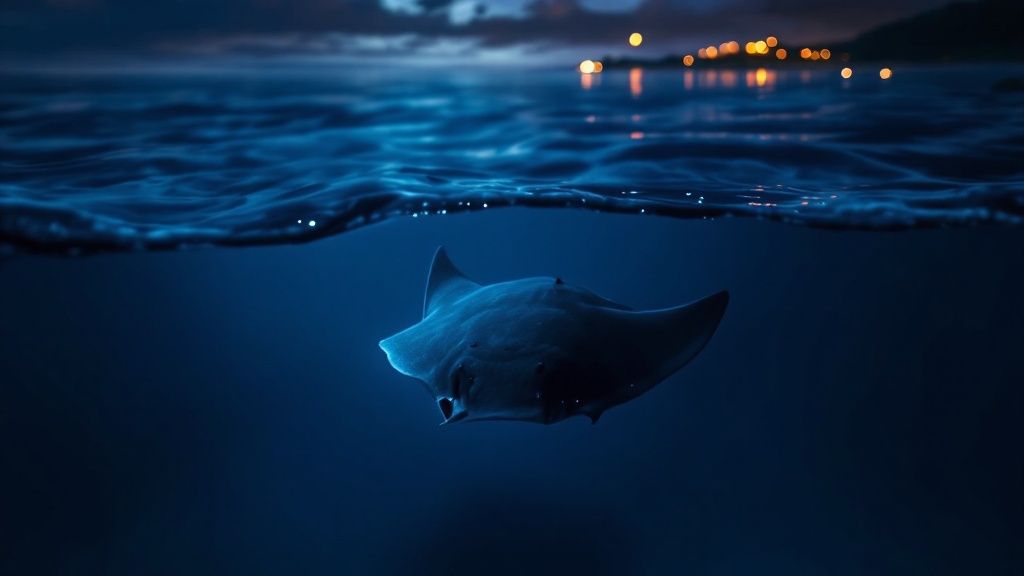
So what makes Kailua Kona the global capital for manta ray encounters? It’s a perfect storm of unique geography, predictable animal behavior, and a well-established, responsible tourism industry. While you might get lucky and spot a manta ray elsewhere, Kona's population is here to stay.
The secret sauce is the nutrient-rich water along the Kona coast, which supports a massive population of plankton—the manta rays' favorite meal. Decades ago, these incredibly smart animals figured out that the bright lights from dive boats at night attract a thick buffet of plankton. This created a reliable nightly feeding frenzy.
This amazing phenomenon has turned the manta ray night dive into one of Hawaii's most sought-after experiences. It’s a surreal and humbling underwater ballet that happens like clockwork, night after night.
Here’s a quick summary of what makes this world-famous dive so special and accessible.
| Attribute | Details |
|---|---|
| Location | Kailua-Kona, Big Island, Hawaii |
| Manta Species | Resident Reef Manta Rays (Mobula alfredi) |
| Sighting Success Rate | Over 85-90% on most nights |
| Average Dive Depth | Shallow, 30-40 feet (10-12 meters) |
| Typical Bottom Time | 45 minutes to 1 hour |
| Average Wingspan | Many individuals exceed 12 feet |
| Primary Dive Sites | Manta Village and Manta Heaven |
| Best For | Scuba Divers & Snorkelers of all levels |
As you can see, the conditions are just about perfect for an incredible encounter.
A Resident Population Means Consistent Sightings
One of the biggest things that sets Kona apart is its resident population of reef manta rays (Mobula alfredi). These mantas aren't just passing through; they live their entire lives, which can be up to 50 years, right here along this stretch of coastline.
This is why the encounters are so incredibly consistent. Of course, mantas are wild animals, but the success rate for sightings is astoundingly high, with tours reporting successful sightings on more than 85-90% of nights.
These dives are conducted in shallow, calm waters, usually between 30 to 40 feet, letting divers get a solid 45 minutes to an hour of bottom time to just sit back and watch the show. The mantas here are famous for their size, too, with many regulars boasting wingspans that exceed 12 feet. You can find even more fascinating details about this unique Kona dive on the Kona Honu Divers website.
"Diving with mantas is one of the most satisfying things a person can do in the water. It’s impossible to describe the feeling of watching a massive fish the shape of a stealth bomber coming into vision."
That reliability removes the guesswork. You aren't just crossing your fingers hoping to see a manta ray—you're showing up at their favorite nightly restaurant.
Two Premier Viewing Locations
The magic of the Kailua Kona manta ray night dive happens in two main spots, each with its own vibe:
- Manta Village (Keauhou Bay): Located just south of Kailua-Kona, this is the original manta ray dive site. It’s known for its almost unbelievable consistency and is often called one of the most dependable wildlife encounters on the planet.
- Manta Heaven (Garden Eel Cove): Situated north of town near the airport, this site can sometimes attract even larger groups of mantas. It's a gorgeous, vibrant reef during the day that transforms into a spectacular feeding arena once the sun goes down.
Both sites offer incredible, front-row seats for scuba divers and snorkelers alike. Divers get to settle on the sandy bottom and look up as the giants glide overhead. Snorkelers hold onto custom floatation boards on the surface and look down into the beams of light.
No matter which way you experience it, the view is something you'll never forget. To find a tour that fits your style, check out the various manta ray dive tours available.
How to Choose the Right Manta Ray Tour
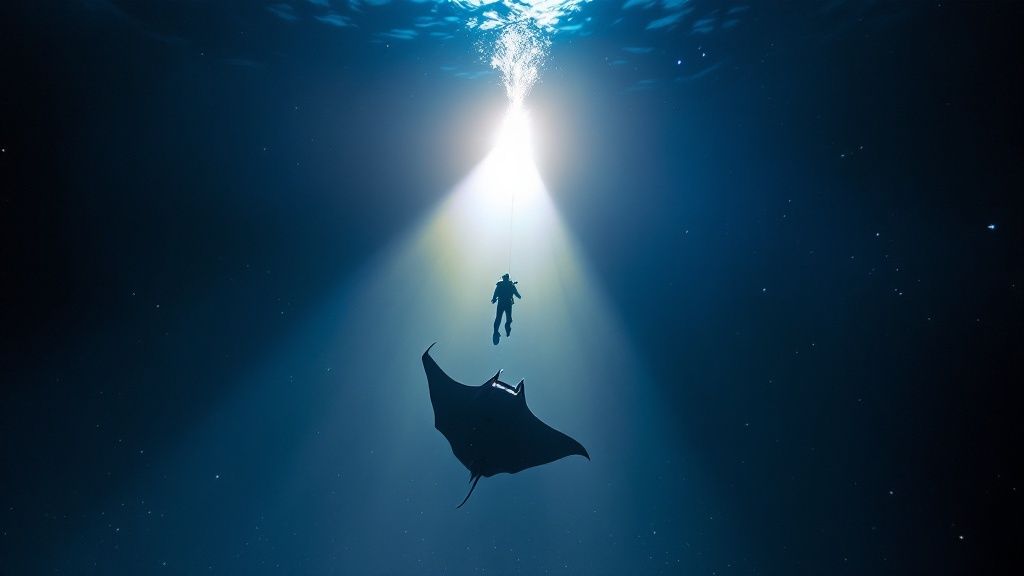
Kailua-Kona is the place in the world for manta ray encounters, so it's no surprise that plenty of boats are ready to take you out. But here’s the thing: picking the right operator is the most important decision you'll make. It’s what separates a good night on the water from a genuinely magical, once-in-a-lifetime experience.
Not all tours are created equal. Far from it. We’re going to walk through the critical things to look for—from safety and guide experience to a real commitment to conservation—so you can book your manta ray night dive in Kailua Kona with absolute confidence.
Dive vs. Snorkel: Which Is Right for You?
First things first, you have to decide how you want to see the show. There are two ways to get in on the action, and the best one for you comes down to your comfort in the water and the kind of view you’re after.
-
Scuba Diving: If you're a certified diver, this is the way to go. You'll descend to the sandy bottom, usually a shallow 30-40 feet, and settle in. From there, you just look up as these gentle giants perform an acrobatic ballet, swooping and barrel-rolling right over your head in the light beams. It’s an incredible, immersive perspective.
-
Snorkeling: This is the perfect option for just about everyone, no matter your swimming skill. You’ll float at the surface, holding onto a specially designed light board. This board shines a bright light down into the water, which attracts the plankton and brings the mantas right up to you. It's a fantastic, low-stress way to get an amazing bird's-eye view.
Honestly, you can't go wrong with either one. Divers get the unique feeling of being part of the underwater world looking up, while snorkelers get a front-row seat to the whole choreographed dance from above. If you want to learn more about the snorkeling side of things, check out our guide on the best manta snorkel tours on the Big Island.
Prioritize Ethical and Sustainable Operators
This is non-negotiable. The most important thing you can do is choose a tour operator who genuinely cares about the well-being of the manta rays. The Kona dive community has worked hard to establish guidelines for responsible interactions, and you should only give your business to companies that live by them.
The Manta Ray Green List was a program that set the standard here, recognizing operators who followed the best sustainable practices. While the official list isn't active anymore, its core principles are still the benchmark for responsible tourism.
Look for operators who still follow that ethos. Supporting them ensures the long-term health of Kona's resident manta population, so this amazing encounter exists for generations to come.
Crucial Rule of Engagement: The absolute number-one rule is to never touch a manta ray. Their skin has a protective mucus coating, and a simple touch from a human hand can remove it, making them vulnerable to dangerous infections. Any good guide will drill this into you before you even get in the water.
What to Look for in a Top-Tier Company
Beyond a company’s ethics, a few other details can make or break your trip. When you’re looking at operators, pay close attention to their reputation, gear, and crew.
Here's what I always look for:
- Experienced Guides: A passionate, knowledgeable guide changes everything. They do more than just keep you safe; they share incredible stories and facts about the individual mantas, often recognizing them by sight.
- A Solid Safety Record: This is a given. Look for companies with a long history of safety, clear pre-dive briefings, and professional, certified staff. Your well-being should be their top priority.
- Small Guide-to-Guest Ratios: Smaller groups mean a better, more personal experience. You get more attention from your guide, and you aren’t bumping elbows with a dozen other people trying to get the best view.
- Boat Quality and Comfort: Don't overlook the boat itself. A clean, well-maintained vessel with perks like a hot-water shower for after the dive can make the whole experience that much more enjoyable, especially on that chilly ride back to the harbor.
Did you know the local manta community has identified and named nearly 200 individual resident mantas based on their unique belly spots? Veteran guides know these animals and can point out regulars like "Big Bertha" or "Lefty," which adds a really cool, personal touch to the whole dive.
Operators like Kona Honu Divers are known for hitting all these marks, from their expert guides to their commitment to safety and conservation. Reading recent reviews is always a great way to get a feel for a company's day-to-day operations.
A Firsthand Look at the Manta Dive Experience
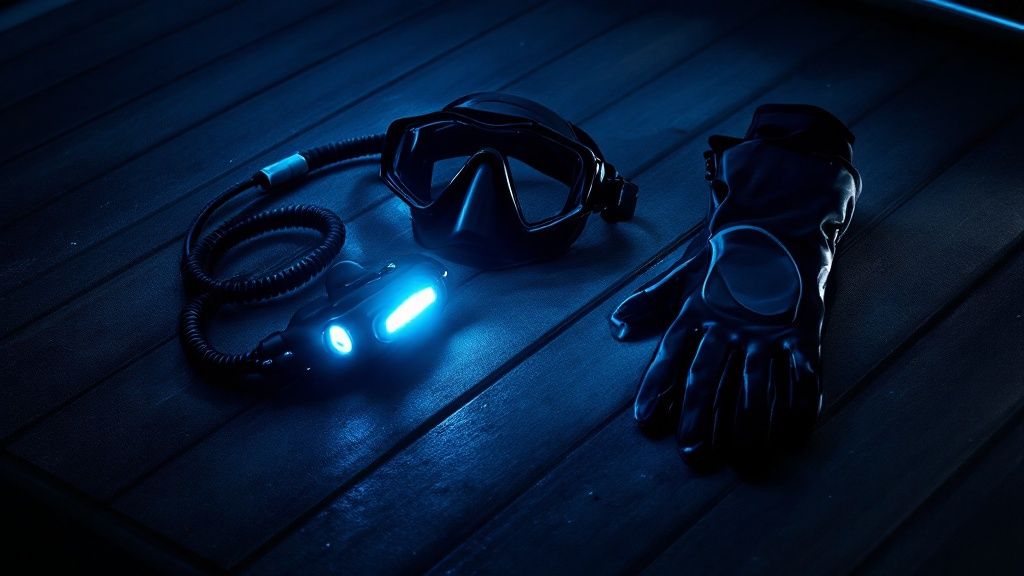
So, what’s it really like to do the world-famous manta ray night dive in Kailua Kona? I get asked this all the time. Let’s walk through the whole evening, from the moment you step on the boat to the final ascent, so you know exactly what to expect. It's so much more than just a dive; it’s a beautifully orchestrated ballet.
Your adventure kicks off in the late afternoon at Honokohau Harbor. The air is warm, the sun is starting its slow descent, and you can feel the excited buzz from everyone on the dock. After you check in with the crew, you’ll hop aboard and settle in for a stunning ride up the Kona coast. Don’t just stare at your phone—this boat trip is part of the show, with incredible views as the setting sun paints the sky in shades of orange and purple.
From Sunset Cruise to Underwater Briefing
As you motor towards the dive site, either Manta Village or Manta Heaven, the guides will give you a full rundown. This isn't your standard, boring safety brief. They bring the experience to life, telling you about the individual mantas you might meet, their unique spot patterns, and their personalities.
You'll also get the most important rule: look, but don't touch. Their skin has a delicate protective coating, and our hands can do real damage. This briefing is where you can tell a great operator from a mediocre one. Their passion for these animals is contagious, and by the time you anchor, you feel like you’re about to be personally introduced to Kona's most famous residents.
As twilight gives way to night, the engine cuts, and a quiet calm settles over the boat. It's time.
You’ll gear up as the last sliver of light disappears from the horizon and make your way into the surprisingly warm, dark water. Plunging in is a total sensory shift. The world above vanishes, and you're left with the quiet hum of the ocean and the narrow beam of your flashlight cutting through the black.
I’ll never forget my first time descending into that darkness. Your entire world shrinks to the circle of light in front of you. There's this shared sense of anticipation with your group—a calm, focused excitement you just don't get on any other dive.
The Underwater "Campfire"
For divers, this is where the real magic begins. You'll descend to a sandy patch on the ocean floor, usually around 30 to 40 feet deep. Your guides will set up powerful lights in the middle, creating what we all call the "campfire." Your group finds a spot in a circle around this beacon, and everyone points their own lights straight up, creating a massive column of light that attracts their dinner.
This light immediately starts drawing in clouds of plankton—the microscopic critters that manta rays travel for miles to eat. If you're snorkeling, the setup is just as cool. You'll hold onto a large, custom float board on the surface that has its own powerful lights shining down, essentially creating a mirror image of the divers' campfire below.
The Grand Entrance
At first, all you see is the plankton. Then, a shadow moves in the distance.
Out of the deep blue darkness, a graceful, massive shape glides effortlessly into the light. It's a moment that will genuinely take your breath away. The first manta has arrived.
What follows is an incredible underwater performance. The mantas swoop and soar, performing elegant barrel rolls just inches above your head. They open their huge mouths to filter the plankton-rich water, completely unbothered by their audience. The only sounds are the hiss of your regulator and the muffled gasps of awe from your fellow divers.
It's silent, peaceful, and utterly mesmerizing. This is the magic everyone talks about—an encounter that no video can do justice to. Ready to see it for yourself? Take a look at the different manta ray dive tours and book your spot at the campfire.
Expert Tips for a Safe and Memorable Encounter
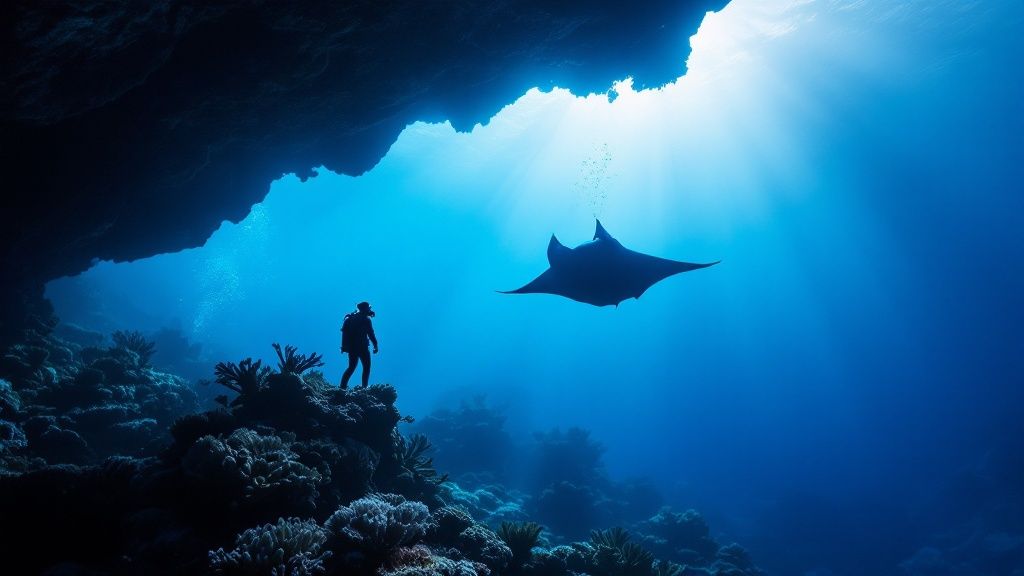
A little preparation can transform your manta ray night dive in Kailua Kona from a great trip into a perfect one. Showing up relaxed and ready means you can soak in every moment of this incredible wildlife encounter, and a few insider tips are all it takes.
Let’s walk through everything from what to pack to the unspoken rules of manta etiquette. My goal is to make sure you have a safe, comfortable, and truly unforgettable experience out there.
Gearing Up: A Few Things to Bring
While the dive operator will handle all the essential gear, packing a few personal items will make your adventure much more comfortable. Think of this as your personal comfort kit for the evening.
- A Warm Jacket or Hoodie: This is a big one. After an amazing time in the water, that boat ride back to the harbor under the night sky can get surprisingly chilly. Having a dry, warm layer to throw on makes all the difference.
- Reef-Safe Sunscreen: If your trip leaves in the late afternoon, the sun will still be out on the way to the site. Protect yourself and our delicate reef by using a mineral-based sunscreen with zinc oxide or titanium dioxide.
- A Towel: Most boats have some, but there's nothing like your own big, fluffy towel to dry off with.
- Seasickness Remedy: Even if you think you're immune, it's smart to take a non-drowsy remedy before you leave the harbor. The Kona coast is usually calm, but why risk feeling queasy? It's always better to be prepared.
The Golden Rule: Passive Observation
The single most important rule of the manta ray encounter is this: look, but do not touch. It's as simple as that.
Manta rays are covered in a protective mucus coating that acts as their immune system, shielding them from nasty bacteria and parasites. Touching them, even with the lightest graze, can rub off this vital layer and leave them vulnerable to infection.
This is the heart of a sustainable and respectful interaction. Our role is to be quiet observers in their world, allowing them to feed naturally without any interference from us. Your guides will brief you on this, but it’s a responsibility every single person in the water shares.
We know from long-term underwater videography just how critical these sites are. Studies show mantas feeding here six to seven nights a week, drawn by the plankton that gathers in our lights. Respecting their space ensures this incredible natural phenomenon can continue for generations to come.
To really get in the right mindset, it's worth brushing up on the basics of responsible and considerate diver etiquette.
Underwater Photography Pro-Tips
Trying to capture the magic of the manta ray night dive is a rewarding challenge. The low light and constant, graceful movement require a totally different approach than your typical daytime reef photography.
Here are a few tips from years of trial and error:
- Go Wide: Use the widest lens you have. This lets you get closer to the mantas, which means less water (and less backscatter) between your lens and your subject.
- Use Your Lights Wisely: Your video lights or strobes are essential, but be smart about where you point them. Position them off to the sides of your camera to light up the manta's white belly without blasting the light directly into its eyes.
- Embrace a Higher ISO: Don't be afraid to bump up your camera's ISO. This helps capture more of the ambient light from the "campfire" of dive lights on the seafloor, creating a much more dramatic and atmospheric shot.
- Focus on the Details: When you're composing your shot, try to get the manta’s eyes or gill slits in tack-sharp focus. This is what turns a good photo into a powerful, engaging image.
Follow these simple guidelines, and you'll spend less time fiddling with your camera and more time just enjoying the breathtaking spectacle unfolding right in front of you.
Explore More of Kona’s Underwater World
The manta ray night dive in Kailua Kona is an absolute showstopper, and for many, it's the main reason they came to scuba dive the Big Island. But once you've seen that incredible underwater ballet, you'll realize it’s just one chapter in Kona's amazing story. The adventure doesn't have to end there.
That single dive often flips a switch for people, sparking a curiosity to see what else is hiding along Kona's volcanic coastline. If you're left wondering what's next, you're in luck. Kona has a dive for every mood, from the eerily beautiful abyss to sun-drenched lava tubes.
The Eerie Beauty of the Blackwater Dive
Ready for something completely different? I'm talking about the famous Kona Blackwater Dive. This isn't your typical reef dive. Imagine drifting in the pitch-black, miles offshore, suspended over thousands of feet of water with only the lights from your rig to pierce the darkness.
What you’re there to see is the largest migration on Earth, as bizarre and wonderful deep-sea creatures rise from the depths to feed. Many of these animals are bioluminescent, creating their own light show in the dark. It feels like you’ve jumped into outer space. It's a must for any diver looking for an experience that's truly on another level. You can get the full rundown on this unique Kona Blackwater Dive.
The Blackwater Dive is humbling. You're just floating in this immense, dark void, watching creatures you’ve only seen in nature documentaries drift by. It really puts the ocean's sheer scale and mystery into perspective.
Advanced Diving Adventures
If you're an experienced diver craving a challenge, Kona's underwater landscape is your playground. The dramatic lava flows have created a maze of arches, caverns, and swim-throughs just waiting to be explored.
An advanced dive tour takes you to some of these incredible spots. You'll drop down to deeper pinnacles, drift along walls covered in vibrant sponges, and maybe even visit a known shark nursery. These dives demand solid buoyancy skills and a spirit for adventure, but the payoff is some of the most breathtaking underwater scenery in Hawaii. If you want to push your limits, check out a trip designed for seasoned divers on the advanced dive tour page.
Whether you're drawn to the strange life of the deep or the geologic wonders of ancient lava, your Kona dive journey is just getting started. Exploring these other dives can transform a great vacation into the ultimate underwater adventure. See everything Kona has to offer by looking through all the available diving tours.
Your Manta Ray Night Dive Questions Answered
It's only natural to have a few questions before you jump into an adventure as incredible as the manta ray night dive in Kailua Kona. To help you plan like a pro, we've put together answers to the most common things we get asked by both divers and snorkelers.
Is the Manta Ray Night Dive Safe for Beginners?
You bet it is. People are often surprised to learn just how accessible this experience is, even for folks with very little time in the water. The dive sites themselves are quite shallow, usually between 25-40 feet, in protected bays with calm water and almost no current.
If you're a scuba diver, the whole thing is stationary. You’ll follow your guide to a good spot on the sandy bottom, settle in, and just watch the show. This completely removes the need for tricky buoyancy skills or navigation. For snorkelers, you’ll be holding onto a custom-built floatation board at the surface, so you don't even need to be a strong swimmer.
Any top-notch operator like Kona Honu Divers will give you a detailed safety briefing and keep their guide-to-guest ratios low. Their whole job is to make sure you feel safe and comfortable, which is why this is hands-down one of the best "first" night dives you could ever do.
What Is the Best Time of Year to See Manta Rays in Kona?
Here’s the best part about diving in Kona: there really isn't a "best" time! The reef manta rays we see are year-round residents. They don’t migrate away from the Kona coast, which means you have an excellent chance for a world-class encounter no matter which month you visit.
Manta sightings stay consistently high all year long. You can base your travel plans on things like cheaper flights, better weather, or hotel deals, not on manta "season." While the ocean surface can sometimes be a bit calmer in the summer, the mantas themselves are always here.
Can I Participate if I Don't Want to Get in the Water?
While the real magic happens underwater, some companies might let you book a "ride-along" spot if you'd rather stay dry on the boat. You absolutely have to check with the dive company directly, like Kona Honu Divers, to see if they can accommodate this on the night you want to go.
As a ride-along, you'll still experience a beautiful Kona sunset from the water and feel the buzz of excitement from everyone else. Be aware, though, that you won't see the manta rays from the deck. The entire show is lit up from below the surface.
If you're not a swimmer but still want to see the mantas, the snorkeling option is your best bet. You are completely supported by a large floatation board, so no swimming is required. You can just relax and watch the spectacle from the surface in complete safety and comfort.
What Happens if No Manta Rays Show Up?
Let's be real—these are wild animals, and even with sighting rates that are often over 90%, their appearance can't be guaranteed 100% of the time.
This is where reputable, customer-first operators really stand out. Most have what's called a "manta guarantee." The exact policy differs between companies, but it generally means that if your paid tour ends up being a no-show for mantas, you can come back another night for free (subject to availability). For a bit more detail on this, check out our article explaining what the manta ray night dive is.
Think of this guarantee as a great insurance policy. It also shows how confident the company is that you're going to have an amazing time. Always ask about the specific guarantee when you're booking your manta ray dive tour.