
Imagine floating in the warm, dark Pacific, the only light coming from the beams below you, when a giant, gentle creature with a wingspan of up to 16 feet glides silently out of the blackness. This is the world-famous manta ray night dive in Kailua Kona, an experience so surreal it’s often called an 'underwater ballet'. It’s an absolute must-do on the Big Island and, frankly, one of the most reliable and magical wildlife encounters you can find anywhere on the planet.
Check Availability
Why Kona Is the Manta Ray Capital of the World
The Kona coast isn't just another pretty spot to go scuba diving on the Big Island; it's the global hotspot for manta ray encounters. What makes it so special is that the experience isn't based on luck or catching a seasonal migration. It’s built on a fascinating relationship between humans, light, and the mantas' natural feeding habits that has developed over decades.
This incredible spectacle was actually discovered by accident. Back in the 1970s, a hotel started lighting up the surf at night for its guests. Those lights attracted swarms of plankton, the manta rays' favorite food. It didn't take long for the local mantas to figure out that light meant a free, all-you-can-eat buffet. They started showing up every night to feast in the illuminated water.
The Two Legendary Manta Dive Sites
Fast forward to today, and dive operators have perfected this "dinner bell" effect. They take powerful lights offshore to specific, established sites, creating a consistent and breathtaking show for divers and snorkelers. This has turned the manta ray night dive Kailua Kona into a true bucket-list adventure, drawing around 80,000 people every year.
Most tours head to one of two main locations, each with its own vibe:
- Manta Heaven (Garden Eel Cove): This spot is just north of Kona and is famous for attracting huge congregations of mantas. If you want to see a crowd, this is the place.
- Manta Village (Keauhou Bay): Located south of Kona, this is the original site where it all began. It has an incredibly high success rate for sightings.
At both sites, you get a front-row seat to one of nature’s most graceful performances. Divers settle on the sandy bottom, about 30-40 feet down, and shine their lights up. Snorkelers float on the surface, holding onto custom light boards.
This creates a massive column of light full of plankton, drawing the mantas in from the dark. They swoop and perform acrobatic feeding loops, often passing just inches from your face. To get a better feel for just how mind-blowing this encounter is, you can find more insights about the Kona manta ray night dive and what to expect.
How to Choose the Right Manta Ray Tour Operator
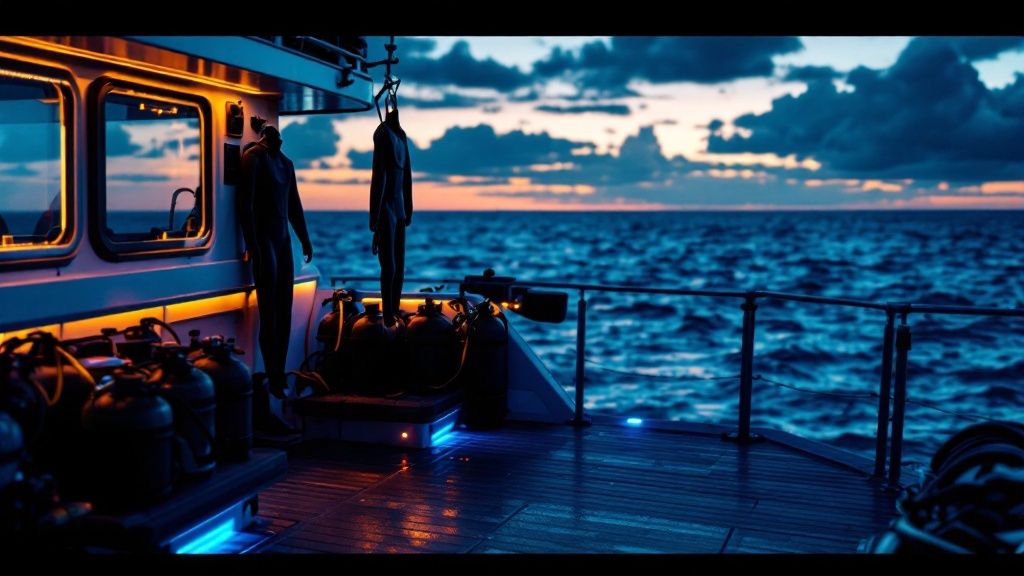
Picking the right guide for your manta ray night dive in Kailua-Kona is probably the single most important decision you'll make for this trip. It’s what separates a good dive from a truly mind-blowing, unforgettable experience.
You're not just booking a taxi on the water. You're looking for a crew that lives and breathes safety, has years of experience with these animals, and shows genuine respect for the ocean. The best operators aren't just there to show you the mantas; they're there to protect them.
Commitment to Manta Ray Conservation
First things first: how does the company treat the mantas? The top-tier operators are deeply involved in conservation and follow what used to be the Manta Ray Green List guidelines. This all boils down to one simple, crucial rule: passive observation. You never, ever touch, chase, or get in a manta's way.
A huge green flag is a thorough pre-dive briefing on "manta etiquette." If your guide takes the time to teach you how to interact respectfully, you know you're with a crew that cares. Companies like Kona Honu Divers are famous for this—they make sure every single guest understands how to be a good visitor in the mantas' world.
If you want to dig deeper into what makes a great dive operation, this guide on how to choose a Kona dive shop has some excellent general advice.
Evaluating Tour Quality and Experience
Once you've vetted their conservation ethos, it's time to look at the actual experience they provide. Here’s what I always tell people to look for:
- Group Size: This is a big one. Smaller groups almost always equal a better dive. You get more room to yourself in the water and feel less like you’re just another face in the crowd.
- Boat Comfort: Think about the little things that make a huge difference. Is there a hot freshwater rinse for when you get out? Are there snacks and drinks? A comfortable boat makes the whole evening so much more enjoyable, especially after a night dive.
- Crew Experience: You can't fake passion. A knowledgeable crew that's genuinely excited to be there transforms the trip. They can tell you about the individual mantas, point out other marine life, and add a rich educational layer to the whole adventure.
It’s worth it to invest in a quality operator. When you know you’re in safe, experienced hands, you can truly relax and just soak in the magic of the moment without a single worry.
Take Kona Honu Divers, for example. They've built their stellar reputation on a foundation of professional crews, comfortable boats, and a firm belief in keeping tour groups small. It's why people walk away with memories that last a lifetime.
What the Manta Dive Experience is Really Like
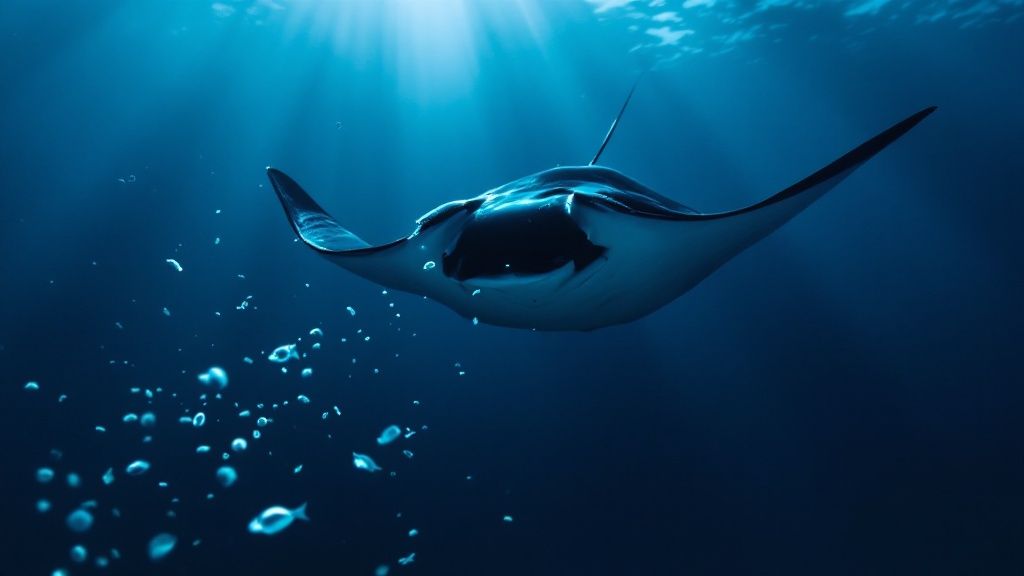
So, you're wondering what the manta ray night dive in Kailua-Kona actually feels like, from start to finish? Let me walk you through it. The whole thing kicks off long before you ever get wet. It begins with that electric buzz of excitement at the harbor as you meet your crew and the other divers, everyone sharing the same look of wide-eyed anticipation.
The boat ride out is an experience in itself. As you motor away from the coast, you get a front-row seat to one of Kona’s legendary sunsets, with the sky exploding in shades of orange, pink, and purple. This incredible view is the backdrop for your pre-dive briefing. This is where the guides lay it all out—safety checks, the plan for the dive, and the most important rule of manta etiquette: look, but don't touch.
Dropping into the Manta Theater
As the last sliver of sun disappears, it’s time to gear up. There’s something truly special about slipping into the warm, dark Pacific under a sky full of stars. It’s a mix of pure thrill and total peace. For divers, the descent is slow and methodical, your dive light cutting a path through the deep blue. You’ll eventually settle on a sandy patch of the ocean floor, about 30-40 feet down, in a spot your guide has picked out.
Once everyone is in position, you all point your lights straight up. Together, you create a massive column of light, turning the dark water into a brightly lit stage. We call it the "campfire." You and the other divers form a circle, becoming the audience for the incredible show about to begin. There's a real sense of shared wonder down there as everyone waits.
The Stars of the Show Arrive
And then… it happens. A huge, graceful shadow emerges from the darkness. The first manta ray glides into the light, its massive wings propelling it through the water with an effortless, silent power. I promise you, it's a moment that will steal your breath. The manta starts its mesmerizing underwater ballet, doing barrel rolls and swooping just inches over your head to scoop up the plankton drawn to your lights.
Before you know it, another one joins, and then another. They move with an elegance that just doesn't seem possible for their size, soaring and looping through the light beams like they're weightless.
You're not just a spectator here; you are a crucial part of the show. Your light creates the "stage" and attracts the food that makes their incredible underwater dance possible. This unique, symbiotic interaction is a huge part of why the Kona manta dive is so special.
What really makes this feel personal is that these aren't just random visitors. The mantas here are residents. In fact, the local population is so well-studied that guides recognize many of them by the unique spot patterns on their bellies. With nearly 200 individuals cataloged, you might be watching a local celebrity like "Big Bertha" or "Lefty" go about their nightly routine.
After about 45 minutes of pure, jaw-dropping magic, it’s time to head back up. The boat ride to shore is quiet and reflective, cruising under the stars as you warm up with some hot chocolate and swap stories with your new friends. You're left with a profound sense of awe and a memory that will stick with you for a lifetime.
Getting Ready for Your Manta Ray Adventure
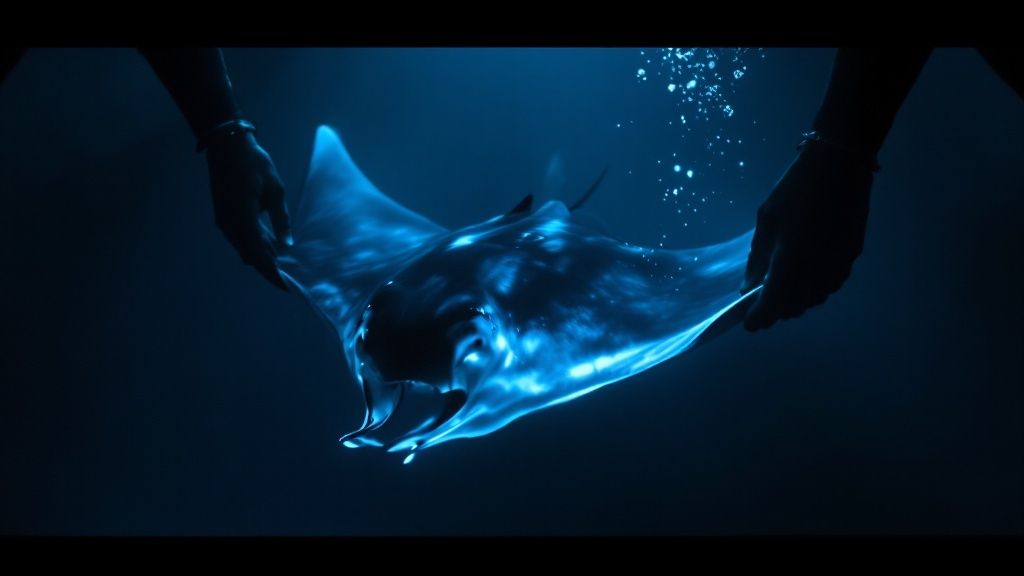
A little prep work goes a long way in turning a good trip into an unforgettable one. Knowing what to expect and what to pack means you can just relax and soak in the magic of the manta ray night dive in Kailua Kona, whether you're a diver or a snorkeler.
For Scuba Divers
If you’re a certified diver, you can relax—this dive is less about tricky navigation and more about stillness. Your most important skill here will be excellent buoyancy control. You’ll be kneeling or sitting on the sandy ocean floor for most of the dive, and the goal is to stay put without stirring up a sandstorm or floating away.
Most tour operators will ask for at least an Open Water Diver certification. Because you're stationary, it's a fantastic dive for all experience levels to witness a truly incredible spectacle. The focus is simply on being a calm, respectful observer of the underwater ballet unfolding before you.
What Snorkelers Can Expect
Don't have a dive certification? No problem. Snorkelers get an equally amazing, front-row seat from the surface. You'll hold onto a custom-designed, floating light board that shines a powerful beam down into the dark water. This light is a magnet for the plankton, which in turn brings the manta rays right up to you.
You’ll just float comfortably at the surface, gazing down into the illuminated "campfire" below. It's not uncommon for the mantas to come within inches of the surface, giving you a breathtaking bird's-eye view of their graceful barrel rolls.
Your Essential Manta Ray Checklist
Packing the right gear makes all the difference, ensuring you're comfortable from the sunset boat ride out to the chilly, star-lit cruise back to shore. Here's a handy checklist to make sure you have everything you need.
| Item | Scuba Divers | Snorkelers | Notes |
|---|---|---|---|
| Warm Jacket/Hoodie | ✅ | ✅ | The boat ride back can be surprisingly chilly after being in the water. |
| Swimsuit | ✅ | ✅ | Wear it under your clothes for an easy transition. |
| Towel | ✅ | ✅ | A quick-dry towel is perfect for this. |
| Certification Card | ✅ | N/A | Don't forget your physical or digital C-card! |
| Dive Computer | ✅ | N/A | Essential for any certified diver. |
| Reef-Safe Sunscreen | ✅ | ✅ | Apply it before you go for the sunset boat ride. |
| Motion Sickness Remedy | ✅ | ✅ | Take it beforehand if you're prone to seasickness. |
| Reusable Water Bottle | ✅ | ✅ | Staying hydrated is key. |
| Waterproof Camera | ✅ | ✅ | A GoPro or similar is great. Important: No flash photography! |
With these simple preparations, you're all set for a smooth, comfortable, and absolutely unforgettable night with Kona's gentle giants.
So, Why Do the Mantas Show Up Here Every Night?
The incredible reliability of the Kona manta ray night dive isn't just good luck. It's actually a fascinating story of biology and geology that has unfolded over decades, creating the perfect conditions for this nightly spectacle.
It all boils down to a simple principle: mantas go where the food is. And here in Kona, a unique combination of factors serves up a dependable plankton buffet that these gentle giants can't resist.
When dive operators turn on those big, bright lights in the water, they're not just illuminating the scene for us. They're essentially ringing a massive dinner bell for the mantas.
The Dinner Bell Effect
The intense light acts like a magnet for swarms of zooplankton, the tiny critters that manta rays absolutely love to eat. This creates a super-concentrated, all-you-can-eat feast right in one spot. It's the underwater equivalent of a food truck showing up at the same time every night.
Over the years, Kona’s resident manta population has caught on. They've learned that lights in the water mean an easy, effortless meal. This learned behavior is the secret sauce behind the dive's amazing consistency.
This is also where the concept of "site fidelity" comes in. The mantas you see here aren't just passing through; they are locals. They live along the Kona coast and know that these specific spots—lovingly nicknamed Manta Village and Manta Heaven—are guaranteed feeding grounds. So, they come back. Again and again. It creates a predictable encounter that you just don't find with most wildlife experiences.
The consistent success rate of manta ray sightings on the Kona Coast is closely tied to the area's unique underwater geography and oceanography. Volcanic slopes and underwater canyons funnel nutrient-rich currents that stimulate plankton blooms, which serve as a reliable food source for manta rays during their nocturnal feeding. Statistically, about 85-90% of manta night dives along Kona’s coast result in successful manta ray encounters. Learn more about the science of Kona's manta dives.
It’s a beautiful, symbiotic relationship. We bring the lights, the plankton swarm, and the mantas get an easy meal. When you understand the science behind it, you realize you're not just watching a show. You're witnessing a brilliant ecological adaptation happening right in front of you.
Your Manta Ray Night Dive Questions, Answered
It’s completely normal to have a few questions swirling around before you book an adventure as unique as the manta ray night dive in Kailua Kona. After all, you’re about to jump into the dark ocean with giant sea creatures! Let's clear up some of the most common things people ask so you can feel totally confident about your trip.
Is the Manta Ray Night Dive Actually Safe?
I get this one all the time, and the answer is a firm yes. Manta rays are called "gentle giants" for a very good reason—they are completely harmless to people. They don't have teeth, stingers, or barbs like some of their ray relatives. If they feel threatened, their only move is to gracefully swim away.
The real secret to a safe dive isn’t the mantas, it’s the crew you go with. A professional, experienced operator will give you a detailed safety briefing, check all your gear, and follow strict protocols to keep everyone comfortable in the water. Listen to your guide, and you’ll have an amazing, worry-free time.
What if I’m Not a Certified Scuba Diver?
No certification? No problem at all. You absolutely do not need to be a scuba diver to get a front-row seat for this incredible spectacle. The manta ray snorkel trip is just as jaw-dropping and is open to pretty much everyone.
Snorkelers hang onto a specially-designed light board that floats on the surface. These boards have powerful lights that beam down into the water, attracting the plankton the mantas come to eat. You get a perfect bird's-eye view as these massive, graceful animals perform their underwater ballet just feet below you. It’s a truly magical experience. To get a better sense of what the whole adventure looks like, check out this guide on what exactly the manta ray night dive entails.
Is It Guaranteed That I'll See Manta Rays?
Nature is always a little unpredictable, so a 100% guarantee is impossible. However, the Kona manta ray dive has an unbelievably high success rate—we're talking over 85% on most nights. It's one of the most reliable wildlife encounters on the planet, mainly because Kona has a resident population of mantas who have learned that the lights mean an easy meal.
It's truly rare for the mantas to be a no-show. But on that very slim chance, most reputable companies offer a "manta guarantee." This usually means you can come back for another trip, free of charge, to try again. Just make sure to ask about the specific policy when you're booking your tour.
When Is the Best Time of Year to See the Mantas?
This is the best part: there is no "best" time! The manta ray night dive in Kailua Kona is a fantastic year-round activity. Our local manta population doesn't migrate, so they're here 12 months a year. You have an excellent shot at an incredible encounter whether you visit in July or December.
Ocean conditions can sometimes be a bit calmer in the summer, but the tours run consistently all year long. You can plan your Big Island vacation around your own schedule, knowing the mantas will be waiting.
For an unforgettable and professionally guided experience, Kona Honu Divers offers premier manta ray dive tours that prioritize safety, conservation, and small group sizes to ensure a magical night for every guest.