
Picture this: you're slipping into the warm, dark Pacific waters just as the last glow of a Hawaiian sunset disappears from the horizon. Down below, powerful beams of light cut through the black, creating an illuminated underwater stage. Suddenly, giant, graceful shadows emerge from the deep, soaring through the light like otherworldly dancers. This isn't a scene from a movie; it's the world-famous manta ray night dive in Kailua Kona, an experience that tops bucket lists for divers across the globe.
The Kona Manta Ray Dive: A True Bucket-List Experience
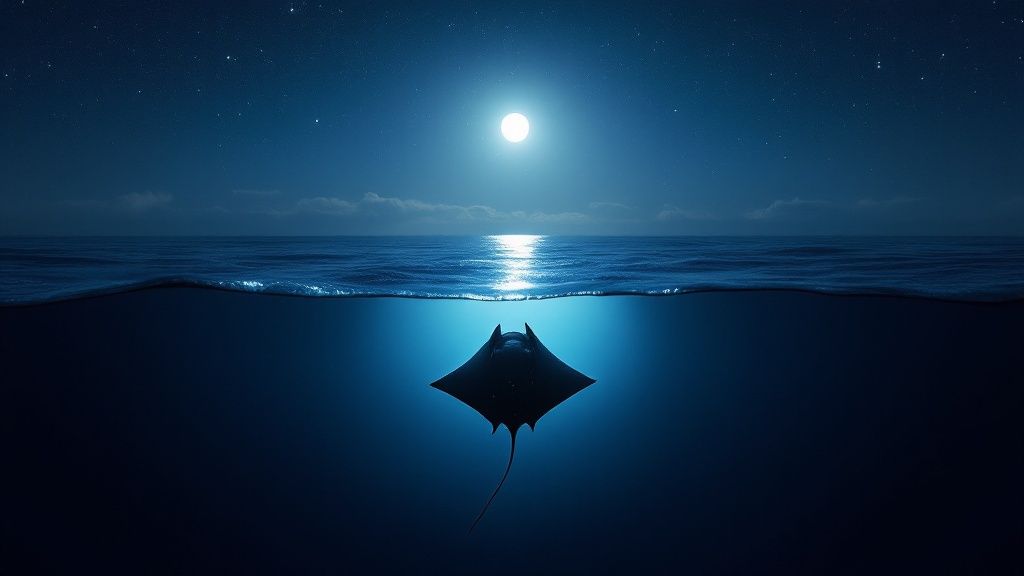
This incredible adventure has, for very good reason, earned its reputation as a must-do on the Big Island. The Kona coast is ground zero for this unique spectacle, giving both divers and snorkelers a front-row seat to a mesmerizing natural feeding behavior. It’s a rare combination of thrilling and deeply peaceful, and it’s an experience that will stick with you forever.
What makes the Kona dive so special is the reliable presence of a large, resident population of reef manta rays. While many wildlife encounters are hit-or-miss or depend heavily on migratory seasons, these gentle giants are here all year. They’re consistently drawn to the plankton-rich waters, and that reliability is what really sets Kona apart.
So, Why Is Kona the Best Place in the World to See Mantas?
It really comes down to a perfect storm of conditions. The sheltered bays along the Kona coast keep the waters calm, and over the years, local tour operators have perfected a simple yet brilliant method to attract the mantas' favorite food: plankton. They just shine incredibly bright lights into the water, creating a massive underwater buffet that draws the mantas in for their nightly feast.
This nightly performance has become a huge part of the local tourism scene. Every year, around 80,000 visitors come to experience the manta ray night dives off Kailua Kona. The numbers speak for themselves—dive operators report an incredible average manta sighting success rate of 85–90% at the main sites. For a wild animal encounter, that's almost unheard of. You can read more about the dive's reliability and economic impact to get a better sense of its scale.
The entire operation is designed to be awe-inspiring, from the boat ride out at sunset to the moment you see that first manta swoop into the light. You'll head out from the harbor to one of the well-known sites like "Manta Heaven" or "Manta Village," where the crew sets the stage for the show. It’s a remarkable example of nature and responsible tourism coming together, and something you can experience on one of the fantastic local manta ray dive tours.
How to Choose the Right Manta Ray Tour Operator
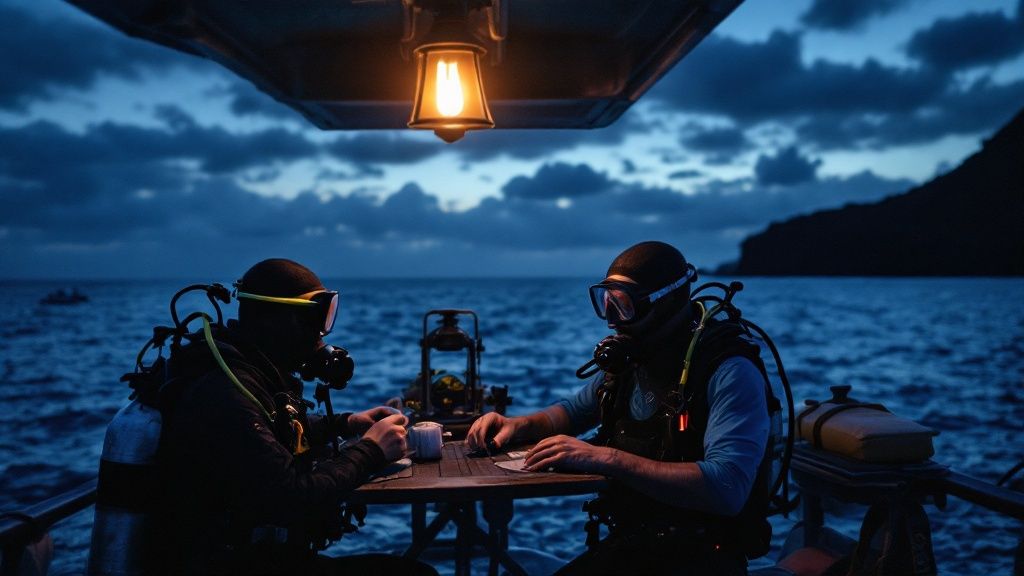
With a ton of companies offering a manta ray night dive in Kailua Kona, picking the right one is easily the most important decision you'll make. This isn't just about getting a good price; the quality of your experience and, more importantly, your safety, rests entirely on the crew and their vessel. A fantastic operator can elevate a cool dive into a truly life-changing memory.
Think about it: your choice impacts everything. It's the difference between a clear, confidence-building pre-dive briefing and a confusing one. It determines your comfort on the boat ride and your sense of security in the dark water. A seasoned crew knows these mantas by name, they can read the ocean's subtle cues, and they put a safe, respectful encounter above all else. This is a carefully managed interaction with protected wildlife, not just another boat trip.
What to Look for in an Operator
When you start digging into different companies, you need to look past the sticker price. The best operations have tell-tale signs of quality and professionalism that are worth every penny.
- Safety Record & Crew Experience: This is non-negotiable. You want a company with a spotless safety record, led by captains and divemasters who have spent years in these specific waters. Their local knowledge is priceless, especially after the sun goes down.
- Boat Comfort & Amenities: You’ll be spending a good amount of time on the boat both before and after your dive. A well-maintained, spacious vessel makes a world of difference. Little things, like a hot water rinse to warm you up and snacks for the ride back, are hallmarks of an operator who cares about your comfort.
- Group Size: Smaller groups are almost always better. It means you have more room to maneuver in the water, get more personalized attention from the guides, and won't feel like you're lost in a crowd.
A smaller group doesn't just give you a better view; it also puts less stress on the manta rays and their habitat. It's a win for the divers and a win for the wildlife.
Putting Responsible Tourism First
It's absolutely essential to go with an operator who is serious about conservation. Look for companies that follow the established guidelines for passive observation, which are designed to protect the long-term health of Kona's manta ray population. The best crews are passionate advocates for the ocean and take the time to teach their guests how to interact respectfully.
This is where Kona Honu Divers really shines. They’ve built a stellar reputation based on their experienced crew, top-notch boats, and a deep-seated commitment to giving every guest an incredible, safe experience. They are an amazing choice for anyone looking to truly dive the Big Island of Hawaii.
Ready to book your adventure with a trusted crew? You can explore their highly-rated manta ray dive tours and secure your spot for this once-in-a-lifetime dive.
Your Manta Ray Night Dive Journey Explained
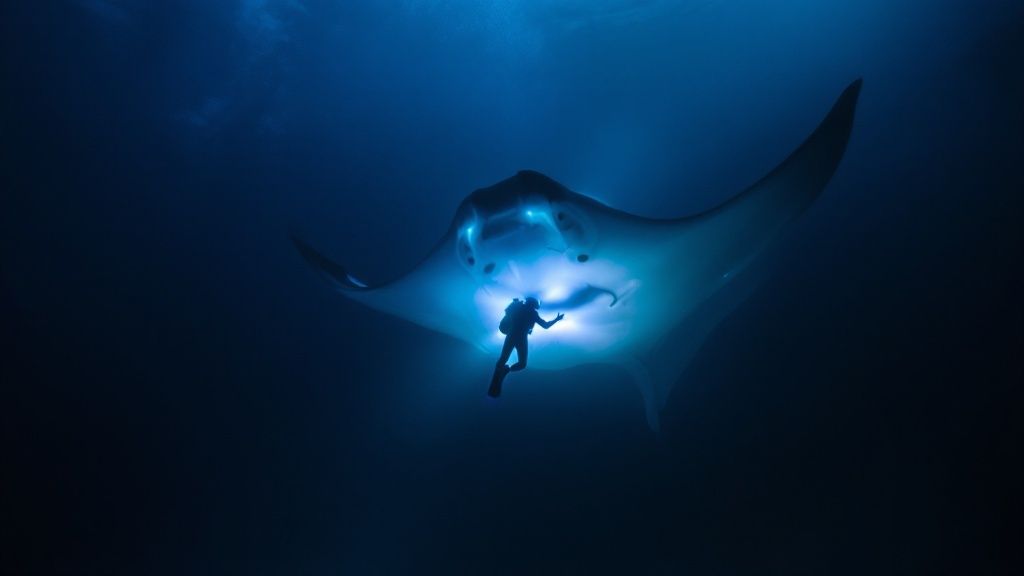
The magic of a manta ray night dive in Kailua Kona doesn't just start when you hit the water. The whole experience begins right at the harbor, with a palpable buzz of excitement in the air as you check in with the crew. You really don't need to bring much—just a towel and something warm and dry to change into for the boat ride back. The dive operator handles all the gear.
As the boat pulls away from the dock, the real journey begins. You'll cruise along the spectacular Kona coast just as the sun starts to sink, painting the sky with fiery colors. This sunset boat ride is an incredible experience on its own. While you soak it all in, your dive guide will give a thorough briefing, walking you through the dive plan, safety procedures, and the do's and don'ts of interacting respectfully with these gentle giants.
Entering the Underwater Theater
Once the boat is anchored, a quiet anticipation settles over everyone. Then, it's time to slip into the warm, dark Pacific. If you're diving, the descent feels almost otherworldly. You'll make your way down to the sandy ocean floor, getting settled at a comfortable depth of about 30 to 40 feet. This is where the crew sets up the main event: an underwater "campfire" of powerful lights aimed straight up toward the surface.
This light show has a specific, brilliant purpose. It attracts huge clouds of plankton, which just so happens to be the manta rays' favorite meal. It usually doesn't take long. Within minutes, the performance begins as massive, graceful shadows emerge from the darkness. They soar, glide, and perform effortless barrel rolls right through the light beams, often just inches above your head. It’s a completely silent, mesmerizing underwater ballet.
The sheer reliability of this encounter is what puts Kona on the map. The area is home to a resident population of over 450 identified individuals, which is why the sighting success rate for the manta ray night dive is over 95%. Dives typically last between 45 to 60 minutes.
The mantas are definitely the stars, but keep an eye out for other nocturnal sea life. You might spot garden eels popping their heads out of the sand or even a curious moray eel. The water temperature is usually a pleasant 75-80°F (24-27°C), and the wetsuit provided by the operator keeps you comfortable while you're mesmerized by the show. Your guides are always nearby, making sure everyone is safe and sticking to the most important rule: look, but don't touch.
The Post-Dive Glow
Climbing back onto the boat, you’re greeted with an incredible sense of awe and adrenaline. But the experience isn't over. The trip back to the harbor is just as special, with the crew often serving hot cocoa while you swap stories and share photos under a brilliant blanket of stars.
It’s a peaceful, reflective ride home that gives you a chance to truly process the stunning natural wonder you just witnessed. The entire trip, from start to finish, is expertly managed to be safe, comfortable, and absolutely unforgettable. For an even deeper look, you can read our complete guide on why you should go on a manta ray dive in Kona.
A Guide To Respectful Manta Ray Encounters
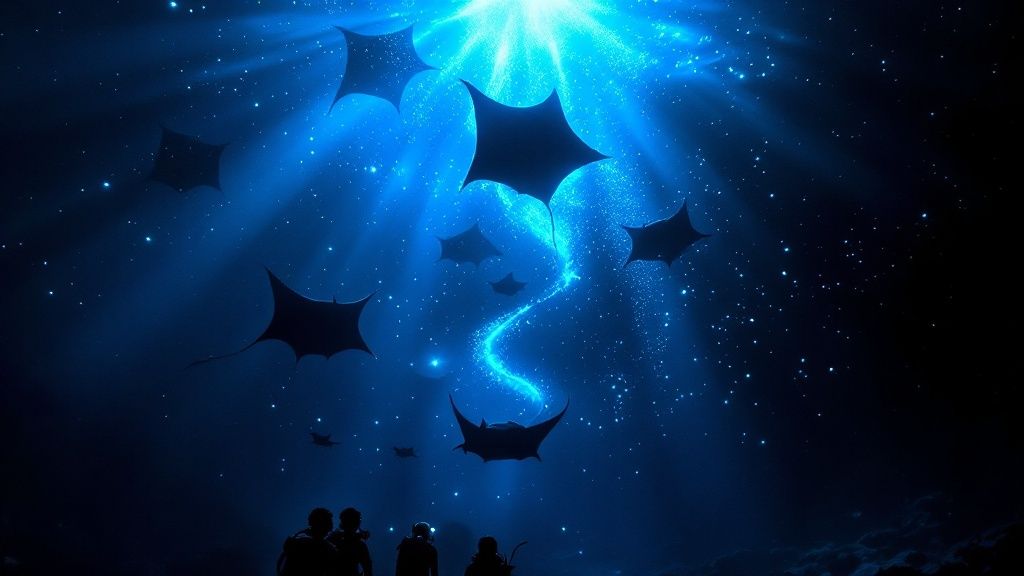
Getting to see Kona's manta rays up close is a privilege, and it’s one that depends entirely on keeping their population healthy and safe. When we enter their world, our job is to be passive, respectful observers. This simple approach keeps both us and the mantas safe, ensuring this incredible experience can continue for years to come.
There’s one rule that’s non-negotiable: look, but absolutely do not touch. Manta rays have a protective mucus layer covering their skin, which is their first line of defense against nasty bacteria and infections. Even a gentle touch from our hands can damage this coating, leaving them open to disease. It’s that sensitive.
Every reputable operator running a manta ray night dive in Kailua Kona will drill this into you. Divers are typically positioned on the sandy bottom, while snorkelers hold onto a custom light board at the surface. This creates a wide, open "water column" where the mantas can glide and feed without obstruction.
Following The Rules Of The Road
The whole encounter is on their terms. We’re just guests at their all-you-can-eat plankton buffet. By sticking to a few key guidelines, we make sure the interaction is a positive one for these gentle giants.
- Let Them Come to You: Never chase a manta. Find your spot and stay put. They are curious and will come close if they feel safe.
- Lights Up (for divers): If you're diving, point your light straight up toward the surface. This draws the plankton into the water column, which in turn brings in the mantas. Snorkelers’ lights are built into their floats and will be pointed down.
- Watch Your Bubbles: When a manta glides overhead, try to time your breathing so you aren't exhaling a stream of bubbles right into its face.
- Buoyancy is Everything: Good buoyancy control is critical. It keeps you from accidentally bumping into a manta or stirring up the seafloor.
Of course, beyond these manta-specific rules, it's always a good idea to stay sharp on general snorkeling and diving safety tips before any ocean adventure.
To make it easy, here’s a quick-reference guide for a safe and respectful swim with Kona's manta rays.
Manta Ray Encounter Do's and Don'ts
| Guideline | Why It's Important |
|---|---|
| DO stay in your designated spot (surface or seafloor). | This creates a predictable and safe feeding lane for the mantas. |
| DON'T touch a manta ray under any circumstances. | You can remove their protective mucus layer, making them vulnerable to infection. |
| DO keep your dive light pointed up. | This attracts the plankton that the mantas feed on, bringing the action to you. |
| DON'T chase or try to "ride" a manta. | This causes stress to the animals and can drive them away from the site permanently. |
| DO control your buoyancy and stay horizontal. | This minimizes your profile and prevents accidental contact. |
| DON'T exhale bubbles directly into a manta's path. | The sudden burst of air can startle them. |
Following these simple rules shows respect for the animals and helps ensure everyone on the boat, including you, has a fantastic and memorable experience.
Protecting A Natural Treasure
These guidelines aren't just for show—they're at the heart of conservation. The Kona dive sites are living laboratories where tour operators and marine biologists work hand-in-hand to make these encounters sustainable.
Years of monitoring have shown that while sightings are consistent on about 85-90% of nights, we can't forget these are wild animals. By following the rules, we help maintain the very habitat and behaviors that make this one of the world's greatest ecotourism attractions. When you choose a tour that puts manta safety first, you’re doing your part to protect this incredible natural wonder for the next generation.
But Don’t Stop at Just One Dive…
The manta ray night dive in Kailua Kona is absolutely the star of the show, but trust me, the underwater adventure here is just getting started. The Big Island’s entire coastline is a diver's paradise, sculpted by ancient lava flows into a wild and wonderful collection of reefs, caves, and dramatic underwater structures.
Those same crystal-clear, calm conditions that make the manta dive so magical are found all along the coast, offering something for every diver.
After you’ve experienced the silent, otherworldly ballet of the mantas, you might find yourself with a new appreciation for what happens after the sun goes down. If that’s the case, your next adventure is waiting.
Ready for the Ultimate Night Dive? Try a Kona Blackwater Dive
I’ve heard seasoned divers call this a “spacewalk,” and honestly, they’re not wrong. The Kona Blackwater Dive is one of the most unique experiences you can have, period. You’ll head miles offshore, tether to the boat, and drift in the deep, inky blackness over thousands of feet of ocean.
Your dive light slices through the dark, illuminating a world of bizarre and beautiful bioluminescent creatures rising from the abyss on their nightly vertical migration. You'll see things that look like they're straight out of a sci-fi movie—strange larval fish, pulsing jellies, and critters most people will never lay eyes on. It’s a dive that truly pushes the boundaries.
Daytime Adventures for Certified Divers
Once the sun is up, Kona keeps delivering. For experienced divers looking to explore, the underwater topography is a playground. Think dramatic lava tubes big enough to swim through, sheer reef walls, and incredible underwater arches packed with life. The advanced dive trips are designed specifically to get you to these more challenging and rewarding sites.
On these charters, you’ll get a chance to meet some of Kona’s other famous residents. You could find yourself exploring:
- Deep Pinnacles: These are underwater mountains that pop up from the seafloor, acting as magnets for huge schools of fish and the occasional pelagic visitor.
- Thriving Reefs: Picture vibrant coral gardens where you'll hang out with turtles, eels, and more colorful reef fish than you can count.
- Shark Hangouts: We know the spots where whitetip reef sharks love to rest on the sandy bottom, and we’re happy to take you there.
If you’re an experienced diver wanting to see the absolute best of the Big Island, Kona Honu Divers runs premium advanced 2-tank trips that get you to these incredible, less-visited locations.
You can be exploring an ancient lava tube in the morning and drifting along a deep reef wall that very same afternoon. That incredible variety is what keeps divers coming back to Kona again and again.
Whether you're hooked on night diving or want to see the vibrant coral gardens in the Hawaiian sun, Kona has a dive for you. You can check out a full list of Kona diving tours to fill out your trip and see for yourself why the Big Island is truly a world-class dive destination.
Your Top Questions About the Manta Ray Night Dive
Even after doing all your homework, you probably still have a few questions buzzing around. That's completely normal. The manta ray night dive in Kailua Kona is a one-of-a-kind experience, and it makes sense to want all the details buttoned up before you go.
Let's walk through some of the most common questions we hear from guests. We'll cover everything from certification to what happens on the rare night the mantas are a no-show.
Do I Need to Be Scuba Certified?
Nope! You absolutely don't have to be a certified diver to experience the magic. While scuba divers get an incredible view from the "campfire" on the ocean floor, snorkelers have an equally amazing, front-row seat from the surface.
Snorkelers hang onto a custom-made float board that’s equipped with high-powered lights. These lights beam down into the water, attracting the plankton that the mantas feed on. Before you know it, these gentle giants are gliding right up to the surface, just inches below you. It's a fantastic option for families, non-divers, or anyone who just feels more comfortable on top of the water.
Is the Manta Ray Night Dive Safe?
Yes, it’s incredibly safe. When you're with a professional, experienced crew, you’re in good hands. Manta rays are famously gentle giants. They don't have teeth, barbs, or stingers, making them harmless to people. If you want to get into the nitty-gritty of the tour, you can learn more about what a manta ray night dive is.
The real safety focus is on standard night diving and snorkeling procedures. Your guides will give you a comprehensive briefing, the dive sites are well-protected from open ocean swell, and the whole experience happens in relatively shallow water, around 30-40 feet.
What Is the Best Time of Year to Go?
Here's the great news: any time is a good time! The Kona manta ray population is a resident community, which means they live here year-round and don't migrate. This gives us remarkably consistent sightings no matter the month.
Sure, ocean conditions can change a bit with the seasons, but operators run these trips almost every single night of the year. You can book your adventure with confidence, whenever you plan to be on the Big Island.
What Happens if We Don't See Any Mantas?
This is a very fair question. Manta sightings are incredibly reliable—most operators have a success rate well over 90%. But, at the end of the day, these are wild animals, and their appearance can never be a 100% certainty.
Because of this, reputable companies usually have a "manta guarantee." If your trip happens to be one of the very few where no mantas appear, they'll typically invite you back for another try, free of charge, on a space-available basis. Just be sure to ask about the specific policy when you book.
Ready to see this underwater ballet for yourself? Kona Honu Divers runs expertly guided, safe, and unforgettable manta ray night dive tours that you'll be talking about for years.