
Of all the incredible things you can do underwater, the manta ray night dive in Kailua Kona is in a class of its own. It's an experience that tops bucket lists worldwide, and for good reason—it’s hands-down one of the most reliable and genuinely mind-blowing marine encounters on the entire planet.
Imagine slipping into the dark Pacific after sunset. Your world shrinks to the beam of your dive light. Then, out of the deep blue, a shadow emerges. It’s a giant manta ray, gliding effortlessly through the light, performing a silent underwater ballet just inches from your face.
Experience Kona’s World-Famous Manta Ray Night Dive
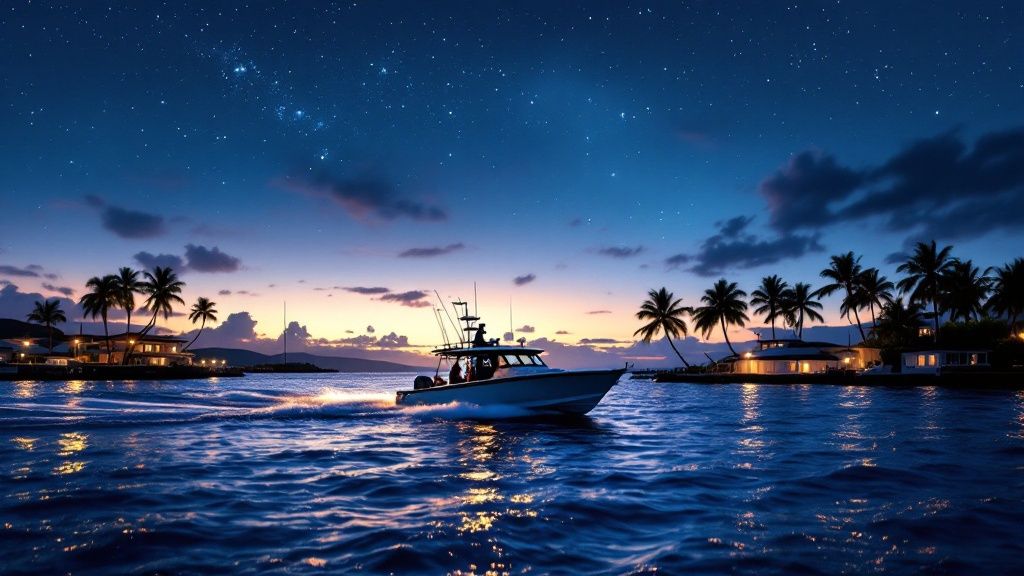
Picture this: you descend into the warm, dark waters just off the Kona coast as the sun disappears. Your dive light slices through the twilight, and then they appear. Giant, majestic manta rays, swooping and barrel-rolling through the beams of light in a silent, perfectly choreographed dance.
This isn't some rare, lucky sighting. It’s a nightly spectacle that has cemented Kailua-Kona's reputation as the global hotspot for seeing manta rays. The experience is pure magic. These gentle giants, with wingspans stretching up to 18 feet, put on a mesmerizing feeding display that you have to see to believe.
Why This Dive Is a Can't-Miss Adventure
What makes this adventure so special is the incredible combination of predictability and wildness. Over the years, local operators have figured out that by shining powerful lights into the water, they can attract swarms of plankton—the mantas' favorite meal. It's essentially a dinner bell for the local manta population.
This simple but effective method results in sighting success rates that often top 90% year-round. It’s an almost guaranteed front-row seat to one of nature's most graceful performances. You're not just watching from a distance; you become part of their world. Divers settle on the sandy bottom, point their lights up, and create a column of light that draws in the feast. The mantas do the rest.
"Diving with mantas is one of the most satisfying things a person can do in the water. It’s impossible to describe the feeling of watching a massive fish the shape of a stealth bomber coming into vision." – Samuel Beckett, Planet Dive
Of course, choosing a professional, reputable operator is everything. It’s the difference between a good dive and an unforgettable, safe, and ethical one. Here at Kona Honu Divers, our crew lives and breathes this stuff. We're dedicated to giving you a world-class experience while always putting the well-being of the mantas and their ecosystem first. Our guides' passion and deep knowledge are what turn a great dive into a profound connection with the ocean.
But don't just take our word for it—see what fellow divers have to say about their experience with us.
For a deeper look into what makes this underwater adventure so incredible, check out our full guide to the Kailua Kona manta ray night dive.
Ready to see the magic for yourself? Let's get you in the water.
Why Kona Is a Manta Ray Magnet
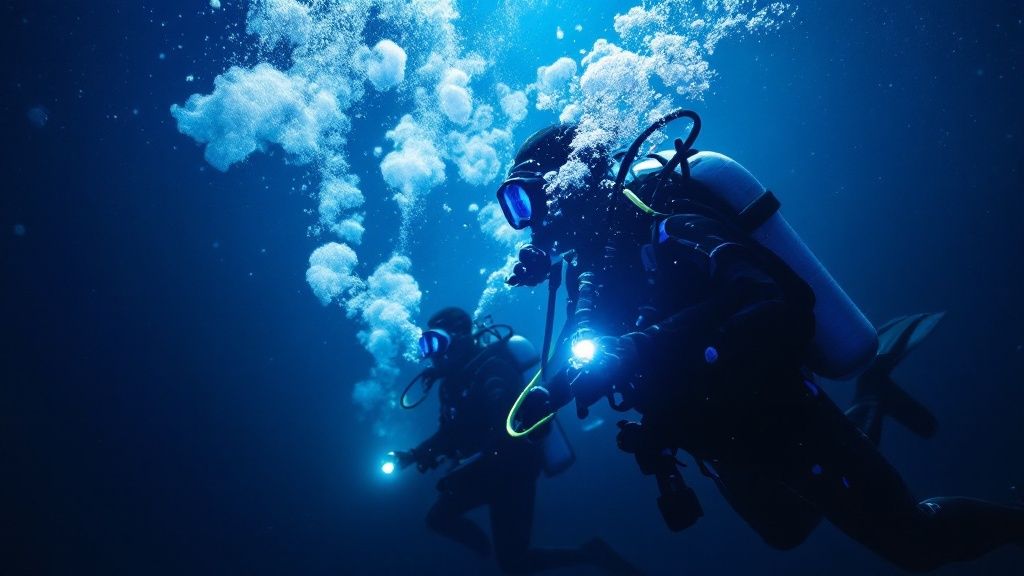
So what makes the manta ray night dive in Kailua Kona so consistently incredible? It isn't just random luck. It’s actually a perfect storm of geography, biology, and a little human cleverness that created this world-famous spectacle.
For decades, divers have flocked here from all over the planet because the show is just that reliable. The secret sauce is simple: bright lights attract tiny plankton, and heaps of plankton attract hungry manta rays. That basic realization turned the Kona coast into the absolute best place on earth for guaranteed manta encounters.
The Science of the Manta Buffet
It all starts with plankton—and Kona has a ton of it. The underwater volcanic slopes and unique currents along the coast act like a funnel, concentrating plankton in shallow areas like Garden Eel Cove and Keauhou Bay. For more on the ideal conditions, check out the Manta Ray Night Snorkel Hawaii blog.
When dive operators shine powerful lights into the water at night, it’s like ringing a dinner bell. Millions of plankton swarm to the light beams, creating a thick, soupy buffet. The mantas just have to show up, open their massive mouths, and gracefully glide through the feast. It's a beautiful, accidental partnership between divers and wildlife.
The nightly event is so reliable because Kona’s manta rays are residents. They don't migrate long distances, meaning they are present year-round, making any time a good time to plan your dive.
This incredible consistency means you can get up close and personal with these giants as they perform their mesmerizing feeding ballet—something you just don't get to see in most other parts of the world.
Gentle Giants with Big Brains
As amazing as the feeding frenzy is, what really sticks with you is the intelligence and personality of the mantas themselves. These aren't just mindless eating machines. Manta rays have the largest brain-to-body size ratio of any cold-blooded fish, and it shows.
They often seem curious, sometimes even playful. You’ll see them making eye contact or interacting calmly with the divers, almost as if they recognize us. It feels less like you’re just watching an animal and more like you’re having a genuine interaction.
Researchers have actually identified hundreds of individual manta rays here in Kona. Each one has a unique pattern of spots on its belly that works just like a fingerprint. They even give them names.
- Lefty: A local celebrity known for her damaged cephalic fin.
- Big Bertha: One of the largest and most sighted mantas in the area.
- Sugar Ray: A smaller, high-energy manta known for doing acrobatic barrel rolls.
Knowing you might meet a local legend adds a whole new level to the experience. You’re not just seeing a manta ray; you could be meeting Lefty or watching Sugar Ray put on a show.
This is what transforms the dive from a cool sightseeing trip into something truly special. It’s a celebration of marine biology in action, all made possible by the responsible practices of local dive shops. It's a huge reason why Kona is a world-class hub for all kinds of underwater adventures, as you can see from our full range of Kona diving tours.
Choosing Your Ideal Manta Ray Dive Site
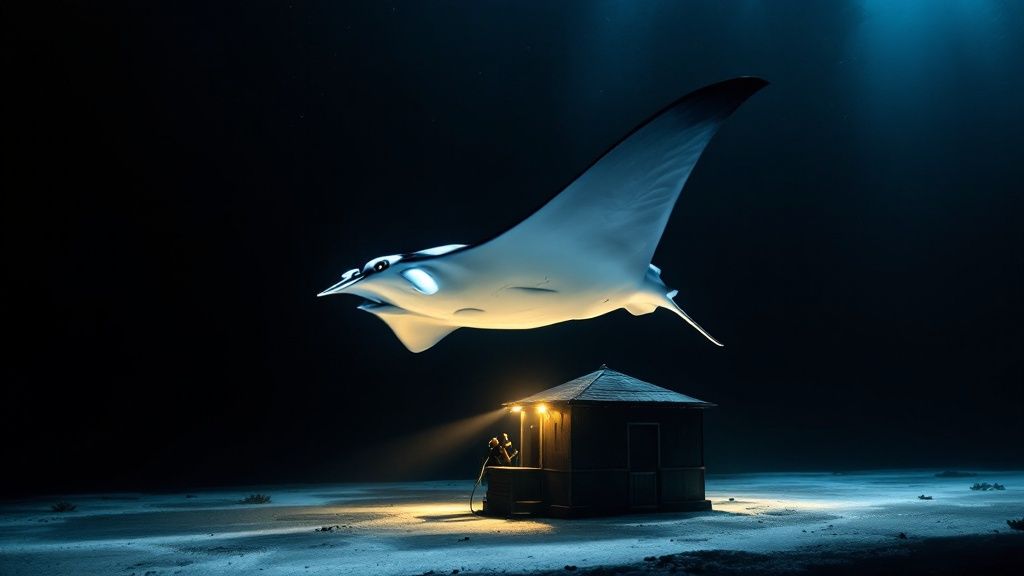
Picking the right spot is a huge part of planning the perfect manta ray night dive in Kailua Kona. Both of Kona's world-famous sites offer incredible encounters, but they are definitely different vibes. Knowing what makes each one unique will help you choose the underwater stage that’s the best fit for you.
Think of it like choosing between a high-energy, unpredictable blockbuster movie and a quiet, intimate theater show. Both are amazing, but you’ll probably have a favorite. Your decision will likely come down to ocean conditions versus the chance to see a massive group of mantas.
Garden Eel Cove: The Thrilling Manta Theater
Just north of Kona near the airport, Garden Eel Cove (also called Manta Heaven) is legendary for attracting huge groups of manta rays. On a great night, you might see more than a dozen of these gentle giants swooping and barrel-rolling through the dive lights. It's an absolutely electric experience that photographers and thrill-seekers love.
The catch? This site is more exposed to the open ocean. That means the surface can be choppy, and the boat ride to get there is longer. Even though it's usually calm down on the bottom, anyone prone to seasickness might find the trip out a bit challenging.
Here's the breakdown for Garden Eel Cove:
- Bigger Manta Groups: This spot often brings in the crowds, sometimes 10-15+ mantas at once.
- High-Energy Vibe: The sheer number of rays creates an incredibly active and exciting scene.
- Variable Conditions: It’s more exposed to wind and swell, which can make for a bumpier boat ride.
- Longer Boat Ride: It takes longer to get here from Honokohau Harbor compared to the southern site.
Keauhou Bay: The Calm Manta Amphitheater
South of Kailua-Kona, you’ll find Keauhou Bay, also known as Manta Village. This is the original manta ray dive site, and its biggest perk is its location inside a protected bay. This means the water is almost always calmer, and the boat ride is much shorter.
That makes it a fantastic choice for first-time night divers, families, or really anyone who just wants a smoother, more relaxing trip. It takes the guesswork out of the ocean conditions so you can just focus on the magic.
You can learn more about the differences between Kona manta ray dive sites to dig deeper.
Manta sightings are super reliable at both spots—we're talking over a 90% success rate—but Keauhou Bay offers a more serene and predictable setting, making the whole trip comfortable from start to finish.
The trade-off is that you might see fewer mantas here than at Garden Eel Cove. But don't let that fool you; the encounters are just as personal and breathtaking. Honestly, no matter which site you choose, you're signing up for an adventure you'll never forget.
Kona Manta Ray Dive Site Comparison
Still on the fence? Here’s a quick side-by-side look to help you decide which manta experience is right for you.
| Feature | Garden Eel Cove (Makako Bay) | Keauhou Bay (Manta Village) |
|---|---|---|
| Location | North of Kona (near airport) | South of Kona (in Keauhou) |
| Typical Manta Count | Higher (often 10-15+) | Consistent (usually 2-8) |
| Ocean Conditions | More exposed, can be choppy | Very protected and calm |
| Boat Ride Time | Longer (approx. 25-35 min) | Shorter (approx. 5-10 min) |
| Best For | Adrenaline seekers, photographers | First-timers, families, those prone to seasickness |
| Vibe | High-energy, unpredictable | Relaxed, intimate, predictable |
Both locations offer a front-row seat to one of nature's most spectacular shows. Your choice just comes down to personal preference: do you want a wild adventure or a calm, guaranteed good time? Either way, you're going to be blown away.
Ready to book your front-row seat to the manta ballet? Let's get you in the water.
How to Prepare for Your Night Dive Adventure
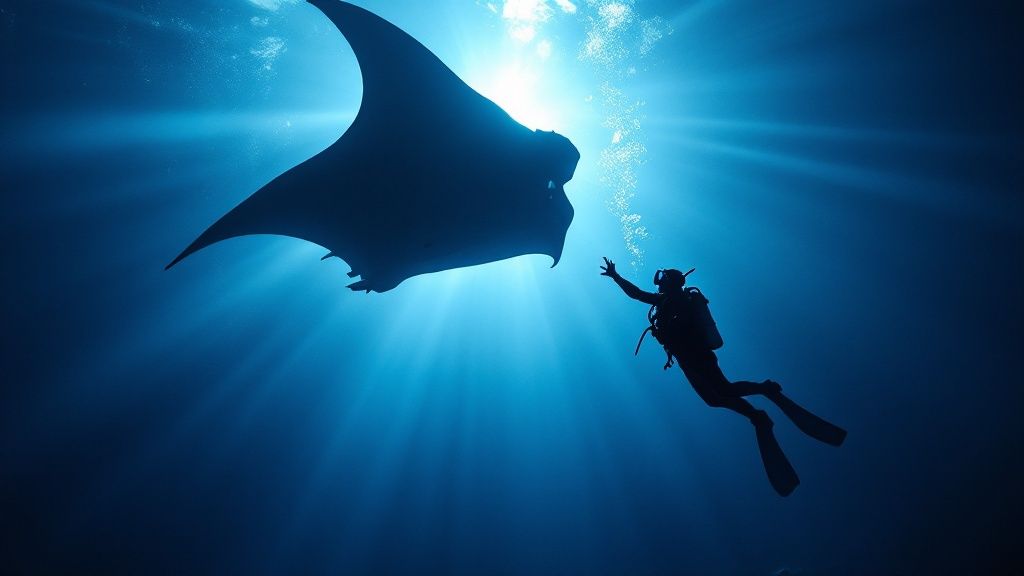
A little bit of prep work can be the difference between a good manta ray night dive in Kailua Kona and a mind-blowing one. If you know what to bring and what to expect, you can just settle in and enjoy the show without a single distraction.
First up, what to pack. Even though you're in tropical Hawaii, that boat ride back to the harbor after sunset can get surprisingly chilly when you're wet. Trust me, a warm jacket or sweatshirt is a game-changer for the ride home.
Other than that, keep it simple. Bring a towel, maybe a change of clothes, and any personal dive gear you’re comfortable with. All the reputable operators provide a full kit, but plenty of divers just feel better using their own mask or dive computer.
Required Skills and Certifications
Okay, let's talk about what you need to join the fun. At a minimum, you’ll need an Open Water Diver certification. The dive itself isn't deep—we usually hang out around 30-40 feet—but being comfortable in the water is way more important than what your card says.
The absolute most important skill for this dive is solid buoyancy control. You’ll be stationary on the sandy bottom for most of the dive, and holding your spot is crucial. It's about your safety, the mantas' well-being, and not kicking up a sandstorm that ruins the view for everyone else.
Here’s a pro tip: try to squeeze in a daytime dive before the manta trip, especially if it’s been a while. It’s the perfect way to dial in your weights, shake off the rust, and make sure you’re totally relaxed for the main event.
If you want to sharpen your skills or get comfortable in more challenging conditions, think about hopping on one of our advanced dive tours. It's a great way to build your confidence.
The Golden Rule of Manta Encounters
If you remember one thing, make it this: look, but don't touch. This is the golden rule, no exceptions. Manta rays have a special mucus layer on their skin that acts like an immune system, protecting them from nasty infections. Touching them can strip that layer right off, leaving them vulnerable.
We have a simple system to keep both divers and mantas safe:
- Stay on the bottom: We all find a spot on the sand, which keeps the water column wide open for the mantas to do their thing.
- Lights up: Point your dive light straight up. This attracts the plankton and basically sets the dinner table for the mantas.
- Let them come to you: Never chase a manta. Ever. Let them control the encounter; if they want a closer look, they'll come to you.
And if you're feeling a little nervous about your first night dive, don't sweat it. The whole experience is surprisingly peaceful, and you’ll be with expert guides. The moment you see that first massive shadow glide into your light, any nerves you had will completely disappear. It’s pure magic.
Ready to get your adventure on the books?
Tips for Capturing Stunning Underwater Photos
Bringing home jaw-dropping photos of the manta ballet is the dream for just about everyone on the manta ray night dive Kailua Kona. It's a tough environment to shoot in—it’s dark, the action is fast, and you’re underwater. But you don't need a pro setup to get incredible shots. Forget the dense manuals; these are the real-world tricks that work.
Your biggest enemy underwater at night is backscatter. Those are the annoying white specks that look like snow in your photos. They're caused by your flash or video light hitting all the little particles floating in the water right in front of your lens.
The secret to beating it? Get your light source off your camera. If you have external strobes or video lights, push them out as far from your lens as your arms will allow, pointing them slightly inward toward your subject. This lights up the mantas without illuminating the "underwater dust" between you and them, making your photos instantly cleaner and more professional.
Dialing in Your Camera Settings
In the pitch black, your camera's auto mode will have a meltdown trying to figure out what's going on. It’s time to take manual control. Every camera is a little different, but these settings are a solid starting point to capture the mantas' fluid dance without turning them into blurry ghosts.
- Shutter Speed: You need to freeze the action. Aim for 1/125th of a second or faster. Anything slower, and you'll get motion blur as the mantas glide and barrel-roll.
- Aperture: Open it up. Start with a wide aperture like f/8 (that's a lower f-stop number). This lets in a ton of light, so your strobes don't have to work as hard. That means faster recycle times and longer battery life.
- ISO: Keep it low. Start between 200 and 400. Cranking the ISO too high in the dark will fill your images with grainy "noise," which can ruin an otherwise great shot.
Composition is king. Don't just stick the manta in the center of the frame every time. Try shooting upwards from below them. You’ll capture their massive silhouette against the glow of the main dive lights, which gives your photos an epic, otherworldly feel and a real sense of scale.
Work With the Light You Have
Hey, you're not the only one down there with a light! The dive site itself has a massive central light, and every other diver has a flashlight. Think of this as your stage lighting.
Use these powerful beams to your advantage. You can get incredible silhouettes of the mantas as they pass through the beams, or use the light to backlight them, making their outlines pop against the dark water.
And don't get tunnel vision on just the mantas. Pull back and capture the whole scene—the other divers mesmerized by the show, the thick columns of plankton swirling in the light, and the vast, inky blackness that surrounds it all. Telling that bigger story makes for a much more powerful photograph.
Once you've nailed your stills, you might get inspired to create engaging short videos to share the full experience of the dive.
Above all, be patient. The best shots happen when you let the mantas come to you. Just relax, wait for that perfect moment when one glides right over your head, and be ready. With these tips, you'll be set to capture images that truly do justice to this unforgettable night.
Why Your Manta Experience Matters
When you book a manta ray night dive in Kailua Kona, you're doing a lot more than just signing up for an incredible adventure. You're casting a vote with your wallet for the kind of tourism you want to support. That might sound a little dramatic, but choosing the right operator is a critical decision that has a real, direct impact on the health and future of Kona's resident manta ray population.
This isn’t just about having a great dive; it’s about making sure these magical encounters can continue for generations to come. The most responsible operators see themselves as guardians of this experience. They get that the mantas’ well-being is the absolute top priority, and they build their entire operation around that principle.
The Power of Responsible Diving
Booking with a dedicated, conservation-minded company like Kona Honu Divers makes a tangible difference. As a recognized Manta Ray Green List operator, their commitment goes far beyond just showing you the mantas. It's woven into every single part of the trip, from the moment you step on the boat to the final dive briefing.
This commitment translates into a way better—and safer—experience for you. You'll notice it in the little details:
- Expert Educational Briefings: Their guides don't just read rules off a script; they share their genuine passion and knowledge, helping you understand manta biology and behavior. This flips the experience from just watching something cool to truly appreciating these animals.
- Strict Safety Protocols: Every procedure is designed to protect both you and the mantas, ensuring a respectful, non-invasive encounter for everyone.
- Top-Tier Equipment and Crew: A skilled, professional crew and meticulously maintained gear mean you can just relax and focus on the mind-blowing spectacle unfolding right in front of you.
By choosing an operator that puts conservation first, you actually become a partner in protecting this one-of-a-kind ecosystem. But you don't have to take our word for it; the experiences of fellow divers speak for themselves.
Your choice matters. Supporting ethical operators ensures that the pressures of tourism don’t harm the very creatures we all come here to admire. It’s about creating a sustainable future where both wildlife and visitors can thrive.
Ultimately, a great manta experience is one that leaves you feeling inspired, not just entertained. It’s an encounter that deepens your respect for the ocean. To dig deeper into what makes this dive so profound, you can learn more about why you should go on a manta ray dive in Kona.
When you're ready to book an ethical adventure that makes a positive impact, we're ready to guide you. Be a part of the solution and help preserve the magic of Kona's manta rays.
Your Manta Ray Night Dive Questions Answered
Planning any big adventure usually brings up a few last-minute questions. We get it. This is where we’ll tackle some of the most common things people ask about the manta ray night dive kailua kona, covering anything we haven't touched on yet so you feel totally ready to book.
What Is the Best Time of Year to See Manta Rays in Kona?
This is probably the easiest question I get asked, and the answer is fantastic: any time you can make it here! The manta ray night dive in Kona is incredible because it boasts a year-round success rate of over 90%.
Unlike a lot of marine life that migrates with the seasons, Kona's manta rays are residents. They hang out in the area all year, so your odds of having a mind-blowing encounter are just as good in December as they are in July.
Do I Need to Be a Certified Scuba Diver to See the Mantas?
Absolutely not! While this guide has a scuba focus, you don't need a C-card to witness the magic. Many operators, including us here at Kona Honu Divers, run amazing manta ray night snorkel trips that are just as spectacular.
Snorkelers get to float comfortably on the surface, holding onto a custom-made light board. The mantas swoop right up to the light to feed just inches below you. It's an equally breathtaking view and makes the experience accessible to just about everyone.
How Deep Is the Manta Ray Night Dive?
The dive itself is surprisingly shallow, which is a huge plus because it means more bottom time to just sit back and enjoy the show. Divers are typically positioned on a sandy patch of the seafloor at a depth of about 30-40 feet (9-12 meters).
For most of the dive, you're not swimming around. Instead, you'll be stationary, forming a kind of human amphitheater while the mantas perform their ballet in the light beams above. This unique setup is world-famous, bringing in roughly 80,000 visitors every year and maintaining an 85- to 95-percent sighting success rate. It's one of the most reliable big animal encounters on the planet.
You can learn more about what makes Kona's famous manta ray night dive so special.
Is the Manta Ray Night Dive Safe?
Yes, it is incredibly safe when you go with a professional, reputable dive operator. The manta rays themselves are true gentle giants. They have no teeth, no stingers, and no barbs—they are completely harmless to humans.
The real key to safety is your operator. A good company will give a thorough pre-dive briefing, manage the site carefully, and follow all safety protocols to the letter. Their expertise is what turns a cool idea into a secure and unforgettable experience.
Knowing these details should help put your mind at ease. For a complete picture, check out our guide that explains what the manta ray night dive is.
Feeling ready to see it for yourself? We've got a spot on the boat waiting for you.
At Kona Honu Divers, we're all about providing safe, respectful, and absolutely unforgettable underwater adventures. Book your manta ray dive tour with us and experience the magic of Kona's gentle giants firsthand.