
Picture this: you're floating weightlessly in the warm, dark Pacific Ocean, and massive, graceful shadows are gliding just inches above your head. That's the manta ray night dive in Kailua Kona for you. It's often called an "underwater ballet," and honestly, that's the perfect way to describe one of the planet's absolute top wildlife encounters.
Your Guide to the Kona Manta Ray Night Dive
This isn't just another dive; it's a front-row seat to one of nature's coolest feeding frenzies. The magic happens when the dive operators sink powerful lights onto the ocean floor. These lights act like a giant dinner bell for microscopic plankton.
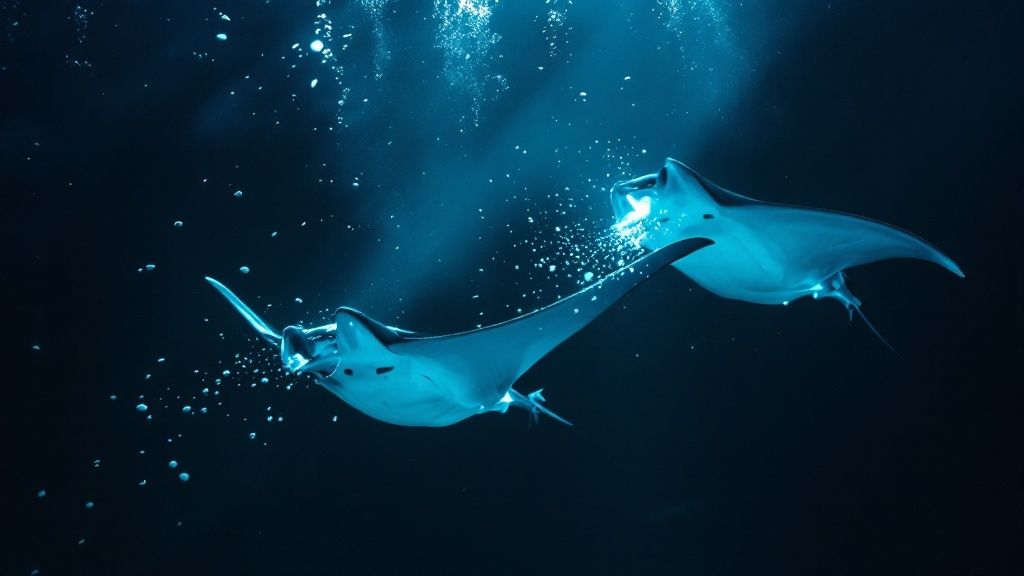
Within minutes, these little critters swarm the light, creating a glowing, all-you-can-eat buffet that Kona's resident manta rays simply can't resist. These gentle giants, with wingspans that can stretch over 12 feet, swoop in to filter-feed, pulling off mesmerizing barrel rolls and glides right in front of you. If you want a deeper dive into the mechanics of it all, check out our guide on what the manta ray night dive is.
This surreal experience is surprisingly accessible, whether you're a seasoned scuba diver or have never even worn a snorkel mask before. Because of the unique setup, the encounters are incredibly reliable and ridiculously up-close.
Kona Manta Ray Night Dive At a Glance
To give you a quick rundown and help with your planning, here's a little cheat sheet for the quintessential Kona adventure.
| Aspect | Details |
|---|---|
| What It Is | A nighttime scuba dive or snorkel where bright lights attract plankton, drawing in giant manta rays to feed right in front of you. |
| Main Locations | Garden Eel Cove (also known as 'Manta Heaven') and Keauhou Bay ('Manta Village'), both near Kailua-Kona. |
| Why It's Special | Kona has a huge, year-round population of manta rays, giving it one of the most reliable sighting rates on the planet. |
| Who Can Go | Just about anyone! It's open to both certified scuba divers and snorkelers. No prior night diving experience is needed for most tours. |
This truly is the adventure of a lifetime. For those curious about how experiences like this get shared with the world, you might find this case study on travel media publishing an interesting read.
Why Kona Is a Global Manta Ray Hotspot
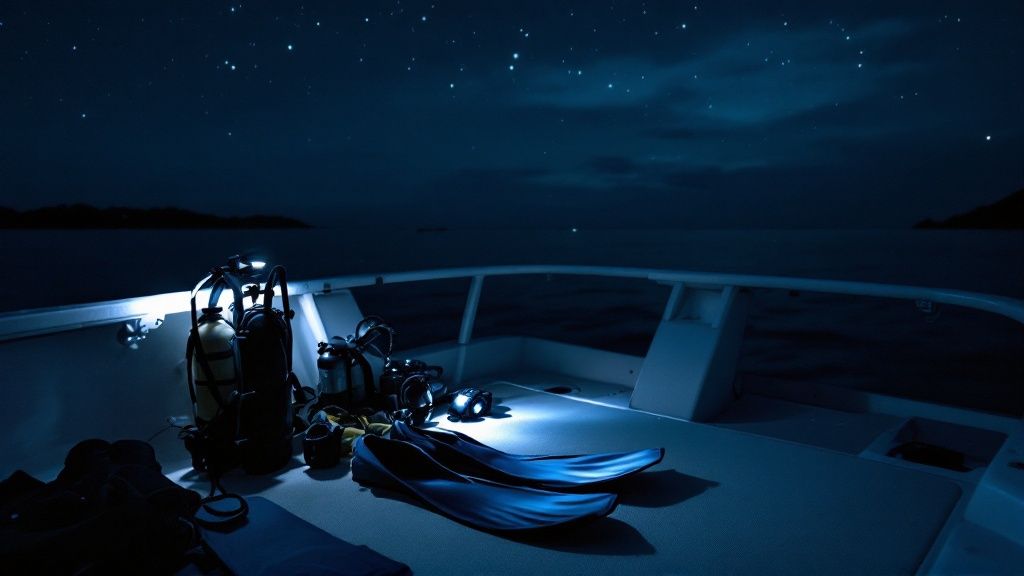
So what makes Kailua-Kona the world’s most reliable spot for seeing manta rays? It isn't just dumb luck. It's really a perfect storm of geology, biology, and a little bit of smart human intervention. The Big Island’s unique underwater landscape is the real secret sauce.
The island’s volcanic slopes create a gently descending, protected coastline. This special underwater geography, combined with nutrient-rich currents, creates an ideal environment for plankton to bloom. Plankton, if you don't know, are the microscopic critters that form the foundation of the ocean's food web—and they're the manta rays' absolute favorite meal.
For the mantas, this nightly plankton buffet is a sure thing. This consistency has allowed a large, resident population of these gentle giants to set up shop right here in Kona. Unlike migratory species that come and go, our mantas stick around all year, meaning any given night could be your night for a mind-blowing encounter.
The Science Behind the Underwater Ballet
The magic behind the manta ray night dive in Kailua Kona boils down to a brilliantly simple idea. Think of the powerful dive lights used by tour boats as a giant dinner bell for the entire marine world.
Here's how it works:
- Calling All Plankton: As soon as the sun goes down, operators submerge powerful lights that cut through the dark water. This light attracts swarms of tiny plankton, which are naturally drawn to it.
- The Manta Feast: This dense cloud of plankton becomes an irresistible, all-you-can-eat buffet. The local mantas have learned to associate these lights with an easy meal, so they glide in from the deep to feed.
- A Graceful Dance: To get as much plankton as possible, the mantas perform these mesmerizing barrel rolls and graceful swoops, filtering huge amounts of water through their cavernous mouths.
This nightly ritual has accidentally created one of the most dependable wildlife encounters on the entire planet. The Kailua-Kona manta ray night dive is famous for its ridiculously high success rate, consistently hitting between 85% and over 95%. This reliability is thanks to Kona's resident population of about 450 identified manta rays, a number that's held remarkably steady.
It gets even better when you consider the dive site conditions. Most dives happen in the shallows, at just 30 to 40 feet. This allows for longer bottom times of 45 to 60 minutes, giving you plenty of time to watch the mantas—some with wingspans over 12 feet—perform their beautiful feeding dance.
Accessible for All Experience Levels
Another huge reason for Kona's popularity is just how accessible it is. The shallow dive sites and calm conditions mean you don't have to be a seasoned pro to join in. This opens up the experience to almost everyone, from brand-new divers to salty veterans.
The comfortable depths let you have a long, relaxed bottom time. You can just settle in on the sandy bottom and enjoy the show without stressing about complicated dive plans. It’s a truly immersive spectacle that’s as safe as it is awe-inspiring, cementing Kona's reputation as the ultimate manta ray destination.
Ready to see the magic for yourself?
Choosing Your Manta Dive Location
So, you're ready for your manta ray night dive in Kailua Kona… awesome. Your first big decision is where to go. You'll quickly find there are two world-famous locations, and each one offers a slightly different vibe.
The choice really boils down to your own comfort level in the water and what kind of underwater show you’re hoping to see. It’s all about matching the site to your personal style.
The two main players are Garden Eel Cove (which everyone calls "Manta Heaven") and Keauhou Bay ("Manta Village"). Both have stellar reputations for manta sightings, but they differ in ocean conditions, how you get there, and even the number of mantas you're likely to see. Let's break them down.
Manta Heaven (Garden Eel Cove)
Just north of Kona, near the airport, you'll find the legendary Manta Heaven. It gets its name for a reason! This spot is a bit more exposed to the open ocean, which can sometimes mean a bumpier boat ride and choppier water on the surface.
But here’s the trade-off: that exposure brings stronger currents. Think of it like a conveyor belt delivering a non-stop buffet of plankton for the mantas. And where there’s more food, you often find more mantas. It’s not unusual to see a whole squadron of them barrel-rolling through the lights in a perfectly synchronized feeding dance. It’s a spectacular sight.
Because of the potential for more motion in the ocean, Manta Heaven is usually the go-to for more experienced divers or really confident swimmers who don't mind a little surface chop.
Manta Village (Keauhou Bay)
Head a little south of Kailua-Kona and you’ll find Manta Village, tucked away in the calm, protected waters of Keauhou Bay. The bay's natural shape acts as a shield from most of the open-ocean swell, which keeps things nice and mellow.
This makes it the perfect spot for first-time night divers, families snorkeling with kids, or anyone who gets a little green around the gills on a boat. The conditions are almost always calm and predictable.
While you might see slightly fewer mantas here compared to Manta Heaven on a big night, the encounters are every bit as magical. The calm water lets you just relax and soak it all in as these gentle giants glide effortlessly right in front of your face. Its reliability and gentle nature make it a hugely popular choice.
The good news? Both of these premier sites have incredibly high success rates for seeing mantas, typically between 80% and 90%. They also share a similar profile for divers: the action happens in about 30 feet of water, and you'll get around an hour of bottom time. You really can't go wrong.
Ultimately, it’s a personal call. Are you after the potentially bigger, wilder show at Manta Heaven? Or do you prefer the calm, predictable magic of Manta Village? Either way, you're signing up for one of the most unforgettable things you'll ever do underwater.
Getting to Know Kona's Manta Rays
The gentle giants you'll meet on the manta ray night dive in Kailua Kona aren't just passing through. Many of them are year-round residents with their own unique personalities. Getting to know them is what turns a cool wildlife sighting into a truly personal encounter. It's kind of like meeting the local celebrities of the reef.
So how do we tell them apart? Every single manta ray has a one-of-a-kind pattern of black spots on its white belly. These markings are as distinct as a human fingerprint. This is what lets researchers and seasoned dive guides identify, name, and track individuals over their entire lives. For you, it means every dive is a chance for a reunion with a familiar face.
For instance, your guide might point out a manta with a specific cluster of spots and say, "Hey, that's Big Bertha," or "Here comes Lefty!" Knowing their names and hearing their stories adds such a rich, personal layer to the whole experience. You can get a better feel for what it’s like to meet these amazing animals in our guide on the Kona manta ray dive experience.
The Faces of the Kona Coast
Over the years, some of these mantas have become local legends. Their consistent appearances and quirky behaviors have made them favorites in the dive community.
- Famous Residents: The guides love to share stories about the well-known mantas, telling you about their history and even their funny habits.
- Behavioral Traits: You'll start to notice personalities emerge. Some mantas are super bold and curious, while others are more graceful and shy, adding another dimension to just watching them feed.
- Conservation Stories: Hearing about an individual manta that recovered from an injury because of local conservation efforts makes the connection you feel that much stronger.
This whole practice of identifying and naming mantas isn't just for fun. It’s actually a huge part of responsible tourism and vital scientific research, and tour operators like us here at Kona Honu Divers play a big role in that effort.
Tourism as a Force for Good
The data we collect on our dives—like who shows up each night—goes directly to conservation groups. It helps them build a deeper understanding of manta behavior, population health, and migration patterns.
The Kailua-Kona area is home to a pretty stable population, with nearly 200 individual manta rays identified as year-round residents. On a really good night, divers have seen incredible gatherings of over 20 mantas at once, with the all-time record being about 36 individuals on a single dive!
This mix of tourism and citizen science is what makes the manta ray night dive in Kailua Kona so special. When you join a tour, you’re directly supporting the research and conservation that protects these magnificent creatures.
It ensures future generations will get to witness the same underwater ballet and meet the famous residents of Kona's reefs. It's an adventure with a purpose.
How to Get Ready for Your Manta Adventure
So, you're ready to book your manta ray night dive in Kailua Kona? Smart move. A little prep work can be the difference between a good trip and an absolutely mind-blowing one. Follow this advice, and you’ll feel comfortable, safe, and ready to soak up every second of the magic.
First things first: what to pack. While your tour operator handles the heavy scuba and snorkel gear, a few personal items will make a world of difference. Always bring a towel and a change of dry clothes for after you get out of the water. Even on a warm Hawaiian night, that boat ride back to the harbor can feel surprisingly chilly when you're wet.
What Your Tour Operator Provides
Going with a reputable company like Kona Honu Divers makes things super easy. You don't have to lug any bulky equipment with you on vacation.
Here’s what your tour will typically include:
- All Scuba or Snorkel Gear: This means a mask, snorkel, fins, and for divers, a BCD and regulator.
- Wetsuits: The water here is pretty warm, but you'll be floating around for a while at night. Operators provide thick 5mm or 7mm wetsuits to make sure you stay toasty and comfortable.
- A Solid Briefing: Before you even get your feet wet, the guides will walk you through everything—safety, what to expect, and how the whole thing works. You'll know exactly what's going on.
The Rules of Engagement
The most critical part of getting ready is understanding how to act around the mantas. The whole experience is built around one core idea: passive observation. This isn't just a friendly suggestion; it's a hard rule designed to protect these incredible animals.
The golden rule is simple: Do not touch the manta rays. Their bodies are coated in a protective slime layer, kind of like a shield against infection. If you touch them, you can wipe off that coating and leave them vulnerable to disease. The best encounters happen when you let them call the shots.
You'll also learn about the "campfire" setup. Divers will settle on the sandy bottom in a semi-circle, pointing their dive lights straight up. Snorkelers hang onto a floating light board at the surface, looking down. This creates a massive column of light that attracts plankton, and all you have to do is wait for the mantas to show up for dinner. No chasing, no reaching out—just being still and watching the show.
For divers, this is where good buoyancy control really pays off. You’ll be kneeling on the bottom, so being able to stay put without stirring up sand is huge for keeping the water clear for everyone. When you stay calm and still, the mantas get unbelievably close—sometimes just inches away—as they perform their feeding ballet. Following these simple rules ensures an amazing, safe time for both you and Kona’s famous manta rays.
Your Manta Ray Night Dive Questions Answered
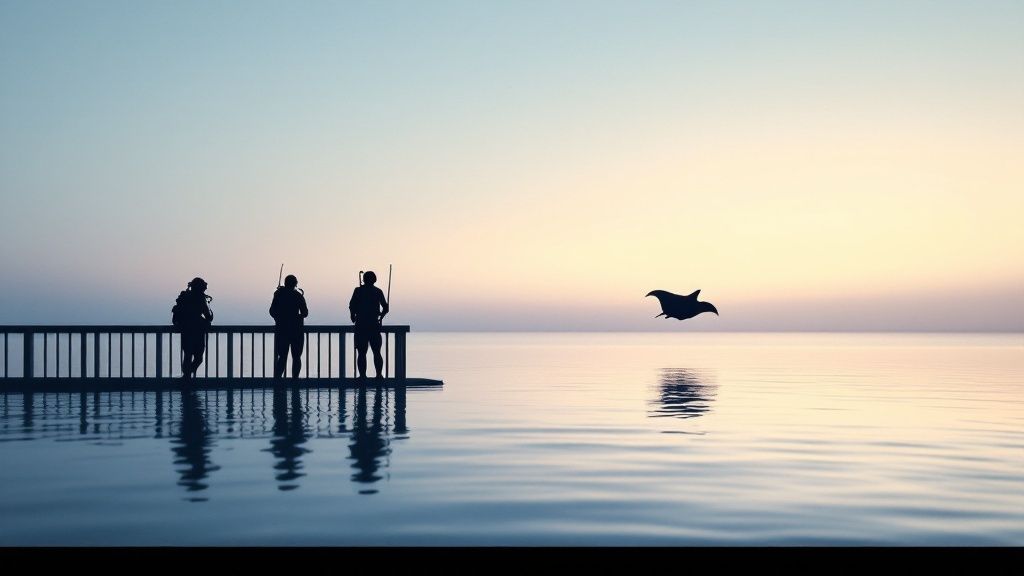
Jumping into the ocean at night to swim with giant sea creatures is an incredible thought, but it's totally normal to have some questions pop up. We get it. Let’s tackle some of the most common ones so you can feel 100% ready for this amazing Kona experience.
Is the Manta Ray Night Dive Safe?
Absolutely. Safety is the number one priority on these trips. The whole operation is carefully managed and led by professional dive guides who know these waters and these animals inside and out. Before anyone even touches the water, you’ll get a thorough safety briefing that covers everything you need to know.
And what about the mantas? Think of them as true gentle giants. They’re filter feeders, meaning they’re only interested in the tiny plankton in the water, not you! Manta rays have no teeth, no stingers, and no barbs. It’s honestly one of the safest and most peaceful wildlife encounters you can imagine.
Do I Need to Be a Certified Scuba Diver?
Nope! That's one of the best parts—this adventure is open to pretty much everyone, whether you’re a seasoned diver or have never worn a mask before. The way the tours are set up ensures both divers and snorkelers get an incredible, front-row seat.
- For Divers: You’ll descend to a sandy spot on the ocean floor, usually around 30-40 feet deep. From there, you just kneel and look up. The mantas will swoop and perform their beautiful barrel rolls right over your head.
- For Snorkelers: You'll hang out on the surface, holding onto a specially designed light board. This board shines powerful lights down into the water, attracting the plankton, which in turn brings the mantas right up to you for a spectacular up-close show.
What Is the Best Time of Year to See Mantas?
This is the magic of Kona—any time is a great time! We're lucky to have a large, resident population of manta rays that stick around all year. They don't migrate, so they’re here every single night, ready for their plankton feast.
That means you can book your manta ray night dive in Kailua Kona for January or July and still have an amazing chance of seeing them. In fact, the success rate for sightings stays above a staggering 90% year-round. Any night you go is likely to be a good night.
Will I Get Cold During a Night Dive?
You’re in the beautiful warm waters of the Pacific, but yes, the temperature does dip a bit after the sun goes down, usually hovering between 75-80°F (24-27°C). To make sure you stay toasty and comfortable for the entire 45-60 minute experience, operators provide top-notch, thick wetsuits.
We’re talking 5mm or even 7mm suits. They are designed specifically to keep you warm, so you can forget about the chill and just focus on the incredible ballet happening in front of you. If you want to dive deeper into what to expect, check out our guide on the manta ray night dive of Kona.
At Kona Honu Divers, we are passionate about providing a safe, educational, and unforgettable manta ray experience. Our expert crew is ready to guide you on the adventure of a lifetime. Explore our world-famous manta ray dive tours and book your spot today.