
Picture this: you're descending into the warm, dark Pacific waters just as the sun dips below the horizon, painting the sky in its final fiery strokes. Down below, a circle of powerful lights illuminates the ocean floor, looking for all the world like an underwater campfire. And then, the main event kicks off. A huge, winged shadow glides into the light—the first manta ray has arrived for its nightly ballet.
The Unforgettable Experience of a Kona Manta Ray Night Dive
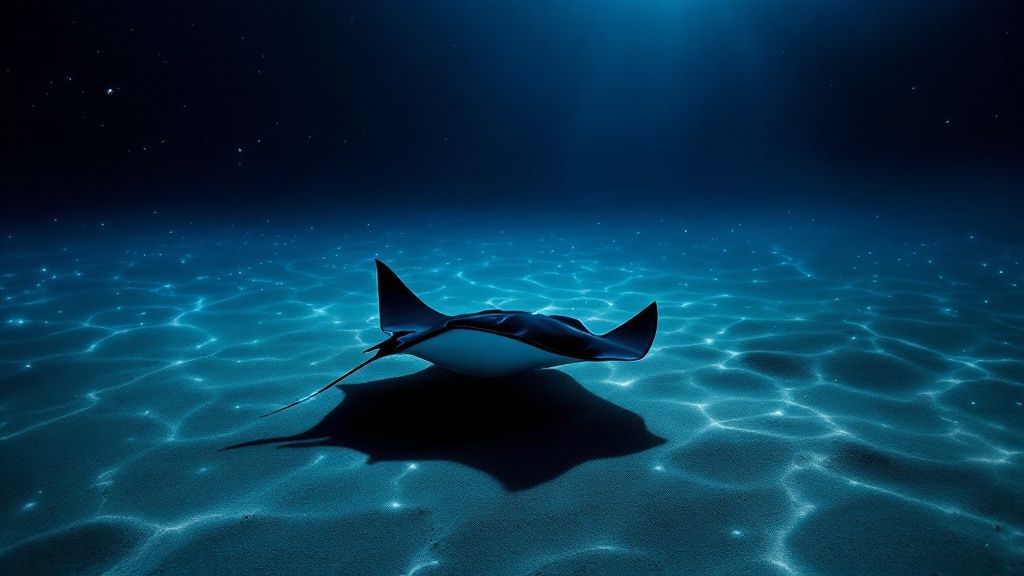
The manta ray night dive Kailua Kona is, without a doubt, one of the top underwater experiences on the planet. It’s a totally surreal, almost spiritual encounter with some of the ocean’s most graceful creatures. The best part? Unlike a lot of wildlife interactions, this one is completely passive and respectful. You’re just a guest in their world, watching the show.
The whole thing works because of a brilliantly simple setup. Dive operators place a ring of powerful lights on the ocean floor. These lights act like magnets for massive clouds of plankton—the manta rays' favorite meal. The mantas, being incredibly smart animals, have figured out that these lights signal a nightly, all-you-can-eat buffet.
An Underwater Ballet
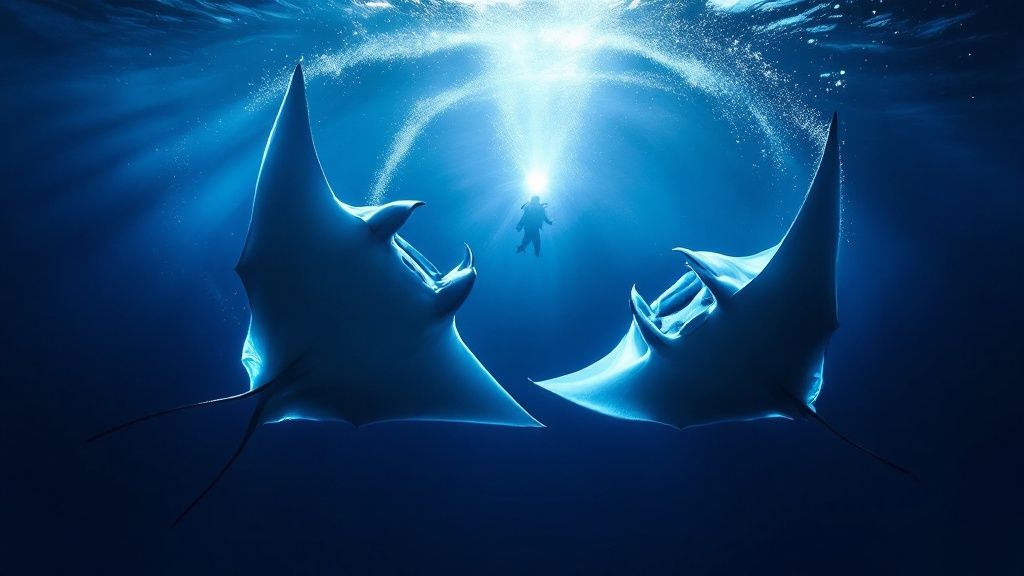
As a diver, your job is simple: settle onto the sandy bottom, point your dive light straight up, and wait. It doesn't take long. Soon, these gentle giants arrive, swooping and barrel-rolling right through the light beams with their enormous mouths wide open, filtering out the plankton. They’ll glide inches over your head, their huge wingspans casting incredible shadows. It's a completely silent, mesmerizing performance that feels like something from another planet.
The feeling of a 12-foot manta ray soaring directly over your head is just impossible to describe. It’s a wild mix of awe, pure excitement, and this deep sense of connection to the ocean.
There's a reason Kailua Kona is world-famous for this dive: the success rate is ridiculously high. The local reef manta ray population lives here year-round, so they don't migrate away. That consistency makes the whole experience incredibly reliable, with a sighting success rate hovering around 85–90%. Some operators even report rates over 95%!
The dives are also pretty accessible, usually taking place in just 30 to 40 feet of water. And the stars of the show? The average manta ray you'll see has a wingspan of around 12 feet, though some of the resident giants are even bigger. You can get more details about this amazing dive from the experts at Kona Honu Divers.
Choosing Your Dive Site: Garden Eel Cove vs. Keauhou Bay
Alright, you're ready to book your manta ray night dive in Kailua Kona. One of the first calls you'll have to make is which dive site to visit. Kona is lucky enough to have two world-class manta ray feeding grounds, but they offer pretty different experiences. The choice usually boils down to a trade-off: comfort and calm versus the chance for a truly massive manta spectacle.
The two main players are Garden Eel Cove up north (often called "Manta Heaven") and Keauhou Bay to the south (known as "Manta Village"). Both have sky-high success rates for seeing mantas, but understanding what makes them unique will help you pick the perfect spot for your night.
This underwater ballet is no secret—an estimated 80,000 people jump in the water each year to witness it, cementing Kona's reputation as the place for manta encounters. While Manta Heaven might draw bigger crowds of mantas, Manta Village's protected waters are a godsend for anyone new to night diving or who gets a little green around the gills on a boat. You can find more details on Kailua Kona's premier manta dive sites here.
Keauhou Bay (Manta Village): The Calm and Consistent Choice
Keauhou Bay, or "Manta Village," is where it all started. This is the OG manta ray night dive spot. Tucked away just off the coast from the Sheraton Kona Resort, the bay acts as a natural shield against the open ocean wind and swell.
That protection makes for a much smoother boat ride and a super comfortable experience in the water. It's a massive win for:
- First-time night divers who might be a little nervous and prefer calm conditions.
- Families with kids snorkeling, as the gentle water is much more forgiving.
- Anyone who gets seasick, because the boat ride from Keauhou Harbor is short and sweet.
You might see slightly fewer mantas here compared to the northern site, but the encounters are incredibly reliable and feel very personal. It’s a fantastic, dependable choice for a magical night.
Garden Eel Cove (Manta Heaven): For a Potentially Bigger Show
Just offshore from the Kona International Airport, Garden Eel Cove didn't get its nickname "Manta Heaven" by accident. This place is famous for attracting huge aggregations of mantas, sometimes creating what feels like an underwater vortex of graceful giants. On a great night, you could find yourself surrounded by a dozen or more.
The catch? This site is much more exposed to the open ocean. That means the conditions can be a wild card, with the potential for stronger currents and some chop on the surface. It's typically a better fit for more experienced divers who are comfortable if things get a bit more dynamic. It's worth learning more about Garden Eel Cove, a prime location for manta ray encounters.
The trade-off is simple: Keauhou Bay offers predictability and comfort, while Garden Eel Cove offers the potential for a larger, more dynamic spectacle at the cost of less predictable conditions.
No matter which one you pick, you're signing up for an unforgettable experience. The best operators, like Kona Honu Divers, are absolute pros at reading the ocean and will always take you to the site that promises the best and safest show for that specific night. Ready to see it for yourself? A great manta ray dive tour is waiting for you.
What To Expect During Your Manta Ray Adventure
The moment you step onto the dock, any jitters melt away into excitement. The check-in at Kailua-Kona is smooth and friendly, setting you up for an unforgettable night on the water.
As twilight approaches, guides gather the group for a concise boat briefing. You’ll cover:
- A step-by-step overview of the night’s itinerary
- Essential safety signals and procedures
- The one unbreakable rule: passive observation—no touching or chasing, just respectful witnessing.
Sunset Departure And Gearing Up
With introductions wrapped, the boat eases away from shore. The sky ignites in fiery oranges and deep purples as you head to the feeding site. Crewmembers help you into your wetsuit, check your regulator, and adjust your mask—small details that make a big difference underwater.
This stretch of open ocean feels electric. Waves lap the hull, lanterns glow, and you sense the moment before nature’s grand performance.
The Main Event Underwater
Diving or snorkeling, you slip into calm, warm water. Divers descend in a controlled fashion to about 30-40 feet deep, while snorkelers secure themselves to a bright, purpose-built float. Powerful beams shine upward, turning plankton into a glowing feast.
It doesn’t take long before a silhouette appears. For more on how this magical setup works, explore our guide on what the manta ray night dive is all about.
The core principle is simple but effective: create a plankton buffet, and the mantas will come. Your role? Blend into the scene and watch their graceful ballet unfold.
You’ll drift for 30 to 45 minutes, watching mantas barrel-roll and carve arcs mere inches away. Throughout the encounter, guides manage lights, track air consumption, and ensure everyone stays comfortable.
Once the show ends, you climb aboard for warm-water rinses, snacks, and spirited chatter under the stars. A well-run tour takes care of every logistic—so you can simply soak in the wonder.
Meet the Gentle Giants of Kona
The real stars of the show on the manta ray night dive Kailua Kona are, of course, the magnificent resident reef manta rays (Mobula alfredi). These aren't just tourists passing through; they're a beloved local population that calls the Kona coast home all year long. Getting to know a bit about them beforehand turns an incredible dive into a genuine connection with one of the ocean's most intelligent animals.
Despite their absolutely massive size, with wingspans that can stretch over 12 feet, these animals are completely harmless. They’re what we call gentle filter feeders. They glide gracefully through the water with their enormous mouths wide open, gulping down huge amounts of tiny plankton. And don't worry—unlike their stingray cousins, they have no stinger or barb on their tails. Their teeth are just tiny, non-functional pegs used in courtship rituals, not for eating.
Fingerprints of the Deep
One of the coolest things about Kona's manta rays is that every single one is unique. They can be identified by the distinct pattern of black spots on their white bellies. Think of it like a human fingerprint. This allows our local guides, researchers, and conservationists to recognize, name, and track them over many years.
Learning the names of the mantas you see on your dive—like the famous "Big Bertha" or "Lefty"—adds a whole new layer to the experience. It’s a powerful feeling when you realize you're interacting with individual personalities, not just random fish. This is also super important for the ongoing conservation work that protects this special group of animals.
Manta Ray Identification and Population
Being able to identify individual mantas has given us amazing insight into their lives. Part of the magic of the Kailua Kona manta ray night dive is knowing that the guides can often tell you exactly who you’re swimming with. Local researchers have cataloged nearly 200 distinct manta rays that live here year-round.
On an average night, you might see a handful of these graceful creatures. But on a truly special dive, you could be surrounded by up to 20 manta rays at once! The record sighting is an unbelievable 36 in a single dive. If you want to see what that looks like, check out some stunning underwater photography from Kona's manta dives.
This focus on individual identification really highlights why responsible tourism matters so much. Operators like Kona Honu Divers are crucial because they educate everyone on board and follow strict guidelines to ensure the mantas stay safe and healthy. Their commitment helps protect this incredible marine ecosystem for future generations.
When you understand the biology and individuality of these animals, your dive becomes so much more than just an activity—it becomes a real encounter. You're not just watching marine life; you're meeting the residents of a vibrant underwater community.
Digging into the "why" behind this world-famous dive makes the whole thing even more special. To get the full picture, take a look at our guide on why you should go on a manta ray dive in Kona. Knowing the backstory enriches the adventure, turning a spectacular dive into an unforgettable connection with nature's gentle giants.
Tips for Photographing the Manta Ray Dive
Trying to capture the magic of the manta ray night dive in Kailua Kona is an awesome challenge. It's dark, things are moving, and it's all happening underwater. But don't let that stop you! With a few pointers, you can walk away with some incredible shots, whether you're using a simple GoPro or a professional camera rig.
First things first, you have to know your gear and manage your expectations. The big lights from the dive boats do most of the heavy lifting, but you're still shooting in the dark. It’s a good idea to get familiar with your camera’s low-light capabilities before you even get on the boat.
Getting Your Camera Settings Dialed In
Nailing your settings is make-or-break for this dive. Every camera is a little different, of course, but these are some solid starting points that work well for most people in this unique environment:
- Shutter Speed: You want to freeze the mantas as they glide by. Aim for a faster shutter speed, somewhere around 1/125s or higher, to keep your shots crisp and avoid motion blur.
- Aperture: Open it up wide! A low f-stop number (like f/2.8 or f/4) lets the most light into your camera, which is exactly what you need in the dark. This also helps you avoid cranking your ISO too high.
- ISO: A good starting point is between 800-1600. You might have to push it higher depending on the conditions, but just be aware that the higher you go, the more "grainy" your photos might look from digital noise.
It's all a balancing act. A fast shutter needs more light, which means opening the aperture or bumping the ISO. The best thing to do is take a few test shots as soon as you get settled on the bottom and make adjustments from there.
Master Your Lighting to Avoid Backscatter
If you're shooting with external strobes, your biggest enemy is backscatter—those annoying white specks that show up when your flash lights up all the tiny particles in the water.
The secret to beating backscatter is all in your strobe placement. You need to position your strobes out wide, a little bit behind your camera lens, and angle them slightly outward. This way, you're lighting the manta from the sides instead of lighting up all the water right in front of your lens.
For those using a GoPro or a point-and-shoot without external lights, your goal is to get as close as you safely can. The less water there is between your camera and the manta, the sharper and more colorful your pictures will be.
Composition and Being a Good Guest
Once you’ve got the technical stuff sorted, start thinking about composition. The sheer size of these animals is hard to capture, so try including another diver in your shot to give it some scale. Shooting up from the seafloor can also create some really dramatic silhouettes against the glow of the dive lights.
But here’s the most important tip: be a responsible photographer. This means having perfect buoyancy control so you're not kicking up sand or bumping into the fragile reef. Give the mantas—and the other divers—plenty of room to breathe. Remember, you're a visitor in their world. The best photos come from being patient and respectful, not from chasing the perfect shot.
And hey, if you'd rather just soak it all in without fiddling with a camera, that's a great option too! Many operators, like Kona Honu Divers, have pros in the water who can capture amazing photos and videos for you. It’s a fantastic way to get guaranteed great shots while you just enjoy the show.
Exploring More Dives in Kailua Kona
Look, the manta ray night dive Kailua Kona is an absolute showstopper, but don't think for a second that's all the Big Island has up its sleeve. Kona isn't a one-trick pony; it's a full-blown world-class diving destination. The same volcanic chaos that forged these islands created an underwater playground that will blow you away.
Once the sun comes up, the adventure is far from over. Daytime Kona diving tours show you a completely different side of the coast. You’ll find yourself drifting over shockingly healthy coral reefs, swimming through ancient lava tubes and massive archways, and meeting creatures you can't find anywhere else on the planet. Every single dive is a new discovery.
For the Truly Adventurous Diver
If that night dive thrill is what you're chasing, Kona has another experience that's on a whole other level. The legendary Kona Blackwater Dive isn't your typical reef dive. We head miles offshore, hang a tether in thousands of feet of water, and wait. You're there to witness the largest vertical migration on Earth, as bizarre, glowing creatures rise from the abyss to feed. It feels less like diving and more like floating through deep space.
Blackwater diving isn't just another night dive; it's an expedition into a mysterious world of alien-like creatures you won't see on any reef. It’s a must for any diver seeking a truly unique and thrilling experience.
Pushing Your Limits with Advanced Dives
For all you seasoned divers itching to go deeper and explore more challenging spots, Kona delivers. We run specialized advanced dive charters that take you way off the beaten path. Think deep pinnacles, sheer walls carpeted in rare sponges, and even potential shark nurseries. These trips demand an advanced certification and solid buoyancy, but the payoff is huge: untouched sites and a real shot at some unforgettable big animal encounters.
From the graceful manta ballet to the alien world of blackwater and the raw beauty of the advanced sites, Kailua-Kona has it all. After you see the mantas, your underwater adventure on the Big Island has only just begun.
Your Manta Ray Night Dive Questions Answered
It's totally normal to have a few questions buzzing around before you commit to an adventure like this, even with all the excitement. We get it! So, let's tackle the most common things people ask before booking their manta ray night dive in Kailua Kona.
Is the Manta Ray Night Dive Safe?
Absolutely! This is genuinely one of the safest wildlife encounters you could ever have. Manta rays are true gentle giants.
Unlike their stingray cousins, they have zero stingers or barbs on their tails—they're completely harmless to people. Their only mission out there is to chow down on the plankton that our lights attract. Every good operator sticks to strict safety rules, and you'll always have professional guides in the water with you, making sure everything goes smoothly.
What Should I Wear and Bring?
Keep it simple and comfortable. The easiest thing is to just wear your swimsuit under your clothes when you head to the harbor.
Most companies provide the wetsuit, which you'll definitely want for the 45-minute swim. Once you're back on the boat, you’ll be super happy you brought these along:
- A warm jacket or hoodie for the boat ride home. That ocean breeze can be chilly!
- A towel for drying off.
- Your underwater camera, if you've got one. You won't want to miss these shots.
- Any motion sickness medicine you might need (pro tip: take it before the boat leaves the dock).
What If I've Never Night Dived Before?
No problem at all! In fact, the manta ray dive is a fantastic first-time night dive. The sites are pretty shallow, usually around 30-40 feet, and the conditions are almost always calm.
The best part? The whole thing is stationary. You just find a spot on the sandy bottom, relax, and watch the show happen above you. It's way less intimidating than a typical night dive where you're navigating a dark reef.
What Happens If We Don't See Any Mantas?
While sightings are unbelievably consistent—we're talking a success rate above 90%—these are still wild animals with minds of their own. On the rare night the mantas decide not to show, most reputable tour companies have a "manta guarantee."
This usually means you can come back another night for free. This is a great reason to book your dive early in your vacation, just in case you need to use that second chance!
The golden rule of the dive is simple: observe only. Never, ever touch a manta ray. Touching them can rub off their protective mucus coat, leaving them open to nasty infections.
Just relax, follow your guide's lead, and respect these incredible animals. Doing so helps keep this amazing encounter going for many years to come. For an even deeper look, you can learn more about the specifics of the Kona manta ray night dive.
Ready to see this underwater ballet for yourself? Kona Honu Divers runs expert-led tours that put safety, education, and an unforgettable night first.