
You're on the boat, the sun is dropping behind the Kona coast, and you can already feel the mix of calm and nerves that comes with a manta ray night dive. The water is dark, the deck lights are on, and everyone is trying to guess how close the mantas will come. That's the right headspace for this trip, because it's less like a drift dive and more like stepping into a carefully managed nighttime wildlife setting.
What makes Kona different is that the experience isn't random. The dive sites, the lights, the plankton, and the boat traffic all shape what happens once you hit the water. If you understand that system before you book, you'll know why Garden Eel Cove is usually the smarter choice, what gear matters, and which operator questions separate a smooth night from a crowded one.
What a Manta Ray Night Dive in Kona Feels Like
The evening starts on the boat, not in the water. You leave the dock in daylight, watch the coastline turn gold, and settle in for a briefing while the crew checks gear and reviews positioning. By the time you reach the site, the sky has gone dark enough that the first thing you notice after entry is the light pool below you.
The shape of the dive
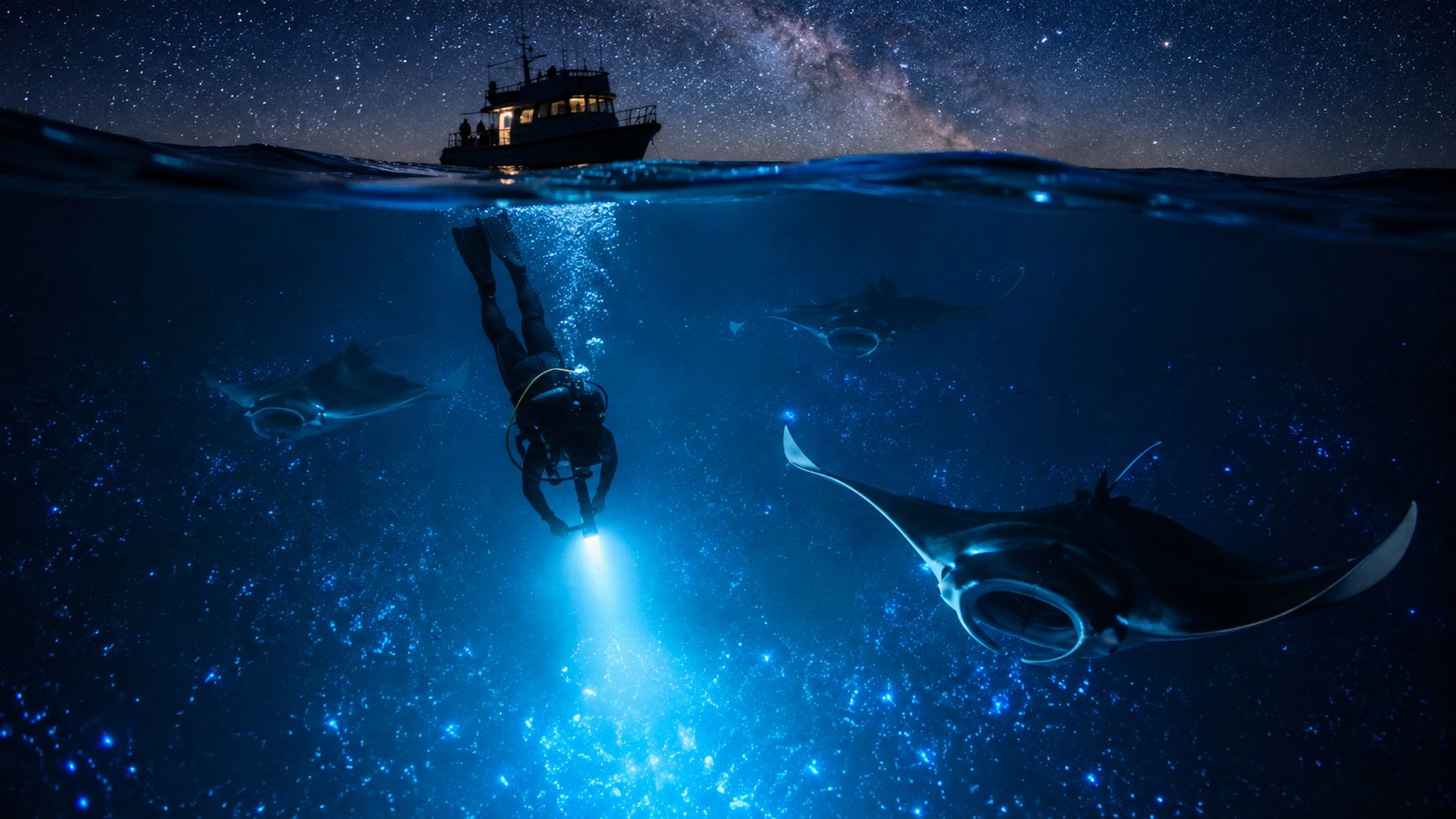
For scuba divers, the drop is shallow and controlled. You descend to the sandy bottom, usually around 30 to 40 feet, settle into position, and face the light source that acts like a dinner table for plankton and, in turn, the mantas. The mental shift happens fast, because you're no longer moving through a reef, you're holding still and waiting for the water column to come alive.
Stay low, stay calm, and let the animals choose the distance.
Once the first manta arrives, the whole site changes. You stop staring at the sand and start scanning upward as a broad white shape rolls through the light, often with its cephalic lobes unrolling to funnel food. The dive feels quiet, but not passive. You're watching a feeding pattern unfold in a predictable viewing zone, not drifting through open ocean.
The return trip is usually unhurried. Boats generally head back before midnight, and the ride home tends to feel shorter than the outbound leg because everyone's replaying the same few moments, the first pass, the closest turn, the way a manta seems to pause and tilt before rising again. That's the memory most first-timers keep, the sense that the site had a pulse and you were briefly inside it.
Why Mantas Come to the Lights at Night
The science is cleaner than most marketing copy makes it sound. Many zooplankton taxa, including copepods, euphausiids, mysids, decapod larvae, and shrimp, rise toward surface waters after dark, and that concentrates food near the top of the water column. Reef mantas use that timing to their advantage, swimming repeated circuits through illuminated water and feeding with their cephalic lobes and gill rakers. NOAA's giant-manta review describes the direct link between artificial illumination, prey concentration, and manta presence at Hawaiʻi night-dive sites (NOAA giant manta review).
What that looks like in practice
The mantas are responding to a prey field, not to divers. That is why the same site can feel electric on one night and quiet on another, depending on visibility, current, plankton density, and seasonal ocean conditions. The interaction is controlled, but it is still ecological, not theatrical.
Researchers studying Kona's feeding sites documented mantas feeding on zooplankton attracted by underwater lights at Keahole Bay and Makako Bay, which is the practical reason the light pool works at all (NOAA's 2024 giant manta recovery framework). When the conditions line up, divers and snorkelers do not get a single pass. They get repeated circuits, looping turns, and returns from individuals that know the site.
Shallow feeding is only part of the picture. NOAA's giant-manta review also notes a much larger vertical foraging pattern, with night descents reaching far below recreational depths (NOAA giant manta review). The shallow light pool is the part you can observe. It is not the whole life of the animal, and that is why a respectful, stationary setup works better than trying to follow anything.
Garden Eel Cove vs Manta Village
Garden Eel Cove, also called Makakō Bay or Manta Heaven, is the better choice for most guests because the site gives operators a cleaner setup and has stronger documented aggregation behavior. A 2025 University of Hawaiʻi study of community-sourced observations from 2010 through 2022 recorded more than 23,000 sightings involving 167 unique reef manta rays, and found that Garden Eel Cove consistently supported larger aggregations than Keauhou Bay (University of Hawaiʻi study). That does not just mean “popular.” It means the odds of a steady, usable light pool are better.
Why the site itself matters
Garden Eel Cove gives operators more room to hold a controlled viewing lane, which helps keep the light pool organized and the mantas moving through it cleanly. The Hawaiʻi Department of Land and Natural Resources also identified Makakō Bay as a popular manta-dive site with a permanent or semi-permanent mooring environment, and in 2020 state aquatic-resource staff responded after live coral fragments were reported below a mooring at the site (DLNR report). Site choice affects the reef, not just the guest experience.
Manta Village carries more name recognition, and it has a long history. For a guest, the better question is which site gives the clearest viewing area, the most dependable manta aggregation, and the least chaotic boat pattern on the night you are going out.
| Criterion | Garden Eel Cove (Makakō Bay) | Keauhou Bay (Manta Village) |
|---|---|---|
| Viewing layout | More controlled and easier to manage | Historic site, but can feel tighter |
| Protected location | Stronger sense of shelter in the site setup | Useful site, but more exposed in practice |
| Reef quality | Needs careful positioning and reef-aware behavior | Also requires caution, with heavy use pressure |
| Aggregation size | Larger documented aggregations in recent study | Important site, but smaller on average in the recent dataset |
Ask about the boat count, the mooring setup, and how the crew manages the lights before you book. That tells you more than a glossy title does. If you are choosing where to go, start with a tour that runs Garden Eel Cove well, and read the operator's Kona manta ray night dive in detail to see what a well-run departure looks like.
Skills, Certifications, and Gear You Need
The scuba version of this trip is for certified divers who can stay calm, hold position, and manage buoyancy at a shallow night site. You don't need advanced training, but you do need to be comfortable at roughly 30 to 40 feet and able to sit or kneel without kicking up the bottom. If you're not certified, the snorkel version is the right lane, and it's built for people who want the same manta encounter from the surface.
What the operator usually supplies
A solid manta operator provides the core dive kit, including wetsuit, mask, fins, tank, and weights. Some crews also carry options for motion comfort, which matters more than most first-timers expect on a dusk departure. The ride is usually short, but the rocking while you're stationary at the site can bother people who haven't tested their tolerance yet.
Practical rule: treat seasickness prevention like part of your gear check, not an afterthought.
If you're preparing in advance, the common options are Dramamine, Bonine, the Ship-EEZ Seasickness Patch, Sea-Band wristbands, and ginger chews. I'd also keep the rhythm simple, eat light before departure, and don't wait until you already feel sick to act. For some guests, the patch or wristbands are enough. For others, medication is the better call.
What to bring yourself
Bring a rash guard, reef-safe sunscreen, dry clothes for after the trip, and a towel that won't stay damp all night. If you like taking photos, keep your setup compact, because the night entry is easier when you aren't wrestling extra gear. A calm boat load starts with fewer loose items and fewer last-minute adjustments.
For guests building confidence before the trip, the basics of buoyancy, comfort in low light, and good in-water awareness matter more than raw fitness. If you want a deeper scuba refresher before booking, the learning resources at this scuba training page are a sensible place to start.
In-Water Etiquette and Safety Rules
The best manta nights are the quietest ones. Once you're in position, stay where the crew places you, keep your knees or fins from wandering into the sand, and let the mantas come through the light lane on their own terms. That's not just etiquette. It's the reason the site stays predictable enough for repeated close passes.
The rules that actually matter
- Stay stationary in the light pool. Moving around scatters the group, and it can break the feeding pattern.
- Keep lights out of the manta's eyes and path. Aim where the crew tells you, not wherever the animal is moving.
- Never chase, touch, or block a ray. The animal decides the distance.
- Avoid benthic contact. Coral and sand disturbance both make the site worse for everyone.
- Surface on the boat's downline and watch for traffic. The exit matters as much as the descent.
Crowding is a real issue at Kona's manta sites, and it's one of the reasons a disciplined in-water pattern matters so much. The right behavior reduces stress on the animals and also lowers the odds of a messy, confusing site. If you want the operator-side version of that philosophy, this etiquette guide is worth reading before you go.
The easiest way to get a better manta pass is to do less, not more.
Divers who dislike crowds should think carefully about timing, operator structure, and how the crew manages the light pool. A controlled group with clear briefing usually feels better than a bigger, looser one, even when both boats are at the same site. The difference shows up in the water.
Boat Traffic, Crowding, and How to Choose a Responsible Operator
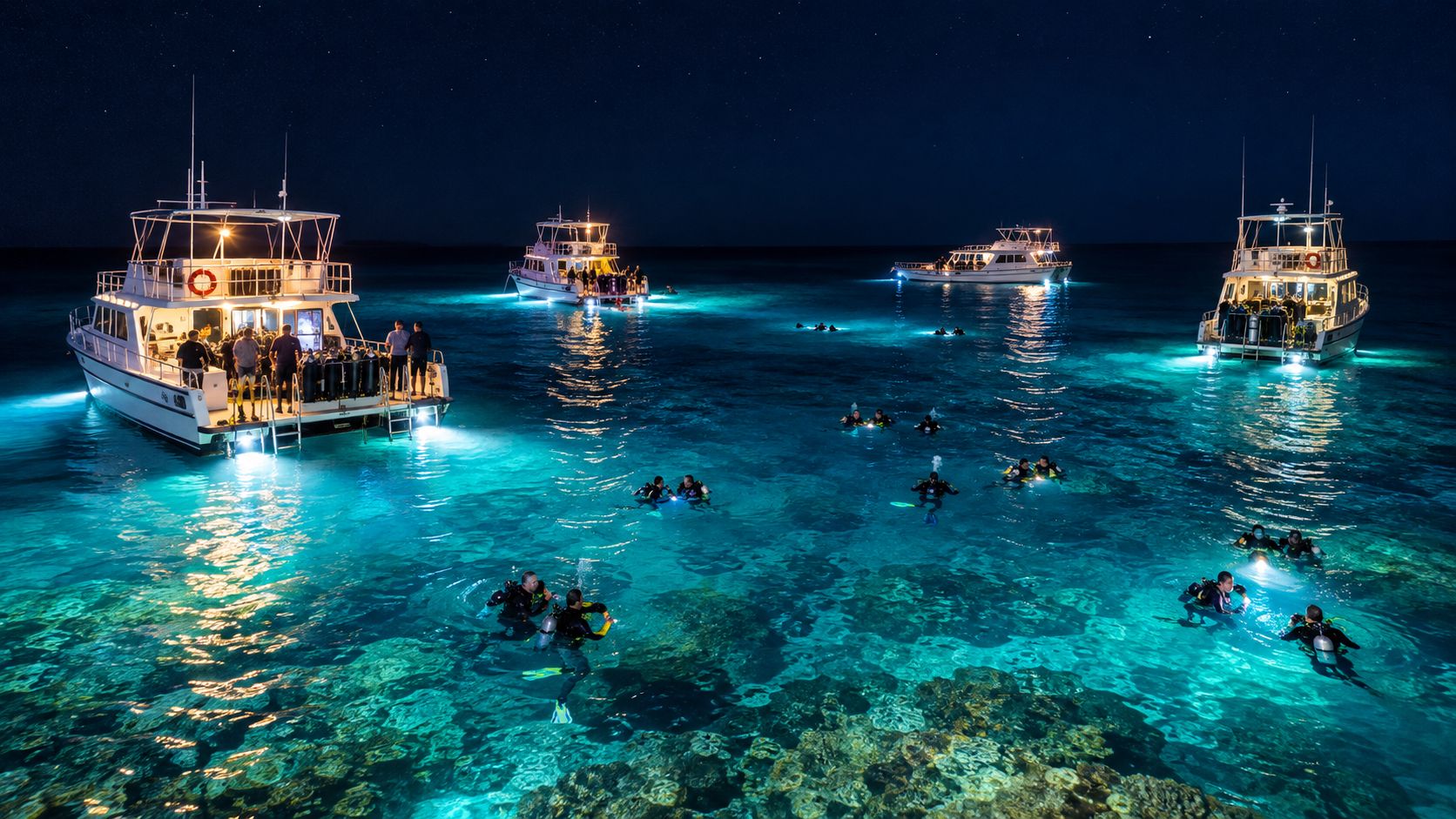
The numbers tell you why this matters. Hawaiʻi County records cited research showing as many as 30 tour boats and 300 participants could visit the manta sites in a single day, and in a survey of 444 participants, 82% felt crowded by snorkelers and 78% by boats (Hawaiʻi County records). That's why this trip is an operational ecosystem, not just a wildlife outing.
Questions to ask before you book
Ask how many boats share the mooring on a typical night. Ask how the crew positions divers relative to the light bar, because that affects whether the site becomes a tidy feeding lane or a loose crowd. Ask what the reef-protection protocol is when the site gets busy, and how the operator handles a boat that can't secure the mooring.
Those questions matter because official rules and voluntary practices are not the same thing. A mooring assignment might be legal and still feel packed if the operator runs a wide group or poor briefing. A smaller, tighter operation usually gives you better control of light placement, less confusion on entry, and a calmer experience once the mantas show.
If you want a deeper operator-selection framework, this guide to choosing a Kona dive company walks through the trade-offs well. For this specific trip, my practical advice is simple, book the Garden Eel Cove departure if the operator runs it with strict spacing and clear light management. That's where the site's advantages are easiest to feel.
Photography and Video Tips for the Light Pool
Night manta shooting is harder than it looks, because you're balancing a moving subject, other divers, and a bright artificial light source in a dark frame. The cleanest results usually come from manual exposure, a wide-angle lens, and a setup you can hold steady without fumbling in the dark. If you're trying to document the dive rather than fight it, keep the rig simple.
Settings and position that work
Shoot from just outside the light bar so you don't fill the frame with backscatter from everyone else's bubbles. If your camera lets you lock exposure manually, keep it there and avoid the temptation to chase every brightness change. A fast wide-angle lens and a high ISO ceiling help, but only if you can keep your hands steady and your buoyancy dialed in.
For stills, the cleanest frames often come from aiming upward into the water column. That gives you a silhouette, the manta's white underside, and less clutter from the sand below. Strobes can help in some setups, but in a shared light pool they can also add glare and disturb the rhythm if you overuse them.
Gear details that save shots
Dual-handle trays help a lot because they stabilize the camera without forcing your elbows to wander. Wet lenses and dome ports need a careful dry-air prep on the boat, since condensation is a real nuisance in night air. GoPro users usually do better when they add a bright dive light to help autofocus lock onto the subject instead of hunting in the dark.
Practical rule: if the manta is close, stop trying to out-swim it with the camera.
For guests who want a packaged setup rather than improvising underwater, this photo-package option shows how operators can build the media side around the dive. The main thing to remember is that the best footage comes from good behavior first, camera settings second.
Best Times, Conditions, and Booking the Tour
Manta activity runs year-round, but calmer summer water usually makes the ride to the site easier and the entry cleaner. The trip generally leaves about 1 to 1.5 hours before sunset, which gives the crew time to reach the site, brief the group, and settle the light pool before the mantas arrive. Lighter wind usually makes the whole evening feel more controlled from dock to return.
What to expect when you book
Garden Eel Cove is the departure to choose if you want the most dependable viewing setup and a reef layout that gives the crew more room to manage the lights and the boat. Manta Village can still produce a good night, but the site choice affects crowding, current, and how much control the operator has once everyone is in the water. Ask about boat count, mooring, and light management before you book, because those details shape the experience as much as the manta count does.
If you want to pair the night dive with daytime diving, look at the operator's full schedule first. A mixed day of reef diving and the manta night dive often fits better than trying to force everything into one slot. Kona Honu Divers offers that kind of combined diving schedule, along with the manta-specific departure you'd want for this experience.
If motion discomfort is part of your history, pick your prevention from the gear section before boarding.
When you're ready, use the booking widget below to choose the night that fits your travel plans. Garden Eel Cove departures often fill ahead of time, and check-in usually starts early enough for waivers, gear, and a clear briefing before departure. The right trip is the one that matches your comfort level, your certification, and the amount of site control you want in the water.
Kona Honu Divers runs guided manta ray night dives, along with other Kona diving options, for guests who want a well-managed night on the water. If you're planning a trip around the manta experience, take a look at Kona Honu Divers and reserve a night that fits your schedule and comfort level.