
The first time you do a Kona manta dive, the moment sticks. You settle into the dark, your light points up, the plankton thickens, and then a manta glides over your mask so close that your whole field of view turns into wings.
The Night the Ocean Danced
Night diving off Kona doesn't feel dramatic at first. It feels quiet. You back roll or giant stride into dark water, get your bearings, descend, and then wait for your eyes to adjust to the strange little universe created by a circle of dive lights.
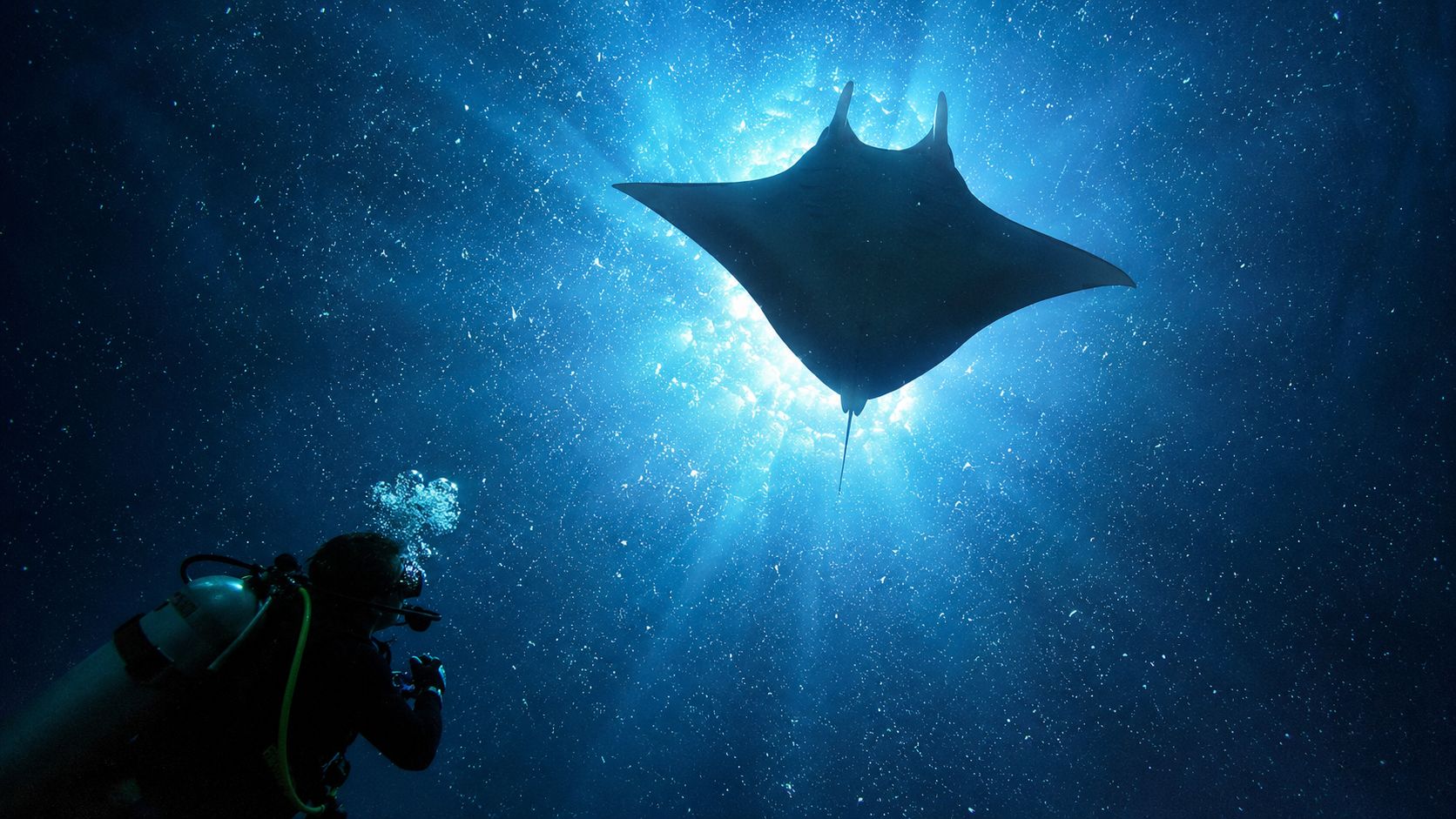
Then the water changes. What looked empty starts sparkling with plankton. Shadows move at the edge of the beam. A few seconds later, one ray appears, banks hard, and passes overhead with the kind of control that makes even experienced divers stop thinking about gauges and start grinning into their regulators.
What it feels like from the bottom
On a good night, you're not chasing wildlife. You're holding your position while the show comes to you. Divers stay low, look up, and let the mantas use the open water column above. That's why the encounter feels so different from most animal dives. You're not covering ground. You're creating a stable viewing zone.
The first pass usually gets all the attention. The second pass is when people start noticing details. The cephalic fins unfurl. The mouth opens into the light. The ray rolls through the densest patch of plankton, then circles back and does it again.
Practical rule: The less you move, the better the encounter gets.
That's one reason manta ray diving in Hawaii became such a sought-after experience. It combines the suspense of a night dive with a wildlife encounter that's close, repeatable, and visually clean in a way few ocean experiences are.
Why divers keep talking about Kona
Kona has a way of converting skeptical divers. People arrive thinking the manta dive sounds overhyped. Then they come up from the second tank talking with their hands, replaying each pass, and asking how soon they can do it again.
Part of that comes from how visual the encounter is. Part comes from how accessible it feels once you're in position. If you want a sense of the scene before you commit, these Kona manta dive photos give a realistic preview of what the light field and manta passes look like underwater.
This isn't a random lucky sighting. It's a highly choreographed meeting point between animal behavior, light, and diver discipline. That's what makes Kona the center of the manta conversation worldwide, and why so many trips to the Big Island end up built around this one night.
Why Kona is the World's Manta Ray Capital
Kona earned that reputation because the encounter is repeatable, not random. Along this coast, operators return to the same feeding areas, the same rays are identified over time, and the site setup supports the kind of predictable plankton concentration that gives divers and snorkelers a real shot at seeing mantas on a given night.
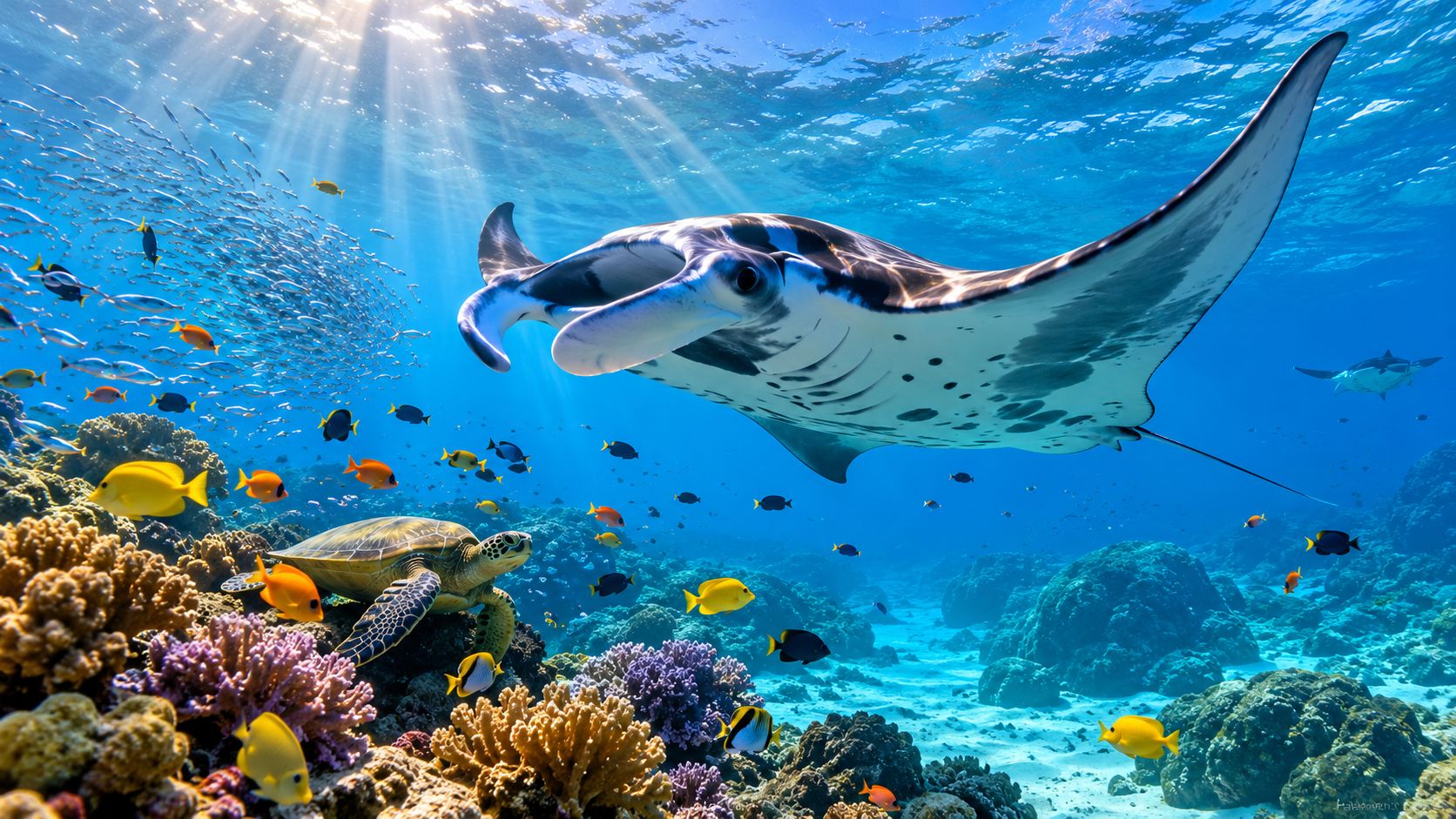
Kona, on Hawaiʻi Island, is widely described as the most reliable global site for manta ray night encounters because local operators and researchers report sightings on about 80% to 90% of nights, with roughly 80,000 people snorkeling or diving with manta rays there each year, and identification work has documented a resident Kona manta population of about 450 individuals according to this Hawaiʻi manta overview.
The science behind the reputation
A lot of marine wildlife trips depend on timing and luck. Kona has luck in the mix too, but it also has a long identification record. Manta Ray Advocates Hawaii has maintained photo identification records along the west side of the Big Island since 1998, and the manta identification library documents repeated sightings of known individuals over time.
For divers, that changes the feel of the experience. You are not waiting on a one-off migration pulse. You are entering a coastline where resident mantas return often enough for guides, researchers, and repeat visitors to recognize individuals and track patterns.
Why Kona works so well at night
The basic chain is simple. Light gathers plankton. Plankton gathers mantas.
What makes Kona stand out is consistency along the leeward coast. The island blocks a lot of the prevailing wind and swell, which gives operators more workable nights than many exposed destinations get. Local site knowledge matters too. Some spots hold light and plankton better, some are more sensitive to surge, and some are easier for new divers to settle into without stirring up the bottom or drifting out of position.
That last point is where generic manta coverage often falls short. People talk about Kona as if every manta site delivers the same experience. It does not. If you want a practical breakdown of the main locations, this guide to where to see manta rays in Hawaii lays out how the sites differ along the coast.
Why divers choose Kona over other manta destinations
Kona offers a rare combination. The encounter is accessible to visiting divers, the animals are seen often enough to support real trip planning, and the format rewards calm, controlled diving rather than aggressive chasing.
It also helps that the dive profile is manageable for a wide range of certified divers. You do not need expedition-level skills to enjoy it, but buoyancy, trim, and comfort in the dark still matter. That trade-off is one reason Kona works so well. The experience feels dramatic without requiring advanced technical diving.
Season and weather still decide the final outcome. Summer usually brings flatter conditions. Winter can bring more surf, surge, and cancellations, especially if harbor conditions or the site itself become questionable. Good operators call dives when the ocean says no, and that is part of why Kona has kept such a strong reputation. The encounter stays good when the rules stay disciplined.
If you are building a Big Island dive trip around mantas, it makes sense to leave some flexibility in your schedule. Many experienced visitors book the manta night early in their stay so they have room to rebook if weather cancels the first attempt.
More experienced divers sometimes pair the manta night with daytime local diving, and some also look at advanced long-range dive trips when they want a second day focused on more demanding sites and conditions.
What to Expect on Your Manta Ray Night Dive
Most manta dive evenings are easier than people expect. The mystery comes from doing it at night. The actual flow is organized, briefed carefully, and built around keeping the group calm and stationary once the feed starts.
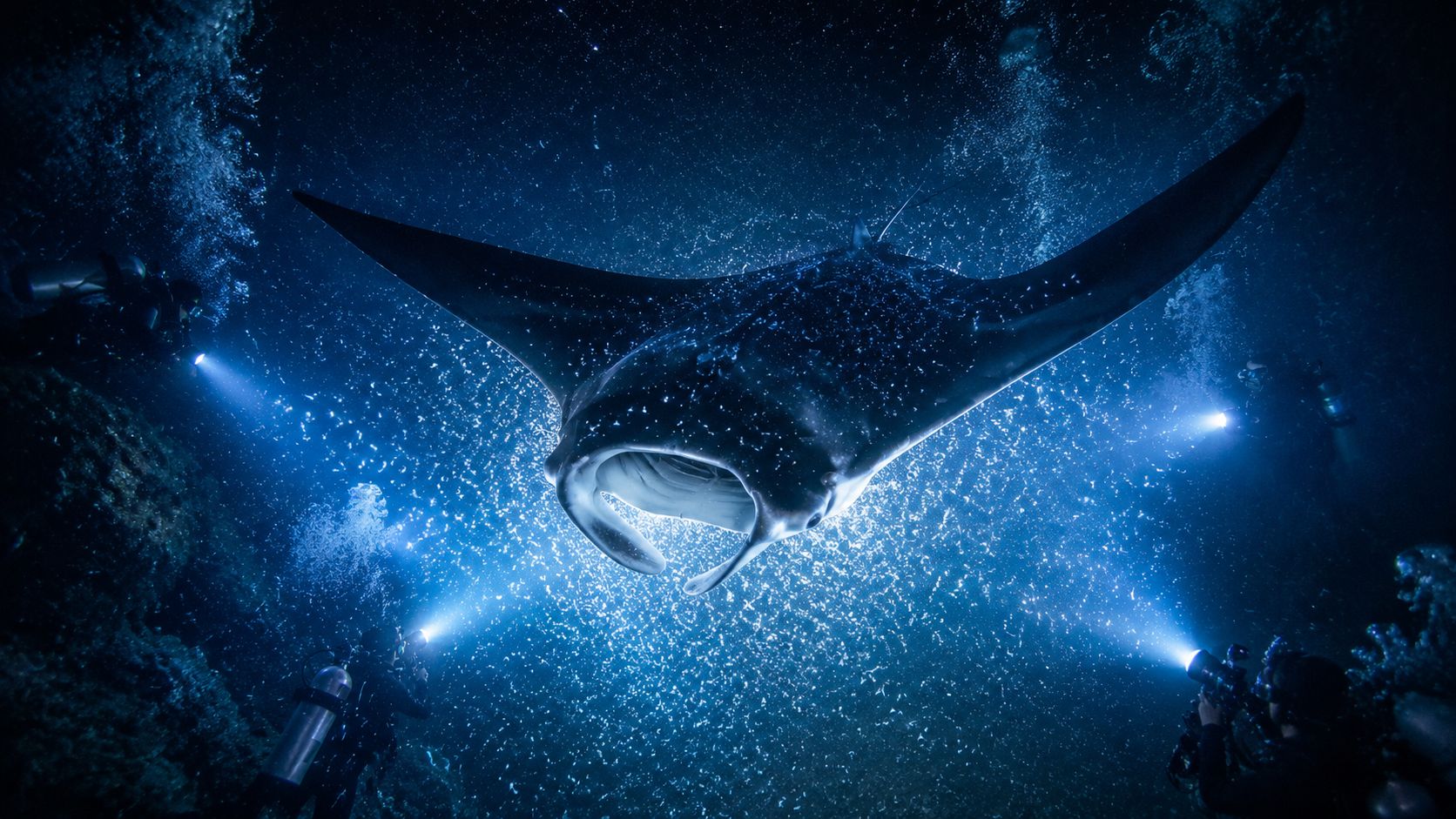
Kona's manta-ray dives are typically run at about 25 to 45 feet, with 45 to 60 minutes of bottom time, and divers are instructed to stay low around a central light array so plankton concentrates in the water column and mantas can feed overhead, which is why the depth and light geometry matter so much.
The evening usually starts with a reef dive
On many two-tank schedules, the first dive is a twilight or dusk reef dive. That's useful for two reasons. First, it lets divers settle in, check weighting, and get comfortable with local visibility and current before the main event. Second, it makes the night feel less rushed.
If you haven't done much night diving, this first tank helps a lot. By the time the manta site is set up, you've already handled entry, descent, and basic communication in lower light.
The campfire setup
The second dive is the one people remember. Divers descend and form up around the light source on the bottom. Depending on the site and operator, that can look like a circle or a semicircle. The goal is always the same. Keep the center open so the plankton stacks in the beams and the mantas have a clean feeding lane.
Here's the part many first-timers get wrong in their heads. You are not swimming after rays. You are basically part of the scenery.
- Stay low: Kneel or hover just above the bottom where the guide places you.
- Keep your fins under control: Wild finning stirs sand and ruins the visibility.
- Point your light where instructed: The light is part of the feeding setup, not just a flashlight for sightseeing.
- Watch your bubbles: Don't angle yourself so you're blowing directly into an approaching manta's face.
If you're well trimmed and still, the mantas often come closer than if you spend the whole dive adjusting position.
What the manta passes look like
A manta pass can be slow and gliding, or tight and repetitive if the plankton concentration is strong. On some nights a single ray does repeated loops. On others, several animals move through in sequence. Your best view is almost always upward, which is why a low stable posture matters more than swimming skill once you're in place.
If you're wondering whether the dive is deeper than you're comfortable with, this breakdown of how deep the Kona manta ray dive is gives a straightforward explanation.
For people ready to book the actual experience, the manta ray dive tour page shows the trip format and logistics.
The Superior Choice Garden Eel Cove
Not all manta sites deliver the same night. The difference isn't just manta behavior. It's also exposure, entry conditions, underwater layout, and how easy it is for a mixed group to stay comfortable and respectful once the action starts.
A frequently underexplained angle is the risk, comfort, and accessibility tradeoffs between scuba and snorkel manta encounters in Kona. The decision is not just diving versus snorkeling, but how well each format matches a guest's comfort, supervision needs, and ability to follow low-disturbance practices, which is why a protected, calm site like Garden Eel Cove is often a better overall experience for all participants according to Hawaii Ocean Watch's manta guidance.
Why Garden Eel Cove works so well
Garden Eel Cove gives crews a practical advantage. When a site is more protected and easier to manage, the whole evening gets smoother. Briefings land better. Entries feel calmer. Divers and snorkelers hold formation more easily. That means less chaos in the water and a cleaner feeding corridor for the mantas.
From an instructor's perspective, that matters more than marketing language. A site can sound famous and still be a poor fit on a choppy night. Garden Eel Cove tends to reward discipline and comfort. Those are two things you want on any night dive.
Better for mixed-ability groups
Many generic articles fall short by treating the choice like a simple activity menu.
It isn't.
If you have certified divers, non-divers, nervous swimmers, older family members, or someone who's comfortable on the surface but not excited about descending after dark, site selection and format matter as much as the manta count. A protected location usually creates a better experience across the group because people spend less energy fighting conditions and more energy paying attention.
A simple way to consider it is:
| Guest type | Usually works better |
|---|---|
| Certified diver who wants the bottom-up view | Scuba at a calm, well-managed site |
| Non-diver or hesitant swimmer | Snorkel at a protected site |
| Family or mixed group | A site that supports both formats with minimal stress |
| Anyone easily overwhelmed at night | The calmest available site, not the most hyped one |
Reef quality matters too
A manta night isn't only about the manta pass. You're also dealing with the boat ride, the briefing, the entry, the waiting period, and often a first dive before the main event. Better surrounding reef and better overall layout make the whole trip feel worthwhile even if the feed is modest.
Good manta nights come from calm guests, clear positioning, and a site that doesn't force everyone to work harder than they need to.
That's why I steer people toward Garden Eel Cove when they want the strongest all-around bet. Not because every night is identical there. Because the site tends to stack the practical variables in your favor.
How to Prepare for Your Manta Adventure
Preparation makes a bigger difference on a manta night than most travelers realize. You don't need elite skills. You do need the right expectations, enough comfort in your gear, and a plan for the things that commonly derail the evening, especially rougher winter ocean state and seasickness.
Pick your dates with realism
Manta tours run year-round, but the best conditions are late spring through early fall, and operators see the greatest number of canceled charters from December to mid-March due to ocean state. The same planning guide also notes about a 70% chance of seeing at least one manta ray at night, which is why timing and backup plans matter, as explained in this pre-trip manta planning article.
That's the most useful scheduling advice I can give: book early in your trip. If weather knocks out your night, or if the encounter is weaker than you hoped and your operator allows rebooking, you'll still have room in the itinerary.
Know what skill level the dive asks for
This is a scuba dive, at night, with lights, task loading, and a group format. You should already be comfortable with the basics before you show up.
Bring these habits with you:
- Stable buoyancy: You can hover without sculling constantly.
- Controlled finning: You won't kick up the bottom while watching upward.
- Comfort in low light: Night diving shouldn't be your first stressful scuba experience.
- Good listening on the briefing: The encounter works only when everybody follows the same water plan.
If you're not there yet, choose the snorkel. There's no shame in that. It's often the better call.
Pack for the boat ride, not just the dive
People obsess over cameras and forget the simple stuff. At night, small comfort mistakes feel bigger.
Bring or wear:
- A swimsuit under your clothes: Faster and easier for check-in.
- A warm layer for the ride back: You cool off fast after a night dive.
- A towel and dry clothes: Worth more than fancy gear after the second tank.
- Simple photo gear if any: Big rigs can become a distraction in the light circle.
If you tend to get motion sick, deal with it before boarding. Don't wait until the boat leaves the harbor.
Useful options include the Ship-EEZ Seasickness Patch, Dramamine pills, Bonine pills, Sea Band wristbands, and ginger chews. If you want a fuller breakdown of what tends to help on Kona boats, this guide on how to avoid sea sickness is worth reading before your trip.
A few mistakes that hurt the dive
Most bad manta nights are not dramatic failures. They're comfort failures.
- Booking the last night of the trip. You lose all flexibility.
- Going despite feeling underconfident about scuba basics. The snorkel may be the smarter move.
- Skipping food and hydration. That can make seasickness worse.
- Overpacking camera gear. If it keeps you from staying still, it hurts more than it helps.
If you're certified for it and your operator offers it, Nitrox can be a nice fit on a two-tank evening. Not because the dive is deep, but because many divers feel better finishing repetitive dives with conservative gas choices.
Booking Your Tour with Kona Honu Divers
Operator choice shapes the night almost as much as site choice. On a manta dive, the boat briefing, crew organization, and underwater discipline matter because the encounter works only when the group moves as a team.
If you're comparing companies, look past the sales language and focus on practical factors:
What to evaluate before you book
- Boat comfort: Night rides feel longer when seating, exits, and gear-up space are cramped.
- Crew clarity: Good crews give short, exact briefings and repeat the underwater positioning rules.
- Wildlife etiquette: You want an operator that enforces no-touch, low-disturbance behavior.
- Trip format: Some divers prefer a two-tank evening that includes a reef dive before the manta site.
- Options beyond the manta trip: Helpful if you're building a full Kona dive week.
One operator to consider is Kona Honu Divers, which offers guided manta trips, other Kona diving options, and package planning for visitors building multiple dive days. If you're looking at the full menu first, their dive tours page lays out the available trip types.
For divers who want to add something very different on another night, there's also the Blackwater night dive, which is a separate experience and better suited to people comfortable with advanced-style night diving conditions.
Match the operator to your group
A lot of travelers book by price and regret it later. The better method is matching the operation to the people in your party.
If your group includes newer divers, choose a crew known for clean briefings and patient in-water supervision. If everyone is experienced and wants to build several dives around the manta trip, look for a shop that can support a wider itinerary without making logistics messy.
The right operator makes the night feel organized before anyone gets wet.
If you want social proof while you compare, the review feed below is relevant because it reflects guest experience with this specific operation.
Manta Ray Diving FAQs
Is the manta ray dive safe
Yes, when you're properly certified for scuba, comfortable at night, and diving with a crew that keeps the group in position. Mantas are feeding on plankton, not interacting aggressively with divers. The bigger safety issue is usually diver comfort, buoyancy, and how well people follow the site procedure.
Is scuba better than snorkeling
For certified divers who want the classic bottom-up view, yes. For non-divers, kids, anxious travelers, or anyone who dislikes descending at night, the snorkel is often the better choice. Better doesn't mean more impressive on paper. It means more comfortable and more likely to be enjoyable.
What if I'm nervous about night diving
That's common. The best fix is honesty. Tell the crew before boarding, not after splash. If basic night diving sounds stressful to you, choose the snorkel. If you dive often and just haven't done many night dives, focus on buoyancy, hand signals, and staying still once you're in the light circle.
Should I plan the manta trip early or late in my vacation
Early. That gives you more flexibility if weather changes or if you want another shot later in the week. It also helps avoid the disappointment of saving the headline activity for the final night and losing it to conditions.
How deep does it feel underwater
Most divers are surprised by how manageable it feels because the manta setup is shallow compared with many other dive profiles. The bigger adjustment isn't depth. It's darkness, task loading, and resisting the urge to swim around.
Can I bring a camera
Yes, but keep it simple. Compact rigs are easier to manage in a crowded light setup. If the camera turns you into a drifting, finning obstacle, leave it on the boat next time.
What should I wear on the boat
Wear your swimsuit under your clothes and bring a warm layer for the ride back. Even in Hawaiʻi, people get chilled after being in the water at night.
Is there a guarantee that I'll see mantas
No operator can guarantee wild animal behavior. What they can do is choose sites well, run the encounter correctly, and tell you clearly what happens if the mantas don't show. Read that policy before you book.
If you're ready to plan your manta night with a shop that also handles the rest of your Big Island diving, take a look at Kona Honu Divers. They offer manta trips, local dive charters, and additional options if you want to turn one night dive into a full Kona dive itinerary.