
You're on the boat at dusk, the water's warm, and the crew is tightening the last straps while the horizon goes black. That's the setup for manta ray diving Hawaii style, not a gimmick, not a stunt, and definitely not a zoo. It's a controlled nighttime feeding encounter where reef manta rays, Mobula alfredi, come in to feed around lights because the lights gather plankton, their food source [NOAA identification study].
What Manta Ray Diving in Hawaii Is
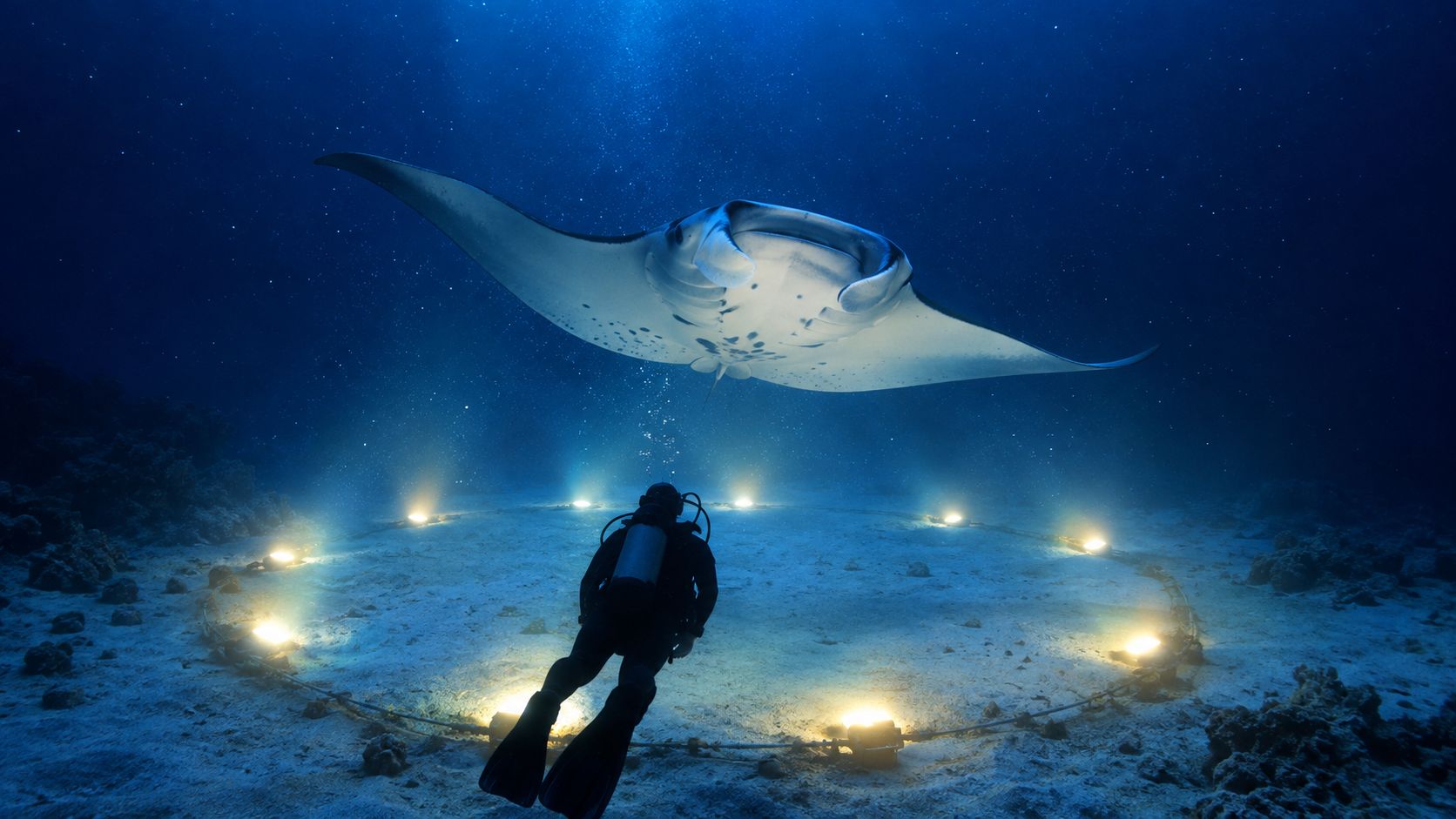
Drop into the dark, settle over the light field, and stay still. That is the dive. The mantas are not being chased or fed, they are responding to plankton that gathers around the lights, then looping through the same feeding pattern again and again [Hawaiʻi marine-life guide].
Kona's established sites work because the animals keep coming back. A long-term NOAA study recorded repeated sightings of resident reef manta rays, which is why the encounter is predictable instead of a lucky open-ocean strike [NOAA study]. For a practical map of the main sites, this Kona manta guide is the place to start.
If a shop sells it as a chase, a show, or a guaranteed parade of mantas, walk away. Good manta diving is about spacing, stillness, and keeping your position on the feeding line.
What you are signing up for is a structured observation dive. Scuba puts you on the bottom with the classic upward view. Snorkel keeps you at the surface with a top-down angle. Both work. The right call depends on how calm you are at night in open water, not on ego or bragging rights.
Why Kona Owns the Manta Dive World
Kona owns this category because the mantas are residents, not drive-bys. A long-term NOAA study recorded repeated sightings of the same reef manta rays across Kona sites, which is what makes the night dive predictable instead of a lucky offshore encounter. That repeatability is what lets good operators run a controlled, responsible setup.
Manta Heaven, Manta Village, and Garden Eel Cove
Kona is not one uniform site. Manta Village sits on the airport side and has a long history in the area, while Manta Heaven, also called Garden Eel Cove, is the site I'd point you to for a dedicated night tour. Garden Eel Cove has a broad sandy bottom and a protected feel that suits stationary viewing and steady manta movement [Garden Eel Cove site reference].
That is the practical reason to choose it. You get a cleaner viewing lane, less underwater clutter, and a bottom that fits the way manta night dives work. For a manta dive, that matters more than a famous name.
| Kona Manta Sites Compared | ||||
|---|---|---|---|---|
| Site | Location | Bottom Character | Viewing Format | Best For |
| Manta Village | Kona, airport side | Local reef and sandy areas | Stationary viewing | Divers who want the classic Kona name and broad access |
| Manta Heaven | Near Sheraton area | Sandy viewing area with reef context | Stationary viewing | Dedicated manta tours and cleaner underwater staging |
| Garden Eel Cove | Kona Coast | Protected cove, sandy bottom, adjacent reef | Stationary observation | The strongest dedicated manta experience |
The economics also make the point. Hawaiʻi analysis estimated manta-watching tourism generated about $4.7 million in direct economic impact across three sites in 2012, including $3.4 million from Kona sites alone, and a rough inflation-adjusted estimate of $6.2 million for Kona manta tourism in 2017 [DLNR analysis]. That level of value explains why site management, boat discipline, and guest behavior have to stay tight.
For a broader look at why this coastline works so well, this overview of diving in Kona is worth a quick read.
Best Time of Year and Time of Night to Go
Kona mantas are not a narrow seasonal gimmick. You can see them year-round, and the smart move is to book for conditions, not mythology. Warmer water, calmer wind, and cleaner nighttime visibility make the whole encounter easier to enjoy, while shoulder-season evenings often give you the most favorable feel without the crowding that comes with peak travel periods.
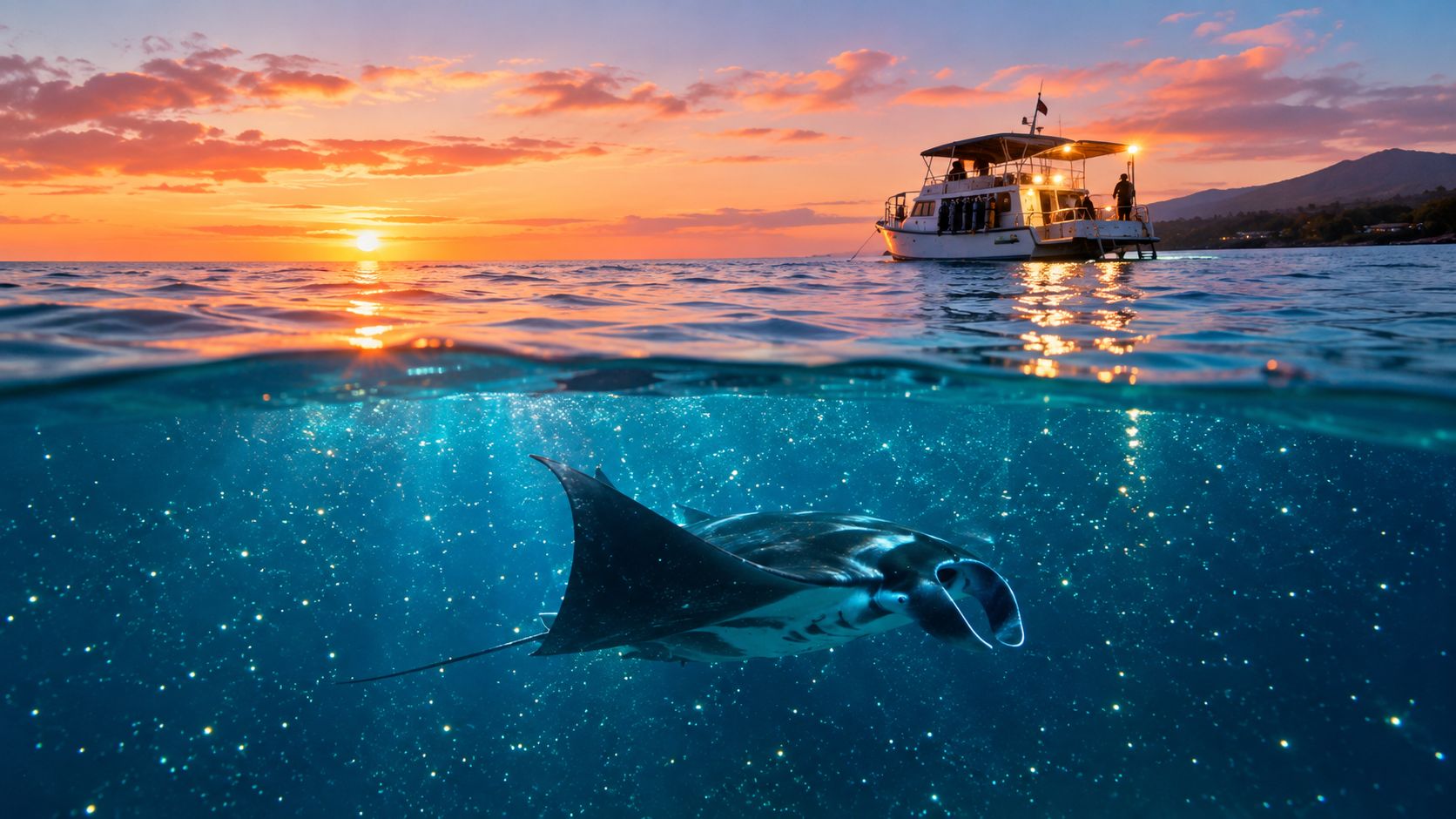
Book the night, not just the date
The dive itself usually starts at dusk with a briefing, then a short ride or setup period, then the main event after full dark. If the operator moves the schedule around for weather or surf, take that seriously. A calm, clear evening is the trade worth chasing, because the lights work better, your body relaxes faster, and the mantas have a cleaner feeding lane.
Moon phase, swell, and runoff all affect the night differently. Moonlight can change how dramatic the scene feels, swell can make entries and surface work rougher, and rain runoff can muddy the water enough to change visibility. The right operator won't pretend those trade-offs don't exist.
Good manta nights aren't about luck. They're about choosing the calmest usable evening and accepting a reschedule when the ocean says no.
If you've got flexibility, target quieter weather windows and don't book yourself into a rigid arrival schedule that forces a bad call. Any clear, calm Kona night is worth doing. The ones that feel easiest are usually the ones where the mantas show best and the humans behave best.
What a Manta Night Dive Feels Like Step by Step
The first few minutes are the part most first-timers worry about. Then the routine takes over. You check in, get fitted, listen to the briefing, and ride out with the boat crew organizing everyone by experience and role. Good operations make the whole thing feel calm before anyone enters the water.
From boat deck to light field
You'll hear the do-not-touch rule, the light-rig positioning, and the plan for where each person stays once they're in the water. On the scuba side, that usually means a controlled entry and settling on the sand behind or around the light source. On the snorkel side, it means holding position at the surface and staying where the board or lights are placed.
The darkness is real, but it's not chaotic if the crew knows what it's doing. You're not hunting the reef with a flashlight. You're waiting in place while the light field draws plankton into the water column, then watching the mantas arrive and turn through it.
The first pass is the moment everyone remembers. A shadow forms, banks into the light, and the animal rolls through with that huge white underside flashing under the beam. Divers get the bottom-up view, snorkelers get the top-down view, and both versions work because the animals are feeding, not performing.
Stay still, stay low, and keep your fins out of the lane. The less a guest moves, the more natural the feeding pattern stays.
The exit should feel as organized as the entry. The crew gathers the group, the lights come down, and everyone gets back aboard without a scramble. If a shop can't run the back half of the night smoothly, it probably can't manage the important part either.
Etiquette, Safety, and Buoyancy That Keep Mantas Coming Back
At Garden Eel Cove, bad habits spill onto the next group. Kona's mantas return to the same feeding ground, so one sloppy dive can clutter the light field and wreck the experience for everyone behind you. Treat the site like a shared workspace, because that is what it is.
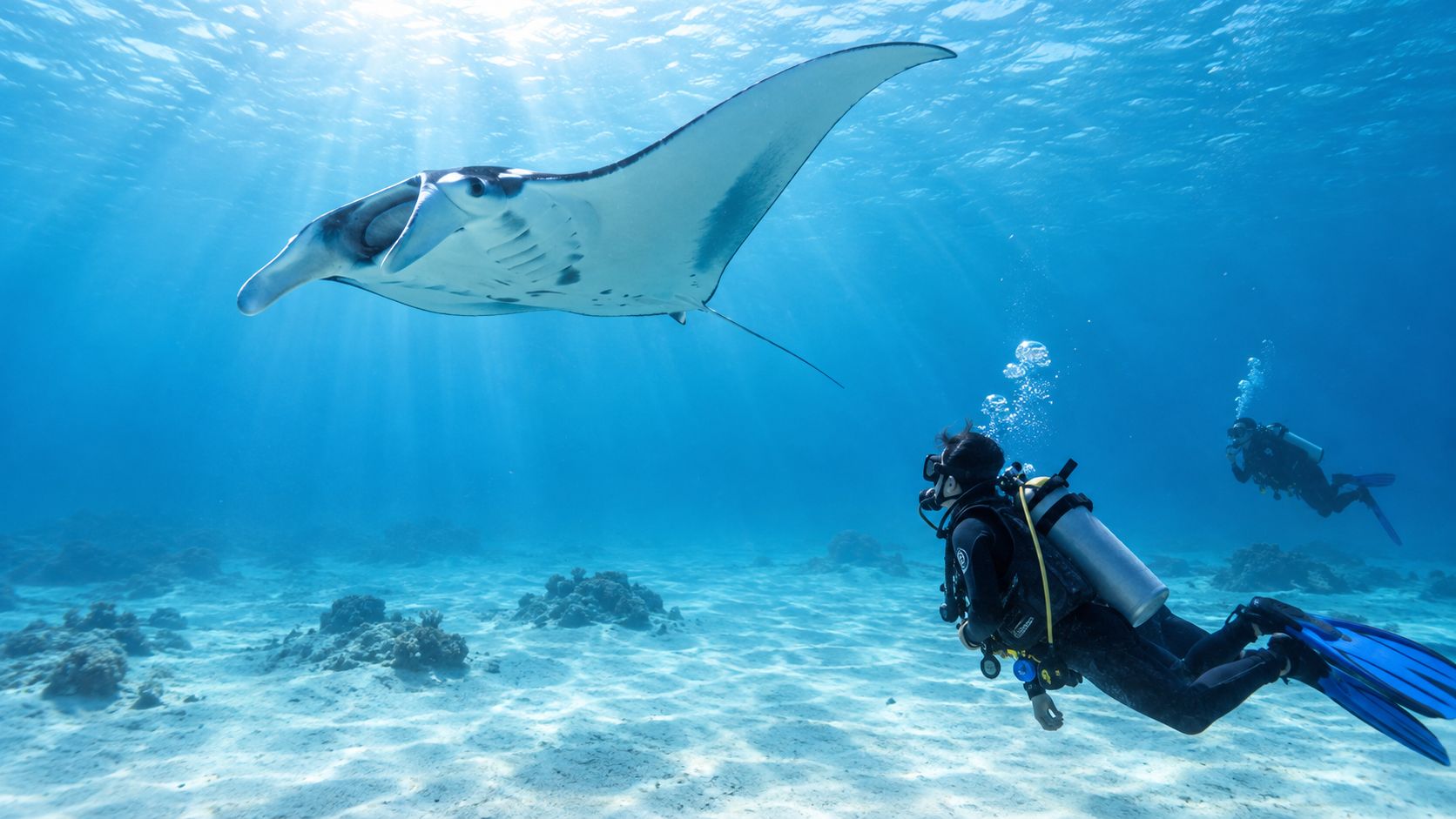
The rules are simple because the animals are sensitive
Don't touch the mantas. Don't chase them, block them, or wedge yourself into the feeding lane. Hawaiʻi rules prohibit harassing or harming manta rays in state waters, and the practical version is simpler, let them come to the light on their own terms.
Buoyancy control matters just as much. If you are kicking, drifting, or bumping around the light field, you add noise, bubbles, and clutter where the mantas need clear water. Hold position off to the side or just downstream of the lights, keep your hands in, and keep your gear out of the lane.
Good divers also think about the shop they booked. Read responsible diver etiquette before you go, then watch whether the crew follows it on the boat. A shop that briefs clearly, controls the group, and sets the lights with care is telling you it respects the site.
The human side matters too. Night nerves, motion sickness, cold, and sloppy gear control create more trouble than the mantas ever do. Calm guests make better encounters, and the crew can spot calm before anyone even hits the water.
How to Pick a Manta Dive Operator in Kona
Don't pick a manta operator by ad copy. Pick by control. Ask how many divers share the light station, who runs the briefing, what happens when conditions go sideways, and whether the crew knows how to position guests without turning the site into a traffic jam. Those answers tell you more than any five-star splash page.
What to ask before you book
A serious operator should answer these cleanly:
- Group size: Smaller groups usually mean less bumping, less confusion, and better control around the light field.
- Briefing quality: The crew should explain entry, position, no-touch rules, and what to do if a manta comes close.
- Light setup: Ask how the lights are placed and whether the arrangement keeps the feeding lane open.
- Condition call: Find out what they do when current, surge, or visibility makes the night marginal.
- Boat handling: A stable, well-run boat matters more than most guests realize once people start gearing up in the dark.
If you want one operator example, Kona Honu Divers runs dedicated manta trips to Garden Eel Cove with full gear, guides, and a structured setup for the night. The point isn't hype, it's that a well-run boat with a clean briefing and a predictable staging plan makes the whole encounter easier to enjoy.
If you want to compare the shop choice against a broader Kona dive context, this operator guide is a useful sanity check.
Gear, Photography, and Booking Preparation
Pack light and pack for the boat ride home. Bring a towel, a warm layer, reef-safe sunscreen for before the trip, and motion-sickness support if you know you need it. For scuba, the operator usually supplies the main kit, including a 3 mm wetsuit, mask, fins, BCD, regulator, weights, and lights.
Make the camera work for the dive, not against it
Night shooting gets messy when people overpack settings. If you bring a camera, use a wide-angle lens, a red focus light, and video lighting only if you already know how to control backscatter. Flat white balance can help around ambient light rigs, but staying still matters more than any menu setting.
- Bring: towel, dry shirt, warm layer, reef-safe sunscreen, and motion-sickness aid if needed.
- Expect from the operator: core scuba gear, weights, lights, a clear briefing, and site management.
- For photos: wide-angle setup, focus light, spare battery, and a plan to stay still.
- Before flying: wait at least 18 hours after diving before you fly or go above 2,000 feet.
That timing catches people off guard, especially if they are connecting to another island or heading to the mainland the next morning. Build it into the itinerary before you book.
If you want dates and gear details lined up early, start with the manta dive booking page.
Manta Ray Diving FAQs Most Guides Miss
Can you touch the manta rays? No. Keep your hands to yourself, and choose an operator that says that plainly in the briefing.
Can a shop guarantee a sighting? No. Kona's mantas show strong site fidelity, so the odds are good, but they are wild animals, not props.
Can non-divers join? Yes. Snorkel is usually the better call for non-divers and anxious swimmers because the job is simpler.
How long before flying? Leave at least 18 hours before flying or going above 2,000 feet. Build that into your trip, especially if you are island-hopping or leaving early the next day.
Should beginners pick scuba or snorkel? Pick the option that keeps you relaxed. Calm guests hold position better, and that makes the night better for everyone.
Book Garden Eel Cove, keep the group tight, and use an operator that places lights cleanly, briefs well, and treats conservation as part of the trip rather than a slogan. Kona Honu Divers runs manta trips with that kind of discipline, centered on Garden Eel Cove and the rhythm that keeps the dive organized.