
You land in Kona at sunset with damp dive bags in the trunk, a mask that still smells faintly of salt, and one question hanging over the evening, whether the manta ray dive will feel crowded, calm, and worth the long day of travel. For many visitors, the answer depends less on luck than on where the boat goes, how the lights are set, and whether the operator treats the site like a feeding ground, not a show. That's why the manta ray dive Kona experience is really a site-selection story as much as a wildlife encounter, and why Garden Eel Cove keeps coming up in serious planning conversations. If you're also lining up a daytime snorkel, this Big Island snorkeling guide can help you think through the rest of the trip without adding guesswork.
Introduction to Kona Night Manta Diving
Kona's manta dive works because the animals return to the same feeding areas again and again, not because anyone lures them with bait. Long-term NOAA records from Kona's main sites documented 25,444 sightings of 118 individual reef manta rays between 2009 and 2014, which is why a night out here feels like a repeatable wildlife event rather than a lucky drift offshore. The same record also shows more sightings at Manta Heaven, also called Garden Eel Cove, than at Manta Village, which helps explain why so many experienced divers pay close attention to site choice when they book a manta ray dive in Kona. You can read the NOAA study itself in this research archive.
What makes the first descent memorable is how simple the setup feels. You settle into darkness, look up, and wait for the beam of light to turn the water into a feeding lane. The feeling is part anticipation, part discipline, because the best encounters happen when the group stays calm and lets the mantas keep their natural rhythm.
Kona Honu Divers runs manta-focused trips with that style of calm structure in mind, and the rest of this guide will help you decide what to expect before you ever step on the boat. For readers who want the snorkel side of the same encounter, the logic is similar even though the viewpoint changes.
Understanding Kona Manta Ray Dive
Why the lights work
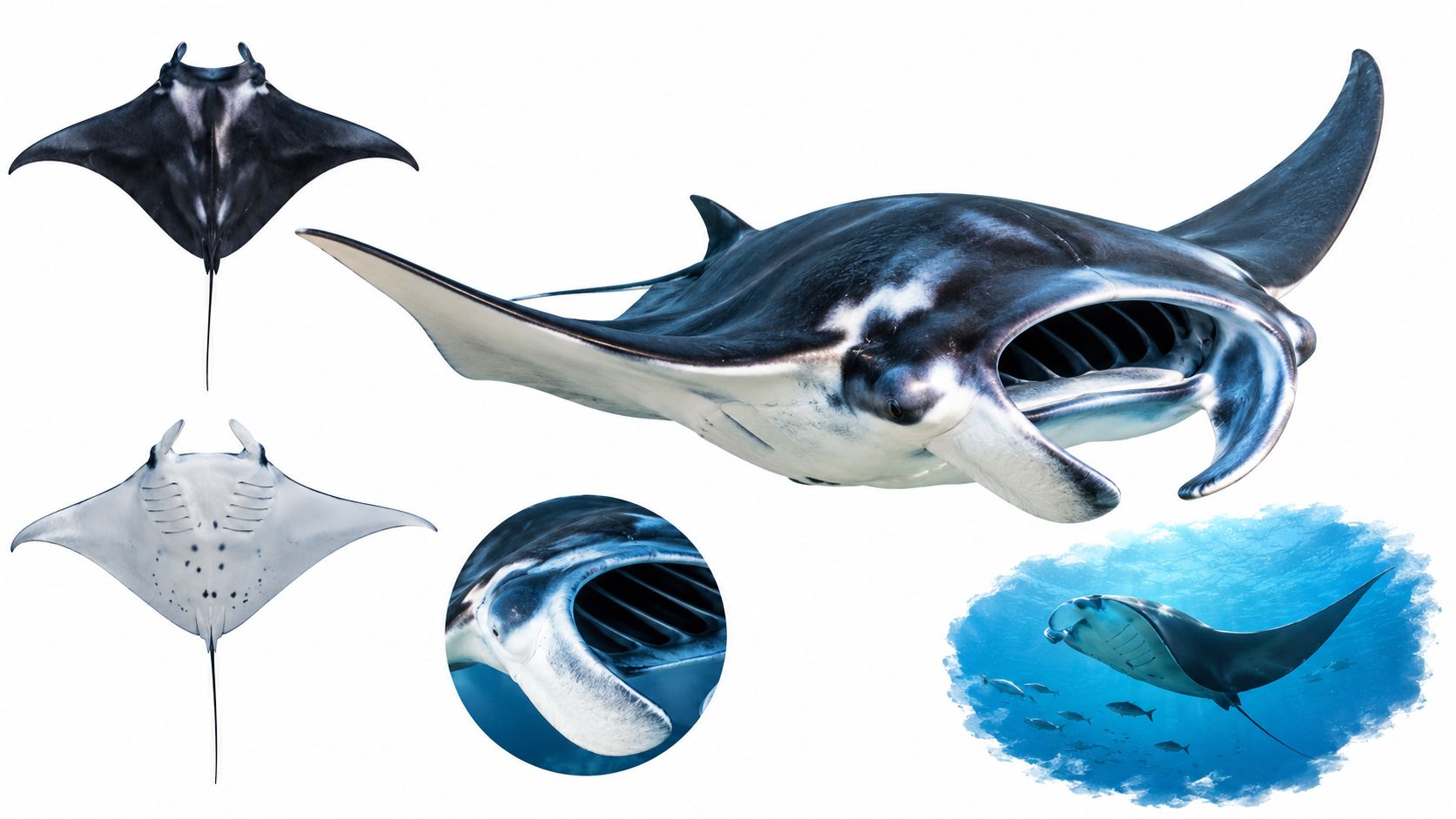
A Kona manta dive starts with a simple feeding chain. Underwater lights gather microscopic plankton into a bright patch, and reef manta rays, Mobula alfredi, move in to filter-feed through that concentrated food source. The mantas are following concentrated plankton in the light beam, which is why careful light placement shapes the whole encounter. If the lights shift too much, the feeding lane becomes less predictable for both the animals and the divers watching from below.
Why Garden Eel Cove is the smarter site
Garden Eel Cove, also called Manta Heaven, has the kind of sheltered setting that gives a night dive more consistency. The bay is protected, with a sandy bottom, scattered coral heads, and lava-rock features, so operators can create a controlled viewing area without fighting exposed shoreline conditions. Divers usually settle on the bottom around 30 to 40 feet and point their lights upward to form the feeding tunnel, a setup that works especially well in a cove with calmer structure as described in this dive overview.
That site choice also fits the long-term ecology. A NOAA-hosted study recorded a much larger share of sightings at Garden Eel Cove than at Manta Village, and the site's resident animals have been tracked through photographic identification since the early 1990s. A later study covering 2010 through 2022 found that plankton density drives aggregation size, with Garden Eel Cove often holding larger groups during spring plankton blooms. The pattern is direct, more food usually draws more mantas, and the sheltered cove gives crews a steadier place to manage lights, spacing, and viewing lanes NOAA sighting study and 2010 to 2022 ecological study.
Practical rule: if you want the most dependable viewing setup, Garden Eel Cove deserves attention before you compare boats or add-ons.
Why the encounter stays repeatable
Kona's night dive works because the mantas return to the same feeding areas again and again. The long photographic record matters here. It lets guides recognize individuals, notice site loyalty, and plan the dive around a resident population rather than a passing open-ocean drift. Respectful viewing keeps that pattern healthy, because stable behavior from the animals is what makes the encounter feel familiar year after year.
Best Seasons and Timing for Manta Encounters
A manta dive feels most predictable when you match your timing to the food in the water, not to marketing language about “best season.” The same 2010 to 2022 ecological study cited earlier found that richer plankton conditions are tied to larger manta gatherings, and Garden Eel Cove often sees bigger groups during spring bloom periods. If you want the highest chance of seeing more mantas at once, spring deserves attention. If you prefer a quieter setup, a different season can give you more room in the water and on the boat.
| Seasonal Dive Conditions in Kona | ||||
|---|---|---|---|---|
| Season | Months | Visibility | Plankton Bloom | Crowd Level |
| Spring | Shoulder months | Often changing, depending on water and weather | Often strong | Usually moderate |
| Summer | Mid-year months | Often variable, depending on plankton | Can be strong | Often higher |
| Winter | Cooler months | Can be clearer on some nights | Usually less pronounced than bloom periods | Often lighter than peak travel periods |
That table helps, but it still leaves the decision in your hands. Spring and summer often line up with stronger feeding conditions, which is why many divers aim for those windows. Winter can still be a smart choice if you value space and a calmer pace over seeing the largest possible group.
For many travelers, the choice is really between density and comfort. A stronger bloom can bring more mantas into view, yet it can also mean more boats, more guests, and a busier deck. A lighter period may trade some of that action for a more relaxed experience, which matters if you want time to settle in and watch the animals without feeling crowded. That is one reason the site selection at Garden Eel Cove stands out, the sheltered setting helps crews manage lights and viewing lanes more consistently than a rougher location would.
Weekdays usually feel less hectic than weekends. That pattern is easy to understand, since arrivals and departures often bunch up around weekend travel. If you want to keep your options open, book early in your trip so you have room to adjust if conditions change. For a broader planning view, this guide to when to dive with manta rays in Kona is a useful companion.
A calm schedule does not control the ocean, but it does give you more margin for weather, timing, and a smoother evening.
Typical Night Dive Itinerary
From harbor to water
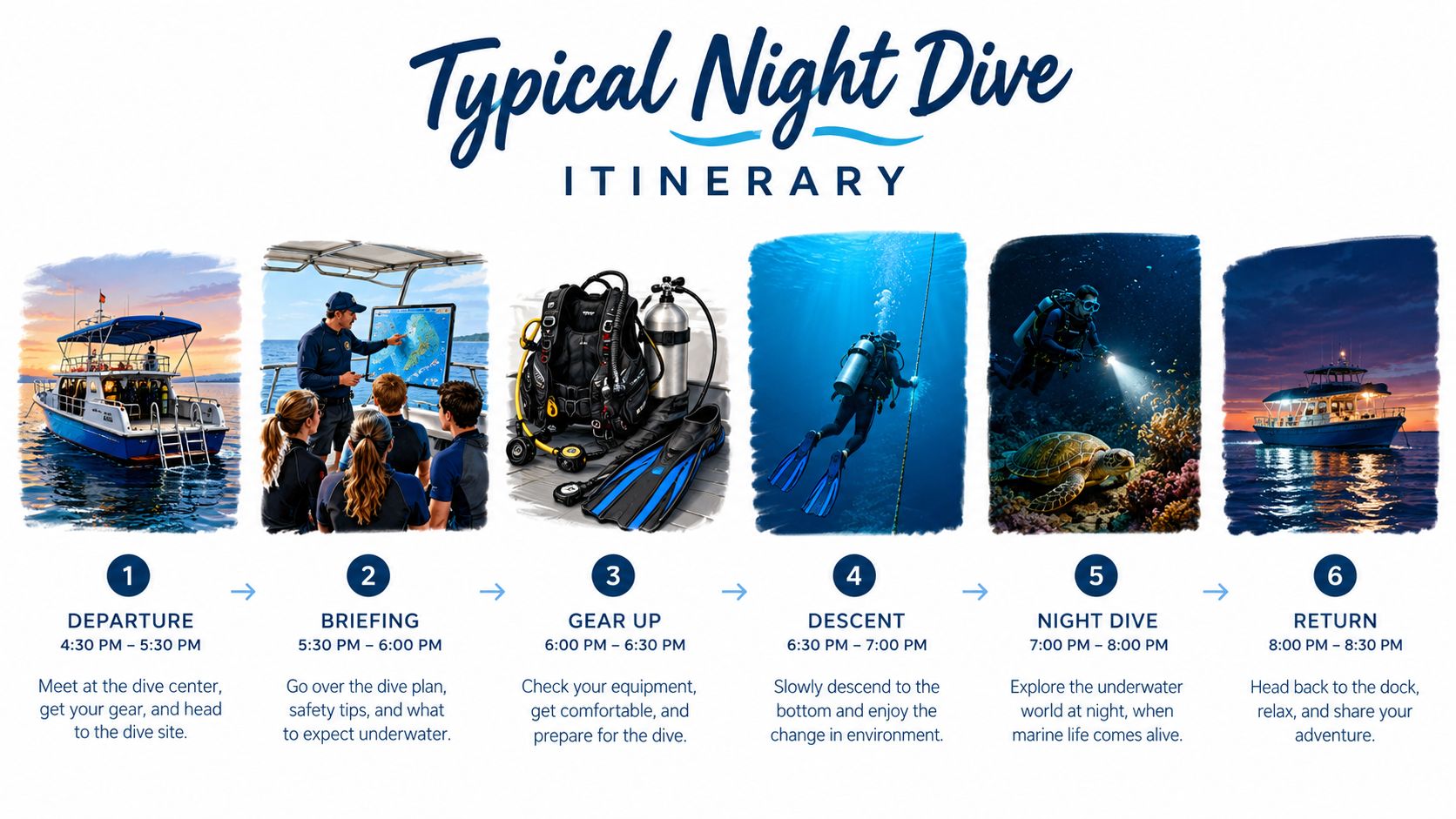
The evening usually begins with check-in, gear sorting, and a short ride to the site while daylight fades. That first stretch matters because it gives the crew time to confirm masks, weights, lights, and buoyancy basics before anyone enters the water. A good briefing should make the roles obvious, who stays near the bottom, who holds the light, and how the group keeps the feeding lane open.
After the boat anchors or holds position, divers enter and move into place on the sandy bottom. The lights then build the illuminated zone above you, and plankton drift into the beam. That's when the mantas begin making repeated passes, using the light like a food corridor instead of a barrier.
What to watch for underwater
The most useful habit is stillness. Stay low, keep your fins and elbows controlled, and let the mantas come through the light field on their own terms. The right posture gives you a clean view upward and keeps you from blocking the path the animals are using to feed.
Watch the mantas, not the clock. The moment people start chasing a shot, they tend to move into the feeding lane and spoil the whole setup.
Once the main viewing window winds down, the team signals the ascent and everyone returns to the boat for the ride back. That's usually the time to rinse masks, stow cameras, and talk through what you saw while the details are fresh. The post-dive debrief is often where newer divers realize how much the site layout affected the encounter, especially if they've only done more exposed night dives before.
Safety Certification and Regulatory Requirements
Certification and comfort level
A manta dive in Kona isn't a beginner swim. Divers should be comfortable with an open-water night environment, controlled buoyancy, and the ability to hold position without drifting into other people or into the mantas' feeding path. If you're still working on comfort in the dark, a broader night-dive refresher can help before you book something as wildlife-focused as this one, and this enriched air certification page is worth reading if you want to pair the dive with better gas management on other trips.
For non-divers, the snorkeling version removes the certification requirement but keeps the need for comfort in open water. The same rule applies either way. If you can't stay calm, you won't enjoy the encounter, and the animals won't get the clean feeding lane they need.
The legal line
Hawaii state rules prohibit touching, chasing, or redirecting rays, and reported penalties range from $500 to $10,000 for violations state protection summary. That law exists to protect manta health and natural feeding behavior, not just to make the briefing sound strict. The practical version is easy to remember.
- Keep your hands to yourself. Touching can damage the manta's protective skin layer.
- Stay out of the feeding path. Crossing in front of a ray changes the way it moves through the light.
- Don't chase for a photo. Let the animal approach the light zone on its own.
- Hold position. Calm, stable divers create better conditions for everyone in the water.
When guests treat the briefing as a legal and ecological boundary, the dive stays smooth. When they ignore it, the encounter becomes louder, messier, and less useful for the animals.
Gear Camera and Preparation Tips
Build your kit for stillness, not speed
Night manta dives reward stable, simple gear. A well-fitted mask matters more than an elaborate setup, because you'll spend most of your time looking up rather than swimming around. For exposure protection, choose a wetsuit that lets you stay relaxed in cool water without fighting your own gear every time you settle on the sand.
Lighting should be useful, not aggressive. Divers typically aim their lights upward to build the feeding tunnel, while cameras need enough power to pick up the ray's outline without blasting the scene into white glare. If your rig is complicated, practice with it before the trip so you're not trying to learn controls in the dark with other divers around you.
Camera habits that help the encounter
Keep camera work simple. Use the setup you can operate without looking at the controls every few seconds, because your attention should stay on the manta's path and the group's spacing. The cleanest shots usually come from holding steady, staying low, and waiting for the ray to re-enter the illuminated zone.
A short pre-dive checklist keeps small problems from becoming big ones:
- Inspect mask and straps. Leaks are far more annoying at night.
- Confirm tank and weights. Don't wait until boarding to discover a mismatch.
- Check batteries. Lights and cameras both fail at the worst time when they're undercharged.
- Bring a warm layer for the ride back. The wet return leg feels colder than the departure.
- Handle seasickness early. Once the boat starts moving, it's too late to wish you'd planned ahead.
If you're comparing broader trip options, night diving in Kona can also be a good fit for divers who want a second after-dark experience on the same vacation. Kona Honu Divers also offers guided boat trips for other kinds of dive days, which is useful if you're building a mixed itinerary rather than booking a single outing.
Costs Booking Advice and Recommended Operators
What affects the value
The biggest cost variable is usually the kind of experience you want, not just the ticket price. Some guests want a simple snorkel, others want a full scuba evening, and some want a two-tank format that combines a daytime reef dive with a manta night dive at Garden Eel Cove. Operators also differ in group size, which matters a lot when the site gets busy.
A 2018 survey documented as many as 30 tour boats and 300 participants per day at key Kona manta sites, which is a strong reason to favor controlled group sizes and clear site management survey summary. When the water is crowded, the operator's habits matter more than a small difference in price. If you're trying to decide where to book, look for crews that keep the site organized and the lights steady.
One option is Kona Honu Divers, which runs a two-tank manta package and a snorkel version, and includes guided support, tanks, weights, and a dive light on the scuba side. If you're comparing departures or looking at a broader boat menu, their Big Island boat tours page is a practical place to start.
For travelers who want a direct booking path on the manta-specific product, the manta ray dive tours page keeps the details in one place. Garden Eel Cove is the stronger choice when you want the more protected environment, the more controlled viewing area, and the reef structure that makes the underwater scene feel less exposed.
Frequently Asked Questions
Can I use a filter on my camera?
Yes, but the better question is whether the filter preserves the manta's outline without dulling the plankton glow. If the image gets muddy, back off and simplify the setup.
What happens if the weather changes?
Good operators will explain their cancellation and rebooking policies before departure. Ask about that before you pay, not after you're standing on the dock with a wet bag.
How do I handle seasickness at night?
Take it seriously. The ride back is often the hardest part because you're wet, the air feels cooler, and the boat is moving in darkness.
Can non-divers join?
Yes, snorkeling is part of the Kona manta experience. The surface view is different from the scuba view, but the behavior you're watching is the same feeding sequence.
If you want a manta night that's organized around Garden Eel Cove, clear briefing, and low-stress group management, Kona Honu Divers can help you line up the right format for your trip. Visit Kona Honu Divers to compare the manta dive and snorkel options, then choose the departure that fits your pace, your certification, and the kind of night you want in the water.