
You're probably looking at photos of a huge ray looping through blue light and wondering if your night will look like that. It might. It also might be quiet, plankton thin, a single animal making brief passes at the edge of the beam. That uncertainty isn't a flaw in Manta Ray Dives of Hawaii Kailua Kona HI, it's the point. You're joining a wild feeding event, carefully staged around light, position, and patience.
Discover Kona’s Nighttime Manta Experience
The first manta often arrives without announcement. One moment you're watching specks drift through your light, the next a dark wing fills the edge of your vision and a reef manta ray rolls overhead, mouth open, white underside flashing as it turns back into the plankton. Divers on the bottom look up. Snorkelers at the surface look down. For a few seconds, both groups share the same animal from opposite sides.
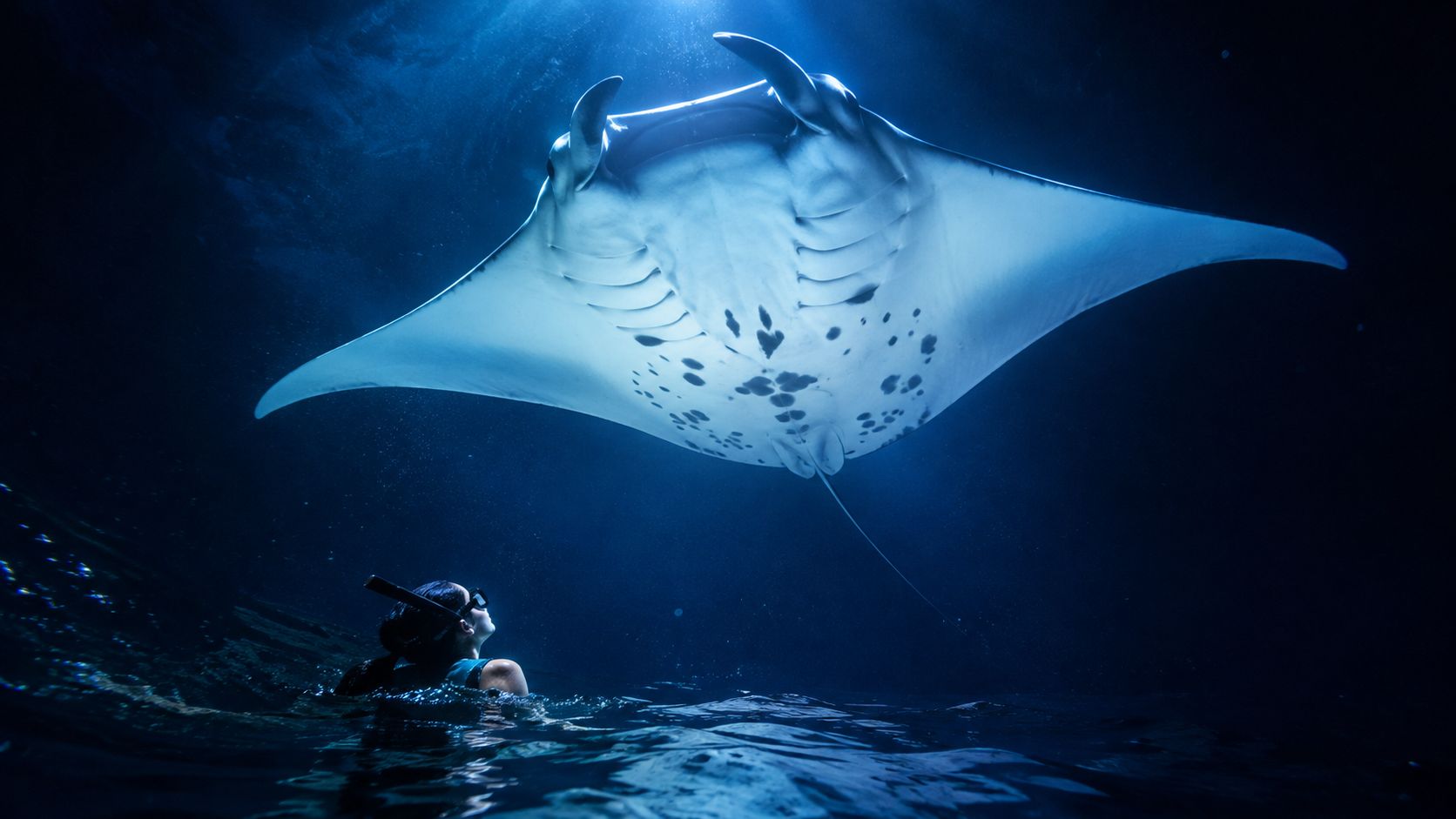
That's the emotional payoff, and it's real. What's not real is any promise that it happens on cue. A responsible crew can guarantee a briefing, a mooring, a controlled position in the water, and lights set to concentrate food. They can't guarantee which ray visits, how many come, or how long they stay.
Who This Night Suits
- Certified divers get the bottom view, settled low while mantas pass above them.
- Snorkelers and families stay at the surface, watching the same feeding loops from above.
- Photographers get a predictable flight path to compose around, provided they don't chase it.
Kailua-Kona became the hub for this by accident. In the late 1980s, underwater spotlights at the Kona Surf Hotel concentrated plankton and drew mantas close to shore, and organized excursions began around 1991, according to the history of Kona's accidental manta attraction and its growth. By 2015, busy periods could put at least 20 boats and more than 200 divers and snorkelers in the water in an evening, which is why crowd discipline matters as much as eyesight.
Within that busy coastline, Garden Eel Cove is the superior choice for this tour because of its protected location, better viewing area, and better reefs. You're not just choosing a chance to see a ray. You're choosing the setting where you'll wait for one, and where the animal has room to feed.
Watch from where you're placed, let the ray decide the distance, and the encounter usually comes to you.
Understand Why Mantas Visit Kona
Think of your dive light as a porch light on a summer night, except the specks gathering in it are food. Zooplankton drift into the illuminated water and become visible and concentrated. A manta doesn't come to perform for the light. It comes to filter that dense patch, swimming repeated passes with its mouth open.
Research near Manta Village and Manta Heaven documented 25,444 observations of 118 individually identified reef manta rays, Mobula alfredi, over six years, with lights illuminating water and seafloor at approximately 10 m, as shown in the NOAA repository study of Kona's light mediated feeding sites. That study recorded 19,841 observations at Manta Heaven versus 5,603 at Manta Village, a useful reminder that sites don't behave identically.
What the Kona Research Shows
| Research finding | What it means for guests |
|---|---|
| More than 23,000 sightings of 167 identified mantas from 2010 to 2022 at Garden Eel Cove and Keauhou | You're watching known, returning individuals, not anonymous passersby |
| Garden Eel Cove supported larger aggregations, Keauhou was visited predominantly by females | Site choice changes the likely makeup of the group you see |
| Aggregation size tracked zooplankton density across seasons and years | Food, not the calendar alone, drives a good night |
| Strong site fidelity, especially among females at Keauhou, plus movement between sites | A ray absent tonight may be feeding at the other site |
Those figures come from a 2025 University of Hawaiʻi study analyzing 13 years of community sourced observations, described in the University of Hawaiʻi analysis of 167 identified Kona mantas. The overall sex ratio across both sites was approximately 1:1, and aggregations stayed relatively stable despite increased tourism during the study period.
Each manta carries a distinctive spot pattern on its underside, so guides and researchers can photo identify individuals across years. That's why crews sometimes name a ray mid briefing. It also explains the limit of any forecast. Site fidelity makes encounters recur, but no one can promise a specific animal will choose your light patch tonight.
Plan Your Kailua Kona Dive Day
Plan this like an evening appointment with conditions attached, not like a daytime reef trip you can shift by an hour. Book early in your stay if you can. If weather, visibility, or animal behavior forces a change, you'll still have other nights to work with.
Start with where you'll sleep and how you'll get back late. Kailua-Kona is the departure area, but harbors, parking, and check in points vary by operator, so confirm the exact meeting place in writing. If you're still choosing lodging, this guide to the best places for divers to stay on the Big Island helps you judge drive time before you commit to a night schedule.
Confirm Before You Pay
- Certification and experience: Ask whether the booking is for certified scuba divers, snorkelers, or both, and whether prior night experience is expected.
- Health and comfort: Disclose medical questions, swimming confidence, and seasickness concerns directly to the operator.
- Site assignment: Ask which site the boat plans to use and what would cause that plan to change.
- Gear handling: Confirm what's provided, what you bring, and what must be fitted before departure. Don't assume rental inclusions.
- No sighting policy: Ask what happens if no mantas appear, and whether rebooking is offered.
Practical rule: Anything involving a time, a dock, or a piece of rental gear belongs in a confirmation message, not in your memory of a webpage.
Pack for the ride back, not just the dive. You'll be wet, in the dark, and cooling down fast once the boat moves, so bring a towel and a warm layer you can pull on over damp skin. Eat normally earlier in the day, hydrate, and avoid building a tight dinner reservation around a return time the ocean controls.
Finally, check your group's split. A family may have one certified diver and three snorkelers, and that changes briefing, positioning, and supervision. State that mix at booking, not at the dock. Clear information early gives the crew time to place everyone safely and gives you fewer surprises after sunset.
Follow the Manta Night Dive Experience
You arrive in daylight or at dusk, check in, and listen more carefully than you think you need to. The briefing covers boat safety, entry and exit, light direction, and the one rule repeated in different forms all night. Don't touch, chase, block, or surround a manta.
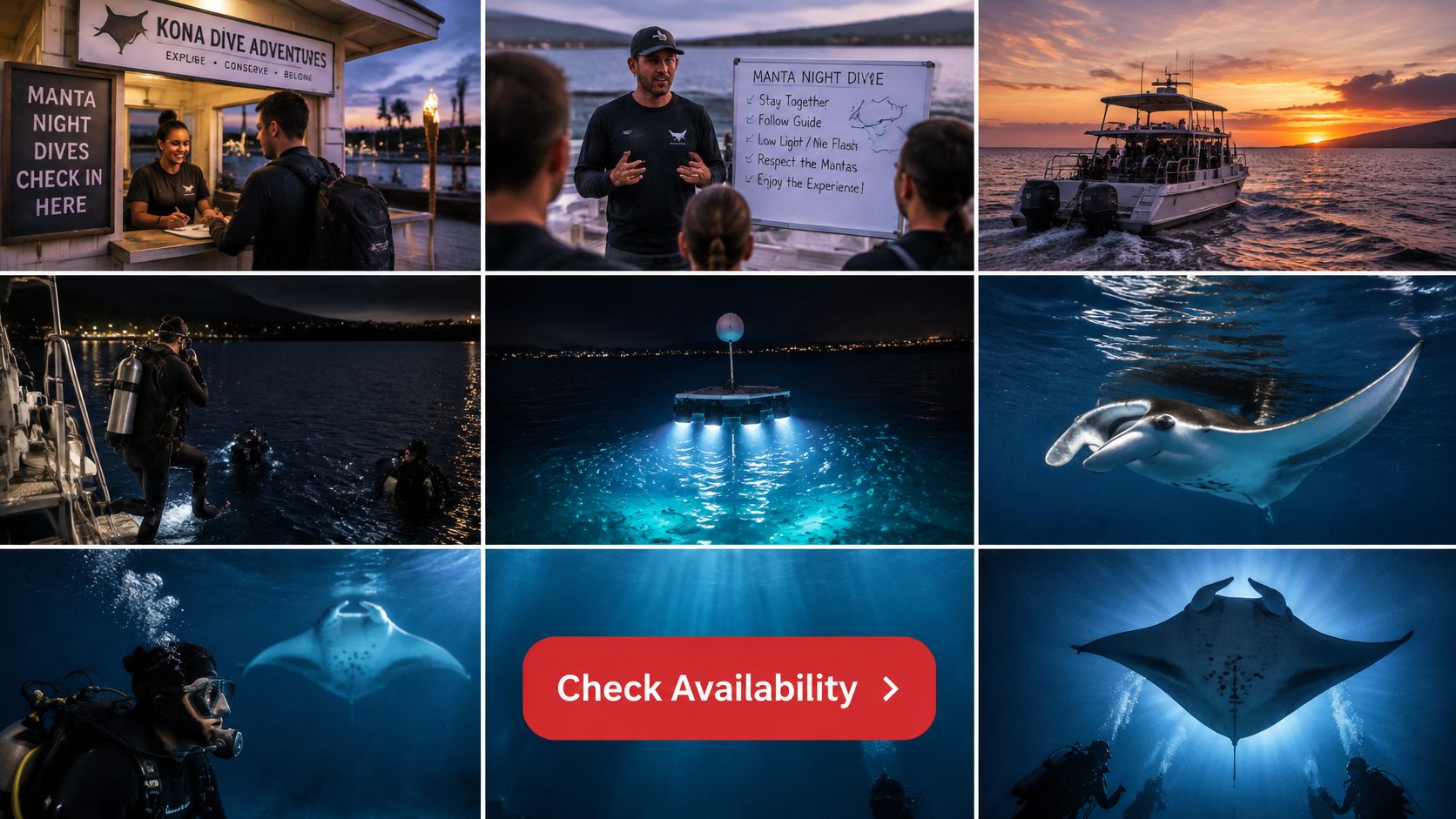
On the ride out, the reef changes character. Colors flatten, your world shrinks to the reach of a beam, and sounds carry differently through scuba gear. If night diving itself is new to you, this overview of scuba diving at night and how darkness changes awareness explains why slower movements matter so much.
From Descent to Ascent
- Setup at the mooring: The crew secures the boat and establishes the viewing area before guests spread out.
- Positioning in the water: Divers settle low on sand or rock, lights aimed up into the feeding zone. Snorkelers remain at the surface and look down.
- Observation period: You stay still, control your fins, and let plankton build in the light.
- Ascent and return: You leave as a group when the guide signals, not when a last ray tempts you to linger.
Staying low isn't etiquette for its own sake. A manta needs an unobstructed water column to loop, turn, and pass again without colliding with a drifting diver. Controlled buoyancy also keeps your fins from resuspending sediment, which clouds the same feeding patch everyone came to watch.
Here's where first timers get confused. A quiet first ten minutes doesn't mean the night has failed, and a spectacular first pass doesn't mean the animal will repeat it on schedule. Numbers vary, individuals vary, and a guide may shorten the encounter if conditions or animal behavior change. Treat the sequence as guaranteed procedure wrapped around unpredictable wildlife.
Back on board, listen during the handoff. Guides often identify which individuals appeared by their underside patterns and explain what the plankton was doing. You'll understand your own photos better, and you'll leave knowing whether you watched a resident regular or a less frequent visitor.
Choose Garden Eel Cove for Viewing and Reefs
Not every Kona manta site gives you the same night, even when the same species shows up. At a crowded, exposed site, you may spend your attention on surge, neighboring lights, and keeping your position. At Garden Eel Cove, the protected location, better viewing area, and better reefs let you spend that attention on the animal.
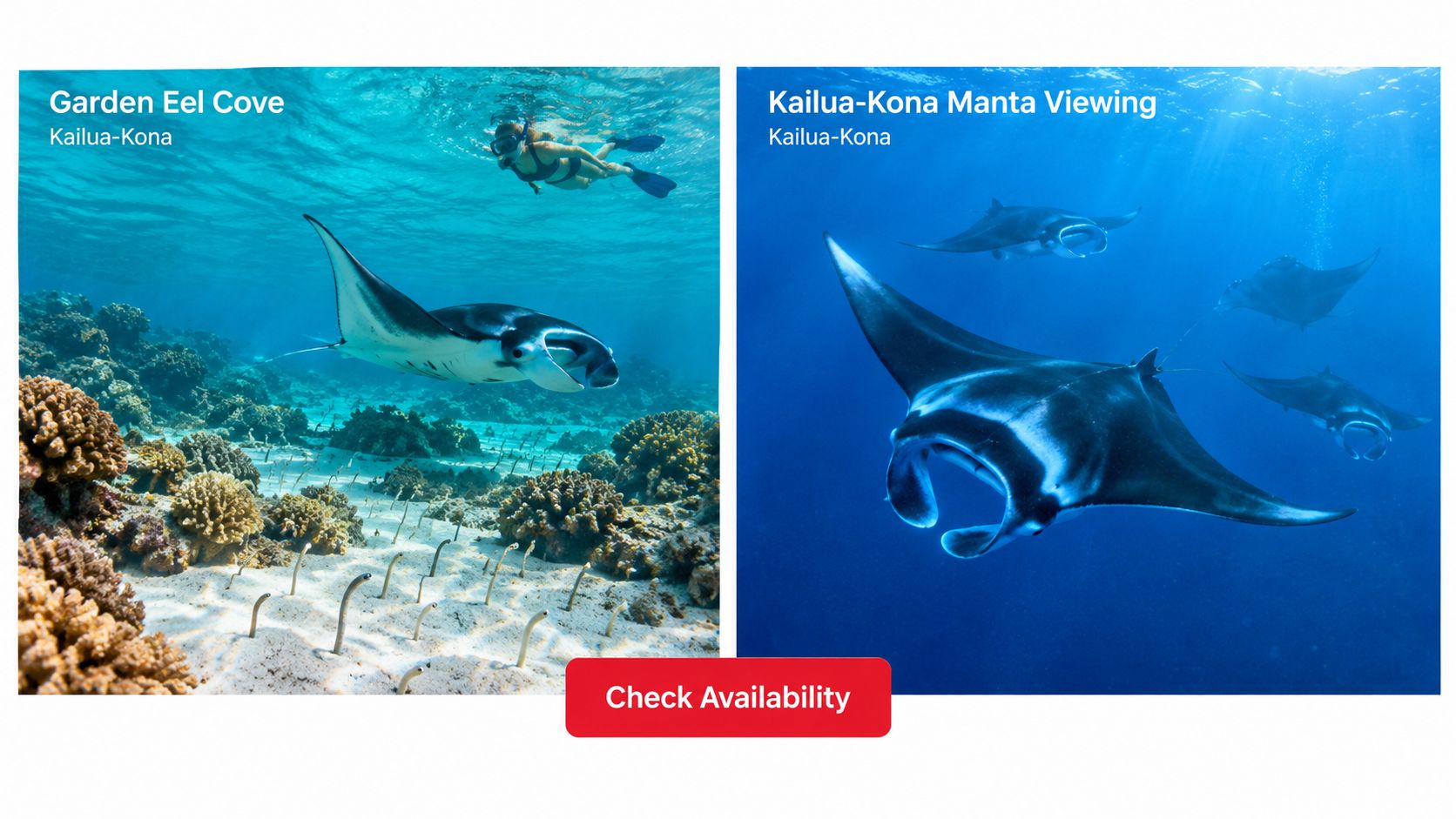
That combination is why Garden Eel Cove is the superior choice for this dive tour. A stronger reef setting gives the first, daylight portion of a two tank outing more to offer, and the viewing area gives divers a stable place to settle without crowding coral. For photographers, stability is not a luxury. It's the difference between composing a pass and grabbing at one.
What Site Choice Can and Cannot Do
- It can improve comfort: A protected position reduces avoidable struggle to hold still.
- It can improve sightlines: A better viewing area keeps the illuminated feeding zone open.
- It cannot command plankton: Food density still drives how long mantas remain.
- It cannot override operations: Vessel traffic, visibility, and animal behavior still set limits.
Ask any operator you're considering how they use the site, not just whether they go there. Where do divers kneel, how are snorkelers kept clear of the feeding column, and how are lights pointed? A crew that answers plainly is telling you how they protect both the view and the ray.
A better site raises the quality of your waiting. It never turns a wild animal into a scheduled attraction.
Protect Mantas and Respect Their Habitat
Frequent sightings create a dangerous assumption, that Kona's mantas are too numerous to disturb. The genetics say otherwise. NOAA supported research found strong island residency and limited exchange between island groups, with females reproducing at the island where they were born, as explained in the NOAA Fisheries account of reef mantas staying close to home. If a Kona aggregation is disturbed, immigration from another island won't quickly replace it.
Scale matters too. Reporting on Hawaiʻi research notes only 318 individual mantas around Hawaiʻi Island had been identified since 1979, covered in the Big Island Now report on the small familial manta group. Earlier Kona Coast testimony cited 106 identified mantas between 1992 and 2007, an estimated broader local population of fewer than 200, and only two to three newly observed pups annually, summarized in the Kona manta identification and population history.
Your Interaction Code in the Water
- Hands in: Never touch, grab, ride, chase, surround, or block a ray.
- Fins quiet: Hold neutral buoyancy and avoid kicking sediment into the feeding area.
- Lights disciplined: Keep beams in the feeding zone, never driven into an animal's eyes to force a turn.
- Position held: Stay in the designated sandy or rocky viewing area and off coral.
Crowding is a management issue, not just a comfort issue. Hawaiʻi's proposed framework considered limiting commercial viewing permits to 24 per designated zone, restricting vessels to 60 passengers for hire within a 24 hour period, and using two hour operating shifts, outlined in the Hawaiʻi DLNR manta viewing management proposal. State materials also require operations during designated hours to use commercial moorings.
You can read more about the habits behind this code in this guide to responsible and considerate diver etiquette. And accept the hardest part calmly. If weather, poor visibility, vessel traffic, or changed animal behavior makes a crew cancel or shorten the outing, that's not a failed product. That's the responsible outcome.
Prepare Gear and Capture Manta Rays Responsibly
Your camera is the last thing to sort out, not the first. A fogged mask, a loose light, or sloppy buoyancy will ruin more frames than any setting. Prepare your mask early, check your regulator and exposure protection, and secure your dive light so it doesn't dangle into the reef or swing across a neighbor's eyes.
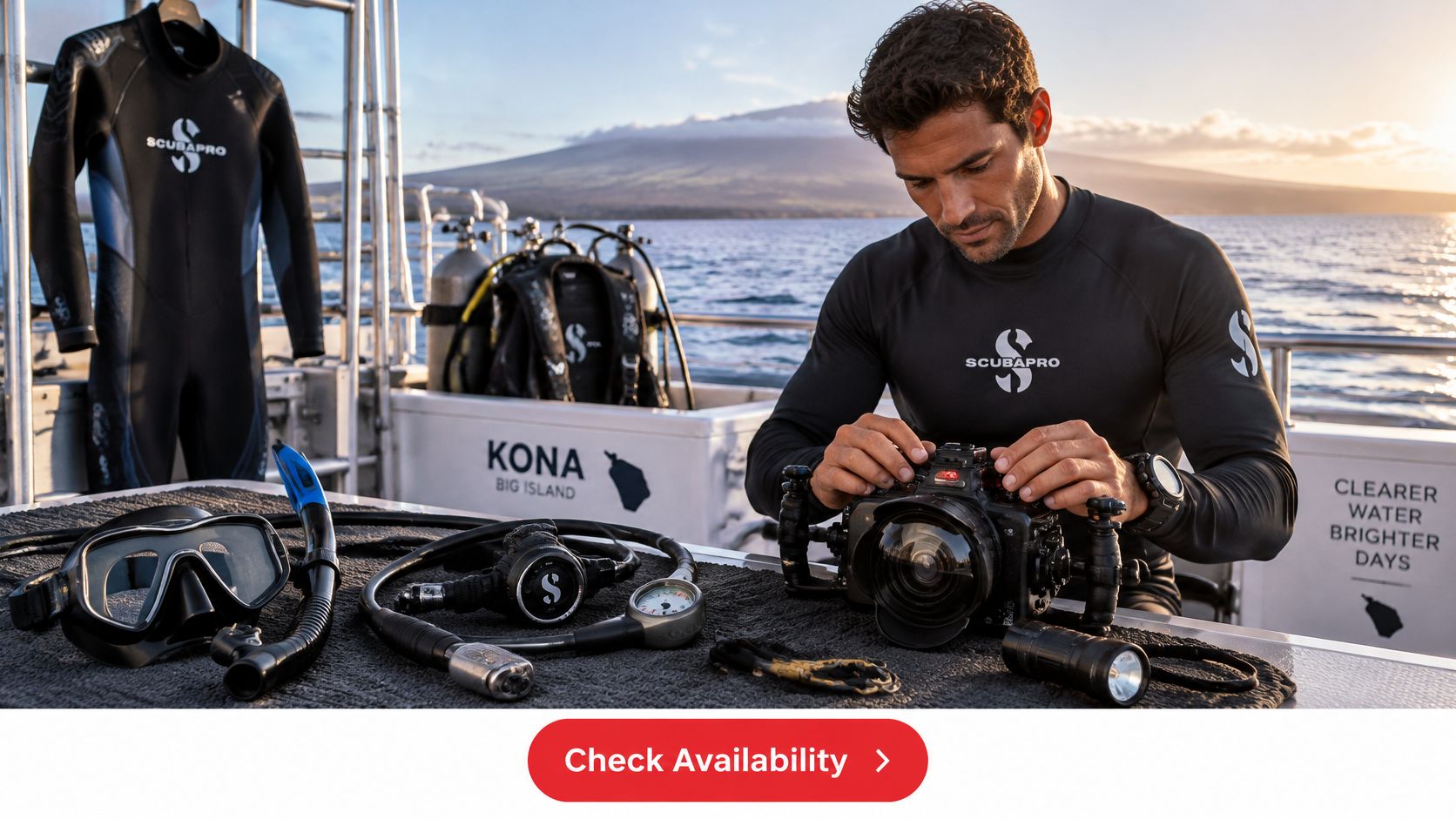
Settle first, shoot second. Plant yourself in the designated viewing area, confirm you're not touching coral, and watch two or three passes before you raise the camera. You'll learn the ray's line through the light, and your composition will stop being a guess.
Getting Cleaner Images Without Pressure
- Compose the corridor: Frame the illuminated feeding zone and let the manta enter it.
- Mind your distance: Controlled distance and angled light reduce backscatter from plankton and sediment.
- Shoot sparingly: Short bursts on a natural approach beat constant firing at a departing animal.
- Keep awareness wide: Track other divers, snorkelers above you, and a second ray arriving from behind.
If you'd rather hand the camera work to someone else, look at what's involved in a Kona manta night dive with a photo package before you travel. Confirm housings, strobes, rentals, and any professional support directly with the operator. None of that should be assumed from a tour title.
The best manta photograph from Kona is almost always taken by the diver who moved the least.
Snorkelers face the same discipline at the surface. Hold your position, keep fins calm, and don't duck dive toward a passing ray for a closer frame. You'll break the feeding column, startle the animal, and usually get a worse, blurrier image for your trouble.
Book a Responsible Kona Manta Dive
Decide with three questions. Will the operator take you to Garden Eel Cove and explain its protected viewing setup? Can they describe their lighting, spacing, and no touch practices without hesitation? Will they tell you plainly that a sighting isn't guaranteed and explain their policy if mantas don't appear?
Use this comparison of how to choose a Kona diving company to structure those conversations. Then browse the broader Kona diving tours to place the night in your wider itinerary, and review the specific 2 tank manta ray dive and snorkel tour for the manta outing itself.
Experienced divers who want a next step after the manta night can consider the Kona blackwater dive or more experienced diving opportunities on the premium advanced 2 tank trip. Treat both as separate decisions with their own eligibility questions, not as automatic add ons.
Kona Honu Divers runs guided manta ray night dives for certified divers and manta snorkel experiences for guests without scuba certification, operating to Garden Eel Cove.
Reserve your manta night early in your Kailua-Kona stay, confirm your meeting point and eligibility in writing, and choose the protected viewing and reefs of Garden Eel Cove for the strongest setting. Visit Kona Honu Divers to book a guided manta dive or snorkel led around calm positioning, disciplined lights, and genuine respect for these resident rays.