
You step onto the boat already picturing the same question most visitors ask on the ride out, will the mantas show, and will the site feel calm enough to enjoy them properly? On the best nights, Garden Eel Cove answers that question before the first ray even appears, because the lights settle into a cone of plankton and the water above the sand starts to feel organized instead of random. That's why the manta ray dives of Hawaii have become such a serious draw for divers, snorkelers, and photographers who want a real wildlife encounter, not a staged spectacle.
The key is choosing the right site and the right operator. Kona's night dive scene works because the animals are resident, the feeding pattern is predictable, and the dive is built around observation, not pursuit, with Garden Eel Cove offering the most practical combination of shelter, viewing room, and underwater structure. If you're planning a trip, start with the dive itself, then work backward into timing, etiquette, and the kind of boat setup that actually supports a good night.
If you want the local context for why this coast is famous, the overview at what Kona is famous for underwater is a useful companion read. For booking, the manta-specific tour page is here, Kona Honu Divers' manta dive and snorkel, and the trip works best when you treat the booking as part of the experience, not just a seat on a boat.
Why Hawaii Is the World Capital for Manta Encounters
A diver drops onto the sand flat at Garden Eel Cove at dusk, settles in, and looks up into a column of light. A minute later, the first reef manta turns through the beam, then another follows. The scene feels organized because it is. Kona's manta nights work because the animals return to the same feeding grounds, and the encounter depends on repeatable plankton concentration, not luck.
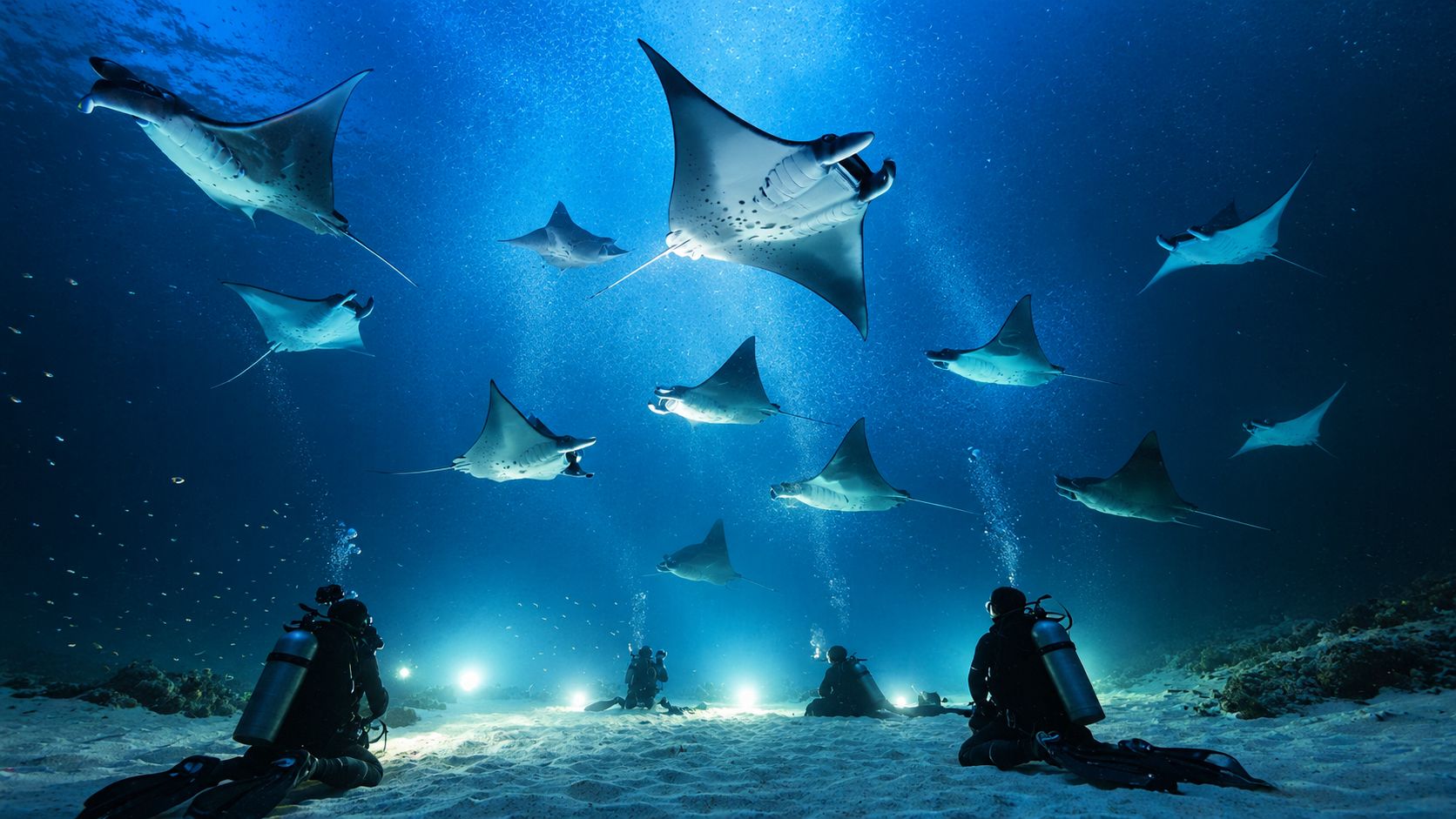
A resident feeding pattern, not a migration story
Kona's night dives began in 1991, when operators started using underwater lights to draw plankton near the former Kona Surf Hotel. Early on, the setup involved about one boat roughly once per week, then interest grew fast as the pattern became known. By 1993, historical accounts describe as many as five boats and about 50 people in the water at the site, and the location later went inactive from 2000 to 2004 before floodlights were reinstalled and the mantas returned Kona Honu Divers history. That history matters because it shows a resident wildlife interaction built around natural feeding behavior, not a baited spectacle.
The long-term scientific record points the same way. A University of Hawaiʻi study used 13 years of community-sourced observations from 2010 through 2022 and logged more than 23,000 sightings of 167 individually identified reef manta rays at Kona's two main night-feeding areas University of Hawaiʻi study. That kind of return rate is why Kona stands out. The same animals keep showing up, and that kind of site fidelity is what lets operators plan trips with a realistic expectation of a good encounter.
What makes the Kona version worth the trip
Garden Eel Cove and Keauhou each have their own strengths, but Kona's advantage is practical. The lights concentrate plankton, the mantas arrive to filter-feed, and divers can watch the sequence from a stable position in the water. In poor conditions, some sites get murky or lose the food plume quickly. In Kona, the setup usually holds together well enough to give the animals room to work.
For travelers comparing options, the broad context is helpful. The overview at what Kona is famous for underwater explains why this coast has become so closely associated with night encounters. The takeaway is simple. Kona combines a resident population, a proven viewing site, and a dive setup that fits the animals' behavior rather than fighting it.
How a Manta Night Dive Actually Works
The dive works as a staged feeding station, lights concentrate plankton, mantas filter-feed through the beam, and divers hold position outside the lane. The lights do not feed the animals. They gather the prey into a tight column, and the mantas show up to take advantage of that concentration. Once you see that sequence, the boat rules stop feeling arbitrary.
Light, plankton, manta
Divers or snorkelers set up around the light source, and the beam becomes a plankton magnet. The animals sweep through the illuminated water and often make repeated passes as long as the food stays concentrated. That is why good operators stress staying put. If you chase the mantas, you do not improve the view, you disrupt the pattern that makes the encounter work.
Underwater, the best choice is usually the quiet one. Stay low, keep your posture steady, and let the mantas move through the light lane. A calm diver gives the animal room to bank, roll, and return through the beam without needing to adjust around people.
Practical rule: If your movement would force a manta to change course, it is too much movement.
Learn how the light-and-plankton sequence is staged on how a manta night dive actually works.
Why divers stay below the lights
Scuba divers usually settle on the sand at roughly 30 to 40 feet in the viewing area, which keeps the group out of the feeding lane and gives the mantas open water above them. That is part of why Garden Eel Cove works so well. The bottom is set up for stationary observation, not for drifting around and hoping the action finds you, and the surrounding reef gives the site a more ordered feel than a loose open-water drift.
The animal most observers are watching is Mobula alfredi, the reef manta. Research on Hawaiʻi Island reef mantas indicates a tight home range and access to nearby deep water, which helps explain why the encounter can stay reliable even as plankton conditions change. That matters in practical terms. You are not relying on a rare migration, you are booking around a resident feeding system. The resident population is also delicate, which is another reason the best encounters depend on careful spacing and clean operator habits, not crowding the site.
Comparing the Best Manta Dive Sites in Kona
A good manta night in Kona depends on more than just seeing rays. Site layout, boat access, and how the light lane forms all change the experience. Garden Eel Cove, also called Manta Heaven or Makako Bay, stands out because the water stays manageable, the access is straightforward, and the bottom works well for a controlled night encounter. See a detailed breakdown of access and bottom layout in comparing Garden Eel Cove and Keauhou.
Garden Eel Cove versus Keauhou and other Big Island options
For divers booking the DiveAroo destination overview, Garden Eel Cove is the clearest all-around choice. The cove's shallow sand flat, roughly 30 to 40 feet (9 to 12 meters) at night, gives the lights a clean viewing lane, while the nearby reef helps hold the site together without making the dive feel cramped. That layout makes a difference for photographers and for anyone who wants a calm, predictable setup instead of working around awkward bottom features.
Keauhou has its own value. The University of Hawaiʻi study points to strong site fidelity there, especially among females, and that tells you Keauhou is part of the same resident manta system rather than a separate spectacle. In practice, though, Garden Eel Cove is usually the easier place to run a clean night dive. The site is more forgiving, the boat routine is simpler, and the mantas have more open water to work with once the lights are set.
Kona Manta Sites at a Glance
| Site | Location & Access | Bottom Layout | Typical Manta Activity |
|---|---|---|---|
| Garden Eel Cove | Reached by boat from Honokōhau Harbor, with easy access from the Kona side | Shallow sand flat with nearby reef structure | Strong nighttime aggregations around lights, with room for steady viewing |
| Keauhou Bay | South Kona night-feeding area | More variable bottom features, with some areas better than others for viewing | Active resident site with strong female use and site fidelity |
| Other Big Island sites | Scattered and less standardized for night tours | Less consistent for structured viewing | Less dependable for a dedicated manta night |
Garden Eel Cove still comes out on top for most manta-focused trips. It gives divers a cleaner position below the lights, and it gives the mantas a wider lane to bank and feed without constantly threading through people. That is why the two-tank manta dive and snorkel format is built around it by many Kona operators, including Kona Honu Divers. The practical trade-off is simple. Keauhou can be excellent, but Garden Eel Cove usually asks less of the diver and gives more back in the water.
When to Go and How to Plan Your Trip
A good manta night in Kona starts with the calendar, but it rarely ends there. Mantas are resident year-round, so the key question is whether the ocean gives you clear water, manageable current, and a calm boat ride on the night you book. Plankton moves with those conditions, and so does the quality of the encounter.
Planning around conditions, not just calendars
West Hawaiʻi can be steadier during some stretches and rougher in others, so a date that looks ideal on paper can still underperform. I have seen calm evenings with strong plankton produce far better manta action than busier nights that looked more promising in advance. That is why a buffer day matters. If the forecast shifts, you want room to move the trip without losing it.
Location helps too. Staying close to Kona makes check-in easier, and that matters more than many visitors expect on a night dive. You do better when you are not rushing gear, briefing, and boarding. If you are pairing the manta trip with other dives, keep the day light. Too many underwater hours in one evening usually leaves people tired before the main event.
What to lock in before you book
Book the manta dive early in your stay, not on your last night, and read when to go and how to plan your Kona manta trip for buffer-day strategy.
That simple choice gives you room if weather changes, if a flight runs late, or if you decide the forecast calls for a different night. It also lowers pressure before the dive, which makes the whole evening feel easier once you are on site.
A practical checklist keeps the trip cleaner. Confirm your arrival time, stay within easy harbor distance if you can, leave one open night in case the dive needs to move, and decide whether you are combining the manta dive with a morning reef dive or a shore dive. Less cramming usually means a better night in the water.
Safety Etiquette and What to Bring Underwater
A good manta night starts with restraint. The briefing gives you the basics, but the actual job is simpler: hold position, stay calm, and let the mantas keep feeding without having to work around you.
The underwater behaviors that matter
Keep your hands still. Keep your fins off the bottom. Turn slowly. Fast corrections, splashy entries, and last-minute shuffling stir up the water and make the scene harder for everyone below. The same goes for getting back on the boat. Calm entries and exits matter because the night starts and ends on deck as much as it does underwater.
The best manta guests follow responsible and considerate diver etiquette as their contribution to the encounter. That means treating space around the light field as shared water, not as a place to chase a better angle. It also means accepting that small adjustments, not constant movement, usually give you the cleanest view.
Your gear should support that approach. A 3mm wetsuit helps when you are hovering still in cool night water. A mask with no tint gives a clearer read in low light. Defog matters because a fogged lens wastes the one thing the dive depends on, visibility. Bring a dive light if your rental kit does not include one, a surface marker or glow stick if your operator uses it, a rashguard for the surface interval, and reef-safe sunscreen for the daytime parts of the trip.
What to bring and why it matters
- 3mm wetsuit, because still water cools you faster than steady swimming.
- Mask with no tint, because the mantas are easier to watch when your view stays clear.
- Defog, because a clean mask keeps your attention on the dive, not on wiping glass.
- Dive light, if it is not supplied, because the light field is part of the setup.
- Surface marker or glow stick, if your boat asks for it, because low-light visibility on the surface still matters.
- Rashguard, because the boat ride and staging area can feel colder after sunset.
- Reef-safe sunscreen, because the daylight portions of the trip should stay reef-conscious.
There is also a conservation side to the checklist. Controlled fin kicks, no touching, and a calm hover all help keep the site workable for the next group. That is not just etiquette, it is what keeps the encounter usable over time.
The Conservation Picture Behind the Lights
A manta night dive can feel effortless from the boat, but the ecology behind it is fragile. Hawaiʻi Island's reef manta population is localized, so pressure at one site does not disappear into a wider migratory pool. The practical result is simple: site choice, crowd control, and diver behavior all matter.
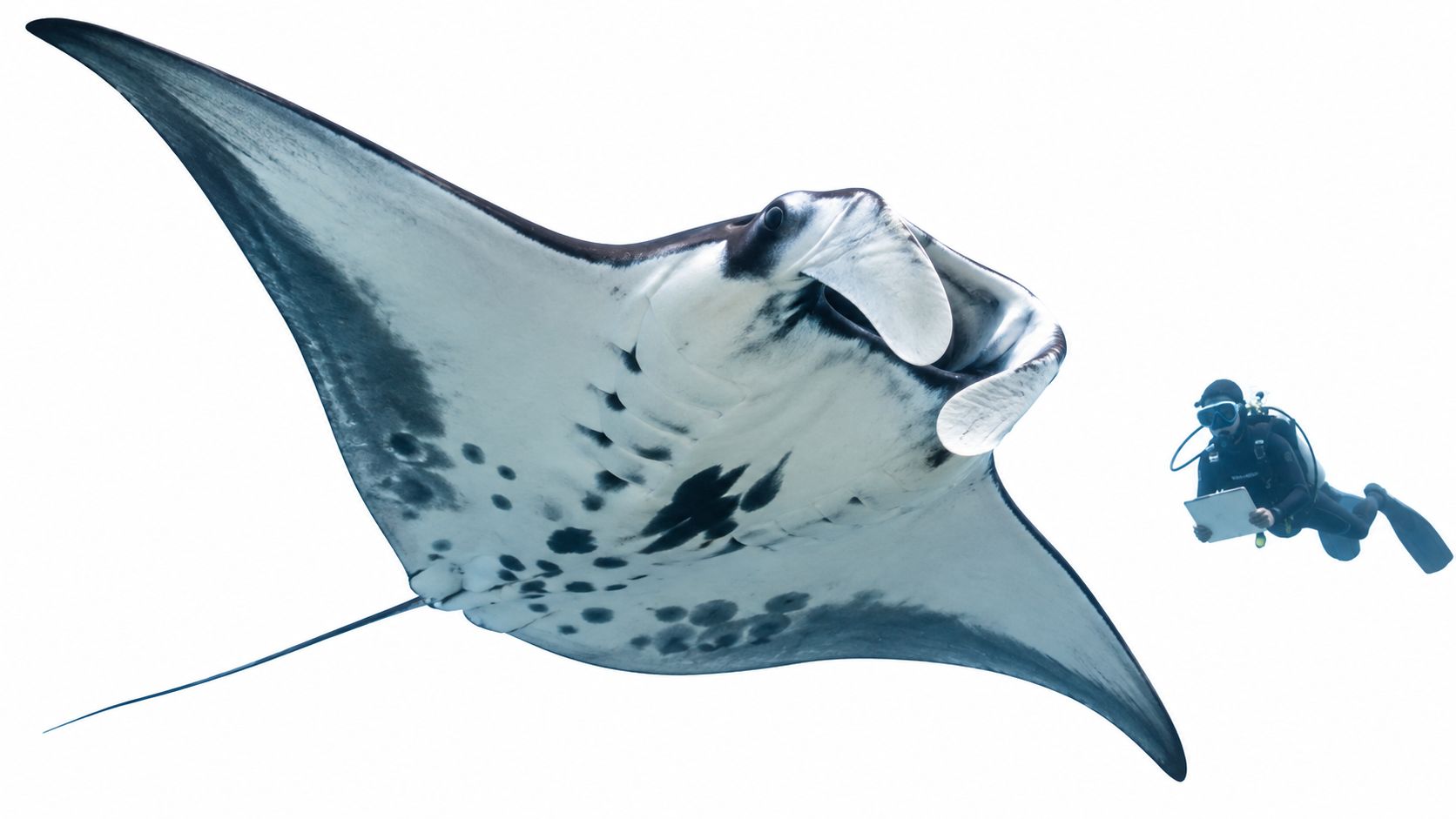
What the data says about stability
Long-term monitoring found that Garden Eel Cove supported larger aggregations than Keauhou, while the two sites together held a near 1:1 sex ratio and showed strong connectivity between locations. The same body of work also tied seasonal and year-to-year shifts in manta numbers to zooplankton density. That is the part divers feel on the water. Some nights the plankton stack up and the mantas arrive quickly. Other nights the beam stays quiet, even at a site with a strong track record.
The bigger point is that repeated visitation did not automatically break the fishery of the dive itself. The population remained comparatively stable through the study period, which is encouraging, but it does not mean the site can absorb careless behavior forever. Hawaiʻi's manta encounters depend on management that keeps the food source, the bottom, and the viewing lane intact.
NOAA-reviewed material adds a caution that matters to anyone who drops below the surface. A heavily used Kona manta site showed fewer emergent zooplankton and lower zooplankton diversity than a less-used comparison site, and the review pointed to inadvertent benthic damage by divers as a possible factor. That turns good buoyancy into more than etiquette. It protects the patch of reef that keeps the lights productive.
How to vet a responsible trip
A responsible operator makes the conservation piece visible before the dive starts.
- Clear light protocols, because the feeding station works best when everyone knows where the beam belongs.
- Controlled group flow, because crowding makes it harder to hold position without brushing the bottom.
- Honest briefings about low-activity nights, because wildlife is never guaranteed.
- Sighting logs and ID records, because monitored encounters reveal more than marketing copy.
- Buoyancy expectations, because divers who stay off the substrate reduce habitat stress.
- Straight reschedule policies, because weather, plankton, and site conditions change.
If an operator cannot explain how it keeps divers from crowding the feeding lane or disturbing the bottom, that is a poor sign.
Ask how they handle low manta nights, how they keep photographers from drifting into the path, and what they do when the site gets busy. Those answers say more about conservation standards than a polished sales pitch ever will.
Photography Tips for the Manta Dive
Manta photography is a control problem, not a gear problem. The best frame isn't the one with the biggest camera rig, it's the one where the manta, the light field, and the divers all make visual sense together. If the shot doesn't show the feeding context, it usually doesn't show the encounter well.
Camera settings that work better underwater
Wide-angle lenses are the safest starting point because the animals move through the scene rather than sitting in one place. Fast apertures help, but the bigger win is strobe placement. Angle the strobes so they light the white belly and the diver group without blasting sand back into the frame. The goal is to keep the water column readable and avoid backscatter from the bottom.
For videographers, ambient light can work if the site is clean and the light field is strong, but don't overreact to every pass. Let the manta complete its movement through the beam. Snorkel photographers have a slightly different job, since the top-down angle changes the composition, but the same principle applies, stay calm and let the animal come into the lane.
What to avoid when shooting
- Don't block the feeding path, because the manta's path matters more than your framing.
- Don't fire strobes at other boats' subjects, because the site is shared and the crowd can get chaotic fast.
- Don't drift forward for a closer shot, because that usually creates a worse photo and a worse encounter.
- Don't over-light the sand, because the backscatter ruins the image and stirs visibility problems.
A good photographer on this dive treats the lights as part of the whole scene, not just as a subject spotlight. The strongest image usually includes the cone of plankton, the group of divers or snorkelers, and the manta moving naturally through the beam. That's also why a well-run brief matters so much. If the crew explains positioning clearly, photographers can work without turning the encounter into a chase.
Choosing a Reputable Operator and Booking Your Dive
The trip lives or dies on operator discipline. You want a crew that explains the dive clearly, manages spacing well, and tells you the truth if conditions don't favor a strong night. That's the practical checklist, more than the brochure language.
What to look for before you pay
A solid manta operator should offer small-group control, conservative light use, clear conservation briefings, visibly maintained gear, and honest weather-reschedule communication. If the team is vague about any of those pieces, that's a warning sign. You're not just buying transport, you're buying the way the evening is managed in the water.
One option that fits those criteria is Kona Honu Divers, which runs a two-tank manta dive and snorkel at Garden Eel Cove and includes the kind of site-specific setup this trip depends on. The operator also publishes a review widget so travelers can check recent guest feedback directly before booking.
The other reason to like a one-operator plan is simplicity. If you're staying longer on the Big Island and want to add different kinds of underwater time, Kona Honu Divers also offers blackwater night dives and advanced two-tank charters, which makes it easier to build a full dive trip without jumping between companies. That matters if you care about keeping logistics clean and the experience organized.
Reserve the manta trip through Kona Honu Divers if you want a Garden Eel Cove night dive that's built around real site management, clear briefings, and a practical approach to wildlife viewing. If you're pairing the manta encounter with other dives on the Big Island, their blackwater and advanced charter options make it easy to keep the rest of your itinerary aligned with the same operator.