
You're probably comparing a couple of Kona operators right now, wondering which manta ray night dive is actually worth your money and which one just sounds good in ads. The answer depends on the site, the crew's habits in the water, and whether they respect the mantas enough to let the encounter happen on the animals' terms.
A real manta ray dive Kona isn't a free-for-all swim in the dark. It's a controlled descent into an illuminated feeding zone, and the difference between a good night and a frustrating one usually comes down to staging, buoyancy, and the operator's discipline before the first manta even shows.
Descending Into the Dark
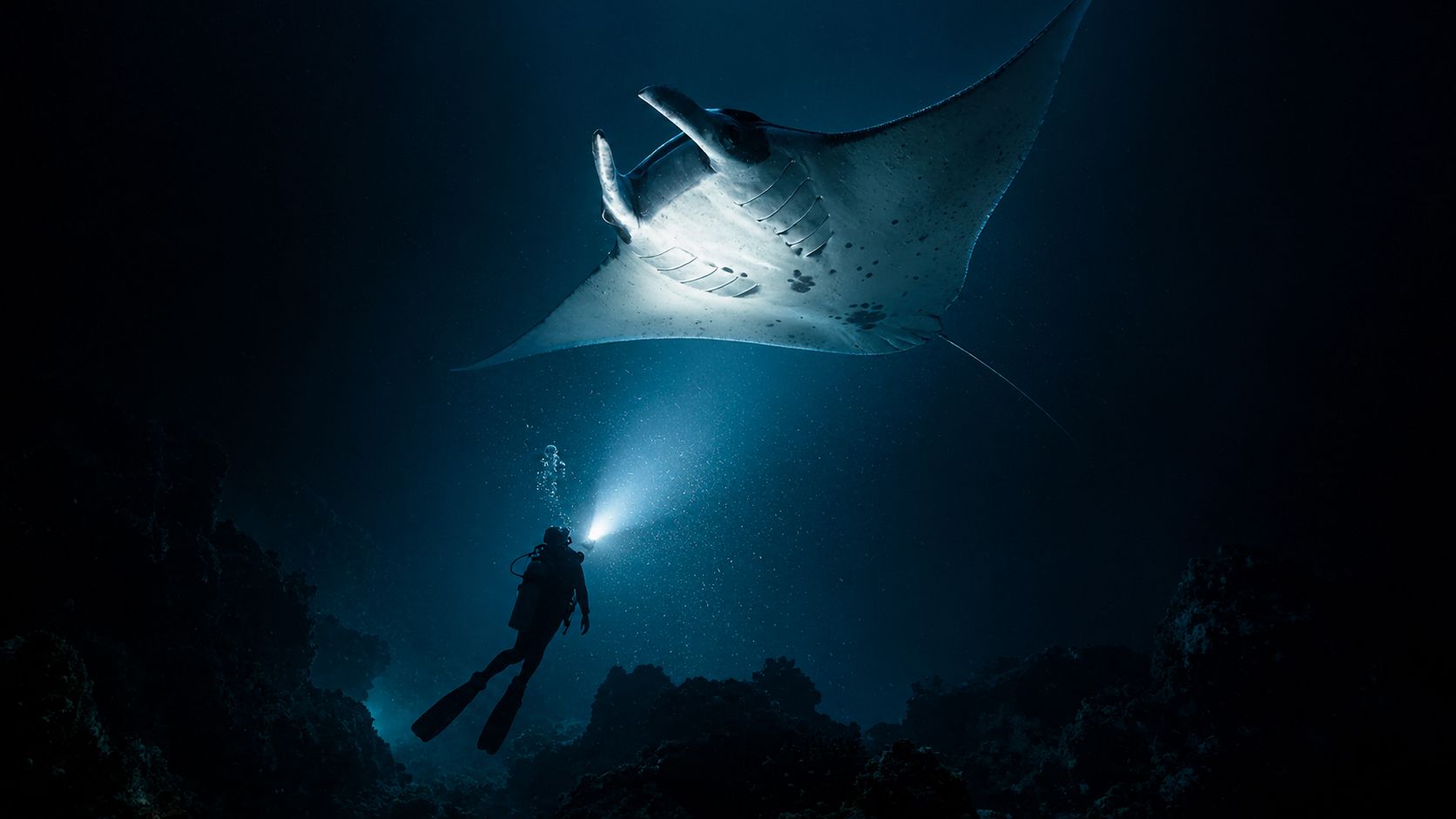
Dusk changes the whole harbor. The ocean looks ordinary from the dock, but once the boat clears the shoreline and the lights on deck start to dominate, the night dive stops feeling like a daytime excursion and starts feeling like a deliberate setup for one specific thing, a clean, calm, low-impact encounter. If you want the mechanics of that transition in more detail, the night-diving overview at Kona Honu Divers is a useful companion.
The best operators don't rush this part. They brief, they settle the group, and they keep the water column in mind long before anyone rolls back in. That matters because the first moments underwater are when divers either get oriented and relaxed, or start burning attention on their own positioning.
What the first minutes feel like
The backward roll into black water is the sharpest mental shift in the whole experience. Your torch cuts a narrow cone, the surface disappears fast, and the illuminated patch below becomes the only place your eyes can really trust. That's also when the manta encounter stops feeling like a “search” and starts feeling like a staged observation event.
Hold position early, breathe slowly, and stop trying to predict the show. The animals read the light and the water better than you do.
Once the lamps are set and the plankton starts building, the dive becomes patient work. Nobody wins by fidgeting, rising off the bottom, or drifting into the open corridor. The magic is real, but the structure is practical, and the structure is what keeps the magic from turning messy.
Why Garden Eel Cove Is the Superior Choice
Garden Eel Cove, also called Manta Heaven, is the site I'd choose first for a proper manta ray dive Kona experience. It sits near Kona International Airport and is described as a naturally sheltered cove rather than an exposed open-ocean site, which matters at night because protection from large swells usually means calmer, more predictable staging conditions after dark. It also has a broad sandy viewing area, so divers can stay in place without spreading over fragile reef structure, unlike a harder, rockier setup that forces more awkward body position and more environmental risk.
Where is the best place to dive with manta rays gets asked constantly, and the honest answer is that site choice changes the entire tone of the trip. Keauhou's Manta Village has its own strengths, and it's historically important, but for a diver who wants the cleanest underwater layout, Garden Eel Cove gives you a more forgiving staging zone and less tension around reef contact.
What the geography buys you
The cove matters because night diving magnifies every small problem. A protected site reduces the odds that chop, surge, or sloppy positioning will turn a good briefing into a chaotic one. A bigger sandy patch also gives guides room to place the group sensibly, which keeps the water column open above the divers and lowers the chance of accidental reef contact.
A good manta site doesn't just hold mantas, it holds people well.
That's the part visitors often miss. They focus on where the rays have been seen, but the operational question is where divers can stage safely, with room to breathe, trim, and let the animals pass overhead. On that count, Garden Eel Cove is the cleaner choice.
The Mechanics of the Plankton Attraction System
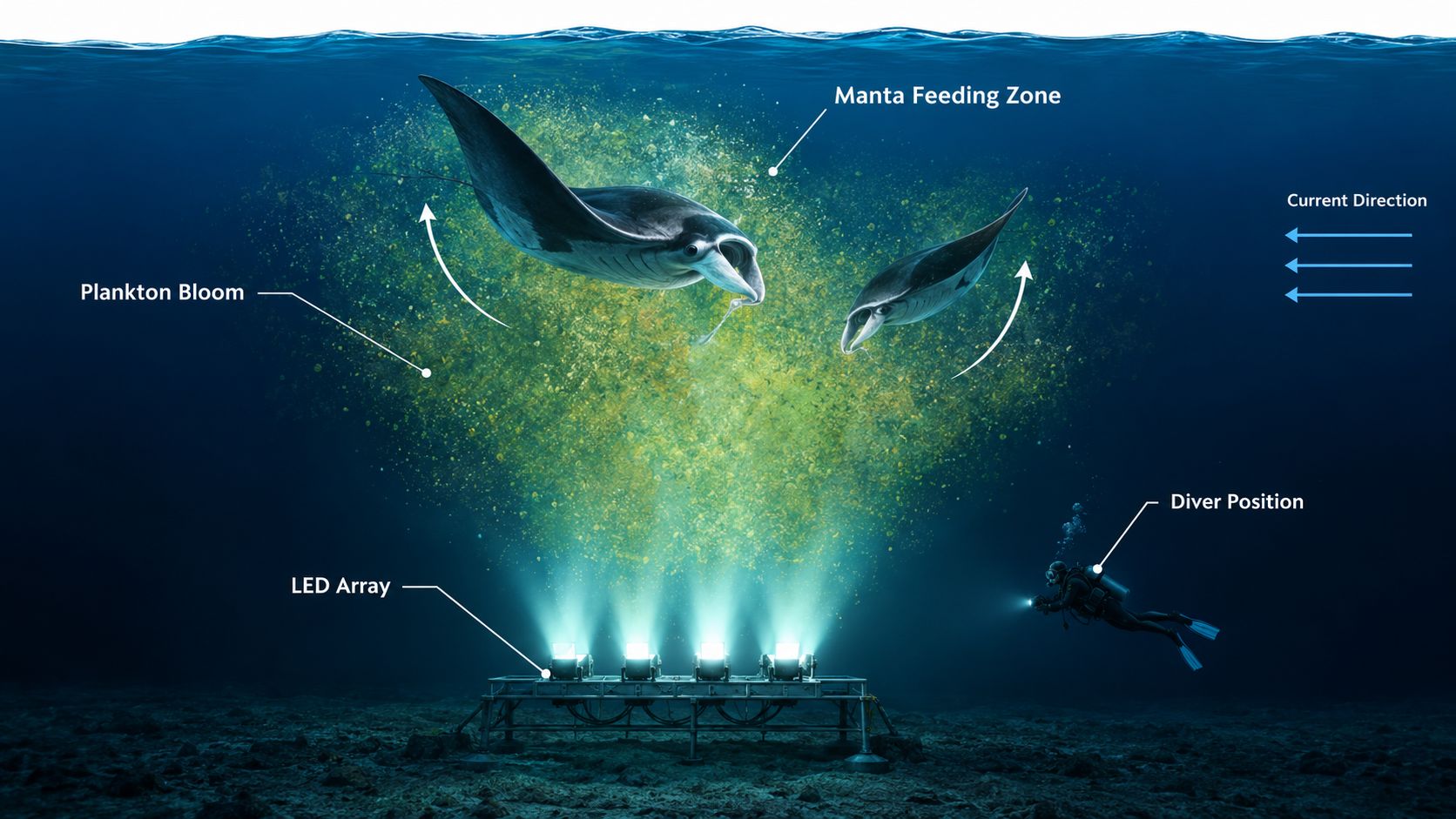
The Kona manta setup works because artificial light concentrates zooplankton, and reef manta rays come in to filter-feed through that illuminated water column. It isn't baiting in the crude sense people imagine. The lights create a feeding opportunity, the mantas recognize it, and the divers or snorkelers are there to watch, not to steer the interaction.
The important part is vertical separation. Divers belong low on the sand, rubble, or boulder bottom with their lights pointed upward, while snorkelers stay at the surface and point lights downward. That split creates a clean corridor for the mantas to bank, turn, and feed without having to thread through a crowd of bodies and bubbles.
Scuba diving versus snorkeling for manta rays is really a question of where you want to sit in the water column. The answer affects visibility, comfort, and how much space the rays have to work with, so it's not just a preference issue. It's part of the animal's access.
What works, and what doesn't
What works is simple.
- Stay low: Divers on the bottom preserve the open water column the mantas need.
- Aim lights correctly: Up for divers, down for snorkelers, so plankton stays concentrated where it helps.
- Keep trim stable: Good buoyancy stops you from drifting into the feeding lane.
- Let the rays choose the pass: Their route changes with the plankton, not your expectations.
What doesn't work is just as obvious.
- Rising off the bottom: That shrinks the feeding corridor.
- Waving lights around: It breaks the pattern and can distract the group.
- Forcing a position for photos: The manta doesn't owe you a better angle.
Garden Eel Cove's setup makes these rules easier to follow because the site gives the group a sensible stage from the start. That's why the mechanics and the geography belong together.
Managing Expectations and Sighting Variability
The biggest mistake people make is treating the manta dive like a show with a fixed script. It isn't. Kona's resident reef mantas are present year-round, but the number you see on any given night depends on plankton concentration, sea state, moonlight, currents, and how the site is behaving that evening.
That's not a flaw in the experience, it's the reality of wildlife. Historical reporting from one Kona operator's public sightings log showed nights in 2026 with 5 to 7 mantas and other nights with 22 to 23 mantas, which is exactly why a simple promise of a consistent “90% sighting rate” doesn't tell you much about the quality of the actual encounter. Jack's Diving Locker sightings report is useful because it shows the spread, not just the headline.
When to dive with manta rays in Kona matters less than people think if they're chasing a guaranteed number and more if they're trying to manage expectations realistically. A low-count night can still be excellent. A big-count night can still be sloppy if the sea state is poor or the operator doesn't hold the group well.
Reading the night correctly
A few things separate a realistic guest from a disappointed one.
- Sighting versus spectacle: Seeing one manta is still a legitimate success.
- Count doesn't equal quality: More animals can mean more movement, not always more comfort.
- Conditions change the mood of the dive: Wind, current, and light all shape the encounter.
- Pressure makes things worse: Asking crews to chase rays or switch sites unsafely is the wrong move.
The commercial temptation is to sell certainty. The better approach is to sell the truth, which is that Kona offers reliable residency but variable nightly behavior. That's a much more useful promise, and it respects both the guest and the animals.
Safety Protocols and Animal Welfare Rules
The key rule is no touching. Contact can remove the manta's protective mucus layer, and chasing, grabbing, encircling, or trying to ride a ray disrupts feeding behavior. Those aren't etiquette suggestions, they're the line between respectful observation and bad practice.
Responsible diver etiquette should be part of every briefing, not an optional extra. Divers should stay on or near the sand, rubble, or boulder bottom. Snorkelers stay at the surface. Divers keep exhaled bubbles out of the manta's face. Everyone keeps the water column open.
If your operator treats the briefing like a formality, that's your warning sign.
The other issue is operational safety, which people often underplay because the mantas themselves are gentle. The genuine risks are crowding, poor light discipline, and vessel congestion. A responsible guest should ask practical questions before booking, such as how the operator manages spacing, whether snorkelers and divers are separated properly, whether propeller risk is addressed, and what the emergency plan looks like if conditions deteriorate.
A Hawaiʻi County safety assessment also noted that state permits did not impose activity-specific limits, participant-capacity restrictions, location rules, lighting requirements, propeller-guard requirements, or medical-equipment requirements for manta viewing operations. That gap is exactly why the burden shifts to the operator and the guest. If the operator's answers sound vague, move on.
The Kona Honu Divers Difference
Kona Honu Divers runs its manta ray night dive as a structured operation, not a loose gathering of boats. The team offers a 2-tank manta dive and snorkel option that combines a daytime reef dive with an evening manta dive at Garden Eel Cove, and that site choice lines up with the sheltered geography and better staging space discussed above. If you're comparing operators, that sequence matters because it builds the day around diving rather than just tacking a night outing onto a rushed schedule.
The practical details count too. Kona Honu Divers uses spacious custom boats, maintains gear on proactive service schedules, and includes complimentary nitrox for divers who can use it. That kind of setup doesn't make the mantas more cooperative, but it does make the whole day smoother, which is exactly what you want before a dark-water dive.
What a good operation feels like
The right crew keeps the staging area calm. They don't crowd divers into bad positions, and they don't treat the encounter like a race to get the first look. They manage the water so the mantas can keep moving naturally through the light.
That's the standard that matters. Comfortable boats and polished logistics are useful, but the true difference is how the team behaves once everyone is in the water and the animals arrive.
Underwater Photography in the Dark
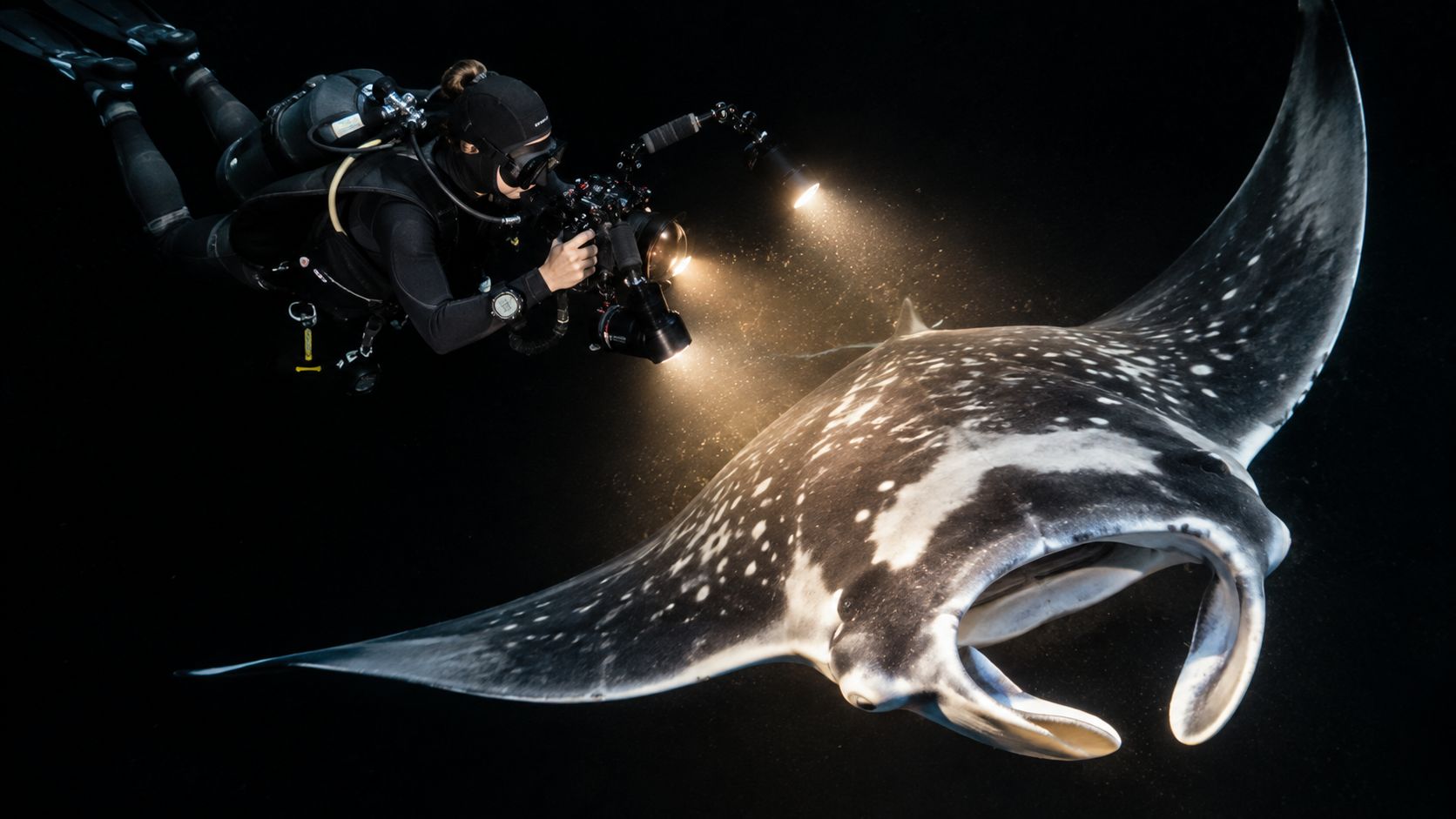
Night manta photography rewards patience and punishes sloppy lighting. If your strobes or video lights blast straight back into the water full of plankton, you get backscatter, and the image turns milky fast. The cleaner shots come from staying low, holding steady, and letting the ray move through a predictable lane instead of trying to intercept it.
That's why buoyancy control matters as much as camera settings. If you're bobbing off the bottom, the frame shifts, the light angle changes, and the manta passes out of composition before you can settle. A stable body position on the sand gives you the best chance at a usable frame and keeps the feeding lane open for everyone else.
What to prioritize
- Lock in your trim: A stable platform beats frantic finning every time.
- Keep the beam controlled: Light should help shape the scene, not wash it out.
- Expect banking turns: The manta's angle changes fast, so pre-visualize the pass.
- Respect the no-chase rule: The shot isn't worth pushing into the animal's path.
The best images come from anticipation, not pursuit. Watch where the plankton is thickest, track the manta's turning radius, and be ready before it arrives in the beam. That's the difference between a rushed snapshot and a frame that actually looks like a night manta dive.
Booking Logistics and Beyond the Mantas
Book early in your stay, because if weather or site conditions blunt the first outing, you want room to reschedule instead of missing the dive altogether. Pack for a night boat ride, not a beach lounge, because you'll get cold on the return trip even if the water feels comfortable on entry. If you're planning a broader Kona itinerary, it helps to pair the manta dive with other formats, including a morning two-tank charter, a blackwater night dive, or a more advanced dive trip when you want something different from the manta circuit.
You can also add a different kind of water time through Kona Honu Divers' dive tours, which keeps the logistics simple if you want one operator handling multiple days. For the manta-focused outing itself, this is the kind of trip where the right site, the right briefing, and the right restraint matter more than flashy marketing.
If you want a manta dive handled with clean staging, Garden Eel Cove positioning, and a crew that respects the animal first, Kona Honu Divers offers that style of trip in Kona. Visit Kona Honu Divers to compare the manta outing with their other dives and reserve the night that fits your schedule.