
Picture this: you're floating in the warm, dark waters off the coast of Hawaii, and suddenly, a massive, graceful creature with a wingspan wider than you are tall glides silently just inches over your head. This isn't a once-in-a-lifetime lucky encounter. This is the world-famous manta ray dive in Kona, one of the most reliable and utterly magical wildlife experiences you can find anywhere on the planet.
What Makes the Kona Manta Ray Dive So Unique
The Kona manta ray dive isn't just another underwater excursion; it's a globally celebrated event that attracts ocean enthusiasts from every corner of the globe. The real magic lies in its incredible consistency and the clever, passive method developed to bring these gentle giants right to you.
It's less of a search and more of a beautifully orchestrated invitation. Operators have figured out how to create a situation where the mantas willingly show up, night after night, for a spectacular feeding display.
The Underwater 'Campfire'
The core of the experience revolves around what we lovingly call the underwater "campfire." Divers find a spot on the sandy ocean floor, arrange themselves in a circle, and point their powerful dive lights straight up. This cone of light acts like a massive bug zapper for marine life, attracting swarms of phytoplankton, the primary food for manta rays.
For those snorkeling on the surface, large, custom-built light boards float and shine powerful beams downward, creating the same effect. The mantas, having learned over decades where to find a free meal, gracefully swim into this all-you-can-eat plankton buffet. They perform an incredible underwater ballet, doing barrel rolls and somersaults to scoop up the food, often coming breathtakingly close. To get a deeper dive into the mechanics, you can read our guide on what the manta ray night dive is all about.
The Kona Coast has an astonishingly high success rate, with a reported 80-90% chance of seeing mantas year-round. This is thanks to the nutrient-rich currents that create the perfect conditions for plankton, turning spots like Manta Village and Manta Heaven into dependable feeding areas.
This predictability is precisely why the Kona experience has become a must-do for roughly 80,000 people every year. For more information about this incredible adventure, mantaraynightsnorkelhawaii.com is another excellent resource. The whole operation is designed around passive observation, ensuring a jaw-dropping show for us while putting the well-being of the mantas first, which truly cements its status as a world-class wildlife encounter.
To give you a quick snapshot, here’s a look at what defines the experience.
Kona Manta Dive At a Glance
| Key Factor | What to Expect |
|---|---|
| Interaction Type | Passive Observation. You remain stationary while mantas swim around you. |
| Primary Attraction | Plankton attracted by powerful lights, which in turn brings the manta rays. |
| Sighting Success Rate | Extremely high, typically 80-90% throughout the year. |
| Manta Behavior | Acrobatic feeding, including barrel rolls and graceful gliding close to viewers. |
| Best Time to Go | Year-round, with calm seas more common in the summer months. |
This unique combination of factors is what elevates the Kona dive from a simple tour to an unforgettable, almost spiritual, underwater event.
Choosing Your Ideal Manta Experience
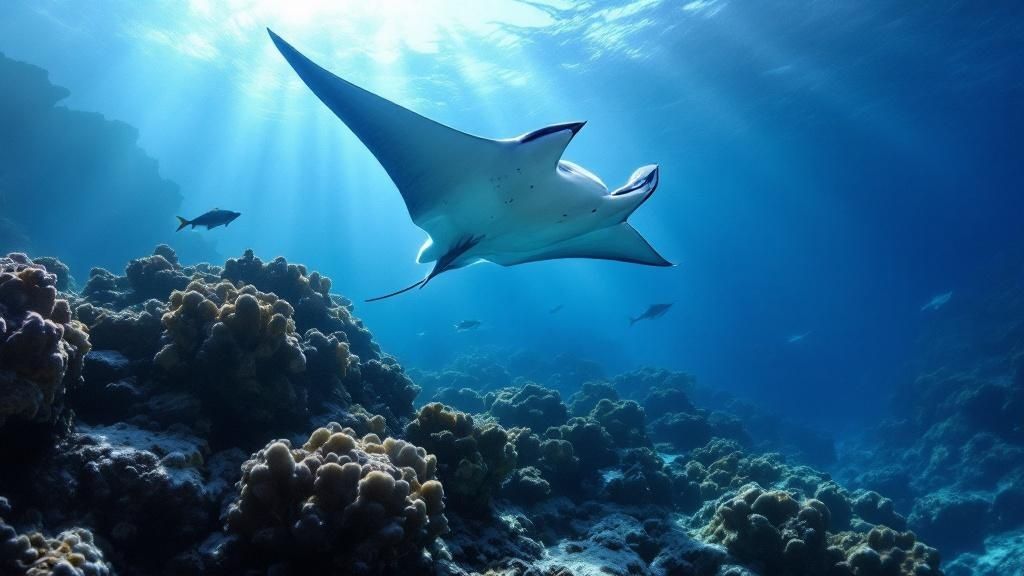
Not all Kona manta ray encounters are the same. In fact, where you go and whether you choose to dive or snorkel will dramatically shape your adventure. The first step to an unforgettable night is figuring out which experience is the right fit for you.
Kona has two primary sites where the magic happens: Manta Village and Manta Heaven. Each has its own distinct vibe, and knowing the difference is key to booking the perfect tour.
Manta Village vs. Manta Heaven
Your first big decision is picking the stage for this incredible underwater ballet.
-
Manta Village (Keauhou Bay): This is the original, most reliable manta site in Kona. Tucked right off the coast from the Sheraton Kona Resort, its biggest advantage is being sheltered from the open ocean, which means consistently calm waters. The boat ride from Keauhou Harbor is also incredibly short, often just a few minutes. This makes it a fantastic choice for first-time night divers, families, or anyone who gets a bit seasick.
-
Manta Heaven (Garden Eel Cove): Located further north near the airport, Manta Heaven can feel a bit wilder and more unpredictable. The conditions here can be more dynamic, sometimes with stronger currents. But the payoff? You might see even more mantas. It's a great spot for more seasoned divers who are comfortable in potentially choppier seas and want a more adventurous feel.
Expert Insight: Manta Village in Keauhou Bay is the classic, calm choice, while Manta Heaven offers a more dynamic environment that can sometimes attract a larger group of rays. Both are incredible, but your comfort in the water should guide your decision.
Dive or Snorkel: What's the Better View?
Next up: how do you want to see the show? From the seafloor looking up, or from the surface looking down?
Scuba Diving puts you right in the middle of the action. As a certified diver, you’ll descend to a sandy bottom, usually around 30-40 feet, and settle in. The view from below is breathtaking—you get to see the mantas' white bellies as they swoop and barrel roll just inches above your head, silhouetted by the lights. It's an incredibly powerful and intimate perspective.
Snorkeling gives you an amazing bird's-eye view. You’ll float on the surface while holding onto a large, custom-built light board. These lights attract the plankton, and the mantas come right up from the depths to feed. Watching them perform their graceful acrobatics from above is just as mesmerizing. It's the perfect option for non-divers and families. For more details, you can find great info on the top Kona tours and tips for snorkeling with manta rays.
Honestly, you can't go wrong with either choice. The best one really just depends on your certification level and what makes you feel most comfortable in the water. If you’re in a group with both divers and snorkelers or are still on the fence, check out this guide to the https://konahonudivers.com/konas-top-10-manta-ray-night-snorkel-tours/ to compare some of the best options available.
Booking Your Tour and Preparing for the Dive
Alright, you've decided where and how you want to see the mantas. Now comes the crucial part: choosing the right crew to take you there. Dozens of companies operate out of Kona, and picking a good one can be the difference between a magical memory and a frustrating night.
The absolute first thing you should look for is a company’s commitment to the manta rays themselves. I can't stress this enough. Find an operator who explicitly follows the established guidelines for responsible manta encounters. These aren't just suggestions; they are vital standards created to protect these gentle giants and keep this incredible experience sustainable for generations.
Vetting Your Tour Operator
A little homework upfront pays off big time on the water. Beyond checking for safety certifications (which is a given), you’ll want to dig into the details that make for a great trip.
Here are a few things I always check before booking:
- Group Size: Smaller groups are almost always better. You get a less chaotic, more personal experience. Ask about their maximum guest-to-guide ratio.
- Gear Inclusions: Does the price include good-quality rental gear? This means wetsuits that fit and powerful dive lights. Trust me, the right wetsuit is essential because the water gets surprisingly chilly after the sun goes down.
- Boat Comfort: See if you can find pictures of their boat. A comfortable, spacious vessel with a marine head (a toilet) makes the entire trip, especially the ride back, much more pleasant.
Crucial Question to Ask: "What is your policy if no manta rays show up?" While sightings are incredibly reliable, these are wild animals with their own agenda. A top-notch operator will have a "manta guarantee," meaning you can come back another night for free.
Preparing for Your Adventure
With your tour locked in, it’s time to think about what you need to do to get ready. Showing up prepared and relaxed means you can focus on the main event instead of sweating the small stuff.
Packing is simple. Bring a towel and a dry change of clothes or at least a warm jacket for the boat ride back—it can get cool quickly once you’re out of the water. If you even think you might get seasick, take something for it before you get on the boat.
Most operators provide all the necessary dive gear, but many experienced divers (myself included) prefer to bring their own mask for a guaranteed good fit. Bringing your own dive computer is also a good habit. A GoPro or other underwater camera is a fantastic idea, but make sure it’s securely attached to you. The last thing you want is to be fumbling with gear when a 1,000-pound manta is gliding inches from your face.
A little prep goes a long way, ensuring your manta ray dive in Kona is smooth, comfortable, and absolutely unforgettable.
What to Expect on Your Manta Night Dive
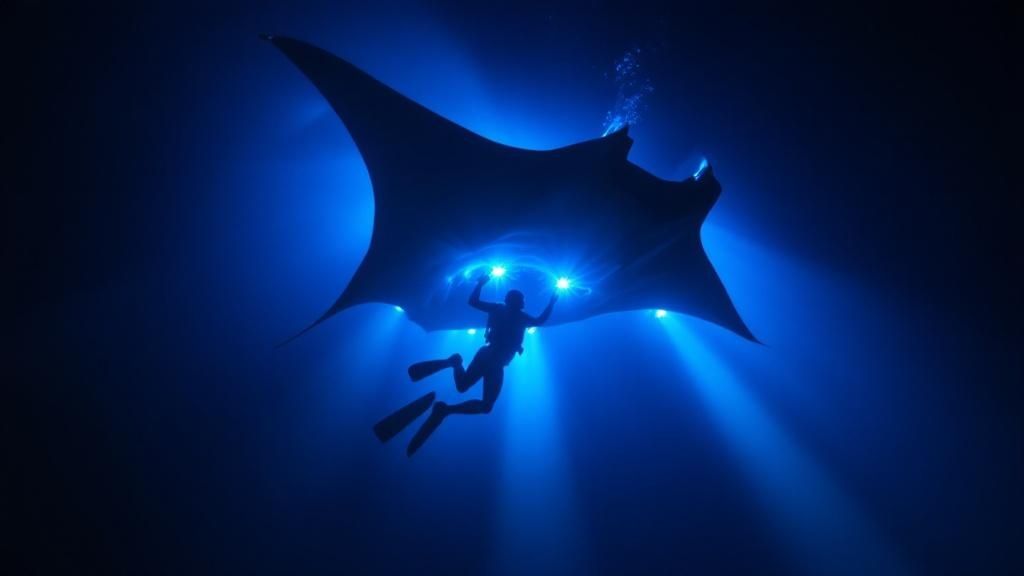
There’s a special kind of energy on the boat ride out. It’s a mix of jitters and pure, unadulterated excitement. As the sun sinks and splashes the Kona sky with orange and purple, your dive master will give a detailed briefing. This isn’t just about the safety checklist; it’s about setting the stage for what you’re about to experience.
They’ll introduce you to the concept of the underwater "campfire," the very heart of the manta ray dive in Kona. After descending to a sandy bottom, usually around 30-40 feet, you and your group will find your spots. The idea is simple: everyone points their dive torch straight up, creating a massive column of light that draws in a feast of plankton.
The Underwater Show Begins
Once darkness falls, the waiting game starts. You'll hear the rhythmic hiss of your regulator and the quiet sounds of the ocean around you. Then, you'll see it—a shadow moving just at the edge of the light. The first time a manta ray glides into view is pure magic, its enormous wingspan catching the beam.
Before you know it, more might join the dance. They perform this incredible, silent ballet of barrel rolls and swoops, sometimes just inches from your mask. Their white bellies flash as they turn over and over, scooping up the plankton you've gathered for them. This is a stationary dive; your only job is to stay put, breathe, and soak in the breathtaking spectacle.
It’s a feeling that’s hard to put into words. It’s like watching a stealth bomber made of silk perform acrobatics just for you. The sheer size and elegance of these creatures, combined with the silence of the deep, creates an experience that is both thrilling and profoundly peaceful.
Following the Rules of Engagement
Passive observation is the golden rule. Your guides will hammer this point home, and for a very good reason. The success of the entire encounter relies on making the mantas feel completely safe and unbothered.
To get the best possible views without disturbing these gentle giants, just keep a few key things in mind:
- Stay Low: Keep to the sandy bottom. This leaves the water column open for the mantas to do their thing.
- No Touching: It's tempting, but you must resist. Touching a manta ray can damage the protective mucous coating on its skin, making it vulnerable to infections.
- Let Them Approach You: Never, ever chase a manta. The most amazing moments happen when you stay perfectly still and let their natural curiosity bring them to you.
- Mind Your Bubbles: Try to time your exhales. A big cloud of bubbles right in a manta's path can startle it as it glides overhead.
This dedication to responsible ecotourism is a huge reason why the Kona manta ray night dive is considered a global model for sustainable wildlife interactions. By following these simple rules, you're not just a tourist; you become an active partner in protecting these magnificent animals for years to come.
Diving Safely and Responsibly with Mantas
Sharing the water with Kona’s majestic manta rays is a profound privilege. And with that privilege comes a big responsibility. The entire future of this incredible encounter relies on one simple idea: passive observation. We are guests in their world, and how we act directly impacts their well-being.
Your main job as a diver is to be a quiet, respectful observer. This all starts with solid buoyancy control, which is absolutely critical on a night dive. You'll be settled on the ocean floor for most of the dive, so get comfortable and find a good spot on a sandy patch. Once you're down, stay down. Unnecessary kicking and fidgeting just stirs up the bottom and can ruin the visibility for everyone.
The Two Golden Rules of Manta Encounters
Beyond your general dive skills, there are two absolute, non-negotiable rules for any manta dive. Think of these as the price of admission. They aren't just polite suggestions; they are vital for protecting these amazing animals.
-
Never Touch a Manta Ray: This is the big one. A manta’s skin is coated in a protective mucous layer that acts as its immune system, shielding it from harmful bacteria. When you touch a manta, you wipe off that protective slime, leaving it vulnerable to dangerous infections. It's that simple. Let them be the ones to get close; fight every instinct to reach out.
-
Don't Chase or Block Them: Chasing a manta is a surefire way to scare it off, ending the show for everyone. Your role is to be a statue on the seabed. By staying still, you create a safe space for the mantas to come in and perform their beautiful, looping feeding ballet in the lights above you.
Following these rules is what keeps the mantas coming back, night after night, year after year.
Becoming a Manta Advocate
Every single person on a Kona manta tour becomes a steward for these animals. Your guide will give you a detailed briefing, but it’s your actions in the water that truly matter. It’s about keeping your gear tight, being mindful of where your light is pointed, and simply respecting the personal space of these gentle giants.
By simply being a calm, respectful presence, you contribute directly to the conservation of this unique ecosystem. You are not just a spectator; you are part of a community effort to preserve one of the world's greatest wildlife encounters for future generations to enjoy.
The good habits you practice here will make you a better diver everywhere. The same principles of environmental awareness apply whether you’re with the mantas or exploring the best shore diving sites in Kona, Hawaii. A mindful diver is a good diver, no matter where you are in the world.
Answering Your Kona Manta Ray Dive Questions
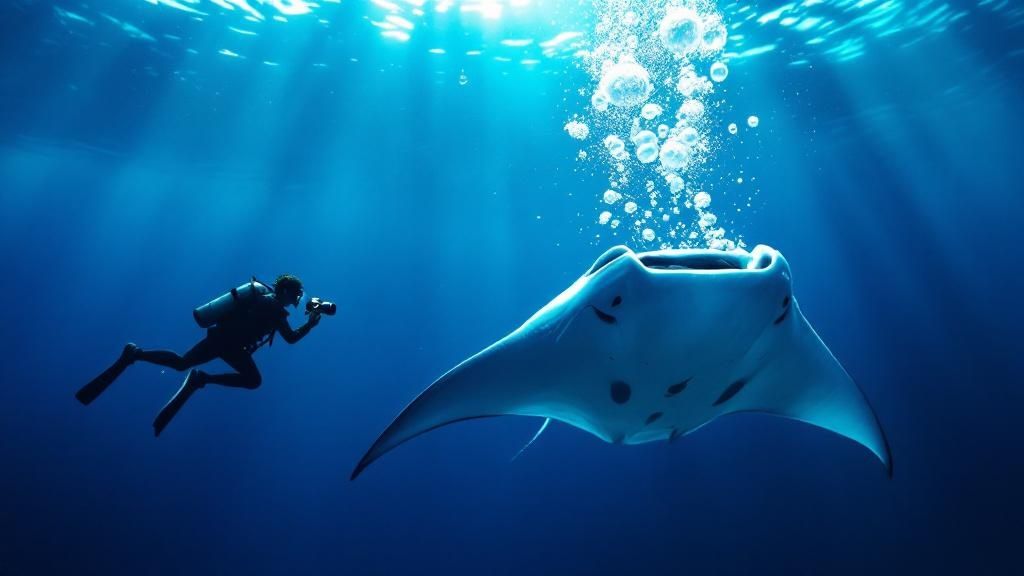
Even after doing all your homework, it’s completely normal to have some last-minute questions before an adventure as unique as the manta ray dive in Kona. It’s not your average dive, and ironing out the details beforehand just makes the experience that much smoother.
Let’s tackle some of the most common questions we hear from divers. Getting these sorted will help you show up to the boat ramp feeling totally prepared and ready for the show.
Is This Dive Safe for Beginners?
Absolutely, but with a couple of key considerations. The Manta Village site, which is the go-to for many operators, is relatively shallow at around 30-40 feet. Its calmer conditions make it an excellent spot for newer divers.
You will need at least an Open Water Diver certification. The good news is the dive itself is stationary—you find a spot on the sand and stay put, so you won’t be navigating complex reefs in the dark.
Still, it is a night dive, and that brings a different dynamic. The most important thing is to be honest with your dive operator about your experience level. I always recommend that newer divers choose a tour with a smaller group size; you’ll get more direct support from your guide.
What Happens If We Don't See Any Mantas?
This is a big one, and a valid concern. While the Kona manta dive has an incredibly high success rate, these are wild animals, not performers on a schedule. There's never a 100% guarantee.
Fortunately, reputable operators have this covered.
Most established companies offer a "manta guarantee." If you get skunked and don't see any mantas on your trip, they'll let you rebook for another night free of charge. Just know this is usually on a standby basis, fitting you in where there's space.
Before you book, just double-check the fine print on their specific guarantee policy. A pro tip: schedule your manta ray dive kona early in your vacation. That way, you have a few extra nights available just in case you need to use that rebooking option.
Can I Bring My Own GoPro or Camera?
Of course! You'd be crazy not to want to capture this. Seeing a giant manta glide inches over your head is a moment you'll want to relive through photos and videos.
That said, your gear shouldn't come at the expense of safety. Your number one priority is managing your buoyancy and staying aware of your surroundings—not fiddling with camera settings.
Here are a few tips I've learned from experience:
- Tether Your Gear: Securely clip your camera to your BCD. You do not want to be the person who drops their camera into the dark abyss.
- Be Mindful of Lights: Big, powerful video lights can be more of a nuisance than a help. They can distract the mantas and blind other divers. It's often best to let the massive "campfire" of lights set up by the crew do the heavy lifting.
- Consider a Pro: Many boats have a professional photographer on board who knows exactly how to get the shot. Buying their photo package afterward lets you just relax and enjoy the moment.
What's the Difference Between the Dive and the Snorkel?
It all comes down to your point of view. Both are incredible experiences, but they offer completely different perspectives on the manta ballet. If you're on the fence, learning more about what you should know about the manta ray dive in Kona can help you make the right call for your group.
Divers head down to the sandy bottom, find a spot, and look up. You get an immersive, belly-up view as the mantas swoop and perform barrel rolls right above your head. It feels incredibly close and personal.
Snorkelers stay on the surface, holding onto a large, custom-made light board. These boards shine powerful lights down into the water, attracting the plankton and bringing the mantas right up to you. You get a fantastic bird's-eye view of the entire scene unfolding below.