
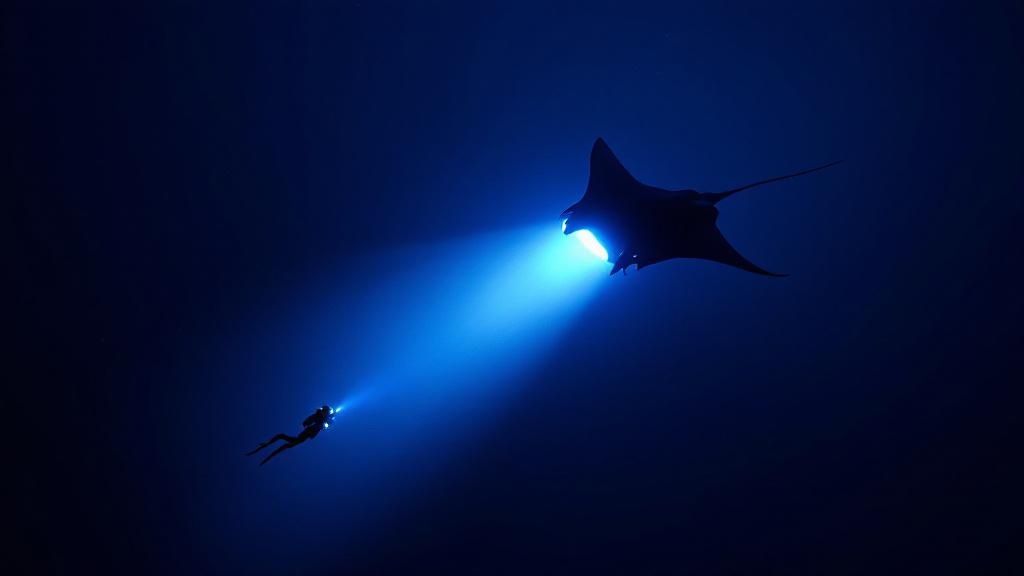
Picture this: you’re floating in the warm, dark waters of the Pacific just off the Kona coast. The last hints of sunset are fading from the sky. Below you, a circle of powerful lights clicks on, illuminating the ocean floor and creating a massive column of light—an underwater stage set for a truly spectacular show.
This isn't just any dive. It’s a carefully orchestrated invitation for Kona’s most famous and graceful residents. The concept behind it is brilliantly simple: the bright lights attract huge clouds of microscopic plankton, which happen to be the manta rays' favorite meal. It's like setting up a glowing, all-you-can-eat buffet in the middle of the ocean.
And then, they arrive.
Giant, shadowy figures emerge from the darkness, gliding effortlessly into the light. With wingspans stretching over 12 feet, these majestic creatures perform an acrobatic ballet, swooping and barrel-rolling through the light beams to scoop up mouthfuls of plankton. It’s silent, serene, and absolutely mesmerizing. You're not just watching nature; you're immersed in it.
A Bucket List Adventure Famous Around the World
This isn't just some local secret. The Kona manta ray dive has earned its reputation as a global hotspot for this one-of-a-kind marine encounter. Thanks to the region’s calm ocean conditions and a healthy, year-round population of manta rays, Kona offers one of the most reliable viewing opportunities on the planet.
It’s no surprise this adventure draws around 80,000 people every year for both snorkeling and diving tours. Two of the most famous sites, Manta Village and Manta Heaven, offer slightly different experiences, making this incredible encounter accessible to almost everyone. You can learn more about what makes this a top-tier global attraction by checking out the Kona Honu Divers site details.
The Kona manta ray dive is consistently ranked as one of the best night dives in the world. Its success rate is often over 90%, meaning your chances of an unforgettable encounter are incredibly high.
To give you a quick snapshot, here’s a summary of what the experience involves.
Kona Manta Ray Dive At a Glance
| Aspect | Description |
|---|---|
| Experience Type | Night dive or snorkel |
| Main Attraction | Pelagic Manta Rays feeding on plankton |
| Location | Kona Coast, Big Island of Hawaii |
| Key Dive Sites | Manta Village (Keauhou Bay) & Manta Heaven (Garden Eel Cove) |
| Depth | 25-45 feet for divers; surface for snorkelers |
| Success Rate | Very high, typically over 90% chance of sightings |
| Best Time to Go | Year-round |
This table provides a high-level overview, but let's break down exactly what your personal experience will look like.
What to Expect on Your Trip
Whether you're a seasoned scuba diver or trying snorkeling for the first time, the entire encounter is built around passive observation. The goal is to be a respectful guest in their underwater dining room.
- For Divers: You’ll descend to a sandy bottom, usually around 35 feet deep, and find a spot around the circle of lights—often called the "campfire." From there, you just settle in and look up as the mantas glide, swoop, and dance right over your head.
- For Snorkelers: You'll float comfortably on the surface, holding onto a custom-built light board. This board shines light down into the water, attracting the plankton and bringing the mantas right up to you for an incredible top-down view.
Both options give you a front-row seat to one of the most awe-inspiring performances nature has to offer.
Meet the Gentle Giants of Kona
The chance to see manta rays up close in Kona is more than just a cool dive—it’s a genuine connection with one of the ocean's most intelligent and graceful animals. When you understand a bit about who these creatures are, the whole experience transforms. It stops being just an activity and becomes a truly memorable encounter with wildlife.
The mantas you'll meet here aren't just passing through. They are part of a resident population of reef manta rays (Mobula alfredi), the second-largest ray species on the planet. And they are big! It's hard to appreciate their scale until you're in the water with them, but their wingspans can stretch over 12 feet. Despite that impressive size, they are completely harmless to us, as their diet consists entirely of tiny plankton.
How the "Manta Buffet" Works
So, what's the secret to getting these magnificent animals to show up so reliably every single night? It's actually a beautifully simple concept: we create an all-you-can-eat buffet for them.
The powerful lights we bring into the water at night act like a giant magnet for plankton, drawing swarms of these microscopic organisms into a concentrated cloud. For the mantas, this is a five-star meal they can't resist. They glide gracefully into the light beams, mouths agape, performing their famous underwater acrobatics—swooping, soaring, and doing barrel rolls to scoop up as much food as possible.
It's a fantastic example of how tourism, when done right, can work in harmony with nature. We set the dinner table, and the mantas put on an unforgettable show. The sheer reliability of this encounter is a huge part of why you should go on a manta ray dive in Kona. It's honestly one of the most dependable big animal encounters in the world.
Getting to Know the Locals
Here’s what makes the Kona experience truly special: we know these mantas personally. Each manta ray has a unique pattern of black spots on its belly, which works just like a human fingerprint. Researchers and veteran divemasters use these spot patterns to identify, name, and track individual rays.
This has led to an incredible database that documents the local population. The effort started back in 1991 and has grown to include over 6,000 reported encounters and 28,500 sightings. Thanks to the nightly dives, we've gathered a treasure trove of information that helps scientists monitor the mantas' health, movements, and life cycles. You can even see the catalog of named mantas for yourself on the Manta Pacific Research Foundation website.
Did You Know? One of the very first mantas identified in Kona was a ray with a damaged left cephalic fin, appropriately named "Lefty." This was the start of a massive citizen science project, where every dive contributes to our understanding of these animals.
Knowing this adds a whole new layer to your dive. You aren't just seeing a manta ray; you might be meeting Big Bertha, Lefty, or any of the other regulars who have been greeting divers here for decades.
This deep connection to individual animals is why choosing an ethical tour operator is so critical. While Kona is famous for mantas, other places offer incredible, conservation-focused wildlife trips, like the fantastic whale watching experiences in Tasmania. When you join a well-run tour, you're not just a tourist; you're actively supporting the research and protection that helps Kona's manta population thrive.
Choosing Your Perfect Manta Dive Site
When you start planning your manta ray dive kona adventure, one of the first things you'll decide is where you're going to dive. It’s an incredible experience no matter what, but Kona’s two main manta sites offer surprisingly different vibes. Think of it like choosing a restaurant: do you want a cozy, reliable neighborhood spot, or a buzzing downtown hotspot with a bit more energy?
Your choice between the two famous locations, Manta Village and Manta Heaven, will really shape your night. Getting to know the personality of each spot helps make sure the adventure is a perfect fit for your comfort level, skills, and what you’re hoping to see. Let's break down what makes each site unique.
Manta Village: The Calm and Consistent Choice
Just offshore from the Sheraton Kona Resort in Keauhou Bay, you’ll find Manta Village. This is the original, the classic, the most famous manta ray dive site in Kona. It got its name because the resort has been lighting up the water for decades, attracting a steady buffet of plankton that the mantas simply can't resist. For reliability and calm conditions, this is the place to be.
Because it’s shallower and more sheltered, Manta Village is the ideal choice for a few different kinds of adventurers:
- First-Time Night Divers: If you're new to diving after dark, the calm, controlled environment here is the perfect way to build confidence.
- Families and Younger Snorkelers: The gentle water makes it a much less intimidating experience for kids or anyone who might feel a bit nervous in the open ocean.
- Anyone Prone to Seasickness: Many tour boats, including ours at Kona Honu Divers, can leave from the nearby Keauhou Harbor, which means the boat ride is just a few short minutes.
With a historical success rate of over 95%, Manta Village is one of the most dependable places on Earth to see manta rays. The consistency is simply unmatched.
The whole experience here feels intimate and almost serene. Divers settle onto a sandy bottom around 30-40 feet, while snorkelers hang out on the surface around floating light boards. It’s a truly classic manta ray dive kona experience.
Manta Heaven: A More Dynamic Encounter
Head north of Kona, near the airport, and you'll find a site called Garden Eel Cove by day and Manta Heaven by night. As the name suggests, this spot can be absolutely heavenly, sometimes attracting huge numbers of mantas for a truly spectacular feeding frenzy.
The trade-off? This site is typically a little deeper and more exposed to ocean currents and surge. That makes it a fantastic option for more experienced divers who are comfortable in potentially changing conditions. The reward for a bit less predictability is often a much bigger show.
Here’s a quick comparison to help you decide:
| Feature | Manta Village (South Kona) | Manta Heaven (North Kona) |
|---|---|---|
| Primary Vibe | Calm, predictable, and serene | Dynamic, energetic, and grand |
| Typical Depth | 30-40 feet | 35-45 feet |
| Conditions | Generally calm and protected | Can have stronger currents/surge |
| Best For | First-timers, families, snorkelers | Experienced divers, thrill-seekers |
| Sightings | Extremely consistent sightings | Often more mantas at once |
| Boat Ride | Shorter (from Keauhou Bay) | Longer (from Honokohau Harbor) |
Manta Heaven can sometimes have a dozen or more mantas swirling around at once, creating a ballet of chaos that seasoned divers find absolutely breathtaking. The slightly deeper setting at 35-45 feet can make the barrel-rolling mantas seem even more dramatic as they swoop up from the dark below.
Honestly, you can't go wrong. Both sites give you a front-row seat to one of the most magnificent shows in nature. The best decision really just comes down to how you feel in the water and what kind of atmosphere you're looking for on your manta ray dive kona night.
Preparing for Your Manta Ray Adventure
A mind-blowing manta ray encounter in Kona doesn't just happen the moment you splash into the water. The real magic begins with a bit of planning. Getting prepared ahead of time is the secret to shaking off any pre-tour nerves and making sure you’re truly ready to soak in the experience. It all comes down to picking the right crew, packing the right stuff, and knowing what to expect.
Think of it this way: you wouldn't show up to a marathon without training. Likewise, you don’t want to go into this incredible encounter without a little know-how to ensure it's safe, ethical, and utterly unforgettable. It all starts with choosing a tour operator who truly respects the mantas.
Choosing an Ethical and Safe Operator
The manta ray night dive is world-famous, which means a lot of boats are heading out each night. But they aren't all the same. Your top priority should be finding a company that follows strict, manta-safe guidelines. For a long time, the "Manta Ray Green List" was the go-to resource for finding operators who were serious about responsible tourism. While that program officially ended in 2023, its core principles are still championed by dedicated outfits like Kona Honu Divers.
So, what does a responsible operator look like in action? They will always:
- Give you a thorough safety and environmental briefing before anyone gets in the water.
- Enforce a strict "no touching" rule. This is critical for protecting the delicate, protective mucous layer on the mantas' skin.
- Have experienced guides in the water with you to keep everyone safe and make sure the rules are followed.
- Keep their boats and gear in top-notch condition.
Choosing a company that lives by these standards isn't just about your own safety—it's about making sure the manta ray dive kona remains a healthy, sustainable experience for years to come.
Key Insight: The best tour operators see themselves as guardians of the manta rays. Their primary mission is to give you a breathtaking experience while actively protecting the animals and their habitat. This deep-seated commitment is the mark of a truly professional company.
This ethical approach is also grounded in science. Since 2009, local underwater videographers have been meticulously tracking individual mantas, creating an incredible database on their movements and population health between the two main sites, Manta Village and Manta Heaven. This research helps operators understand sighting patterns and run their tours responsibly. To get a feel for the science behind the magic, you can dive into some fascinating manta ray sighting statistics and research.
What to Bring and What to Expect
Okay, you've booked with a great company. Now, what should you pack? Your operator will handle all the essential in-water gear, but bringing a few personal items can make your trip so much more comfortable.
What Your Operator Provides:
- Wetsuit: The ocean gets chilly after sunset, and a good wetsuit is key to staying warm and comfortable.
- Snorkel Gear or Dive Gear: This covers everything from your mask, snorkel, and fins to a full scuba rig for certified divers.
- Lights: This is the most important piece of gear! The lights are what attract the plankton that the mantas feed on. Divers get powerful handheld lights, while snorkelers gather around a floating light board.
Your Personal Checklist:
- Towel: Seems obvious, but you’ll be glad you have it for the ride back.
- Warm Jacket or Sweatshirt: The boat ride back to the harbor can get surprisingly cool. A dry, warm layer is a total game-changer.
- Reusable Water Bottle: Always a good idea to stay hydrated.
- Action Camera (Optional): Got a GoPro? Bring it! Just be sure to stay aware of your surroundings and give the mantas and other guests plenty of space.
- Motion Sickness Medication: If you even think you might get seasick, it's best to take something beforehand just in case.
Finally, remember to set your expectations. Kona is famous for its 90%-plus manta sighting success rate, but these are wild animals, and there are no guarantees. The best thing you can do is listen carefully during the briefing, follow your guide's instructions, and then just relax. You’re about to witness one of nature's most majestic underwater ballets as a privileged observer.
What to Expect on Your Manta Ray Night Dive
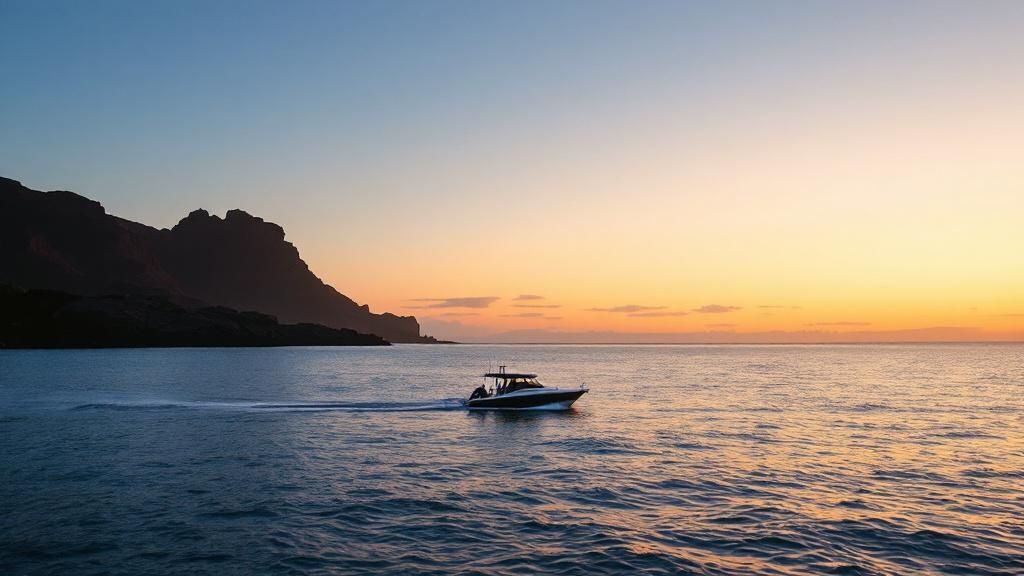
The whole experience starts long before you even dip a toe in the water. The real magic begins during that golden hour, as the boat leaves the harbor and makes its way along the beautiful Kona coast. Watching the sun dip below the horizon, painting the sky with fiery oranges and deep purples, you can feel the excitement building among everyone on board.
This isn't just a scenic cruise, though. It's an important part of the adventure. Since this is a night dive, there are special considerations for boating at night, and you’ll see firsthand how our expert crew handles everything with precision and care. During the ride out, the Kona Honu Divers team will give a thorough safety briefing. They'll shift from friendly hosts to focused pros, making sure everyone knows the plan.
They’ll cover everything from getting into and out of the water safely in the dark to the golden rule of passive observation. The goal is to make sure you feel totally comfortable and ready for the unique experience of a night dive.
Taking the Plunge
As dusk gives way to true darkness, we'll moor the boat at the dive site. The crew will make their final checks while you get your gear on. Then comes that incredible moment: stepping off the boat into the vast, dark Pacific. It's a thrill, for sure, but any jitters you might feel will vanish as your guide leads you toward the main attraction.
If you’re diving, you'll make a slow, controlled descent to the sandy bottom, usually about 35 feet down. There, you'll settle in around a circle of powerful lights pointing up towards the surface. We like to call this the "underwater campfire."
For snorkelers, the view from the top is just as spectacular. You'll hold onto a large, custom-made floatation board equipped with its own bright lights that shine straight down, creating a perfect window into the action below.
The Show Begins: A Silent Ballet
Once everyone is settled, a sense of quiet anticipation takes over. You just wait and watch as the beams of light cut through the dark water, attracting tiny clouds of plankton. And then… it happens.
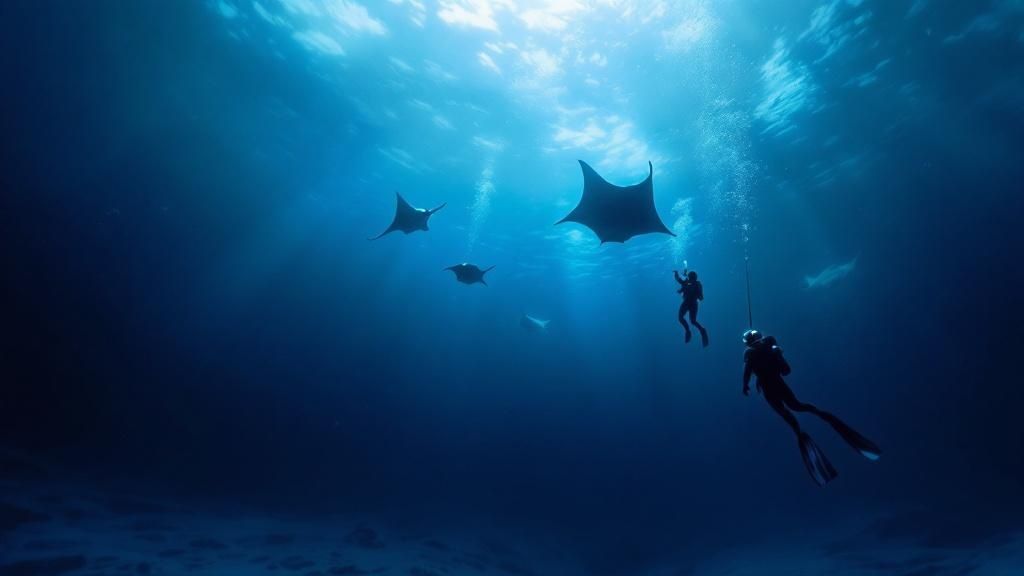
A dark shape emerges from the edge of the light, growing bigger and clearer until a full-sized manta ray glides into view. It’s a moment that truly takes your breath away, something no video can ever do justice. The manta soars with an effortless grace, its huge wingspan creating a stunning silhouette. Before you know it, another one appears, and then another, until the water is filled with these gentle giants performing a silent, mesmerizing ballet.
They swoop and barrel roll just inches above the divers and right below the snorkelers, their cavernous mouths open to filter the plankton-rich water. It's a sight to behold.
The most important part of this entire encounter is passive observation. Think of it this way: you're a guest in their dining room. By remaining still and letting the mantas lead the interaction, you help keep them safe and allow for an unbelievably close and natural experience.
This one rule is the key to what makes the Kona dive so special. To get a better handle on the philosophy behind it, you can read our detailed guide explaining what a manta ray night dive is.
The Afterglow
After about 45 minutes of pure awe, your guide will give the signal to head back to the boat. Divers make a slow, safe ascent, and snorkelers are helped aboard one by one. Our crew will be there to greet you with big smiles, hot chocolate, and some well-deserved snacks.
The ride back to the harbor is always buzzing with energy. Everyone is chattering away, sharing stories, and reliving their favorite moments from the dive. There's a real sense of shared wonder that connects everyone on the boat, whether it's their first time snorkeling or their tenth time diving with the mantas. You don’t just go home with amazing memories; you leave with a deeper connection to the ocean and its incredible inhabitants.
Diving with Respect and Protecting the Mantas
The fact that we can get so close to these magnificent creatures on a manta ray dive kona is an absolute privilege. It’s a delicate balance built on years of trust and respect. These aren't performers in an aquarium; they're wild animals graciously allowing us into their world.
To keep this incredible encounter possible for years to come, every single person in the water—diver and snorkeler alike—has a role to play.
The entire experience boils down to one simple, powerful idea: passive observation. Think of yourself as a quiet, motionless rock on the ocean floor. Your only job is to watch the ballet unfold around you. This hands-off approach is everything. It ensures the mantas stay safe, calm, and comfortable.
The Golden Rules of Manta Interaction
To make sure everyone—and every manta—has a safe and positive experience, there are a few simple rules. These aren’t just suggestions; they’re the non-negotiable house rules for visiting the mantas' favorite dining spot.
-
Observe Only, Never Touch: Manta rays have a special mucous coating on their skin that acts like an immune system, protecting them from harmful bacteria. Touching them, even gently, can rub off this protective slime and leave them vulnerable to infection.
-
Do Not Chase or Ride: We all get excited, but you must resist any urge to chase after a manta. Chasing, grabbing, or trying to ride a manta causes them immense stress. It ruins their feeding patterns and teaches them to fear humans.
-
Stay in Your Designated Spot: If you're diving, your place is on or very near the sandy bottom. If you're snorkeling, you'll stay at the surface, holding onto the light board. This keeps the water column—the space between the surface and the seafloor—clear so the mantas have plenty of room to glide and swoop without bumping into anyone.
Following these guidelines isn't just about good manners; it's an act of conservation.
By choosing a tour operator like Kona Honu Divers, who champions these responsible guidelines, you are directly supporting the protection of Kona's beloved manta ray population. Your participation becomes a positive force for conservation.
This shared commitment to ethical tourism is what has made the manta ray dive kona a world-class example of ecotourism done right. When you respect their space, the mantas feel secure, and that’s when they reward you with the breathtakingly close passes that make this dive an experience you’ll never forget.
Answering Your Top Questions About the Manta Ray Dive
It’s completely normal to have a few questions before jumping into an adventure like this. Getting the details sorted out ahead of time means you can relax and focus on the magic of the moment. So, let's dive into some of the things people ask us most often.
Do I Need to Be a Certified Diver?
Nope! And that's one of the best things about this experience. It’s designed to be accessible for just about everyone, whether you’re a seasoned diver or have never worn a pair of fins.
We run two different experiences at the same time, so you can pick what works for you:
- For Certified Divers: You’ll get to gear up and head down to the sandy bottom, about 35 feet deep. From there, you'll have a fantastic view looking up as the mantas swoop and glide right over your head.
- For Snorkelers: You’ll hang out on the surface, holding onto a specially designed light board. This board illuminates the water below, attracting plankton and bringing the mantas right up to you for a spectacular bird's-eye view.
No matter which you choose, you’re guaranteed a front-row seat for the show.
Is the Manta Ray Night Dive Safe?
Absolutely. When you book with a professional, safety-conscious company like Kona Honu Divers, this is a very safe activity. Our crew lives and breathes safety; it's our number one priority. We run through detailed briefings before anyone gets in the water, and our expert guides are with you every step of the way.
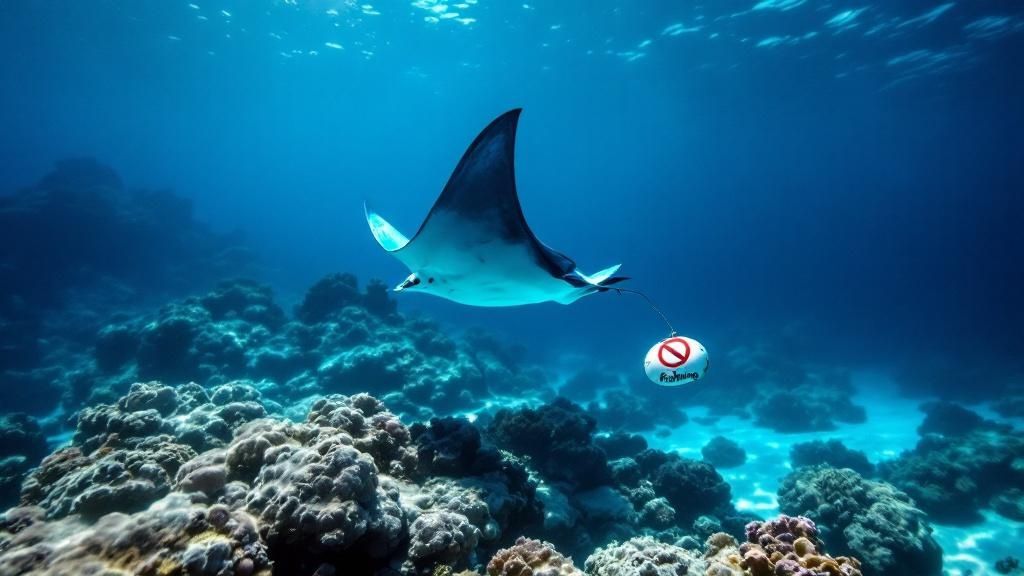
As for the mantas, they’re truly gentle giants. They don't have teeth, stingers, or barbs of any kind. Their only motivation is to feed on the tiny plankton drawn to the lights, and they have zero interest in bothering the humans watching them.
What Happens If No Manta Rays Show Up?
Kona’s manta dive has an incredible success rate of over 90%, but these are wild animals with minds of their own, so a sighting can never be a 100% certainty. We get it, and that’s why we have a "manta guarantee." If your tour is one of the very rare ones where no mantas appear, we'll get you back out on the boat another night for free (based on availability, of course).
Expert Tip: Book your manta tour for one of your first nights in Kona. That way, if you need to reschedule for any reason, you have the rest of your vacation to find another spot.
When Is the Best Time of Year to See Mantas in Kona?
This is the best part—anytime! The manta rays here are a resident population, meaning they hang around the Kona coast all year long. They aren’t migrating, so there's no "off-season." Ocean conditions are beautiful pretty much year-round.
So, the best time to go is simply when you can get here! You can read more about what you should know for your manta ray dive in Kona to feel fully prepared. The mantas are always waiting.