
There are few wildlife encounters on Earth as truly magical as the manta ray dive in Kona. It’s a world-famous night dive for a reason: you get to witness majestic manta rays, just inches away, performing a graceful underwater ballet as they feast on plankton.
Experience Kona’s Unforgettable Manta Ballet
Picture this: you're floating in the calm, dark waters off the Kona coast. Out of the darkness, a magnificent shape emerges—a giant manta ray with a wingspan wider than a car, gliding effortlessly right toward you. This isn't something you watch on a screen; this is the real, awe-inspiring experience waiting for you here.
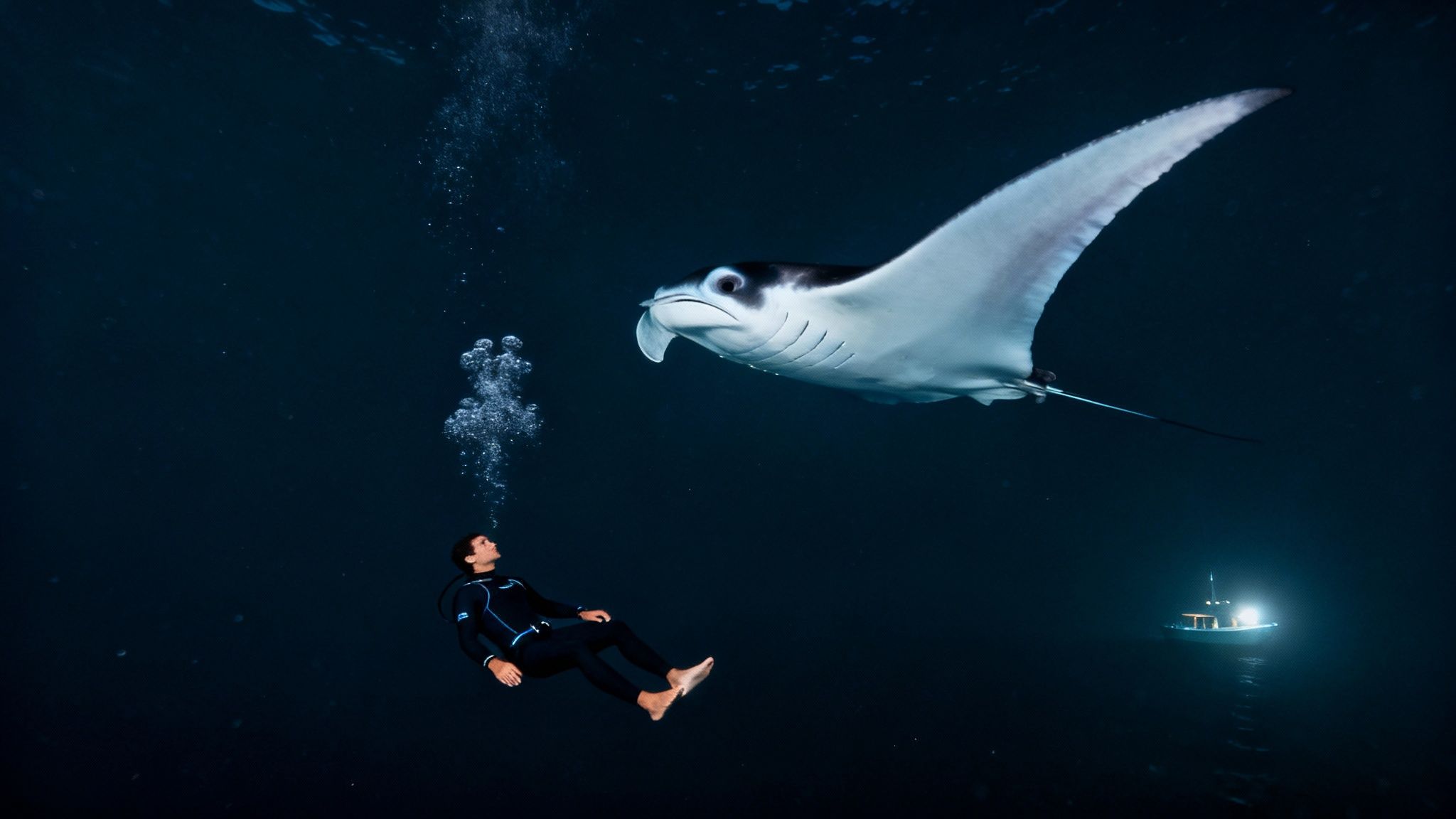
So, how did this specific spot in Hawaii become a global hotspot for these gentle giants? It all comes down to a perfect storm of natural conditions and a clever human innovation that creates a nightly, irresistible buffet for these plankton-lovers.
Why This Dive Is So Special
What sets the Kona manta ray night dive apart is that you're not just watching from a distance; you're fully immersed in the spectacle. You become a respectful guest at a breathtaking natural feeding event, witnessing a behavior that is both incredibly powerful and surprisingly delicate.
Best of all, with success rates consistently over 90% year-round, it's one of the most reliable big animal encounters you'll find anywhere.
Here’s a quick look at what makes this experience so unique:
- Up-Close Encounters: The mantas often glide within inches of divers and snorkelers, close enough to see every detail.
- The Manta "Dance": You'll see their famous acrobatic "barrel rolls" as they scoop up mouthfuls of plankton.
- Everyone Is Welcome: Both certified scuba divers and snorkelers can join in the fun.
- A Focus on Conservation: The entire operation is built on respecting and educating people about these protected animals.
At Kona Honu Divers, our mission is to provide an encounter that is safe, educational, and sustainable. We believe that by sharing this experience, we're helping to build a deeper love for our oceans and the amazing creatures that call them home. Don't just take our word for it—check out these stunning Kona manta ray dive pictures from our trips.
What to Expect On Your Dive
Your adventure kicks off with a scenic boat ride to one of Kona's premier manta ray sites just as the sun begins to set. On the way, you’ll get a thorough briefing on safety procedures and the proper etiquette for interacting with the mantas. It's all about making sure everyone—humans and mantas alike—has a great time.
To give you a snapshot of the adventure, here’s a quick rundown of what your dive will look like.
Kona Manta Ray Dive At a Glance
| Aspect | What to Expect |
|---|---|
| Experience Type | Night dive or snorkel in the open ocean |
| Marine Life | Giant Pacific Manta Rays (up to 15-foot wingspans) |
| Key Behavior | Mantas feeding on plankton attracted to underwater lights, often doing barrel rolls |
| Group Size | Small, intimate groups for a better, less crowded experience |
| Required Skill Level | Open to certified divers and snorkelers of all experience levels |
| Sighting Probability | Extremely high, with sightings on over 90% of nights |
This is truly an experience that sticks with you long after you've dried off.
It’s impossible to describe the feeling of watching a massive fish shaped like a stealth bomber materialize out of the darkness. It’s an awesome, once-in-a-lifetime moment that connects you directly with the magic of the ocean.
Ready to see it for yourself? We’d love to have you join us.
Getting to Know Kona’s Gentle Giants
Let’s get one thing straight: despite their massive size, with wingspans that can stretch over 15 feet, the manta rays you'll meet in Kona are completely harmless. It's a common concern, but any feeling of apprehension instantly melts away and turns into pure awe the moment you see one of these majestic animals gliding through the water. It’s a truly humbling experience.
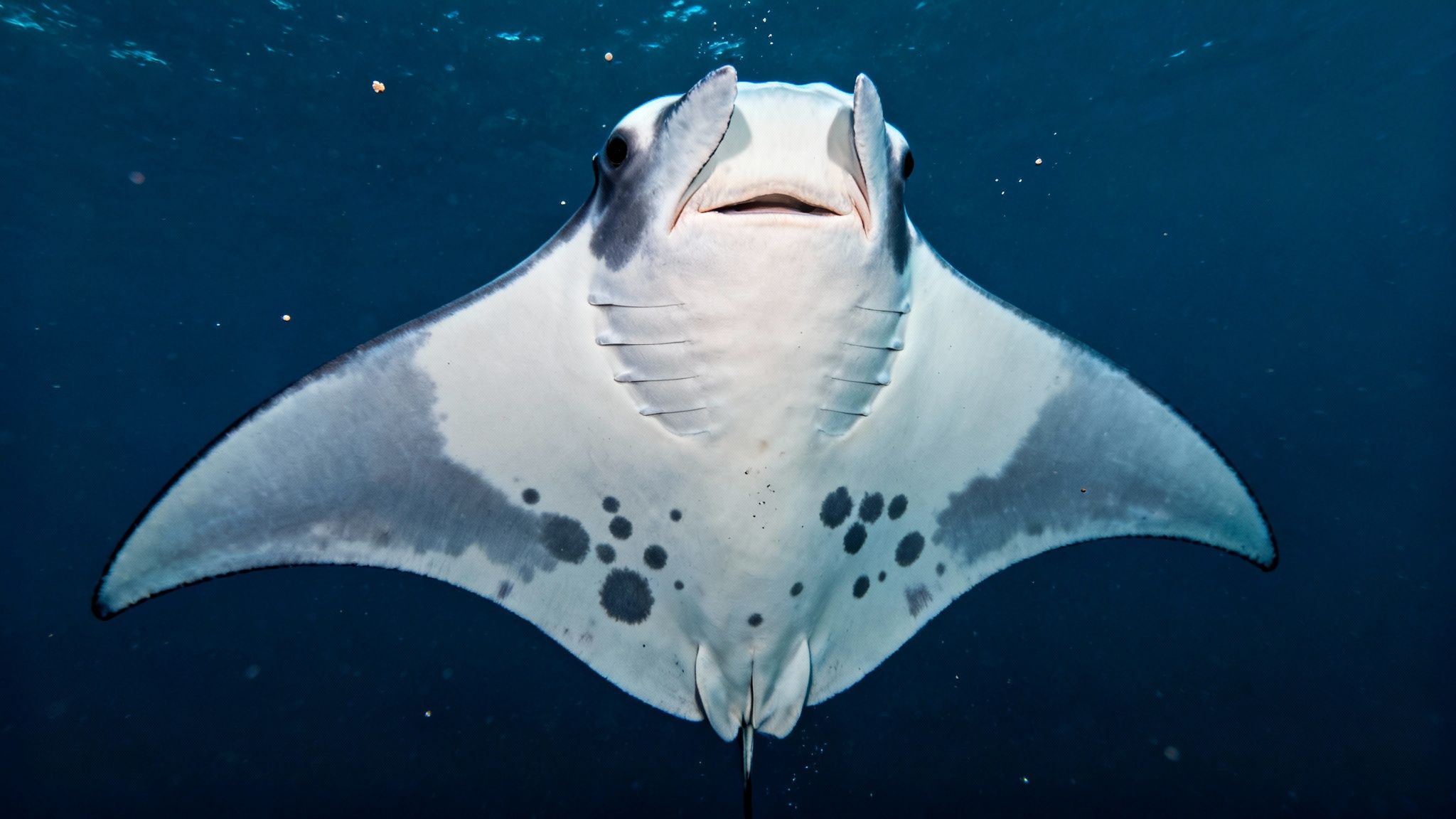
Unlike their cousins, the stingrays, manta rays have no stinger, barb, or any other defensive weapon. They're peaceful filter feeders, using those enormous mouths to scoop up microscopic plankton. They don't even have teeth for biting, just specialized plates to filter their food. So, you can relax completely and just soak in their power and grace.
The mantas here in Kona are also known for being incredibly curious and intelligent. It’s not unusual for them to make direct eye contact or perform a graceful barrel roll just inches away, seemingly as fascinated by us as we are by them.
The Secret in Their Spots
One of the coolest things about Kona's manta rays is the secret they carry on their bellies. Each manta has a unique pattern of black spots on its white underside, which works just like a human fingerprint. No two are ever the same.
This is more than just a neat fact; it's a powerful tool. This natural marker allows researchers, dive guides, and even guests like you to identify individual rays. When you join a manta ray dive in Kona, you're not just a tourist—you're stepping into a massive citizen science project that helps us understand and protect these amazing creatures.
This ability to track them has created a real personal connection with the local manta population. We've given names to many of the regulars based on their spot patterns or personalities, like "Big Bertha," "Sugar Ray," or "Melainey." After a while, a dive feels less like a wildlife encounter and more like a reunion with old friends.
Since 1991, researchers have been photographing and identifying individual manta rays using their unique ventral spot patterns. The first manta ray ever identified in Kona was 'Lefty,' and since then, the catalog has grown to include over 330 unique manta rays. Over the past 14 years, the database has recorded nearly 6,000 reported encounters and more than 28,500 individual manta sightings, contributing to global understanding of manta ray populations. Learn more about these incredible research findings on MantaRays.info.
Two Species You Might Meet
On any given night in Kona, you are most likely to meet the Reef Manta Ray (Mobula alfredi). This is the second-largest ray species on the planet and the star of the nightly feeding ballet. They’re known for their acrobatic barrel rolls and social nature at the feeding sites.
Every once in a while, though, we get a surprise visit from the much larger and more elusive Giant Oceanic Manta Ray (Mobula birostris). These are true ocean travelers, and seeing one cruise through the dive site is a rare and unforgettable treat.
Whether you see one manta or twenty, it's an experience that will stick with you forever. At Kona Honu Divers, we're committed to providing an adventure that’s not only breathtaking but also respectful and educational.
See what our guests have to say about this incredible experience:
We invite you to join our manta ray dive tours and meet these gentle giants for yourself. It’s a chance to connect with the wild heart of the ocean.
The Science Behind the Manta Spectacle
So, what makes the manta ray dive in Kona one of the most dependable big animal encounters in the world? It’s not magic, but it feels like it. The secret is a fascinating partnership between manta ray biology and a clever human setup, creating what we affectionately call the "campfire effect."
The whole show starts when dive operators place powerful lights on the ocean floor, pointing them straight up. Just like moths to a flame, tiny marine organisms called plankton are drawn to the bright beams. In no time, these lights create a thick, swirling soup of plankton—the manta rays' favorite meal.
For the mantas, this glowing all-you-can-eat buffet is an invitation they can't refuse. They gracefully glide into the light, performing their iconic barrel rolls to gulp down huge mouthfuls of their dinner. We’ve essentially created a reliable nightly feast that the local mantas have learned to show up for, year after year.
Kona's Natural Plankton Buffet
Of course, this whole operation wouldn't work if the plankton weren't already here in the first place. The Kona coast is perfectly situated to create massive, natural plankton blooms. Deep, nutrient-rich water pushes up against the island's underwater volcanic slopes, providing the ideal conditions for plankton to flourish.
Mantas have been feeding along these shores for centuries, long before divers ever showed up with lights. What the night dive does is concentrate this naturally abundant food source into one spot, turning a widespread feeding behavior into an incredible, up-close spectacle. Knowing this gives you a much deeper appreciation for the amazing ecosystem you're about to become a part of.
Thanks to these rich plankton blooms, the manta ray night dives off the Kona Coast have a staggering success rate of 80% to 90% year-round. Researchers and dive operators have been tracking individual rays here since at least 2013, building a huge database on their behavior. You can learn more about how these sites became so consistent over at MantaRayNightSnorkelHawaii.com.
The Famous Manta Dive Sites
While you might spot mantas feeding all along the coast, two specific locations have become the premier stages for this underwater ballet. Each spot offers a slightly different, but equally breathtaking, experience.
- Manta Village: This is the original and most famous site, located just south of Kailua-Kona near Keauhou Bay. The bottom is relatively shallow and sandy, creating a perfect natural amphitheater for divers to settle in and watch the show from below.
- Manta Heaven: You'll find this site, also known as Garden Eel Cove, north of Kona near the airport. It’s known for fantastic visibility and can sometimes attract even larger groups of mantas, making for a truly dynamic and action-packed dive.
Both of these world-renowned sites give you a front-row seat to one of the most magical wildlife encounters on the planet. By choosing a professional operator like Kona Honu Divers, you are guaranteed a safe and respectful viewing of this nightly spectacle.
Our experienced crew knows these sites inside and out, ensuring you have the best possible view of the manta ballet. See what our guests are saying about their incredible experiences.
Ready to witness the science for yourself? Our manta ray dive tours run nightly, offering an unforgettable adventure.
Choosing Your Manta Ray Adventure
There's more than one way to witness the incredible manta ballet, and picking the right one is all about getting the perfect front-row seat. Your two main options for the manta ray dive Kona experience are scuba diving or snorkeling. Each offers a completely unique and breathtaking perspective.
The best choice really boils down to your comfort in the water, whether you're a certified diver, and what kind of encounter you're dreaming of.
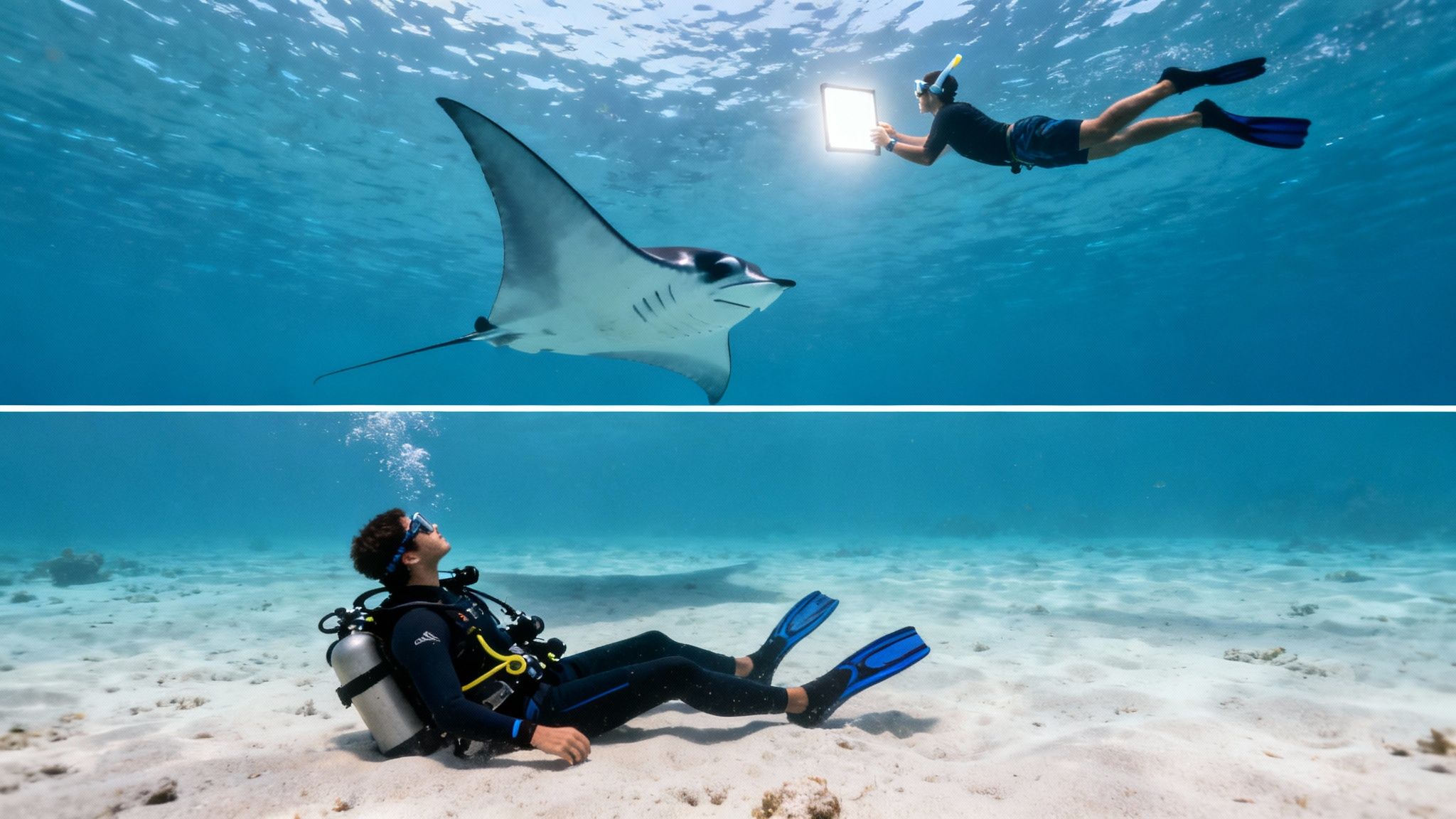
Whether you dive down or float on top, you’re in for an unforgettable night. Here at Kona Honu Divers, we make sure both options are safe, thrilling, and always respectful of the mantas.
The Diver's Perspective: Looking Up
For certified scuba divers, this is a truly immersive experience. You’ll descend with your group and settle onto a shallow, sandy patch of the ocean floor, usually around 25-40 feet deep. Think of it as your own personal underwater amphitheater.
From here, you get to look straight up as these gentle giants glide and swoop just inches over your head. It’s an unbelievable feeling to see the silhouette of a manta with a 12-foot wingspan block out the surface lights as it performs a graceful barrel roll. This bottom-up view is incredibly personal and makes you feel like you’re truly a part of their world.
The Snorkeler's Perspective: A Bird's-Eye View
Snorkeling is an equally magical, though totally different, experience. You’ll be floating comfortably on the surface, holding onto a specially designed light board. These boards shine powerful lights into the water below, attracting the plankton that the mantas come to feed on.
From your vantage point, you get a perfect bird's-eye view of the whole show. You can watch multiple mantas swoop, turn, and dance through the light beams beneath you. It’s a fantastic way to appreciate the sheer scale and grace of their movements, and it doesn't require any scuba certification, making it accessible to almost everyone.
Still on the fence? Our guide on whether it's better to snorkel or dive with manta rays can help you weigh the pros and cons.
To help you visualize the differences and decide which adventure is the right fit, here's a quick comparison of the two experiences.
Dive vs Snorkel: Which is Right for You?
| Feature | Scuba Diving | Snorkeling |
|---|---|---|
| Perspective | A bottom-up view. You get to watch mantas glide directly overhead, often just inches away. | A top-down view. You'll see the whole spectacle unfold in the light beams beneath you. |
| Certification Required | Yes, you'll need an Open Water certification or higher to participate. | Nope! This is perfect for anyone who is comfortable swimming in the ocean. |
| Proximity | Encounters can feel immense and incredibly close as the mantas swoop low over the divers. | Very close. The mantas come right up to the surface, but they stay a few feet below you. |
| Equipment | You'll use a full set of scuba gear, including a BCD, regulator, tank, and weights. | Just the basics: a mask, snorkel, fins, and a wetsuit to stay warm. |
Ultimately, both options provide an amazing and intimate look at these magnificent creatures in their natural habitat. You really can't go wrong!
More Than Just One Dive
Our most popular trip at Kona Honu Divers is the 2-Tank Manta Dive / Snorkel tour. This trip is the best of both worlds, combining two incredible experiences into a single evening. You'll start with a gorgeous twilight reef dive, watching the underwater world shift from day to night as the sun goes down. After a short surface interval, it's on to the manta site for the main event.
But the adventure in Kona doesn't stop with the mantas. For a different kind of thrill, the otherworldly Kona Blackwater Dive takes you on a surreal journey into the deep ocean. You’ll see the bizarre and beautiful creatures that rise from the abyss only at night. And for experienced divers looking to explore Kona's more remote sites, our Advanced Dive Tours are the perfect challenge.
No matter which adventure you choose, we’re here to make it unforgettable.
Getting Ready for Your Manta Ray Dive
A little bit of prep work can take a great dive and make it absolutely unforgettable. Getting ready for your Kona manta ray dive is pretty straightforward, but a few smart moves ahead of time will guarantee you’re comfortable, confident, and ready to enjoy every second of the show.
Let’s be honest, you want to be focused on the mantas, not on being cold or uncomfortable. That’s why thinking ahead is so important, especially for a night dive when the air cools down after the sun sets.
What to Toss in Your Dive Bag
Your comfort is everything. The boat ride back to the harbor can get surprisingly chilly once you’re out of the water, so packing a few key items makes a world of difference.
Here’s a quick and easy checklist of what you should bring:
- A Warm Jacket or Sweatshirt: Seriously, don't skip this. You'll thank us on the ride home when the ocean breeze kicks in. It’s a game-changer.
- Reef-Safe Sunscreen: If you're joining our popular 2-Tank Manta trip, you’ll be on the boat while the sun is still out. Protect your skin and our precious reefs by using only reef-safe options.
- Towel and Dry Clothes: Nothing beats slipping into something warm and dry after a dive. It makes the ride back so much more pleasant.
- Reusable Water Bottle: Staying hydrated is key. We have plenty of water on board, but bringing your own bottle helps us cut down on plastic.
- Your Own Gear (If You Want): We provide high-quality, well-maintained gear, but if you have a mask or computer you love, feel free to bring it along!
You can leave the heavy stuff at home! We’ve got all the tanks and weights covered. Our job is to make this whole experience as easy and fun for you as possible.
The Pre-Dive Briefing: What to Expect
Before we hit the water, your dive guide will walk you through a detailed pre-dive briefing. This isn’t just about checking boxes; it’s about making sure everyone is safe, knows the plan, and understands how to interact respectfully with the mantas. We'll go over everything from boat safety to the number one rule of manta encounters: look, but don’t touch.
This is also the perfect time to let us know if you have any jitters. Feeling a little nervous about diving at night? Prone to seasickness? Just tell us. Our crew has seen it all and is here to give you tips and reassurance so you feel completely at ease. We want you to be nothing but excited for the adventure ahead. So, ask away! This briefing is your chance to get all your questions answered so you know exactly what to do when you finally meet Kona’s gentle giants.
With Kona Honu Divers, you're in great hands. Our whole team is passionate about giving you a safe, educational, and truly breathtaking experience.
Diving with Respect for the Mantas
Seeing the manta ballet up close is an incredible privilege, not just another item to check off a travel list. With that privilege comes a huge responsibility to protect these gentle giants and their home. When you choose a responsible tour operator for your manta ray dive in Kona, you're casting a vote for conservation and helping preserve this amazing spectacle for the future.
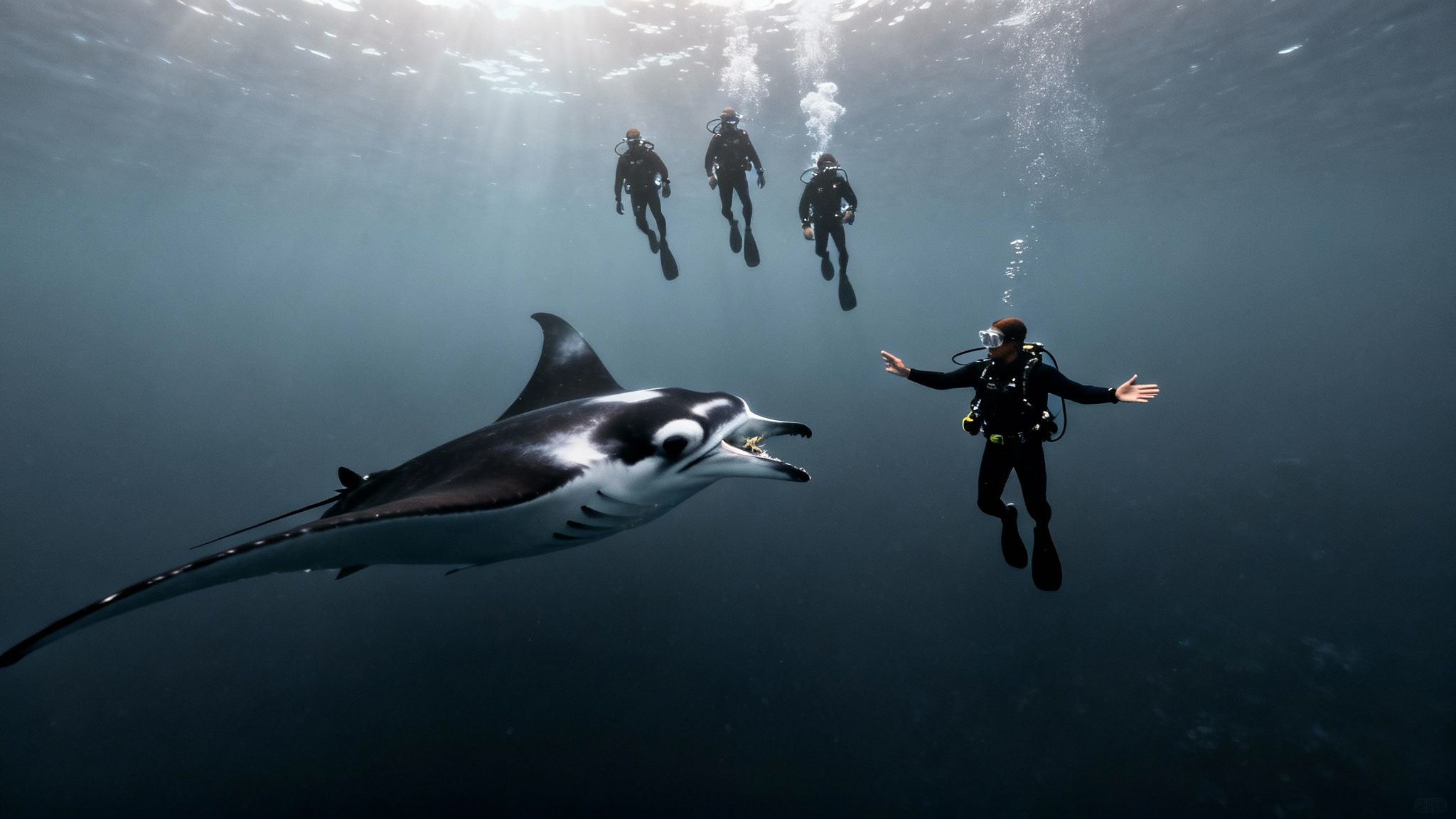
Here at Kona Honu Divers, we take this seriously. We're all about sustainable tourism and stick to globally recognized standards for interacting with manta rays. These guidelines aren't just rules; they're our way of making sure every encounter is safe for the mantas and magical for our guests.
The Golden Rules of Manta Interaction
The whole idea is passive observation. We're guests in their world, so we act like it. Mantas are naturally curious and will often get incredibly close on their own. Our job is simply to create a safe, non-threatening space for them to do their thing.
If you remember only one rule, make it this one: do not touch the manta rays. Ever. Their skin is covered in a protective mucus layer that’s like their immune system, warding off bad bacteria. Touching them strips this layer away and can leave them vulnerable to nasty infections.
Here’s exactly what we expect from everyone on our dives:
- Divers on the Bottom: All scuba divers find a spot on the sandy bottom and stay put. This keeps the water column wide open, giving the mantas a clear flight path to swoop, turn, and feed without obstacles.
- Snorkelers on the Surface: For snorkelers, the rule is to stay on the surface and hold onto the light board. Duck-diving down into the action can disrupt the mantas' feeding patterns and even cause a collision.
- Let Them Come to You: Never chase a manta, try to ride one, or swim in front of it. Just be still and calm. The less you move, the safer they feel, and the more likely they are to grace you with a close pass.
Following these simple rules is everything. It's not just about protecting the mantas; it's about getting a better experience. A calm, passive group gets to see the most natural and breathtaking behavior.
The Kona manta ray night dive has become a global model for marine ecotourism, drawing an estimated 80,000 people every year. While neither the reef manta (Mobula alfredi) nor the giant manta (Mobula birostris) is dangerous, listening to your guides is key for a safe and memorable dive.
Your Role in Conservation
By simply following these guidelines, you become a partner in marine conservation. The massive popularity of the manta ray dive in Kona creates a powerful reason for the community to protect these animals and their habitat. It transforms a bucket-list adventure into a meaningful act of stewardship.
Understanding proper etiquette is a huge part of the experience. You can get a head start by reading our guide on responsible and considerate diver etiquette. Your mindful participation helps ensure this magical encounter can continue to inspire awe for years to come.
Answering Your Manta Ray Dive Questions
It's natural to have a few questions before you commit to an adventure like this. Let's tackle some of the most common ones we hear so you can feel completely ready for your big night out with Kona's famous manta rays.
Do I Have to Be a Certified Scuba Diver?
Not at all! While you'll need at least an Open Water Diver certification for the scuba portion, our snorkeling experience is open to just about everyone.
If you're comfortable in the water, you can join the fun. This makes it a fantastic activity for families or groups where some people dive and others don't.
What if the Manta Rays Don't Show Up?
Manta rays are wild creatures, and we can't script their behavior. That said, the sightings here are incredibly reliable, with a success rate consistently over 90%.
Still, we get that it would be a huge bummer to miss them. That's why we have a "Manta Guarantee" at Kona Honu Divers. If your tour doesn't see a single manta, you can come back and try again for free on another night (as long as we have space). We're committed to making sure you have this amazing experience.
How Safe is the Manta Ray Night Dive?
Your safety is our absolute first priority, and the simple answer is: yes, it’s very safe. We run these tours in a controlled, relatively shallow area.
Every trip is led by seasoned PADI professionals who will walk you through a detailed safety briefing before you even touch the water. We provide all the lighting and safety gear you'll need, and the mantas themselves are gentle giants—they're just here for the plankton and pose no danger to people.
How Far Ahead Should I Book?
This is easily one of the most sought-after experiences on the Big Island, and our boats do fill up fast.
To be safe, we strongly suggest booking at least a week or two in advance. If you're coming during a busy season like summer or the holidays, booking even earlier is a good idea. A little planning goes a long way in making sure you don't miss out.
Ready to come face-to-face with Kona's gentle giants? Kona Honu Divers runs the Big Island's premier manta ray night dive and snorkel, led by a crew that’s spent decades getting to know these waters. We focus on a safe, respectful, and genuinely magical encounter you'll be talking about for years.
Book your manta ray dive tour today and prepare for an adventure you'll never forget.