
Picture this: you're floating in the warm, dark embrace of the Pacific Ocean. Suddenly, giant, graceful shadows emerge from the blackness, gliding effortlessly just inches away. This isn't a scene from a science fiction film; it's the world-famous manta ray dive in Kona, an experience that tops bucket lists for ocean lovers across the globe.
Embark on Kona’s World-Famous Manta Ray Dive
This guide is your deep dive into every aspect of this incredible adventure. We'll explore exactly why Kona became the planet's most reliable spot for this underwater ballet and get you properly acquainted with the gentle giants themselves.
Drawing on insights from the seasoned pros at Kona Honu Divers, we’ll prepare you for more than just a tour. You'll understand not just what happens on the dive, but why it’s such a profound experience that connects you directly to the magic of the ocean.
Why Kona is the Global Epicenter for Manta Rays
So, what makes the Kona coast so special? It's really a perfect storm of geography and biology coming together. The ancient underwater volcanic slopes have created a unique environment where plankton—the manta rays' absolute favorite food—gathers in massive quantities.
This dependable, all-you-can-eat "underwater buffet" has attracted a large, resident population of reef manta rays. Unlike many other places where sightings are hit-or-miss and seasonal, Kona offers a spectacular show year-round. It's this incredible consistency that brings thousands of adventurers here.
Just how consistent is it? Tour operators report manta ray sightings between 80-90% of the time, any night of the year. It's a remarkably high success rate, making the Big Island the go-to destination for unforgettable manta ray adventures.
Manta Ray Dive Kona at a Glance
For those planning their trip, here’s a quick rundown of what makes this adventure so special.
| Aspect | Details |
|---|---|
| Location | The Kona Coast, Big Island of Hawaii |
| Creature | Reef Manta Rays (Mobula alfredi) |
| Best Time to Go | Year-round |
| Sighting Success Rate | 80-90% |
| Activity Options | Scuba Diving & Snorkeling |
| Typical Depth | 30-40 feet (9-12 meters) |
This table gives you the essential details, but the experience itself is something you have to see to believe.
What to Expect on Your Adventure
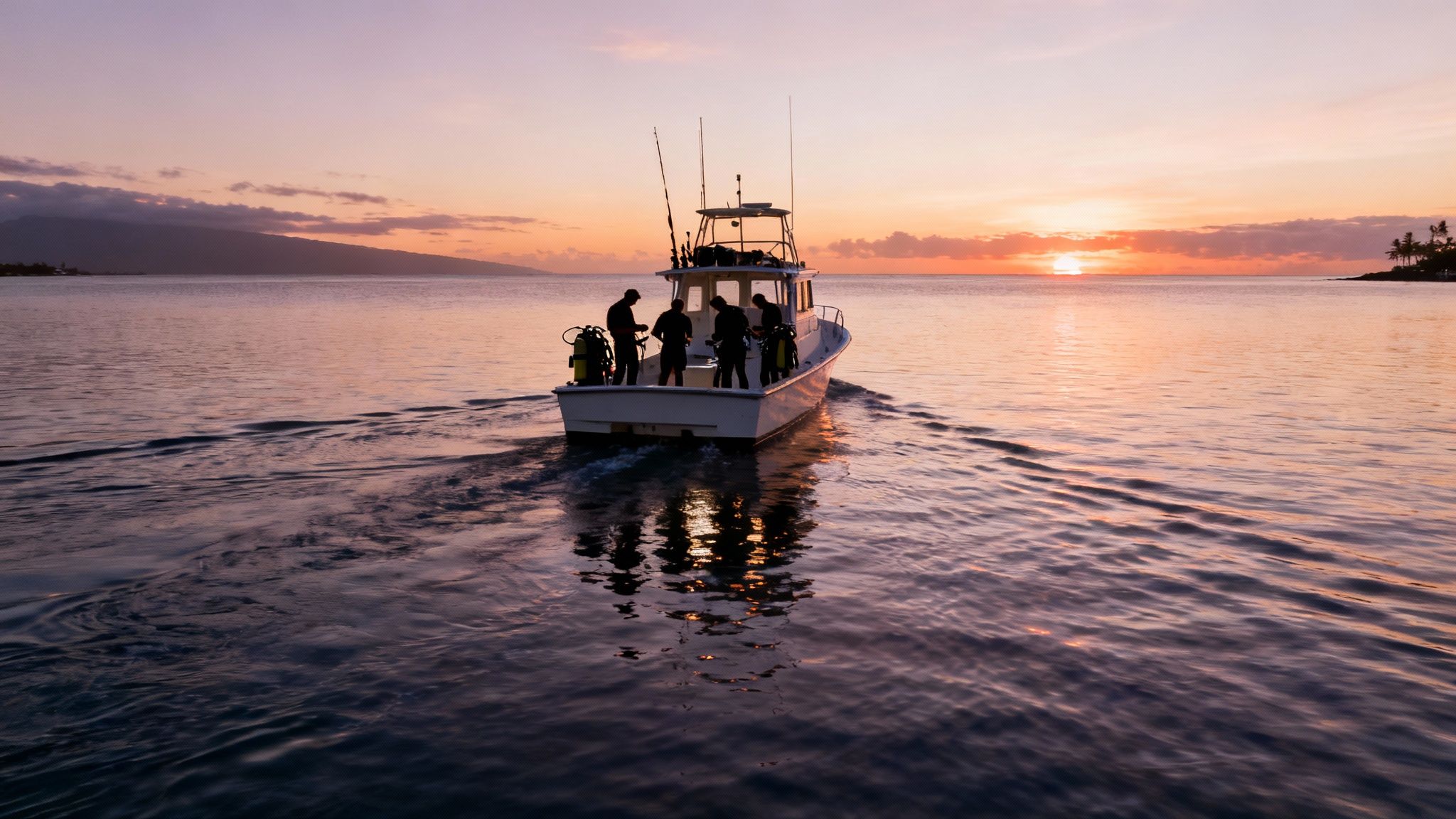
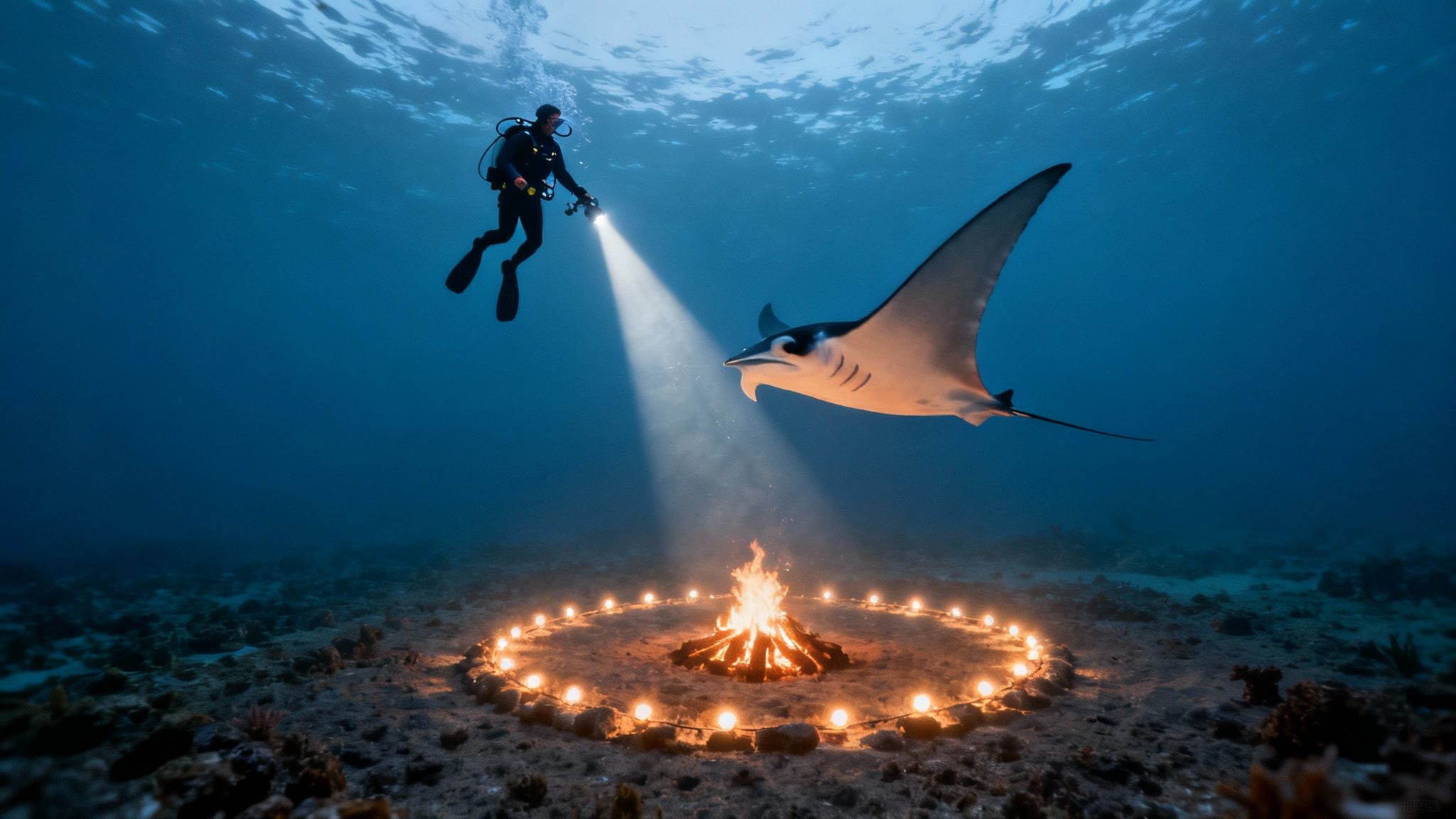
Your journey typically begins with a boat ride into a stunning Hawaiian sunset. As you cruise out, the experienced crew prepares you for the encounter, sharing fascinating facts and safety procedures. Once at the site, they set up a "campfire" of powerful lights on the ocean floor. This light attracts the plankton, and the plankton, in turn, rings the dinner bell for the majestic manta rays.
"Diving with mantas is one of the most satisfying things a person can do in the water. It’s impossible to describe the feeling of watching a massive fish the shape of a stealth bomber coming into vision."
Whether you’re a certified diver exploring the seafloor or a snorkeler floating on the surface, the experience is designed to be accessible, safe, and completely awe-inspiring.
From the biology of these amazing creatures to practical tips for your trip, we’ll cover everything you need to feel prepared. Let's get you ready for an unforgettable manta ray dive in Kona—a top-rated experience that truly lives up to its legendary reputation.
Getting to Know Kona’s Gentle Giants
Before you take the plunge on your manta ray dive in Kona, let's talk about the real stars of the show. These aren't just any fish; they're Kona's resident reef manta rays (Mobula alfredi), a species known for its remarkable intelligence and graceful presence.
Getting a little background on these animals completely changes the experience. It turns a cool sightseeing trip into a genuine connection with some of the ocean's most incredible creatures.
The Anatomy of an Underwater Acrobat
The first thing that will strike you is their sheer scale. Manta rays are cartilaginous fish, putting them in the same family as sharks, but their vibe is totally different—calm, majestic, and anything but intimidating. Their huge, triangular pectoral fins act just like wings, letting them "fly" through the water with a power that looks completely effortless.
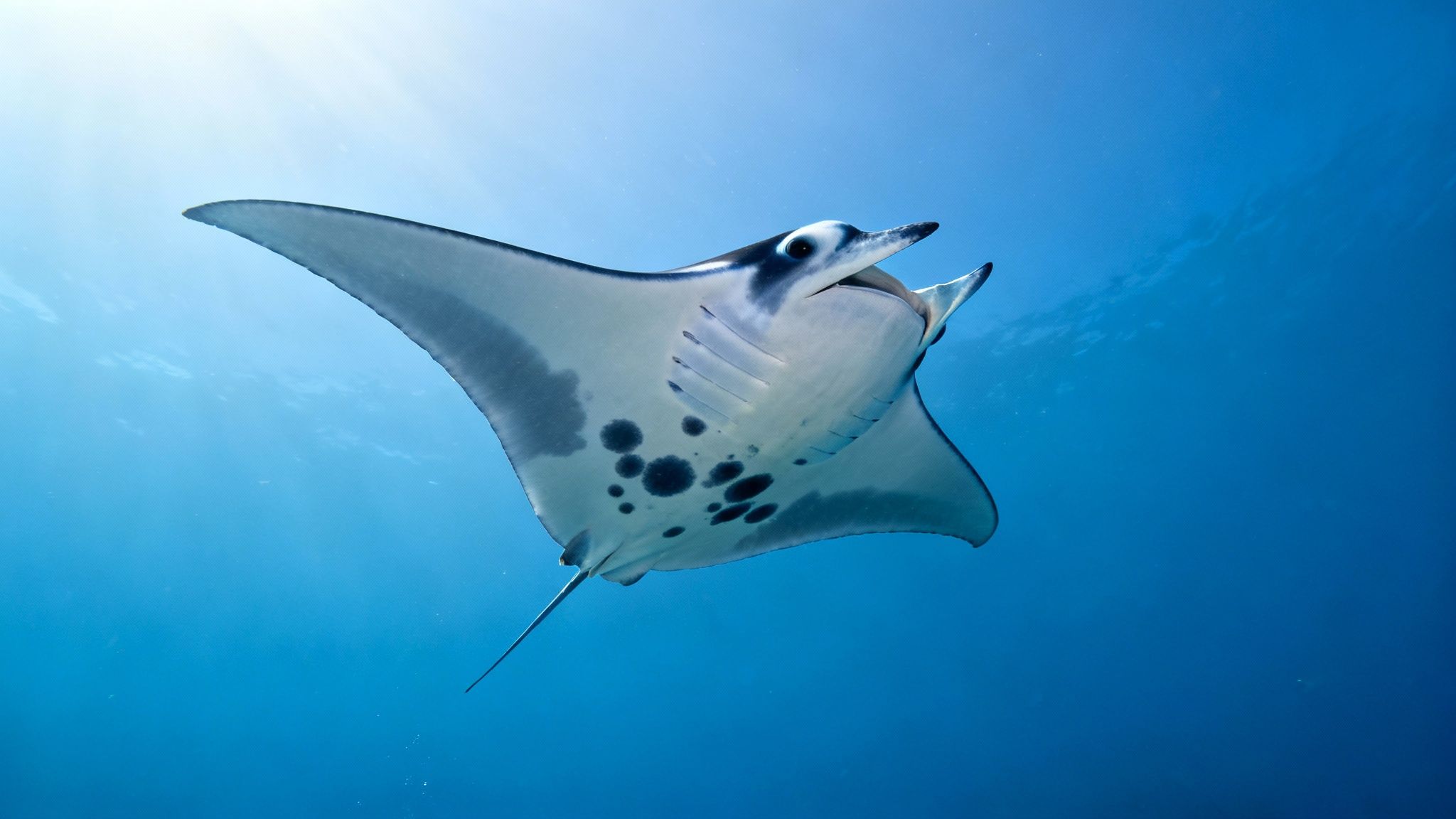
One of the most unique things you'll see up close are the cephalic lobes. These are two fins that unroll from the front of their head. During the night dive, they use these lobes like flexible funnels to expertly guide plankton-rich water straight into their massive mouths.
Speaking of massive, the size of these animals is truly something to behold. While reef mantas can reach widths of up to 29 feet across, the ones you’ll meet in Kona are still unbelievably impressive. You can read more about these impressive statistics on the Kona Honu Divers website.
How to Tell Them Apart
Believe it or not, every single manta ray you'll see is a unique individual. The proof is right on their bellies.
The pattern of dark spots on a manta's white underside is as distinct as a human fingerprint. Marine biologists use these spot patterns to identify, name, and track individual mantas for years, monitoring their health, movements, and life cycles.
Pay close attention during your dive, and you’ll start to notice the different patterns. You might just be looking at a local celebrity like "Big Bertha" or "Lefty," who have been regulars at the Kona feeding sites for decades. Knowing this adds a whole new layer of wonder to the encounter.
Brains and Behavior
Manta rays have the largest brain-to-body size ratio of any cold-blooded fish, which points to some serious intelligence. We see it in their complex social behaviors, from playful interactions to coordinated group feeding.
They're also naturally curious. It's not uncommon for them to approach divers, not with aggression, but with what seems like genuine interest. This is exactly why ethical, hands-off tourism is so critical. A respectful approach lets the mantas feel safe, which is what keeps them coming back. Operators like Kona Honu Divers are deeply committed to these protective standards.
Conservation and Our Role
Sadly, reef manta rays are listed globally as a vulnerable species. They face serious threats from overfishing and habitat loss, which makes the protected waters of Kona a vital sanctuary.
By choosing a responsible company for your manta ray dive in Kona, you become part of the solution. Your dive supports an economy built around protecting these amazing animals, not exploiting them. It’s a powerful model that proves manta rays are worth far more alive than caught, helping ensure they'll be gliding through these waters for generations to come.
Your Night Dive Experience from Start to Finish
So, what’s it really like to be on the world-famous manta ray night dive in Kona? It’s one thing to see the photos, but another entirely to feel the experience unfold. Let's walk through the whole adventure with Kona Honu Divers so you know exactly what to expect.
Your trip doesn't start with a splash, but with a beautiful boat ride from Honokohau Harbor. As we head out to the dive site, the sun starts to dip below the horizon, lighting up the sky in fiery shades of orange and purple. It’s a pretty incredible way to kick off the evening and the perfect calm before the underwater storm of activity.
During the cruise, our crew gives a full, easy-to-understand briefing. We'll cover everything from how we get in and out of the water to the most important rule of the night: passive, no-touch interaction with the mantas. This is the perfect time to ask any questions you have and get comfortable with the game plan.
Setting the Stage for the Show
As daylight fades completely, we anchor at the dive site, and this is where the magic really begins to build. The crew gets to work setting up what we affectionately call the "underwater campfire"—a powerful set of lights placed on the ocean floor. For our snorkelers, we use a custom light board that floats on the surface.
This brilliant beacon has one job: to attract a massive cloud of plankton. Think of it like a porch light on a summer night attracting moths. The mantas are here for this all-you-can-eat buffet, using their cephalic lobes (the fins near their mouths) to funnel the plankton-rich water in as they feed.
Once the lights are set, it’s go-time. You'll gear up, get your mask fitted, and feel the excitement kick in. Our crew does one final check to make sure everyone is safe, secure, and ready to descend into the deep blue.
The Descent into an Otherworldly Theater
This is the moment. You take that giant stride into the warm, dark Pacific. The sounds of the world above disappear, replaced by the rhythmic sound of your own breathing as your dive light cuts a path through the water.
As a diver, you'll make a slow descent to the sandy bottom, which sits at a comfortable 30-40 feet. Your divemaster will show you to your spot around the circle of lights. Once you're settled and neutrally buoyant, you’ll point your flashlight up, adding your beam to the glowing campfire and waiting for the show to start.
The anticipation is a huge part of the experience. You're a quiet guest in this incredible underwater theater, waiting for the headliners to arrive. The surrounding darkness just makes the moment the first manta appears that much more breathtaking.
For snorkelers, the view is just as spectacular. You'll hold onto the light board at the surface and look straight down into the illuminated water. You get a perfect bird's-eye view of the action as the mantas swoop and barrel-roll right beneath you.
And then, it happens. A huge, graceful shadow emerges from the blackness, gliding effortlessly into the light. It's the first manta. Soon, another follows, and then another. They perform a silent, weightless ballet, rolling and soaring through the light beams to scoop up plankton. They get so close you feel like you could reach out and touch them (but of course, you won't!), and their sheer size is just awe-inspiring.
Our divemasters are in the water the entire time, keeping a close watch on the divers, snorkelers, and the mantas to make sure everyone stays safe. Their presence lets you relax and just soak in every incredible second. To see what this looks like, check out these amazing manta ray dive Kona pictures from our tours.
After about 45 minutes of pure wonder, it’s time to head back up. The energy on the boat afterward is always electric, with everyone buzzing about what they just saw. We’ll have warm drinks and snacks ready for the ride back to the harbor, giving you a chance to process the truly once-in-a-lifetime encounter you just had.
How to Choose an Ethical Manta Ray Tour
Picking the right guide for your manta ray dive in Kona is hands-down the most important decision you'll make. A great operator doesn't just point you toward the mantas; they act as guardians for these incredible animals and the entire ecosystem they call home.
An ethical tour company focuses on a safe, respectful, and truly mind-blowing experience for you, all while putting the well-being of the rays first.
This is where a company like Kona Honu Divers really shines. Their whole operation is built on sustainable practices that protect the very creatures that make this dive so legendary. When you choose an operator with this mindset, you're helping ensure the long-term health of Kona's resident manta population.
Manta Ray Green List Standards
So, how can you tell a responsible tour operator from the rest? A huge clue is whether they follow the Manta Ray Green List standards. While the official list isn't active anymore, its core principles are still the gold standard for ethical manta encounters. The whole idea is simple: passive, no-touch observation.
It boils down to a few key rules:
- Observe Only: This is the big one. Never touch, chase, or even think about riding a manta ray. Touching them can strip off their protective mucus coat, which is like their immune system, leaving them wide open to infections.
- Hold Your Position: Divers should stay on or near the seafloor. Snorkelers stay on the surface. This creates a clear, predictable "manta highway" in the water column for them to glide through safely.
- Lights Up, Lights Down: Divers shine their flashlights up towards the surface to attract plankton. Snorkelers shine their lights down. This creates a concentrated column of food, an easy and stress-free buffet for the mantas.
Operators who build their tours around these simple rules show a deep respect for the marine environment. That commitment is what keeps the mantas feeling safe, encouraging them to return to the feeding sites night after night.
What to Look for in a Tour Operator
Beyond the manta-specific rules, the best operators invest in quality across the board. Think highly experienced crew, top-of-the-line gear, and comfortable, well-maintained boats built with diver safety and convenience in mind.
An experienced crew can make or break your trip. They aren't just there to lead the way; they're educators who can share amazing facts about manta biology and behavior. They’re also safety professionals, making sure every single person—from a seasoned pro to a first-time snorkeler—feels totally comfortable and secure. To dig deeper, check out our full guide on how to choose a Kona dive shop.
High-quality, regularly serviced gear is completely non-negotiable. Reputable outfits provide everything you need, from wetsuits that actually fit and keep you warm to reliable regulators and dive computers. This focus on detail means you won't have to stress about your equipment, letting you soak in every moment of the incredible show unfolding before you.
Why Guest Reviews Matter
When you book with a team like Kona Honu Divers, you're choosing an operator that consistently gets rave reviews for its professionalism and genuine passion. But don't just take our word for it—see what your fellow divers have to say about their own experiences.
Ultimately, choosing an ethical operator for your manta ray dive in Kona is a vote for conservation. You're supporting a local economy that understands the value of protecting marine life, and you're helping guarantee that this magical experience will be around for generations to come. You can book with confidence, knowing you've made a choice that benefits both you and the gentle giants of the sea.
Practical Tips for Your Manta Ray Encounter
Alright, you've booked the trip—now for the fun part. A little bit of prep can make the difference between a good night and an absolutely unforgettable one. Getting these small details right ahead of time lets you relax and just soak in the magic of the manta ray dive in Kona.
When you’re comfortable and confident, you can focus on the incredible ballet happening right in front of you. This isn't just a checklist; it's our tried-and-true advice for making sure your encounter is perfect.
Essential Safety Protocols to Remember
Safety is, and always will be, our number one priority. This is an incredibly safe experience, especially with our crew, but we need your help. The most important rule is simple: always follow your divemaster's instructions. They know these waters and these animals better than anyone.
For divers, good neutral buoyancy is your best friend. It lets you hover in place without kicking up sand or accidentally floating into a manta's path. The whole idea is to be a silent observer. When you're calm and still, you become part of the scenery, and the mantas will treat you as such.
The core principle of a successful manta ray encounter is respect. By keeping your hands to yourself and maintaining a calm presence, you contribute to a safe and sustainable interaction that protects these gentle giants for future generations.
And this brings us to the golden rule: never, ever touch or chase a manta ray. Their skin is coated with a delicate mucus layer that acts as their immune system. A simple touch from us can strip it away, leaving them vulnerable to infection. Just relax and let them come to you—their curiosity often brings them breathtakingly close.
What to Bring for a Comfortable Trip
While we provide all the high-quality dive and snorkel gear you’ll need, packing a few personal items will make your trip that much more enjoyable.
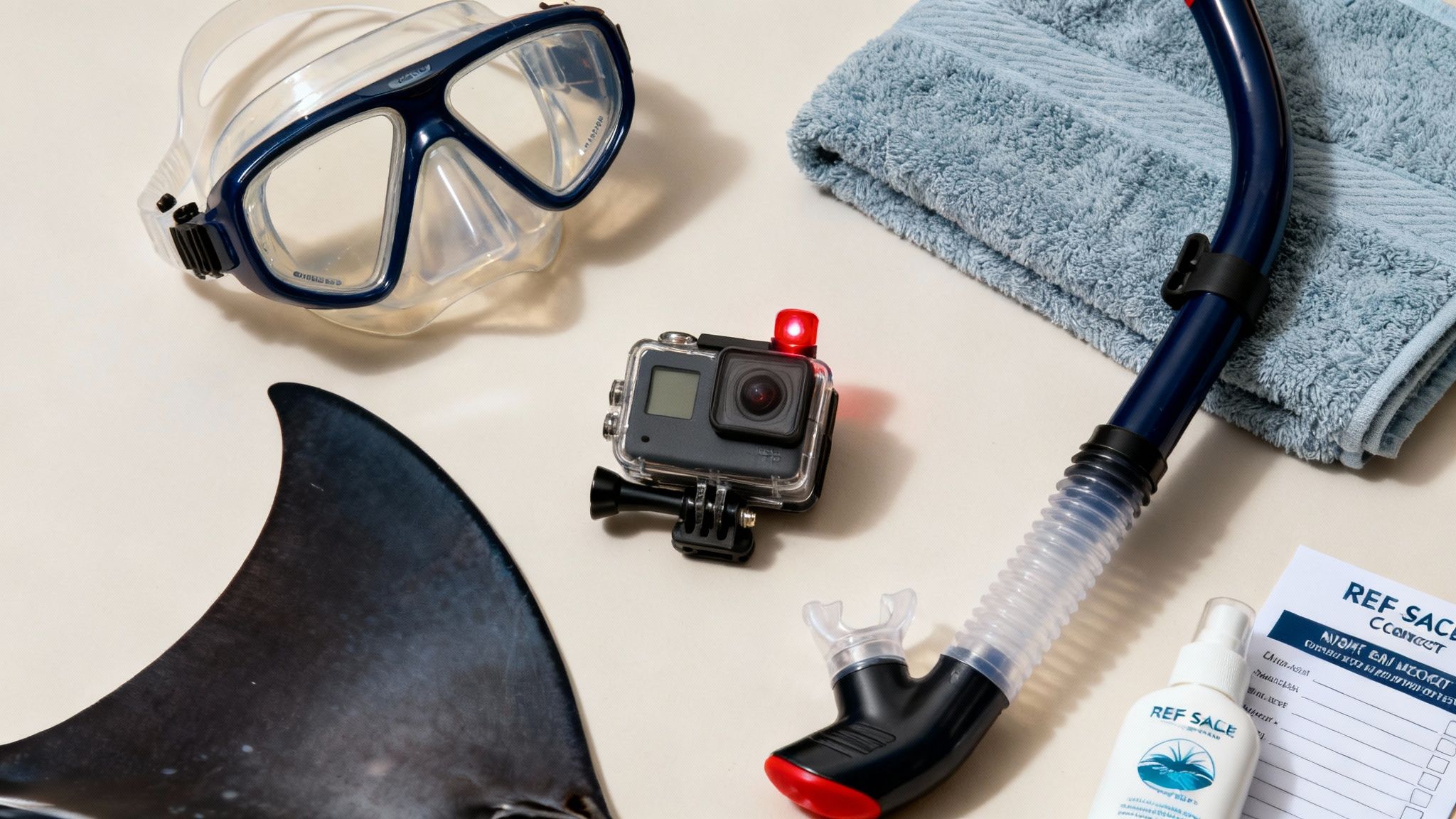
- Towel & Dry Clothes: Nothing beats wrapping up in a warm towel and changing into dry clothes for the cozy boat ride back to the harbor.
- Motion Sickness Medication: If you're even slightly prone to seasickness, take your preferred remedy before we leave the dock. It’s always better to be safe than sorry!
- Underwater Camera: You'll want to relive this. A GoPro or a similar camera with solid low-light performance is ideal. Just one critical rule: no flash photography. The sudden, bright lights can seriously disorient and stress the mantas.
If you want a full breakdown of what to pack, you can check out our detailed guide on the gear you will need for your Kona diving adventure.
Choosing Your Viewing Perspective
One of the greatest things about the Kona manta experience is that almost anyone can do it. Whether you're a seasoned diver or have never put on a snorkel mask before, you can get a front-row seat. The only difference is the angle of your view. It all comes down to your comfort in the water and what kind of adventure you’re after.
To help you decide, let's compare the two ways to see the show.
Diver vs. Snorkeler Experience
| Feature | Scuba Diver | Snorkeler |
|---|---|---|
| Perspective | A truly awesome bottom-up view, watching mantas glide inches above you against the dark surface. | A fantastic top-down "aerial" view of the action as the mantas swoop and feed just below. |
| Proximity | You may experience incredibly close passes as mantas perform barrel rolls right through the light. | The mantas often come right up to the surface, giving you an equally impressive, close-up look. |
| Requirements | Scuba certification is necessary. | No certification is needed! It's perfect for all swimming abilities. |
| Position | You’ll be stationary on the sandy bottom, gathered around our "underwater campfire" of lights. | You’ll hold onto a custom float on the surface that beams light down into the water. |
Ultimately, there's no wrong choice. Both divers and snorkelers get to witness one of the most magnificent spectacles in the natural world.
Don’t Stop at the Mantas—There’s More to Explore in Kona
The manta ray dive in Kona is, without a doubt, a showstopper. But think of it as the opening act, not the whole show. The Big Island's volcanic coast has sculpted an underwater world that is unbelievably diverse, offering up a lifetime of dive adventures for everyone from new divers to seasoned pros.
So, after you've been mesmerized by the manta ballet, the natural question is, "What's next?" The answer is, thankfully, a long one. Kona's waters are packed with everything from sun-drenched coral gardens swarming with fish you'll only find in Hawaii to dramatic, otherworldly lava formations that serve as a constant reminder of the island's fiery birth.
The Blackwater Night Dive: A Trip to Inner Space
If you’re craving something truly different—something that feels less like diving and more like floating through deep space—you have to experience the Kona Blackwater Dive. Picture this: you're miles from shore, suspended over thousands of feet of inky black water, watching the largest migration on the planet happen right before your eyes.
Under the cover of darkness, a bizarre and beautiful world of bioluminescent creatures rises from the depths. This isn't a reef dive. It's a front-row seat to an alien world, where you'll meet creatures straight out of science fiction—gleaming ctenophores, see-through squid, and larval fish that look like tiny, intricate glass sculptures. It’s a surreal, humbling, and utterly unforgettable experience.
Go Deeper: Advanced Dives and Volcanic Vistas
For experienced divers ready to push their limits, Kona’s dramatic underwater topography is waiting. Our advanced dive tours are specifically designed to get you into the island's most spectacular and challenging environments.
We're talking about exploring ancient lava tubes, navigating along vertical drop-offs that plummet into the blue, and circling massive pinnacles that rocket up from the seafloor. These are the spots where you’re more likely to encounter bigger animals like sharks, eagle rays, and huge, swirling schools of jacks. This is where you really feel the raw, powerful beauty of Hawaii's volcanic soul.
From the silent, graceful dance of the mantas to the deep, mysterious world of the blackwater dive, Kona offers endless opportunities for exploration. There is always another adventure waiting just beneath the waves.
No matter where you are in your diving journey, there are countless diving tours to keep you exploring. The manta dive is an incredible place to start, but trust us, it’s just the beginning of what Kona has to offer.
Your Manta Dive Questions, Answered
As you get ready for your big manta ray dive in Kona, a few questions are bound to pop up. It’s totally normal! We’ve heard them all over the years, so we’ve put together some straightforward answers to help you feel confident and prepared for the adventure ahead.
I'm a Beginner Diver. Is This Dive Too Much for Me?
Not at all! This experience is actually perfect for new divers. The main dive site is in a sheltered bay, so the water is generally calm, and we stay in a pretty shallow zone—usually around 25 to 35 feet.
You'll get a thorough safety briefing from a certified divemaster before you even get in the water, and they’ll be with you the whole time. If you’re not a diver, or just prefer to stay at the surface, snorkeling is an amazing option too. You get the same incredible view from the top!
When Is the Best Time of Year to See the Mantas?
This is one of the best parts about diving in Kona: there really isn't an "off-season" for manta rays. You can come any month of the year and have a great chance of seeing them.
Kona is home to a resident population of mantas that stick around all year because their food source—plankton—is always here. That’s why we see an 80-90% success rate for sightings on any given night. The best time to go is simply when you can make it happen!
What Should I Bring With Me on the Boat?
We've got you covered with all the necessary scuba or snorkeling gear, but a few personal items will make your trip much more comfortable.
- A towel and some dry clothes to change into for the ride back to shore.
- Any personal medications you might need.
- A reusable water bottle is always a good idea.
- If you're on a sunset trip, be sure to bring some reef-safe sunscreen.
Packing these few things means you can just relax and focus on the incredible show happening in the water.
Is It Okay to Touch the Manta Rays?
The answer to this is a firm but friendly "no." The no-touching rule is probably the most important guideline we have, and it’s entirely for the manta rays' protection. Their skin is covered in a delicate mucus layer that works like an immune system, protecting them from nasty bacteria.
Our whole philosophy is based on passive observation. We let the mantas come to us and behave naturally. When we give them space, the encounter is far more magical and authentic for everyone involved.
Touching a manta can rub off that protective slime, leaving them vulnerable to infection. We're visitors in their home, and our number one job is to make sure we leave them just as we found them—healthy and unharmed.
Ready for an experience you'll be talking about for years to come? Kona Honu Divers runs a world-class, ethical, and totally breathtaking manta ray dive tour that will connect you with the gentle giants of the Kona coast. Book your spot and prepare to be amazed!