
Picture this: you're floating in the warm, dark Pacific waters off the Big Island. Suddenly, graceful shadows emerge from the deep, soaring through the water like underwater birds. These are Kona's famous manta rays, and with wingspans reaching up to 18 feet, watching them is an experience that borders on spiritual. It’s not just a dive; it’s an underwater ballet, and you have a front-row seat.
Why Kona is a Manta Ray Paradise
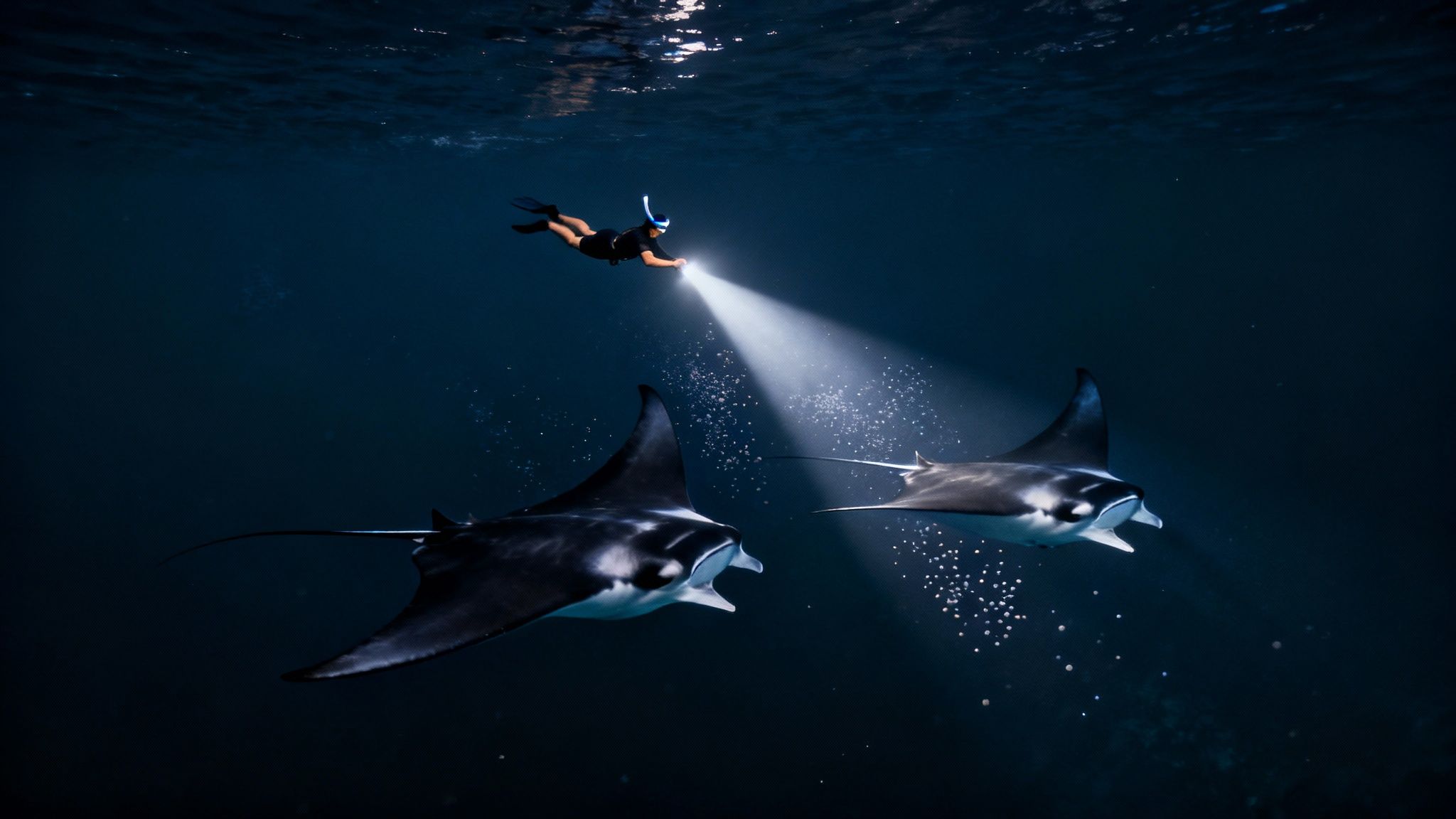
So, why here? The Kona coast has become a reliable, year-round feeding ground for these gentle giants. For decades, tour operators have used powerful lights to attract plankton, the mantas' favorite meal. This creates a nightly, all-you-can-eat buffet that the rays just can't resist.
This unique setup has turned the manta ray dive in Kona into one of the most consistent wildlife encounters you can find anywhere. We're talking about an incredible 80-90% success rate for sightings. On a good night, it’s not unusual to see dozens of mantas dancing in the lights. It's no wonder this adventure draws around 80,000 divers and snorkelers every single year.
To give you a quick snapshot of what to expect, here’s a look at the key details.
Kona Manta Ray Night Dive At a Glance
| Aspect | Details |
|---|---|
| Location | Kona Coast, Big Island of Hawaii |
| Best Time | Year-round, with high consistency |
| Activity Type | Night dive or snorkel |
| Water Temp | 75-80°F (24-27°C) |
| Manta Size | Wingspans can exceed 18 feet |
| Sighting Success | Typically 80-90% |
| Who Can Go? | Certified divers and snorkelers of all ages |
| Key Attraction | Watching manta rays feed on plankton attracted by lights |
This table just scratches the surface of this incredible experience.
What Makes This Dive So Special
Unlike manta encounters elsewhere in the world, which often happen at "cleaning stations," the Kona dive is all about the feeding frenzy. You're not just a spectator; you're part of the action as these huge, graceful creatures swoop and barrel-roll right in front of you, filtering plankton from the illuminated water.
Here’s what really sets it apart:
- Everyone Is Welcome: Whether you’re a certified diver or a snorkeler, you can join in. Divers typically kneel on the sandy bottom and look up, while snorkelers float on the surface and watch from above.
- Completely Safe: Manta rays are true gentle giants. They have no teeth, no stingers, and no barbs, making this a completely safe and awe-inspiring interaction.
- Here to Stay: The local manta population is resident, meaning they don't migrate. This is why you have a fantastic chance of seeing them any night of the year.
This is more than just another item on a travel itinerary; it's a chance to connect with the ocean in a way you'll never forget. To get a real sense of the magic, check out our gallery of Kona manta ray dive pictures.
Choosing Your Perfect Manta Ray Dive Site
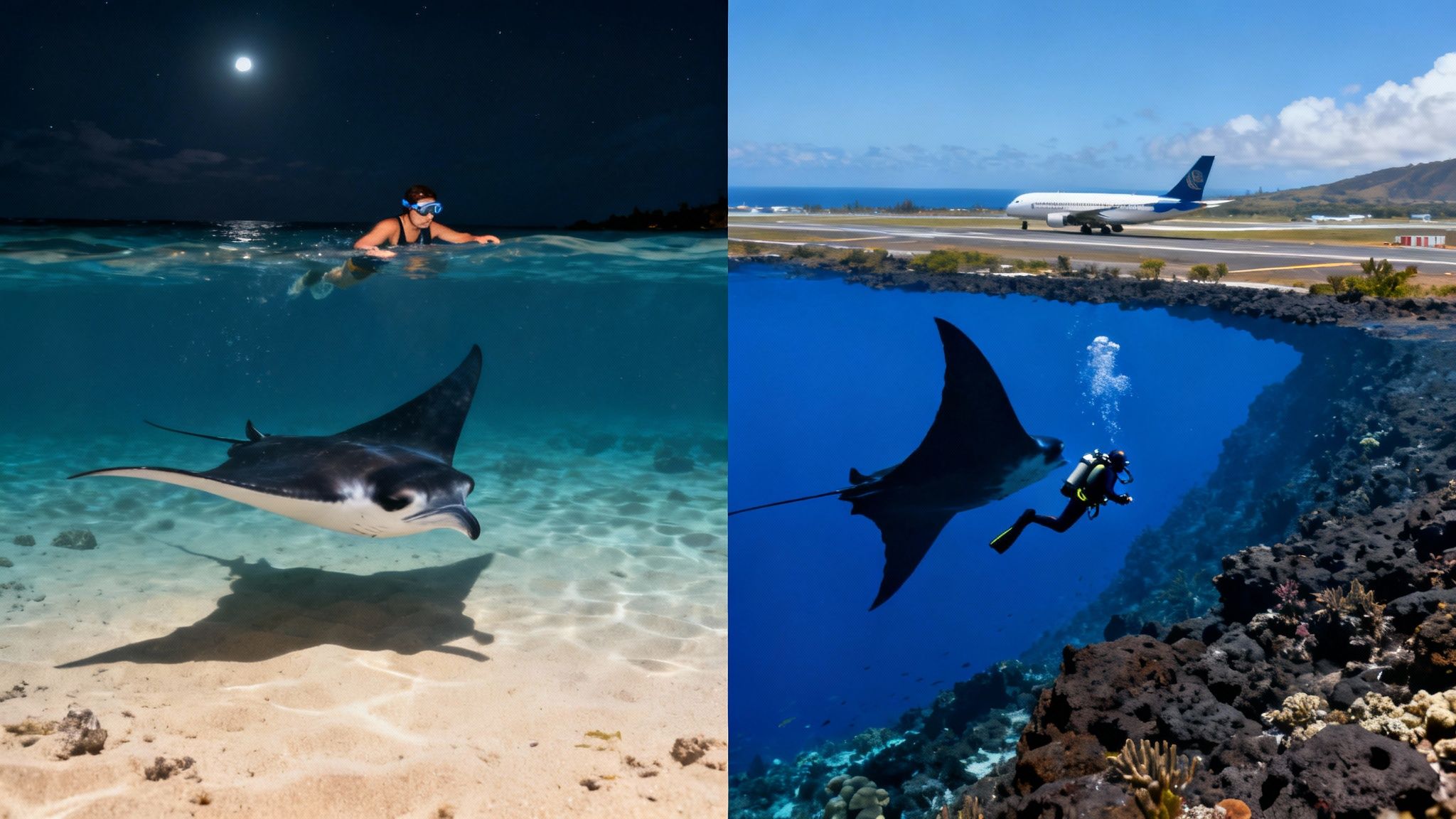
When it comes to planning your manta ray dive in Kona, you've got two world-class options to choose from. But they aren't interchangeable. The two main sites, affectionately known as "Manta Village" and "Manta Heaven," each offer a completely different vibe. Picking the right one for you is the first step toward an incredible night.
Manta Village is the original, the classic. Tucked into the sheltered waters of Keauhou Bay, this site is practically tailor-made for first-timers, families, or anyone who just wants a calm, predictable experience. The water is shallow, the bottom is sandy, and the conditions are typically very gentle. It's a serene, almost zen-like setting to watch the mantas glide and dance.
If you head a bit further north, you'll find Manta Heaven, located near the airport. This spot is a different beast altogether. It's deeper, the currents can be a little more playful, and it tends to draw in massive congregations of mantas. This is where experienced divers and photographers go for those jaw-dropping, up-close encounters as the giants emerge from the deep blue.
Comparing the Two Premier Locations
So, how do you choose? It really boils down to what you're looking for in an adventure. Do you want a chill, mesmerizing ballet or a front-row seat at a rock concert?
- Manta Village (Keauhou Bay): The go-to for beginners and snorkelers. Its shallow depth of 25-35 feet and predictable conditions make it a super comfortable and relaxed experience.
- Manta Heaven (Garden Eel Cove): This one's for certified divers who are comfortable in deeper water (35-45 feet) and don't mind a bit of a current. It's your best bet for seeing a truly staggering number of mantas.
Honestly, you can't go wrong. Both sites offer a mind-blowing opportunity to connect with one of the ocean's most majestic creatures. Whether you opt for the tranquility of Manta Village or the high-energy show at Manta Heaven, you’re in for a night you'll never forget.
Still on the fence? You might find our article discussing whether it is better to snorkel or dive with manta rays helpful in making your decision.
Getting to Know Kona’s Resident Manta Rays
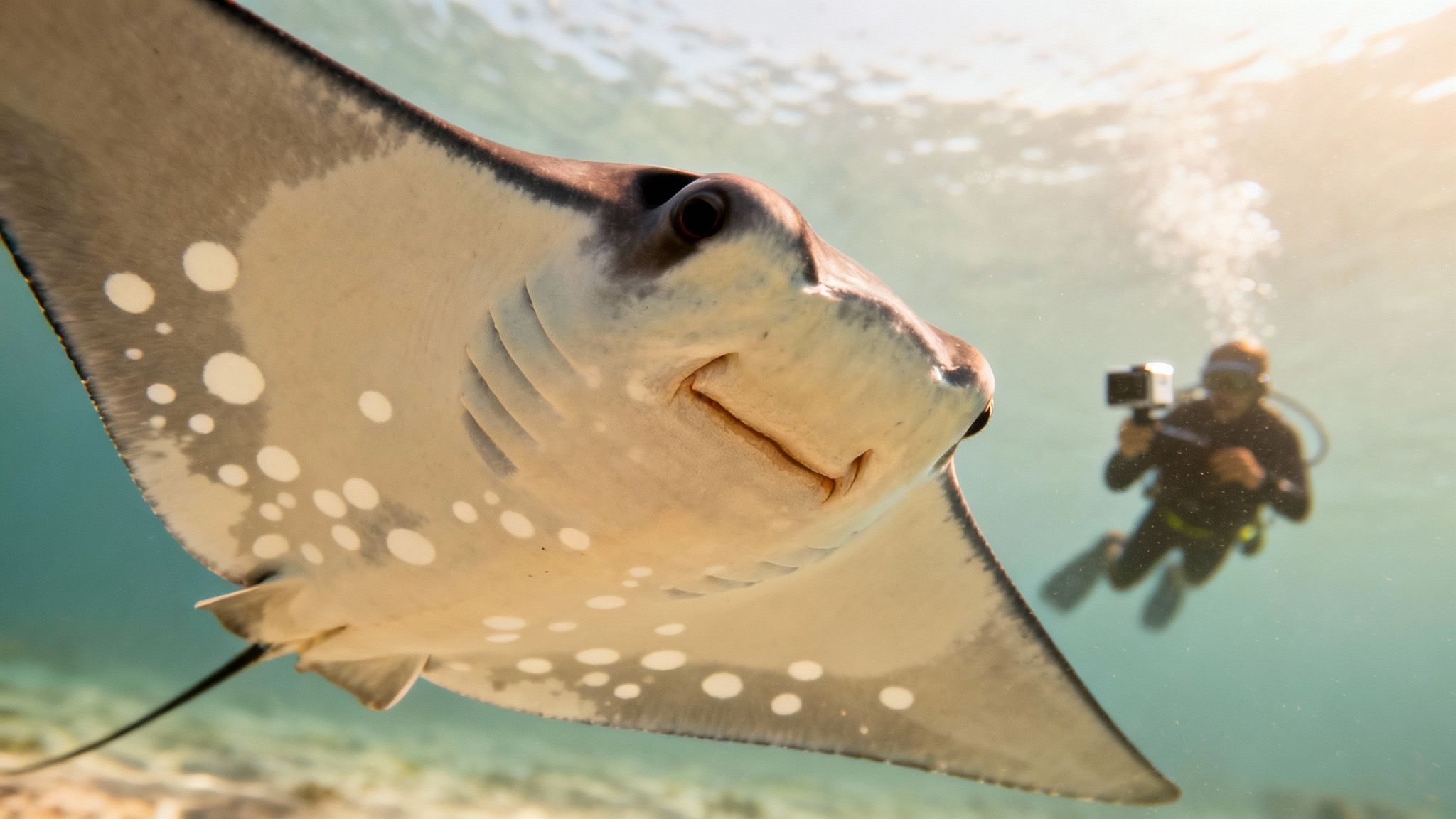
The mantas you'll see in Kona aren't just random visitors passing through. They're a true resident population, a cast of local celebrities with names, personalities, and backstories that turn a simple dive into a personal encounter.
So, how do the guides know who’s who? It's all in the belly spots. The unique pattern of black and white markings on a manta's underside is their version of a human fingerprint. No two are alike, which allows researchers and veteran dive guides to recognize specific individuals year after year.
This means you might actually meet famous locals like "Lefty," who's easy to spot because of an old injury to his cephalic fin, or the massive "Big Bertha." Knowing their stories makes it feel less like you're just observing wildlife and more like you're being introduced to old friends of the sea.
A Community of Ocean Giants
This incredible identification process has led to one of the most comprehensive studies of any manta population on the planet. For decades, a dedicated community of researchers, dive guides, and even visiting divers have been cataloging these gentle giants.
Since 1991, an impressive database has been tracking individual manta rays along the Kona Coast. The catalog has grown to include over 330 unique individuals, and in one 14-year period alone, researchers logged around 6,000 encounters and a staggering 28,500 individual manta sightings. You can dive into the data yourself over at the Manta Pacific Research Foundation website.
This long-running effort creates a powerful connection between people and the animals they've come to admire. When you join a manta ray dive in Kona, you're more than just a tourist. You become part of a legacy of citizen science and conservation that helps protect these majestic creatures for generations to come. It adds a whole new layer of meaning to an already magical experience.
How to Prepare for Your Manta Ray Adventure
Your unforgettable **manta ray dive in Kona** starts well before you ever step on the boat. A little prep work goes a long way in making sure the whole experience is safe, comfortable, and absolutely magical.
The single most important decision you'll make is choosing a top-notch, reputable operator. You want a company with a stellar safety record and a genuine commitment to protecting the mantas, like us here at Kona Honu Divers.
Going with an experienced crew means you can relax knowing you're in capable hands. They'll handle the detailed safety briefings and make sure every interaction with these gentle giants is respectful and sustainable. Don't just take our word for it—see what fellow divers have to say.
What to Bring and What to Expect
While the dive company will cover the big stuff—tanks, lights, and safety gear—packing a few personal items will make your trip that much better.
- Something Warm: It might be Hawaii, but after a night dive, the boat ride back can get surprisingly chilly. A towel and a dry sweatshirt or a light jacket will feel amazing.
- Seasickness Meds: If you even think you might get motion sickness, it's a good idea to take something beforehand. You don't want to miss a moment of the action.
- Underwater Camera: This is a moment you'll want to relive. A GoPro or another underwater camera that performs well in low light is perfect for capturing the ballet.
Most of the essentials are provided for you. If you're curious about the specifics of what's usually included, you can learn more about the gear you will need for your Kona diving adventure. And for those who love their gear, checking out some of the best dive watches can be a great way to round out your kit.
Remember the golden rule: look, but don't touch. Never touch the mantas. Their skin is coated in a delicate, protective mucus that acts as a shield against infection. Human touch can strip it away, leaving them vulnerable to serious harm.
By listening to your guide and giving the wildlife its space, you're not just keeping yourself safe—you're playing a crucial role in protecting Kona's cherished manta ray population for years to come.
Exploring More of Kona’s Underwater World
The manta ray dive in Kona is an absolute showstopper, but don't pack your gear away just yet—it's only a glimpse of what the Big Island offers beneath the waves. The very same volcanic activity that sculpted the perfect manta feeding grounds has also created a stunning underwater playground of lava tubes, dramatic arches, and sprawling coral gardens.
Believe me, Kona's daytime dives are just as mind-blowing as the night-time spectacle. The waters are teeming with life, from graceful sea turtles gliding by to moray eels peeking out from crevices and huge schools of colorful tropical fish. These sites are a dream for photographers and any diver who wants to see the full, vibrant picture of Hawaiian marine life. While the manta experience is unique to Kona, there are diverse scuba diving and water sports options to explore in other fantastic locations, too.
The Famous Kona Blackwater Dive
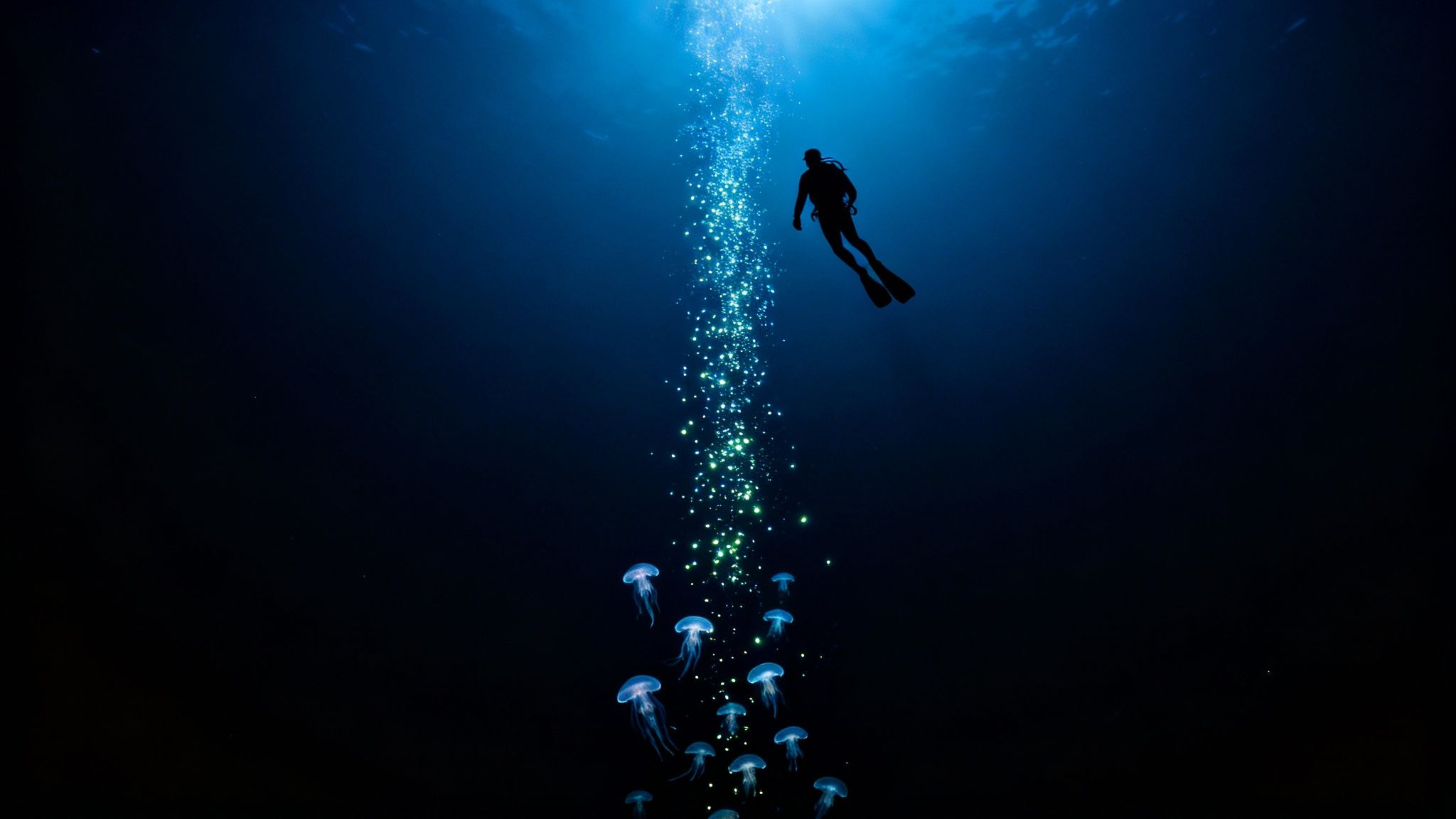
If you're hooked on night diving and crave something truly different, the Kona Blackwater Dive is your next adventure. This isn't your typical reef dive. It takes you miles offshore to float in the deep, inky blackness of the open ocean.
Here, you'll witness one of the planet's largest migrations as strange and wonderful creatures rise from the depths to feed near the surface.
Think of it less as a dive and more as a journey into the ocean's "inner space." You're suspended in another world, watching alien-like larval fish, pulsating jellies, and other organisms you’d never see otherwise.
For those ready to see it all, Kona Honu Divers provides a fantastic lineup of diving tours that hit all the highlights. You can book their legendary Blackwater Night Dive or check out charters designed specifically for advanced divers looking to push their limits.
Answering Your Kona Manta Dive Questions
If you're thinking about booking this incredible adventure, you probably have a few questions. Let's get them answered so you can plan the perfect trip with confidence.
Are Manta Ray Sightings Guaranteed?
Nature doesn't offer absolute guarantees, but the Kona manta dive comes incredibly close. The success rate is fantastic, hovering between 80-90% all year long. It's one of the most reliable wildlife encounters on the planet.
These specific locations are historic feeding grounds for the mantas. The dive operators have this down to a science—they use powerful lights to draw in the plankton, which brings the mantas right to you. On most nights, you won't just see one; you'll likely have several of these graceful giants gliding through the beams.
Do I Need to Be a Certified Diver?
Not at all! This is one of the best parts—nearly everyone can experience it.
- Snorkelers: You'll hang out on the surface, holding onto a specially designed floatation raft. The lights shine down from the raft, and you get a breathtaking bird's-eye view of the mantas swooping and feeding just below you.
- Scuba Divers: If you're certified, you'll head down to the sandy bottom, usually around 25-40 feet. From there, you get a unique upward view as the mantas perform their underwater ballet right over your head.
Both experiences are absolutely spectacular.
What Is the Best Time of Year for This Dive?
Honestly, any time is a good time. Manta sightings are consistent year-round, which is why this dive is so famous.
That said, if you're looking for the absolute ideal conditions, the months between April and October are often considered peak season. The ocean tends to be a bit calmer, and the water is warmer, typically in the 75–80°F (24–27°C) range. But even in winter, the show goes on.
The key thing to remember is that no matter when you visit, your chances of a magical encounter are incredibly high. The reliability of this dive is what truly sets it apart.
Is the Manta Ray Night Dive Safe?
Yes, it's very safe, as long as you go with a professional, reputable operator. Manta rays are called "gentle giants" for a reason—they are completely harmless to humans. They don't have teeth, stingers, or barbs, and they're only interested in tiny plankton.
Your safety is the top priority for the dive crews. They provide detailed briefings, all the necessary gear, and clear instructions. Just listen to your guide, stay with the group, and remember the golden rule: look, but don't touch. You'll be in great hands the entire time.
Ready to see the underwater ballet for yourself? Kona Honu Divers runs fantastic, professionally guided 2-Tank Manta Dive & Snorkel tours that give you a safe and unforgettable front-row seat to this natural wonder.