
Imagine this: you're floating in the warm, dark Pacific Ocean. Suddenly, huge, ghost-like shadows emerge from the deep, gliding and barrel-rolling just inches from your face. It sounds like a sci-fi movie, but this is the real deal—the world-famous manta ray dive in Kona. It’s an experience so profound that divers consistently rank it as one of the most unforgettable underwater encounters on the planet. For thousands, it's a true bucket-list adventure that connects you with nature in a way you'll carry with you forever.
What Makes the Kona Manta Ray Dive Unforgettable
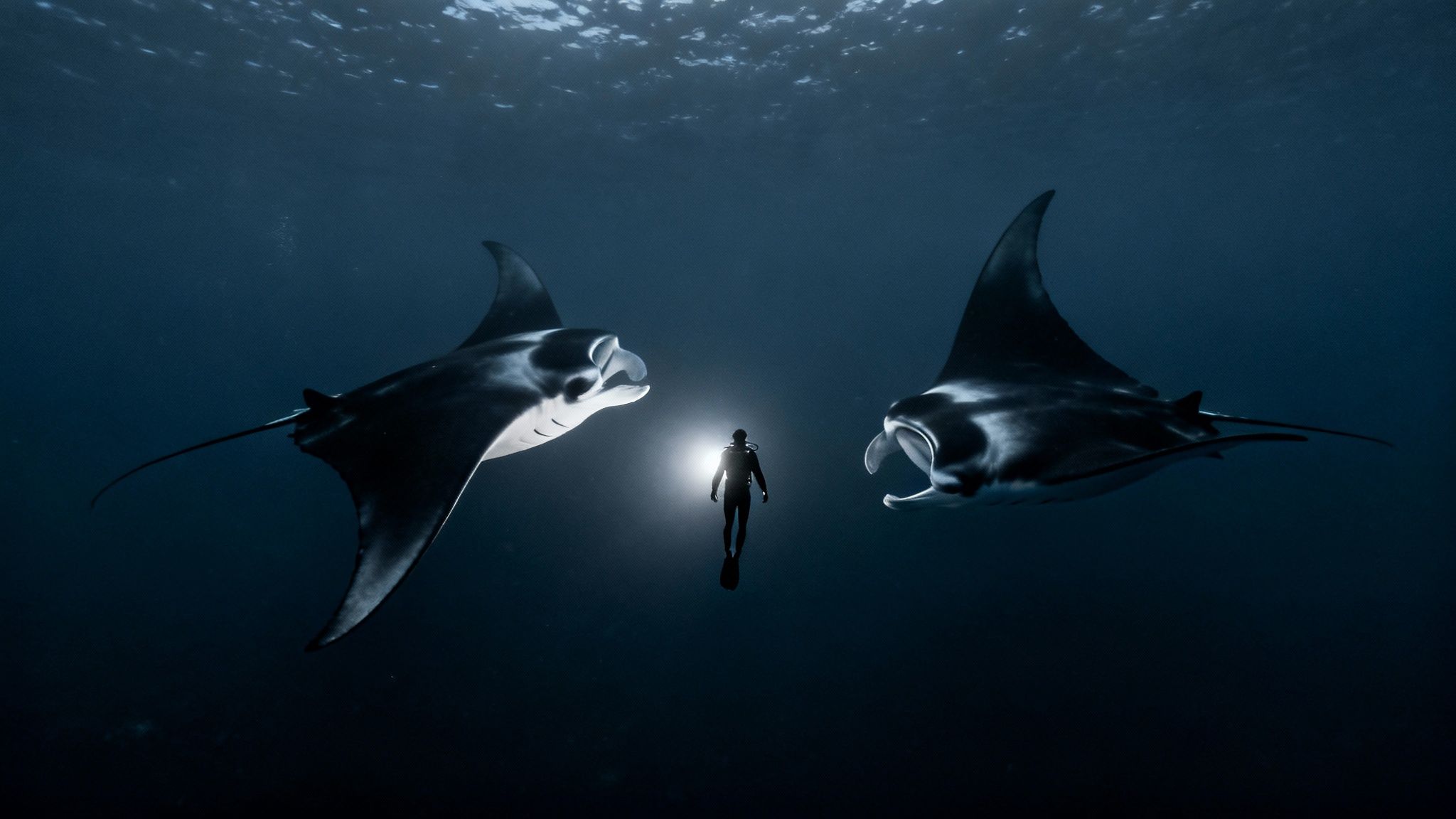
The Kona coast of the Big Island has earned its reputation as the most reliable place on Earth to swim with manta rays. Many wildlife encounters are hit-or-miss, depending entirely on seasonal migrations. But Kona is different. It’s home to a large, resident population of reef mantas, which means your chances of seeing them are incredibly high, any time of year.
This amazing reliability is what turned a local secret into a global phenomenon. Every year, about 80,000 people join snorkel and dive tours here, all hoping for a close encounter. While you can see them year-round, the peak season runs from April to October. The water is warmest then, and it's not uncommon for divers to see 8 to 12 mantas on a single trip.
The Famous 'Manta Campfire'
The real magic of the Kona manta ray night dive boils down to a clever concept we call the "manta campfire." We’ve spent years perfecting a method that creates an unbelievable underwater light show. It's a simple, brilliant setup.
Here’s how it works:
- Powerful Lights: We place a custom-built light box on the ocean floor, shining its powerful beams up toward the surface.
- Plankton Magnet: Like moths to a flame, these lights attract massive clouds of plankton—the manta rays' favorite food.
- The Dinner Bell: This concentrated cloud of plankton is basically an all-you-can-eat buffet, ringing the dinner bell for any hungry mantas in the area.
This creates a brightly lit stage where divers can settle on the sand and watch the main event unfold from below. The mantas put on an incredible acrobatic display, an "underwater ballet" of swoops, glides, and somersaults right over your head as they scoop up mouthfuls of plankton. Watching these gentle giants, some with wingspans up to 18 feet, move with such grace is truly humbling.
This isn't just about watching wildlife from a distance. You're an invited guest at their nightly feast. The mantas are so gentle and curious, and it’s that interaction that makes the whole experience feel so personal and awe-inspiring.
To learn more about what makes this encounter so special, check out this guide on the Manta Ray Night Snorkel in Hawaii: An Unforgettable Experience. And if you want a sneak peek of the action, have a look at our gallery of stunning https://konahonudivers.com/manta-ray-dive-kona-pictures/.
Choosing Your Perfect Manta Ray Adventure
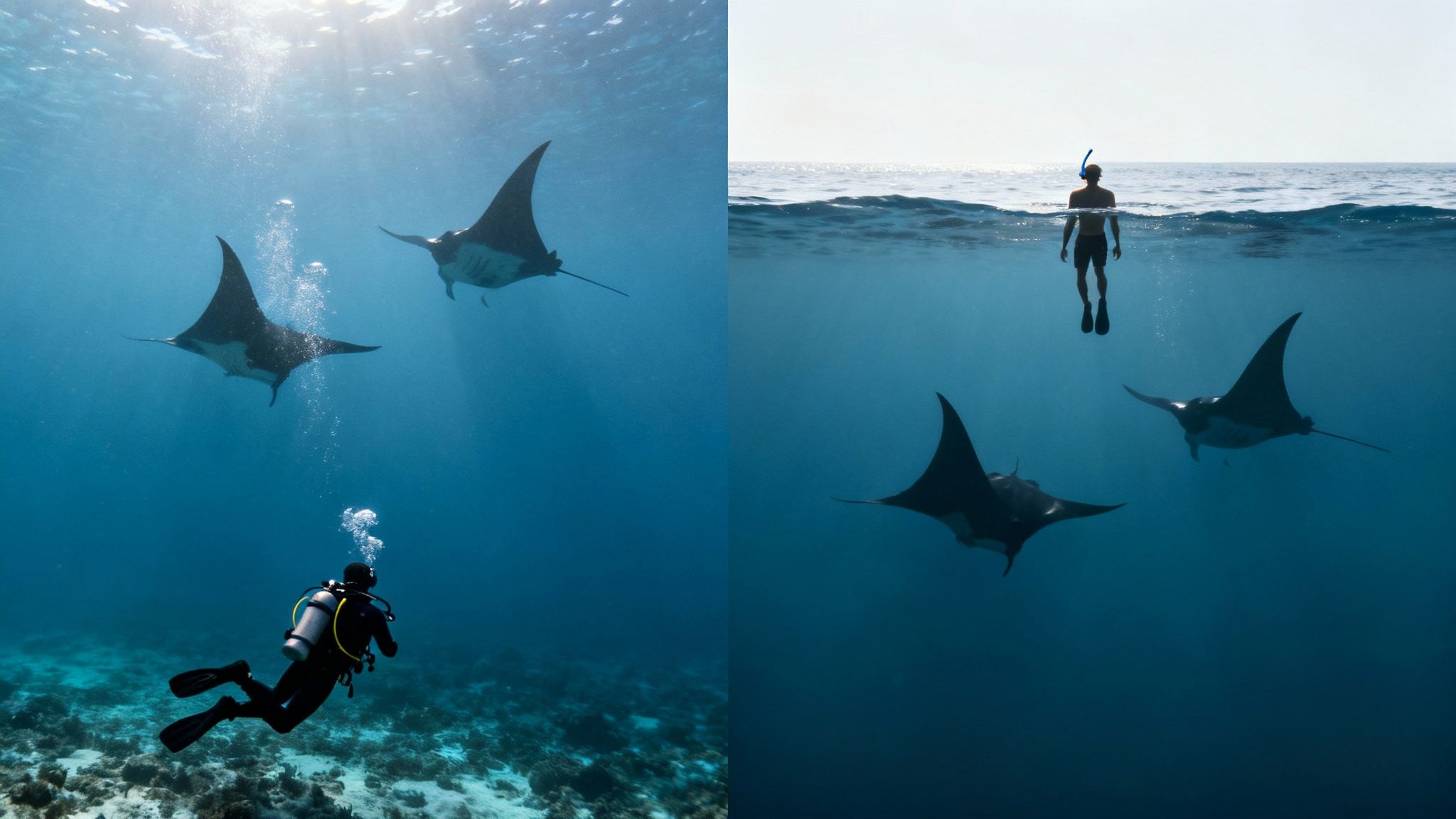
Not all manta ray tours are the same, and picking the right one is your first step toward an absolutely unforgettable night. When you're planning your manta ray dive in Kona, the biggest decision you'll make is how you want to see the show: from below the surface as a scuba diver, or from above as a snorkeler.
Each option gives you a completely different—but equally magical—view of the manta ballet. The best choice for you really comes down to your comfort in the water, whether you're a certified diver, and what kind of encounter you're dreaming of.
Scuba Diving vs. Snorkeling: Which Is Right for You?
As a scuba diver, you’ll get to experience the show from the front row. Imagine settling down on the sandy ocean floor, about 35 feet deep, and just… watching. From this unique vantage point, you look up as these gentle giants glide and somersault right over your head, sometimes so close you could almost touch them (but we don't!). It’s an incredibly immersive view that makes you feel like you’re truly a part of their underwater world.
Snorkelers get what I like to call the "skybox view." You'll float comfortably on the surface, holding onto a specially designed light board that illuminates the water below, attracting the plankton. From this perspective, you can see the entire spectacle unfold like a perfectly choreographed performance, watching multiple mantas weave and interact with each other all at once.
Deciding between the two can be tough, as both are amazing. This table breaks down the key differences to help you figure out which experience is the best fit for you.
Manta Ray Dive vs Snorkel Comparison
| Feature | Scuba Diving Experience | Snorkeling Experience |
|---|---|---|
| Perspective | Bottom-up view, looking toward the surface as mantas glide overhead. | Top-down, bird's-eye view of the entire feeding area. |
| Proximity | Potentially closer encounters as mantas swoop low over the ocean floor. | Very close encounters as mantas feed right below the surface lights. |
| Requirements | Must be a certified scuba diver. | No certification needed; suitable for all ages and swimming abilities. |
| Physical Effort | Minimal; you will be stationary on the ocean bottom for the duration. | Minimal; you float while holding onto a stable flotation device. |
Ultimately, you can't go wrong either way. For a more detailed breakdown, check out our guide on whether it's better to snorkel or dive with manta rays.
Selecting a Responsible Tour Operator
Who you go with matters just as much as how you see the mantas. The long-term health of Kona's manta ray population hinges on all of us practicing responsible tourism. It’s absolutely essential to book with a company that puts the safety and well-being of these magnificent animals first.
This is where the principles of the Manta Ray Green List standard come into play. While the official list was discontinued, its guidelines are still the gold standard for reputable operators like us here at Kona Honu Divers. These practices ensure tours are safe for both the mantas and for you.
The most important rule is passive observation. This means no touching, no chasing, and never blocking a manta’s path. When you choose an operator who strictly follows these rules, you become part of the solution, helping protect this incredible natural wonder for years to come.
When you're researching companies for your manta ray dive Kona tour, keep an eye out for these signs of a high-quality, responsible operator:
- Small Group Sizes: Fewer people in the water creates a calmer, more intimate experience for you and a less stressful environment for the mantas.
- Thorough Safety Briefings: A great tour always starts with a comprehensive briefing that covers cool manta facts, the rules of engagement, and all the safety procedures.
- Quality Gear and Boats: A comfortable, well-maintained boat and gear that fits you properly (especially a warm wetsuit!) make a world of difference in your enjoyment.
At Kona Honu Divers, we’re deeply committed to upholding these standards. Our experienced crew makes sure every single trip is safe, educational, and above all, respectful of the amazing marine life we're so lucky to visit.
By taking a little time to choose the right experience and a responsible operator, you’re setting yourself up for an adventure that is not only thrilling but also helps conserve Kona's beloved gentle giants.
Understanding the Gentle Giants of Kona
Before you take the plunge on your manta ray dive in Kona, it helps to get to know the stars of the show. These aren't just fleeting shadows in the night; they're intelligent, curious creatures with some truly fascinating behaviors. Understanding a bit about their world is what turns a great dive into a profound connection with nature.
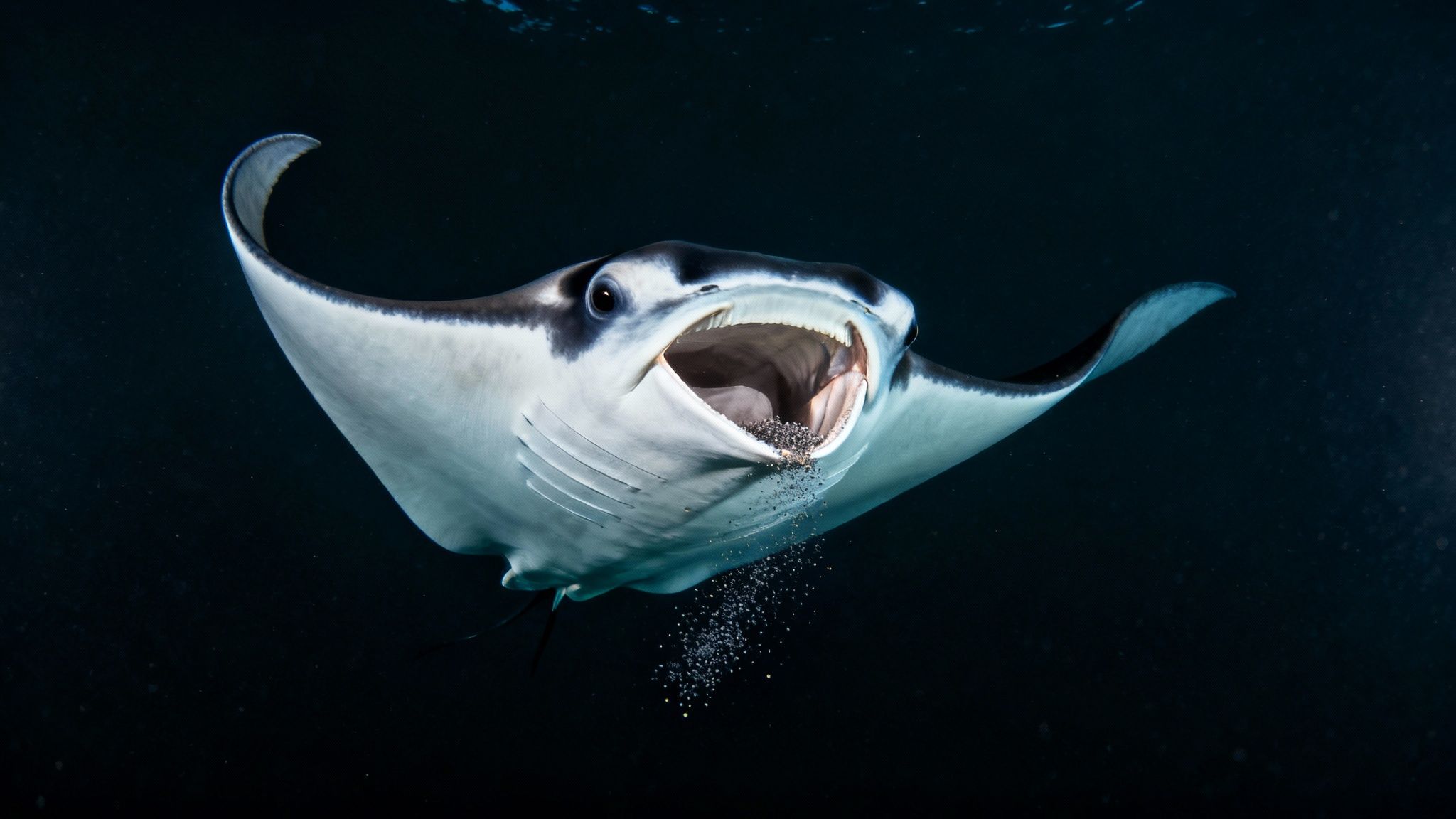
First things first: these gentle giants are completely harmless. People often see their massive size or hear the "ray" part of their name and think of stingrays, but that couldn't be further from the truth. Manta rays lack any stinger or barb, and they don't have teeth for biting. They are peaceful filter-feeders, making your encounter completely safe.
The Two Types of Kona Mantas
Off the Kona coast, you can find two different species: the resident reef manta (Mobula alfredi) and the much larger, migratory oceanic manta (Mobula birostris). The reef mantas, which are the ones you'll most likely meet, have impressive wingspans reaching up to 14 feet. Their oceanic cousins can get even bigger, with wingspans of over 22 feet!
Kona’s warm, plankton-rich waters are an ideal feeding ground for both. If you want to dive a little deeper into their biology, you can find great manta ray facts here.
It's this incredible, accessible wildlife experience that draws an estimated 80,000 divers and snorkelers here every year. When you join a tour, you’re not just a spectator—you’re contributing to a local economy built around conservation and education, helping protect these animals for years to come.
The Science Behind the 'Manta Ballet'
So, how do tour operators all but guarantee you’ll see mantas? The secret is a brilliant yet simple setup we call the "manta ballet" or the "underwater campfire."
Think of it like setting up a five-star, pop-up restaurant right on the ocean floor, specifically for mantas.
Here’s how it works:
- Setting the Stage: First, your guides place a powerful, custom-built light box on a sandy patch of the seabed.
- Attracting the Food: This bright light acts like a giant bug zapper, but for plankton—the microscopic organisms that are the manta's favorite food.
- Ringing the Dinner Bell: As a massive cloud of plankton swarms the light, it creates an irresistible, all-you-can-eat buffet. Any mantas in the area see this and know it's time for dinner.
This simple technique draws the mantas in and keeps them circling, allowing you to watch them feed up close. You'll get a front-row seat as they perform graceful barrel rolls and somersaults to filter the plankton from the water, a mesmerizing show that happens just feet away from where you're calmly observing.
The "campfire" method is genius because it creates a well-lit, stationary viewing area. This allows divers to settle in one spot, minimizing our impact on their behavior and maximizing the time we get to spend in awe of them.
Why Kona's Manta Dive is So Unique
You can see manta rays in other parts of the world, but those encounters are often at "cleaning stations," where smaller fish groom the mantas. It's cool, but it's a bit like watching someone get a spa treatment.
Kona is different. Here, the entire experience is built around active "feeding stations." You get to witness their dynamic, acrobatic feeding behavior, which is a far more breathtaking spectacle.
This is what makes the manta ray dive Kona experience world-famous. You’re not just seeing an animal; you're witnessing a nightly ritual, getting an intimate glimpse into a wild creature's world. It's an experience that stays with you long after you've dried off.
How to Prepare for Your Night Dive Adventure
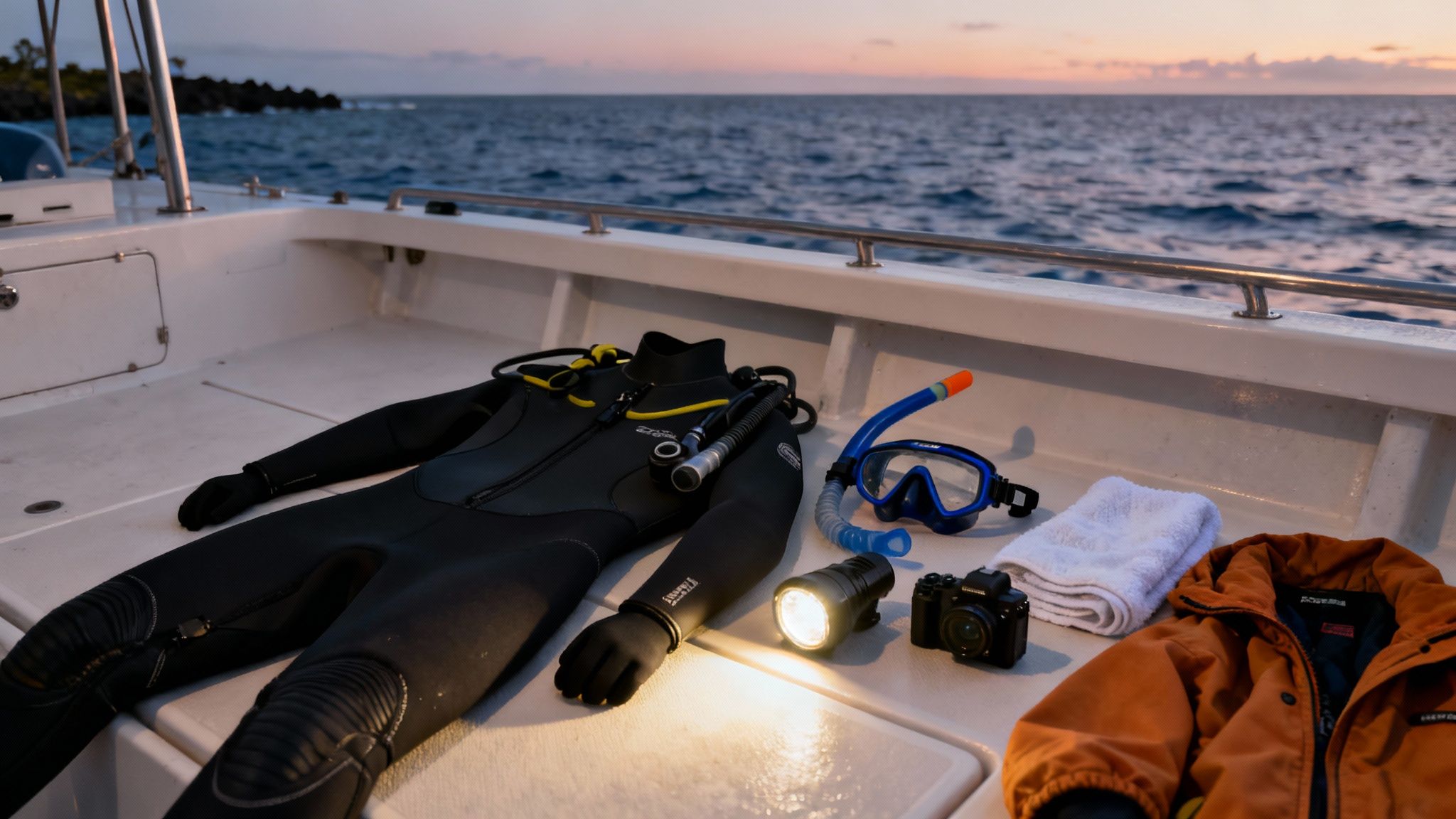
Getting ready for your Kona manta ray dive starts well before you ever step foot on the boat. A little preparation goes a long way in making the whole experience smoother and more enjoyable.
Knowing what to pack, what to expect from operators like Kona Honu Divers, and how to handle any pre-dive jitters is key to a fantastic night out with the mantas.
What to Pack for Your Night Dive
Think of your dive bag as your personal toolkit for an amazing ocean adventure. Having the right stuff on hand makes all the difference.
Here’s what I always recommend bringing along:
- Warm layers: A windbreaker or a cozy sweater is a lifesaver for the boat ride back. You'll be surprised how chilly it can get.
- Underwater camera: You’re going to want proof of the incredible manta acrobatics you'll witness under the lights.
- Seasickness remedies: Even on seemingly calm nights, the water can get choppy. It’s always better to be safe than sorry.
- Swimwear and a towel: Obvious, but easily forgotten!
- Headlamp or small flashlight: This comes in handy for getting around the boat and doing your safety checks in the dark.
For a little extra peace of mind, here are a few pro-level items to consider tossing in your bag.
| Item | Why It Matters |
|---|---|
| Windbreaker | Keeps that post-dive chill away. Trust me on this one. |
| Dry Bag | A must for protecting your phone, keys, and wallet. |
| Spare Mask Strap | A broken strap can ruin a dive. Be prepared. |
| Anti-fog Gel | Nothing’s worse than a foggy mask when mantas are overhead. |
It's also a good idea to check the marine forecast before you go. A calm, steady night sets the perfect stage for a confident and relaxing dive.
What Operators Provide and the Pre-Dive Briefing
Good news—you don’t need to bring your own scuba gear. Kona Honu Divers provides full dive gear, including a thick wetsuit (essential for staying warm), fins, a mask, and weights.
Before you even think about getting in the water, your guides will walk you through a clear, friendly safety briefing. This isn't a stuffy lecture; it's a practical chat where you’ll learn about manta behavior, essential hand signals, and how to position yourself at the underwater 'campfire' where the action happens.
"The best tool is your calm mind and steady breathing." — A favorite tip from the Kona Honu Divers crew.
Cameras and Capturing Manta Moments
Photographing mantas at night is an art form. You're essentially painting with light as these gentle giants glide through the dark water.
To get those jaw-dropping shots, try setting your camera to a fast shutter speed and a wide aperture. From there, you just have to let the mantas work their magic.
- Turn off autofocus: The constantly changing scene can confuse it. Lock your focus on the bright 'campfire' lights instead.
- Use manual white balance: You'll need to adjust it to get the best color out of that deep blue water.
- Keep your strobe power low: A harsh flash can startle the mantas. Gentle, diffused light is much better.
Planning your shots beforehand will help you feel less frantic and more in control once you're down there.
Managing Seasickness and Nerves
It's totally normal to have some butterflies in your stomach before a night dive, especially if it's your first one. A few simple tricks can help calm both your nerves and a queasy stomach.
- If you start feeling queasy on the boat, lie down and keep your eyes fixed on the horizon.
- Focus on breathing slowly and deeply through your nose.
- Have a light snack and sip some water before you board.
- Try a quick breathing exercise on deck to center yourself.
These little things can make a huge difference, and they’ll all be forgotten the second you see your first manta swoop by.
Buoyancy and Underwater Positioning
Once you’re in the water, your goal is to be as still and stable as possible. Think of yourself as part of the scenery. Use slow, controlled breaths to stay neutrally buoyant just above the sandy bottom.
- Small weight adjustments before you descend can help you nail your buoyancy.
- Once you're settled, avoid kicking to prevent stirring up sand and ruining the view for everyone.
- Tucking your knees gently toward your chest can help you stay steady.
By remaining still, you create a safe, non-threatening environment that encourages the mantas to come closer and put on their incredible show.
The Evening Schedule Outline
Your manta ray tour generally follows a simple, four-part schedule. Knowing the flow of the evening can help build excitement and reduce any anxiety.
- Harbor Gathering: You'll meet the crew, sign waivers, and get fitted for your gear.
- Boat Ride: It's about a 20-minute cruise out to the dive site, often under a beautiful starry sky.
- Underwater Briefing: Just before you descend, there's a final gear check and your guides will set up the lights for the 'campfire.'
- Manta Encounter: Time for the main event! You’ll settle onto the sand (or float on the surface if you’re snorkeling) and watch the manta ballet unfold.
On a typical night, the sighting success rate is over 90%, so your chances of having an unforgettable encounter are incredibly high. That said, these are wild animals, so just be prepared to soak in the entire experience, no matter what happens.
Final Pre-Dive Checklist
Run through this quick final checklist before you head to the harbor. It’s like what a pilot does before takeoff—a few simple checks to ensure a smooth journey.
- Confirm your booking and arrival time.
- Stay hydrated throughout the day and eat a light meal an hour or two before.
- Use the restroom before the boat leaves the dock.
- Take off any loose jewelry that could get snagged or harm a manta.
- If you need any prescription medication, make sure it’s packed in a waterproof bag.
Arriving a little early is always a good idea. It gives you time to relax, chat with the crew, and avoid any last-minute stress. With this prep work done, you’re all set for a magical, stress-free night with Kona's famous manta rays.
Don't forget to share your manta moments with #KonaHonuDivers! Now, get ready to unplug and witness something truly special.
Book your two-tank manta dive snorkel with Kona Honu Divers and dive into the magic tonight.
Protecting the Mantas Through Responsible Tourism
Diving with Kona's manta rays is more than just another tourist attraction. It's a genuine privilege, and with that privilege comes a real responsibility to protect these gentle giants. When we enter their world, we're guests in their home. The most important rule for every single encounter is simple: passive observation.
This golden rule just means we're there to watch, not to interact. It’s a promise you make to not touch, chase, or get in the way of a manta as it glides through the water. The best way to think about it is like visiting a pristine national park—you leave no trace, making sure your presence doesn't disrupt their natural feeding behavior.
Why Your Actions Matter
These aren't just arbitrary rules; they're absolutely essential for the well-being of the mantas and for making sure this incredible experience is around for years to come.
- No Touching: Manta rays have a special mucus coating on their skin that acts as a shield against bad bacteria. When we touch them, we can rub that layer off, leaving them exposed to infections.
- No Chasing: Chasing after a manta doesn't just stress it out—it can actually scare them away from their favorite feeding spots. This disrupts a crucial part of their daily life.
- Give Them Space: The best thing you can do is let the mantas control the encounter. By staying still and calm, you create a safe space for them. Honestly, this is when they often get curious and decide to come closer on their own terms.
When you follow these simple guidelines, you're not just a spectator anymore. You become a guardian of the ocean. Your respect ensures this amazing experience can be enjoyed by future generations of both people and mantas.
Your Dive Supports Conservation
Here’s the great part: when you book with an operator that takes these rules seriously, your adventure directly helps conservation. Many of us in Kona are heavily involved in citizen science, helping to track and protect the local manta population. Since 1991, a massive effort has been underway to identify individual mantas by photographing the unique spot patterns on their bellies—it’s just like a human fingerprint.
This ongoing research has cataloged over 330 individual mantas and recorded thousands of sightings. All that data helps scientists understand their population dynamics, behaviors, and movements. You can learn more about this vital work at MantaRays.info.
By being a respectful observer, you become part of this bigger conservation story. We’ve put together more tips on how to be a mindful guest in our guide on responsible and considerate diver etiquette.
Every dive is a chance to support the work that makes Kona a world-class destination for both thrilling adventures and critical marine research. Choosing to dive responsibly is the single most powerful decision you can make, ensuring the manta ray ballet you see will continue to thrive for decades.
Your Manta Ray Dive Questions Answered
Thinking about planning your own manta ray dive in Kona? You're not alone, and it's totally normal to have a few questions before taking the plunge. We get asked these all the time, so we’ve put together the answers to help you feel confident and ready for the adventure.
Is the Kona Manta Ray Night Dive Safe?
In a word: yes. When you go with a professional, experienced crew, it's an incredibly safe and well-managed experience. Manta rays are called "gentle giants" for a good reason—they have zero teeth, no stingers, and no barbs. They are completely harmless to people.
The entire encounter is carefully supervised from start to finish. Our guides give a thorough safety briefing before anyone gets in the water, and they're with you the whole time. Divers stay in a fixed spot on the ocean floor, and snorkelers hold onto a large, custom-built float. Our job is to make sure you feel secure so you can just relax and enjoy the show.
When Is the Best Time of Year to See Manta Rays?
This is the best part: you can see manta rays in Kona all year round! The local population of reef mantas doesn't migrate, so they are here day in and day out, no matter the season.
That said, a lot of people prefer to visit between April and October. The ocean is typically a bit calmer and the water is warmer during these months. But even in the winter, the tours run nearly every night, and the odds of seeing mantas are just as high. Most operators, including us, have a success rate of over 90% year-round.
Can I Go if I'm Not a Strong Swimmer?
You absolutely can. The snorkeling version of this tour was designed with non-swimmers and those with little water experience in mind.
You'll be wearing a wetsuit, which makes you naturally buoyant, and holding onto a specially designed floatation board with built-in lights. You just float comfortably on the surface and watch the mantas dance below—no real swimming is required. You're always right by the boat and under a guide's watchful eye. For the scuba dive, however, you will need to have a valid diving certification.
Is a Manta Ray Sighting Guaranteed?
We're dealing with wild animals, so a 100% guarantee is never possible. But honestly, the Kona manta ray dive has one of the highest success rates of any wildlife encounter on Earth. The mantas have been coming to these "campsites" to feed on plankton for decades, and they are remarkably consistent.
Many reputable companies offer a "manta guarantee." Here at Kona Honu Divers, our promise is simple: if for some rare reason the mantas don't show up, we'll take you out again on another night for free. It's always a good idea to check the specific policy of any company you book with.
Are you ready to see this incredible underwater ballet for yourself? Kona Honu Divers offers a world-class, safe, and truly unforgettable experience for both divers and snorkelers. Our experienced crew, top-notch gear, and deep respect for the mantas ensure you have the adventure of a lifetime.
Book your manta ray dive tour today and get ready to be amazed.