
Picture this: you're floating in the quiet, dark waters of the Pacific just after sunset. Suddenly, giant, graceful shadows begin to materialize from the deep, swooping and gliding through the water. This isn't a sci-fi movie—it's the world-famous Kona manta ray dive, a real-life underwater ballet where you have the best seat in the house.
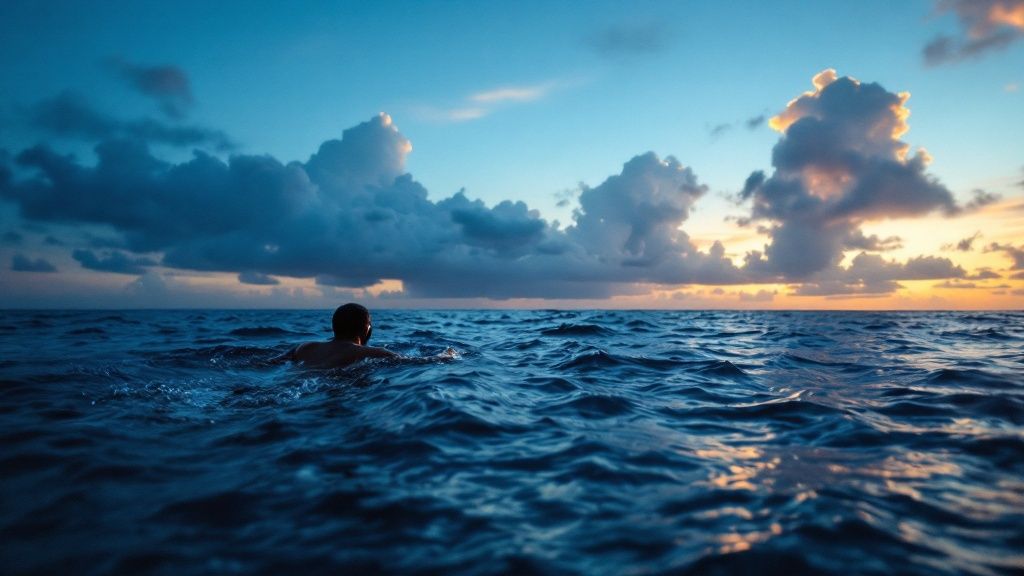
An Underwater Ballet: The Kona Manta Ray Dive
The Kona coast on the Big Island has earned its reputation as the single most reliable place on Earth to see these gentle giants up close. This nightly spectacle isn't just a lucky break; it’s a unique combination of underwater geography and plankton-rich currents that create the perfect feeding frenzy, drawing the mantas to the same spots, night after night.
This incredible predictability is what makes the experience so special. It's not a shot-in-the-dark search; it’s an almost guaranteed encounter. In fact, this unique dive attracts around 80,000 visitors every year. The sighting success rate is consistently around 80-90%, which is practically unheard of in wildlife tourism.
Our guide will walk you through everything you need to know to plan your own adventure, from what to expect on the boat to why this is an evening you’ll be talking about for years to come.
Kona Manta Ray Dive At a Glance
To give you a quick snapshot of what this adventure entails, we’ve put together a simple table. Think of it as the highlight reel for one of the most mesmerizing wildlife encounters on the planet.
| Aspect | Details |
|---|---|
| Best Time to Go | Year-round, but the calmest seas are typically April to October. |
| Sighting Success Rate | Extremely high, often 80-90%. |
| Experience Level | Open to everyone! Snorkelers and certified divers of all levels can join. |
| What You'll See | Giant Reef Manta Rays feeding on plankton attracted by underwater lights. |
| Primary Dive Locations | Manta Village (Keauhou Bay) and Manta Heaven (near the airport). |
This table covers the basics, but the real magic is in the details.
Preparing for the Show
Getting a clear picture of the experience beforehand can make it even more special. It all starts with a beautiful sunset boat ride. Your expert guides will give you a detailed briefing, building the anticipation until you finally slip into the warm, dark water.
To get a true sense of the magic waiting for you, check out our gallery of Kona manta ray dive pictures. It's the next best thing to being there.
This guide is here to walk you through every step, ensuring you feel totally prepared to witness this natural wonder. Ready to see it for yourself? You can book your unforgettable adventure right now and secure your spot.
Choosing Your Ideal Manta Ray Dive Site
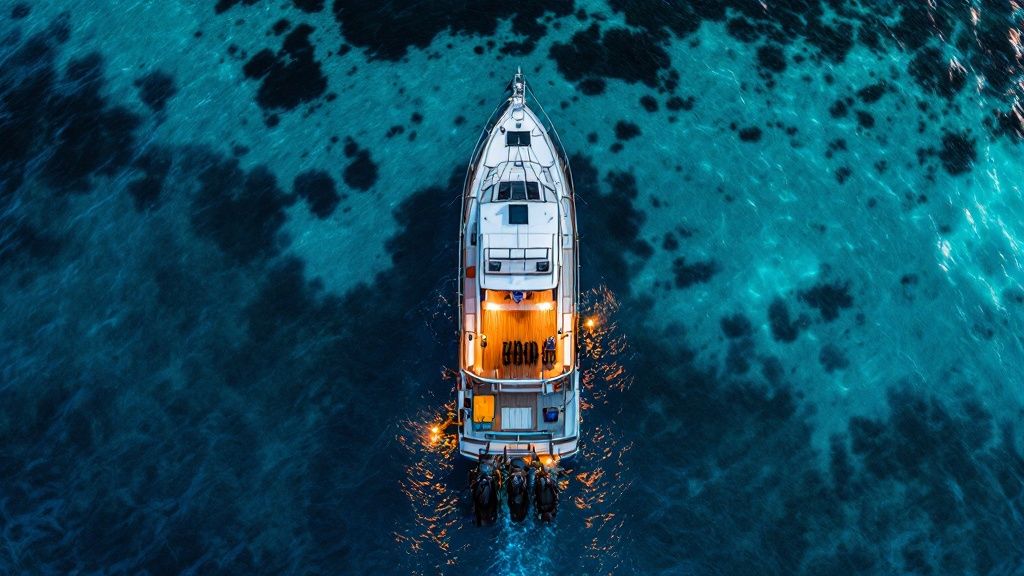
When you're planning your manta ray dive kona adventure, you’ll find there are two main "stages" for this incredible underwater ballet. It’s a bit like choosing between a cozy, intimate theater and a grand, dynamic arena—both put on a spectacular show, but the vibe is completely different. The two primary spots are affectionately known as Manta Village and Manta Heaven.
Figuring out the unique personality of each site is the key to picking the adventure that’s right for your comfort level, experience, and what you’re hoping to see. The good news is, both locations operate on the same simple, brilliant principle.
Think of it like a campfire in the woods at night. The light draws in all sorts of insects, creating a buzzing hub of activity. Underwater, the powerful lights from the dive boats do the exact same thing, creating a "manta campfire" that attracts microscopic plankton. This nightly, all-you-can-eat buffet is what brings the manta rays in, making these magical encounters so reliable.
Manta Village: The Calm and Classic Choice
Just south of Kailua-Kona in Keauhou Bay, you'll find Manta Village. This is the original, the classic, the most famous site for the manta ray night dive. It’s known far and wide for its calm, predictable conditions, which makes it a fantastic choice for almost everyone.
- Shallow and Protected: The dive happens over a sandy bottom at a pretty shallow depth, around 25-35 feet. The bay itself acts as a natural shield from strong open-ocean currents, keeping the water consistently gentle.
- Ideal for All Experience Levels: Because it's so calm, Manta Village is perfect for first-time night divers, families snorkeling with kids, or anyone who feels a little nervous about heading into the dark ocean.
- High Success Rate: This spot has been the go-to for decades, so it has an incredibly high success rate for manta sightings. The mantas know exactly where to show up for dinner.
Thanks to its accessibility and reliable conditions, Manta Village is a comfortable and absolutely awe-inspiring introduction to the world of these gentle giants.
Manta Heaven: For the Adventurous Spirit
Head a bit further north, near the Kona International Airport, and you’ll discover Manta Heaven. True to its name, this site can feel completely otherworldly, but it often asks for a little more from its visitors. It’s a different kind of encounter—a bit wilder and more dynamic.
Manta Heaven is set in deeper water and is more exposed to ocean currents and surge. This is the kind of environment that experienced divers and underwater photographers often prefer, as it gives them unique angles and a more rugged adventure. The potential for stronger currents means the mantas might put on a more energetic show, leading to some truly thrilling interactions.
The experience at Manta Heaven can feel wilder and more untamed, appealing to divers who are comfortable with variable conditions and seek a less crowded, more intimate encounter with the mantas.
So, Kona's legendary manta ray experience really boils down to these two spots, each with its own distinct character. Manta Village, the classic site, has a shallow, sandy bottom with calm waters perfect for all skill levels and often hosts 8-12 mantas during peak season. On the other hand, Manta Heaven is deeper, can have stronger currents, and offers a more dynamic experience that advanced divers love. You can discover more insights about these unique Kona dive sites to help lock in your decision.
Ultimately, your choice between these two premier locations comes down to personal preference and diving skill. Whether you opt for the serene theater of Manta Village or the dynamic arena of Manta Heaven, your manta ray dive kona experience is guaranteed to be a performance you’ll never forget.
What to Expect on Your Night Dive Adventure
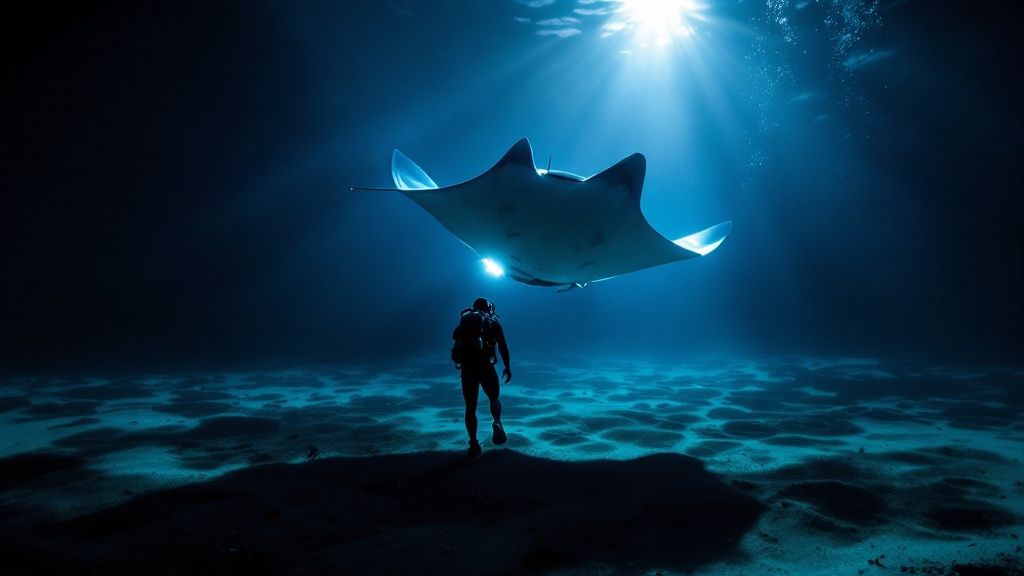
It all starts on the boat. As you motor out from the harbor, the Hawaiian sun dips toward the horizon, lighting up the sky in brilliant shades of orange and pink. The anticipation on board is electric—this is the beginning of your Kona manta ray adventure, an experience that happens in a few distinct and totally unforgettable stages.
The boat ride itself is a beautiful trip along the Kona coast, but it's also where the groundwork is laid. Your guides will give a thorough pre-dive briefing as the last bits of daylight fade away. This isn't just about checking a box; it's a crucial rundown on safety, how the dive will work, and most importantly, how to interact with the mantas respectfully.
The golden rule is simple: look, but don't touch. Manta rays have a delicate, protective mucus layer on their skin that our hands can easily damage. Your guides will make it clear that divers stay on the seafloor and snorkelers on the surface, creating a safe space for the mantas to swim freely above.
Once the briefing is over, it’s go-time. You'll take that giant stride into the dark, warm Pacific, and any butterflies you might have will instantly turn into pure wonder. The ocean at night is a whole different world.
The Underwater 'Campfire'
When you reach the sandy bottom, you’ll see the main event already set up: a circle of powerful lights pointing straight up. Divers call this the "manta campfire." Your guide will get you settled in a spot around the light, and then you just get comfortable and wait.
You’ll point your own dive light up, adding to the bright beacon that attracts plankton—the mantas' favorite food. There's a quiet, almost magical feeling as you watch these tiny organisms swarm in the beams. And then, it happens. A huge, graceful shadow emerges from the darkness.
The first manta ray soars into the light, its massive wingspan creating a silhouette that will take your breath away. Soon, another joins, and then another. They perform an incredible underwater ballet, doing effortless barrel rolls just inches over your head to scoop up the plankton. The only sound is your own breathing, making the whole experience feel deeply personal and almost surreal.
Guided by Experts
Your guides are the unsung heroes of the dive. They aren't just there to show you the mantas; they're constantly managing the group, making sure everyone is safe, and monitoring the animals' behavior. Their expertise is what elevates this from just seeing wildlife to having a truly magical, well-run encounter.
Many of these pros know the individual mantas by sight, recognizing them by the unique spot patterns on their bellies. Their calm, knowledgeable presence lets you completely relax and soak in the spectacle. It’s this dedication to safety and respect that you'll find with top-tier operators like Kona Honu Divers.
After what feels like both an eternity and a split second, your guide will give the signal to head up. You'll slowly ascend to the surface, your mind still replaying the incredible performance you just witnessed. The energy back on the boat is buzzing as everyone excitedly shares their stories. The warm snacks and hot chocolate on the ride back to the harbor are the perfect cap on a night you'll never forget.
Ready to see this underwater show for yourself? The award-winning manta ray dive tour is waiting for you.
Getting to Know the Famous Kona Mantas
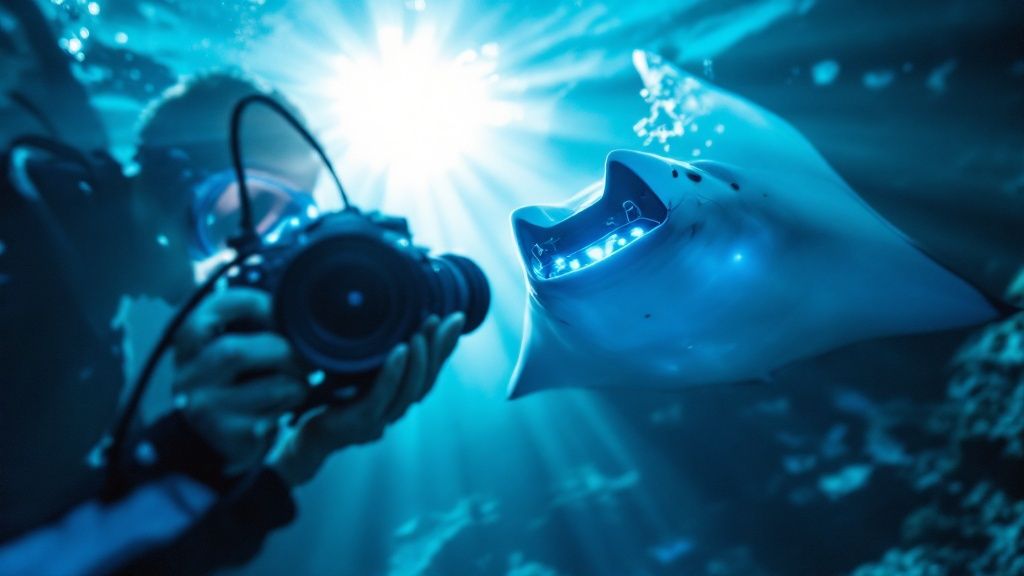
When you see those giant shadows gliding through the light on a Kona manta dive, you're not just watching wildlife pass by. You're actually meeting a community of local celebrities. Each one has a name, a personality, and a backstory that the local dive guides know well, turning what could be a simple tourist activity into a genuine connection with a protected marine family.
So, how do we tell them apart? It all comes down to their bellies. Every manta ray has a completely unique pattern of dark spots on its white underside, just like a human fingerprint. This natural marker is the key that allows researchers and dive guides to identify, track, and get to know each individual ray.
This simple but brilliant identification method has been the foundation of incredible long-term research right here in Kona. Since 1991, local projects have been using photo IDs to build a massive database of the resident manta population. We're talking about a monitoring effort with nearly 6,000 encounters and over 28,500 sightings logged—one of the most detailed in the world. You can actually browse the catalog of over 330 identified mantas and dive into the data yourself through the work documented at Manta Rays Info.
Meeting Kona's Underwater Superstars
You can get to know some of Kona’s most famous residents before your fins even touch the water. These mantas are local legends, each known for their unique behavior, size, or distinctive features.
- Lefty: You can't miss him. Lefty has a permanently curled left cephalic fin from an old fishing line injury, making him one of the most recognized and beloved mantas in Kona.
- Big Bertha: As one of the original matriarchs of the group, Big Bertha is a sight to behold. Her massive size commands respect, and she’s been a regular at the dive sites for decades.
- Kailey Ray: A frequent and graceful visitor, Kailey Ray was named for the daughter of one of Kona's dive pioneers and is known for her curious and gentle nature.
When your guide points to a manta doing a barrel roll right above your head and says, "That's Lefty!", the experience becomes so much more personal. It's a real connection.
Reef Mantas vs. Oceanic Mantas
The mantas you'll almost certainly meet on your night dive are reef mantas (Mobula alfredi). They are the second-largest ray species and tend to stick closer to coastlines, forming social, resident communities like the one in Kona.
But Hawaii also gets visits from their bigger, more mysterious cousins: the giant oceanic manta ray (Mobula birostris). These are true world travelers, migrating vast distances and diving to incredible depths. Seeing one is a rare and unforgettable treat. The easiest way to tell them apart is by the marking on their back—oceanic mantas have a "T" shape, while our local reef mantas have more of a "Y" shape. We get into all the details of how deep Kona's mantas swim in our detailed guide.
Knowing that these are individual animals, studied and protected for decades, completely changes the manta ray dive experience. You're no longer just a spectator. You become a witness to a thriving underwater community that dedicated people work tirelessly to understand and conserve.
Why Choose Kona Honu Divers for Your Manta Ray Dive
Let’s be honest: your choice of dive operator will make or break your manta ray experience. It’s about more than just getting in the water; it’s about safety, comfort, and the quality of the encounter itself. This is where Kona Honu Divers really shines. They’ve earned their stellar reputation by delivering incredible dives while putting the well-being of both divers and manta rays first.
Their guides aren’t just leading a tour—they’re passionate ocean advocates who know many of the local mantas by name. That personal connection makes for a much richer experience, one that’s deeply respectful of the animals you’re there to see. The crew’s professionalism is top-notch, ensuring every part of your trip, from the briefing to your final ascent, is handled with meticulous care.
The Kona Honu Divers Difference
So, what really sets them apart? It’s their total commitment to creating the perfect environment for everyone involved, mantas included. Their custom-built dive boats are spacious and thoughtfully equipped. You’ll find little touches that make a huge difference, like hot water showers to warm you up after the dive.
They also walk the talk when it comes to being eco-conscious. The entire operation is built around strict, sustainable guidelines to make sure these encounters don’t harm Kona’s manta population. This dedication to responsible tourism is why they're so respected in the diving community. In fact, you can learn more about their recognition as a top dive operator in Kona and see why people come back to dive with them year after year.
The real secret sauce with an operator like Kona Honu Divers is their focus on safety and small group sizes. A less crowded boat means a more personal, intimate, and frankly, more magical encounter with the mantas.
But you don’t have to take our word for it. The reviews from fellow divers say it all.
Booking Your Unforgettable Manta Dive
Kona Honu Divers has the perfect trip designed for this adventure: the 2-Tank Manta Dive & Snorkel tour. This is the best way to do it. You’ll get to explore a beautiful Kona reef on a late afternoon "twilight" dive before the main event begins.
This two-tank setup is brilliant because it gives you a chance to get comfortable with your gear and the conditions before the sun sets. By the time it’s dark, you’re already relaxed and ready to be completely mesmerized by the underwater ballet. Whether you’re a diver or a snorkeler, their team will make sure you get a front-row seat to one of the most incredible shows on Earth.
When you put a bucket-list trip in the hands of a trusted, safety-focused operator like Kona Honu Divers, you know it’s going to be an adventure you’ll never forget.
Explore More Big Island Diving Adventures
Don't get me wrong, the manta ray dive kona is an absolute must-do—it's world-famous for a reason. But think of it as the incredible opening act for everything else the Big Island has to offer. The very same volcanic forces that sculpted these islands created an equally stunning world below the waves, making Kona a top-tier spot for divers of all stripes.
After you've seen the manta ballet, you'll be itching to see what this coastline looks like with the sun up. The underwater terrain here is something else entirely. We're talking dramatic lava tubes you can swim through, ancient archways, and sprawling coral gardens buzzing with life. A daytime charter reveals a whole different personality of Kona's marine world.
Journey into the Deep with a Blackwater Dive
If the thrill of the manta night dive got your adrenaline pumping, hold on. The Kona blackwater dive is a whole other level of adventure. This isn't for the faint of heart. Instead of hovering over a reef, you're tethered to the boat in the deep, dark, open ocean—with thousands of feet of water below you.
Out there, you'll witness the largest migration on the planet. Strange, often bioluminescent creatures rise from the abyss to feed near the surface under the cover of night. It’s the closest you can get to floating in outer space, surrounded by bizarre, beautiful, and alien-like animals you’d never encounter anywhere else.
A blackwater dive is truly otherworldly. You’ll come face-to-face with pure pelagic life—from tiny, see-through larval fish to pulsing siphonophores. It's a surreal journey into one of the planet’s last real wildernesses.
Advanced Diving Opportunities
For those certified divers looking for a bigger challenge, Kona definitely delivers. The island’s underwater geography serves up sheer cliffs, deep-water pinnacles, and complex cave systems that are just begging to be explored. These spots are typically deeper and can have ripping currents, so they demand a solid set of skills.
Jumping on a premium trip for advanced divers is the best way to tackle these sites safely. With guides who know every nook and cranny, you can push your boundaries and see parts of the reef that most divers miss. Plus, this is where you’re more likely to have those jaw-dropping encounters with bigger pelagics, like sharks.
From the sunlit reefs to the mysterious blackwater, the Big Island offers a lifetime of diving. The manta dive is an unforgettable start, but it's just the first chapter. To see everything we offer, from laid-back reef tours to advanced charters, take a look at the full list of scuba diving tours in Kona. Your next adventure is waiting.
Your Kona Manta Ray Dive Questions, Answered
Alright, let's tackle those last-minute questions you probably have swimming around in your head. I get it—you want to feel completely ready for this incredible adventure. Think of this as a quick, practical chat to clear up any lingering concerns.
We'll run through the most common queries I hear from divers and snorkelers. By the end, you'll have all the info you need to book your trip with confidence and focus on what really matters: the mantas.
Is the Manta Ray Dive in Kona Actually Safe?
Yes, it is remarkably safe. There's a reason these creatures are called "gentle giants." Manta rays are peaceful filter-feeders, meaning they glide through the water collecting plankton. They have no teeth, no stingers, and no barbs—they are completely harmless to humans.
Top-tier operators like Kona Honu Divers are also serious about safety. They stick to strict guidelines to protect both you and the mantas. Before you even dip a toe in the water, you’ll get a comprehensive safety briefing from seasoned guides who create a controlled, secure environment for everyone involved.
Do I Have to Be a Certified Scuba Diver to Go?
Not at all! This is one of the best things about the Kona manta ray experience—it’s wonderfully accessible, no matter your experience level.
- Snorkelers: You'll hold onto a custom-built light board and float comfortably on the surface. From here, you get a stunning bird's-eye view as the mantas swoop and barrel-roll in the light beams just a few feet below you. It's a mesmerizing perspective.
- Divers: If you are certified, you'll head down to the sandy ocean floor. From this vantage point, you'll watch the entire ballet unfold from below, with mantas often gliding right over your head.
Both options offer a front-row seat to the show and deliver an equally unforgettable encounter.
When Is the Best Time of Year for This Dive?
Honestly, any time is a great time. The Kona manta ray dive is a year-round spectacle, thanks to a large resident population of manta rays that stick around the area. The sighting success rate stays incredibly high no matter which month you visit.
That said, if you're looking for the absolute best conditions, the peak season is generally from April through October. The ocean tends to be at its calmest and warmest during these months. But even if your trip is planned for the winter, your chances of a magical encounter are still exceptionally good.
What Should I Pack for the Tour?
The tour operator will provide all the essential gear, like your snorkel, mask, fins, and wetsuit. To make your trip as comfortable as possible, you’ll just want to bring a few personal items.
Here’s a quick checklist:
- A towel to dry off
- A warm, dry change of clothes for the ride back
- A reusable water bottle
- Reef-safe sunscreen, especially if you’re on a tour that starts before sunset
Ready to cross this incredible adventure off your bucket list? The team at Kona Honu Divers is waiting to guide you on a safe, respectful, and truly unforgettable manta ray dive tour.