
There’s a reason the world-famous manta ray dive in Kona, Hawaii, lands on nearly every diver's bucket list. It’s hard to put into words the feeling of floating in the dark ocean while gentle giants with wingspans up to 16 feet glide just inches from your face. It's pure, unforgettable underwater magic.
What Makes the Kona Manta Ray Dive So Magical
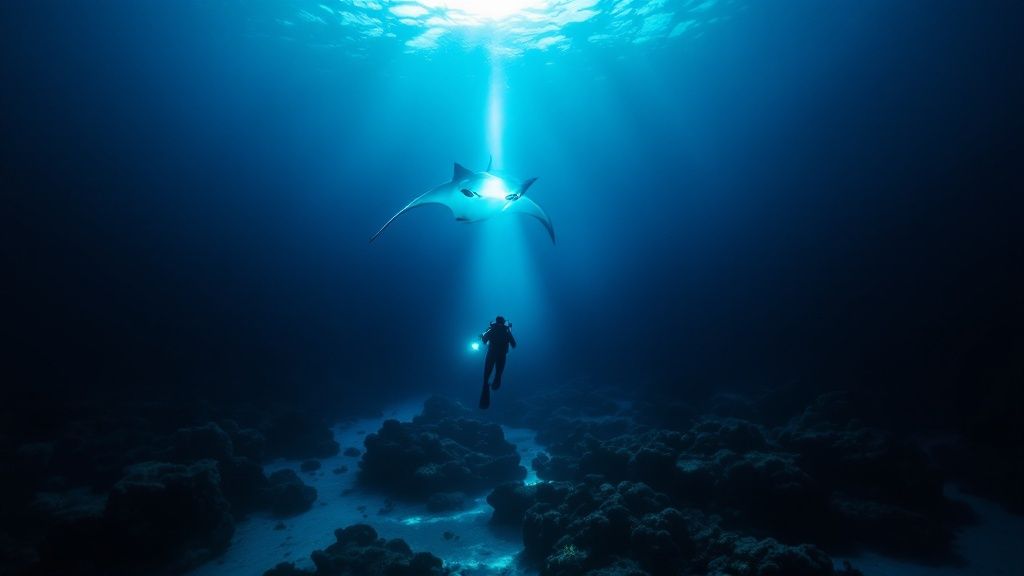
Picture this: you descend into the warm, dark Pacific Ocean. Powerful lights from your dive group cut through the blackness, illuminating the water like a movie set. Suddenly, enormous, graceful shadows emerge from the deep. This is the heart of the Kona manta ray dive, an experience consistently ranked as one of the best night dives on the planet.
But what makes this underwater ballet so consistently amazing? It comes down to a clever, symbiotic relationship that's been nurtured for decades. Local operators learned that by shining bright lights into the water after sunset, they could attract swarms of phytoplankton—the microscopic creatures that manta rays love to eat.
This nightly buffet draws the mantas to the same spots, night after night, creating a predictable and absolutely breathtaking show for divers and snorkelers.
An Underwater Theater
The setup is brilliant in its simplicity. Many operators call it the "underwater campfire." Divers gather in a circle on the sandy ocean floor, about 25-35 feet down, pointing their lights up towards the surface. Snorkelers do their part from above, holding onto a large, custom-made raft with lights pointing down.
This creates a massive column of light, a veritable plankton superhighway. And then, the show begins.
The mantas swoop in, gliding and barrel-rolling through the light beams to scoop up mouthfuls of plankton. This isn’t some distant wildlife sighting; it’s an incredibly close and personal encounter. You're right there in their world, a silent spectator in a mesmerizing performance.
This isn't just a dive; it’s an immersive performance. The mantas are the stars, the light is the stage, and you have a front-row seat to one of nature's most spectacular shows.
To give you a better idea of what to expect, here’s a quick snapshot of the experience.
Kona Manta Ray Dive At a Glance
Here is a quick overview of what to expect on your manta ray adventure.
| Aspect | Details |
|---|---|
| Location | Off the Kona Coast, Big Island of Hawaii |
| Best Time | Year-round, with calm seas common in summer |
| Dive Type | Night dive or snorkel |
| Typical Depth | 25-35 feet (7-11 meters) for divers |
| Water Temp | 75-80°F (24-27°C) |
| Creature | Reef Manta Rays (Mobula alfredi) |
| Wingspan | Up to 16 feet (5 meters) |
| Success Rate | Between 80% and 90% sighting rate |
With around 80,000 people participating in tours each year, it's clear this isn't some fleeting phenomenon. The experience is both reliable and world-class.
This powerful combination of dependable sightings, stunning visuals, and incredibly intimate interactions is what makes the manta ray dive Kona experience a truly once-in-a-lifetime adventure. You can read more about the best times to see manta rays to help plan your trip.
A Step-by-Step Walkthrough of Your Adventure
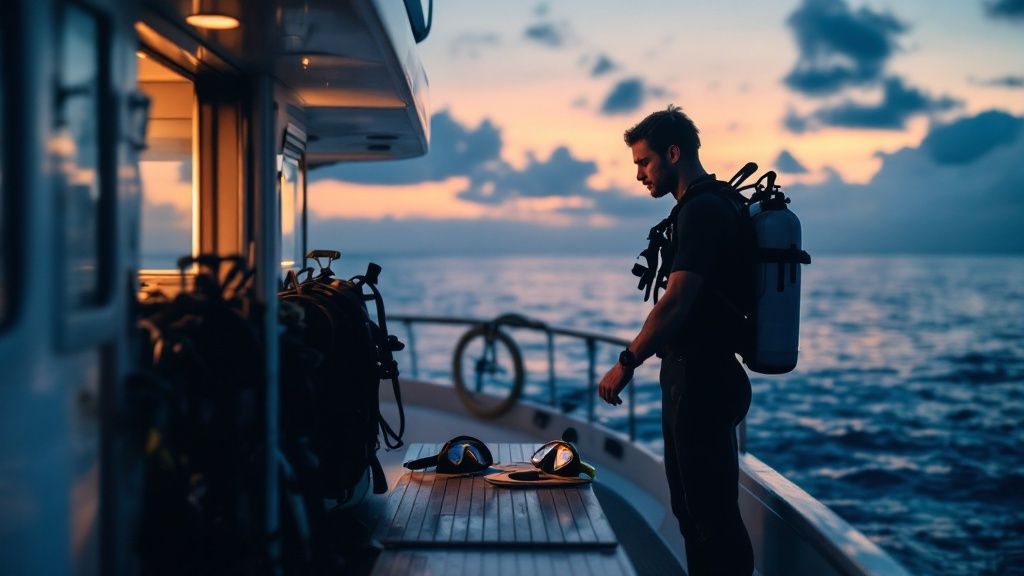
The buzz for your manta ray dive in Kona starts well before you ever get wet. It kicks off in the late afternoon as you step onto the boat, with the Hawaiian sun just starting to dip towards the ocean. You can feel the energy in the air as the crew from a top-notch operator like Kona Honu Divers welcomes you and gets things underway.
The boat ride out to the site is part of the experience. You’ll motor along the beautiful Kona coast while the crew gives you the rundown. This isn't some dry safety lecture; it's an engaging introduction to the gentle giants you’re about to meet. You’ll learn all about manta behavior, how to identify them by their unique spot patterns, and the simple guidelines for safely sharing their world.
Arriving at the Dive Site
Just as twilight begins to paint the sky, your boat will moor up at one of the famous manta spots, like "Manta Village" or "Manta Heaven." The crew moves with purpose, setting the stage for the show. If you're diving, you'll gear up for a twilight descent to the sandy bottom, which is usually around 35 feet deep. If you're snorkeling, the crew deploys a big, stable raft with powerful lights built right in.
This whole setup creates what we all call the "underwater campfire."
- For divers, you'll settle in a circle on the seafloor and point your dive lights straight up.
- For snorkelers, you'll hang onto the custom light board at the surface, which shines its beams straight down.
All these lights converging create a massive column of light in the water. This acts like a giant dinner bell, attracting swarms of plankton—the manta rays' favorite meal. The buffet is officially open.
The Manta Ballet Begins
Once you're settled in your spot, a quiet anticipation hangs in the water. Then you see it—a huge, dark shape gliding effortlessly out of the blackness and into the light. Soon, another one joins, and then another.
What happens next is a breathtaking spectacle people call the "manta ballet." The rays swoop and soar, performing graceful barrel rolls right through the beams of light, their giant mouths wide open to scoop up the plankton. They often get so close you can see the intricate details of their gills and the unique spot patterns on their bellies.
It's an almost silent, totally surreal experience. The only sounds are the gentle hiss and bubble of your regulator and the collective, unspoken awe from everyone watching these magnificent animals dance inches from your face.
Divers get a fantastic view looking up, seeing the mantas silhouetted against the glowing surface. Snorkelers get an equally stunning top-down view, taking in the full scope of the show below. No matter how you experience it, you’ve got a front-row seat to one of the greatest shows on Earth.
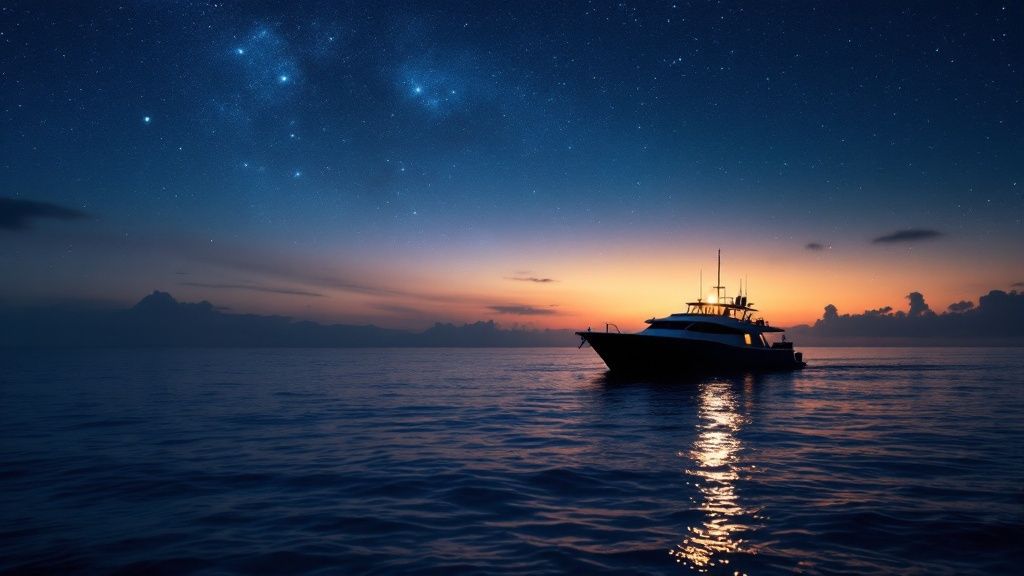
The ride back to the harbor under a canopy of stars is the perfect, peaceful ending to a truly unforgettable night.
How to Choose the Right Manta Ray Tour
This is a once-in-a-lifetime experience, so picking the right operator for your manta ray dive Kona adventure is a big deal. The company you choose doesn't just shape your enjoyment and safety; it also impacts the well-being of the mantas themselves. A truly great tour is about more than just seeing these incredible animals—it's about doing it responsibly.
The best operators all share a few core principles: an ironclad safety record, a commitment to small group sizes, and a genuine respect for the marine environment. A smaller group isn’t just a nice-to-have; it means a more intimate, less crowded dive where you get a clear, front-row seat for the underwater ballet.
Safety and Experience Matter Most
When you’re heading out into the ocean at night, nothing is more important than the expertise of the crew leading the way. You'll want to find a company with a long-standing reputation and a team of seasoned, certified divemasters and instructors. These are the pros who know how to manage any situation and make sure everyone, from a dive veteran to a first-time snorkeler, feels comfortable and safe.
The gold standard for a manta ray tour is a crew that is not only highly skilled but also passionate about marine conservation. Their enthusiasm and knowledge elevate the trip from a simple activity to an educational and inspiring event.
A company's dedication to safety usually shows in the quality of their gear. Look for well-maintained boats and top-of-the-line rental equipment—it’s a clear sign you’re with a professional operation that doesn’t cut corners.
Eco-Conscious and Ethical Practices
Responsible tourism is the key to protecting Kona’s beloved manta ray population for years to come. The best tour operators are deeply involved in conservation and follow strict guidelines to ensure human interactions don't stress or harm the animals. This means enforcing rules like no touching, no chasing, and never blocking a manta’s path.
By choosing an eco-aware operator like Kona Honu Divers, you know your money is supporting a business that actively helps protect these gentle giants. For a side-by-side look, check out our guide to the top 5 manta ray night dive tours to see how different companies compare.
One of the best ways to get a feel for a company is to hear what other divers have to say. Reading real, honest reviews gives you priceless insight into the entire experience, from the crew's attitude to the overall vibe on the boat.
When you make an informed choice, you can relax and completely immerse yourself in the magic of the dive, knowing you're in the best possible hands.
Ready to jump in? You can check availability and reserve your spot right now.
Getting to Know Kona’s Gentle Giants
The real stars of every manta ray dive in Kona are the magnificent resident reef mantas, or Mobula alfredi. These aren't the same as their massive, globe-trotting cousins, the oceanic mantas. Kona's population tends to stick close to the coast, which is exactly why our nightly encounters with them are so incredibly reliable.
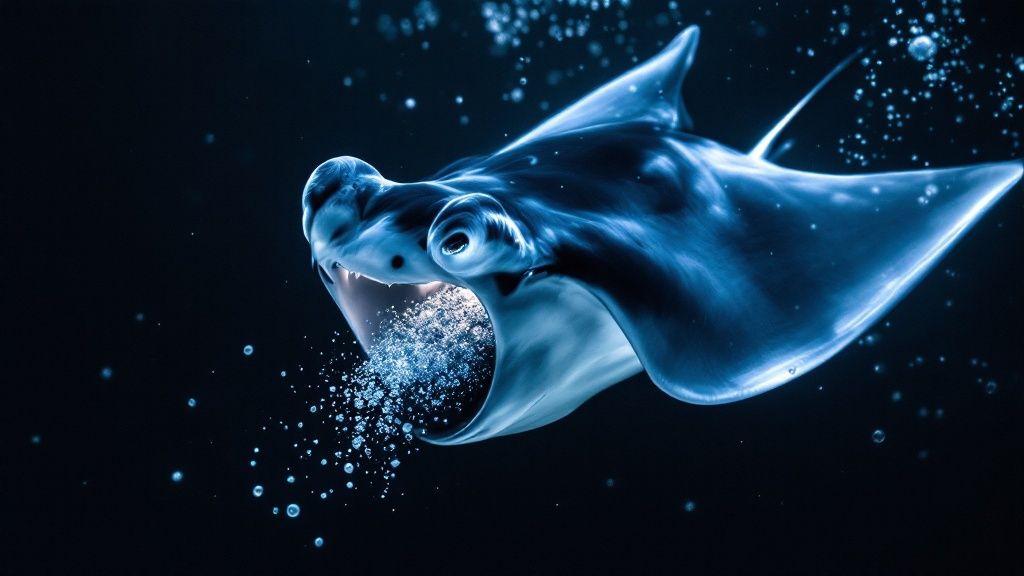
They are filter feeders, and the entire underwater spectacle is built around their simple, instinctual hunt for a meal. The powerful lights we use attract huge, swirling clouds of plankton—their favorite food. We’re essentially creating a concentrated, all-you-can-eat buffet that the mantas find impossible to ignore.
This feeding behavior is the heart of the experience. To get a better sense of how it all works, you can read our deep dive on what the manta ray night dive is all about.
Busting Manta Ray Myths
Let’s clear the air on a few common misconceptions. Despite their enormous size and the fact they look a bit like stingrays, manta rays are completely harmless to humans. They are, in every sense of the phrase, gentle giants.
- No Stingers: You won’t find any stingers or barbs on their tails.
- No Teeth: As filter feeders, they have no teeth for biting or chewing.
- Not Aggressive: Their only defense is to swim away—and they are impressively fast when they want to be.
Their naturally curious and peaceful nature is what makes this encounter so magical. They are completely focused on the plankton, not on the divers and snorkelers watching them in awe.
Unique Manta Characteristics
One of the first things you'll probably notice are their cephalic fins. These are the two paddle-like fins that extend from the front of their heads. When it’s time to eat, they unfurl these fins to funnel plankton-rich water right into their mouths, almost like built-in scoops. When they’re just cruising, they roll them up into tight little "horns."
But here’s what makes the Kona population truly special: we can identify each manta individually.
Think of it like a fingerprint. The unique pattern of black spots on each manta ray's white belly is completely distinct, allowing researchers to identify, name, and track them over their entire lives.
This has allowed for some incredible long-term research. Since 1991, scientists have used photo-identification to create a massive database of the local population. Today, that catalog includes over 330 individually identified mantas from thousands of reported encounters, giving us an unparalleled look into their lives. You can explore more of this groundbreaking work on how mantas are identified.
When you know these details, your dive becomes more than just a cool sightseeing trip. It’s a genuine connection with these intelligent, graceful animals and the vital research that helps protect them for years to come.
Logistics: Planning Your Perfect Manta Trip
A little bit of planning is all it takes to make your manta ray dive in Kona absolutely unforgettable. Getting the logistics sorted out beforehand means you can just relax and soak in the incredible experience when the time comes.
While you can see mantas here all year long, there's definitely a sweet spot. The peak season generally runs from April to October. This is when the water is warmer, hovering between a pleasant 75 to 80°F, and the plankton—the mantas' favorite food—is most abundant.
It's not uncommon for divers during these months to witness 8 to 12 mantas at once, all swirling through the water in their mesmerizing "manta ballet." If you want to dive deeper into what makes this time of year so special, check out our guide on what to expect during Kona's prime manta season.
What to Bring on the Boat
You can travel pretty light for this trip. We take care of all the heavy-duty scuba and snorkel gear, so you just need to pack a few personal items to stay comfortable.
Here’s a simple checklist of what you should bring along:
- Swimsuit: The easiest thing to do is just wear it under your clothes when you arrive.
- Towel: You’ll be glad you have a dry towel waiting for you after your time in the water.
- Something Warm: Even in Hawaii, the boat ride back after sunset can get surprisingly chilly. A hoodie or light jacket is a must.
- Reusable Water Bottle: It's always smart to stay hydrated.
- Camera: If you have an underwater camera, this is its moment to shine.
- Dry Bag: A small one is perfect for keeping your phone, wallet, and keys safe and dry.
Think of it this way: we handle all the technical dive equipment like tanks, weights, and wetsuits. You just bring the personal comforts that make the trip cozy and fun from start to finish.
Understanding the Gear Provided
Rest assured, your tour operator will have all the essential gear ready for you. This includes a properly sized wetsuit to keep you warm, a mask, fins, and either a BCD with a regulator for divers or a snorkel for those staying on the surface.
Of course, if you have your own gear that you're comfortable with, like a special prescription mask or your favorite fins, feel free to bring it! Getting all these gear questions answered ahead of time is the best way to ensure you can fully immerse yourself in the magic of the dive.
For a full rundown of the equipment, take a look at our guide on the gear you will need for your Kona diving adventure.
Exploring More Kona Diving Adventures
The world-famous manta ray dive is an absolute must-do, but I promise you, it's just the tip of the iceberg when it comes to Kona's underwater world. The Big Island's volcanic coast has created a stunning, one-of-a-kind playground for divers that can easily fill an entire vacation. See all of our diving tours here.
Once you’ve experienced the manta ballet, it's time to try something truly otherworldly: the Kona blackwater dive. Forget the reef. This is a drift dive in the deep, open ocean at night, tethered to the boat. You’re basically an astronaut floating through inner space, surrounded by bizarre, bioluminescent creatures rising from the depths to feed. It’s an experience that’s hard to put into words.
Beyond the Night Dives
For certified divers hungry for a daytime challenge, Kona really shines. The coastline is laced with dramatic underwater formations just begging to be explored. Many of our advanced day dives are designed to get you to these incredible spots.
- Lava Tubes and Arches: Imagine swimming through intricate tunnels and massive caverns carved out by ancient lava flows. They're now teeming with all sorts of marine life hiding in the nooks and crannies.
- Deep Reefs and Pinnacles: Dropping down to the deeper, pristine reefs reveals a whole different ecosystem. This is where we often find sharks, massive schools of pelagic fish, and other amazing critters.
These dives will definitely test your skills, but the reward is seeing underwater landscapes that most divers only dream of. We explore some of the best of these sites on our premium advanced dive trips.
The manta ray experience might be what brings you to Kona, but it's the sheer diversity of world-class dive sites that will make you want to stay and explore every hidden corner of its underwater world.
For those who get bitten by the bug and want to see even more, branching out into different kinds of adventures like liveaboard diving experiences can open up a whole new world of marine encounters. Whether you're drifting in the deep on a blackwater dive or navigating a lava tube, every single plunge in Kona offers a new and unforgettable adventure.
Your Manta Ray Dive Questions, Answered
Even after doing all your homework, a few questions can pop up as your trip gets closer. Let's tackle some of the most common ones we hear from divers and snorkelers. Think of this as the final check to make sure you're feeling completely ready for this incredible experience.
Is the Kona Manta Ray Night Dive Really Safe?
It is, and for good reason. Every reputable operator in Kona puts safety above all else. You'll get a detailed briefing before you even touch the water, and you'll be accompanied by certified, experienced guides the entire time you're out there.
These dive sites have been used for years, and the procedures are dialed in. Plus, the manta rays themselves are famously gentle—they're just there for the plankton and couldn't care less about the people watching them.
Do I Have to Be Scuba Certified?
Nope! That's one of the best parts about this adventure—it's open to almost everyone. If you're not a certified diver, you can join as a snorkeler and still get a front-row seat.
Snorkelers hang onto a large, custom-made light board on the surface. From there, you get a perfect top-down view of the mantas as they swoop and barrel-roll right below you. It's a fantastic way to see the show, especially for families with mixed experience levels.
What if I'm Not a Great Swimmer?
You can still absolutely do this. The snorkeling option is designed to be incredibly safe and stable, even for those who aren't super comfortable in the water.
The crew will get you fitted with a wetsuit, which provides a lot of natural buoyancy, making it easy to float. The whole time, you'll be holding onto that large floatation board, so there's no real swimming required. You just relax and watch the magic unfold.
How Far Ahead Should I Book My Spot?
Book as far in advance as you possibly can. I can't stress this enough, especially if your trip falls during the busy seasons like spring break or summer. These tours are one of the most popular activities on the Big Island and they consistently sell out, sometimes weeks ahead of schedule. Booking early directly with a quality operator is the surest way to guarantee your place.
Ready to see the underwater ballet for yourself? The team at Kona Honu Divers is passionate about running safe, ethical, and truly breathtaking trips with Kona's gentle giants.
Go ahead and book your manta ray dive tour and get ready for an unforgettable night.