
There are very few underwater experiences on Earth that can match the sheer spectacle of the manta ray dive in Kona. It’s consistently ranked as one of the most memorable dives in the world for a reason. Picture this: you’re at the bottom of the ocean at night, and giant, gentle creatures with wingspans stretching up to 20 feet glide effortlessly just inches above your head. It’s a silent, otherworldly ballet, and it’s waiting for you on the Big Island.
Experience the Kona Manta Ray Dive
Imagine kneeling on the sandy ocean floor, looking up as colossal, graceful shadows swoop and soar through the water. It sounds like something out of a sci-fi film, but it's the very real, very surreal Kona manta ray dive—a true bucket-list adventure.
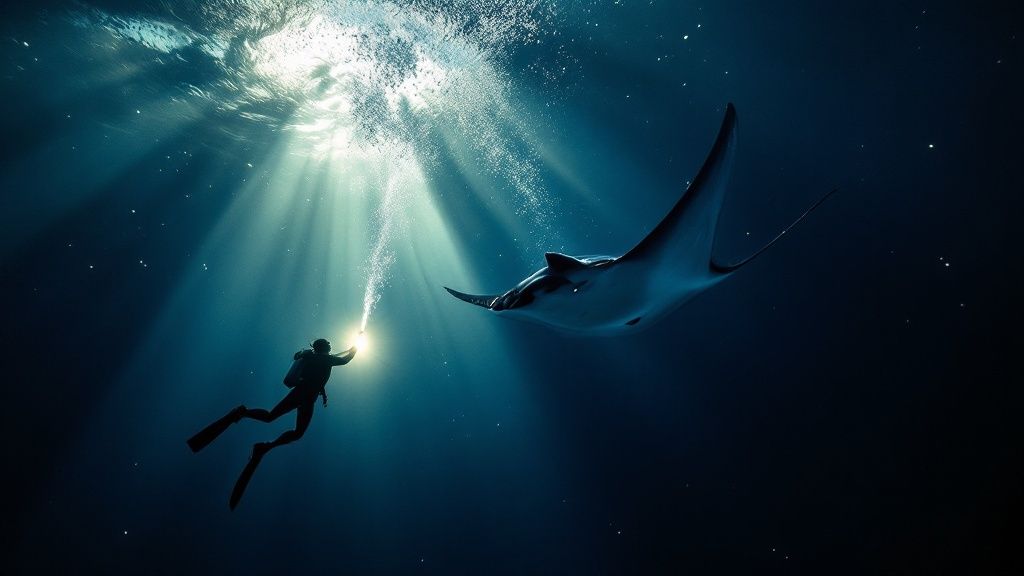
The whole thing starts when your dive crew sets up powerful, upward-facing lights on the seafloor. This creates a sort of "underwater campfire" that attracts clouds of plankton, the manta rays' favorite meal.
Soon enough, the main attraction arrives. Kona’s resident reef manta rays descend on the light beams to feast on the plankton buffet. They perform an incredible feeding ballet, executing barrel rolls and somersaults right in front of spellbound divers and snorkelers.
A World-Renowned Underwater Spectacle
Kona isn’t just a good spot for this dive; it’s the best spot on the planet. Around 80,000 people come every year to experience the manta ray tours along the Kona Coast, cementing its status as a global hotspot.
The two most famous sites are Manta Village in Keauhou Bay and Manta Heaven, which is a bit further north. Manta Village is the original location, known for its calm, shallow waters that make it perfect for first-timers to get a front-row seat to the show.
This encounter is a privilege, offering a front-row seat to one of nature's most spectacular displays. It’s an experience that connects you directly with the ocean's gentle giants in a profound and unforgettable way.
When you're ready to book, picking a responsible and highly-rated operator is crucial. For years, Kona Honu Divers has built a fantastic reputation for running safe, respectful, and absolutely awe-inspiring manta ray dive tours.
You don't even have to be a certified diver to witness the magic. Snorkelers get an equally amazing bird's-eye view from the surface. If you want to see what that's like, you can delve into the magic of a Night Snorkel with Manta Rays in Hawaii.
Consider this guide your all-in-one resource for planning what will undoubtedly be a once-in-a-lifetime adventure.
Getting to Know Kona’s Gentle Giants
One of the most incredible parts of the Kona manta ray dive is the realization that you're not just observing random wildlife. You’re actually meeting local celebrities. The mantas you see night after night aren't just passing through; they're long-term residents, and many have been known by local researchers and dive guides for years—each with its own name and personality.
This personal connection completely changes the experience. It’s not just a sightseeing trip; it’s a genuine encounter. Before you even get your fins wet, you might hear stories about rays like "Big Bertha," "Lefty," or "Koie." Knowing their history gives you a much deeper appreciation for these magnificent animals once you see them in the water.
How We Tell Them Apart
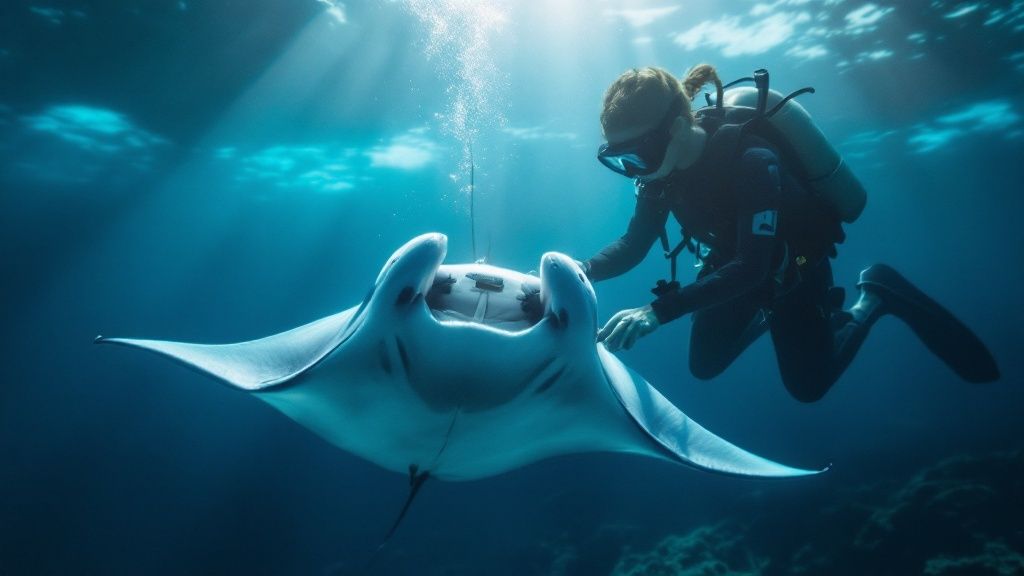
So, how do you identify one manta from another? The secret is on their bellies. Every single manta ray has a unique pattern of black spots on its underside, which works just like a human fingerprint. No two are ever the same.
Divers, snorkelers, and scientists photograph these spot patterns, creating a comprehensive catalog of the local population. This massive citizen science effort means you can actually help identify which specific manta you're swimming with. It adds a whole new layer of discovery to your dive.
This identification process is far more than just a fun fact; it provides crucial data for conservation. It helps scientists track the health, migration patterns, and life stories of Kona's beloved manta population.
This incredible project has been going on for decades. Researchers have been studying and documenting the local mantas since 1991, identifying individuals by their unique belly spots. Today, the catalog contains over 330 unique individuals. This database tracks nearly 6,000 encounters and more than 28,500 confirmed sightings, offering a goldmine of information for global research. You can learn more about this amazing manta ray database and its discoveries.
Meet the Two Types of Kona Mantas
While you're in the water, you might encounter two different species of manta rays, though one is definitely the star of the night dive.
- Reef Manta (Mobula alfredi): This is the manta you're almost certain to see. They're the slightly smaller of the two, with an average wingspan of about 12 feet. As their name suggests, they prefer to stick to shallower coastal waters, which makes them the main attraction at the nightly plankton buffet.
- Oceanic Manta (Mobula birostris): The true giant of the manta world. These behemoths can have a wingspan of 20 feet or even more. They are true globetrotters, preferring the deep, open ocean. Seeing one on the night dive is rare, but when an oceanic manta shows up, it's an unforgettable event.
Knowing all this before you go makes the adventure so much richer. You're not just seeing a manta ray; you're meeting a specific, named individual with a known history. It turns your manta ray dive in Kona from a cool experience into a deeply personal and profound one.
What Happens on a Manta Ray Night Dive
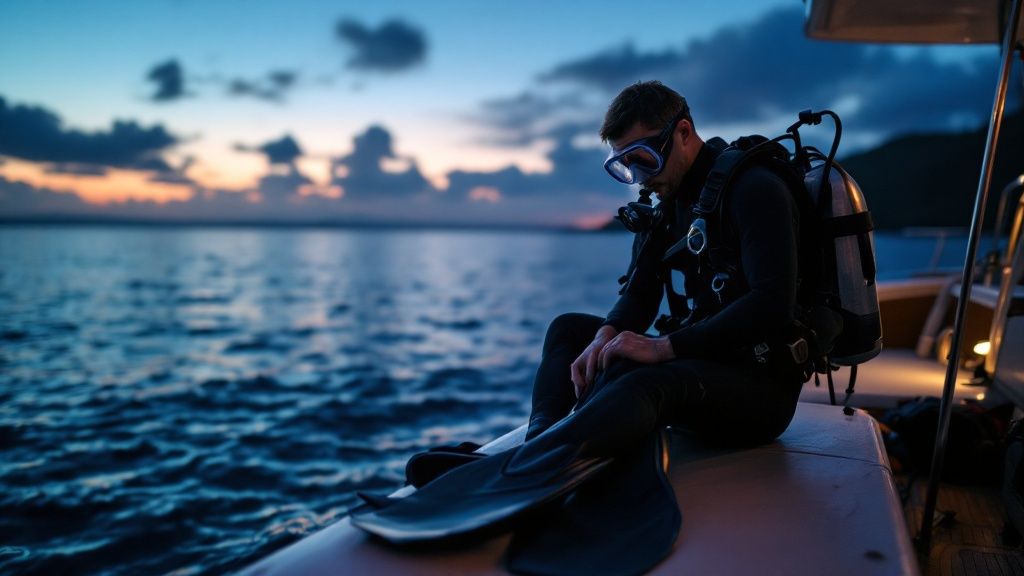
The whole manta ray dive Kona experience is a masterclass in building anticipation. It's not just about what happens underwater; the entire trip is designed to create a memory that lasts a lifetime.
It all starts in the late afternoon. You'll board the boat and cruise along the stunning Kona coast just as the sun begins to dip towards the horizon, painting the sky in fiery colors. This boat ride is your chance to settle in, get to know the crew and your fellow divers, and just let the excitement build for the main event.
During the ride out, the crew gives a thorough pre-dive briefing. They’ll cover all the safety checks and, just as importantly, teach you the proper "manta etiquette." This part is key because it ensures everyone—divers and mantas alike—has a safe, respectful, and incredible encounter.
Setting the Underwater Stage
Once the boat is anchored at the dive site, the crew gets to work setting the stage for the show. They strategically place incredibly bright, eco-friendly lights on the ocean floor, aiming the beams straight up to the surface.
I've always thought of it as building an "underwater campfire."
This powerful light is irresistible to the tiny, microscopic plankton that manta rays feed on. As the plankton swarm into the illuminated columns of water, it creates the perfect all-you-can-eat buffet for Kona's gentle giants. This simple, brilliant setup is the secret sauce that makes this one of the most reliable and awe-inspiring marine animal encounters on the planet. We dive deeper into the mechanics in our guide on what makes a manta ray night dive so unique.
The Main Event Underwater
With the campfire lit, it's your turn to get in the water. Whether you’re diving or snorkeling, you're guaranteed a front-row seat to the performance.
-
For Divers: You’ll descend with your guide to a sandy patch on the bottom, usually around 25-45 feet deep. From there, you'll find a spot to kneel or lie flat, forming a loose circle around the lights as you gaze upward. Staying still is the most important rule; it keeps the environment undisturbed and lets the mantas get comfortable with your presence.
-
For Snorkelers: You'll hang out on the surface, holding onto a specially designed float that has its own set of lights shining down. This draws the plankton right up to you, giving you an amazing bird's-eye view of the whole scene.
It usually only takes a few minutes before the first dark, graceful shadow glides into view. Then another. And another. Before you know it, multiple giant manta rays are swooping, soaring, and doing mesmerizing barrel rolls just inches above the divers and below the snorkelers.
They are completely focused on feeding, seemingly unfazed by their audience. The only sounds you'll hear are the rhythmic hiss of your regulator and the quiet gasps of wonder from everyone around you. Watching these massive creatures move with such fluid, effortless grace is truly a humbling experience you will never forget.
Ready to see the underwater ballet for yourself?
Choosing Your Ideal Kona Manta Ray Tour
Not every manta ray dive Kona offers is the same. Picking the right tour operator and dive spot is what separates a good dive from an absolutely mind-blowing, once-in-a-lifetime experience. It really boils down to your comfort in the water, your dive certification level, and what you’re hoping to see.
Kona is home to two world-famous locations for this nightly ballet, and each has its own vibe. Knowing the difference between them is the key to finding the perfect underwater theater for your big night out.
Manta Village vs. Manta Heaven: Which Site Is for You?
The two main "stages" are affectionately known as Manta Village and Manta Heaven. Both give you a front-row seat to the action, but they’re set up for slightly different crowds.
-
Manta Village (Keauhou Bay): This is the original, classic manta site. Tucked inside a protected bay, it’s shallower and the water is typically calmer. The boat ride is shorter, which is a huge plus if you’re worried about seasickness. Because of these gentle conditions, it’s a fantastic spot for first-time night divers, snorkelers, and families.
-
Manta Heaven (Garden Eel Cove): A bit further north, this site is a little deeper and can sometimes have a bit more current to navigate. It still boasts an incredible success rate of over 90%, but it tends to be the preferred spot for divers with a few more logbook entries under their belt who don't mind potentially more dynamic conditions.
Kona Manta Ray Dive Site Comparison
Choosing between the two legendary manta ray dive sites in Kona can feel like a tough call. Both offer incredible, up-close encounters with these gentle giants. This table breaks down the key differences to help you select the spot that best fits your skill level and what you’re looking for in an underwater adventure.
| Feature | Manta Village (Keauhou Bay) | Manta Heaven (Garden Eel Cove) |
|---|---|---|
| Location | South Kona, inside a protected bay | North Kona, near the airport |
| Depth | 25-35 feet (great for all levels) | 35-45 feet (a bit deeper) |
| Conditions | Usually very calm and protected | Can have stronger currents |
| Best For | Beginner divers, snorkelers, families | More experienced divers |
| Boat Ride | Shorter ride from Keauhou Harbor | Longer ride from Honokohau Harbor |
Ultimately, you can't go wrong with either site. Both Manta Village and Manta Heaven are meticulously managed to ensure unforgettable and safe encounters. Your choice simply comes down to matching the site's conditions with your personal comfort and experience level.
What to Look for in a Tour Operator
The dive site is only half the equation; the company you go with makes all the difference. A truly great operator does more than just drop you in the water. They’re obsessed with safety, passionate about education, and deeply committed to protecting the manta rays.
The best operators have a fantastic safety record, keep their groups small, and follow eco-friendly practices. Their guides are genuine marine life experts who bring the experience to life with incredible facts and stories.
When you're ready to book, ask about the little things. Do they have a hot shower on board? Do they offer snacks or hot drinks? Those small comforts feel like pure luxury after an hour in the dark ocean. A quality crew makes you feel safe and looked after from start to finish. For a full rundown of our favorites, check out our guide to the top 5 manta ray night dive tours in Kona.
How to Be a Responsible Manta Ray Observer
The manta ray night dive is one of the most breathtaking experiences you can have in Kona, and it’s a privilege to share the water with these gentle giants. To keep this encounter special for years to come, we all have to be respectful guests in their home. It all comes down to following a few simple, but absolutely critical, rules.
Think of it like being an invited guest at someone’s dinner party—you wouldn’t interfere with the host. The number one rule is to look, but don't touch. Manta rays are covered in a protective mucus layer that acts as their shield against infection. Even a casual touch from a human hand can strip that away, leaving them vulnerable to nasty diseases. Let the mantas call the shots.
The Rules of Engagement
Knowing where to position yourself is just as important as keeping your hands to yourself. If you're diving, you'll want to stay low on the sandy bottom. If you're snorkeling, you stay floating on the surface. This simple act creates a wide-open "dining room" in the middle of the water column for the mantas to swoop and glide through as they feed.
Here’s a quick rundown of the core principles for a responsible manta encounter:
- Let Them Come to You: Never, ever chase, grab, or try to ride a manta ray. Let them decide if they want to get close.
- Nail Your Buoyancy: As a diver, your job is to be a quiet observer. Good buoyancy control is essential to avoid stirring up sand or accidentally bumping into one of these magnificent creatures. If you want a refresher, it's always a good idea to read up on responsible and considerate diver etiquette.
- Point Your Light Up: Your dive light attracts the plankton, so aim it straight up into the water column, not at the mantas. Shining a bright light directly into their eyes or mouth is disorienting and stressful for them.
When you follow these simple guidelines, you're doing more than just being a polite diver—you are actively helping conserve Kona's manta ray population. Your good behavior ensures the dive is a positive, stress-free experience for the animals.
These aren't just polite suggestions; they are part of a massive conservation effort. Manta rays are not only crucial to Hawaii's marine ecosystem but also to its economy. This single dive experience generates over $2.5 million every year for the local community.
Thankfully, a 2009 Hawaii state law made it illegal to kill or capture manta rays in state waters, protecting them from the devastating gill plate trade that has decimated populations elsewhere in the world. You can discover more insights about these protective measures on hamerinhawaii.org. By following the rules, we all do our part to make sure the Kona manta ray dive remains a sustainable, ethical, and truly unforgettable adventure.
Common Questions About the Kona Manta Dive
Even with all the details, you probably have a few lingering questions before you're ready to commit. That’s perfectly normal. Getting the practical stuff sorted out is the final step before you can get excited about the adventure.
To help you feel confident in your planning, I've put together answers to the most common questions I hear from divers and snorkelers heading to Kona. Think of this as the final briefing before you book the trip of a lifetime.
When Is the Best Time of Year to See Manta Rays in Kona?
This is one of the best things about the Kona experience: you can see the manta rays any time of year. Seriously. The local population is non-migratory, and they show up to feed on the plankton attracted by the dive lights with incredible consistency.
That means you can plan your trip for January or July and have an amazing shot at a magical encounter. That said, if you're looking for the absolute best conditions, the ocean is generally calmest and warmest from late spring to early fall—think April to October.
Is a Manta Ray Sighting Guaranteed?
Manta rays are wild animals, so nobody can ever make a 100% guarantee. But let me be clear: Kona is arguably the most reliable place on the entire planet to see them. It's not even close.
The top-tier, experienced operators like Kona Honu Divers have a success rate well over 90%. On the very rare night the mantas are a no-show, most reputable outfits will offer a voucher to come back and try again for free. It’s a great reason to schedule your manta dive early in your vacation, just in case you need to use that rain check.
Can I Participate if I'm Not a Certified Diver?
Absolutely! The manta ray experience is just as mind-blowing for snorkelers. In fact, some people argue snorkelers get an even better, more panoramic view.
You’ll hang onto a large, custom-made float on the surface. Bright lights shine down from this float, drawing the plankton in. The mantas then swim right up to the surface, performing barrel rolls and graceful acrobatics just inches below you. It’s an incredible, unobstructed bird's-eye view of the whole show—perfect for families, non-divers, or anyone who prefers staying at the surface.
What Other Unique Dives Can I Do in Kona?
Kona is a world-class destination for scuba diving in Kona, Hawaii, and the adventure doesn't stop with the mantas. If you want to get a few more dives in your logbook, there are a couple of truly unique experiences you shouldn't miss.
For another unforgettable night dive, the Kona Blackwater Dive is a must-do. You drift in the open ocean over thousands of feet of water, watching bizarre, bioluminescent creatures rise from the abyss. It's often described as diving in outer space. For a daytime thrill, experienced divers can book advanced dive tours to explore incredible lava tubes, deep reefs, and dramatic underwater cliffs. Both are fantastic ways to see just how diverse the Big Island's marine life really is.
Ready to book your underwater adventure?
At Kona Honu Divers, we are passionate about sharing the magic of Kona's underwater world with you. Check out our full range of manta ray dive tours and book your adventure today.