
The manta ray dive in Kona isn't just another dive; it's a world-famous underwater spectacle. Divers and snorkelers get a front-row seat to watch majestic reef manta rays feed on plankton in the beam of their lights. It's often called an "underwater ballet," and for good reason—it’s one of the most reliable and breathtaking wildlife encounters you can have anywhere on Earth.
Your Essential Guide to Kona’s Manta Ray Dive
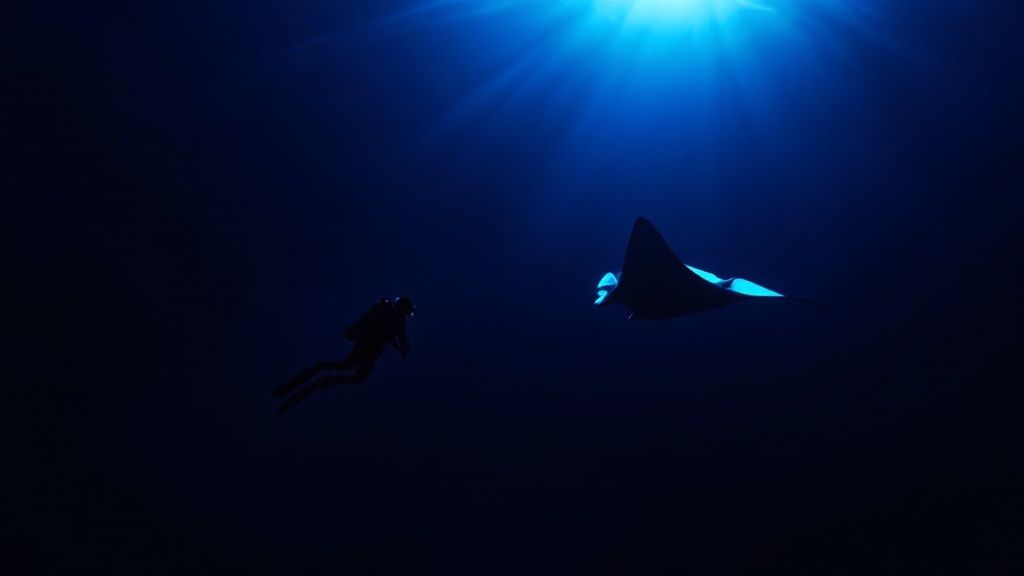
Picture this: you’re kneeling on the ocean floor just after sunset, wrapped in the quiet darkness of the Pacific. You switch on your dive light and aim it straight up, creating a brilliant column of light that immediately starts attracting tiny, shimmering plankton.
Then, out of the darkness, a colossal shadow glides into view. It’s a giant manta ray, with a wingspan stretching over 12 feet, soaring effortlessly into the light. This is the heart of the Kona manta ray dive.
This isn't just about observation; it’s a full-on performance. The mantas swoop and barrel roll just inches above your head, their cavernous mouths open to filter the plankton-rich water. It’s an incredibly intimate and humbling experience, connecting you with one of the ocean's most gentle giants.
What to Expect on Your Dive
Your adventure kicks off with a short boat trip to one of Kona's famous manta sites as the sun sets over the ocean. Before you even get in the water, your guide will give you a detailed briefing covering safety, what to expect, and the golden rule of interacting with mantas: no touching. We are visitors in their world, and passive observation is key.
Once at the site, you'll descend to a shallow sandy bottom, usually around 35 feet deep. Your group will form a circle, and everyone will point their lights up, creating a "campfire" of light. This is the dinner bell for the mantas. For the next 45 minutes or so, you just get to watch the show unfold.
To get you started, here’s a quick overview of what to expect.
Kona Manta Ray Dive At a Glance
| Aspect | Details |
|---|---|
| Creature | Giant Reef Manta Rays (Mobula alfredi) |
| Wingspan | Up to 14 feet (4.2 meters) |
| Dive Depth | 25-40 feet (7-12 meters) |
| Water Temp | 75-80°F (24-27°C) |
| What to Wear | 3mm or 5mm full wetsuit recommended |
| Experience Level | All levels, from beginners to experienced divers |
| Prime Viewing | Year-round, but calmer seas in summer |
This table should give you a solid baseline for planning, but the real magic is in the experience itself.
The Two Premier Manta Ray Dive Sites
While you might spot mantas along the coast, the nightly show is concentrated in two primary locations. Knowing the difference between them can help you choose the right trip.
- Manta Village: This is the original site, located just south of Kailua-Kona. It’s known for being incredibly consistent and reliable. The shallow, protected bay and sandy bottom make it a perfect spot for divers of all skill levels.
- Manta Heaven: Situated north of Kona near the airport, this site is also called Garden Eel Cove. It can be a little less consistent than Manta Village, but when the mantas show up, they often arrive in greater numbers, creating a truly jaw-dropping spectacle.
One of the best things about this experience is that it’s accessible to almost everyone. Scuba divers get the classic view from the seafloor, looking up at the graceful giants. Snorkelers float on the surface, holding onto a custom light board that also attracts plankton, giving them an amazing bird's-eye view of the action.
To learn more about how this incredible encounter works, check out our guide that answers the question: what is the manta ray night dive? For a perspective from the surface, this Ultimate Guide to the Kona Manta Ray Night Snorkel is a fantastic resource.
Why Kona Is the World’s Premier Manta Ray Destination
Sure, you can spot manta rays in other parts of the world, but the manta ray dive Kona offers an experience that is consistently magical. It's not just another dive—it's a world-renowned natural spectacle. So, what makes this specific slice of the Big Island the undisputed king of manta encounters? It all comes down to a perfect storm of geography, biology, and a bit of happy accident.
The Kona coast is uniquely shielded from the powerful trade winds by the colossal volcanoes of Mauna Loa and Hualalai. This natural barrier creates incredibly calm and clear waters pretty much year-round, which is fantastic for both divers and the marine life they come to see. The underwater terrain itself, formed by ancient lava flows, has created gentle slopes and reefs that are ideal habitats for the plankton that mantas love to eat.
It’s these calm waters that allow for a massive concentration of plankton, the key to the whole show. Nutrient-rich currents hug the coastline, creating a perfect breeding ground for these microscopic organisms. When dive operators shine powerful lights into the water after sunset, it's like ringing a dinner bell. A thick, shimmering soup of plankton is drawn to the light, and the hungry mantas are never far behind.
A Reliable and Resident Population
What truly sets Kona apart is its huge, non-migratory population of reef manta rays (Mobula alfredi). These mantas don’t just pass through; they live here all year. This is their home turf, which skyrockets the chances of seeing them on any given night.
The Kona Coast hosts one of the most significant manta ray populations on the planet, with more than 450 identified individuals. These are primarily reef mantas, and they are giants, often boasting wingspans of 12 to 14 feet. The success rate for seeing them is an incredible 85-90%, making it about as close to a guarantee as you can get in the wild. You can learn more about Kona's unique manta population and the individuals that call these waters home.
This incredible reliability changes the whole dynamic of the dive. You aren't anxiously scanning the dark for a fleeting glimpse; you're settling in for the main event.
A Symphony of Light and Life
The story of how this world-famous dive began is actually one of accidental genius. Decades ago, a hotel on the coast started aiming lights at the ocean to illuminate the surf for guests. The lights attracted plankton, and soon enough, the mantas started showing up for a free meal. A few sharp local dive operators saw what was happening and realized they could replicate it offshore, and the structured night dive we know today was born.
This nightly event isn’t a fleeting glimpse of a passing animal. It's a sustained, close-up encounter where these gentle giants perform an intricate underwater ballet, swooping and barrel-rolling for up to an hour just inches from observers.
This unique history has allowed a responsible and well-managed ecotourism industry to grow up around the mantas. Operators work together, following strict guidelines to protect the animals and ensure the experience is sustainable for generations to come.
It’s this perfect recipe—ideal geography, a reliable food source, a resident manta population, and a thoughtfully managed tourism industry—that makes the manta ray dive Kona the absolute best in the world. It’s a natural phenomenon, perfected.
Choosing Your Perfect Manta Ray Tour and Time
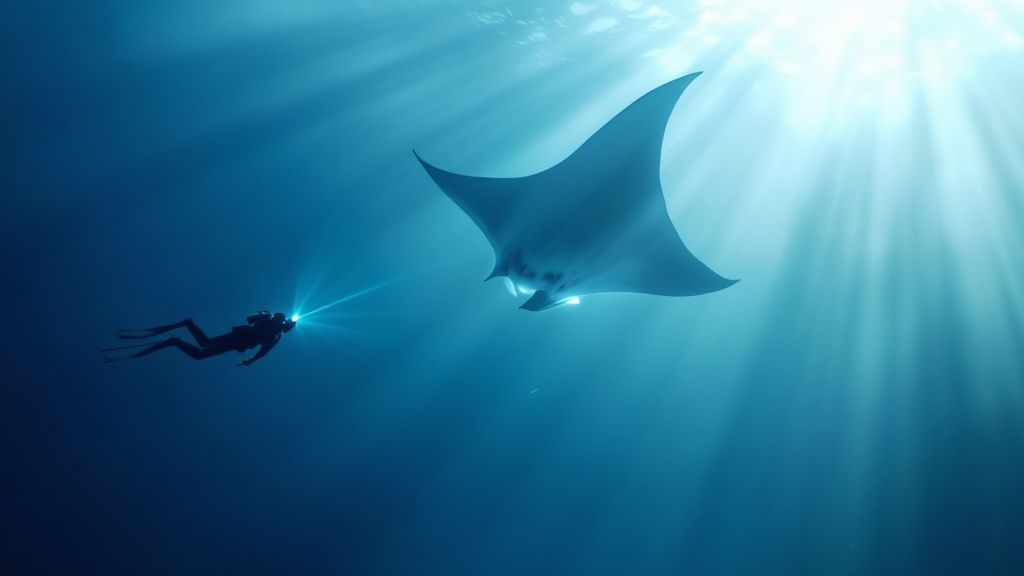
Getting your timing and tour operator right are the two biggest decisions you'll make when planning your manta ray night dive. Honestly, this is what separates a good trip from a truly mind-blowing one. It’s all about putting yourself in the right place at the right time with a crew that puts you and the mantas first.
While you can see manta rays here year-round (we have a resident population, after all), some months definitely have an edge. The sweet spot is generally from April to October. During this time, the Pacific tends to be calmer and the water is a balmy 75 to 80°F.
That warmer water often means more plankton, which is the manta's favorite meal and can draw in bigger numbers. But don't write off the winter months! Kona’s coastline is incredibly protected, so conditions are often fantastic, and you’ll likely share the water with fewer boats. To dig deeper into the seasons, check out our guide on what is the best time of year to see manta rays in Kona.
Selecting the Right Dive Location
Next up, you have to choose your "theater." There are two main sites where the mantas congregate, and while both put on an incredible show, they offer slightly different experiences.
- Manta Village: This is the original, tried-and-true spot located south of Kona. It's in a shallow, protected bay with a sandy bottom, making it absolutely perfect for new divers or anyone who prefers calm, predictable conditions.
- Manta Heaven: You'll find this site, also known as Garden Eel Cove, north of the airport. It's a bit deeper, and while sightings can be a little more variable, it’s famous for attracting huge groups of mantas when the plankton is rich. It’s a breathtaking spectacle.
This whole experience has become a massive draw for the Kona Coast, with around 80,000 people joining tours every year. The two main sites really cater to different divers. Manta Village is a go-to for beginners, while the deeper waters and potential currents at Manta Heaven are often a favorite for more experienced divers and photographers.
How to Choose a Reputable Tour Operator
With so many people wanting to see the mantas, dozens of boats are heading out every night. Picking the right operator is absolutely crucial for a safe, ethical, and fun trip.
You want a company that's totally upfront about its commitment to protecting the manta rays. Look for operators like Kona Honu Divers who are on the Manta Ray Green List, which means they follow strict guidelines for passive observation. No touching, no chasing, and no getting in the mantas' way. Period.
Experienced guides are just as important. A great guide not only keeps you safe but can actually identify individual mantas by their spot patterns and tell you their stories.
Diving vs. Snorkeling: Divers get an incredible view looking up from the seafloor as the mantas swoop and glide just inches above them. Snorkelers get a stunning bird's-eye view of the entire ballet from the surface. Both are amazing, so it really just comes down to your comfort and certification level.
One final piece of advice: book well in advance. This is one of Kona's can't-miss adventures, and spots fill up fast, especially during the peak season. Waiting until you get to the island almost always leads to disappointment. Lock in your spot early to ensure you get to go out with a great crew on the night you want.
How to Prepare for Your Night Dive Adventure
A truly magical manta ray dive in Kona begins long before you even get your fins wet. Good preparation is what turns a fun dive into a life-changing memory. When you know what to expect, what to bring, and how to act, you can simply relax and soak in the underwater spectacle.
Most reputable operators, including us here at Kona Honu Divers, will provide all the major scuba gear you need—tanks, BCD, regulators, weights, and dive lights. That said, many experienced divers prefer bringing their own personal gear for a more comfortable and dialed-in fit.
Here are a few items you might want to pack:
- Your Own Mask: A mask that fits your face perfectly is a game-changer. There's nothing worse than fumbling with a leaky, foggy mask while giant mantas are gliding inches from your face.
- Wetsuit: While rentals are available, having your own wetsuit ensures it fits like a second skin. We recommend a 3mm to 5mm full suit. You’ll be mostly stationary for up to 45 minutes on the ocean floor, and that can get surprisingly chilly.
- Underwater Camera: Want to capture the magic? Make sure your camera gear is rated for the depth (around 40 feet) and that you've practiced with its low-light settings beforehand. A red filter can also work wonders for bringing back the vibrant colors.
If you want a more detailed checklist, check out our complete guide on the gear you will need for your Kona diving adventure.
Mastering the Mindset and Safety Rules
For anyone who hasn't dived at night before, the idea can be a little intimidating. But trust me, the Kona manta ray dive is incredibly well-managed and safe. Before you even get in the water, your dive guide will give a thorough briefing covering everything from hand signals to procedures.
They'll also cover the single most important rule of the entire experience: passive observation.
This is the golden rule of the manta dive: You must never touch, chase, or block the path of a manta ray. Touching them can strip away their protective slime coat, making them vulnerable to infection. We are guests in their dining room, and acting like a respectful guest is non-negotiable.
The dive itself is actually quite straightforward. You'll descend to a specific spot on the sandy bottom, get settled by kneeling or lying flat, and form a circle with your group. Then, you'll point your dive lights straight up, creating a column of light that attracts the plankton. The plankton, in turn, brings the mantas.
Your job? Stay calm, manage your buoyancy, and enjoy the show. It's that simple. Listen to your guide—they're the experts who keep both you and the mantas safe.
Diver vs. Snorkeler Preparation Checklist
Whether you're diving down below or snorkeling up top, you're in for an amazing show. However, how you prepare for it and what you'll experience are quite different. Here’s a quick comparison to help you know what to expect.
| Preparation Step | Scuba Diver Considerations | Snorkeler Considerations |
|---|---|---|
| Certification | You must be a certified Open Water diver or higher. It's a good idea to have a recent dive under your belt so your skills are fresh. | No certification needed, but you should be a comfortable swimmer and feel at ease floating in the ocean after dark. |
| Positioning | You'll be on the ocean floor at about 25-40 feet, looking up as the mantas swoop down to feed in your lights. | You'll float on the surface, holding onto a specially-designed light board that draws plankton (and mantas) from above. |
| Key Skill | Excellent buoyancy control is essential. You need to stay perfectly still to avoid kicking up sand or bumping into other divers. | The main challenge is to relax and hold onto the float board. No diving down is allowed, so you just get to float and watch. |
| What You See | You get an incredible "bottom-up" view, watching the mantas perform their graceful barrel rolls just inches above your head. It's breathtaking. | You get a stunning "top-down" aerial view of the entire ballet, seeing multiple mantas weave through the lights below. |
No matter which way you choose to see the mantas, a little preparation goes a long way. Following these steps ensures your focus can be where it belongs: on the gentle giants of Kona.
Supporting Manta Ray Conservation in Kona
When you go on a manta ray dive in Kona, you’re doing more than just having an amazing adventure. You’re actually stepping into the role of a citizen scientist and directly supporting the conservation of these incredible animals.
This unique connection between tourism and research is what makes the Kona experience so special. Your trip helps fund a whole ecosystem of protection and study, turning a thrilling night dive into a meaningful contribution.
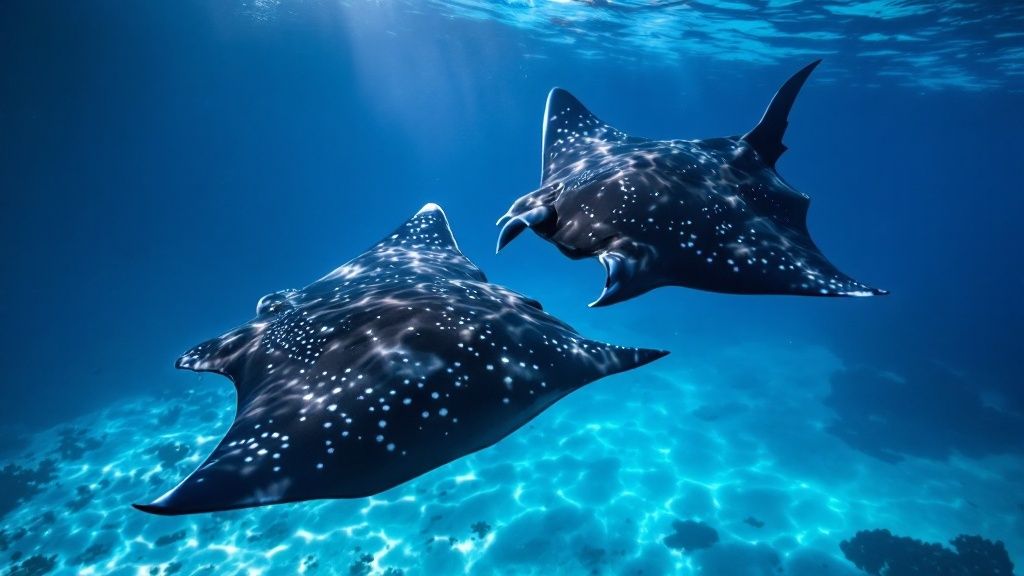
At the center of it all is a simple but incredibly effective research tool: photo-identification. Think of it like a human fingerprint. The unique pattern of spots on a manta ray’s belly (its ventral side) is a one-of-a-kind identifier that never changes. This allows researchers to track individual mantas for their entire lives.
So, when you're in the water, every photo and video taken of a manta's underside is a priceless piece of data. This information is crucial for scientists monitoring the population's health, mapping their movements, and truly understanding their life cycles.
How Your Dive Becomes Data
The whole process turns every diver into a field researcher for the evening. It’s a beautifully collaborative effort.
- Snap the Shot: Guides, tour operators, and even you are encouraged to get clear photos of the mantas' bellies as they glide overhead.
- Send It In: These photos are then sent to researchers who meticulously compare the spot patterns against a huge database of known mantas.
- Track and Identify: If it’s a manta they already know, your sighting adds a new data point to its life story. If it’s a brand-new manta, it gets an official name and is welcomed into the catalog.
This citizen science model has been a game-changer. Since 1991, researchers have used this technique to build an impressive ID catalog, documenting over 330 individual manta rays. This groundbreaking work has led to a database with nearly 6,000 reported manta encounters and more than 28,500 sightings logged over 14 years. It's a massive global effort involving divers, operators, and scientists. You can dive deeper into this groundbreaking manta ray research and explore the database for yourself.
The image below gives you a real look at how a manta's unique spot pattern is used for identification.
This screenshot shows just how detailed the records are, tracking individuals like "Big Bertha" by name, gender, and her entire sighting history.
Following the Manta Ray Green List Guidelines
To make sure these encounters are safe and stress-free for the mantas, the best operators follow a strict set of rules, often called the 'Manta Ray Green List' standards. These guidelines are all about putting the animals' well-being first.
The golden rule is passive observation. That means no touching, no chasing, and never getting in a manta's way. By staying still on the ocean floor, you become part of the environment, allowing the mantas to feel secure enough to come incredibly close.
By choosing a tour operator like Kona Honu Divers that is dedicated to these sustainable practices, you can be sure your dive is a positive force for good. Your participation in a well-run manta ray dive in Kona helps fund the very research needed to protect these gentle giants for generations to come.
Your Manta Ray Dive Questions, Answered
Going on a manta ray dive in Kona is an experience you'll never forget, but it's totally normal to have questions before you get in the water. We've heard them all, so we put together this quick rundown of the most common ones.
Getting these answers ahead of time means you can just relax and enjoy the main event: the incredible underwater ballet of Kona's gentle giants.
What if No Manta Rays Show Up?
This is probably the number one question we get, and the good news is, it's almost never an issue. The Kona coast has a ridiculously high sighting rate—we're talking over 90% success. The mantas here are residents, not just passing through, and they show up at the same "feeding stations" like clockwork almost every single night.
That said, they are wild animals, so a 100% guarantee is impossible. In the very rare case that the mantas don't make an appearance, most reputable operators (including us at Kona Honu Divers) will let you come back another night for free or at a steep discount.
Pro Tip: Book your manta dive early in your trip. That way, if you hit that unlucky 10% chance, you have plenty of time to reschedule.
Is There a "Manta Ray Season"?
Nope! This is one of the best parts about diving with mantas in Kona—it’s a year-round show. The reef manta rays you’ll meet are locals. They live here their whole lives and don't migrate, so you can book a trip in January or July and have a fantastic chance of a life-changing encounter.
The only thing that really changes with the seasons is the surface condition of the ocean. Summer usually brings calmer, warmer water, but trust us, the mantas couldn't care less about the calendar. They show up for dinner no matter what.
Can I Touch the Manta Rays?
This is a hard no. It’s the single most important rule of the entire experience. Manta rays have a special mucus coating on their skin that protects them from nasty bacteria and infections. Touching them, even gently, can rub this protective layer off and make them vulnerable to disease.
Every responsible dive operator enforces a strict "passive observation" rule. Just find your spot on the seafloor, stay still, and let them come to you. When you become part of the environment, they feel safe and will often glide just inches above your head. It’s a way better experience for everyone.
Is Swimming with Manta Rays Dangerous?
Not in the slightest. Despite their massive size, manta rays are incredibly gentle creatures. They are often called "gentle giants" for a reason!
They are filter feeders, meaning they only eat tiny plankton. They have no teeth, no stingers, and no barbs like their stingray cousins. Any close passes are just them trying to get to the plankton attracted by your dive light. You're just part of the scenery. The whole encounter is designed to be completely safe for you and the mantas.
What's the Difference Between Diving and Snorkeling with Mantas?
It all comes down to your perspective. Both experiences are amazing, just from a different angle.
- Scuba Divers: You’ll be on the ocean floor, around 25-40 feet deep, looking up. You shine your light toward the surface, and the mantas perform their graceful barrel rolls right over your head. It’s a breathtaking, bottom-up view.
- Snorkelers: You'll be floating at the surface, holding onto a specially designed light board. From here, you get a bird's-eye view of the whole scene, watching the mantas swoop and glide through the light beams below you.
Honestly, you can't go wrong either way. It just depends on whether you're a certified diver and what kind of view you're looking for.
What Certification Do I Need for the Dive?
If you want to scuba dive with the mantas, you’ll need to be at least an Open Water Certified Diver, and you’ll have to show proof of your certification card.
It's also a really good idea to have been diving recently. Your buoyancy control is key on this dive, so if you're a bit rusty, we highly recommend doing a daytime refresher dive first. It's the perfect excuse to explore another amazing Kona dive site and get comfortable with your gear again before the big show. There are plenty of great diving tours in Kona, Hawaii that can get you tuned up.
Ready to see the magic for yourself? Kona Honu Divers runs expert-led tours that put the safety of our guests and the well-being of the mantas first. Book your unforgettable manta ray dive tour and get ready for the adventure of a lifetime.