
There's a reason the manta ray dive in Kona is consistently called one of the best night dives in the world. It’s hard to put into words, but picture this: gentle giants with wingspans stretching up to 18 feet glide and barrel-roll just inches from your face. It's a silent, mesmerizing ballet, and you have a front-row seat. This isn't just another dive; it's a genuine connection with one of the ocean's most magnificent creatures.
What Makes The Kona Manta Ray Dive So Special?
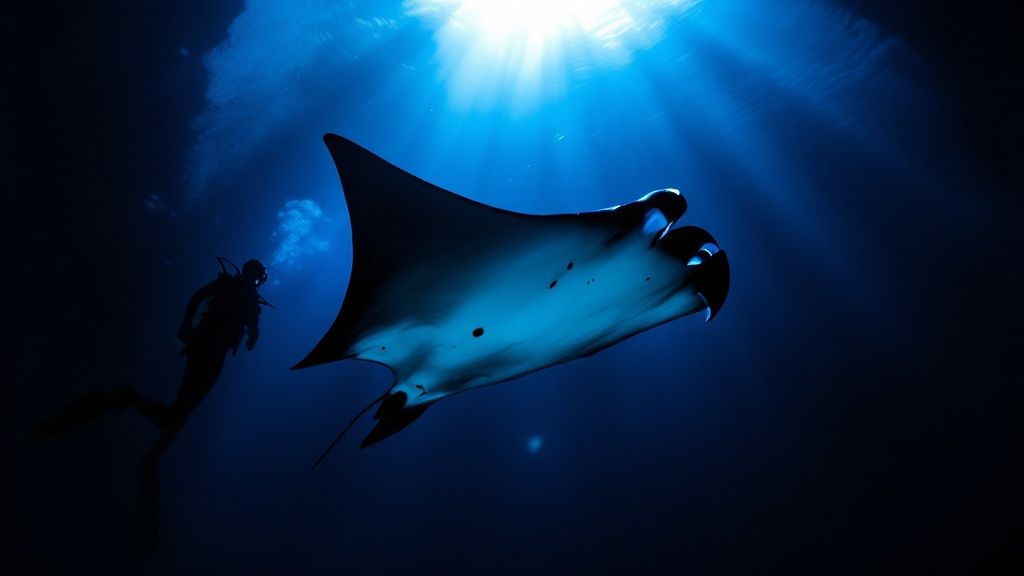
Sure, you can spot manta rays in other places around the globe, but the experience here in Kona, Hawaii, is something else entirely. Most other encounters happen at "cleaning stations," where mantas hang out while smaller fish pick parasites off their skin. It’s interesting, but what Kona offers is far more dynamic. Here, you get to witness their nightly feeding frenzy.
This whole thing started by accident. Decades ago, a hotel built on the coast aimed bright lights into the water, which attracted swarms of plankton—the manta's favorite meal. The mantas followed, and a natural phenomenon was born. Today, dive operators recreate that effect by shining powerful, safe lights into the water. It’s like building an "underwater campfire" that reliably draws these graceful animals in for dinner.
A World-Renowned Destination
Kona’s reputation as the go-to spot for manta encounters is well-earned. The area draws about 80,000 visitors every year, all hoping to see the show. And the odds are good.
What makes Kona so perfect for this? A few key things come together:
- Reliable Sightings: Most nights, the success rate for seeing mantas is an incredible 80-90%. They almost always show up.
- Unique Geology: The Big Island's volcanic underwater landscape creates sheltered bays. These spots are perfect for concentrating the nutrient-rich currents that plankton thrive on.
These ideal conditions make the manta ray dive Kona experience one of the most consistent and spectacular wildlife encounters you can have anywhere on Earth. If you want to dive deeper into the mechanics of it all, check out our guide on what is manta ray night dive.
This blend of natural beauty, reliable sightings, and a well-established, responsible tourism industry has locked in Kona's status as a bucket-list destination for any ocean lover. So, are you ready to see the magic for yourself?
How the Manta Ray Night Dive Actually Works
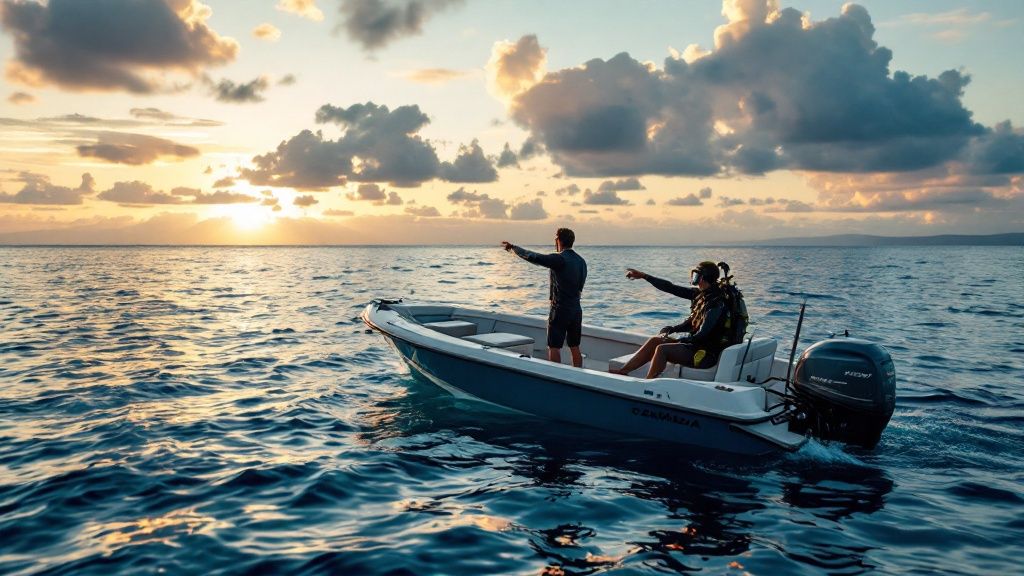
The reason the manta ray dive in Kona is so reliable isn't luck—it's a brilliant, yet simple, system that works with nature. It all comes down to a basic food chain: bright lights attract plankton, and plankton is what manta rays eat.
This whole phenomenon was discovered by accident years ago. A hotel on the coast pointed its lights at the water, and soon enough, the glow attracted clouds of plankton. The local mantas quickly figured this out and showed up for an easy meal. Today, dive operators have perfected this process, creating a safe and predictable way for us to witness it.
After sunset, boats head out to one of the dedicated sites and drop anchor. The crew then sets up powerful underwater lights. For divers, these lights are placed in a circle on the seafloor. For snorkelers, they're built into large, floating rafts they can hold onto. This creates an "underwater campfire" that lights up the dark ocean and gets the dinner bell ringing for the mantas.
The Underwater Buffet Begins
It only takes a few minutes for the magic to start. The beams of light attract a blizzard of tiny plankton, creating a glowing, all-you-can-eat buffet. The manta rays, being smart and creatures of habit, have learned that these lights mean food is served.
They glide in from the darkness and begin their mesmerizing feeding ballet. You'll watch them perform effortless barrel rolls and flips, swooping through the light to filter the plankton-rich water. This isn't a trick; it's their completely natural feeding behavior, happening just feet away from you.
It's important to know that this is not baiting or feeding the animals. The operators are simply concentrating the mantas' natural food source into one spot. This allows for an incredible, non-invasive encounter that doesn't disrupt their normal habits.
The Two Premier Viewing Locations
In Kona, the action is concentrated at two legendary dive sites. Each has its own vibe and personality.
- Manta Village: This is the original spot, located right off the Sheraton Kona Resort in Keauhou Bay. It’s famous for its consistency, with a success rate often around 96%. The sheltered bay and sandy bottom make it a perfect place for divers to settle in and watch the show.
- Manta Heaven (Garden Eel Cove): You'll find this site north of Kona, closer to the airport. Manta Heaven is known for attracting huge groups of rays—sometimes more than a dozen at once. While the success rate is a tick lower than Manta Village (still an amazing 90%), the payoff can be an absolutely mind-blowing number of mantas.
Scuba Diving vs. Snorkeling Perspectives
You don’t have to be a certified diver to have an incredible experience. Both scuba divers and snorkelers get a front-row seat, just from different angles.
Scuba divers head down to the ocean floor, usually about 25-35 feet deep, and find a spot on the sand. From there, you look up as these gentle giants glide and loop right over your head, sometimes so close you could almost touch them (but don't!). It’s a completely immersive, bottom-up view of the action.
Snorkelers, meanwhile, float on the surface, holding onto custom-made light boards. Looking down into the illuminated water, they get a fantastic bird's-eye view of the mantas as they swoop and feed just below.
Both are incredible ways to see the mantas, so the choice really just depends on your comfort in the water and the perspective you want. Ready to see it for yourself? You can book one of the world's most unique manta ray dive tours right here.
Choosing Your Perfect Manta Ray Dive Tour
With so many boats heading out to see the mantas every night in Kona, how do you pick the right one? It’s a big decision, and honestly, not all tours are created equal. The difference between a crowded, chaotic trip and a truly mind-blowing, ethical encounter often boils down to the details an operator focuses on.
When you start looking, a few things should jump out as non-negotiables. First, small group sizes. This is huge. Fewer people in the water means a calmer, more intimate experience for you and, just as importantly, for the manta rays. It's the difference between feeling like you're at a busy nightclub and having a private audience with nature's most graceful acrobats.
Next, look at the crew's experience. You want guides who are more than just underwater tour leaders; you want passionate marine experts. Seasoned professionals not only keep you safe but also share incredible insights about manta behavior and the local ecosystem. Their knowledge turns a cool dive into a rich, educational adventure you'll never forget.
Why Kona Honu Divers Stands Out
Here at Kona Honu Divers, we’ve built our entire manta experience on a deep-seated respect for the ocean. We're all-in on marine conservation, and that means following strict, sustainable guidelines to make sure our time with the mantas is completely non-invasive. We want you to witness a natural wonder, not interfere with it.
If you're weighing your options, our guide to the top 5 manta ray night dive tours offers a great breakdown of what's available.
We also know that being comfortable and safe is key. That’s why we provide top-notch, meticulously maintained gear for every diver. Before you even get your feet wet, our detailed briefings cover everything from safety protocols to the golden rule of manta diving: never, ever touch the animals.
"Diving with mantas is one of the most satisfying things a person can do in the water. It’s impossible to describe the feeling of watching a massive fish the shape of a stealth bomber coming into vision." – Samuel Beckett, Planet Dive
This dedication to quality is why our divers leave with a profound new appreciation for these gentle giants. But you don't have to take our word for it—see what others have to say about their adventures with our crew.
We put a lot of thought into crafting the perfect manta ray experience. Here’s a quick summary of what sets us apart.
Why Divers Choose Kona Honu Divers
| Feature | What This Means For You |
|---|---|
| Small Group Sizes | More personal attention, less crowding, and a calmer environment for the mantas. |
| Experienced Guides | You get expert insights into marine life and top-tier safety supervision. |
| Conservation Focus | Feel good knowing your tour respects and protects the local ecosystem. |
| High-Quality Gear | No old, leaky equipment. Just comfortable, reliable gear for a worry-free dive. |
| Detailed Briefings | You’ll feel confident and prepared before hitting the water, knowing exactly what to do. |
Ready to see what all the fuss is about? An unforgettable adventure that puts you and the mantas first is waiting.
How to Prepare for Your Manta Ray Adventure
A little prep work goes a long way in turning a great manta ray dive in Kona into the experience of a lifetime. When you know what to expect and have the right things with you, you can relax and focus on the incredible show happening right in front of your eyes.
The good news? Your tour operator handles all the heavy lifting. Here at Kona Honu Divers, we provide all the essential scuba or snorkeling equipment. That includes a nice, thick wetsuit to keep you warm in the night water, along with your mask, fins, and regulator. We've even got snacks and drinks covered, so you can leave your cooler at home. To see a full breakdown, check out our guide on the gear you will need for your Kona diving adventure.
What to Bring With You
While we take care of the dive gear, there are a few personal items you’ll be glad you brought, especially once you're out of the water. Think of it as your personal comfort kit.
Here’s a quick checklist of what to pack:
- A Towel and Dry Clothes: It can get surprisingly chilly on the boat ride back to shore after sunset. Trust me, having something warm and dry to change into feels amazing.
- Reef-Safe Sunscreen: This is a must if your trip is a two-tank dive that starts in the afternoon sun.
- Reusable Water Bottle: It’s always smart to stay hydrated, both before and after your dive.
- Motion Sickness Medication: If you're even slightly prone to seasickness, it’s best to take something beforehand. You don't want a queasy stomach to ruin the magic.
The All-Important Safety Briefing
Before anyone gets in the water, your guide will walk you through a detailed safety briefing. This is the most important part of your preparation, so listen up! Every rule is there for a reason: to keep you safe and to protect the manta rays.
The golden rule of the encounter is passive observation. This means no touching, no chasing, and no blocking a manta ray's path. Touching a manta can rub off its protective slime coat, which is like their immune system, leaving them open to nasty infections.
Your guide will show you exactly where to position yourself, whether you're a diver on the sandy bottom or a snorkeler holding onto the light board at the surface. This creates a safe, predictable space for the mantas to swoop in and feed. By following these simple guidelines, you're doing your part to keep this incredible interaction sustainable for generations to come.
Meet Kona’s Famous Manta Ray Residents
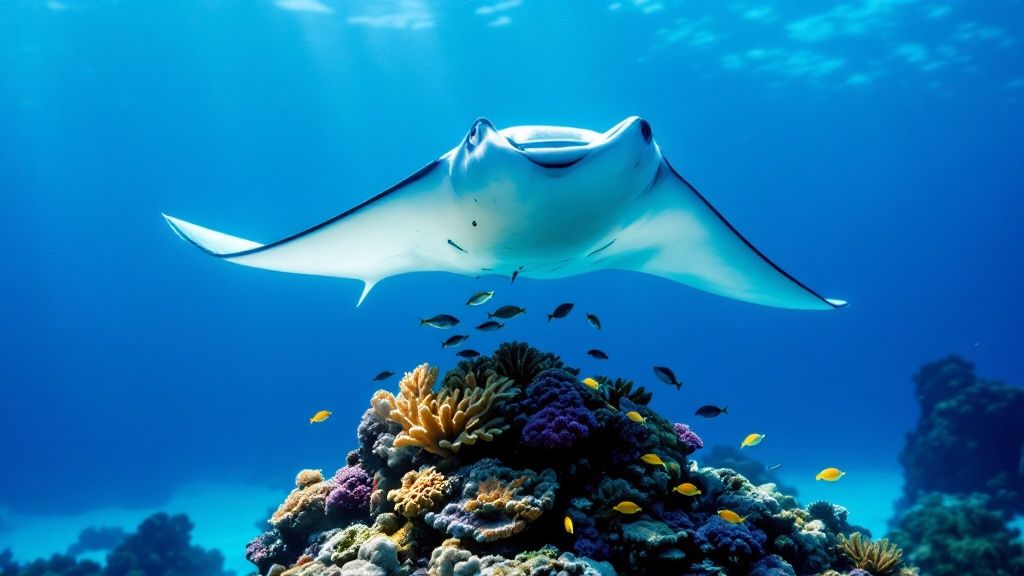
When you join a manta ray dive in Kona, you’re not just swimming with wild animals; you’re meeting the local celebrities. Each manta ray that visits the Kona coast is a known individual, recognized by the one-of-a-kind spot pattern on its belly. It's like a fingerprint—no two are the same.
This amazing identification system means your dive is more than just a sightseeing trip. It becomes a personal introduction to animals with names, backstories, and even distinct personalities. For decades, local guides and researchers have been documenting these regulars, building a rich catalog of the manta population. On your dive briefing, you’ll likely hear about famous rays like "Lefty," who is missing part of her left cephalic fin, or the truly massive and majestic "Big Bertha." Hearing their stories adds a whole new dimension to the encounter.
A Deeper Connection to the Dive
Learning to recognize these mantas makes the experience incredibly meaningful. It’s the difference between seeing a manta ray and seeing Kailey Ray, a local favorite known for her spectacular barrel rolls. This storytelling brings their intelligence and individuality to life, deepening your respect for the complex ocean world you’re about to visit.
This personal touch is what makes the Kona dive so special. You become part of an ongoing narrative, witnessing the nightly ballet of creatures that have been studied and loved for years. To make your experience even better, understanding what is the best time of year to see manta rays in Kona can help you plan your trip for when the action is at its peak.
The Surprising Journeys of Kona's Mantas
Years of observing these individuals have led to some mind-blowing discoveries about their behavior. It was once believed that reef mantas were homebodies that stuck to one area. Tracking studies have completely shattered that assumption, revealing just how far these animals can travel.
In one incredible case from 2020, a manta named Loulou Ray was tracked journeying an astounding 42 miles along the Big Island coastline over eight weeks. Even more impressive, another ray, Jolene Ray, covered that same distance in only eight days! She swam from the Kohala Coast all the way down to Kailua-Kona and back, showing off some serious endurance. These findings prove that Kona’s mantas aren’t just residents of one bay—they’re explorers of the entire coast.
Ready to meet these famous residents in person?
Protecting the Mantas Through Responsible Tourism
The only reason we get to enjoy this incredible manta ray encounter in Kona is because of a deep-seated respect for the animals. The whole experience is built around responsible, sustainable tourism—practices carefully developed to make sure the mantas are safe and their home is protected for generations to come.
It all boils down to one simple idea: passive observation. You'll get unbelievably close to these gentle giants, but there are some hard and fast rules. The biggest one? Never, ever touch a manta ray. Their skin is covered with a delicate mucus coating that's basically their immune system. Touching them can rub it off, leaving them wide open to serious infections. We also need to give them space, which means no chasing or blocking their path as they glide in to feed.
The Golden Rules of Manta Observation
By following a few simple guidelines, you're not just a tourist—you become a guardian of this amazing underwater ballet. These rules keep both you and the mantas safe and ensure this experience can continue.
- Look, Don't Touch: This is the heart of it all. No touching, no chasing, and definitely no trying to "ride" a manta. Just be a respectful witness.
- Hold Your Spot: If you're diving, you'll be settled on the sandy bottom. Snorkelers stay at the surface, holding onto a light board. This keeps the water column clear, creating a safe "fly zone" for the mantas.
- Let Them Come to You: It can be tempting to swim out to a manta, but don't. When you stay put, they feel comfortable and will often glide right over you on their own terms. It's a much better experience for everyone.
Following these practices is key to a great night. You can learn more about how to be a considerate guest in their world by reading our guide on responsible diver etiquette.
Your Dive is a Contribution to Science
Believe it or not, just by joining a well-run tour, you're helping with important conservation work. Since 1991, guides and divers have been snapping photos and collecting data, contributing to an amazing citizen science project.
Each manta has a unique pattern of spots on its belly, like a fingerprint. By identifying these patterns, researchers have cataloged over 330 individual manta rays and logged nearly 6,000 encounters! This massive amount of data gives scientists incredible insights into the manta population, their behaviors, and how they use this habitat—information that is absolutely vital for protecting them long-term.
Answering Your Top Manta Ray Dive Questions
Thinking about booking your own manta ray adventure in Kona? You probably have a few questions. Let's walk through some of the most common ones so you can feel totally prepared for this incredible experience.
Just How Safe is the Manta Ray Dive?
It's exceptionally safe, and that’s by design. Every reputable operator, like our team at Kona Honu Divers, puts safety above all else.
Your trip starts with a detailed safety briefing before you even touch the water. The entire encounter is built around passive observation—we're there to watch them, not interact. Remember, manta rays are gentle giants. They're filter feeders munching on microscopic plankton, not predators, and they have no interest in humans.
Do I Need Scuba Certification?
Nope, and that's one of the best things about this tour! You don't need any special certification to witness the magic.
Scuba divers get a breathtaking view from the seafloor, looking up as the mantas swoop and glide overhead. But snorkelers get an equally amazing, just different, perspective. You'll hold onto a specially designed light board at the surface and watch the whole spectacle unfold right beneath you. It’s like having a front-row seat from the balcony.
I Get Cold Easily. Will I Be Freezing on a Night Dive?
We've got you covered. The tour operators provide thick, high-quality wetsuits that are more than capable of keeping you warm and comfortable in the water after the sun goes down.
Honestly, once you see a 15-foot manta ray barrel-rolling a few feet away, the adrenaline rush alone will probably make you forget all about the temperature! That said, a warm towel and a dry change of clothes for the boat ride back are always a good idea.
Is a Manta Sighting Guaranteed?
Because we're dealing with wild animals in their natural habitat, a sighting can never be 100% guaranteed. But let me put it this way: Kona is one of the most reliable places on the entire planet to see manta rays.
On any given night, the success rate for seeing at least one manta hovers between 80-90%, and it stays that high all year long. The odds are definitely in your favor.
Ready to see these gentle giants for yourself? Come join Kona Honu Divers for an adventure you’ll be talking about for years. Our experienced crew is here to make sure you have a safe, respectful, and truly unforgettable night.