
Of all the underwater encounters in the world, few can match the magic of the manta ray dive in Kona. It’s a truly spectacular experience, bringing you face-to-face with giant, graceful mantas as they feed in the dark of night. We call it the "manta ballet," and it's a surreal show that unfolds as powerful underwater lights attract plankton, which in turn draws in these gentle giants for a mesmerizing feeding frenzy.
Your Essential Guide to the Kona Manta Ray Night Dive
Picture this: you descend into the warm Pacific just as the sun dips below the horizon. Your dive light cuts through the darkening water as you and your group settle onto the sandy ocean floor. You'll form a circle around a central hub of powerful lights aimed straight up at the surface—a setup affectionately known as the "campfire." This is where the magic is about to happen.
The light acts like a magnet for tiny plankton, the manta rays' favorite meal. Before long, the first shadowy figures emerge from the darkness, gliding effortlessly into the beams of light. It's a breathtaking sight. With wingspans that can stretch over 12 feet, these magnificent creatures perform graceful barrel rolls and somersaults, scooping up plankton with their massive, gaping mouths. It's a completely silent, awe-inspiring performance you'll never forget.
An Experience for Everyone
One of the best things about this adventure is that just about anyone can do it. You don't have to be a certified scuba diver to witness the show. Tour operators have perfected the experience for both divers and snorkelers, so everyone gets a front-row seat.
- For Divers: You get to be right on the ocean floor, looking up as the mantas soar just inches above your head. It’s an incredibly immersive, jaw-dropping perspective that's hard to put into words.
- For Snorkelers: You'll float comfortably on the surface, holding onto a specially designed light board. The mantas come right up to the surface to feed, giving you an equally stunning view from above.
This unique setup makes the manta ray dive in Kona a perfect outing for families and groups with different comfort and experience levels. It’s no wonder around 80,000 people do this tour every year, solidifying Kona’s spot on the map as a world-class wildlife destination. While the peak season is from April to October when the ocean is calmest, manta sightings are remarkably consistent all year long.
To give you a quick overview, here's a snapshot of what to expect from this incredible adventure.
Kona Manta Ray Dive At a Glance
| Aspect | Details |
|---|---|
| Location | Kona Coast, Big Island, Hawaii |
| Experience Type | Night Dive & Snorkel |
| Main Attraction | Giant Pacific Manta Rays feeding on plankton |
| Best Time to Go | Year-round, with calmer seas from April to October |
| Avg. Participants | 80,000 annually |
| Manta Wingspan | Up to 12+ feet |
| Who Can Go | Scuba divers and snorkelers of most ages |
| Key Feature | Underwater lights attract plankton, creating a "campfire" effect |
This table just scratches the surface, but it highlights why this tour is a must-do for anyone visiting Hawaii.
This is so much more than just a dive; it’s a chance to form a profound connection with one of the ocean's most majestic animals. If you're ready to see the underwater ballet for yourself, find out more about what a manta ray night dive truly entails.
Choosing Your Perfect Manta Ray Dive Site in Kona
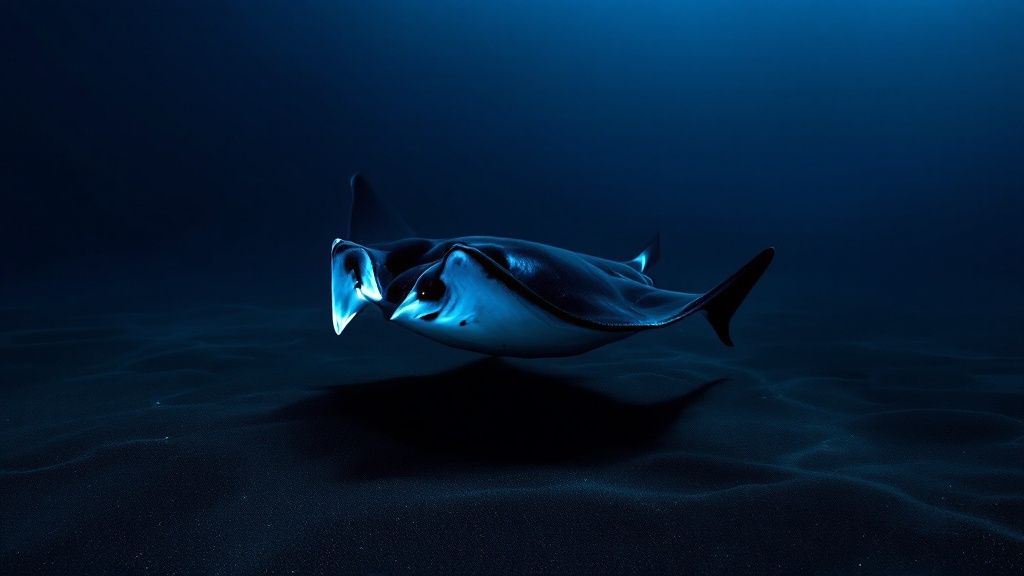
When you start planning your manta ray dive in Kona, you’ll quickly learn there are two main hotspots where the magic happens. Both offer unforgettable encounters, but each has its own unique vibe and caters to different comfort levels. Picking the right one is all about matching the site to the experience you’re hoping for.
Think of the two locations, Manta Village and Manta Heaven, as different stages for the same breathtaking underwater ballet. One is a more intimate and predictable theater, while the other is a grand, dynamic arena.
Manta Village: The Welcoming Original
Just off Kaukalaelae Point, near the Sheraton Keauhou Bay Resort, you'll find Manta Village. This is the OG manta ray feeding spot, famous for its incredible consistency and easy access. It’s hands-down the best choice for first-time night divers, families with snorkelers, or anyone a little nervous about their first big night dive.
The real advantage here is the depth. At a shallow 10 to 20 feet, the environment feels calm and controlled. The sandy bottom is perfect for divers to settle in, relax, and just watch the show unfold right above them with very little current.
That reliability is what makes Manta Village so popular. For years, the success rate for seeing mantas here has been sky-high, making it the go-to for operators who want to give their guests a virtually guaranteed encounter.
Manta Heaven: A More Dynamic Experience
Head a bit further north, closer to the Kona International Airport, and you'll find Manta Heaven (also known as Garden Eel Cove). This spot offers a slightly deeper and more dynamic environment that tends to attract more seasoned divers and underwater photographers looking for that perfect shot.
The depth here dips down to between 15 and 30 feet, and instead of a sandy patch, the seafloor is made of volcanic rock formations. It feels a bit wilder. While still incredibly reliable, Manta Heaven is famous for attracting massive groups of mantas at once, creating a truly jaw-dropping spectacle for those comfortable in a slightly more challenging setting. Both locations are incredible, and you can learn more about the variety of Kona dive sites you can explore.
Ultimately, there's no wrong answer—it just comes down to your personal comfort and experience level.
- Choose Manta Village if: You're new to diving, have kids in your group, or just want a calmer, shallower experience with an almost certain chance of seeing mantas.
- Choose Manta Heaven if: You're a confident diver, comfortable with a bit more depth and potential current, and you're hoping for a more dynamic, "epic" scene.
No matter where you go, you’re in for a night you'll never forget.
Meet the Famous Manta Rays of Kona
When you slip into the water for a Kona manta ray dive, you're not just observing random wildlife. You’re being introduced to a cast of local celebrities, each with its own name, personality, and backstory. This isn't just a tour; it’s a personal introduction to a well-known and protected family of ocean giants.
So, how do we know who’s who? It's all in the belly spots. Every manta ray has a unique pattern of black spots on its underside, just like a human fingerprint. This natural marker allows our local divemasters and researchers to identify them on sight, building a surprisingly personal connection with these incredible animals over years of encounters.
You might hear your guide point out local legends like "Big Bertha," "Lefty," or "Sugar Ray." Learning their stories—their habits, their preferred feeding spots, even their quirky behaviors—transforms the entire experience. It feels less like a first-time meeting and more like a reunion with old friends.
A Groundbreaking Citizen Science Project
This deep, personal connection is the heart of one of the world's most successful marine citizen science projects. Back in 1991, a massive effort began to photograph and catalogue Kona’s manta rays, creating a rich database that helps track their health and behavior without ever needing invasive tags.
It’s been wildly successful. Today, the Kona manta catalog contains over 330 individual mantas, one of the largest known study populations anywhere in the world. In one 14-year span, citizen scientists helped log nearly 6,000 manta encounters and over 28,500 individual sightings along the coast. This mountain of data is priceless for researchers worldwide.
This is a true community effort, with dive operators, tourists like you, and scientists all working together. Every photo taken and every dive logged adds another piece to the puzzle, deepening our understanding of these magnificent creatures.
By joining a manta ray dive in Kona, you become a part of this story. You're not just a tourist watching from the sidelines; you’re an active contributor to the conservation and study of one of the ocean's most majestic animals.
The information gathered from these dives is essential for keeping the local manta population thriving for years to come. You can even get to know the individual Kona manta rays and their unique histories before you even get in the water. It's this special bond between the community and the mantas that truly sets the Kona experience apart.
What to Expect on Your Manta Ray Night Dive Adventure
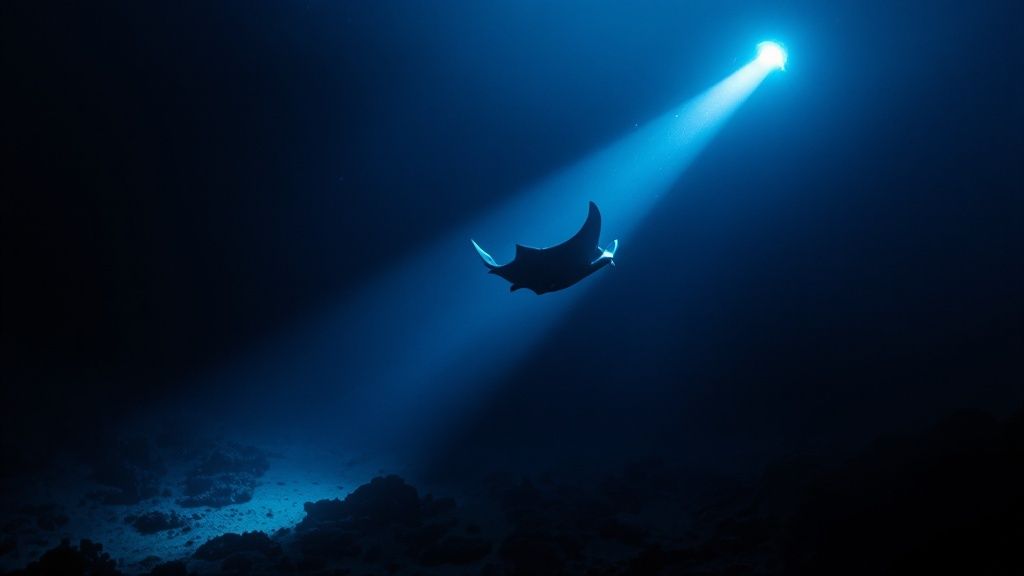
Jumping into the ocean at night might sound a little daunting, but the Kona manta ray dive is anything but scary. It's a beautifully orchestrated ballet, designed to replace any nervousness you have with pure awe from the moment you leave the shore.
Every trip starts with a thorough briefing from your guides. These aren't just skippers; they're passionate experts who will walk you through the entire plan, making sure everyone feels confident and ready. They’ll explain the whole process, including the famous underwater "campfire."
The Underwater Campfire
Once the boat anchors, your group will descend to a specific spot on the sandy ocean floor, usually at a comfortable depth of 20-30 feet. Divers then settle in a circle around a set of powerful lights pointing straight up. These beams create an incredible column of light, attracting the tiny plankton that mantas love to eat.
Think of it as your front-row seat to one of nature's greatest spectacles. You just get settled on the sand, relax, and watch the stage. The only sound is the rhythmic hiss and bubble of your own breathing as you scan the darkness with your dive light, waiting.
And then, it happens. A massive, ghost-like shape swoops out of the darkness and glides into the light. The first manta has arrived. Soon, more often follow, performing an acrobatic underwater dance of barrel rolls and graceful loops just inches above your head as they feast on the buffet of plankton.
The number one rule is simple and absolute: look, but don't touch. Manta rays have a delicate, slimy coating that acts as their immune system. Touching them can rub it off, leaving these gentle giants vulnerable to infection.
Following this single guideline is the most important thing you can do to protect Kona's mantas. By listening to your guides, you ensure these amazing animals stay healthy for future divers to enjoy. For a deeper dive into the play-by-play, check out this guide on what it's like to go on the manta ray dive. You'll surface feeling like you were a privileged guest in their world, not just a spectator.
How to Select the Best Manta Ray Dive Operator
Let’s be honest, the tour operator you choose can make or break your entire manta ray dive in Kona. It’s the single most important decision you'll make. The right crew doesn't just motor you out to a dive site; they create an experience that’s safe, respectful to the animals, and genuinely mind-blowing. They’re the difference between a good dive and a core memory.
So, what should you look for? First and foremost, check for a serious commitment to conservation. The gold standard here is operators who are Manta Ray Green Listed. This is a big deal. It means they voluntarily follow a strict set of rules designed to protect these incredible creatures, like keeping a safe distance, having a strict no-touching policy, and managing the site to avoid stressing the mantas.
A top-notch company also knows that education is part of the adventure. You want a thorough pre-dive briefing that goes beyond the basic safety checks. Learning about manta ray biology and the specific behaviors you're about to witness adds so much depth to the experience.
Key Factors for Choosing an Operator
A few practical things separate the great operators from the merely good ones. Nailing these details will ensure you're in the best hands. If you want to go really deep, this guide on how to choose a Kona dive shop is a fantastic resource.
- Group Size: Smaller is almost always better. Fewer people mean more room to maneuver in the water and a much more personal, less chaotic experience.
- Boat Comfort and Safety: Don't overlook the boat itself! A well-maintained, comfortable vessel with amenities like a hot shower and snacks makes a world of difference after you get out of the cool night water.
- Guide Expertise: You can't put a price on experienced, passionate guides. These are the people who know the mantas by name, can read their behavior, and make sure every single person feels safe and included.
A truly exceptional operator sees this as more than just a business transaction. For them, it's a chance to share their love for the ocean and foster a deep, lasting respect for its inhabitants. That kind of passion is infectious.
One company that consistently gets it right is Kona Honu Divers. They've built an incredible reputation for a reason. Their crew is fantastic, their boats are top-tier, and their dedication to manta conservation is unwavering. They really set the standard for a safe, educational, and absolutely unforgettable dive.
When you go with a proven leader, you’re not just booking a tour; you’re ensuring your adventure is everything you hoped it would be. Ready to see what the best manta ray dive Kona has to offer?
Exploring More Kona Diving Adventures
The manta ray dive in Kona is an absolute must-do, a true bucket-list experience. But trust me, it's just the tip of the iceberg when it comes to the underwater world of the Big Island.
Once you’ve seen the incredible manta ballet, you'll be hooked. The good news is, Kona's diverse dive sites are ready for you. The adventure doesn't end when the mantas glide away—it's just getting started.
Kona is truly a complete diving destination, with something incredible for every diver, no matter your experience level. You can explore dramatic volcanic landscapes one day and have rare marine life encounters the next. The island's unique geology has created a spectacular underwater playground just waiting to be explored.
Beyond the Manta Madness
If the thrill of night diving has you buzzing, you have to try the famous Kona blackwater dive. This is nothing like a reef dive. You'll be drifting in the deep, dark, open ocean miles from shore.
It's here you'll see some of the ocean's strangest and most beautiful creatures. Bizarre, bioluminescent animals—many of which are rarely seen by human eyes—migrate toward the surface under the cover of darkness. It's a surreal, otherworldly experience that honestly feels more like floating through outer space than diving.
For certified divers ready for a bigger challenge, our advanced dive tours unlock some of Kona’s most rewarding sites. We're talking exploring ancient lava tubes, navigating breathtaking underwater archways, and dropping down deep reef walls that are just pulsing with life. These trips are designed for divers who are looking for a little more depth and adventure.
The sheer size of Kona's reef mantas is hard to comprehend until you're right there with them. Many boast wingspans of around 14 feet (4.3 meters), creating a sight that will genuinely leave you speechless. It’s important to remember that these gentle giants are classified as vulnerable by the IUCN due to threats like overfishing. This really highlights how vital Kona's protected waters are for their survival. You can learn more about the conservation of these incredible creatures and why this work is so important.
Whether you're drawn to the mysteries of the deep or the thrill of volcanic seascapes, Kona Honu Divers offers a full range of world-class diving tours in Kona, Hawaii.
Your Manta Ray Dive Questions Answered
Thinking about taking the plunge? It's natural to have questions before heading out on an adventure like this. Here are the answers to a few things we hear all the time, so you can feel totally ready for your big night with the mantas.
Do I Need to Be Scuba Certified to See the Manta Rays?
Not at all! While getting up close with them on a scuba dive is something special, the snorkeling experience is just as breathtaking.
Snorkelers hang onto a large, custom-lit float on the surface. The lights draw in the plankton, and the mantas swoop right up to the surface to feed. You get a perfect bird's-eye view of the whole ballet. It's a fantastic option for families, non-divers, or anyone who wants to witness the magic from above.
Is the Manta Ray Dive Safe?
Absolutely. When you choose a reputable, conservation-minded operator, safety is the top priority. Manta rays are often called "gentle giants" for a reason—they have no teeth, stingers, or barbs.
The most important rules are simple: listen to your guide and never, ever touch the mantas. Touching them can damage the protective slime coat on their skin, which leaves them vulnerable. Your divemaster will give you a detailed briefing and will be in the water with you the entire time to make sure everyone, including the mantas, has a safe and enjoyable time.
What Is the Best Time of Year for the Manta Ray Dive?
One of the best things about Kona is that you can see manta rays all year round! The local population sticks around, so you don't have to worry about a "manta season."
That said, if you're looking for the calmest, warmest water, the peak time is generally from April to October. But don't let that stop you from booking a winter trip. Tours go out constantly, and the guides in Kona boast an incredible success rate of over 90% for manta sightings any time of year.
What Should I Bring on the Dive Tour?
Your tour operator will have all the essential gear covered, including wetsuits to keep you warm.
You’ll want to pack a towel and a set of dry, warm clothes to change into afterward—it can get chilly on the boat ride back. A reusable water bottle is always a good idea. If you get seasick, you might want to take some medication beforehand (just follow the instructions). And, of course, don't forget your underwater camera! You're going to want proof of this magical experience.
Ready to see this unforgettable underwater show with your own eyes? Kona Honu Divers runs expertly guided, conservation-first manta ray dive tours that will give you memories you'll talk about for years.