
Imagine this: you're floating weightlessly in the warm, dark Pacific. Suddenly, a majestic giant with a wingspan wider than you are tall glides effortlessly just inches from your face. This is the manta ray dive Kona is famous for—a surreal, breathtaking underwater ballet that easily ranks as one of the best wildlife encounters on the planet.
Embarking on Kona’s World-Famous Manta Ray Dive
The Kona coast of Hawaii isn't just a place to see manta rays; it's a global hotspot. This isn't a "maybe you'll see one" kind of dive. It's a reliable, almost nightly spectacle where gentle giants gather for a feeding frenzy under the glow of powerful lights. You're not just getting a fleeting glimpse of a shy creature; you're getting a front-row seat to an incredible natural phenomenon.
Local operators have turned this unique adventure into a science. They create what’s affectionately known as a "manta campfire" by placing powerful, eco-friendly lights on the ocean floor. These lights attract massive clouds of plankton—the manta rays' favorite meal—essentially setting a dinner table for these magnificent animals.
What truly makes the experience unforgettable is how close you get. Divers settle on the sandy bottom, shining their lights up, and watch as mantas with wingspans reaching up to 16 feet swoop, soar, and perform graceful barrel rolls right over their heads.
To give you a quick rundown, here are the essential details for planning your trip.
Kona Manta Ray Dive At a Glance
| Aspect | Details |
|---|---|
| Location | Kona Coast, Big Island of Hawaii |
| Primary Dive Sites | Manta Village (Keauhou Bay) & Manta Heaven (Garden Eel Cove) |
| Peak Season | April to October (excellent year-round) |
| Average Sightings | 8 to 12 manta rays per night |
| Annual Visitors | Approximately 80,000 divers and snorkelers |
| Key Attraction | A large, non-migratory population of reef manta rays. |
This table should help you get a sense of what to expect, but the real magic is something you have to see to believe.
A World-Class Wildlife Encounter
Kona's reputation as a premier manta ray destination is well-earned. This consistent interaction is possible because the area is home to a large, non-migratory population of reef manta rays. They are regulars at these feeding sites, which has allowed researchers and top-tier dive companies like Kona Honu Divers to identify and even name many of the individuals you'll meet.
This long-standing relationship between humans and mantas is built entirely on respect and responsible tourism. For a deeper dive into the whole experience, check out this Ultimate Guide to the Kona Manta Ray Night Snorkel.
This isn't just another tourist attraction; it's a living, breathing testament to successful ecotourism. Your participation directly supports the local economy and the ongoing conservation efforts that protect these gentle giants for generations to come.
Operators like Kona Honu Divers have spent years perfecting this adventure, ensuring a trip that is safe, respectful, and consistently awe-inspiring. It’s an experience that truly leaves you speechless.
Ready for the experience of a lifetime? You can book your adventure on our manta ray dive tours page.
Understanding Kona’s Gentle Giants
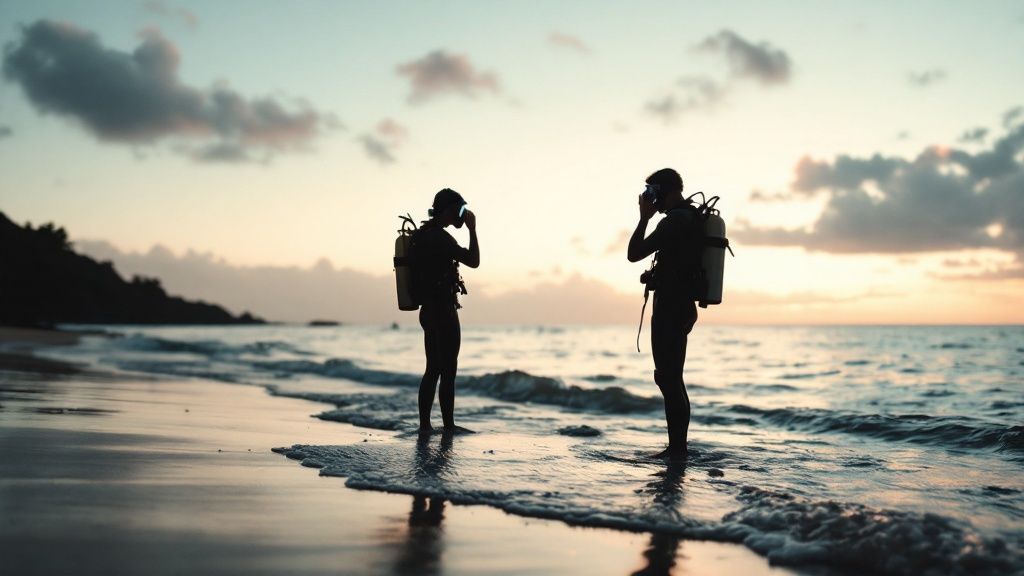
The incredible creatures you’ll meet on a manta ray dive in Kona aren't just big fish. They’re intelligent, charismatic animals, each with a distinct personality. Getting to know them on their own terms transforms your dive from a cool activity into a genuine connection with the ocean. These gentle giants are the stars of a nightly underwater ballet, a spectacle driven by some surprisingly simple science.
So, how does it all work? The magic starts with light. Dive operators have figured out how to create an irresistible buffet by placing powerful, submerged lights on the ocean floor. This light acts like a giant magnet for phytoplankton, the microscopic organisms that form the base of the ocean food web.
As the plankton swarm to the light, the manta rays follow, swooping in for an easy meal. Think of it as an underwater "campfire" where everyone gathers for dinner. It's this reliable, graceful feeding frenzy that has put Kona on the map for divers worldwide.
Meet the Locals: Manta Rays of Kona
The waters off the Kona coast are home to two main types of manta rays. Knowing the difference will give you a whole new level of appreciation for what you’re seeing.
-
Reef Mantas (Mobula alfredi): These are the regulars, the locals you're almost guaranteed to meet. They’re a bit smaller than their deep-water cousins, with an average wingspan of around 12 feet (though some can reach up to 18 feet!). Reef mantas prefer to hang out in shallower coastal areas, which makes them consistent visitors to the established feeding sites.
-
Giant Oceanic Mantas (Mobula birostris): Seeing one of these is a special treat. As the largest ray species on the planet, their wingspans can stretch beyond an incredible 23 feet. These giants are more migratory and tend to stick to deeper waters, so when one decides to join the party, it's a truly unforgettable sight.
What makes the Kona manta experience so special is that you're meeting a resident population. These aren't just random visitors passing through. Many of the mantas you'll see have been coming to these exact same spots for years, becoming familiar faces to the local dive community.
More Than a Dive Site, It's a Living Laboratory
This consistent gathering of mantas has turned the Kona coast into a hugely important hub for marine research. One of the most fascinating parts of this work is how scientists tell the mantas apart.
Every single manta ray has a unique pattern of black spots on its white belly, just like a human fingerprint. Researchers—and even divers like you—can use photos of these patterns to identify and track individual animals over time.
This collaborative "citizen science" approach has been a massive success. It has helped create a catalog of over 330 individual manta rays along the Kona coast alone. Over a 14-year period, this initiative documented nearly 6,000 encounters, adding up to about 28,500 individual manta sightings!
This huge collection of data is priceless, fueling conservation efforts and scientific studies in Hawaii and around the world. To learn more about how this incredible encounter works, you can read our guide on what is a manta ray night dive. By joining a dive, you become part of this ongoing story, directly contributing to the protection of these magnificent animals.
Choosing Your Manta Ray Adventure
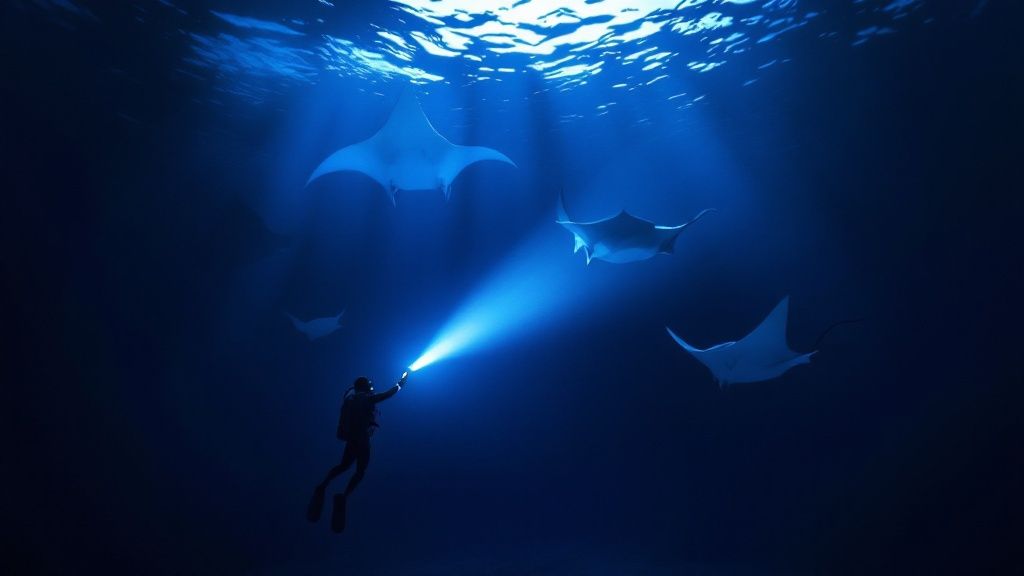
When you're planning your big manta ray encounter in Kona, your first decision is how you want to see the show. There are two incredible ways to witness this underwater ballet, and your choice really boils down to your comfort in the water and the perspective you're after.
Do you want to be a scuba diver on the "ocean floor," watching these gentle giants swoop and barrel-roll inches above your head? Or would you rather be a snorkeler, floating at the surface with a bird's-eye view as they glide up from the dark to feed right below you?
Each option delivers a truly unique and unforgettable experience. Divers get completely immersed in the manta's world, while snorkelers get a wider perspective on the entire feeding frenzy. Honestly, there's no wrong choice here.
Scuba Diving vs. Snorkeling for the Manta Ray Encounter
So, what's the real difference? It all comes down to where you are in the water. Divers are settled on the sandy bottom looking up, while snorkelers are at the surface looking down. Think of it as choosing between a front-row seat on the floor or a VIP box seat up high—both give you a spectacular view of the main event.
To help you figure out which adventure is the right fit, let's compare the two side-by-side.
| Feature | Scuba Diving | Snorkeling |
|---|---|---|
| Perspective | Bottom-up view; mantas glide just overhead. | Top-down view; watch mantas ascend to feed. |
| Experience Level | Requires Open Water Diver certification. | No experience necessary; great for all ages. |
| Proximity | Extremely close encounters are common and expected. | Very close, as mantas come right to the surface. |
| Equipment | Full scuba gear (BCD, regulator, tank, etc.). | Mask, snorkel, and fins. |
| Best For | Certified divers looking for an immersive thrill. | Families, non-divers, and newcomers to the ocean. |
Ultimately, it doesn't matter if you dive or snorkel. You're guaranteed an amazing view. The lights from both the divers below and the snorkelers above create one giant column of plankton, drawing the mantas in for everyone to enjoy the show.
Picking Your Dive Site: Manta Village vs. Manta Heaven
Okay, so you've decided between diving and snorkeling. Next up: location. The two most reliable spots for the manta ray dive in Kona are affectionately known as "Manta Village" and "Manta Heaven." While both sites have ridiculously high success rates, they each have a slightly different vibe.
Manta Village (Keauhou Bay)
Just south of Kailua-Kona, this is the original manta ray hangout. It's relatively shallow with a sandy bottom, which creates a perfect natural amphitheater for the nightly performance.
- Average Depth: 25-35 feet (7-10 meters)
- Success Rate: Consistently high, often over 95%.
- Atmosphere: It can get a bit busy since it's the original, well-known spot.
Manta Heaven (Garden Eel Cove)
Located north of Kona near the airport, this site is a little deeper and has more dramatic volcanic rock formations. It sometimes attracts even larger groups of mantas, though both sites can host an impressive number on any given night.
- Average Depth: 30-40 feet (9-12 meters)
- Success Rate: Also incredibly reliable, typically over 90%.
- Atmosphere: The underwater landscape offers a different, more rugged backdrop.
No matter which site you choose, you're taking part in one of the most well-managed and sustainable wildlife encounters on the planet. The reliability of both Manta Village and Manta Heaven is a testament to decades of responsible tourism and a deep respect for the local manta population.
Both locations promise the adventure of a lifetime, and the choice often just comes down to which site your chosen tour operator visits. You can check out all the details and book your spot on our 2-Tank Manta Ray Dive & Snorkel Tour page. My advice? Book early. This is easily one of the most popular experiences on the Big Island for a reason.
Getting Ready for Your Manta Ray Night Dive
Knowing the rhythm of the evening before you even step on the boat is the key to a truly incredible manta ray dive. When you know what’s coming, you can stop worrying about the logistics and just let the magic of the moment take over.
Let’s walk through what a typical trip looks like, from the harbor to the grand finale.
Most tours kick off in the late afternoon. You'll meet your crew at the harbor, get checked in, and find your spot on the boat. The ride out to the dive site—whether it’s Manta Village or Manta Heaven—usually lines up perfectly with a spectacular Kona sunset. It’s the perfect way to start the adventure and a great time to settle in and chat with the crew.
On the way out, your divemaster will give a full briefing. This isn’t just a dry list of do's and don'ts; it’s a fascinating introduction to the gentle giants you’re about to meet. You’ll learn all about their behavior, why they're so vital to our marine ecosystem, and most importantly, how we can all interact with them safely and respectfully. This briefing is packed with great info, so it’s worth paying close attention.
What to Pack (and What to Leave Behind)
A few small items can make a world of difference in your comfort, especially after you get out of the water. While the dive operator provides all the heavy-duty gear, you'll want to bring a small bag with some personal essentials.
Here’s what I always recommend packing:
- A Towel & Warm Layers: This is the big one. Even after a balmy day, the boat ride home can get surprisingly chilly once you’re wet. A dry towel and a warm sweatshirt or jacket are absolute must-haves.
- Reusable Water Bottle: Staying hydrated is key. Most boats have a water cooler, so bringing your own bottle is easy, smart, and good for the planet.
- Seasickness Remedy: If you’re even a little bit prone to motion sickness, take your preferred medication before you leave the dock. The calmer your stomach, the more you'll enjoy the show.
You can relax knowing your operator has all the critical gear covered. They provide top-notch scuba and snorkel equipment—wetsuits, masks, fins, and of course, the powerful lights that attract the plankton.
Once you arrive at the site, the crew runs a well-oiled operation to get everyone in the water. Snorkelers will be guided to a custom float ring equipped with bright lights pointing down into the dark water. Divers will get their tanks and BCDs on before descending to the "campfire" on the sandy bottom. For a more detailed look at what to pack for all your dives in Kona, check out our guide on the gear you will need for your Kona diving adventure.
Skill Level and Certification
If you're planning to scuba dive, you’ll need at least an Open Water Diver certification. The dive itself isn't particularly deep—usually around 25 to 40 feet—and you'll be stationary for most of it. However, being comfortable with your buoyancy and familiar with night diving basics will make the experience much more enjoyable. If it’s been a year or more since your last dive, doing a quick refresher is always a great idea.
For snorkelers, no certification is needed! As long as you can swim and are comfortable in the ocean, you’re good to go. The float provides a secure handhold, making this an amazing experience for just about everyone. It’s a perfect activity for groups with both certified divers and non-divers.
Ultimately, whether you're breathing from a tank or a snorkel, the most important skill is to listen closely to your guide and follow their lead. They'll ensure you have a safe, respectful, and absolutely unforgettable night.
Protecting the Mantas Through Responsible Tourism
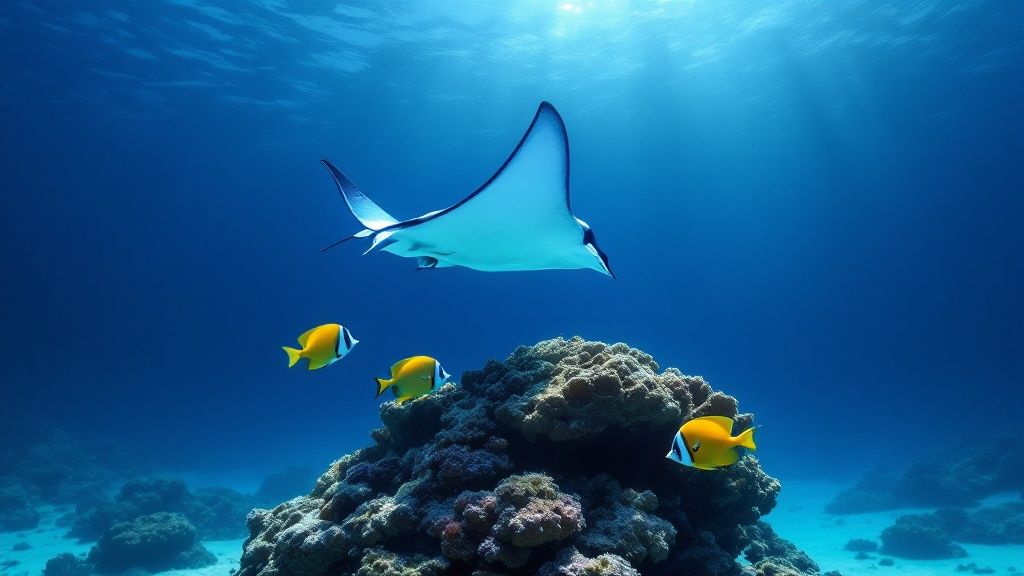
The Kona manta ray dive has become a world-class example of sustainable ecotourism done right. But its long-term success isn't guaranteed—it relies on a crucial partnership between dive operators and every single person who gets in the water. This isn't just about watching a show; it's about actively participating in a remarkable conservation story.
When you join a manta ray dive in Kona, you essentially become a guardian of the reef for the night. The guidelines are simple, but they are absolutely vital for keeping the mantas safe, healthy, and willing to return. Following these "rules of engagement" is how we ensure this incredible encounter can continue for generations.
The Golden Rule: Look, But Don't Touch
If you remember one thing, make it this: there is a strict no-touching policy. This isn't just about being polite; it’s a matter of life and death for these animals. Manta rays are covered in a delicate mucus coating that functions as their immune system, protecting them from harmful bacteria and infections in the water.
When a person touches a manta ray, even by accident, it can strip away that protective slime. This leaves the manta vulnerable to disease, much like how a cut on our own skin can easily get infected. Simply by keeping your hands to yourself, you are playing a direct role in their health.
The whole experience is built around passive observation. Imagine you're a guest in their underwater dining room. By staying still and calm, you allow the mantas to feel comfortable, which is what leads to those breathtaking, up-close passes this dive is famous for.
Guidelines for a Safe and Ethical Encounter
All reputable tour operators in Kona follow a shared set of standards designed to minimize any stress on the animals. Knowing what’s expected of you ahead of time helps you become a more responsible and aware participant.
- Hold Your Spot: If you're diving, you'll be positioned on or near the sandy bottom. Snorkelers stay on the surface, holding onto their light float. This creates a clear, safe "dance floor" in the middle for the mantas to swoop and glide.
- Lights, Plankton, Action: Your lights are what attract the plankton. Divers should point their lights straight up, and snorkelers should point theirs straight down, creating a concentrated column of food.
- Let Them Come to You: Never chase, pursue, or try to ride a manta ray. The magic happens when they choose to approach you.
- Mind Your Bubbles: For divers, try to time your breathing so you aren't exhaling a big cloud of bubbles directly into a manta's face as it glides just inches above you.
Following these simple rules shows respect for these magnificent animals and the entire marine environment. To dive deeper into proper conduct in the water, check out our guide on responsible and considerate diver etiquette.
Your Dive Is Part of a Bigger Picture
Choosing to do this dive does more than just create an unforgettable memory; it provides a powerful economic reason to protect these creatures. The manta ray ecotourism industry on the Kona Coast is a huge success, generating over $2.5 million annually.
Because of this, Hawaii passed legislation back on June 5th, 2009, that prohibits killing or capturing manta rays in state waters. This legal protection, backed by a thriving tourism economy, makes every dive a direct contribution to conservation and helps shield these animals from global threats.
Exploring More of Kona’s Underwater World
The manta ray dive Kona offers is a life-changing experience, no doubt about it. But believe me when I say that incredible underwater ballet is just your introduction to the Big Island. Once you've seen that, you’ll be hooked, wondering what else is hiding in these clear blue waters during the day.
Kona's volcanic past has sculpted an underwater world that's nothing short of spectacular. By day, the reefs are a riot of color and activity. You’ll be navigating ancient lava tubes and stunning archways, all teeming with life. It's totally normal to have a green sea turtle (we call them honu) cruise by, spot a moray eel poking its head out of a crevice, or see a pod of spinner dolphins playing just offshore. These daytime charters show you a completely different personality of Kona's ocean.
You can get a feel for all the different daytime adventures on the diving tours page.
Beyond the Reef: The Blackwater Dive
If you're a diver who truly craves adventure—the kind that feels like you’re exploring another planet—then you have to try a blackwater dive. Forget the reef. On this dive, you’re tethered to a line and drifting in the deep, dark, open ocean, miles from shore.
The magic happens when the bizarre and wonderful creatures of the deep begin their nightly vertical migration toward the surface. Under the beam of your light, you’ll see life forms that few humans ever lay eyes on. Many are bioluminescent, creating their own eerie light shows in the pitch-black water. It’s a surreal, humbling, and absolutely unforgettable experience that redefines night diving.
Pushing Your Limits on Advanced Dives
Are you an experienced diver looking to get your heart pumping? Kona's dramatic underwater landscape serves up some serious challenges for divers with advanced certifications and rock-solid buoyancy control. We're talking about dives to deeper pinnacles, sheer drop-offs, and remote sites that most visitors will never see.
These premium trips will have you exploring incredible sponge-covered walls and even known shark habitats, offering a dive that's as demanding as it is rewarding. If you're ready to go beyond the standard reef tour, Kona has some world-class advanced dive sites that are waiting to test your skills.
Kona's underwater world is a treasure trove of diverse experiences. From the gentle giants of the manta ray night dive to the alien-like creatures of the blackwater and the challenging topography of advanced sites, there is always another adventure waiting just beneath the surface.
Exploring these different environments is the only way to get the full picture of why the Big Island is a top-tier global diving destination. Ready to plan your next dive?
Your Kona Manta Ray Dive Questions, Answered
It’s completely normal to have a few last-minute questions, even after you’ve done your research. To put your mind at ease, I've rounded up the most common things people ask before heading out for this incredible night on (and in) the water.
Let's clear up any lingering doubts so you can focus on the excitement.
Are We Guaranteed to See Manta Rays?
This is the big one, and the honest answer is that with wild animals, nothing is ever 100% guaranteed. That said, the success rate for the Kona manta ray dive is astonishingly high—we're talking over 90% on most nights. These sites are well-established feeding grounds where the mantas have shown up like clockwork for decades.
Top-tier operators, like Kona Honu Divers, live and breathe these waters. They know the patterns and what makes for a great night. In the very rare case of a no-show, most reputable outfits will offer you a "second chance" voucher to come back another night. It’s always worth double-checking their specific policy when you book.
Do I Have to Be Scuba Certified?
Nope! You absolutely do not need a scuba certification to have a mind-blowing experience. Snorkeling is just as amazing, and for many people, it's the preferred way to see the mantas.
As a snorkeler, you'll hold onto a custom-built flotation board that has powerful lights pointing down. These lights create a massive column of plankton soup, and the mantas glide right up to the surface to feast. They’ll often get within inches of you—it’s an unforgettable, front-row seat to the action and perfect for families or anyone not certified to dive.
Just How Safe Is the Manta Ray Night Dive?
It's incredibly safe, provided you go with a professional, experienced operator. This isn't some rogue adventure; it's a highly organized and supervised activity that has been refined over many years.
Every tour starts with a thorough safety briefing, and certified divemasters and instructors are in the water with you the entire time. And the mantas themselves? They're called gentle giants for a reason. They have no teeth, no stingers, and no barbs—they are completely harmless and non-aggressive. The golden rules are simple: listen to your guide and never, ever touch the mantas.
When Is the Best Time of Year to Go?
Here’s the best part: any time is a great time! The Kona manta ray experience is fantastic year-round because our local manta population sticks around all 12 months.
If you’re looking for the absolute best conditions, the period from April to October generally offers the calmest seas and warmest water, hovering between 75-80°F. But even during the winter, the manta sightings are just as consistent. This is one of the Big Island’s premier attractions, so my best advice is to book well in advance, no matter when you plan to visit.
Ready to check this once-in-a-lifetime experience off your bucket list? Kona Honu Divers runs exceptional manta ray dive and snorkel tours that are all about safety, respect for the animals, and making incredible memories.