
Welcome to the Kona coast. If you're here for manta rays, you've come to the right place—it’s genuinely the best spot on the planet for an up-close encounter.
The world-famous manta ray dive in Kona isn't just another dive; it's a life-list experience, something you'll talk about for years. It’s an adventure that puts you front and center for one of nature's most incredible performances, and you can enjoy it whether you're a seasoned diver or a first-time snorkeler.
Experience Kona’s World-Famous Manta Ray Night Dive
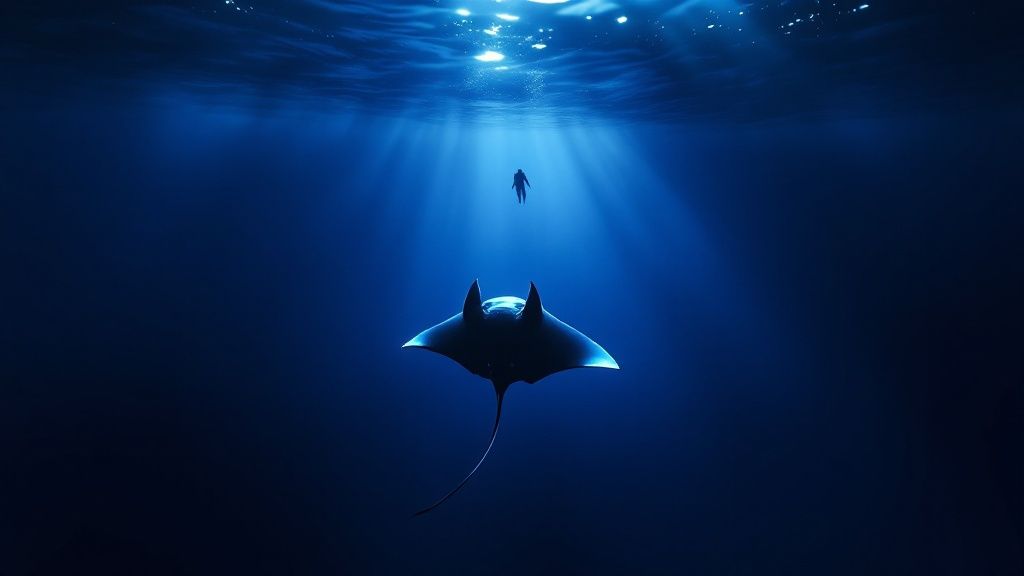
Picture this: you slip into the warm, dark Pacific right after the sun goes down. As you descend, the beams from your group's dive lights converge on the seafloor, creating a brightly lit stage. This light immediately starts to attract clouds of plankton, basically ringing the dinner bell for the stars of the show.
Then, they arrive. Enormous, graceful manta rays, some with wingspans stretching over 12 feet, emerge from the darkness. They glide, swoop, and perform effortless barrel rolls just inches above your head. It’s a silent, awe-inspiring ballet.
This isn't a "maybe you'll see one" kind of dive. The unique setup here on the Kona coast creates a reliable feeding ground that draws the mantas in every single night. The success rate is incredibly high, which is why it's a true bucket-list dive for people from all over the world.
An Adventure for Everyone
One of the greatest things about the Kona manta experience is that almost anyone can do it. You don't need to be an expert diver with hundreds of dives under your belt. The dive sites are relatively shallow, and the conditions are usually calm, making it a perfect and unforgettable experience for newly certified divers.
Not a diver? No problem at all. Snorkelers get an equally amazing view from the surface. You'll hold onto a custom float board equipped with lights that shine down, attracting the plankton—and the mantas—right up to you. Both options give you a spectacular perspective of this incredible feeding frenzy.
The feeling of watching a massive fish the shape of a stealth bomber coming into vision is impossible to describe. It’s a truly awesome experience that stays with you forever.
Choosing a Top-Tier Operator
To make sure your adventure is safe, respectful to the animals, and truly memorable, picking the right tour operator is key. Here at Kona Honu Divers, we’re obsessed with providing world-class diving tours while putting the well-being of the manta rays and the marine environment first.
Our experienced crew makes sure every single guest feels comfortable and ready for this unique night dive. We give detailed briefings, provide top-quality gear, and offer expert guidance in the water. To get a better sense of the trip, check out our guide on what the manta ray night dive is.
Our guests consistently praise our commitment to safety and creating a magical experience.
Ready to experience the magic for yourself? Book your unforgettable manta ray dive tour in Kona today.
Check Availability
Why Is Kona the World’s Best Place to See Manta Rays?
Kona isn't just a great spot to see manta rays; it's the spot. This isn't by accident. The unique underwater landscape of the Big Island, coupled with nutrient-rich waters, creates the perfect breeding ground for plankton—a manta ray’s favorite meal. Think of it as the most reliable five-star restaurant for these gentle giants, and they show up night after night.
Years ago, local dive operators figured out something brilliant. They realized that shining powerful lights into the water after dark attracts plankton like moths to a flame. This simple trick essentially creates a concentrated, glowing buffet right where divers are. The mantas, being incredibly smart, caught on quickly.
They've learned to associate the lights with an easy meal, a classic example of what scientists call behavioral conditioning. This learned behavior is the secret sauce that makes the manta ray dive Kona offers so incredibly reliable. It’s a beautifully simple, symbiotic relationship.
How the Magic Happens
The whole process is a fascinating display of nature meeting a little human ingenuity. Once the boats get into position after sunset, they switch on their massive underwater lights.
- Step 1: The Plankton Cloud Almost immediately, tiny microscopic critters—plankton—are drawn to the bright beams. They swarm together, creating a thick, soupy cloud in the water.
- Step 2: The Dinner Bell Manta rays, with their incredible senses, detect this dense plankton feast from a distance and glide in for dinner.
- Step 3: The Show Begins To scoop up as much food as possible, the mantas perform mesmerizing barrel rolls and graceful loops, their cavernous mouths wide open. This is the breathtaking underwater ballet that people travel across the globe to see.
This nightly ritual turns a patch of dark ocean into an illuminated stage for one of nature's most spectacular performances. If you want to dive deeper into what makes this experience so special, you can learn more about why you should go on a manta ray dive in Kona.
Kona’s Two World-Famous Manta Dive Sites
While you might spot a manta anywhere along the Kona coast, two sites have become legendary for their consistent action. Each has its own unique character, catering to different comfort levels.
Manta Village (Keauhou Bay)
This is the original, classic manta dive spot. Located just off the coast from the Sheraton Kona Resort, Manta Village is famous for its calm, protected waters and relatively shallow depth, usually around 30 to 40 feet.
Its sheltered location and sandy bottom make Manta Village the go-to spot for first-time divers and snorkelers. The gentle conditions let you relax and just soak in the spectacle without worrying about strong currents.
Manta Heaven (Garden Eel Cove)
You'll find Manta Heaven further north, near the airport. This site is a bit more exposed to the open ocean, which can mean a deeper bottom and occasionally stronger currents.
The trade-off? Manta Heaven often attracts a larger number of mantas, creating an absolutely mind-blowing scene for more seasoned divers. The sometimes-choppy conditions can also lead to more dynamic and up-close encounters, making it a favorite for underwater photographers hunting for that perfect shot.
Every year, the Kona coast draws about 80,000 visitors specifically for these tours, cementing its status as the world's number one destination for reliable manta encounters. Whether you choose the calm of Manta Village or the thrilling action of Manta Heaven, you're guaranteed an unforgettable manta ray dive Kona adventure.
How to Prepare for Your Manta Ray Adventure
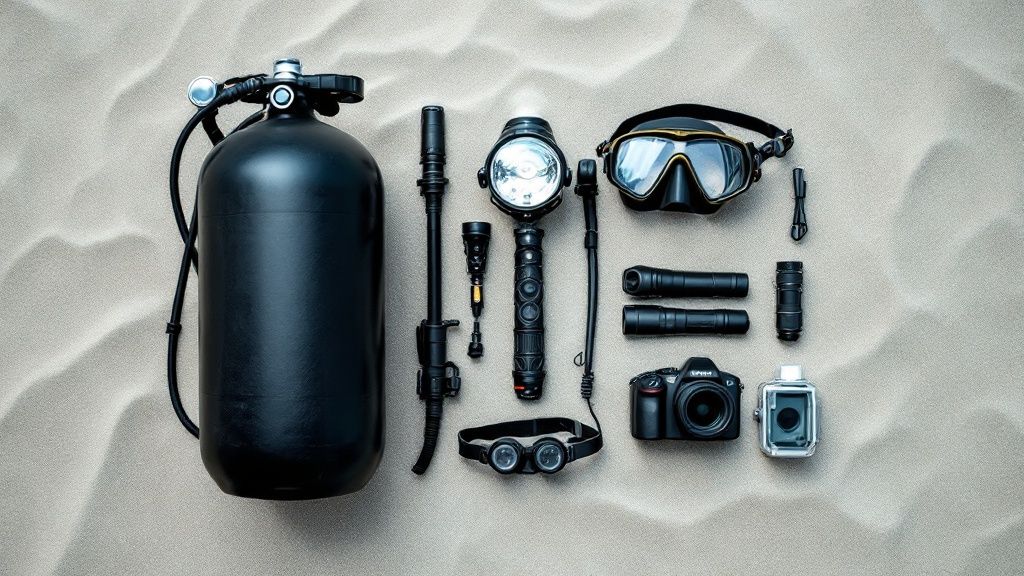
A little bit of prep work can make the difference between a good trip and an absolutely mind-blowing one. Getting ready for your Kona manta ray dive isn't just about showing up—it's about making sure you’re comfortable, safe, and ready to soak in every moment.
One of the best things about Kona's mantas is that they stick around all year. They’re residents, not just passing through. That means you can have an amazing experience any time you visit. Here’s a pro tip, though: book your manta tour for one of the first nights of your trip. On the rare occasion the mantas are a no-show, most quality outfits will let you try again on another night, free of charge.
Choosing Your Underwater Experience
Your first major decision is how you want to see the show. Will you be a scuba diver on the ocean floor, or a snorkeler floating at the surface? Both give you a front-row seat, but the perspective is completely different.
- Scuba Diving: If you're a certified diver, you'll head down to a sandy bottom about 30-40 feet deep. From there, you'll kneel or sit and point your dive light up. This creates a column of light that attracts plankton, and the mantas follow. You get this incredible, humbling view looking up as these gentle giants swoop and barrel roll just inches above your head.
- Snorkeling: Snorkelers get to float on the surface, usually holding onto a custom-built light board. The powerful lights shine down into the water, drawing the plankton up toward you. The mantas come right to the surface to feed, giving you a stunning bird's-eye view. It’s perfect for non-divers, kids, and anyone who wants to stay on top of the water.
Still on the fence? Let's break down the two options side-by-side to help you figure out what’s best for you.
Kona Manta Ray Dive vs Snorkel Experience
Deciding between diving and snorkeling really comes down to personal comfort and the kind of view you want. Both are unforgettable, but this table highlights the key differences.
| Feature | Scuba Diving | Snorkeling |
|---|---|---|
| Perspective | Looking up from the ocean floor | Looking down from the water's surface |
| Proximity | Mantas glide directly overhead | Mantas swim just below you |
| Requirements | Scuba certification is required | No certification needed; basic swimming ability |
| Best For | Certified divers seeking an immersive view | Non-divers, families, and all experience levels |
Ultimately, there’s no wrong choice. Both experiences put you face-to-face with these incredible animals in a way you'll never forget.
Packing for Success and Comfort
A few small items can make a huge difference in your comfort. Hawaii’s water is warm, but once you're out of the ocean and the boat starts moving, that night air can feel surprisingly chilly.
A warm jacket or hoodie is one of the most essential items to pack. You’ll be so glad you have it for the ride back to the harbor.
Other than that, just bring the basics: a towel, a reusable water bottle, and an underwater camera if you have one. Reputable operators like Kona Honu Divers provide all the essential gear (wetsuits, lights, etc.), but it never hurts to double-check when you book. For a more detailed list, you can check out our guide on getting ready for the manta ray night dive.
Finally, make sure you book with a Manta Ray Green Listed operator. This ensures your adventure is handled by a company committed to protecting these amazing creatures and their habitat. With a little planning, you’ll be all set for the underwater ballet of a lifetime.
What It Feels Like to Dive with Gentle Giants
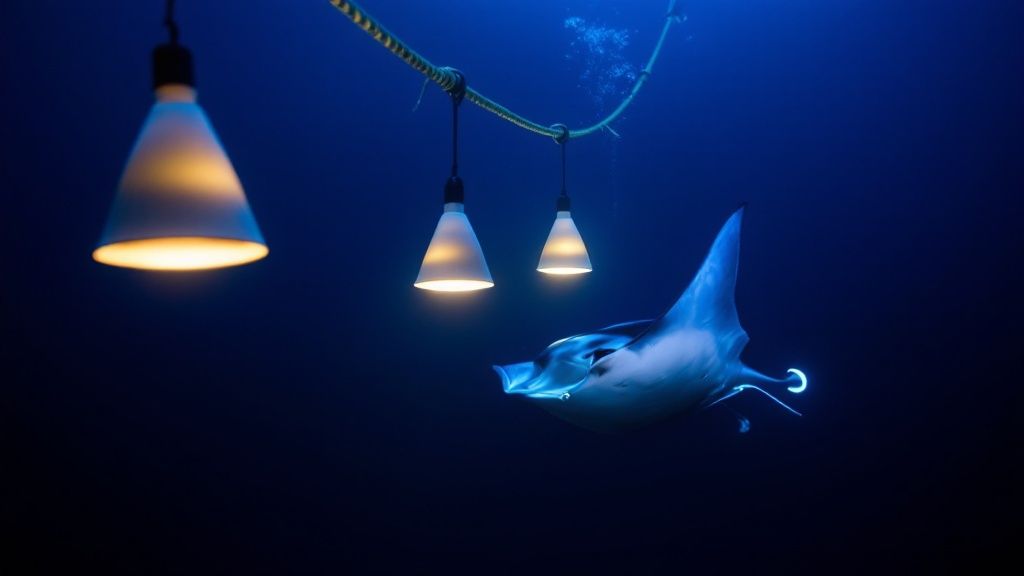
There’s a special kind of quiet that settles in just before you roll back into the ocean for the manta ray dive Kona is famous for. The sun has set, the boat engine is cut, and the only sounds are the gentle slap of waves against the hull and the last-minute hiss of your regulator. And then, you slip into the warm, dark water, leaving the world above behind.
You descend to the sandy bottom, around 30 to 40 feet deep, where your group finds a spot and settles in a semi-circle. Together, you point your powerful dive lights straight up, creating beams that pierce the darkness. We call it building the "campfire." This light isn't for warmth—it's an invitation.
Almost immediately, the light attracts a blizzard of microscopic plankton, which swarm and swirl in the beams. You've just set the dinner table. Now, you just have to wait for the guests to arrive.
The Silent Underwater Ballet Begins
You will never, ever forget the first time you see a manta ray appear. They don’t just swim into view; they materialize out of the blackness. One moment there’s nothing, and the next, a massive, graceful shadow glides into the light, its wingspan stretching an unbelievable 12 feet or more. It's a truly humbling sight that makes you feel both small and incredibly lucky.
Before you know it, another joins, and then another. They begin their nightly feeding ritual—a mesmerizing, silent ballet. To scoop up as much plankton-filled water as they can, they perform effortless barrel rolls and somersaults, looping over and over again right in front of you.
It’s a completely surreal experience. You're just kneeling on the ocean floor while these gentle giants perform acrobatics inches from your head. The only sound is the rhythm of your own breathing, creating an incredibly personal and awe-inspiring connection.
The mantas are totally unfazed by your presence. You're just a spectator at their grand feast, a guest in their underwater dining room. The trust they show is profound, and that feeling is something that will stick with you long after you've dried off.
A Reliable and Awe-Inspiring Encounter
What really sets the manta ray dive Kona offers apart is just how dependable it is. Thanks to the unique conditions and the established feeding sites, this is one of the most reliable places on the entire planet for a nighttime encounter with these animals. You’ll typically spend 45 to 60 minutes in the water, giving you plenty of time to take it all in. The odds of seeing mantas here are incredible, with a nightly success rate of 85-90%—that’s practically unheard of for a wild marine animal encounter. You can learn more about what makes the conditions so perfect in this Kona manta dive guide.
A Sensory Experience Unlike Any Other
This dive is so much more than just a visual spectacle; it's a full-body immersion. You feel the gentle push and pull of the ocean's surge and see the otherworldly glow of plankton dancing in your light. But what really stands out is the profound silence.
Down here, there are no words. Communication happens through a shared sense of wonder. As these massive, gentle creatures glide past, you might find yourself holding your breath—not from fear, but from pure astonishment. This is the magic that makes the Kona manta ray dive a true once-in-a-lifetime memory, and a story you’ll be telling for years to come.
Ready to see the ballet for yourself?
Check Availability
How to Be a Safe and Responsible Manta Ray Tourist
https://www.youtube.com/embed/K9RLyR4Wml4
Getting in the water with Kona's manta rays is more than just another dive—it's a genuine privilege. You're being invited into their world, and with that comes a huge responsibility to protect these gentle giants and their home. Being a responsible tourist isn't just a nice idea; it's the only way we can ensure these amazing encounters are around for years to come.
The entire experience hinges on one simple, unbreakable rule: passive observation. You're a guest in their house, so the goal is to watch their natural behavior without getting in the way.
The Golden Rules of Manta Interaction
The local dive community has worked hard to establish a clear set of rules to keep both divers and mantas safe. These aren't just suggestions; they are proven methods to minimize our impact and let the mantas feed without stress.
- Observe Only, Never Touch: This is the big one. Manta rays are covered in a protective mucus coating that shields them from nasty bacteria. If you touch them, you can wipe off that coating, leaving them open to infections.
- Hold Your Position: Divers need to stay on or very near the sandy bottom. Snorkelers stay flat on the surface. This keeps the water column wide open, giving the mantas a clear and safe path to glide and feed.
- Don't Chase or Block Their Path: Never, ever swim after a manta ray or try to cut them off. Let them come to you. Chasing them causes a lot of stress and can scare them away from the very spot they came to for a meal.
Following these guidelines is what turns a tourist attraction into a meaningful act of conservation. Your respectful presence actually helps support this unique ecosystem instead of harming it.
When you follow these rules, it doesn't just protect the animals—it makes your dive a thousand times better. A calm, respectful group is far more likely to see the mantas perform their incredible feeding ballet just inches away. To learn more, check out our complete guide on being a responsible and considerate diver.
Why Professional Guides and Green List Operators Matter
Your dive operator is a huge piece of this puzzle. A professional guide's job is to manage the dive and make sure everyone understands and follows the rules. Think of them as the guardians of the encounter, totally dedicated to the mantas' well-being.
When you're looking to book your manta ray dive in Kona, the smartest thing you can do is choose a company from the Manta Ray Green List. These are the operators who have publicly promised to stick to the highest standards for manta conservation. Booking with a Green List company means your money is supporting the long-term health of Kona’s manta population.
This shared commitment to doing things the right way is what makes this a world-class encounter. By being a respectful guest, you’re not just watching the show—you're playing an active part in protecting one of the most incredible animals in the ocean.
Getting to Know Kona’s Famous Manta Rays
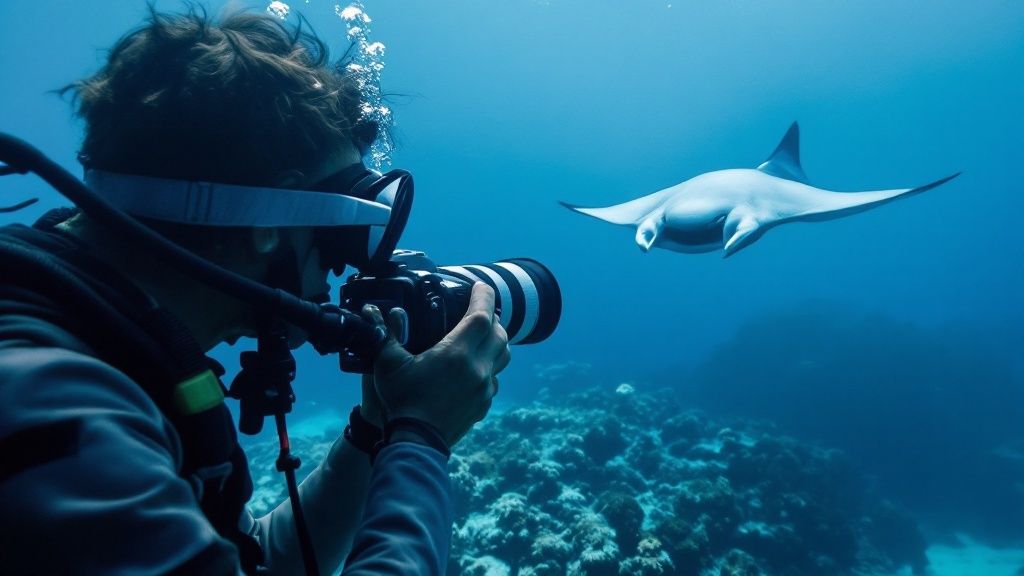
The manta rays you’ll meet on your night dive aren't just faceless creatures of the deep. They’re local celebrities, and most of them have names. The manta ray dive Kona experience is so special because it offers a peek into the lives of one of the most well-studied manta populations on the planet.
So, how do we tell them apart? It comes down to a fascinating biological quirk. Every manta ray has a unique pattern of black spots on its white belly. Just like a human fingerprint, no two are ever the same. This natural ID system allows local guides, researchers, and even regular divers to recognize individual mantas year after year.
This simple yet brilliant method has turned the nightly dives into a massive, ongoing citizen science project. When a new manta is spotted, its belly pattern is photographed and added to a massive database, helping scientists track their movements, health, and life stories.
You Might Meet a Local Celebrity
Over the decades, the Kona dive community has gotten to know hundreds of these individual animals on a first-name basis. They’ve been given names based on their distinct spot patterns, memorable encounters, or even their personalities.
During your dive, you might just run into some of the area's most famous residents:
- Lefty: You can't miss him—he has a bent left cephalic fin (one of the fins near his mouth).
- Big Bertha: A true matriarch of the Kona coast, she is one of the largest and most frequently seen mantas.
- Kailey: Her name comes from the distinct "K" shape formed by the spots on her belly.
- Koa: Known for his energetic and almost acrobatic feeding style.
Knowing their names and a little about their history adds a completely different dimension to the dive. It’s no longer just a wildlife sighting; it becomes a personal introduction. There’s nothing quite like surfacing from a dive and hearing your guide exclaim, "That was Big Bertha! We haven't seen her in a few weeks!"
This personal connection is what makes the Kona manta ray dive so unforgettable. You’re not just an observer; you become part of an ongoing research and conservation story that spans decades.
How Your Dive Contributes to Science
The photos and observations gathered during these nightly dives are incredibly valuable for conservation. Kona's manta ray population is a biological treasure, with over 450 individual manta rays identified in the region since tracking began back in 1991. This huge catalog, built largely through the efforts of dive operators and their guests, gives researchers an unparalleled look into the lives of these animals.
Your participation directly supports this effort. The photos and videos you take could even help identify a new, unnamed manta ray that has just joined the local scene. If you're wondering when to plan your trip to see these incredible creatures, our guide on the best time of year to see manta rays in Kona can help you decide.
Choosing a manta ray dive Kona tour means you’re stepping into a story much bigger than a single night's adventure. You are actively contributing to the understanding and protection of these gentle giants, helping ensure they continue to grace our waters for generations to come.
Check Availability
Common Questions About the Manta Ray Dive in Kona
Thinking about swimming with Kona’s famous manta rays? It's a trip that sparks a lot of curiosity. Whether you’re an old pro with hundreds of dives under your belt or you’re just getting your fins wet, you probably have a few questions. We’ve got you covered.
Let’s go through some of the most common things people ask so you can book your trip with total confidence.
Can Beginners Do the Manta Ray Dive?
Absolutely! This is actually one of the best night dives out there for someone new to diving. The whole experience is set up to be as stress-free as possible.
The main dive sites are in calm, protected bays, and you’ll be in relatively shallow water—usually between 30-40 feet. You won’t have to worry about strong currents or the challenges of a deep dive, letting you focus on the incredible show in front of you. Just be upfront about your experience level when you book, and a good crew will make sure you’re comfortable every step of the way.
Is It Safe to Be in the Water with Manta Rays at Night?
Yes, it’s incredibly safe. This is probably the number one concern we hear, but you can put your mind at ease. Manta rays are true gentle giants.
They’re filter feeders, so they don’t have teeth, barbs, or stingers. They are completely harmless to people.
The real risks are the same ones you’d find on any dive, like keeping an eye on your buoyancy. Every reputable tour operator starts with a detailed safety briefing and has expert guides in the water whose sole job is to watch over the group and keep everyone safe.
What Are My Chances of Actually Seeing Manta Rays?
Your odds are fantastic. Kona is world-famous for this encounter for a reason: it's incredibly reliable. On any given night, the success rate for seeing mantas is somewhere between 85-90%.
Of course, with any wild animal, there’s never a 100% guarantee. But the Kona manta dive is about as close to a sure thing as you can get in the world of wildlife encounters. It's this consistency that puts it on so many bucket lists.
What If I Am Not a Certified Scuba Diver?
No problem at all! You don't have to miss a thing. The snorkeling experience is just as spectacular, offering a completely different but equally stunning view.
Snorkelers hang onto a large, custom-made light board that floats on the surface. These powerful lights beam down into the dark water, attracting the plankton. The mantas then swim right up to the surface to feed, putting on a show just feet below you. It's a perfect bird's-eye view of their graceful ballet, and it's a great way for non-divers, kids, and families to join the adventure.
Ready to book your own underwater adventure?
Check Availability
At Kona Honu Divers, we're dedicated to providing a safe, respectful, and unforgettable experience for every guest. Join our expert crew for the adventure of a lifetime and book your manta ray dive tour today.