
Picture this: you're floating in the quiet, inky blackness of the Pacific Ocean. The only light comes from a cluster of underwater beams pointing up, illuminating a breathtaking scene right before your eyes—huge, graceful manta rays gliding just inches above your head. This isn't something you see on a nature documentary; this is the world-famous manta ray dive in Kona, Hawaii, an adventure that tops the bucket list for divers and ocean lovers from all corners of the globe.
Why The Kona Manta Ray Dive Is A Global Phenomenon
So, what makes the Kona coast of the Big Island so special? It's all about a unique set of circumstances that set the stage for this nightly show. While seeing a manta ray in most parts of a world is a matter of luck, Kona’s dive operators have discovered and established specific feeding sites where these gentle giants show up like clockwork. That incredible reliability is what turned this small stretch of coastline into the undisputed best place on the planet to see manta rays.
The whole "manta ballet" kicks off when powerful lights are set up on the ocean floor. These lights attract massive clouds of plankton, which happen to be the mantas' favorite meal. The rays, which are filter feeders, simply swoop in to enjoy the all-you-can-eat buffet.
Two Premier Viewing Locations
Kona actually has two world-renowned dive sites for this experience, each with its own vibe. Tour operators will usually pick the best spot based on the conditions for that specific night.
- Manta Village (Keauhou Bay): This is the original site and is generally known for its calmer, shallower waters. It's often the go-to spot for first-time night divers and snorkelers who want a more sheltered experience.
- Manta Heaven (Garden Eel Cove): A bit further north of Kona, this site can sometimes boast an even greater number of mantas. The trade-off is that conditions can be a little more unpredictable.
No matter which site you visit, the odds are overwhelmingly in your favor. Both locations have an incredible success rate, with manta sightings reported on over 90% of tours. You can see them any time of year, but the ocean is typically flattest and calmest during the summer months.
What truly makes the Kona manta ray dive so magical is how respectful and intimate the encounter is. Divers rest on the sandy bottom, pointing their lights upward. Snorkelers do the same from the surface. Together, they create a "campfire" of light that draws the mantas in for a performance you'll never forget.
This incredible natural event is more than just a tourist attraction; it's a huge part of ongoing marine research and conservation efforts in Hawaii. To get a deeper look into what makes this encounter so unique, check out our complete guide on the manta ray dive in Kona.
Choosing the Best Kona Manta Ray Tour
Let's be honest, picking the right tour operator is the single biggest decision you'll make for your manta ray dive in Kona. A truly great company does more than just ferry you to the dive site—they create an experience that’s safe, ethical, and absolutely unforgettable. With so many choices out there, you need to know what to look for.
First and foremost, safety should be the top priority. The best outfits run a tight ship, with a crew of PADI or SSI-certified divemasters and instructors who are experts in night diving. They’ll give you a comprehensive briefing, keep a close eye on everyone in the water, and manage the group like seasoned pros.
Beyond just keeping you safe, a top-tier company has a deep-seated respect for the ocean and its inhabitants. Look for operators who still follow the principles of the old Manta Ray Green List. These guidelines are all about responsible interaction, especially the strict "look, don't touch" policy that protects the manta’s delicate, slime-like coating.
Differentiating Tour Options
When you start looking, you'll see two main choices: a manta ray dive tour or a snorkeling tour. Both give you an incredible show, just from different angles. Divers get a front-row seat on the sandy ocean floor, looking up as the mantas swoop and glide just inches overhead. Snorkelers hang out on the surface, holding onto a big floating light board that draws the plankton (and the mantas) right up to them.
As you're comparing your options, keep these things in mind:
- Boat and Group Size: Smaller boats usually mean a more intimate, personalized trip with a better guide-to-guest ratio. On the other hand, larger boats can feel more stable in the water and might have more amenities.
- What's Included: Always check what the price tag covers. Does it include good-quality rental gear, wetsuits, snacks, and drinks? Unexpected fees are no fun, so getting clarity upfront is key.
- Conservation Commitment: Does the company give back? Choosing an operator that’s involved in manta ray research or conservation efforts adds a whole other layer of meaning to your adventure.
An operator’s reputation says it all. When you go with a highly-rated company like Kona Honu Divers, you know you're in the hands of professionals who are just as passionate about protecting the mantas as they are about giving you a world-class experience. Don't just take our word for it—see what other divers are saying.
Ultimately, you want to find a tour that fits your comfort level and your values. The right operator won’t just give you a safe and amazing dive; they'll leave you with a much deeper appreciation for these magnificent animals.
For a complete rundown of what a premier tour looks like from start to finish, you can learn more about the Kona manta ray night dive.
Comparing Manta Village and Manta Heaven
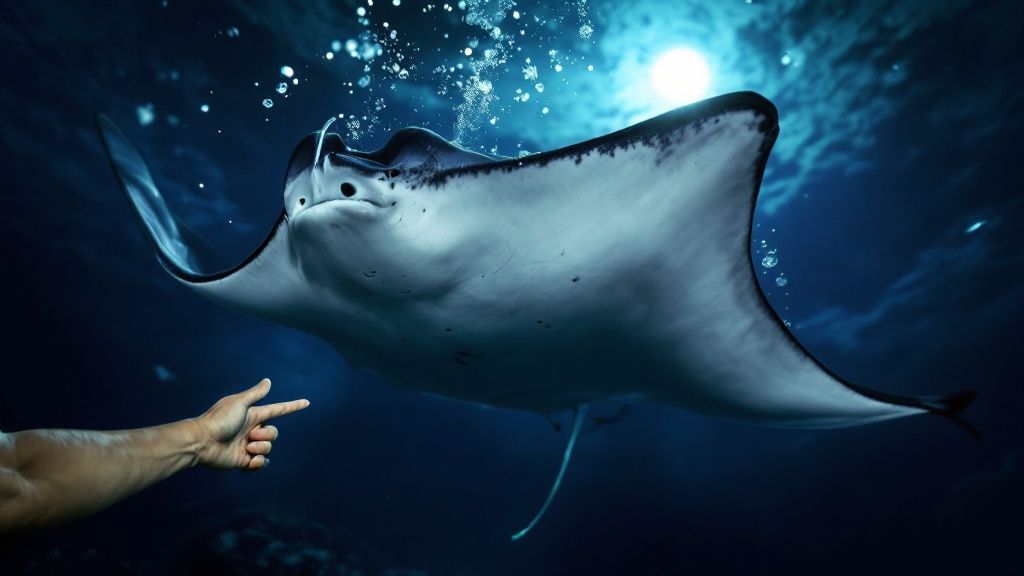
When you book a manta ray dive in Kona, you'll be heading to one of two world-renowned spots. While both promise an unforgettable show, they each have their own unique vibe and conditions. Think of it like choosing between two incredible concert venues—one is an intimate, cozy theater, while the other is a bigger, more dynamic arena.
Picking the right one really boils down to your comfort level and what kind of adventure you're looking for. Both Manta Village and Manta Heaven are well-established feeding grounds where mantas gather like clockwork to feast on plankton attracted by dive lights. With 80,000 people taking the plunge each year and average sightings of 8 to 12 mantas per night, your chances of a magical encounter are sky-high at either location.
If you want to dive deeper into what makes this experience so special, you can explore the details of the Kona manta experience.
Manta Village: The Original Site
Manta Village, tucked away in Keauhou Bay just south of Kailua-Kona, is where it all began. This is the original, legendary site that put Kona on the map for manta encounters.
Its biggest selling point? The location. Being inside a sheltered bay means the water is usually calmer and shallower, making for a super chill experience.
- Ideal for Beginners: With depths around 25-35 feet, it's the perfect spot if you're a new diver, a bit nervous about night diving, or just want a more relaxed swim.
- Easy Access: It’s close to town, which often means a shorter, quicker boat ride to get to the action.
- Consistent Conditions: The protected nature of the bay makes the experience very reliable.
For these reasons, Manta Village is often the top recommendation for anyone looking for a comfortable and predictable—yet still mind-blowing—encounter.
Manta Heaven: A More Dynamic Encounter
Head a bit further north, up by the Kona airport, and you'll find Manta Heaven (also known as Garden Eel Cove). This site offers a slightly different flavor of adventure.
Because it's more exposed to the open ocean, the water can be a bit deeper and you might feel a bit more current. But don't let that deter you! That dynamic environment is precisely what can attract an even larger congregation of mantas. For divers with a few more logbook entries, the added thrill of watching these giants glide through the moving water is an experience in itself.
I always tell people it comes down to personal preference. Manta Village feels like you have a front-row seat in a serene underwater theater. Manta Heaven can feel more like you've been dropped into the middle of a wild, swirling ballet. Both are absolutely incredible.
So, which one is right for you? This quick table breaks down the main differences to help you choose the best stage for your manta ray dive in Kona.
Manta Village vs Manta Heaven at a Glance
Choosing the right site for your manta ray encounter in Kona depends on what you're looking for in an underwater adventure. Here's a side-by-side comparison to help you decide.
| Feature | Manta Village (Keauhou Bay) | Manta Heaven (Garden Eel Cove) |
|---|---|---|
| Location | Sheltered bay south of Kailua-Kona | Exposed cove north of Kailua-Kona |
| Depth | Shallower (25-35 feet) | Deeper (35-45 feet) |
| Conditions | Generally calmer, less current | Can have stronger currents |
| Best For | Beginner divers, snorkelers, families | Experienced divers, adventure seekers |
| Vibe | Relaxed, "theater-like" viewing | Dynamic, "wild ballet" feel |
| Boat Ride | Typically shorter | Can be a bit longer |
Ultimately, there's no wrong choice. Both Manta Village and Manta Heaven deliver an experience that you will be talking about for years to come. It’s all about picking the one that best fits your skill level and sense of adventure.
How to Prepare for Your Manta Ray Night Dive
A little bit of prep work can make the difference between a good dive and a truly unforgettable one. When you step onto that boat feeling ready and relaxed, you can soak in every moment of the magic that's about to unfold.
Think about what you'll need to stay comfortable. The water here in Kona is beautiful and warm, but an evening dive means you'll be submerged for a while as the air cools. A 3mm or 5mm full wetsuit is usually the sweet spot for most divers.
It’s also a great idea to pack a dry bag. Tossing in a towel and a warm hoodie for the boat ride back is a pro move—you'll be glad you did when the cool night air hits. And if you’re even a little prone to seasickness, taking some medication before you board is always a smart bet.
Getting Certified and Briefed
First things first, this is a scuba dive, so you’ll need to be certified. If it’s been a year or two since you last blew bubbles, consider a quick refresher dive to get your skills and confidence back up to speed.
Before anyone hits the water, your divemaster will run through a detailed pre-dive briefing. Pay close attention here, as this is where you get all the critical info for a smooth, safe dive.
- Night Diving Signals: They'll cover the specific hand signals and procedures we use after dark to communicate and stay together.
- Gear Checks: You'll run through a standard safety check on your own equipment and then do a buddy check to make sure everything is functioning perfectly.
- Manta Etiquette: This is the big one. Your guide will explain the cardinal rule of interacting with these gentle giants: look, but don't touch. This is non-negotiable, as touching them can damage the delicate protective mucus layer on their skin.
The briefing really sets the stage for the whole experience. It’s not just about rules; it’s about learning how to be a respectful visitor in the mantas' world. Following these guidelines ensures the dive is safe for you, the other divers, and most importantly, for the manta rays themselves.
You can get a deeper sense of the whole adventure by checking out the details of a manta ray night dive in Kailua-Kona.
Your Underwater Manta Ray Encounter
Once you slip beneath the waves, the world above disappears. The boat's hum fades, replaced by the steady, meditative sound of your own breathing. Your dive light cuts a path through the dark water, guiding you down toward a circle of lights on the sandy bottom—what we affectionately call the "campfire." This is where the show happens.
You and your group will find a spot on the sand, pointing your lights straight up into the water column. This light beam acts like a dinner bell, attracting clouds of tiny plankton, the manta rays' favorite food. Before you know it, the guests of honor start to arrive. A massive, winged shadow glides out of the darkness and into the light. Then another. And another.
The Manta Ballet
What happens next is nothing short of magical. The manta rays, some with incredible wingspans of over 12 feet, begin a silent, mesmerizing ballet. They swoop and glide, performing graceful barrel rolls just inches over your head with their huge mouths wide open to filter out the plankton.
Their movements are powerful yet completely fluid. You’ll be close enough to see the unique spot patterns on their bellies and look right into their intelligent, curious eyes as they soar past. It’s an experience that feels both incredibly grand and surprisingly intimate. For a play-by-play of what this is really like, read our detailed breakdown of the manta ray dive experience.
The key is to stay calm and still. By maintaining good buoyancy and just relaxing on the seafloor, you become part of the scenery. This allows the mantas to get comfortable and put on their natural feeding display, ensuring a safe and unforgettable encounter for both divers and the rays.
Diving for a Cause
Joining a manta ray dive in Kona isn't just about making an amazing memory; you're also playing a part in important conservation work. Since 1991, divers and researchers have been carefully cataloging the local manta population, using the unique spot patterns on their undersides to identify individuals—kind of like a fingerprint.
This massive citizen-science project has resulted in a database with nearly 6,000 encounters and over 28,500 sightings, identifying more than 330 individual manta rays. This data is gold, giving scientists critical insights into manta behavior and helping protect these gentle giants. You can learn more about the extensive manta ray research efforts here.
Every person who goes on this dive contributes to that effort. You’re not just watching the show; you’re helping ensure it continues for generations to come.
Exploring More of Kona’s Underwater World
The manta ray dive is an absolute must-do, but don't let it be the only thing you do in Kona. The Big Island’s coastline is a diver's paradise, with a massive variety of underwater adventures waiting for you, whether you’ve just gotten your C-card or have logged thousands of dives.
Daytime dives show off a completely different side of Kona’s personality. The island’s volcanic past has sculpted an incredible underwater landscape of lava tubes, dramatic arches, and healthy coral gardens packed with life.
It's pretty standard to see Hawaiian green sea turtles (honu) gliding by, pods of spinner dolphins playing in the distance, and schools of colorful fish that you can’t find anywhere else on the planet. A classic two-tank morning charter is the perfect way to soak in the sun-drenched beauty of it all.
The Thrill of the Deep and Dark
If you’re looking for something a little more adventurous, Kona has two other night dives that are truly mind-blowing. The first is the world-famous Kona Blackwater Dive, which is like diving in outer space. You’ll drift over thousands of feet of open ocean and watch as bizarre, bioluminescent creatures rise from the depths—part of the largest migration on Earth.
Got a few more dives under your belt and looking for a challenge? Kona has you covered. There are some incredible advanced charters that head to deeper reefs and remote pinnacles, where the environment is more demanding but the payoff is huge.
The bottom line is, your underwater journey doesn't have to end once the mantas have had their fill. From sunlit reefs to the mysterious deep, the sheer range of diving tours available in Kona will keep you coming back for more.
Your Manta Ray Dive Questions Answered
As you get ready for your manta ray dive in Kona, it's natural for a few questions to surface. Getting them answered beforehand just adds to the excitement and helps you feel completely prepared for this once-in-a-lifetime experience.
Is the Manta Ray Dive Safe?
You bet it is. When you go with a reputable, certified dive operator, your safety is their top priority. They walk you through everything in a detailed pre-dive briefing, keep a close eye on the group underwater, and make sure everyone sticks to the safety rules.
And what about the mantas? They're true gentle giants. Unlike their stingray cousins, manta rays have no barb or stinger, so they pose absolutely no threat to people. Their only mission is to feast on the plankton that gathers in the glow of the dive lights.
Can I Snorkel Instead of Scuba Dive?
Absolutely! Most companies offer a fantastic snorkeling option that’s every bit as magical. As a snorkeler, you'll float at the surface, holding onto a specially designed light board. This board illuminates the water below, drawing in the plankton.
The mantas then swim right up to the surface to feed, giving you an incredible, up-close view of the action from above. It’s an amazing way to experience the ballet without going deep.
What if I've Never Done a Night Dive Before?
No problem at all. The Kona manta dive is actually one of the best first-time night dives you could ask for, especially at the main "Manta Village" site. The water is usually calm, and the dive itself is pretty shallow.
Your divemaster will cover all the night diving procedures and special hand signals in the briefing, so you'll feel confident and comfortable before you even hit the water.
Will I Definitely See Manta Rays?
While these are wild animals and sightings can never be 100% guaranteed, the Kona dive has an incredible success rate—often over 90%! The dive sites are well-established feeding areas that the local manta population has been returning to for decades.
If you want to dig deeper into how it all works, you can learn more about what the manta ray night dive is all about.