
Picture this: you're floating weightlessly in the warm, dark Pacific. Suddenly, giant, graceful manta rays glide inches from your face, performing an underwater ballet in the beams of bright lights. This is the heart of the manta ray dive in Kona, a world-renowned experience that tops bucket lists for divers and snorkelers everywhere. It's a kind of magic you just can't find anywhere else.
The Unforgettable Kona Manta Ray Night Dive
The Kona coast of the Big Island is hands-down one of the best and most reliable places on Earth to meet these majestic creatures. This isn't just a happy accident; it's the result of a perfect storm of natural conditions and well-managed tourism that creates a breathtaking spectacle nearly every single night. For decades, these calm, plankton-rich waters have been the go-to feeding grounds for a resident population of reef manta rays.
So, what makes this adventure so special? Unlike manta encounters in other parts of the world, which often happen at "cleaning stations," the Kona experience is all about their feeding behavior. Tour operators use powerful, submerged lights to attract massive clouds of plankton—the mantas' favorite meal. This creates an irresistible underwater buffet they simply can't ignore.
The result is a mesmerizing display of nature in action, and it’s something you have to see to believe:
- Graceful Acrobatics: You'll watch as mantas with wingspans reaching over 14 feet swoop, turn, and perform effortless barrel rolls to filter plankton from the water.
- Up-Close Encounters: The rays are drawn directly to the lights, meaning they often glide just inches away from you, offering views that are simply unparalleled.
- A Reliable Spectacle: The established feeding sites and the healthy local manta population lead to an exceptionally high success rate, with sightings on over 90% of tours.
This unique interaction transforms an ordinary night dive into an extraordinary connection with one of the ocean's most intelligent and gentle giants. It’s an experience that’s consistently rated as one of the planet's top night dives for a reason, leaving visitors with a profound sense of awe and a deeper appreciation for the marine world. You can learn more about what makes the Kona manta ray night dive so incredible and how it all began. This thrilling introduction is just the beginning of planning your own unforgettable journey into the heart of Hawaii's underwater marvel.
Meeting the Gentle Giants of Kona
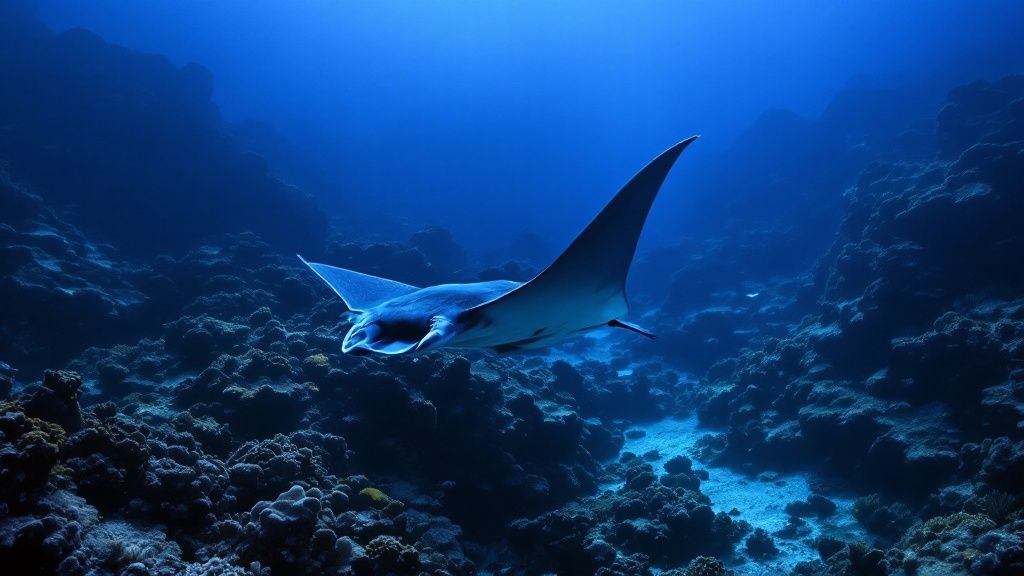
The stars of the show on any Kona manta dive are, of course, the magnificent reef manta rays (Mobula alfredi). These aren't just big fish; they're the ocean's acrobats, gliding through the water with a grace that seems impossible for their size. Getting to know a little about them beforehand completely changes the experience from just seeing them to truly appreciating them.
When you first see one emerge from the dark, the first thing that hits you is their sheer scale. The local reef mantas here in Kona can have wingspans stretching over 14 feet! It’s a sight that will genuinely take your breath away.
But despite that intimidating size, it’s critical to remember they are completely harmless. If you're feeling a bit of pre-dive nervousness, let that fact put you at ease.
Gentle Giants Without Defenses
One of the most comforting things about manta rays is that their gentle nature is baked right into their biology. They simply don't have the defensive weapons you see in their stingray cousins.
- No Stingers or Barbs: Unlike stingrays, a manta's long tail is just a tail—no stinger, no barb, nothing to worry about.
- Toothless Wonders: Manta rays are filter feeders, so they have no need for teeth. Their cavernous mouths are designed for one thing: gulping down microscopic plankton.
This means you can truly relax on the seafloor and just enjoy the spectacle, knowing these incredible animals are focused entirely on their dinner, not on you.
Masters of Filter Feeding
The whole manta ray night dive experience is engineered around the ray's unique way of eating. Think of them as the ocean's most graceful vacuum cleaners. They swim with their mouths wide open, using specialized plates called gill rakers to filter tiny organisms like plankton from the water.
This is exactly why our big dive lights are the key to the whole operation. The powerful beams attract a thick "soup" of plankton, creating a concentrated buffet the mantas simply can't resist. You'll get to see them perform stunning barrel rolls and somersaults, a behavior they use to loop through the densest clouds of food over and over. If you want to get deeper into the mechanics of it all, we have a whole guide on what the manta ray night dive is.
Surprisingly Intelligent Creatures
Beyond their physical presence, manta rays are also known for being incredibly smart. They have the largest brain-to-body size ratio of any cold-blooded fish, putting them in the same league as animals like dolphins or primates in some studies.
Divers who have been in the water with Kona's mantas for years will tell you they see signs of recognition and genuine curiosity. The rays seem to acknowledge the divers, making eye contact and interacting in a calm, inquisitive way that makes every encounter feel personal.
While there are two species of manta rays you might see off the Kona Coast—the reef manta (Mobula alfredi) and the giant manta (Mobula birostris)—it’s the reef mantas you'll meet on the night dive. They have become true icons of marine conservation, and the Kona experience is a perfect example of how responsible ecotourism can help protect these amazing animals. Now you're ready to fully appreciate the gentle giants you’re about to meet.
Choosing the Right Manta Ray Dive Site
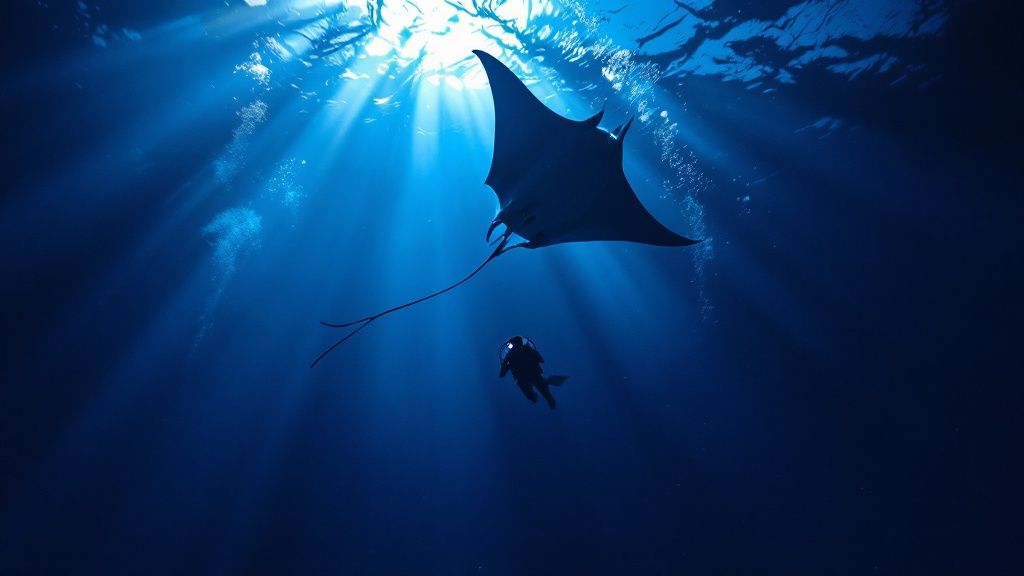
When you're gearing up for a manta ray dive in Kona, you should know that not all dive sites are the same. Your experience can be wildly different depending on where you drop in, so picking the right spot is a huge part of planning your adventure.
Two world-famous sites really own the Kona manta scene, and each one offers a totally unique vibe. Which one is for you? It really boils down to your comfort in the water, your dive certification, and what you’re hoping to get out of the night. One spot is famously easygoing and perfect for beginners, while the other presents a different kind of challenge that often clicks with more seasoned divers.
Knowing the difference is key to booking a tour that nails your expectations for this unbelievable encounter.
Manta Village: The Original Site
Often called the "original" manta ray night dive, Manta Village is tucked right off the coast from the Sheraton Keauhou Bay Resort. It has earned every bit of its stellar reputation. This spot is famous for being incredibly reliable and easy to get to, making it a fantastic choice for first-timers and snorkelers alike.
The conditions here are almost always on your side:
- Shallow Waters: The site is only about 25 to 35 feet deep. That’s much less intimidating for new divers and absolutely perfect for snorkelers who can just float on the surface and watch the show from above.
- Calm Conditions: Being in a protected bay means Manta Village is usually shielded from big winds and currents, making for a much smoother and more comfortable time in the water.
- High Success Rate: The odds of seeing mantas here are incredibly high. It’s not unusual for multiple rays to show up and perform all night long.
Thanks to its gentle conditions and dependable manta sightings, Manta Village is the go-to for many families and divers of all stripes. It’s a classic, awe-inspiring introduction to the magic of Kona’s manta rays.
Manta Heaven: A Deeper Experience
North of Kona, near the airport, you'll find Manta Heaven (also known as Garden Eel Cove). This site offers a slightly different—but equally spectacular—manta experience. It tends to be a bit deeper and can sometimes have stronger currents, which is why it's often a favorite among more experienced divers looking for advanced dive tour opportunities.
While Manta Village is known for consistency, Manta Heaven is sometimes known for its sheer numbers. It’s not uncommon for huge groups of mantas to gather here, creating a truly breathtaking underwater ballet. The volcanic rock formations on the bottom also provide a dramatic backdrop for the feeding frenzy.
The number of manta rays that can show up at Manta Heaven is just staggering. On a good night, you might see more than a dozen rays swooping and barrel-rolling through the lights—it’s a beautiful, chaotic spectacle.
Each year, an estimated 80,000 people head to the Kona Coast for a manta ray tour, cementing its status as a global hub for this unique marine encounter. Manta Village, with its shallow and calm environment, is ideal for beginners, giving divers a front-row seat to the famous "manta ballet." Meanwhile, the deeper waters and potential for stronger currents at Manta Heaven appeal to more experienced divers looking for incredible photo opportunities. With water temps holding at a comfy 75-80°F from April to October, divers often see 8 to 12 manta rays a night. You can learn more about the history of Kona's manta dives and what makes them so special.
Manta Village vs. Manta Heaven at a Glance
To make the decision a little easier, here’s a quick comparison of Kona's two main manta ray dive sites. Use this chart to figure out which location best fits your experience level and what you’re hoping for.
| Feature | Manta Village (South Site) | Manta Heaven (North Site) |
|---|---|---|
| Location | Off Keauhou Bay, south of Kona | Near Kona International Airport, north of Kona |
| Average Depth | 25-35 feet (shallower) | 35-45 feet (deeper) |
| Conditions | Typically very calm and protected | Can have stronger currents |
| Best For | Beginner divers, snorkelers, and families | Intermediate to experienced divers |
| Key Appeal | High reliability and calm, accessible waters | Potential for larger groups of mantas and dramatic scenery |
No matter which spot you pick, you're signing up for an incredible show. Both locations give you a fantastic chance to get up close with Kona's gentle giants. For an unforgettable night with these graceful creatures, consider booking one of Kona Honu Divers' acclaimed manta ray dive and snorkel tours.
Check Availability
How to Prepare for Your Manta Ray Adventure
A little bit of prep work can be the difference between a good trip and a truly unforgettable one. Your manta ray dive in Kona is going to be incredible, and taking a few minutes to get ready will make sure everything is as smooth, safe, and magical as it can be. Think of this as your practical pre-flight checklist for the big night.
Getting the small details right—like bringing a warm jacket for the boat ride home—means you can relax and focus on the main event: the awe-inspiring giants gliding right before your eyes.
Whether you're a seasoned diver or hopping in with a snorkel for the first time, knowing what to bring and what to expect helps you feel confident and ready to soak it all in.
What to Bring on the Boat
Packing the right gear is all about comfort. The boat ride back to the harbor can feel surprisingly chilly after a night swim, so a few key items will make the whole experience much more pleasant.
Here's a quick list of must-haves for your adventure:
- Swimsuit: The easiest thing to do is wear it under your clothes. That way, you're ready to gear up as soon as you get on the boat.
- Towel: Simple, but you'll be happy you have it when it's time to dry off.
- Warm Jacket or Sweatshirt: Even on a balmy Hawaiian evening, the wind on a moving boat can cool you down fast. You won't regret having a warm layer for the trip home.
- Reusable Water Bottle: Staying hydrated is always smart, plus it’s the eco-friendly way to go.
- Camera: If you have an underwater camera like a GoPro, bring it! But even a regular camera is great for snapping photos on the boat before and after.
Most professional tour operators, like us here at Kona Honu Divers, provide all the essential dive or snorkel gear you'll need—wetsuits, masks, fins, the works. Still, it never hurts to double-check what's included when you book your manta ray dive and snorkel tour.
The Importance of the Pre-Dive Briefing
Before you even think about getting in the water, your guide will give a thorough pre-dive briefing. Pay close attention to this! It's not just a formality; it's where you'll learn everything you need to know to have a safe, successful, and amazing encounter.
This briefing covers critical safety info, how to use your equipment, and the game plan for the night. Most importantly, it lays out the rules for interacting with the manta rays, which are there to protect both you and these magnificent animals.
Responsible Tourism: The Golden Rules
The Kona manta ray dive is a world-class example of ecotourism done right, and its long-term success hinges on everyone playing by a few simple rules. The most important principle is passive observation.
This means we are guests in the mantas' dining room. Our job is to watch their natural feeding behavior without getting in the way. When we stay still and calm, the mantas feel safe, and that's when they put on their best show, often coming incredibly close.
To keep this a sustainable and magical experience for generations to come, please remember these key rules:
- Observe Only, Do Not Touch: It can be tempting, but you must resist the urge to reach out and touch the mantas. Their skin has a protective mucous layer that our touch can damage, leaving them vulnerable to infection.
- No Chasing or Riding: Never, ever chase, grab, or try to ride a manta ray. This is extremely stressful for the animal and ruins the experience for everyone.
- Hold Your Position: If you're diving, stay on or near the sandy bottom. If you're snorkeling, hold onto the light board at the surface. This keeps the water column clear, giving the mantas plenty of room to perform their graceful underwater ballet.
Following these guidelines not only protects the animals but also preserves this incredible encounter for everyone. If you're interested in the conservation side of things, you can learn more about why you should go on a manta ray dive in Kona.
Finding the Best Manta Ray Tour Operator
Picking the right company for your manta ray dive in Kona is hands-down the most important decision you'll make for this trip. A great operator is so much more than just a boat ride. They're the ones who make sure your adventure is safe, fascinating, and an experience you'll be talking about for years. The best outfits are easy to spot: they’re obsessed with safety, deeply respect the ocean, and are genuinely excited to share this incredible moment with you.
When you're looking around, keep an eye out for operators that emphasize small group sizes. It makes a world of difference. A smaller group means you get more one-on-one time with the guides, a better view of the mantas without a crowd of fins in your face, and just a more personal, memorable dive.
Why Kona Honu Divers Stands Out
When it comes to a truly top-notch manta experience, Kona Honu Divers is a name that comes up again and again, and for good reason. They’ve built their reputation on having incredibly knowledgeable guides, rock-solid safety procedures, and a real commitment to marine conservation. Their crew members aren't just there to point out the mantas; they’re passionate educators who will fill you in on all the cool details about ray behavior and the local ecosystem.
They’re also huge advocates for responsible tourism, strictly following the Manta Ray Green List standards for passive observation. This ensures the dive is sustainable and protects the very animals we're all here to see. What they offer is more than a tour—it's an education in ocean stewardship. Don't just take our word for it; see what other divers have to say.
The Importance of Responsible Practices
Choosing an operator that puts the mantas first is absolutely critical. Since 1991, researchers and divers have been documenting Kona's resident reef manta rays, creating a massive database from over 28,500 manta sightings. This incredible effort helps us understand their lives, tracking individuals like Loulou Ray, who was recorded swimming an impressive 42 miles over eight weeks. This research shows how the mantas have learned to associate the dive lights with an easy meal, which underscores why responsible, hands-off tourism is so vital to protect their natural behaviors. You can dive deeper into these remarkable manta ray findings and research.
By choosing a tour that follows established guidelines, you are directly contributing to the long-term health and preservation of Kona's manta ray population. Your decision supports a sustainable industry that allows these amazing encounters to continue for years to come.
There are a lot of fantastic operators in the area, and it’s smart to do a little homework to find your perfect match. To get you started, check out our guide on the top 10 Kona diving companies ranked for a detailed breakdown.
At the end of the day, you want to go with a team that makes you feel confident, safe, and stoked for the dive. With their amazing crew and dedication to the rays, Kona Honu Divers really does offer one of the best ways to experience this world-famous dive. You can check out their highly-rated manta ray dive tours page to see what makes them a favorite for divers and snorkelers alike.
Check Availability
Your Manta Ray Dive Questions Answered
Even after doing all the homework, a few last-minute questions always seem to pop up before a big, once-in-a-lifetime adventure. We get it. To help you book your manta ray dive in Kona feeling totally confident, we’ve put together the answers to the questions we hear most often from both divers and snorkelers.
Think of this as the final piece of the puzzle. Getting these details sorted out means you can stop worrying and just focus on the pure excitement of meeting Kona’s gentle giants.
When Is the Best Time of Year for the Manta Ray Dive?
Here's the great news: the Kona manta ray dive is fantastic all year round. The local manta population doesn't migrate, so they're here feeding every single season. That means the success rate for sightings is incredibly high no matter when you decide to visit.
That said, if you're looking for the absolute most comfortable conditions, a lot of people lean towards the summer months, roughly from April through October. During this time, the ocean is usually calmer and the water is a bit warmer, which makes the whole experience—especially the boat ride back after dark—just that much more pleasant.
Do I Need to Be Scuba Certified?
Nope, not at all! You absolutely don't need to be a certified diver to have an incredible time. Snorkeling with the manta rays offers a different perspective that is every bit as breathtaking and spectacular.
Snorkelers hang onto a big, custom-made light board that floats on the surface. These powerful lights are what attract the plankton, and the plankton, in turn, draw the mantas right up to the top. You get an amazing bird's-eye view as they glide, swoop, and do barrel rolls just a few feet beneath you. It’s a perfect option for families, non-divers, or really anyone who wants a more relaxed way to enjoy the show. For a deeper dive, check out our guide on what it's like to go on the manta ray dive in Kona.
Is the Manta Ray Dive a Safe Experience?
Yes, it is a very safe experience, especially when you go with a professional, reputable operator. There’s a good reason manta rays are called "gentle giants"—they have no teeth, no barbs, and no stingers. They are filter feeders, and their only interest is the plankton in the water.
The main safety focus is on standard water safety protocols, which your guides are experts at managing. They'll give you a detailed briefing before you get in the water and will be right there with you the whole time. Just listen to their instructions, and you'll ensure a safe and respectful encounter for both you and the mantas.
What If We Don't See Any Manta Rays?
While seeing mantas in Kona is extremely reliable (we're talking a success rate well over 90%), they are wild animals, and nature can never be 100% guaranteed. The best tour operators know this and usually offer what's called a "manta guarantee."
This typically means that if you're on one of the rare tours where no mantas show up, you can rebook and try again on another night for free, depending on availability. It's always a smart move to ask about the specific policy with whatever operator you choose when you book your tour.