
Close your eyes and picture this: you're floating in the warm, dark Pacific. Suddenly, colossal, gentle shadows glide just above you, their massive wingspan silhouetted against beams of light. This isn't a dream. This is the world-famous manta ray night dive in Kona, an experience so surreal and magical it sits at the top of bucket lists for divers and snorkelers everywhere.
It's hands-down one of the most reliable and breathtaking big animal encounters you can have on this planet.
Welcome to Kona's World-Famous Manta Ray Dive
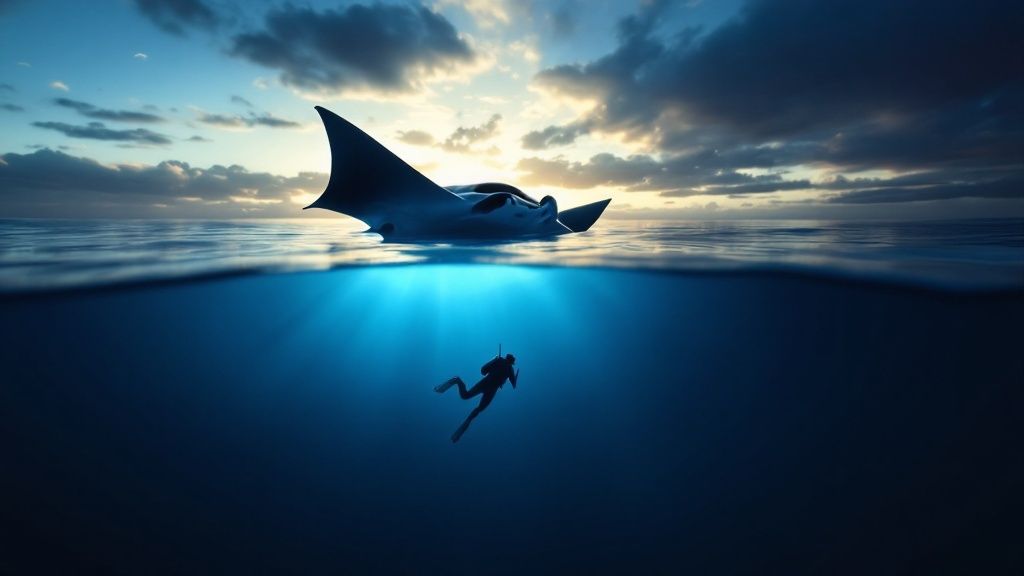
The Kona coast, on the Big Island of Hawaii, is the place to see manta rays. I can't stress that enough. While other destinations might offer seasonal or hit-or-miss sightings, Kona’s resident manta population shows up like clockwork, year-round, for their nightly feast. This incredible consistency has turned a natural feeding behavior into one of the most sought-after underwater adventures in the world.
So, how does it work? The setup is ingeniously simple. Tour operators create what we call an underwater "campfire." They submerge powerful, eco-friendly lights on the ocean floor, which attract swarms of plankton—the mantas' favorite food. The mantas follow the food, swooping and gliding in a silent, effortless ballet as they scoop up their meal right in front of your eyes.
The best part? This incredible spectacle is accessible to almost everyone, whether you're a seasoned diver or have never put on a mask before.
- For Certified Divers: You'll head down to the sandy bottom, find a spot, and simply look up. The mantas soar just inches over your head, close enough to see every detail.
- For Snorkelers: You'll float comfortably on the surface, holding onto a specially designed light board. The mantas come right up from the depths, performing barrel rolls just below you as they feed.
Honestly, both views are absolutely mind-blowing.
To give you a quick overview, here are the key details you'll want to know for planning your trip.
Manta Ray Dive Kona At a Glance
| Aspect | Details |
|---|---|
| Location | Kona Coast, Big Island, Hawaii |
| Dive Sites | Manta Village (Keauhou Bay) & Manta Heaven (near Kona Airport) |
| Best Season | Year-round, but April–October offers the warmest water. |
| Water Temperature | 75–80°F (24–27°C) during peak season. |
| Average Sightings | 8–12 mantas per night is common, but can vary. |
| Participants | Over 80,000 people experience this annually. |
| Who Can Go | Certified divers and snorkelers of all experience levels. |
This table should help you get a feel for what to expect, but let's dive into a little more detail on the sites themselves.
The Premier Manta Ray Dive Sites
Two main spots along the Kona coast are famous for this nightly show. One of the original and most popular sites is Manta Village, located just off Keauhou Bay. It's calmer, shallower, and incredibly reliable, making it a fantastic pick for your first time.
The other go-to spot is Manta Heaven, situated a bit north of the Kona airport. This site often boasts a larger number of mantas at once and is slightly deeper. During the peak season from April to October, you'll be treated to comfortable water temps between 75–80°F and an average of 8–12 mantas per night.
This is so much more than just a tour; it's a real connection with one of the ocean's most intelligent and graceful creatures. Seeing these gentle giants in their element is something that truly sticks with you.
Choosing a professional and responsible operator is crucial, not just for your safety but for the well-being of the mantas. You want a team that respects the ocean and provides a top-tier, educational experience. You can learn more about what exactly happens on a manta ray night dive in our dedicated article, which breaks it all down. This guide will give you everything you need to make this dream dive a reality.
Understanding Kona's Gentle Giants
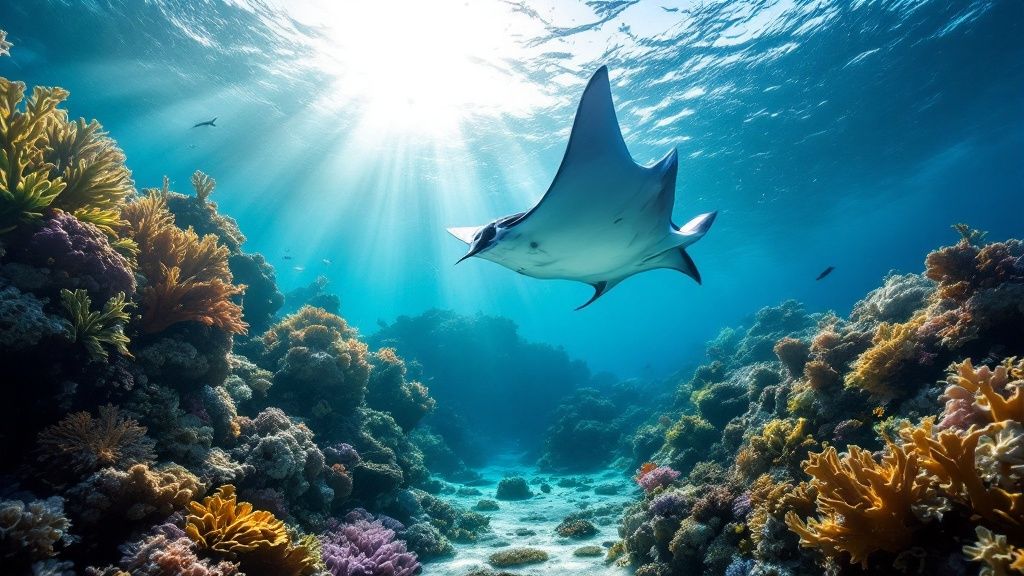
To really get the most out of the manta ray dive Kona experience, you have to know a little something about the stars of the show. We're not just talking about big fish here; these are highly intelligent, curious, and unbelievably graceful ocean gliders. Each one has a personality as unique as the spot patterns on its belly.
An encounter with them feels less like watching wildlife and more like meeting a respected elder of Hawaii's marine world.
Kona is lucky enough to be a regular hangout for two different types of manta rays. The most common visitor to our nightly "campfire" is the resident reef manta (Mobula alfredi). These guys are pretty social and tend to have wingspans around 12-14 feet. We know their feeding patterns well.
Every so often, we get a visit from the bigger, more nomadic oceanic manta (Mobula birostris). Seeing one of these is a truly jaw-dropping moment, with a wingspan that can stretch up to a massive 22 feet. Their sheer size can be a bit intimidating at first, but these giants are completely harmless, which brings us to an old myth that needs busting.
Debunking the 'Devil Fish' Myth
Way back when, sailors who didn't know any better gave these animals the scary nickname "devil fish." You can kind of see why—the dark coloration and horn-like fins might look menacing if you'd never seen one before. But that name couldn't be more wrong.
Manta rays are total sweethearts. They have no teeth for biting, no sharp barbs, and no stingers like their stingray cousins. Their only real defense is their incredible speed to simply get away from trouble.
They are filter feeders, meaning their diet is made up entirely of tiny plankton they scoop out of the water with those giant mouths. The whole nighttime spectacle we get to witness is built on this simple fact: our lights attract the plankton, and the plankton brings in the mantas. It's a peaceful, mesmerizing dinner party, not a hunt. Knowing what it's like to witness this firsthand really helps you appreciate just how gentle these animals are.
In Hawaiian culture, manta rays, or hahalua, are held in high regard. Their graceful movements inspired myths and dances for generations, a local reverence that stands in stark contrast to those old, outdated misconceptions.
How We Know Who's Who
One of the coolest things about the Kona manta population is that we know so many of them as individuals. Researchers and longtime dive guides can identify specific mantas by the unique pattern of black spots on their white undersides. These markings are as distinct as a human fingerprint.
Thanks to this natural tagging system, many of our local mantas have names and are greeted like old friends when they show up. You might get to meet some of Kona’s celebrities:
- Lefty: One of the original and most reliable mantas in Kona, Lefty is easy to spot because of a damaged left cephalic fin.
- Big Bertha: A huge female known for her calm presence and impressive size. She’s been a regular at the feeding sites for years.
- Kailey: Named way back in 1999, she's another long-term resident and a diver favorite for her graceful barrel rolls.
The Kona manta colony is remarkably stable, with around 320 specifically cataloged individuals. This familiarity is what turns a great dive into a personal one. When your divemaster points out a manta by name and tells you their story, the connection you feel is so much deeper. It’s a powerful reminder that you’re a guest in their home, privileged to watch their nightly ballet.
How to Choose a Responsible Manta Ray Tour Operator
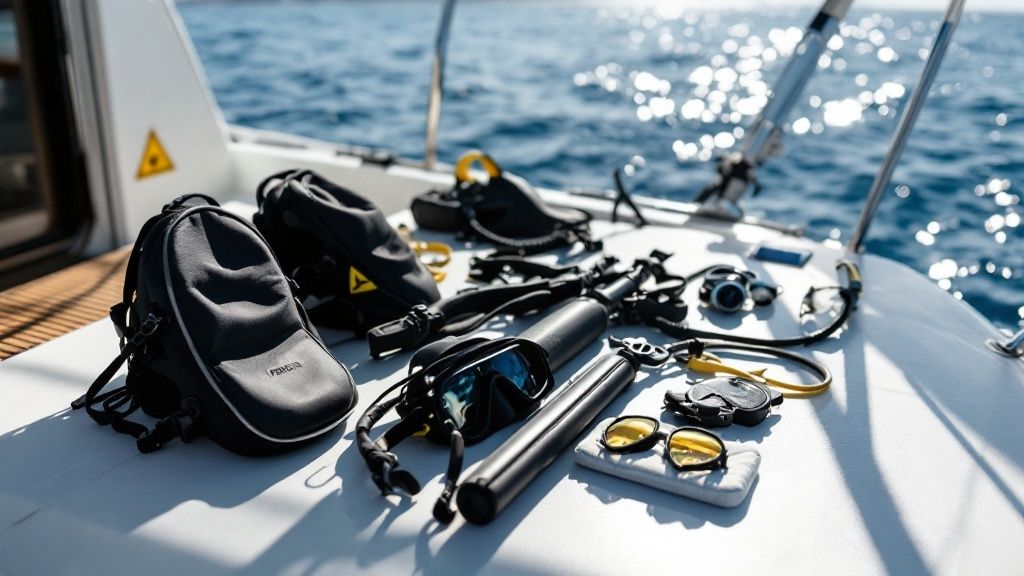
Picking your tour operator is a huge deal. It's about way more than just booking a spot on a boat; it truly shapes the quality, safety, and ethical backbone of your entire manta ray dive Kona experience. The right company ensures you have a mind-blowing adventure while actively helping protect Kona's famous manta ray population for years to come.
The best operators live and breathe sustainable tourism, putting the well-being of the mantas first, always. This means your jaw-dropping encounter doesn't come at the expense of the very animals you came halfway across the world to see.
What to Look For in a Top-Tier Operator
When you start digging into different companies, the first thing to check is their commitment to proven safety and conservation rules. For years, the gold standard was the Manta Ray Green List, which spelled out strict, common-sense protocols for interacting with marine life. While that specific list isn't active anymore, its core principles are still the playbook for the best operators in Kona.
These rules are all about one thing: respect. Minimal impact on the animals, maximum awe for you.
- Look, Don't Touch: This is the golden rule. Never, ever touch the manta rays. It sounds simple, but it’s critical. Touching them strips away their protective mucus coating, which is like their immune system, leaving them wide open to nasty infections.
- Know Your Place: Divers belong on or near the sandy bottom. Snorkelers stay flat on the surface. This creates a safe, open water column in the middle for the mantas to swoop and glide without obstacles.
- Lights Up, Lights Down: The lights are for attracting plankton, the mantas' food source. Divers point their lights up, and snorkelers point theirs down. This creates a "plankton sandwich" with the mantas in the middle. Never shine your light directly in a manta's eyes or at other guests.
A truly professional operator will drill these rules into everyone during the pre-dive briefing. They make sure every single person understands how to be a responsible guest in the mantas' home.
Another massive clue to a shop's quality is their professional affiliations. Keep an eye out for a PADI 5-Star Instructor Development Center (IDC), like us here at Kona Honu Divers. That’s not just some fancy sticker for the window; it's the highest rating in the dive industry for training, safety standards, and customer service. It’s a clear sign of a deep, unwavering commitment to doing things the right way.
The Kona Honu Divers Difference
Following the rules is the bare minimum. A truly exceptional tour is built around creating a world-class experience from the moment you step on the boat to the moment you leave. It all starts with a thorough safety briefing that leaves you feeling confident and ready for what's ahead. It also means providing top-notch, perfectly maintained gear—something that’s absolutely crucial for your comfort and safety, especially on a night dive.
Group size is another game-changer. A boat packed to the gills almost always leads to a chaotic, impersonal, and crowded experience in the water. We—and other reputable outfits—purposefully keep our group sizes small. This means a more personal, intimate encounter with the mantas and far less stress on the entire marine environment.
Of course, one of the best ways to gauge a company is to see what past customers are saying. Real reviews give you that unfiltered, honest insight into what the experience is actually like.
By picking an operator that checks all these boxes, you're doing more than just booking a dive. You're investing in a company that puts safety, education, and conservation at the forefront. It’s how you guarantee your adventure will be both breathtakingly beautiful and fundamentally responsible. For an even deeper dive, check out our guide on how to choose a Kona dive shop for more insider tips.
Preparing for Your Manta Ray Night Dive
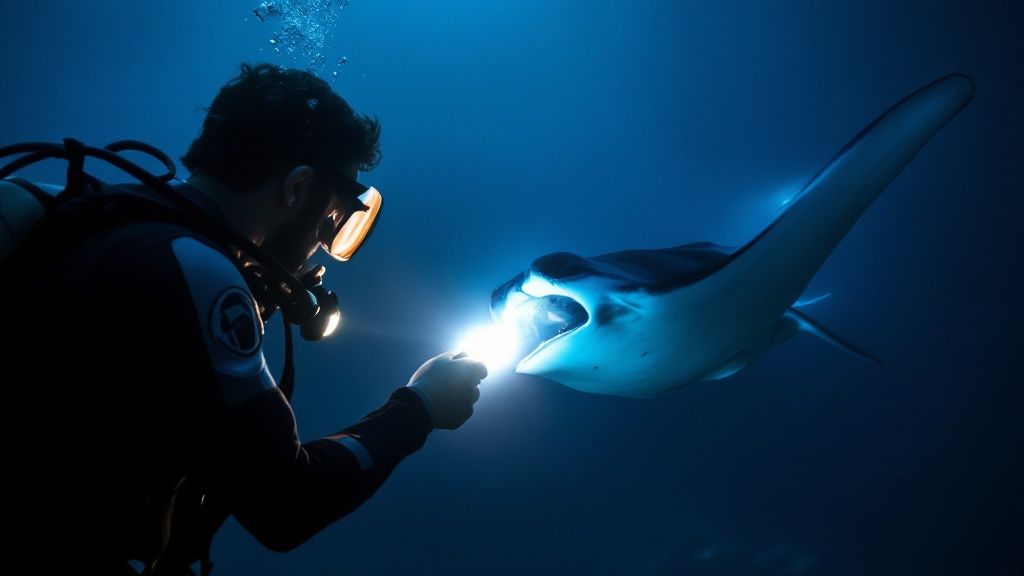
A little bit of prep work goes a long way in turning a great trip into a legendary one. Making sure your manta ray dive Kona experience is smooth, safe, and utterly mind-blowing starts well before you ever step foot on the boat.
Think of it like a pre-flight checklist for an adventure that’s truly out of this world.
First up, let's talk about what you need to have in your pocket to join in.
- For Divers: You absolutely must have a valid Open Water Diver certification from a recognized agency like PADI. This isn't just a rule; it's a non-negotiable safety requirement for everyone on the dive. All our scuba diving tours in Kona require certification.
- For Snorkelers: Here’s the good news—no certification is needed! If you can swim and feel comfortable in the water, you're all set to join the tour and watch the ballet from the surface.
With the basics out of the way, let's get into what you should toss in your bag.
Your Essential Packing List
Packing for the manta dive is pretty simple, but a few key things will make your evening way more comfortable. Most good operators, including us here at Kona Honu Divers, will provide all the in-water gear you need—wetsuit, mask, fins, the works. Your job is just to bring the personal comforts.
Here’s a quick list of what we recommend bringing along:
- Reef-Safe Sunscreen: Even on an evening trip, you'll be on the boat before sunset. Slathering on some reef-safe sunscreen is a great way to protect Hawaii's fragile coral ecosystems.
- A Towel: This one’s a no-brainer. You’ll definitely want it for drying off and warming up after your swim.
- Warm Layers: Once you’re out of the water, the air can feel surprisingly chilly, especially with the breeze on the ride back to the harbor. A hoodie or a windbreaker is a fantastic idea.
- Motion Sickness Remedy: If you’re prone to feeling queasy, it's smart to take your preferred remedy before you get on the boat. The ocean here is usually calm, but it's always better to be prepared.
A couple of final tips for the day of your tour: hydrate well throughout the day and try to have a light meal a few hours beforehand. Showing up comfortable and prepared means you can focus 100% on the incredible experience waiting for you.
Rules of Engagement with Mantas
This is the most critical part of your prep: understanding how to act respectfully and safely around these gentle giants. Your guides will give you a detailed briefing on the boat, but getting familiar with the principles ahead of time will make you a more confident and responsible observer.
The golden rule is simple but absolute: Look, but do not touch. Manta rays have a protective mucus coating on their skin that’s basically their immune system. Touching them can strip this layer off, leaving them vulnerable to nasty infections.
When you're in the water, you'll be instructed to stay in a specific spot to create a safe viewing area. Divers will be on or near the sandy bottom, while snorkelers will hold onto a custom-lighted float at the surface. Holding your position allows the mantas to glide freely and safely between the two groups.
For a deeper dive into the play-by-play of the night, you can explore a full breakdown of what to expect during a Kona Manta Ray Night Dive here.
By following these simple rules, you’re doing your part to ensure this magical natural encounter can continue for generations. You'll be ready to just kick back, relax, and soak in every incredible moment.
How Your Dive Helps Protect Kona's Mantas
Your manta ray dive in Kona is so much more than just a mind-blowing vacation story. It’s your chance to directly participate in marine conservation. When you book with a responsible company, your presence creates a powerful economic reason to protect these amazing animals. But you can take it a step further.
All you need is a camera to become a citizen scientist. This elevates your whole experience, transforming you from a passive observer into an active part of the solution for protecting Kona's mantas.
Become a Citizen Scientist
The secret to helping researchers is hidden on the mantas' bellies. Each manta ray has a completely unique pattern of black spots on its white underside—it works exactly like a human fingerprint. By snapping a clear photo of these patterns, you can help scientists identify individual animals.
This is where the real magic begins. Since 1991, the Kona manta population has been studied by cataloging these unique spot patterns. Projects like mantarays.info have built a massive database, thanks to divers and snorkelers just like you. They've gathered thousands of sightings, covering over 330 distinct mantas, a database that includes our manta ray dive tours, making this one of the most well-documented manta populations on Earth. You can discover more about this incredible citizen science project and its findings on mantarays.info.
Contributing your own sighting is super simple:
- Get a clear shot of the manta’s belly.
- Jot down the date, time, and location of your dive.
- Upload your photo to a manta ray identification database.
That's it. Your photo provides invaluable data that helps researchers track the population's health, monitor their movements, and better understand their lives.
Sustainable Ecotourism in Action
The entire manta ray dive industry in Kona is a powerful, living example of sustainable ecotourism. These nightly encounters bring in significant revenue for the local community, which builds a rock-solid economic case for protecting the mantas and their home.
When these gentle giants are worth more alive and thriving in their natural habitat, their long-term survival becomes a top priority for everyone.
By participating in a professionally managed tour, you are directly funding the conservation of this incredible species. Your ticket purchase becomes an investment in the health of the local marine ecosystem, ensuring future generations can experience the same sense of awe and wonder.
This model proves that human interaction and marine conservation don't have to be at odds—they can actually support each other. It’s a win-win scenario where the mantas, the local community, and awe-struck visitors all benefit. Understanding why you should go on a manta ray dive in Kona goes way beyond the thrill; it's about supporting a system that works for both people and nature.
When you choose a responsible operator, your adventure is not only unforgettable but also fundamentally ethical. You're not just a spectator—you're a guardian, a scientist, and a key part of protecting one of the ocean's most magnificent creatures.
Answering Your Manta Ray Dive Questions
Even after you've got everything planned out, it's totally normal to have a few questions rolling around in your head. This is a big adventure, after all! To help you feel completely ready, we’ve put together the questions we hear most often about the manta ray dive Kona experience.
These aren't just textbook answers. This is the stuff we've learned from thousands of hours in the water with these amazing animals.
Is the Manta Ray Dive Safe?
Absolutely. I know they're huge, but manta rays are incredibly gentle creatures. They are filter feeders and have no teeth, stingers, or barbs like their stingray cousins. They pose zero threat to humans.
Before anyone even gets a fin wet, your guides will walk you through a detailed safety briefing. They’re in the water with you the entire time, making sure everything is smooth, controlled, and safe for both you and the mantas. The whole idea is to be a passive observer, which makes this one of the safest and most awe-inspiring things you can do in the ocean.
When Is the Best Time of Year for the Dive?
This is the best part—anytime! The manta population here in Kona is non-migratory, which means they grace us with their presence all 12 months of the year. You can't really pick a "bad" time to come.
That said, a lot of folks love the summer months, from about April to October. The ocean is typically calmer and the water is a touch warmer, which definitely makes for a comfortable evening swim. But honestly, we see incredible manta action every single night, year-round.
Do I Need to Be a Certified Diver?
Nope, you don't! The experience is just as mind-blowing for snorkelers, which opens it up to almost everyone.
Snorkelers get to float on the surface, holding onto a specially designed light board that attracts the plankton. The mantas glide right up to the surface to feed, sometimes just inches below you. It’s a spectacular top-down view of the "manta ballet."
Certified divers get a different perspective, positioned on the sandy bottom looking up as the mantas soar overhead. Both options are available on the manta ray tour, so you can pick whichever experience calls to you.
What Happens if We Don't See Any Mantas?
It's a fair question—they are wild animals, and nature doesn't offer a 100% guarantee. But the good news is that Kona's manta sites have an insanely high success rate, consistently over 90%. It is extremely rare for the mantas to skip their nightly buffet.
In the very unlikely event that the mantas are a no-show, any reputable operator will have your back. Here at Kona Honu Divers, we have a "manta guarantee." We’ll gladly get you back out on the boat another night, free of charge (based on availability, of course). It’s our way of making sure everyone gets the best possible shot at witnessing this unforgettable spectacle.
Ready to see the magic for yourself? Kona Honu Divers offers a world-class, safe, and unforgettable manta ray dive and snorkel experience. Our expert crew is dedicated to providing you with the adventure of a lifetime.