
Few underwater encounters on the planet are as memorable as the manta ray dive in Kona. It’s one of those rare moments where you can safely get inches away from true gentle giants, and with a sighting success rate hovering around 90% year-round, it's an adventure you can count on. The experience is pure magic: watching massive rays gracefully feed on plankton, illuminated by brilliant underwater lights.
Experience Kona’s World-Famous Manta Ray Night Dive
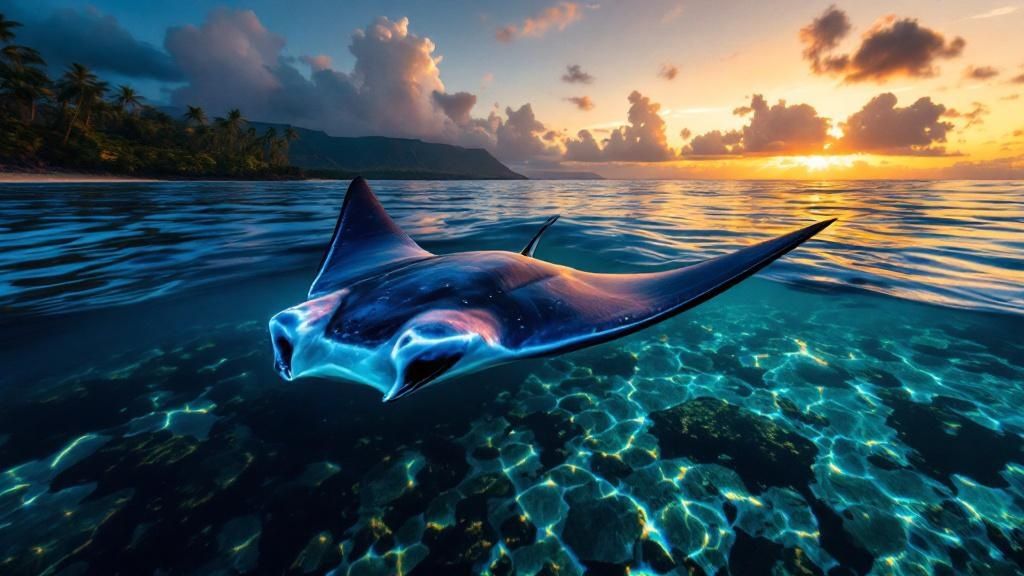
Picture this: you descend into the twilight ocean, find your spot on the sandy bottom, and just wait. There’s a quiet anticipation in the water. Then, a shadow emerges from the darkness, slowly transforming into a graceful giant with a wingspan of up to 16 feet. It glides effortlessly just above your head, its massive form lit up by a central pool of light.
This isn't just another dive. It's an otherworldly ballet and one of the most consistent manta ray encounters you can find anywhere on Earth.
This incredible spectacle is exactly what makes the Kona Manta Ray Dive a true bucket-list adventure. It’s the kind of experience that creates an unforgettable connection with marine life and, for many divers, completely redefines their relationship with the ocean.
What Makes Kona's Dive So Special
The real magic behind this dive comes from a unique blend of environmental factors right here along the Kona Coast. Nutrient-rich currents fuel an absolute feast of plankton—the primary food for these gentle giants—drawing huge numbers to the same spots, night after night.
Better yet, the dive itself is very accessible. We typically descend to shallow depths of only 30 to 40 feet, making it a safe and comfortable experience even for newer divers. All of this comes together to produce a remarkable 85-90% sighting success rate, offering some of the most dependable manta encounters in the world.
This isn't just another dive; it's a front-row seat to one of nature's most spectacular performances. You become part of a magical, moving spectacle that divers consistently rank as a lifetime highlight.
Choosing a top-tier operator like Kona Honu Divers means you're in expert hands. With a deep commitment to safety and marine conservation, their experienced crew sets the stage for a truly breathtaking encounter. They handle all the logistics so you can just relax and focus on the awe-inspiring moments unfolding right in front of you. You can learn more about what a manta ray night dive involves in our detailed guide.
How to Choose Your Manta Dive Adventure
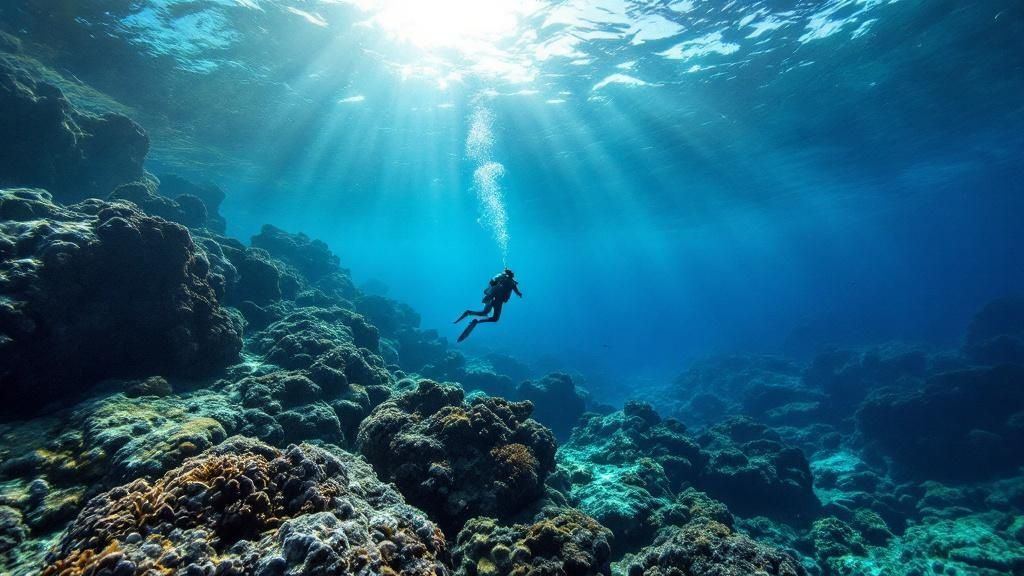
Not every manta ray experience in Kona is the same, and a little planning goes a long way toward creating that perfect underwater memory. The biggest decision you'll make right out of the gate is choosing your dive site. This single choice shapes the entire encounter, from the calmness of the water to how the mantas themselves behave.
Kona has truly perfected this adventure for the roughly 80,000 people who do it each year. The action is centered around two world-class sites: Manta Village and Manta Heaven.
Dive Site Showdown: Manta Village vs. Manta Heaven
Getting to know the two main locations is key to matching the experience with your comfort level and what you hope to see. Think of Manta Village as a cozy "underwater campfire," where divers settle in a circle on the sand and watch the mantas perform graceful loops overhead. It's known for being a more predictable and tranquil environment.
Manta Heaven, on the other hand, can be a bit more dynamic. It’s located near the airport and is slightly deeper. The potential for stronger currents means the experience often feels less like you're just observing the action and more like you're right in the middle of it. The mantas here often use the current to their advantage, which can lead to some incredibly close and exhilarating fly-bys.
To help you decide, here’s a quick breakdown of what makes each site unique.
Manta Village vs. Manta Heaven: A Quick Comparison
This table helps you quickly see the differences between Kona's two main manta ray dive sites. Use it to pick the best fit for your skill level and what you're looking for in an adventure.
| Feature | Manta Village (Garden Eel Cove) | Manta Heaven (Keahole Point) |
|---|---|---|
| Location | Original site, near Keauhou Bay | Near the Kona International Airport |
| Depth | Shallower, typically 25-35 feet | Slightly deeper, around 30-40 feet |
| Conditions | Generally calmer waters, more protected | Can experience stronger currents, more dynamic |
| Best For | Novice divers, snorkelers, and those preferring a predictable, calmer experience | Experienced divers who are comfortable with potential currents and want closer encounters |
| The "Vibe" | A classic, amphitheater-style viewing experience | An immersive, sometimes thrilling experience with mantas using currents for fly-bys |
| Manta Behavior | Graceful, looping patterns above the "campfire" of dive lights | More varied and active, often resulting in very close passes |
While both sites offer incredible encounters, your choice really comes down to personal preference. Do you want a chill, mesmerizing ballet or a more dynamic, edge-of-your-seat show? For a deeper dive into what makes this adventure so special, check out our guide on why you should go on a manta ray dive in Kona.
Snorkeling vs. Scuba Diving
Next up: deciding how you'll watch the show—from the surface or from the seafloor. Each option gives you a completely different, yet equally incredible, perspective.
-
Snorkeling: You'll be floating on the surface, holding onto a custom-made light board. These powerful lights draw in the plankton, which in turn brings the mantas right up to you. It gives you an amazing top-down view of their feeding ballet and is accessible to almost everyone, no certification needed.
-
Scuba Diving: If you're a certified diver, this is the way to go. You'll settle on the sandy bottom, about 30-40 feet down, and shine your light up. This provides a breathtaking, upward-looking view as these massive rays glide, barrel-roll, and swoop just inches above your head. It’s a truly immersive and awe-inspiring experience. You can browse scuba diving Kona, Hawaii tours to find the right one for you.
Choosing the right operator is just as important as choosing the site. A top-tier company puts safety first and strictly follows the Manta Ray Green List guidelines for ethical, non-invasive encounters. This ensures the well-being of these magnificent animals for years to come.
At the end of the day, the best manta ray dive kona adventure is the one that perfectly matches your skills and your dreams for the encounter. Whether you opt for the calm predictability of Manta Village or the wild energy of Manta Heaven, an unforgettable—and safe—experience is waiting for you.
Preparing for Your Manta Ray Night Dive
A truly spectacular manta ray experience actually starts long before you ever step foot on the boat. Getting yourself prepped properly means you'll be comfortable, confident, and ready to soak in every moment of this incredible adventure. From what you toss in your bag to what you eat for dinner, a few simple choices can make all the difference.
One of the first questions we always get is about what to wear. The water here in Kona is beautiful, but you'll be submerged at night for a good while. We find a 3mm or 5mm wetsuit is perfect for keeping most people warm and comfortable for the entire dive. Just as critical is what you have waiting for you afterward—a warm, dry towel and a sweatshirt or windbreaker are absolute must-haves for the boat ride back to the harbor. You'll thank me later.
Fueling Up and Calming Nerves
What you eat before you go matters more than you might think. Trust me, a heavy, greasy meal right before a night dive is a recipe for discomfort and can even bring on seasickness. Your best bet is to have a light meal or snack a couple of hours before your tour. This gives you plenty of energy without weighing you down or upsetting your stomach on the boat.
It’s also completely normal to have a few butterflies, especially if this is your first night dive. The key is to trust your guides and the process. The pre-dive briefing is easily the most important part of the entire tour. This is where the crew lays out every detail: the dive plan, safety procedures, and exactly how to interact with the mantas responsibly. Listen closely, ask any questions that pop into your head, and just remember you're in the hands of seasoned professionals.
Your main job as a diver is to be a calm, respectful observer. By remaining still on the seafloor and letting the mantas dictate the encounter, you contribute to a safe and magical experience for everyone.
For a really deep dive into what to expect, check out our full guide on what you should know about the Kona manta ray dive.
Tips for Underwater Photographers
Trying to capture the magic of the manta ray dive in Kona is a rewarding challenge. Getting great shots in low-light conditions just requires a little bit of planning.
- Camera Settings: A wide-angle lens is your best friend here; it’s the only way to capture the impressive wingspan of the mantas. You'll want to start with a higher ISO (think 800-1600) and a wide aperture (f/2.8-f/4) to let in as much precious light as possible.
- Positioning is Everything: Whatever you do, don't chase the mantas. The best shots happen when you find a good spot on the sand, get your settings dialed in, and simply let them come to you. This leads to more natural, breathtaking photos and, most importantly, respects the animals' space.
By thinking ahead just a little, you can set yourself up for an incredible and totally stress-free night dive. That way, you can focus on what's important: enjoying the underwater ballet unfolding right in front of your eyes.
Inside the Dive: The Underwater Ballet Unfolds
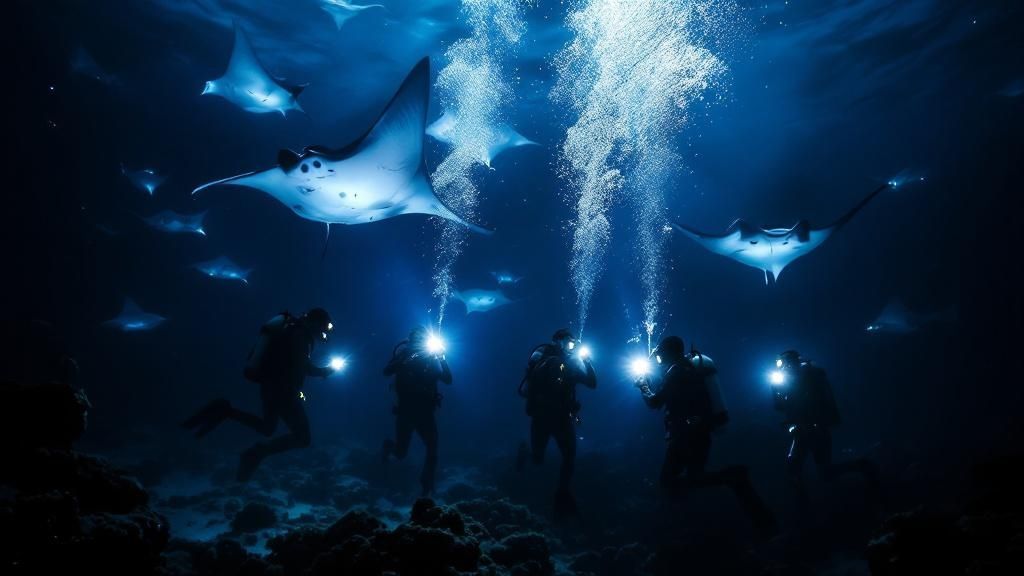
The moment you roll backward into the dark ocean, everything changes. Your senses kick into high gear as you descend, your dive light carving a path through the inky blackness. It’s a quiet, almost surreal feeling.
Down on the sandy bottom, around 30 to 40 feet deep, you’ll find your spot among the other divers. Everyone gets settled, then points their light straight up. Together, you create this incredible column of light piercing the dark water from below.
This collective beacon is basically a giant dinner bell. Almost instantly, you’ll see tiny, shimmering specks of plankton swarming into the beams. You've just helped set the table. This central "campfire" of light is the heart of the entire manta ray dive kona experience, signaling that the feast is ready.
There's a buzz of anticipation in the water as you wait. Then, it happens. A massive, ghost-like shape emerges from the darkness, gliding effortlessly into the illuminated arena. The first manta has arrived.
The underwater ballet has begun.
The Performance Begins
Watching these gentle giants feed is absolutely mesmerizing. They perform a series of breathtaking barrel rolls and swoops to scoop up as much plankton as possible. You’re a guest at their dinner party, and your only job is to sit back and enjoy the show.
You'll likely see a few signature moves:
- Graceful Swoops: The mantas glide just inches above your head. They get so close you can see the unique spot patterns on their bellies in perfect detail.
- Barrel Rolls: To maximize their meal, they perform these elegant, slow-motion barrel rolls, looping over and over again through the thickest clouds of food.
- Close Passes: Their curiosity might bring them incredibly close, but it’s crucial to stay completely still. They are in total control, navigating around you with unbelievable precision.
Your role here is simple: be a respectful, passive observer. You are part of the scenery. By staying put and just breathing, you allow the mantas to do their thing naturally, which makes the experience more authentic and magical for everyone.
A Deeper Connection
What's really cool is that every manta you see is a known individual to local researchers and divemasters. Thanks to a long-running citizen science project, the unique spot patterns on their undersides are used for identification, kind of like a human fingerprint.
Since 1991, this database has grown to include over 330 individual manta rays, with nearly 6,000 recorded encounters. You can actually look up the mantas you might meet and learn about this amazing research.
As more and more mantas join the spectacle, the scene transforms into a swirling, silent dance of giants. It’s an intimate, humbling experience that’s both thrilling and profoundly peaceful. This is the moment you came for—a front-row seat to one of nature’s greatest performances. Explore available manta ray dive tours to book your front-row seat.
Don’t Stop at the Mantas — Other Epic Kona Dives Await
While the **manta ray dive kona** is an absolute can’t-miss spectacle, it’s really just the opening act for what the Big Island’s underwater world has to offer. For divers looking to fill out their logbooks, Kona serves up a whole menu of thrilling experiences that show off its unique volcanic topography and vibrant marine life. The adventure doesn’t have to stop when the mantas glide off into the night.
Think of the manta dive as the headliner of a multi-day diving festival. Once you've seen the main act, there's a whole lineup of incredible supporting artists waiting for you, each offering a completely different kind of underwater magic.
The Kona Blackwater Dive: A Journey into the Abyss
If you're looking for a truly mind-bending night dive, nothing on Earth compares to the Kona Blackwater Dive. Forget everything you know about reef diving. Here, you'll find yourself drifting, suspended in the dark, open ocean over thousands of feet of water, witnessing one of the largest migrations on the planet.
Every single night, countless strange and beautiful creatures journey from the deep to the surface to feed. You'll come face-to-face with bizarre larval fish, translucent squids, and bioluminescent jellies that look like they're straight out of a sci-fi movie. It’s an experience that will completely redefine what you think a night dive can be. You can book this one-of-a-kind Blackwater Dive tour to see it for yourself.
Daytime Adventures: Lava Tubes and Pelagic Encounters
When the sun comes up, Kona's dramatic underwater landscapes take center stage. The island's volcanic origins have created a playground of arches, canyons, and intricate lava tubes just waiting to be explored. These incredible formations are home to a stunning array of marine life, including sharks, dolphins, and rare endemic species you won't find anywhere else on the planet. For divers with a few dives under their belt, these sites offer an exhilarating challenge. For more experienced diving opportunities, check out our advanced dive tour page.
Kona's diverse dive sites transform the Big Island from a single-attraction destination into a world-class, multi-day diving hub, offering wonders for every skill level.
There’s a different kind of thrill that comes from navigating these ancient structures. The feeling of swimming through a lava tube carved out by volcanic fire or peering over the edge into a deep canyon is an adventure in its own right. Kona Honu Divers offers fantastic advanced dive tours designed specifically for more experienced divers eager to explore these unique sites.
Kona truly has it all, from the mesmerizing grace of the manta rays to the alien world of the blackwater and the geological marvels of its daytime reefs. To plan your complete underwater itinerary, you can explore the full range of our scuba diving Kona tours.
And of course, if you’re getting ready for the main event, be sure to read our comprehensive guide on the Big Island manta ray night dive to make the most of your adventure.
Your Kona Manta Dive Questions Answered
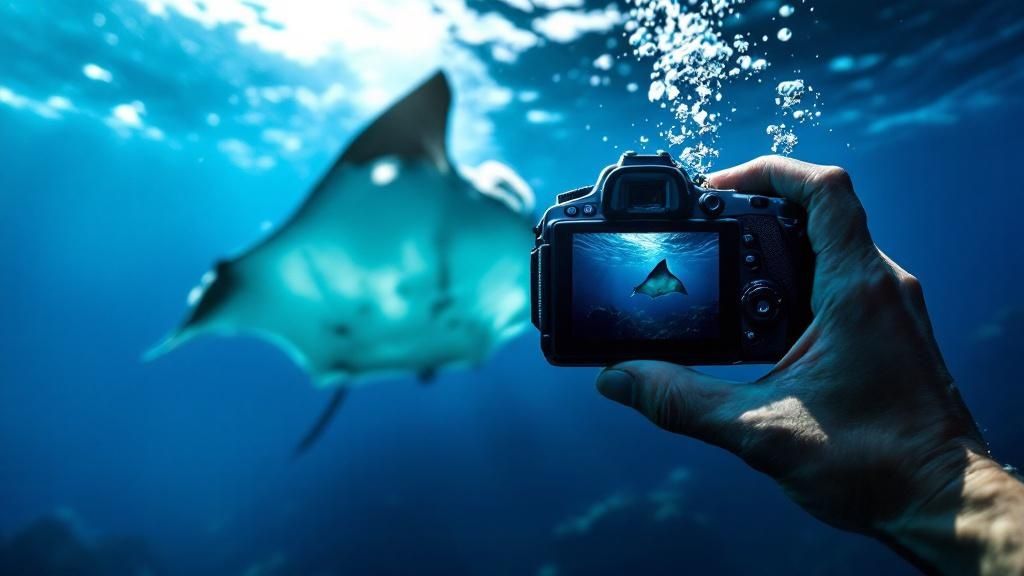
Even after doing all your research, it's totally normal to have a few last-minute questions popping into your head before you book a manta ray dive in Kona. This is a major highlight for any Big Island trip, so let's tackle some of the most common ones.
Getting these answers straight will let you focus on what really matters: the pure magic of watching these gentle giants perform their nightly ballet right in front of your mask.
Do I Need To Be Scuba Certified to See the Manta Rays?
Not at all! Snorkeling is an equally incredible—and super popular—way to experience the manta encounter. This opens up the adventure to just about everyone, no dive card required.
Snorkelers hang onto a custom-built light board that floats on the surface. These powerful lights are what attract the plankton, which in turn brings the mantas right up to the top. You get a stunning bird's-eye view of their feeding dance. It's a fantastic option for families or anyone not certified to dive.
Is the Manta Ray Night Dive Safe?
Yes, it's remarkably safe when you go with the right people. Reputable operators, like us at Kona Honu Divers, put safety above everything else. Every single tour is led by experienced, certified Divemasters who know these sites and procedures like the back of their hand.
The dive itself is pretty shallow, usually between 30-40 feet, which minimizes potential risks. Most importantly, the manta rays themselves are gentle giants. They're filter feeders with no teeth, stingers, or barbs, making them completely harmless to people. Just follow your guide's briefing, stay calm, and you're set for a secure and unforgettable night.
What Is the Best Time of Year to See Manta Rays in Kona?
Here’s the best part: you can see manta rays in Kona all year long! The local population doesn't migrate, so the sighting success rate stays consistently high—hovering around 90%—no matter when you visit.
The ocean is often a bit calmer and warmer between April and October, but the winter months still offer fantastic, reliable encounters. Just make sure you've got a good wetsuit for the slightly cooler water, and you're ready to go any time of year.
People always ask if they can touch the mantas. The answer is a firm no. Manta rays have a protective mucus coating on their skin that our touch can damage, leaving them vulnerable to dangerous infections. This entire experience is built around passive, respectful observation.
Ready to book this incredible adventure? You can see our available dates and secure your spot for the 2-Tank Manta Ray Dive or Snorkel here.
If you want to read more personal accounts and get a better feel for the experience, check out our guide on the manta ray night dive of Kona with Kona Honu Divers.