
Picture this: you're descending into the warm, dark Pacific Ocean. Suddenly, gentle giants with wingspans wider than a car appear, performing a silent, weightless ballet all around you. This is the world-famous Kona manta ray dive, an absolute bucket-list adventure that consistently ranks as one of the best night dives on the planet. It’s an underwater spectacle you will carry with you for a lifetime.
Experience Kona’s Legendary Manta Ray Dive
The Kona coast of the Big Island is more than just a stunning tropical backdrop; it’s the perfect stage for this nightly performance. The unique ecosystem here reliably attracts these magnificent creatures, giving divers and snorkelers an incredible opportunity to get up close. Unlike so many wildlife encounters that come down to sheer luck, this one is remarkably consistent.
So, what's the secret? It’s a fascinating mix of biology and some clever learned behavior. Nutrient-rich currents around the island create a concentrated soup of plankton, the mantas' favorite food. When dive operators shine powerful lights into the water, it becomes an irresistible, all-you-can-eat buffet that the mantas have learned to associate with an easy meal. The dive sites essentially become their go-to nightly restaurants. You can dive deeper into what makes the Kailua-Kona manta ray night dive so unforgettable in our detailed guide.
To give you a quick snapshot of what the experience involves, here’s a breakdown of the key details.
Kona Manta Ray Dive At a Glance
| Aspect | Details |
|---|---|
| Location | Kona Coast, Big Island of Hawaii |
| Typical Depth | 30 – 40 feet (Shallow and accessible) |
| Manta Population | Over 450 identified individuals |
| Sighting Chance | 85-90% on any given night |
| Best For | Certified divers of all levels, snorkelers |
| Experience | Passive observation of manta rays feeding on plankton attracted by lights |
This combination of factors makes it one of the most reliable and accessible big animal encounters anywhere in the world.
Your Expert Guides to the Underwater Ballet
Embarking on this adventure with a trusted, professional operator is absolutely critical for a safe and memorable trip. Kona Honu Divers has a stellar reputation for providing world-class experiences led by an expert crew that puts both guest safety and the well-being of the mantas first.
Their deep commitment to responsible tourism ensures the dive is as respectful to the marine environment as it is thrilling for everyone on board.
Ready to witness the magic for yourself? Don't wait to secure your spot for this unforgettable underwater show.
Choosing Your Manta Ray Adventure
Deciding to do a manta ray dive in Kona is the easy part. Figuring out where to go? That takes a little more inside knowledge. Not all manta encounters are created equal, and the perfect spot for you really comes down to your comfort in the water and what you’re hoping to experience.
The two legendary sites here in Kona are Manta Village and Manta Heaven. Each one has its own distinct flavor, and knowing the difference is the key to planning an unforgettable night. Your choice will shape everything from the ocean conditions to the kind of manta behavior you’ll get to see up close. For a deeper look at what makes this whole experience so special, check out why you should go on a manta ray dive in Kona.
Manta Village: The Classic Choice
Manta Village, right near Keauhou Bay, is the OG—the original manta ray night dive site. It’s usually our top recommendation for first-timers, families, and anyone who prefers to snorkel. The big draws here are the calmer conditions and shallower water, typically sitting between 25 to 35 feet.
Because it's tucked into a sheltered bay, it's well-protected from the strong currents you can get in the open ocean. This makes for a much more predictable and relaxing environment. Divers can comfortably kneel on the sandy bottom and just watch the show unfold above, which is perfect if you're new to night diving.
Manta Village is famous for being incredibly consistent. You might see a slightly smaller group of mantas than at the other site, but the odds of seeing them are exceptionally high. It's a fantastic bet for an incredible night.
Manta Heaven: For the Seasoned Diver
If you’re a more experienced diver or an underwater photographer, Manta Heaven offers a more dynamic and, frankly, more thrilling environment. Located a bit further north near the airport, this site is deeper and can sometimes have stronger currents. But that's part of the appeal—these conditions often bring the mantas gliding in much closer to the ocean floor for truly intimate encounters.
The varied topography and potential for larger groups of mantas make it a favorite for divers looking for unique photographic angles and a bit more of an adventure. Its popularity is huge, contributing to the roughly 80,000 people who join Kona's manta tours every single year.
No matter which spot you pick, the expert guides at Kona Honu Divers will make sure you have an exceptional and safe experience, putting you in the perfect position for the underwater ballet.
What to Expect on Your Manta Dive
The buzz of anticipation is in the air from the second you step on the boat. As you head out to the dive site, the sun starts to dip low, painting the sky with those incredible Hawaiian sunset colors. This isn't just a boat ride—it's the opening act for an experience that will stick with you forever.
Before you even think about getting in the water, your guides will walk you through a detailed pre-dive briefing. This is more than just a quick rundown; it's a crucial part of making sure both you and the mantas stay safe. They'll cover everything from how to get in and out of the water to the golden rules of being a respectful observer in their world.
The Underwater Stage Is Set
Once you arrive at the spot, you’ll see the unique setup for this underwater performance. If you’re diving, you'll make a controlled descent to the sandy bottom, usually a comfortable 30 to 40 feet deep. Down there, you'll find a spot to kneel, becoming part of a semi-circle with your fellow divers.
Up on the surface, snorkelers will be holding onto a specially designed float board. Both the divers' lights and the snorkelers' board are rigged with powerful lights pointing straight down. The goal? To attract a massive cloud of plankton, which is exactly what the mantas are here to eat. If you want a deep dive into how it all works, you can learn more about what the manta ray night dive is.
This array of lights creates a mesmerizing underwater arena, which we all affectionately call "the campfire." It's basically a giant dinner bell, calling these gentle giants in from the darkness for their nightly feast.
As the lights cut through the water, you’ll see a blizzard of tiny plankton swarm into the beams. The energy in the water is palpable while you wait. And then it happens—a shadow emerges from the deep blue, growing larger and more defined until the first majestic manta ray glides gracefully into view.
The Main Event: An Unforgettable Ballet
What happens next is nothing short of breathtaking. These giant manta rays, some with wingspans stretching over 12 feet, perform a silent, elegant ballet just inches above your head. They swoop and soar through the light beams, pulling off graceful barrel rolls with their cavernous mouths wide open to filter the plankton-rich water.
You're simply a spectator in their world, witnessing a completely natural feeding behavior that feels like a perfectly choreographed show. It's an incredibly serene and powerful experience, watching these massive creatures move with an effortless grace that just defies their size. After about 45 minutes of pure awe, your guide will signal for a slow, safe ascent, leaving you with memories that will last a lifetime.
The Science Behind This Underwater Ballet

Watching Kona’s manta rays gather every night feels like witnessing pure magic. But this incredible spectacle is actually a brilliant combination of ecology and some very clever animal behavior. The Big Island’s unique underwater landscape and strong currents create the perfect conditions for a nightly buffet of zooplankton, the mantas' favorite meal. It's a reliable feast served up by nature, night after night.
The real secret sauce, though, is something called behavioral conditioning. Over many years, Kona's resident mantas have learned to connect the bright lights from our dive boats with an easy, all-you-can-eat dinner. As soon as the lights switch on, plankton swarm to them, and the mantas know it's time to show up. This learned behavior has basically turned our dive sites into their go-to underwater restaurants.
Fingerprinting the Gentle Giants
What really makes the manta ray dive Kona experience so personal is that we know these aren't just random visitors; they're our well-documented neighbors. For decades, scientists and conservationists have been studying these animals, and they’ve come up with a fantastic, non-invasive way to tell them apart.
Every single manta ray has a unique pattern of black spots on its white belly. Just like a human fingerprint, no two are identical. By snapping photos of their undersides, researchers can identify and track individual mantas, giving them names and following their life stories. This photo ID system is the backbone of manta conservation in Hawaii. It's even helped us figure out the best time of year to see manta rays in Kona by showing us just how consistently they stick around.
Research and Conservation Efforts
This long-term tracking gives us priceless information. Research going all the way back to 1991 has carefully documented the movements of Kona's mantas, confirming that they are incredibly loyal to our three main dive sites. Their behavior is driven by that learned connection between artificial light and abundant plankton, which keeps them coming back for more.
This ongoing research has created a massive database with almost 6,000 documented encounters, helping us understand everything from population size and reproductive cycles to migration habits.
When you join a professionally guided manta ray dive Kona tour, you're not just a tourist watching from the sidelines. You're actually helping with this vital citizen science. The photos and observations from your dive contribute directly to the research that protects this amazing natural wonder, making sure the underwater ballet continues for generations to come.
Diving Safely and Responsibly with Manta Rays
When you slip into the water for this experience, remember that the safety and well-being of both the divers and the manta rays are the absolute top priority. The whole encounter hinges on one simple but critical idea: passive observation.
Think of it this way: you're a quiet guest invited into their magnificent underwater dining room. The best way to show your respect is to just watch the incredible ballet unfold without getting involved.
The golden rule is to look but never, ever touch. Manta rays are covered in a thin, protective mucus layer. It’s their first line of defense against nasty bacteria and infections. Touching them, even with the lightest brush, can strip away this crucial coating and leave them vulnerable to getting sick.
Rules of Engagement
To keep everyone safe and protect the mantas, all the operators follow a strict set of guidelines. Sticking to these rules isn't just about this one dive; it's about making sure this amazing encounter is around for years to come. Knowing them ahead of time makes you a partner in conservation.
- Find Your Spot: If you're diving, you'll stay on or near the sandy bottom. This leaves the whole water column open for the mantas to swoop and glide. Snorkelers hang out on the surface, holding onto a specially designed light float.
- Don't Chase: Never, ever chase, follow, or try to ride a manta. Just relax and let them come to you. Their natural curiosity often brings them in for breathtakingly close passes.
- Light Discipline: Divers should point their lights straight up toward the surface, creating a column of light that attracts plankton. Snorkelers' lights will be built into their float, pointing down.
- Mind Your Bubbles: When a manta is coming in for a close pass, try to time your breathing so you don't exhale a huge stream of bubbles right in its face.
Following these simple rules helps create a calm, predictable environment where the mantas feel comfortable and safe to feed, just like they have for decades.
Choosing a Responsible Operator
The single best thing you can do to ensure an ethical experience is to book your manta ray dive kona tour with a company that puts marine conservation first. Good operators, like Kona Honu Divers, are deeply committed to these standards. They give thorough briefings and have expert guides in the water with you the whole time.
Their whole operation is built on a foundation of safety and sustainability. You can get a feel for what to expect and learn more about the specifics of the manta ray night dive in Hawaii when you go with a top-tier crew.
Exploring More of Kona’s Underwater World
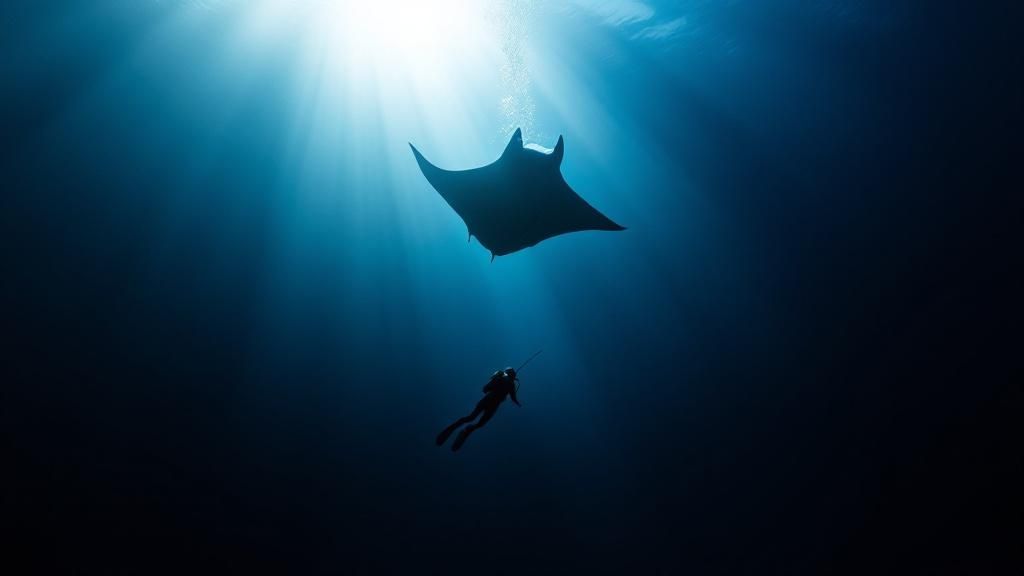
While the manta ray dive Kona is an absolute can't-miss experience, the Big Island's underwater playground doesn't close up shop once the mantas glide away. Kona is a true world-class diving destination, and there’s a whole universe of adventure waiting just beneath the waves for every kind of diver.
The ocean here serves up all sorts of incredible wildlife encounters. You can find truly memorable whale watching experiences that introduce you to different gentle giants of the deep. But for divers seeking something profoundly unique, Kona offers a thrill you literally can't find anywhere else.
The Famous Kona Blackwater Dive
Picture this: you're drifting in the deep, dark, open ocean, miles from shore and suspended over thousands of feet of inky black water. This is the Kona Blackwater Dive, a surreal experience where you come face-to-face with the bizarre and beautiful bioluminescent creatures that migrate from the abyss toward the surface every single night.
These are alien-like animals rarely seen by human eyes, making this one of the most unique night dives you will ever do. It’s a trip into a mysterious world of floating light and deep shadow. You can get all the details on this incredible adventure over on the Blackwater Dive tour page.
Advanced Dives for Experienced Divers
If you're an experienced diver looking for a bit more of a challenge, Kona’s coastline is a geological wonderland. Advanced charters head out to explore dramatic lava tubes, stunning underwater arches, and pristine deep-water coral reefs that are just teeming with life.
These dives take you to more remote sites where you can explore unique volcanic formations and encounter different species, including sharks, eagle rays, and massive schools of fish.
These trips are perfect for certified divers hoping to push their skills and see the wilder side of Kona’s underwater world. Check out the options for these amazing charters on the advanced dive tour page. From mantas to the deep abyss, Kona really has it all. See the full lineup of Kona diving tours available to find your next adventure.
Your Kona Manta Dive Questions, Answered
You've probably got a few questions buzzing around your head as you plan this incredible trip. That's a good thing! Let's get them all answered so you can feel completely ready for one of the most memorable nights of your life.
Do I Need to Be Scuba Certified to See the Manta Rays?
Nope, not at all! While the scuba dive is an amazing, bottom-up view, the snorkeling experience is just as breathtaking.
Snorkelers hang on to a specially designed floating light board right on the surface. These bright lights attract the plankton, and the mantas swim right up to feed, gliding and barrel-rolling just inches beneath you. It’s an incredible, face-to-face encounter that’s open to almost everyone.
What Is the Best Time of Year for the Manta Ray Dive?
Here’s the great news: the manta ray dive Kona is a year-round adventure. The local manta population doesn't migrate, so you'll find them here every single month. We see a success rate of over 90% throughout the year.
If you're aiming for the most comfortable conditions, plan your trip between April and October. The ocean is typically calmer and the water is a bit warmer then. But honestly, the winter months are just as magical, so you can book with confidence anytime.
Is the Manta Ray Night Dive Safe?
Absolutely. Safety is the top priority for any reputable, professional operator like Kona Honu Divers. The whole experience is built around strict safety protocols, from the detailed pre-dive briefing to the expert guides who are right there in the water with you.
As for the stars of the show, manta rays are true gentle giants. They don't have the stingers that their stingray cousins do, and they pose no threat to people. Your only job is to be a passive observer—just relax and enjoy the show without touching these amazing animals.
Ready for an experience that will stay with you forever? Book your adventure with the experts at Kona Honu Divers. Take a look at their world-famous manta ray dive tours and prepare to be amazed.