
If there's one experience that defines diving on the Big Island, it's the world-famous manta ray dive in Kona. This isn't just another dive; it's a true bucket-list adventure that delivers a practically guaranteed encounter with majestic reef mantas. Every single night, these gentle giants put on a show as they feed on plankton, drawn to specially placed lights. It’s easily one of the most reliable and awe-inspiring wildlife encounters you can find anywhere on the planet.
Your First Kona Manta Ray Night Dive
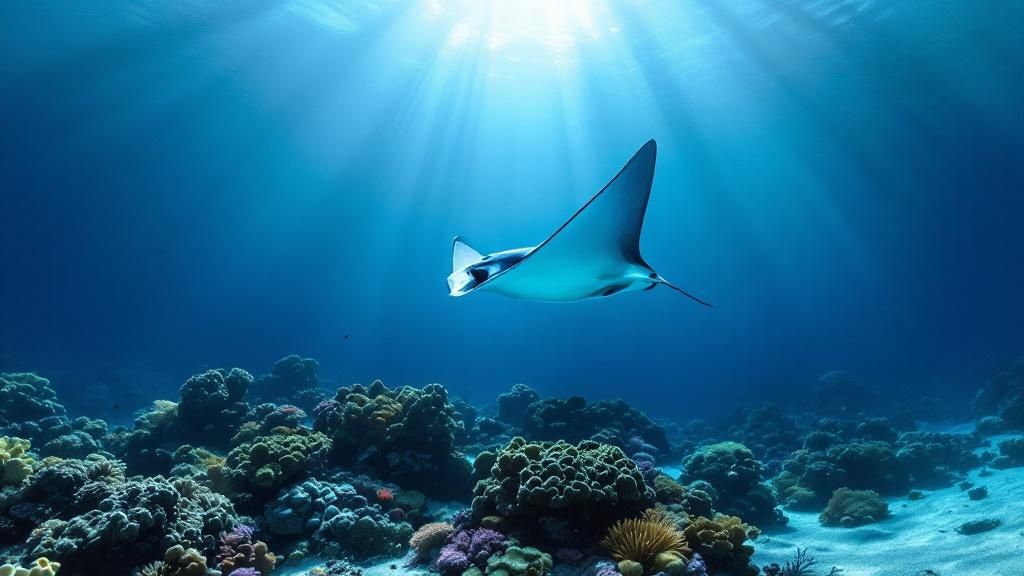
Picture this: You slip into the warm, dark Pacific waters just as the sun disappears below the horizon. Your guide leads you down to the sandy bottom, around 35 feet below the surface. There, a circle of powerful lights points upward, creating a brilliant stage in the deep blue.
Then, out of the darkness, they appear. Silent, graceful giants emerge, some with wingspans stretching over 12 feet wide. They swoop and soar through the light beams, performing an otherworldly ballet just inches above your head. This is the manta ray dive Kona experience, a spectacle that has captivated divers from every corner of the globe for years.
What makes this encounter so reliable? It's a fascinating and unique relationship that has developed over decades. The story goes that a local hotel used to keep its oceanfront lights on at night. These lights attracted swarms of plankton—the primary food for manta rays. The local rays quickly figured out that the lights meant an easy, all-you-can-eat buffet. Today, dive operators have perfected this by setting up an underwater "campfire" of lights, ensuring the mantas show up for dinner night after night.
What to Expect on Your Dive
This adventure is far more than just getting in the water; it's a fully guided, educational experience from start to finish. It all begins with a short and scenic boat ride to one of Kona’s prime manta viewing sites. Along the way, the crew will give you a detailed briefing, not just on safety procedures but also on the fascinating biology and behavior of these gentle creatures.
Once you arrive at the site, you'll make your descent to a designated viewing area on the sand. From there, you get a front-row seat to one of nature's greatest shows. The entire experience is built around passive observation, which is key to keeping it safe and sustainable. This means:
- No Touching: Manta rays have a delicate, protective mucous layer on their skin. Touching them, even accidentally, can strip this layer and leave them vulnerable to infection.
- Stay on the Bottom: Divers remain stationary on the ocean floor. This creates a predictable environment and keeps the water column clear, giving the mantas plenty of room to maneuver safely.
- Lights Point Up: You’ll either be given a light or position your own to aim upward. This attracts the plankton, which in turn brings the mantas directly overhead for an unbelievable view.
This responsible, "look but don't touch" approach, championed by operators like Kona Honu Divers, ensures the encounter is safe and enjoyable for both the animals and the divers. The result is a profoundly moving experience that sticks with you long after you surface.
A Quick Guide to Your Kona Manta Ray Experience
To help you plan, here's a quick summary of what to expect on this incredible adventure.
| Aspect | Details |
|---|---|
| Who Can Go? | Both certified scuba divers and snorkelers can participate. |
| Best Time | The tour runs year-round, every night. The mantas are always here! |
| Water Depth | Divers typically settle on the sandy bottom at 25-40 feet. |
| Water Temperature | Varies from 75°F in winter to 82°F in summer. A 3mm or 5mm wetsuit is recommended. |
| What You'll See | Reef Manta Rays (Mobula alfredi) with wingspans from 6 to 14 feet. |
| Guarantees? | While wildlife is unpredictable, sighting rates are incredibly high, often over 90%. |
| Key Rule | Passive observation only. Do not touch, chase, or impede the mantas. |
This table covers the basics, but the real magic is something you have to see for yourself. Ready to witness the underwater ballet? Our manta ray dive tours are the perfect way to start your adventure.
How Did This Manta Ray Night Dive Even Happen?
The nightly underwater ballet you see on the manta ray dive Kona isn’t some ancient, mystical ritual. It's actually a fascinating, and relatively recent, example of learned behavior that has unfolded over the past few decades. This whole spectacle is a perfect storm of marine biology and pure, accidental conditioning.
It all started pretty simply. Years ago, a hotel on the coast decided to light up its oceanfront property at night. Those bright lights attracted huge swarms of tiny zooplankton, which just so happen to be the favorite meal of manta rays. The local mantas, being incredibly smart and always on the look for an easy meal, quickly put two and two together: bright light means a buffet is open. And just like that, a reliable feeding spot was created, giving birth to one of the most incredible wildlife encounters on the planet.
Today, dive operators have perfected this process. We create what I like to call an "underwater campfire" by submerging powerful, safe lights on the seafloor. This simple setup draws in the plankton, and true to form, the mantas show up for dinner. This learned behavior is now so deeply ingrained that Kona has become the world's most reliable place to see manta rays.
Hawaii’s Gentle Giants
The waters off the Big Island are home to two manta ray species, but the celebrity of the Kona night dive is the Reef Manta Ray (Mobula alfredi). These are the second-largest ray species in the world, boasting impressive "wingspans" that can stretch up to 18 feet. The ones we typically see here in Kona are still massive, averaging a solid 12 feet from tip to tip.
Despite their imposing size, these creatures are the definition of gentle giants. They don't have the stinging barb their stingray cousins are known for, making them completely harmless to people. They are filter feeders, elegantly soaring through the water with their mouths wide open to gulp down huge quantities of microscopic plankton.
What's just as impressive is their intelligence. Manta rays have the largest brain-to-body size ratio of any fish, which explains their complex social lives and remarkable problem-solving skills. It’s this intelligence that allowed them to so quickly learn and adapt to the feeding opportunity the lights created. If you want a deeper dive into the logistics of the trip, you can learn more about what the manta ray night dive involves in our full guide.
Your Dive Is Also Citizen Science
Every single manta ray in Kona has a unique pattern of black spots on its white belly, which works just like a human fingerprint. This is fantastic news for scientists and conservation groups because it allows them to identify, track, and monitor individual rays. They can keep tabs on their health, migration patterns, and the overall population. So, your manta ray dive in Kona is much more than just an amazing tour—you're actively participating in citizen science.
Since 1991, an ongoing project has been cataloging our local manta population using these distinct spot patterns. This incredible database, which includes records of nearly 6,000 reported encounters, is vital for protecting these magnificent animals. By recognizing specific individuals—some of whom have been sighted consistently for decades—researchers gather priceless information about their life cycles and what we need to do to conserve them. You can even browse through the massive collection of manta sightings and see individual ray profiles for yourself at MantaRays.info.
Choosing Your Manta Adventure: Dive or Snorkel?
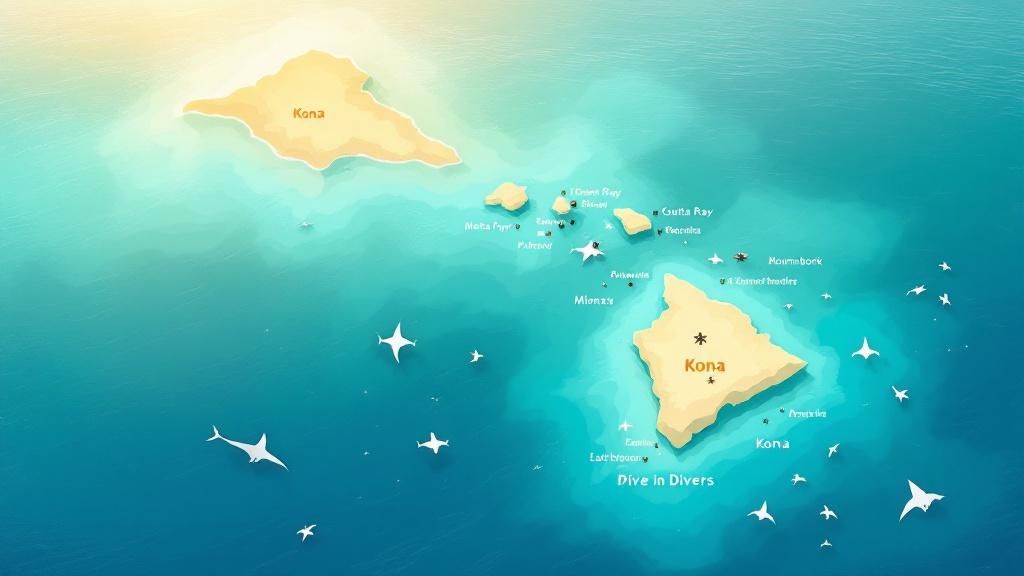
One of the greatest things about the Kona manta ray experience is that almost anyone can do it. You absolutely don’t need to be a certified scuba diver to witness the magic. Both diving and snorkeling offer unbelievable, front-row seats to the nightly ballet, so your choice really just depends on your comfort in the water and the perspective you're after.
If you're a certified diver, your adventure involves a descent to the sandy ocean floor, usually around 35 feet deep. You’ll settle in, aim your dive light up toward the surface, and prepare for the show. From this unique vantage point, you get to see the majestic mantas as massive, graceful silhouettes gliding right over your head. It’s a truly humbling view.
For snorkelers, the experience is just as incredible but from a different angle. You'll float on the surface, holding onto a specially designed light board. These powerful lights beam down into the water, attracting the plankton that the mantas feed on. The result? The mantas come right up to the surface, performing barrel rolls and feeding just inches below you. It's an amazing bird's-eye view of the action.
You can check out the specifics of our night manta ray snorkel tours to see exactly how it works.
Dive Site Showdown: Manta Village vs. Manta Heaven
Kona is the undisputed global capital for manta ray encounters, drawing about 80,000 people every year for this very reason. The action is concentrated in two primary locations: "Manta Village" and "Manta Heaven." While both deliver unforgettable experiences, they each offer something a little different.
- Manta Village (Keauhou Bay): This is the classic, world-famous site where it all began. It’s shallower, with a calm, sandy bottom that makes it perfect for snorkelers and divers of all levels, including beginners. Its protected position inside the bay usually means calmer, gentler conditions.
- Manta Heaven (near Kona Airport): Also known as Garden Eel Cove, this site is typically a bit deeper and can have more current. For more experienced divers, this often translates into more dynamic and thrillingly close encounters, making it a favorite for those seeking an extra dose of adventure. Check out our advanced dive tour page for more opportunities.
Here at Kona Honu Divers, we operate at both of these iconic sites. This flexibility allows us to choose the best possible location on any given night based on ocean conditions, ensuring you have a fantastic and safe experience. No matter which adventure you pick, you're setting yourself up for a night you’ll never forget.
Your Manta Tour with Kona Honu Divers
Knowing what to expect on your manta ray dive can make all the difference, turning a good trip into a truly incredible one. When you join us at Kona Honu Divers, we’ve fine-tuned every part of the experience for your safety, comfort, and, of course, to maximize the sheer wonder of it all. We want you to feel confident and excited for the amazing encounter that awaits.
It all starts at the harbor with a warm welcome from our professional crew. We'll get you checked in and make sure all your gear fits just right. It doesn't matter if you're a veteran diver with thousands of hours logged or a snorkeler getting your fins wet for the first time—we take the time to ensure you’re perfectly set up.
Once you’re settled on our spacious boat, it’s time to relax and enjoy the ride out to the site. Along the way, our guides will give you a full briefing. This isn't just a boring list of dos and don'ts; it's a fascinating look into the lives of the manta rays you're about to meet. We'll talk about their behavior, the fragile ecosystem we're visiting, and our strict safety protocols. A key part of this is learning how to be a passive observer, which ensures we can keep having these respectful, sustainable interactions for years to come. You can find out more about what our Kona, Hawaii manta ray night dive includes right on our website.
The Famous Underwater Campfire
The real magic happens around what we call the "underwater campfire." It’s our nickname for the powerful, custom-designed light box our guides place on the ocean floor.
Think of this bright circle of light as a massive bug zapper, but for plankton. It attracts a dense cloud of these tiny organisms, which happen to be a manta ray’s favorite meal. The mantas then swoop in for an all-you-can-eat buffet, putting on the graceful, acrobatic show you came all this way to see.
For divers, this means you'll have a comfortable, front-row seat on the sandy bottom, looking up at the action. Snorkelers get their own version of the show. We use a custom-built float on the surface with lights that shine down, drawing the mantas right up toward you. It’s a simple concept, but the result is absolutely breathtaking. Our guests consistently tell us that our attention to detail makes for a world-class, safe, and unforgettable experience.
From the detailed briefing to the expert guidance you'll receive in the water, we’ve got every step covered. We manage all the details so you can simply lose yourself in the majestic underwater ballet of these gentle giants.
How to Be a Responsible Manta Viewer
The future of the Kona manta ray dive, this absolutely incredible experience, really does depend on us. When you sign up for this adventure, you're not just a tourist; you're stepping into the role of a temporary guardian for these amazing animals. The number one rule is simple: passive observation. It's less of a rule and more of a pact we make to protect the mantas and their home.
The best way to think about it is that you're a visitor in their underwater dining room. The most critical guideline, above all else, is to never, ever touch a manta ray. Their skin is covered in a delicate mucus layer, which is their primary defense against nasty bacteria. If we touch them, we can rub off that protective slime and leave them susceptible to dangerous infections.
The Rules of Engagement
Every professional dive operator has a clear set of rules to keep both you and the mantas safe. These aren't just suggestions—they're mandatory for the well-being of the animals and the long-term health of this unique encounter.
- Divers on the Bottom: If you're scuba diving, you'll be settled on the sandy bottom. This creates a stable, predictable "floor" for the show, keeping the main water column clear for the mantas to swoop and feed above you.
- Snorkelers on the Surface: Snorkelers will hang out on the surface, usually holding onto a custom-built float or light board. It's important not to dive down into the feeding frenzy, as this can startle the mantas and create a safety hazard.
- Lights Point Up (or Down): As a diver, you'll point your dive light straight up toward the surface. Snorkelers, on the other hand, will have lights on their boards pointing down. This creates a brilliant "plankton sandwich" effect, concentrating the food source and keeping the mantas feeding safely in the middle.
Following these simple steps ensures the manta ray dive in Kona remains a sustainable and truly magical experience for years to come. You can learn more about why you should go on a manta ray dive and just how special these encounters are.
The manta ray night dive is a big deal for the Kona community, bringing in over $2.5 million in revenue every year. Because these animals are so valuable—and vulnerable—Hawaii passed a law on June 5th, 2009, making it illegal to knowingly capture or kill manta rays in state waters. This crucial protection helps conserve the local population and ensures the dive operations that depend on them can continue. You can learn more about the local conservation efforts and their amazing work.
Exploring More Dives Around Kona
While the manta ray dive in Kona is an absolute can't-miss highlight, it’s really just the beginning of what the Big Island’s underwater world has to offer. The island's volcanic origins have sculpted a dramatic and truly unique underwater landscape, creating a genuine playground for divers of every skill level.
Think of it as exploring a submerged mountain range. You’ll find ancient lava tubes that have morphed into incredible swim-through caverns, breathtaking arches carved by millennia of ocean currents, and vibrant coral reefs absolutely teeming with life. Every dive reveals another facet of Hawaii's raw, natural beauty. At Kona Honu Divers, we live to show you the full spectrum of what Kona has to offer, and our guests consistently rave about our knowledgeable guides and unwavering commitment to safety.
The Thrilling Kona Blackwater Dive
For a completely different kind of adventure that stands in stark contrast to the manta ray spectacle, you have to consider the world-famous Kona Blackwater Dive. This isn't your typical reef exploration. It's about drifting in the deep, open ocean at night, safely tethered to the boat.
As you float in the darkness, you're witnessing one of the planet's largest migrations. Bizarre and beautiful deep-sea creatures, many of them bioluminescent, rise from the crushing depths toward the surface to feed. It feels like a journey to another planet, encountering alien-like lifeforms you simply won't see anywhere else.
This highly specialized dive is a must for any adventurous spirit looking for an unforgettable thrill. You can learn more about this one-of-a-kind experience on our Blackwater Dive tour page. If you're planning your trip and staying nearby, check out our helpful guide on the manta ray experience near Waikoloa Village to help with the logistics.
From our signature two-tank morning trips to advanced charters and the legendary blackwater dives, we have an experience for every diver's passion. Let Kona Honu Divers be your guide to all the underwater expeditions the Big Island has to offer. Our full range of Kona scuba diving tours are ready and waiting.
Common Questions About the Manta Ray Dive
Even the most seasoned divers have questions before a new adventure, and when it comes to something as special as the Kona manta ray dive, it’s smart to be prepared. Let's tackle some of the most common things people ask so you can head out on the water with total confidence.
Is the Manta Ray Dive in Kona Safe?
Yes, it’s remarkably safe, especially when you're with a professional crew that prioritizes safety above all else. Think of manta rays as gentle giants. They're filter feeders, so they don't have teeth, stingers, or barbs—they are completely harmless to people.
Our guides are sticklers for the rules, but for good reason. We enforce a strict "passive observation" policy, which basically means we look, but we don't touch. This keeps both you and the mantas safe and ensures the experience remains a respectful one.
When Is the Best Time of Year to See Manta Rays?
Here’s the great news: any time is a good time! Kona’s resident manta ray population sticks around all year long, so you don’t have to worry about a migration season. They're always here.
While the ocean is often glassiest from about April through October, the chances of seeing mantas are consistently high no matter the month.
You can book your manta ray dive tour for any month, knowing you have an excellent shot at a spectacular show.
Do I Need to Be Scuba Certified?
Nope, you don't need a scuba certification to have an incredible experience. Snorkeling offers an equally amazing, front-row seat from the surface.
Snorkelers hold onto a large, custom-built light board that floats on the water. This light attracts the plankton, and the plankton brings the mantas right up to you. It's a fantastic way to get face-to-face with these animals, making the tour accessible to almost everyone.
Is a Manta Ray Sighting Guaranteed?
This is probably the most common question we get. Since mantas are wild animals, no one can ever give a 100% guarantee. However, the Kona dive sites have an unbelievably high success rate—we're talking over 90% throughout the year. Our crew has spent years learning the patterns and behaviors of our local mantas, and we use that knowledge to put you in the best possible spot for a magical encounter.
Ready to see the underwater ballet for yourself?