
Picture this: you’re sinking into the warm, dark Pacific waters off the coast of Hawaii. Suddenly, giant, graceful shadows begin to materialize, gliding just inches above you. It’s not a dream—it’s the world-famous manta ray dive in Kona, a true bucket-list experience for anyone who loves the ocean. The magic here is the incredible reliability of the sightings, combined with a safe, sustainable approach that makes it one of the most celebrated wildlife encounters on the planet.
What Makes the Kona Manta Ray Dive So Unforgettable?
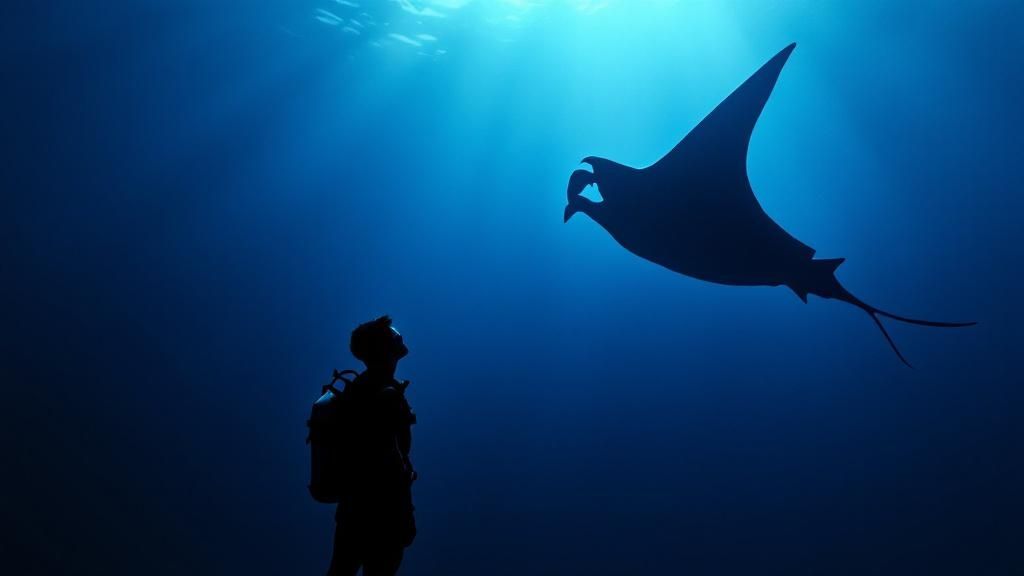
The Kona coast of the Big Island is known worldwide for one of the most consistent and jaw-dropping wildlife interactions you can find. In most dive destinations, a manta sighting is a happy accident, a stroke of good luck. In Kona, seeing these gentle giants up close is practically a guarantee, which has cemented the manta ray dive kona as a legendary adventure.
So, what’s the secret? It’s actually a brilliantly simple concept that has been refined over decades. Years ago, locals noticed that bright lights shining on the water at night attracted massive clouds of plankton—the favorite meal of manta rays. From that observation, local dive operators engineered a spectacular and sustainable nightly event.
They create what we affectionately call an underwater "campfire." Divers settle in a circle on the sandy ocean floor, about 35 feet down, and point their powerful dive lights straight up. This pillar of light quickly becomes an all-you-can-eat buffet for plankton, and in turn, the mantas swoop in for their dinner. The result is a mesmerizing, silent ballet performed right in front of you.
An Experience Built on Respect
What truly elevates the Kona manta dive is the profound respect that the operators have for the mantas themselves. Top-tier companies like Kona Honu Divers have perfected a passive viewing model. There’s no chasing, no touching, and no luring. Instead, divers and snorkelers become a temporary, quiet part of the seascape, allowing the mantas to approach entirely on their own terms. It’s this non-invasive approach that keeps the animals comfortable and ensures they keep coming back, night after night.
The sheer scale of this operation is impressive. As one of Hawaii’s most popular activities, it draws around 80,000 people each year to the main sites, Manta Village and Manta Heaven. With a success rate that consistently hovers between 80% and 90% year-round, it's easy to see why so many visitors trust this will be the highlight of their trip. You can dive deeper into these impressive manta ray statistics and what makes the sites so reliable.
The feeling is almost impossible to describe. You're kneeling on the ocean floor as a creature with a 12-foot wingspan performs graceful barrel rolls just over your head—so close you feel you could reach out and touch it (but you absolutely don't!). It’s a powerful, humbling, and unforgettable connection with the natural world.
Kona’s unique geography, combined with the dedication of its local diving community, has created the perfect conditions for this magical experience. If you’re looking at any diving tours in Kona, the manta ray night dive isn’t just an option; it’s an absolute must-do. You can book one of the most highly-rated manta ray dive tours here.
Choosing Your Ideal Manta Dive Site
When you’re planning your Kona manta ray night dive, you’ll quickly discover there are two primary spots everyone talks about: Manta Village and Manta Heaven. What most people don't realize is that these sites offer completely different experiences. Picking the right one for your skill level and what you hope to see is the first step to an unforgettable night.
So, let's get into it.
Manta Village vs. Manta Heaven: What’s the Real Difference?
Most operators will take you to one of two locations. Understanding the nuances between them is key.
Manta Village (Keauhou Bay)
This is the classic, world-famous manta spot. Tucked inside the protected waters of Keauhou Bay, it's known for being incredibly reliable. The conditions are typically calm and the dive site itself is relatively shallow, usually around 25 to 35 feet.
Because it's so accessible and predictable, Manta Village is a fantastic choice for first-time night divers, snorkelers, and anyone who might be a bit nervous. It's where you'll often see that famous "manta ballet," with several rays gliding and looping through the light beams. It’s a truly mesmerizing spectacle.
Manta Heaven (near the Airport)
If you're a more seasoned diver looking for something a bit more dynamic, Manta Heaven might be calling your name. Located further north, this site is more exposed to the open ocean. Check out advanced dive tours for opportunities like this.
The depth here is a little greater, sitting around 35 to 50 feet, and you can encounter stronger currents. This wilder environment often leads to some seriously thrilling encounters. Think dramatic, up-close fly-bys and jaw-dropping barrel rolls right over your head. It’s a favorite for underwater photographers for a reason.
Insider Tip: If you're a photographer or an advanced diver craving that extra adrenaline, the conditions at Manta Heaven are hard to beat. The potential for more active manta behavior can give you those once-in-a-lifetime shots.
Manta Dive Site Comparison Kona
To make the choice easier, here’s a quick side-by-side look at the two main locations. Think about what kind of dive experience you're after.
| Feature | Manta Village (Keauhou Bay) | Manta Heaven (near Airport) |
|---|---|---|
| Depth | Shallow (25-35 ft) | Deeper (35-50 ft) |
| Currents | Generally calm and protected | Can be stronger and more variable |
| Best For | Beginners, snorkelers, easy access | Advanced divers, photographers |
| Typical Sighting | "Manta ballet" with multiple rays | Close fly-bys and barrel rolls |
Both sites are incredible, but they cater to different comfort levels. If you’re not a diver, don’t worry, you won't miss out. There are plenty of available Manta Ray Snorkel Kona tours that visit these sites, giving you a front-row seat from the surface.
When Should You Book Your Dive?
One of the best things about Kona is that you can see mantas year-round. It’s a consistent, reliable activity.
That said, if you have flexibility, the prime season is generally from April to October. During these months, the ocean is at its calmest, and the water temperature is a balmy 75 to 80°F. This just makes for a more comfortable and pleasant experience overall, both on the boat and in the water.
Ultimately, knowing these details helps you tailor the adventure to your own expectations. To get a feel for what the entire experience is like from start to finish, you might want to read our full guide on what the manta ray night dive entails.
How to Prepare for Your Dive
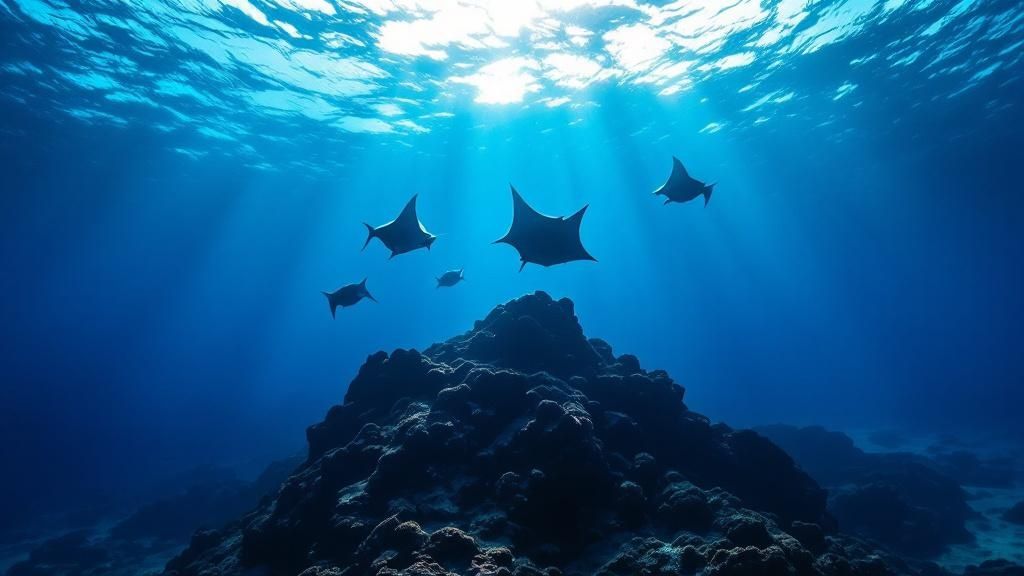
A truly unforgettable manta ray dive in Kona starts well before you ever hit the water. Getting your ducks in a row beforehand is what separates a good dive from a great one—it’s all about being comfortable, safe, and ready for the main event. Your first and most important decision is choosing a top-notch, safety-focused dive operator.
This single choice can make or break your experience. The best crews, like the team at Kona Honu Divers, don't just know the dive sites; they have a deep respect for the mantas and prioritize the well-being of both the animals and their guests. You can get a feel for what a professional operation offers by checking out their highly-rated manta ray dive tours here.
What to Bring (And What to Leave on Shore)
Packing smart is all about comfort. The goal is to bring just enough to stay warm and have what you need without cluttering the boat deck.
Here’s a quick list of what I always recommend people toss in their dive bag:
- A Warm Jacket or Windbreaker: Don't underestimate the ride back. Even in Hawaii, you’ll be wet, and the wind can make it surprisingly chilly. A dry layer is a game-changer.
- Reusable Water Bottle: Hydration is key for divers. Simple as that.
- Towel: A small, quick-drying one is perfect. No need for a giant beach towel.
- Dry Clothes: Trust me, changing into something dry for the ride back to your hotel makes a world of difference.
- Motion Sickness Meds: If you even think you might get seasick, take your medication before you board. The trip to the dive site can be choppy, and it's better to be safe than sorry.
As for what to leave behind? Valuables. Unless you have a bulletproof dry bag you trust, it's best to leave jewelry, wallets, and non-essential electronics at your hotel. Onboard storage is usually limited and not designed for securing personal items.
Gearing Up Your Camera
For many, capturing the underwater ballet is half the fun. But getting great shots requires a bit of finesse. Big, bright camera strobes can startle the mantas and disrupt their feeding. If you have them, continuous video lights are a much better choice.
If you’re using a GoPro or a simple point-and-shoot, your main focus should be stability. Find your spot on the bottom, get comfortable, and hold your camera as steady as possible. Let the mantas glide into your shot. Chasing after them never works—you’ll just get shaky footage and risk disturbing the very animals you came to see.
Pro Tip: Don’t get so lost behind the lens that you miss the actual experience. I always tell people to put the camera down for a few minutes. Just float and watch. That memory will stick with you long after the photos fade.
The pre-dive briefing is probably the most critical part of the entire tour. Listen up! Your divemaster will walk you through essential safety protocols, night-diving hand signals, and—most importantly—the rules for interacting with the manta rays. They’ll show you exactly where to position yourself and explain why you must never, ever touch a manta ray. This briefing is what ensures everyone has a safe and respectful encounter.
To get a better sense of all the underwater adventures the Big Island has to offer, you can learn more about how to dive the Big Island of Hawaii from seasoned guides.
What to Expect at the Underwater Campfire
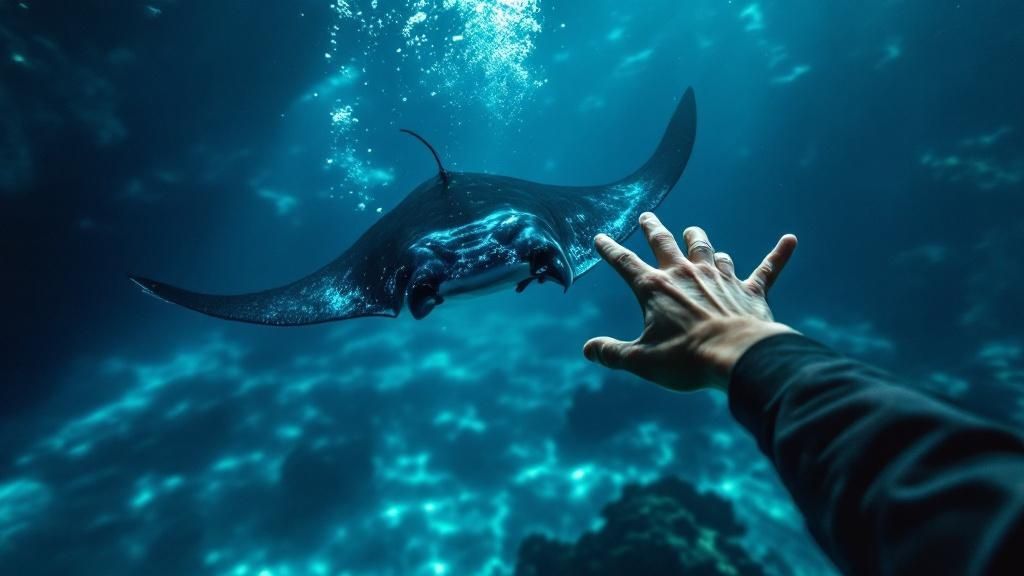
This is it—the moment all the planning and anticipation has been building toward. Your boat cruises out as the famous Kona sunset sets the sky ablaze with fiery oranges and purples. After a solid briefing from your crew, you’ll take that giant stride off the boat and into the dark, surprisingly warm Pacific. The excitement is real.
Dropping down is a quick, almost dreamlike descent. You'll follow your divemaster through the deepening blue, landing on a clean, sandy patch roughly 35 feet under the surface. This is where the magic happens. The "underwater campfire" you've heard so much about isn't a fire, of course. It's something far more brilliant—a circle of powerful dive lights all pointing upward, creating a beacon for dinner guests.
The Campfire Comes to Life
Your guide will get you situated. You’ll find a spot on the sand, settle in with the other divers, and form a big circle. On cue, everyone aims their dive light straight up, creating a massive column of light that acts like a dinner bell for microscopic plankton. The manta rays’ favorite meal.
You wait. The only sounds are the rhythmic hiss of your own regulator and the soft, crackling life of the reef around you. And then you see it. A huge, dark shape glides out of the blackness, effortlessly swooping into the light. Then another. And another. These gentle giants, some with wingspans stretching over 12 feet, put on a mesmerizing underwater ballet.
They loop and soar right through the beams of light, performing graceful barrel rolls to scoop up the plankton-rich water. It's an absolutely breathtaking sight. They get so close you can make out the unique spot patterns on their undersides, sometimes passing just inches from your mask. It's humbling, powerful, and utterly unforgettable. To get a better sense of the whole experience, check out what the Kona Manta Ray Night Dive is really like.
Essential Manta Dive Etiquette
For this encounter to be safe and magical for everyone—divers and mantas alike—there are a few hard-and-fast rules. This is purely passive observation, which is exactly what keeps the manta ray dive kona experience so special and sustainable.
- Hold Your Spot: Once you're settled on the sandy bottom, stay put. This creates a stable, predictable environment for the mantas to navigate.
- Lights to the Sky: Keep your dive light pointed straight up. This maintains the "campfire" that draws in the plankton and keeps the show going.
- No Touching. Ever. This is the golden rule. Manta rays are covered in a protective mucous layer. Touching them strips this coating away, making them susceptible to skin infections. Let the mantas decide how close they get.
By simply being a quiet observer, you're treated to one of nature’s most incredible spectacles. Your calm presence lets the mantas feed undisturbed, making the interaction genuine and leaving you with a memory that will last a lifetime.
Meet the Mantas and Support Conservation
When you join a manta ray dive in Kona, you're stepping into something much bigger than just an incredible underwater experience. You're actually becoming part of a living laboratory and a powerful force for marine conservation. Every moment you spend at that underwater campfire, you’re not just watching the show—you're contributing to a vital, long-term study of these amazing animals.
The secret to this whole operation is hidden on the mantas' bellies. Each ray has a unique pattern of black and white splotches on its underside, just like a human fingerprint. This is how local guides and researchers can tell them apart, giving them names and tracking their lives over years, even decades.
Getting to Know the Locals
You might even get to see some of the local celebrities on your dive. Keep an eye out for residents like "Lefty," who is easy to spot because of a distinctively curled cephalic fin, or "Big Bertha," one of the largest and most reliable visitors to the dive sites. Putting a name to a manta completely changes the experience. It’s no longer just seeing a manta ray; it's recognizing an individual with a known personality and history.
The information gathered night after night is priceless. Using these unique belly patterns, researchers have identified and cataloged over 330 individual manta rays that call Kona home. This massive community effort has led to nearly 6,000 reported encounters and over 28,500 individual manta sightings logged in just 14 years. It’s what makes Kona one of the most important places on Earth for studying manta ray behavior. You can see a full breakdown of how this citizen science data works.
Your dive directly supports a huge citizen-science project. Every photo taken and identification made helps build a massive database that informs global conservation strategies to protect mantas everywhere.
This genuine dedication to the animals is what makes the Kona dive so profound. The operators here aren't just running tours; they're stewards of the manta population. They take the time to teach every diver how to interact with the rays respectfully, ensuring this magical encounter can continue for generations to come.
By choosing the manta ray dive in Kona, you are directly funding and participating in this crucial conservation work. To really grasp the full impact of this experience, it's worth exploring the deeper reasons why you should go on a manta ray dive in Kona.
Your Kona Manta Ray Dive Questions Answered
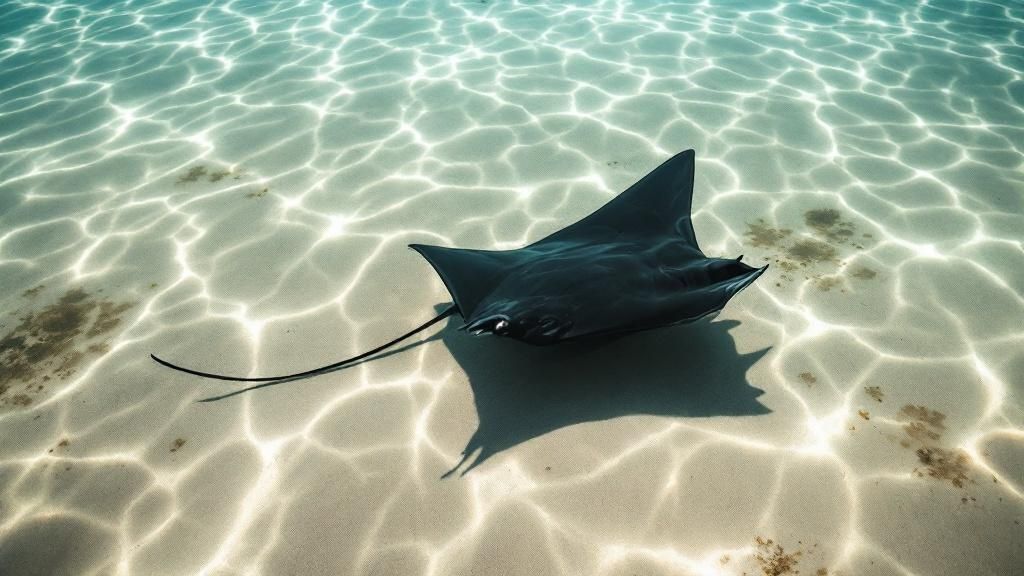
Even after doing all your homework, it’s completely normal to have some last-minute questions before jumping in for the world-famous Kona manta ray night dive. This isn't your average dive, and knowing exactly what to expect helps calm any nerves and makes sure you're ready for an incredible night.
We've been asked just about everything over the years, so we’ve pulled together the most common questions from divers and snorkelers to give you the straight-up answers you're looking for.
Is the Manta Ray Night Dive Safe for Beginners?
Yes, absolutely. In fact, it’s one of the most beginner-friendly night dives you could possibly do. The top operators have this experience dialed in, and companies like Kona Honu Divers are absolute experts at creating a controlled and safe environment.
The dive sites, like the well-known Manta Village, are specifically chosen because they are sheltered, calm, and relatively shallow—usually around 25-35 feet. The best part for new divers? There’s very little actual swimming involved. You’ll be positioned in a stationary spot on the sand. Snorkelers are just as comfortable, holding onto a custom-built floatation board right on the surface.
What’s the Difference Between Diving and Snorkeling With Mantas?
Both give you a spectacular show, just from a different seat in the house. Think of it as front-row orchestra seats versus the first-row balcony—both are phenomenal vantage points.
-
For Divers: You get to descend to the seafloor and settle in around the "campfire" of lights. From there, you look up as the mantas swoop and glide right over you, often coming within inches of your mask. It’s an immersive, eye-to-eye experience.
-
For Snorkelers: You stay on the surface, holding onto a specially designed light board. You get a fantastic top-down view as the mantas gracefully rise from the depths to feed in the light. You see the whole underwater ballet unfold below you.
No matter which you choose, you’re in for an unforgettable, up-close encounter.
Will I definitely see manta rays?
While we're dealing with wild animals in their natural habitat—so a 100% guarantee is never possible—the Kona manta dive has an incredible success rate, consistently hovering between 80-90%. These dive sites weren't chosen by accident; they're locations where mantas have been feeding for decades.
On the rare evening the mantas decide not to show up, most high-quality operators offer a "manta guarantee." This usually means you can come back and try again on another night for free (subject to availability). It’s their way of making sure you get another chance to see the magic.
What Other Unique Night Dives Are in Kona?
If the manta dive sparks a love for after-dark underwater adventures, you're in the right place. The Kona Blackwater Dive is a completely different, mind-bending experience. Instead of a reef, you're tethered and drifting in the open ocean, suspended over thousands of feet of water.
At night, a whole world of weird and wonderful bioluminescent creatures and tiny, otherworldly larvae migrate from the deep toward the surface. It’s a surreal, thrilling dive that feels like you're exploring another planet. For more details on all the options, you can check out our comprehensive guide on diving with manta rays in Hawaii.