
Picture this: you’re weightless in the warm, inky-black Pacific. Suddenly, a colossal, graceful shadow glides out of the darkness. A giant manta ray, with a wingspan stretching 12 feet, soars right over your head, its massive mouth open to feed in the beam of your light. This isn't a scene from a documentary; it’s the manta ray dive in Kona, and it's an experience that truly lives up to its "bucket-list" reputation. It’s less of a dive and more of an underwater ballet.
The Unforgettable Kona Manta Ray Night Dive
The Kona coast of Hawaii is uniquely special. It’s not just a place where you might see a manta ray; it's a place where hundreds of them show up for dinner every single night. This isn't by accident. The local waters host a thriving population of over 450 identified manta rays, drawn to the coast by a reliable buffet of plankton.
These gentle giants congregate in surprisingly shallow water, usually around 30 to 40 feet deep, making the experience accessible to both divers and snorkelers. The consistency of the food source means the mantas are incredibly predictable. In fact, your chances of seeing them are a staggering 85-90%, a level of reliability you just don't find anywhere else in the world.
A World-Class Eco-Adventure
This nightly spectacle has turned the Kona manta ray dive into one of the planet's premier eco-adventures. Reputable operators like Kona Honu Divers have built their entire philosophy around protecting these animals while providing an absolutely mind-blowing experience for guests. The focus is always on responsible, safe, and sustainable tourism that keeps the magic alive for both people and mantas.
"Diving with mantas is one of the most satisfying things a person can do in the water. It’s impossible to describe the feeling of watching a massive fish the shape of a stealth bomber coming into vision." – Samuel Beckett, Planet Dive
Don’t just take our word for it. See what fellow divers and snorkelers have to say about their own encounters with Kona Honu Divers:
For a really comprehensive look at what to expect, check out this fantastic Kona Manta Ray Night Snorkel: Ultimate Adventure Guide.
Whether you have hundreds of dives under your belt or you're trying snorkeling for the very first time, seeing these animals up close is a profound experience. If you’re curious about the logistics and what makes this trip so special, we’ve put together a detailed guide on the Kona manta ray night dive that covers all the specifics.
Ready to see the show for yourself? The first step to an adventure you'll talk about for years is booking your spot on a manta ray dive tour.
How to Choose the Best Manta Ray Tour in Kona
With dozens of boats heading out every single evening, picking the right operator is probably the most critical decision you'll make for your manta ray dive in Kona. While you're almost guaranteed to see mantas, the quality of your experience—from safety and comfort to that feeling of pure awe—comes down entirely to the crew you choose.
Let's be clear: not all tours are created equal. The best ones focus on smaller groups, give you a solid pre-dive briefing, and operate comfortable, well-maintained boats. A great crew does more than just take you to the spot; they educate you, keep you safe, and foster a real atmosphere of respect for these incredible animals. When you're looking at different companies, you want one that truly puts marine conservation and responsible tourism first.
Key Factors for Selecting a Tour Operator
Choosing a reputable company is about much more than just the price. You’re looking for a team that delivers a safe, respectful, and unforgettable encounter with these gentle giants.
Here's a quick guide to help you sort through the options and find the perfect fit.
- Eco-Consciousness: Does the company follow Manta Ray Green List standards? This is a big one. It means they enforce a strict "no-touch" policy and teach everyone how to observe passively to protect the mantas' delicate mucous coating.
- Safety Record & Crew Experience: Look for established operators with seasoned divemasters and captains. Check online reviews, but pay close attention to comments that mention the crew's professionalism and attentiveness. A strong safety record is non-negotiable.
- Boat Comfort & Amenities: A comfortable boat makes a huge difference, especially after a night dive. Do they have warm showers? What about snacks and drinks for after the dive? Is the boat spacious, or will you be packed in like sardines?
- Manta Guarantee: Since mantas are wild animals, sightings aren't technically 100% guaranteed. The best operators know this and often offer a "manta guarantee," which means you can come back for free if the mantas don't show up.
This dive is more than just a tourist thing; it’s a cornerstone of Kona’s identity. With roughly 80,000 people doing this every year, the economic impact is massive. These animals, known as 'hāhālua' in Hawaiian tradition, also hold deep cultural significance and are even mentioned in the ancient creation chant, the Kumulipo. Choosing an operator who gets this helps preserve the experience for everyone. A detailed safety assessment from the DLNR offers more insight into their importance.
To help you narrow down your search, I've put together a checklist of what to look for when you're comparing dive operators.
Kona Dive Operator Checklist
| Factor | What to Look For | Why It Matters |
|---|---|---|
| Group Size | Smaller groups (6-12 people). Ask about the boat's maximum capacity vs. how many they actually take. | A smaller group means a more personal experience, less crowding in the water, and better photo opportunities. |
| Crew Expertise | Experienced, PADI/NAUI certified divemasters and a licensed captain. Look for crew who are passionate and knowledgeable about mantas. | An experienced crew ensures safety, provides fascinating information, and knows how to manage the dive for everyone's benefit. |
| Vessel Quality | Clean, well-maintained boats with amenities like a marine head (toilet), freshwater rinse, and easy water entry/exit. | Comfort is key. A warm shower and a comfortable ride back to shore make the entire experience much more enjoyable. |
| Eco-Practices | Adherence to "Manta Ray Green List" guidelines and a clear commitment to conservation. | This ensures the mantas are not harmed and that the dive is sustainable for years to come. It shows respect for the animals. |
| Manta Guarantee | A clear policy for rebooking at no charge if no mantas are sighted on your trip. | This is the mark of a confident, customer-focused operator who stands behind their tour. |
| Online Reviews | Recent reviews on platforms like Google, TripAdvisor, and Yelp that mention safety, crew attitude, and overall experience. | Past customer experiences are one of the best indicators of the quality you can expect. Look for consistent, positive feedback. |
Using this checklist will help you see past the marketing and find a company that truly delivers a world-class, responsible manta ray encounter.
Why Kona Honu Divers Stands Out
If you're looking for a top-tier experience, I consistently recommend Kona Honu Divers. They've earned their reputation for an unwavering commitment to safety, education, and making sure every guest has an amazing time. Their guides are not just experienced; they are genuinely passionate about marine life and provide an exceptional level of care.
Their whole approach ensures you feel like a respectful guest in the mantas' world, not just a tourist. If you're still on the fence, learning more about why you should go on a manta ray dive in Kona can really highlight the value of this incredible encounter.
Getting Ready for Your Manta Ray Adventure
The secret to truly soaking in the magic of a manta ray dive in Kona is feeling completely prepared. Once you've booked your charter, the anticipation really starts to build. Now it’s time to get ready for an evening you'll likely never forget. This is mostly about packing a few key items, listening carefully, and getting into the right mindset.
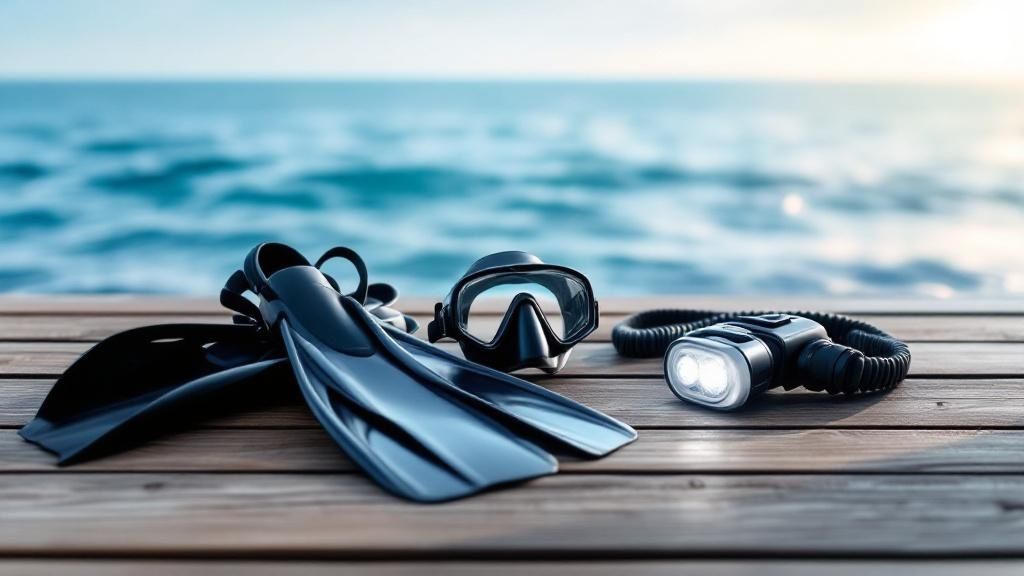
A top-notch operator like Kona Honu Divers will handle all the heavy lifting, providing the essential scuba gear—your tank, BCD, regulators, weights, and those powerful dive lights. But you'll want to bring a few personal things to stay comfortable.
What to Pack for Comfort and Success
Even in beautiful Hawaii, the water can get a bit chilly after the sun goes down, and the boat ride back can feel surprisingly cool. If you're warm and comfortable, you can focus on the incredible experience instead of shivering.
Here's what I always recommend packing:
- Towel and Dry Clothes: This is non-negotiable. Having a warm, dry hoodie or a simple windbreaker for the boat ride back to the harbor makes a world of difference.
- Swimsuit: The easiest way to do it is to wear your swimsuit under your clothes to the marina. It makes gearing up so much faster.
- Reusable Water Bottle: Diving always dehydrates you, so it's a good habit to keep sipping water.
- Seasickness Medication: If you even think you might get motion sickness, take your preferred remedy well before the boat leaves the dock. The trip to the dive site is usually smooth, but it’s always better to be safe than sorry.
Your tour will supply a wetsuit, typically a cozy 5mm to 7mm thick one. That’s plenty of insulation for the 35-foot depths at the manta sites, where the water usually sits around a pleasant 75°F (24°C).
The All-Important Pre-Dive Briefing
Don't tune out the pre-dive briefing. I know it can feel like a formality on a regular fun dive, but this one is different. It’s your playbook for a safe, successful, and mind-blowing manta experience.
Your guides will walk you through everything, covering information that is very specific to the manta ray dive in Kona. Listen closely—they'll explain the whole dive, from entry to exit.
You'll hear one rule repeated, and it's the most important one of the night: passive interaction. This simply means you are a guest in their underwater ballroom. You're there to watch. No touching, no chasing, and never, ever blocking their path. When you let the mantas lead the dance, you get a much more natural and awe-inspiring show.
You’ll also learn specific hand signals for night diving and, crucially, how to position yourself on the sandy bottom. The plan is usually to form a semi-circle around a central light box, kind of like an underwater "campfire" that attracts the plankton. By staying low and still, you become part of the scenery, giving the mantas a safe space to glide and feed just inches above you.
Absorbing these details before you even get in the water is key. It lets you relax and just enjoy the spectacle. This is why picking a great operator is so critical; their briefing sets the tone for the whole night. If you need some pointers, we have a whole guide on how to choose a Kona dive shop.
What to Expect on Your Manta Ray Dive
Your adventure kicks off with a breathtaking boat ride along the Kona coast as the sun begins to set. Watching the sky light up with color is the perfect start to the evening. The crew will head to one of the well-known manta ray locations, like 'Manta Village' or 'Manta Heaven,' and the whole journey there builds a real sense of excitement for what's to come.
Once the boat is anchored, you'll see the crew's expertise in action. They get to work setting up what we like to call the "underwater campfire." This involves placing powerful lights on the ocean floor for divers or on a float for snorkelers. These lights cut through the dark water, attracting a huge amount of plankton—which is exactly what the manta rays are coming for. Think of it as ringing the dinner bell for these gentle giants.
Finding Your Spot in the Underwater Theater
How you experience this incredible show depends on your choice and certification level. Both divers and snorkelers get a front-row seat, but from a totally different—and equally amazing—perspective.
- Certified Divers: You’ll descend with your guide to the sandy bottom, which is typically about 35 feet down. You’ll find a spot in a semicircle around the central light source, looking up. The view is unreal: you get to watch the mantas perform their graceful, looping ballet directly overhead.
- Snorkelers: You'll stay on the surface, holding onto a custom-built float. This float is ringed with bright lights pointing down into the water, creating a column of plankton right in front of you. The mantas will swim up from the darkness to feed, sometimes getting just inches from your mask. It’s an unbelievably close encounter.
The Main Event
The anticipation while you wait in the warm, dark water is something you’ll never forget. And then, it happens. A huge, dark shape glides out of the blackness and into the light. The first manta has arrived. Soon, more follow. You'll watch them perform mesmerizing barrel rolls and effortless loops, their giant mouths open to filter the plankton. It's a completely silent, almost surreal performance that feels truly magical.
The best thing you can do is stay calm and still. The mantas are naturally curious and will often come incredibly close if you let them. By being a quiet observer, you allow them to act naturally, which makes for a much more spectacular and intimate experience for everyone.
This nightly gathering is so consistent that it’s become a hotspot for scientific research. From 2009 to 2014, citizen-science initiatives tracked individual rays, creating a massive photo database to better understand their habits and behaviors. This kind of research is vital for ensuring the dive remains a sustainable and protected activity for years to come.
Getting a feel for the flow of the evening will help you relax and just soak it all in. If you want to dive even deeper, check out our guide on what the manta ray night dive is all about.
Exploring More of Kona’s Underwater World
The manta ray dive in Kona is an absolute showstopper, but trust me, it’s just the opening act for everything scuba diving the Big Island has to offer. Once you’ve seen the manta ballet, you’ll get it—Kona is a legitimate world-class diving destination that will have you planning your next trip before you even dry off. The island’s volcanic past has sculpted a dramatic underwater landscape that's bursting with life.
By day, Kona’s coastline reveals a totally different personality. You'll find yourself exploring vibrant coral gardens, swimming through ancient lava tubes, and navigating stunning underwater archways. These aren't just empty structures; they're bustling neighborhoods for sea turtles, moray eels, and schools of technicolor reef fish. Going out with an experienced crew like Kona Honu Divers is the best way to see it all safely and have a guide who knows where the coolest creatures hide.
Kona is far more than just a single dive. It's a comprehensive diving destination with unique experiences for every skill level, from breathtaking daytime reefs to the mysteries of the deep ocean at night.
Dive into the Abyss on a Blackwater Dive
If you're looking for a thrill that’s a complete 180 from the manta dive, the Kona Blackwater Dive is it. This isn't your typical reef dive. It’s a completely different animal. You’re dropped into the open ocean at night, tethered to the boat, and suspended over thousands of feet of inky black water.
As you drift, an entire universe of strange and wonderful creatures migrates up from the depths to feed. We're talking about things that look like they're straight out of a sci-fi movie—tiny, translucent larval fish, glowing jellies, and all sorts of bioluminescent critters. It’s an intimate look at one of the planet's largest animal migrations, an experience you can only have in a few select spots on earth. Kona happens to be one of the very best. For an adventure you'll be talking about for years, check out a specialized Blackwater Dive tour.
Advanced Dives and New Challenges
For those of you with a few more dives under your belt, Kona has some incredible more experienced diving opportunities that are well worth the effort. These dives take you a bit deeper or further afield, to untouched reefs, remote lava formations, and even spots known for sharks.
These are the dives that really let you feel the raw, untamed beauty of the Pacific. It's a fantastic way to push your skills and see a side of Kona that most visitors miss. If you're ready to step up your game, booking a premium advanced dive trip is how you get to the really wild stuff.
Your Manta Ray Dive Questions Answered
We've talked a lot about the magic of the manta ray dive in Kona, but you probably still have a few practical questions. Let's get those sorted out so you can feel completely confident moving from the planning stage to actually booking your trip. These are the most common things we get asked by both divers and snorkelers.
Do I Need to Be a Certified Diver to See the Manta Rays?
Nope! And that's one of the best things about this whole experience—it’s incredibly accessible.
If you aren't a certified diver, you can book a snorkel trip. You'll float on the surface, holding onto a large, custom-built raft with bright lights shining down into the water. The lights attract the plankton, and the mantas come right up to the surface to feed, often just inches away from you.
Certified divers get a different, but equally amazing, viewpoint. You'll descend to the sandy ocean floor and watch from below as these gentle giants perform their ballet right above your head. Both are spectacular ways to see the mantas.
Is the Manta Ray Dive in Kona Safe?
Yes, it’s considered an extremely safe activity when you go with a professional, reputable operator. Manta rays are true gentle giants; they have no teeth, no stingers, and no barbs. They are only interested in the cloud of plankton attracted by the lights.
Safety is always the number one priority. A good operator like Kona Honu Divers will give you a detailed briefing, keep guide-to-guest ratios low, and stick to strict guidelines that protect both you and the mantas. The dive sites themselves are well-established and located in relatively shallow, calm, and protected bays, which makes for a very secure and comfortable environment.
Once you see how the professionals run the show, any nerves you have will quickly disappear.
What Happens If No Manta Rays Show Up?
Let's be real—these are wild animals, and nature doesn't offer guarantees. That said, the success rate in Kona is incredibly high, often over 90%.
Still, the pros know that sometimes the mantas just don't feel like coming out to play. That's why most reputable companies have a "manta guarantee."
If your trip ends up being one of the rare nights where no mantas appear, operators like Kona Honu Divers will usually let you come back and try again on another night for free (subject to availability). It's always a good idea to ask about the specific policy when you book.
Can I Touch the Manta Rays?
Absolutely not. This is the single most important rule of the manta ray dive in Kona, and it's non-negotiable.
Touching a manta can strip off its protective slime coat. This coating is basically its immune system, and removing it leaves the animal vulnerable to life-threatening skin infections.
The guiding principle here is passive observation. Your job is to find your spot, stay still, and just be a respectful observer. The mantas are curious and will often glide incredibly close on their own. Resisting that powerful urge to reach out and touch them is crucial for their well-being and for keeping this incredible encounter sustainable for years to come.
Want to dig a little deeper? We've got even more helpful tips and info on what you should know about the manta ray dive in Kona.
Now that we’ve got your questions covered, the only thing left is to book your adventure and get ready for a night you will truly never forget.
Ready to witness the manta ballet for yourself? Kona Honu Divers offers expertly guided tours that prioritize your safety and the well-being of the mantas. Secure your spot on one of the world's most incredible night dives.
Book your manta ray dive tour today