
There are very few dives on Earth that live up to the hype, but the manta ray dive in Kona is one of them. It's consistently voted one of the best night dives in the world, and for good reason. It’s an otherworldly experience where you get to watch majestic manta rays glide, swoop, and perform breathtaking barrel rolls just inches from your face.
The Unforgettable Kona Manta Ray Night Dive
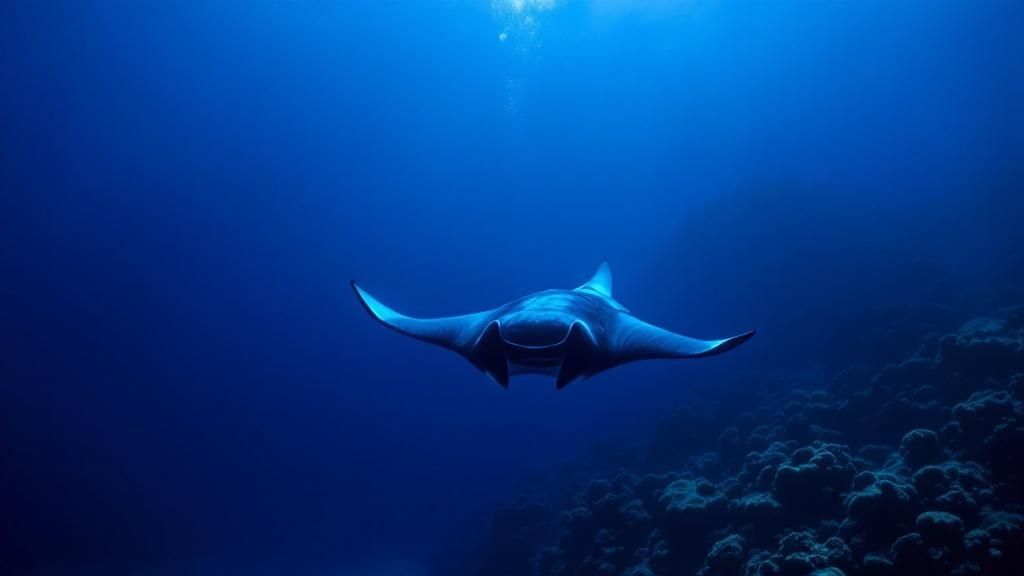
Picture this: You slip into the warm, dark Pacific Ocean just as the last glow of the Hawaiian sunset disappears. Your dive light cuts a beam through the inky water, setting the stage for an incredible underwater ballet. The only sound is the rhythmic hiss of your regulator as you and your fellow divers settle in, full of anticipation.
Then, out of the darkness, a shadow emerges. It's a giant manta ray, gliding silently into the light, its massive wings carrying it with impossible grace. Before you know it, more arrive, swooping and rolling in a mesmerizing dance as they feed on the plankton drawn to your lights.
A World-Class Underwater Spectacle
This is more than just a dive; it’s a genuine connection with one of the ocean's most magnificent creatures. The Kona coast is famous for this specific encounter, drawing around 80,000 people every year for both night snorkeling and scuba diving Kona. And with a sighting success rate that hovers between 80% and 90% all year round, it's one of the most reliable places on the planet for this kind of adventure.
The feeling is almost indescribable. Watching a creature the size of a small car move with such grace is a humbling and awe-inspiring moment that stays with you forever. It's less like observing wildlife and more like being a guest at their mesmerizing nightly feast.
How You Can Join the Show
One of the best things about the Kona manta ray experience is that it’s incredibly accessible. You don't need to be a seasoned diver to see the magic up close. There are two main ways to take part, each giving you a completely different—but equally amazing—perspective. You can learn more about the specifics of the Kona Manta Ray Night Dive and see what makes it such a must-do activity.
Your choice really just comes down to your comfort and certification level:
- Scuba Diving: If you're a certified diver, this is your chance for a front-row seat on the ocean floor. You'll kneel on the sand and watch the mantas perform their acrobatics right above you. It's an incredible bottom-up view.
- Snorkeling: Perfect for all ages and swimming abilities. You'll float on the surface, holding onto a custom light board that attracts the plankton. This gives you a fantastic bird's-eye view of the entire spectacle.
Both options offer breathtakingly close encounters, making this the perfect adventure for families and groups with different experience levels. A professionally guided manta ray dive tour is your ticket to one of nature's greatest performances.
Choosing Your Manta Ray Adventure: Dive Or Snorkel?
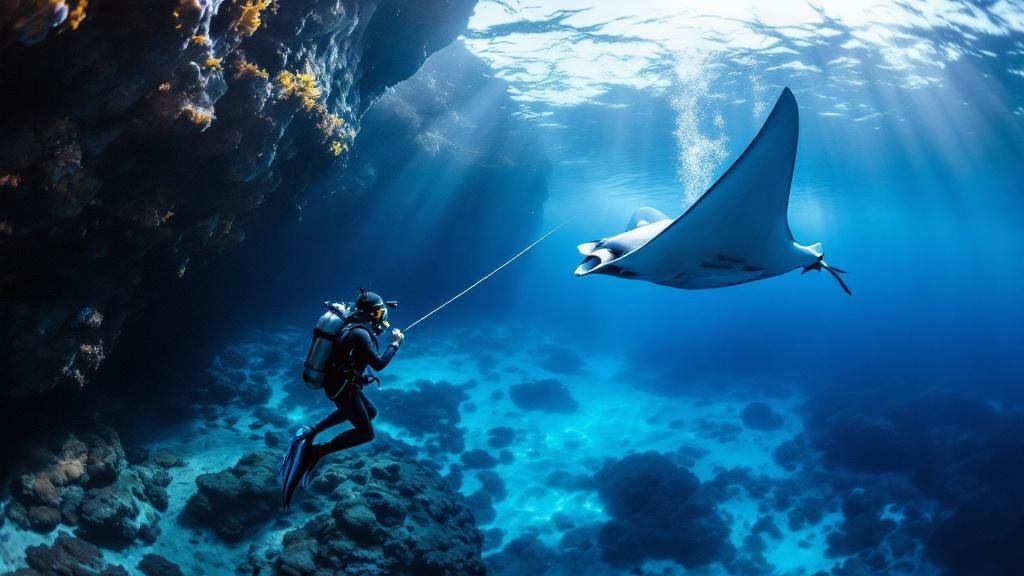
Okay, so you're ready for the magic of the Kona manta rays. The first big decision is how you want to see them: as a scuba diver or as a snorkeler? Both options get you unbelievably close to the action, but each offers a completely different, yet equally breathtaking, perspective on this underwater ballet.
Think of it like choosing your seat for a world-class performance. Do you want to be in the front row, looking up at the stage? Or would you prefer a VIP balcony seat with a view of the entire production? There’s no wrong answer. It all comes down to your comfort level in the water and what kind of adventure you're looking for.
The Scuba Diver's Perspective
For certified divers, the manta ray dive in Kona is a truly immersive experience. You'll gear up and descend with your guide to a sandy patch on the ocean floor, usually around 35 feet deep. Your group will settle in a semi-circle around a powerful light source—what we like to call the "underwater campfire."
This light is the dinner bell, attracting swarms of plankton that, in turn, bring in the mantas. From your spot on the seabed, you get an incredible bottom-up view.
There's nothing quite like the feeling of a 12-foot manta ray gliding silently, just inches over your head. You can feel the water displaced by its massive wings, creating a powerful, humbling connection that words can't fully capture.
You get to watch these gentle giants perform acrobatic barrel rolls as they swoop through the light beams. It’s a serene, almost meditative way to witness their grace and sheer size against the dark backdrop of the ocean.
The Snorkeler's Bird's-Eye View
Snorkeling is the most accessible way to join the manta party. It's a fantastic choice for families, non-divers, or anyone who prefers staying close to the surface. No certification is needed—just a sense of wonder!
Snorkelers are given a custom-built floating raft to hold onto. These rafts have bright lights that shine down into the water, drawing the plankton right up to the surface. You just float comfortably and watch the show unfold below. This gives you a spectacular bird's-eye view of the entire scene, often allowing you to see multiple mantas feeding at once.
From the top, you can see the divers below and the mantas soaring between the surface and the seafloor. It’s a dynamic view that lets you appreciate the full scale of this incredible feeding event. Premier operators like Kona Honu Divers are masters at running trips that cater to both divers and snorkelers on the same boat, so everyone in your group can have an amazing time.
Manta Ray Dive vs Snorkel: What Is Right For You?
Still on the fence? This direct comparison should help you decide which experience is the perfect fit for your Kona adventure.
| Feature | Scuba Diving | Snorkeling |
|---|---|---|
| Perspective | Bottom-up view from the ocean floor. | Top-down view from the water's surface. |
| Requirements | Open Water Diver certification is required. | No certification needed. Basic swimming ability is sufficient. |
| Experience | Meditative and immersive; feel the water move as mantas pass overhead. | Dynamic and accessible; see the full scope of the feeding frenzy. |
| Depth | Around 35 feet (10-15 meters). | Floating on the surface. |
| Best For | Certified divers seeking an intimate, close-up encounter. | Families, non-divers, and those who want an easy, accessible experience. |
Whether you choose to dive deep or float on top, you're signing up for one of the most unforgettable wildlife encounters on the planet. Both guarantee a front-row seat to nature's most dazzling nightly performance. The Kona Honu Divers Manta Ray tour is expertly designed to give everyone the best possible view.
What To Expect On Your Manta Ray Dive Tour
There's nothing like knowing what your adventure will look like from start to finish. It transforms that nervous anticipation into pure, unadulterated excitement. A manta ray dive in Kona is a well-oiled machine, carefully planned for your safety, comfort, and of course, a jaw-dropping experience. Let’s walk you through it, so you’ll feel like a pro before you even step on the boat.
Your journey doesn't start in the water, but right here on the dock. You'll meet your crew and the other divers and snorkelers joining you for the evening. The air is always buzzing with energy—a mix of jitters and palpable excitement. This is your chance to chat with the guides and get any of those last-minute questions answered.
The Pre-Dive Briefing: Your Foundation for a Safe Dive
Before we even think about leaving the harbor, your lead guide will run through a detailed pre-dive briefing. Honestly, this is the most critical part of the tour. Your guides will cover everything from the boat's safety features to the specific dive plan for the night. Pay close attention, because this information is what makes the whole trip run smoothly and safely.
A huge part of this briefing is about the rules of passive interaction. This is the absolute cornerstone of responsible manta tourism. You'll learn the single most important rule: never, ever touch a manta ray. Their skin is covered in a delicate mucus layer that acts as their immune system, and a simple touch from us can strip it away, leaving them vulnerable to infection.
You'll also get a few other key guidelines:
- For Divers: The plan is to stay on or very near the sandy bottom. This keeps the water column wide open for the mantas to do their thing.
- For Snorkelers: You'll be asked to stay on the surface, holding onto a specially designed light board. No free-diving down into the action.
- For Everyone: We'll show you how to position yourselves and your lights to attract the most plankton without getting in the way of the mantas' natural feeding patterns.
The Sunset Cruise to the Dive Site
Once the briefing is done, it's time for the best part to begin. We head out! The boat ride to the manta site is an incredible experience all on its own. We time most of our tours to catch a world-famous Kona sunset. As we cruise along the coast, the sky just explodes in fiery oranges, pinks, and purples. It's the perfect backdrop for the main event.
The ride itself is usually pretty quick, somewhere between 15 and 45 minutes, depending on which site we're heading to. It's the perfect time to finish getting your gear on, run through your buddy checks, and just soak in the stunning ocean views. The crew will be right there to help with any equipment and make sure you're feeling ready. You can feel the excitement building with every minute as we get closer to the "manta arena." If you want to learn more about how these sites work, check out our guide that answers the question, what is the manta ray night dive?
The Main Event: The Underwater Campfire
As soon as the boat is moored and the engines are off, the real magic starts. Divers are usually the first ones in the water. You'll make a controlled descent with your guide to a designated spot on the sandy bottom, about 30-40 feet down. Here, your group will arrange itself in a semi-circle around a powerful central light box—what we affectionately call the "underwater campfire."
The feeling of settling onto the ocean floor, pointing your dive light into the dark water, is just surreal. You can feel a shared, quiet anticipation among the divers. It's like a silent agreement that you're all about to witness something truly extraordinary.
This powerful light is essentially a dinner bell. It attracts massive clouds of microscopic plankton, which is what the mantas are here to eat. Now, all you do is wait. The anticipation is a tangible thing, a collective holding of breath. Then, you see it. A graceful shadow emerges from the darkness. A giant manta ray glides effortlessly into the light, beginning its beautiful, silent ballet.
Throughout the entire dive, our Divemasters are on it. They are constantly checking on divers, monitoring air gauges, and making sure everyone is sticking to the passive interaction rules. Their expertise is what ensures the whole encounter is safe and unforgettable for both you and the mantas, from the moment you splash in to your final ascent.
Why Kona Is The World’s Manta Ray Capital
Sure, you can spot manta rays in other beautiful corners of the world, but Kona is on a whole different level. It’s not just a place you might get lucky; it’s hands-down the most reliable and awe-inspiring destination on the planet for this encounter. So, what makes this one small stretch of Hawaiian coastline the undisputed capital for manta rays?
It boils down to a perfect storm of unique ocean conditions, visionary conservation, and a community built around responsible tourism. Unlike migratory mantas found elsewhere, Kona’s rays are residents. They live here all year long, and for one very good reason: a consistent, all-you-can-eat buffet.
The underwater geography and local currents have created a natural “plankton soup kitchen.” Deep, nutrient-rich water gets pushed up to the surface, causing massive blooms of zooplankton—the mantas’ absolute favorite meal. With a food source this reliable, they simply have no reason to leave.
A Sanctuary Built on Protection
Kona’s success isn't just a happy accident of nature. It's a story of people recognizing how special their resident manta population was and taking bold steps to protect it.
Back on June 5, 2009, Hawaii passed a groundbreaking law that made it illegal to kill or capture manta rays in state waters. This was a monumental move that created a true sanctuary for these gentle giants, safeguarding their small, slow-to-reproduce population from any harm.
This legal shield has allowed the local mantas to thrive without fear, growing comfortable and even familiar with the nightly feeding rituals that we divers and snorkelers come from all over the world to witness.
Sustainable Tourism as a Force for Good
The conservation efforts are powerfully reinforced by a simple economic reality. Manta ray tourism is a cornerstone of the local economy, generating well over $2.5 million every year. It’s a powerful case study in how sustainable tourism creates a financial incentive to protect a natural treasure.
When an animal is worth more alive than dead, the entire community becomes its guardian. In Kona, every dive operator, boat captain, and local business has a vested interest in the health and safety of the manta ray population.
This synergy between commerce and conservation ensures that everything is done with the long-term well-being of the mantas in mind. It's a model of ecotourism that just plain works, proving that unforgettable wildlife encounters and responsible stewardship can fuel one another. You can dive deeper into what makes this trip so valuable in our article on why you should go on a manta ray dive in Kona.
The Famous Manta Arenas: Manta Village and Manta Heaven
Within Kona’s prime waters, two specific locations have become world-famous for their nightly manta shows. These aren't just random spots; they are established feeding grounds that have been active for decades.
- Manta Village: Located south of town in Keauhou Bay, this is the original site. It first became a hotspot when a nearby resort switched on its oceanfront lights, which attracted plankton and, in turn, the mantas. It's known for incredibly consistent sightings.
- Manta Heaven: Situated north of Kona near the airport, this site (also known as Garden Eel Cove) often attracts even larger groups of mantas. It can be a mind-blowing spectacle with dozens of rays swooping and barrel-rolling in a beautifully choreographed dance.
The magic of these sites is preserved by the strict, passive-interaction rules that all reputable operators follow. This simple framework ensures the mantas can feed undisturbed, which is why they keep coming back, night after night. It’s this incredible blend of ideal geography, strong legal protection, and a community dedicated to conservation that truly makes Kona the one and only Manta Ray Capital of the World.
Choosing The Best Manta Ray Dive Operator
Let's be real: your choice of a tour operator will absolutely make or break your manta ray experience in Kona. The mantas are the main event, of course, but the crew, the boat, and the whole vibe of the company you go with are what shape the memory you take home. It's about so much more than just finding the cheapest trip. You're looking for an operator who puts safety, the well-being of the mantas, and the quality of your dive first.
A great operator takes a good dive and makes it an incredible one. Think top-notch gear that fits and works, boats that aren't packed like sardine cans, and guides who are genuinely passionate about the ocean. These guides aren't just there to point you in the right direction; they're there to teach, inspire, and build a real connection between you and the amazing animals you're about to meet.
What to Look For in a Manta Tour Company
When you start comparing your options, a few things should be at the very top of your checklist. Getting these right is the key to having a safe, respectful, and totally mind-blowing encounter.
- Following the Rules: The best companies are serious about the official Manta Ray Tour Operator Standards. This means a strict "look, don't touch" policy and smart positioning in the water to give the mantas all the space they need to glide and feed naturally.
- Small Group Sizes: Nothing ruins the magic faster than a chaotic, overcrowded dive site. Look for operators who cap their group numbers. A smaller guide-to-guest ratio means a more personal, controlled, and ultimately more enjoyable time for everyone.
- An Experienced Crew: There's no substitute for experience. You want a team with a seasoned captain and divemasters who know these waters and the mantas' behavior like the back of their hand. Their expertise is your best asset for both safety and getting the best possible sightings.
- Great Gear and Boats: Well-kept equipment and clean, spacious dive boats aren't just about comfort—they're a sign of a truly professional outfit that cares about your safety and experience.
Why Kona Honu Divers Stands Out
With plenty of operators to choose from in Kona, Kona Honu Divers has built a stellar reputation, and for good reason. Their commitment to safety, conservation, and giving divers a world-class experience shines through in everything they do. It's no surprise they were recently recognized as the best dive operator in Kona.
But don't just take our word for it. Here’s what fellow divers have to say:
When you choose a company that's actively involved in conservation and research, your money does more than just buy a tour. It directly helps protect these incredible animals for generations to come.
By going with a respected operator, you’re not just booking a dive; you're investing in a high-quality adventure that honors the delicate marine ecosystem. This ensures the Kona manta ray dive can remain a world-class spectacle for many years. Ready to see it for yourself?
More Incredible Kona Diving Adventures
The manta ray night dive is an absolute must-do in Kona, a true bucket-list experience. But don't make the mistake of thinking that's all the Big Island's underwater world has to offer. That legendary dive is just the opening act for a whole festival of incredible adventures waiting for you along this volcanic coast.
Once you've seen the mantas, you'll be itching to explore more. From surreal night dives in the open ocean to navigating ancient lava tubes, Kona's dive portfolio is genuinely world-class.
Journey Into the Abyss With a Black Water Dive
If you're looking for something utterly different, something that feels like a trip to another planet, you have to try a Kona Blackwater Dive. This is not your typical reef dive. Far from it. You'll find yourself drifting in the pitch-black of the open ocean, safely tethered to the boat, hovering over thousands of feet of water.
What you're there to see is one of the largest migrations on Earth. Every single night, a menagerie of bizarre and beautiful creatures rises from the crushing depths to the surface to feed. Many are the tiny, larval forms of familiar reef fish, but they look like something out of a sci-fi movie. It’s a dive into inner space, filled with glowing, pulsing, and utterly alien life forms.
Hone Your Skills on Advanced Dives
Are you a certified diver ready to see what lies beyond the beginner sites? Kona is an absolute playground. The island’s volcanic origins have sculpted a stunning underwater landscape of lava tubes, dramatic arches, and deep canyons that will take your breath away.
Exploring these advanced sites feels like navigating a submerged cathedral. The way light filters through an ancient lava tube and illuminates the life within is something you'll never forget. It’s a photographer’s dream and a diver’s delight.
These dives reveal a completely different side of Kona’s ecosystem. You’ll find everything from hidden shark hangouts to pristine, untouched coral gardens teeming with life. To experience these incredible formations safely with seasoned guides, consider joining a dedicated advanced dive tour. While you're planning, check out our in-depth guide to the Kona Manta Ray Tour for more insider tips.
Kona is rightly famous for its mantas, but amazing wildlife encounters are what diving is all about. If your travels take you further afield, you could find yourself on incredible Tasmania whale watching tours, another unforgettable marine adventure.
Got Questions About the Manta Dive? We’ve Got Answers.
It's totally normal to have a few questions swirling around before booking a big adventure like this one. We get it! So, we've put together answers to the most common things people ask about the manta ray dive in Kona. Our goal is to make sure you feel completely confident and ready for the experience.
Is the Manta Ray Dive Safe?
Yes, absolutely. Manta rays are famously gentle giants. They don't have teeth, stingers, or barbs—they're just big, graceful filter feeders. For any reputable dive operator, your safety (and the mantas' safety) is the absolute top priority.
The whole encounter is designed for you to be a respectful observer. Think of it like being a guest in their underwater home. You'll be asked not to touch, chase, or get in their way. This keeps the experience safe and stress-free for both you and the mantas.
What Happens If We Don’t See Any Manta Rays?
While sightings are incredibly reliable—we're talking a success rate of over 90%—it's nature, not an aquarium. Manta rays are wild animals, so their appearance is never a 100% guarantee. But don't worry, the best tour operators have a plan for that.
Most top-tier companies offer a "manta guarantee." If your group doesn't see a single manta, operators like Kona Honu Divers will let you come back on another night for free. This is a huge reason why we always suggest booking your manta dive early in your trip—it gives you a buffer for that second chance, just in case!
How Close Will I Get to the Manta Rays?
You'll be amazed at how close you can get. It's not uncommon for these majestic creatures to glide just inches above or below you as they swoop in and out of the light beams, feeding on plankton.
The secret is to stay relatively still and let them come to you. By holding your position, you become a predictable part of the environment. The mantas feel comfortable, allowing them to put on their incredible acrobatic show right in front of your mask.
Do I Need to Be a Certified Diver to Participate?
If you want to be on the ocean floor looking up, you will need to be a certified Open Water Diver. But you definitely don't need a certification to join the fun! Snorkelers get a fantastic bird's-eye view of the entire ballet from the surface.
Snorkeling is a great option and makes this an adventure the whole family can enjoy together, regardless of their scuba experience.
Ready to see the magic for yourself? Booking a professionally guided manta ray dive tour is your ticket to one of the most memorable underwater encounters you'll ever have.