
Picture this: you’re floating in the warm, dark Pacific waters off the Kona coast. Suddenly, a majestic manta ray, with a wingspan wider than a car, glides silently just inches above you. This isn't a scene from a nature documentary—it's the world-famous Kona manta ray dive, and it’s an experience consistently ranked as one of the best night dives on the entire planet.
The Magic of the Kona Manta Ray Dive
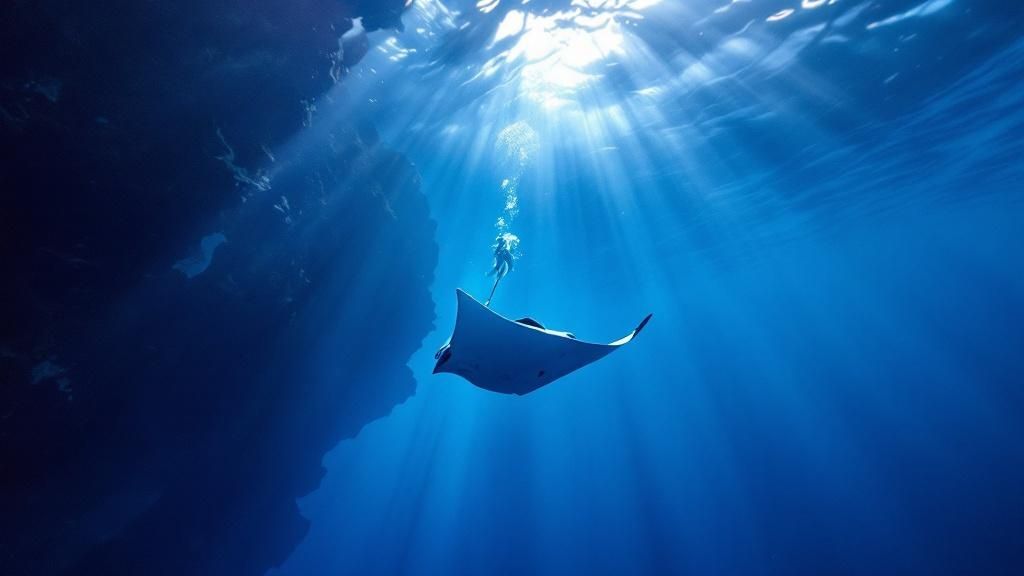
There are very few things you can do underwater that even come close to the feeling of a Kona manta ray dive. This is so much more than just another dive; it’s an opportunity to connect with some of the ocean’s most intelligent and gentle giants. Divers often describe it as being invited to a silent, graceful dance, where you are simply a guest in their world.
So, what makes Kona the go-to spot for this incredible adventure? It really boils down to two things: reliable sightings and a well-established, responsible tourism model. The Kona coastline is a year-round home for a resident population of reef mantas (Mobula alfredi). These mantas don't migrate, and they are drawn to the coast every night to feed on plankton, which are concentrated in the beams of light set up by dive operators. It's a brilliant and symbiotic setup.
Why Is This Dive So Reliable?
The consistency of the sightings is what truly sets Kona apart from anywhere else in the world. This reliability is why the dive attracts around 80,000 participants every single year. The area's currents create massive blooms of plankton, the mantas' favorite food.
At the most popular dive sites, the success rate for seeing mantas is incredibly high—often hovering between 80% and 90%. An encounter is pretty much a sure thing. This has allowed the local community to build a sustainable, world-class experience that protects these amazing animals.
An Unforgettable Bucket-List Adventure
The feeling of a 12-foot manta ray soaring right over your head is something that will stick with you forever. It's hard to describe the mix of awe and tranquility you feel when you see their sheer size paired with their peaceful nature. It’s a moment of pure underwater wonder.
If you’re curious about what makes this encounter so powerful, you can learn more about why you should go on a manta ray dive in Kona.
Booking your manta ray dive tour is the first step toward checking this incredible item off your bucket list. The entire adventure, from the sunset boat ride to the dive itself, is designed to build excitement for a truly unforgettable night.
Where to Dive: Choosing Your Perfect Manta Ray Site
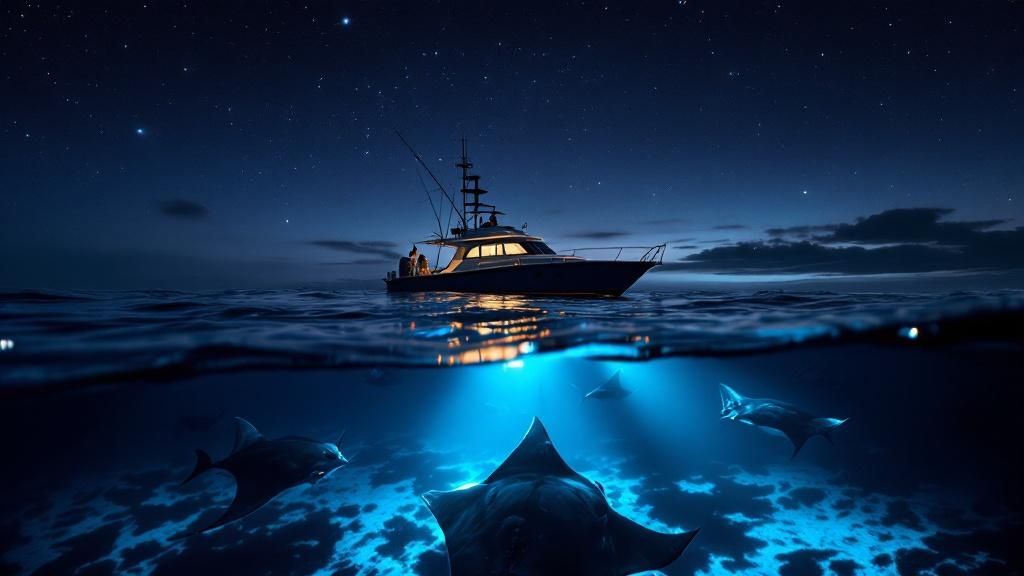
When you're ready to book your manta ray dive in Kona, you'll find there are two primary, world-class spots to choose from. They aren't interchangeable, though. Each location has its own unique character and offers a slightly different experience.
Knowing the personality of each site is the key to picking the right one for your comfort level and what you hope to get out of the adventure. Your choice comes down to two legendary spots: “Manta Village” and “Manta Heaven.”
Manta Village: The Classic Kona Experience
Just south of Kona town in the calm, protected waters of Keauhou Bay, you'll find Manta Village. This is the original, the OG of manta night dives. It’s famous for its relatively calm and shallow conditions, with a comfortable sandy bottom at around 35 feet.
This gentle environment makes it a fantastic choice for a few types of people:
- First-Time Night Divers: If you've never dived after sunset, Manta Village is a perfect introduction. Its tranquil setting is far less intimidating.
- Families and Snorkelers: The predictably calm surface is ideal for snorkelers floating above the action and for families with kids or mixed experience levels.
- Photographers: The reliable manta appearances and clear, shallow water create amazing opportunities for capturing that iconic “manta ballet” shot.
Thanks to its easy access and incredibly consistent sightings, Manta Village is a brilliant all-around choice that almost guarantees a magical night.
Manta Heaven: A More Dynamic Encounter
Head a bit further north, near the Kona International Airport, and you'll arrive at Manta Heaven (also known as Garden Eel Cove). This site tends to be a little deeper and can sometimes have more active water movement compared to the protected bay of Manta Village.
This spot often attracts more experienced divers. The reason? A stronger current can sweep in more plankton, which sometimes draws in an even greater number of mantas for a truly spectacular feeding frenzy. The deeper setting also offers a different vantage point, letting you watch these gentle giants glide down from the dark water above.
Deciding between Manta Village and Manta Heaven really defines your Kona experience. You can find more insights about the Kona manta dive sites and what makes each special. And while sightings are reliable year-round, it’s worth learning about the best time of year to see manta rays in Kona to ensure you’re comfortable with the water temps.
Manta Village vs. Manta Heaven At a Glance
Sometimes, seeing the details side-by-side makes the choice crystal clear. Use this quick comparison to help you decide which Kona manta ray dive site best fits your adventure style and experience level.
| Feature | Manta Village (Keauhou Bay) | Manta Heaven (Garden Eel Cove) |
|---|---|---|
| Location | South of Kailua-Kona | North of Kailua-Kona |
| Depth | Shallower (25-40 feet) | Deeper (35-50 feet) |
| Conditions | Generally calmer, more protected | Can have more current and surge |
| Best For | Beginners, snorkelers, families | Experienced divers |
| The Vibe | Relaxed, "amphitheater" feel | Dynamic, open-ocean feel |
Ultimately, you can't go wrong. Whether you opt for the calm predictability of Manta Village or the wilder energy of Manta Heaven, you're signing up for one of the most unforgettable underwater encounters on the planet.
What to Expect on Your Manta Adventure
That flutter of excitement you feel before a manta ray dive kona tour is half the fun. But knowing exactly what's in store can turn any nervousness into pure, unadulterated thrill. From the second you walk through our doors, everything is geared toward making this a seamless and truly unforgettable night.
Your adventure starts on land with a friendly check-in at the dive shop. Our crew will be there to welcome you, get you kitted out with the right gear, and make sure all the paperwork is handled. It's the perfect time to ask any last-minute questions you have. The whole vibe is relaxed and welcoming—the ideal start for the incredible evening ahead. Once everyone is set, it’s off to the boat for a beautiful ride along the Kona coast while the sun dips toward the horizon.
The Journey to the Dive Site
The boat ride out is an experience in itself. As we cruise to the dive site, the crew will give a full safety and educational briefing. We don't just read a list of rules; we explain the why behind them. You'll get a real understanding of manta ray behavior, what to expect in the water, and how the entire dive will play out.
This briefing is so important because it keeps both you and the mantas safe. You'll see the crew's passion and expertise shine through as they answer every question with confidence. They'll break down the core concept of the dive: creating an underwater "campfire" of light. This light acts like a magnet for plankton, the mantas' favorite food, essentially ringing the dinner bell for these gentle giants. For a deeper look at how it all works, check out our guide on what the manta ray night dive is all about.
The Underwater Ballet Begins
Once we anchor, the show really begins. The setup is brilliantly simple but unbelievably effective, giving both divers and snorkelers an amazing view.
Whether you're a diver settled on the ocean floor or a snorkeler floating on the surface, you have a front-row seat to one of nature's most spectacular performances. Both views are unique and utterly breathtaking.
Divers will descend with a guide and find a spot on the sandy bottom, usually around 30-40 feet deep. From there, you just look up. You'll watch as mantas swoop and perform graceful barrel rolls through the beams of light, sometimes coming within inches of you.
For snorkelers, the experience is just as mind-blowing. You'll hold onto a custom-built light board that floats on the surface. This board shines a bright light down into the water, attracting the plankton and drawing the mantas right up to you for an unparalleled top-down view of their feeding dance. It's an incredible way to be right in the middle of the action.
An Expert Crew Makes All the Difference
What really turns a great dive into a lifelong memory is the professionalism and care of the Kona Honu Divers crew. Their deep knowledge of our local marine life and unwavering commitment to safety mean everything runs like clockwork. They aren't just guides; they're passionate stewards of the ocean who genuinely love sharing these animals with you.
That dedication is clear in the countless amazing experiences our guests have shared. See for yourself what other divers and snorkelers are saying about their manta ray dive kona with us.
After about 45 minutes in the water, you’ll climb back on the boat, absolutely buzzing with what you just saw. We’ll have snacks and warm drinks ready for the cozy ride back to the harbor, giving you plenty of time to trade stories and photos with new friends. This complete, expertly managed adventure is why so many people choose to book their manta ray dive and snorkel tour with us.
How to Be a Responsible Manta Ray Observer
When you slip into the water for a manta ray dive in Kona, you're not just an observer; you're a guest in their world. Think of it less like a visit to an aquarium and more like being invited into someone’s home. It’s an incredible privilege that comes with the responsibility to be a respectful, considerate visitor.
By following a few simple but non-negotiable rules, you ensure these magnificent animals stay safe. More importantly, you help guarantee this amazing encounter can continue for many years to come. The foundation of it all is passive observation—look, admire, and be amazed, but never, ever touch.
The Golden Rule: No Touching
If you remember only one thing, make it this: do not touch the mantas. It's the absolute number one rule.
Manta rays have a special mucous layer, a kind of slime coat, that covers their skin. This is their frontline defense against bacteria and infections in the ocean. When a human hand touches them, it strips away that vital protective film. Even a well-intentioned, gentle graze can leave a manta vulnerable to serious skin diseases. To keep them healthy, we have to keep our hands to ourselves.
How to Interact Respectfully
Beyond the no-touching rule, being a good guest is all about your behavior in the water. Your goal is to be as predictable and non-threatening as possible. A calm environment means comfortable mantas, and comfortable mantas mean unforgettable encounters.
- Nail Your Buoyancy: For divers, this is crucial. You want to stay settled on the sandy bottom, avoiding any accidental ascents into the mantas' flight path. Good buoyancy control also prevents you from kicking up sand and disturbing the delicate ecosystem.
- Stay Calm and Still: The less you move, the better. Avoid flailing your arms, kicking wildly, or trying to chase after the animals. The more you act like a part of the scenery, the more likely a manta will get curious and glide right over you.
- Let Them Come to You: These gentle giants are incredibly curious. If you're patient and still, they will often approach on their own, sometimes passing just inches above your head. That's where the real magic happens—when the encounter is on their terms.
- Trust Your Guide: Listen to your divemaster. They are experts in manta behavior and know exactly where to position the group for the best views without causing stress to the animals. Follow their lead, and you'll be in the right spot at the right time.
The first step toward a responsible dive is choosing a reputable operator. When you dive with a company like Kona Honu Divers, you're actively supporting a business that puts the well-being of the manta rays first.
Your Choices Make a Difference
Your commitment to being a responsible ocean steward starts before you even get on the boat. Something as simple as using reef-safe sunscreen makes a huge impact. The chemicals in standard sunscreens are toxic to coral reefs and the marine life that depends on them, including the plankton that mantas eat.
What’s more, your participation in a guided dive directly supports vital conservation work. Responsible ecotourism helps fund the research needed to protect Kona's celebrated manta ray population. Since 1991, citizen science has helped identify and catalog individual mantas by their unique spot patterns, building a database of over 330 individuals and 28,500 sightings.
When you follow these guidelines—many pioneered by local operators over decades—you become part of the solution. You can read more about the ongoing push to formalize these protections in our open letter regarding manta rules. Your choice to dive responsibly helps ensure this incredible natural wonder continues to thrive.
Explore More of Kona’s Underwater World
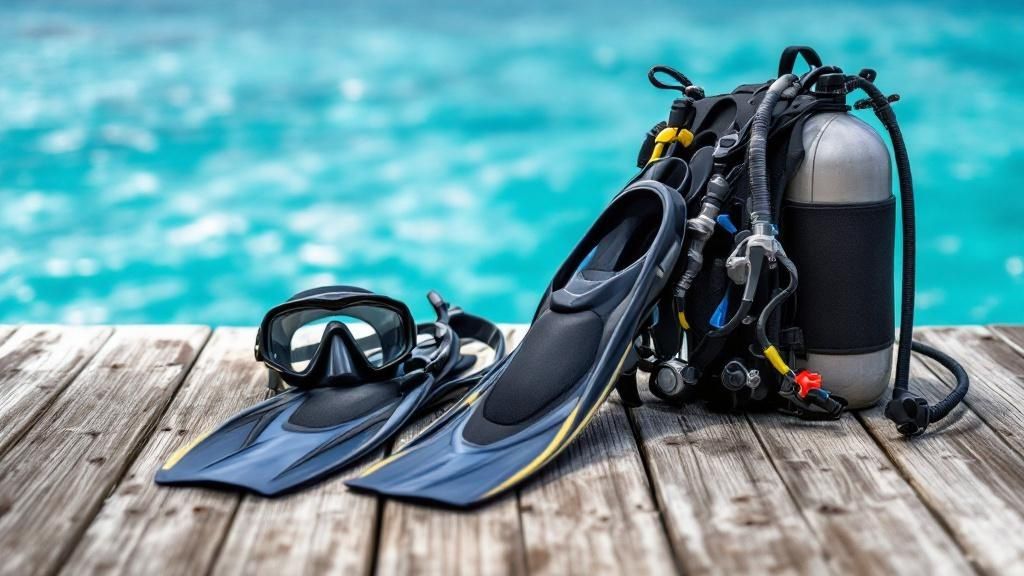
While the manta ray dive in Kona is an unforgettable, bucket-list experience, it's really just the beginning of what the Big Island has to offer. Think of it as the stunning opening act. Once you've seen the mantas, you'll be hooked, and trust me, there's a whole world of incredible diving tours waiting for you just beyond the reef.
Kona isn’t just a one-trick pony; it’s a world-class diving destination for a reason. The underwater landscape here is as diverse and dramatic as the island itself, with everything from deep-sea oddities to ancient lava tubes.
The Famous Kona Blackwater Dive
Picture this: you're floating miles offshore in the dead of night, suspended over thousands of feet of inky black water. This is the Kona Blackwater Dive, and it’s as close to floating through outer space as you can get. It is, without a doubt, one of the most unique night dives on the entire planet.
Tethered securely to the boat, you drift with the current and watch one of nature’s greatest light shows. Your dive light illuminates a constant parade of strange and wonderful creatures rising from the deep to feed near the surface. You'll see things you'd never find on a reef—tiny, translucent larval fish, bizarre jellies, and all sorts of bioluminescent critters.
The Blackwater Dive isn't about big animals; it's about the small, the strange, and the surreal. It's a journey into a hidden world that reveals the incredible biodiversity thriving in the deep ocean off the Kona coast.
This is a dive that feels like a trip to another planet. If you're up for a truly unique adventure, don't miss the chance to experience our Blackwater Dive tour for yourself.
Adventures for Experienced Divers
If you're a certified diver with a taste for adventure, Kona's volcanic origins have created an underwater playground just for you. These advanced sites go far beyond a standard reef tour, offering challenges and sights that will get any seasoned diver's pulse racing.
Here’s a taste of what’s waiting for you out there:
- Exploring Lava Tubes: Imagine swimming through ancient underwater caverns and archways carved out by flowing lava centuries ago.
- Deep Reefs and Pinnacles: Descend along dramatic drop-offs and explore isolated pinnacles that rise from the depths, teeming with life.
- Discovering Unique Formations: You can find everything from sheer walls covered in vibrant sponges to hidden shark nurseries.
These advanced charters are all about showing you the wilder, more rugged side of Kona's underwater world. We have a deep knowledge of the area and run premium advanced dive tours designed to get you to these exclusive sites safely.
From the gentle giants of the manta dive to the otherworldly creatures of the blackwater, Kona is a destination that truly has it all. We’d be thrilled to show you every incredible corner of it.
Your Manta Ray Dive Questions, Answered
Even after getting pumped up for the adventure, it's totally normal to have a few last-minute questions buzzing around your head before you book your manta ray dive in Kona. Getting those sorted out is the final step to feeling confident and ready for what is truly an unforgettable night.
Let's dive into some of the questions we hear all the time from divers and snorkelers just like you.
What if I’m Not a Certified Scuba Diver?
No problem at all! You absolutely do not need to be a scuba diver to get a front-row seat for this incredible underwater show. The manta ray snorkeling option is designed to be just as spectacular.
Snorkelers get to hold onto a custom-built floating board that has powerful lights pointing down into the water. This gives you a perfect bird's-eye view as the mantas glide and feed just a few feet beneath you. It’s an incredibly safe, comfortable, and breathtaking way to see all the action.
What Is the Best Time of Year to See Manta Rays?
Here’s the fantastic news: any time is a great time! Kona's resident manta ray population doesn't migrate, which means they’re here and active all year long. The sighting success rate hovers consistently above a remarkable 90%, regardless of the month you visit.
The water is definitely warmer between April and October, which is a big plus for many people. That said, the winter months are also amazing and can sometimes be a bit less crowded. You can book your trip for any season, knowing you have an excellent chance for a world-class manta ray dive.
What Happens if We Don't See Any Mantas?
While sightings are incredibly reliable, we are dealing with wild animals, and their behavior can never be guaranteed with 100% certainty. The best tour operators know this and have policies in place because they’re committed to you having a great experience.
That’s why Kona Honu Divers has a "manta guarantee." If your tour doesn't see a manta ray, you can come back and try again on another night for free, based on availability. This takes the pressure off and gives you the best possible shot at witnessing the magic.
What Should I Bring on the Tour?
Your tour operator handles almost everything you'll need in the water, but bringing a few personal items will make your trip much more comfortable. Think of it like a quick day-pack.
- A towel for drying off when you get back on the boat.
- A warm jacket or hoodie for the boat ride home. It can get chilly once you're out of the water!
- Motion sickness medication, if you're prone to it. Be sure to take it before the boat leaves the harbor.
- A reusable water bottle is always a good idea to stay hydrated.
Operators like Kona Honu Divers will provide all the gear (wetsuits, masks, etc.) and typically have snacks and drinks on board. For a deeper dive, check out these frequently asked questions about manta ray encounters for even more detailed info.
Ready to book this bucket-list experience?
For the best and safest manta ray dive in Kona, book your tour with the experts at Kona Honu Divers. Explore all our incredible manta ray dive tours and reserve your spot today.