
Picture this: you’re floating in the inky blackness of the Pacific, and suddenly, a majestic manta ray with a wingspan wider than a car glides inches from your face. This isn't some rare, once-in-a-lifetime fluke. This is the world-famous manta ray dive in Kona, and it’s one of the planet's most reliable and jaw-dropping wildlife encounters. It’s an underwater ballet, and you’ve got a front-row seat.
An Unforgettable Kona Manta Ray Encounter
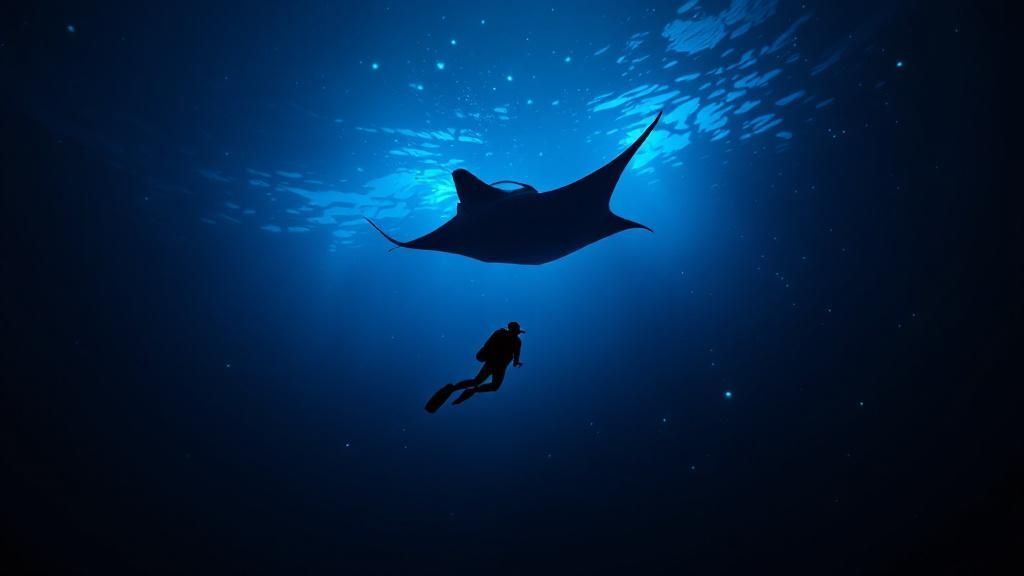
This guide is your complete roadmap to experiencing this magic for yourself. We'll dive into what makes Kona's unique ecosystem the perfect nightly feeding ground for these gentle giants, drawing them to the lights of divers and snorkelers like moths to a flame. It's a natural spectacle, perfected over years by local operators who treat these animals with the utmost respect.
Every year, the Kona coast draws about 80,000 people who come specifically for these incredible manta ray experiences. What makes it so consistent? Nutrient-rich currents create dense blooms of plankton, the mantas' favorite food, which brings them in to feed every single night. The success rate for seeing them is an incredible 80% to 90% all year long, cementing Kona's reputation as the most reliable place on Earth to see manta rays.
Why Is This Dive So Special?
What sets the Kona dive apart from encounters elsewhere in the world—which often happen at "cleaning stations"—is that this is a feeding event. Divers and snorkelers use powerful underwater lights to attract plankton, creating a concentrated buffet that the mantas simply can't resist.
This setup leads to an unbelievable show of natural behavior. You'll watch as the mantas perform graceful barrel rolls and looping acrobatics, soaring right through the light beams to filter-feed on the plankton. It's not a passive viewing; it's an active, dynamic, and profoundly moving interaction.
Here at Kona Honu Divers, we've refined this adventure into an experience that is safe, respectful, and absolutely awe-inspiring. Our entire operation is built around ensuring the well-being of the mantas while giving our guests a memory that will genuinely last a lifetime. You can learn more about what makes this Kona dive a must-do adventure right here on our blog.
Choosing the right crew is everything. You need an operator with a stellar safety record and, just as importantly, a deep respect for the marine life you're there to see.
Planning Your Adventure
So, are you ready to plan for the underwater ballet of a lifetime? The great news is this experience is open to both certified divers and snorkelers, so almost anyone can join in.
- For Divers: You’ll descend to the sandy bottom, around 35 feet deep, and shine your light up towards the surface.
- For Snorkelers: You’ll float comfortably at the surface, holding onto a custom-built light board that illuminates the water below.
Both positions offer spectacular, up-close views as the mantas swoop and feed. The choice is yours, and either way, you're in for an incredible night.
Choosing Your Dive Site: Manta Village Vs. Manta Heaven
Your manta ray dive kona adventure hinges on one big decision: which underwater stage will you choose? Kona is famous for two world-class manta ray feeding sites, and while both are incredible, they offer totally different experiences. Picking the right one is all about matching the dive to your comfort level and what you're hoping to witness.
Think of it like choosing between a cozy, intimate concert and a massive stadium show. Both can be amazing, but the vibe is completely different. The same goes for Manta Village and Manta Heaven. You can read more about what makes the Kona manta dive so special on our blog, but the key is understanding that these aren't just spots on a map—they're unique ecosystems with their own personalities.
Manta Village: The Classic Campfire
Tucked away in the calm, sheltered waters of Keauhou Bay, Manta Village is the original, the classic. It's often called the "Manta Campfire" for a good reason. Divers settle on the sandy bottom in a semi-circle, pointing their lights upward to create a column of light that attracts plankton, and in turn, the mantas. It’s a beautiful, communal experience.
This site is known for:
- Shallower Depths: The dive usually bottoms out around 30 to 40 feet, making it less intimidating for newer divers or those who haven't been in the water for a while.
- Calm Conditions: Because it’s in a bay, it’s well-protected from open ocean swell and currents. This means a more relaxed and predictable dive from start to finish.
- Incredible Reliability: Manta Village has a sighting success rate of over 90%. It’s pretty much the most reliable wildlife encounter you could ask for, anywhere on the planet.
For these reasons, Manta Village is our top recommendation for first-time night divers, families, and anyone who prefers a serene and almost guaranteed encounter.
Manta Heaven: A Dynamic Underwater Theater
Head a bit north, just off the coast near the Kona International Airport, and you'll find Manta Heaven. By day, it's known as Garden Eel Cove, but by night, it transforms into a wilder, more dynamic feeding ground.
Manta Heaven is where you might see a larger congregation of mantas at once. It’s a vast, open theater where the performance can feel grander and more unpredictable, appealing to those seeking a more dramatic encounter.
This location is famous for:
- A Deeper Setting: The action here happens a little deeper, usually between 35 to 45 feet, giving it a more open-ocean feel.
- Potential for More Mantas: While both sites are consistent, Manta Heaven is known to sometimes attract larger groups of mantas, creating a swirling vortex of giants that will leave you breathless.
- More Movement: This site can occasionally get stronger currents, so divers should be comfortable with conditions that can be a bit more challenging.
If you’re a more experienced diver or this is your second or third manta dive, Manta Heaven offers a thrilling experience that shows off the wilder side of Kona’s underwater world. It’s a crucial choice when planning your ultimate manta ray dive tour.
Manta Village vs. Manta Heaven at a Glance
To help you decide, here's a quick comparison of the two premier Kona manta ray dive sites. Think about your experience level and what kind of vibe you're looking for on your adventure.
| Feature | Manta Village (Keauhou Bay) | Manta Heaven (Garden Eel Cove) |
|---|---|---|
| Location | South of Kona, in a protected bay | North of Kona, near the airport |
| Depth | 30-40 feet (shallower) | 35-45 feet (deeper) |
| Conditions | Calm, protected, minimal current | Can have stronger currents, more open |
| Best For | Beginners, families, first-time night divers | Experienced divers, adventurous spirits |
| Vibe | Intimate "campfire" gathering | Grand, unpredictable "underwater theater" |
| Success Rate | Extremely high (over 90%) | Very high, with potential for larger groups |
Ultimately, you can't go wrong with either site. Both offer a life-changing opportunity to get up close with these gentle giants. The choice just comes down to personal preference—do you want a cozy campfire story or a blockbuster movie?
What to Expect During Your Manta Ray Night Dive
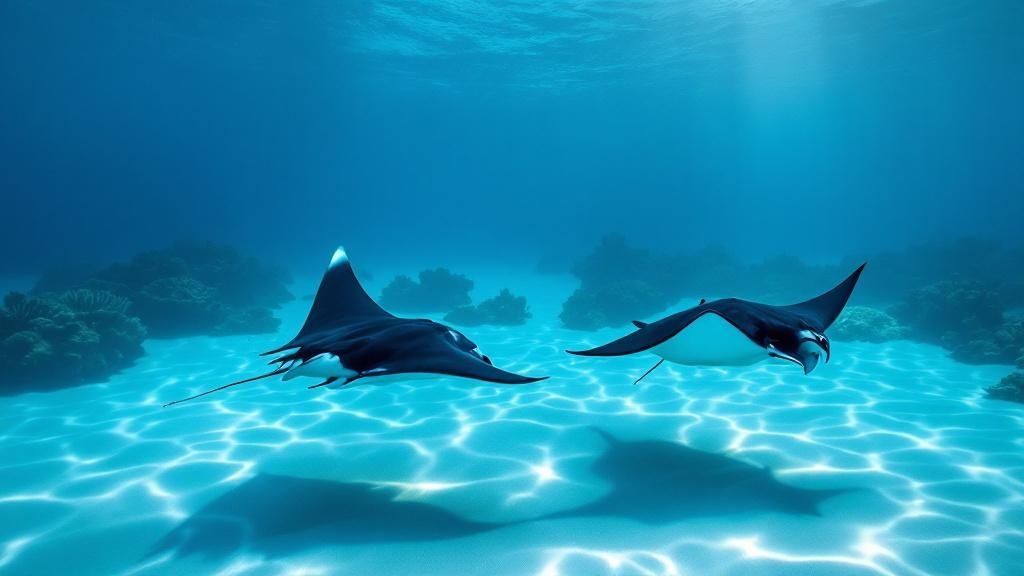
The feeling you get just before a manta ray dive in Kona is electric. It really starts the moment you step onto the boat, with the sun setting over the water, painting the sky in fiery oranges and purples. It's one thing to be excited, but it's another to know exactly what that excitement is for.
Let's walk through the entire adventure, from the friendly crew briefing to the surreal underwater ballet. Your journey doesn’t begin when you hit the water; it starts on deck, surrounded by professionals whose passion for the ocean is absolutely contagious.
The Journey Begins Onboard
Your excursion starts with a warm welcome from the Kona Honu Divers crew. The first order of business is always a detailed briefing, because safety and education are everything. You'll learn all about the mantas, their habits, and the all-important rules for interacting with them—what we call "Manta Etiquette."
These guidelines aren't just for show; they exist to protect these gentle giants and make sure they feel safe enough to return night after night. It’s a system built on mutual respect. As the boat heads out to the dive site, you'll gear up, run through your safety checks, and feel the anticipation building with every wave. The trip is usually short, and before you know it, you’ve arrived.
Descent into the Underwater Theater
Slipping beneath the waves into the twilight ocean is like entering another world. If you're diving, the plan is to descend to the sandy bottom, around 30 to 45 feet deep, and find a spot with the group. You'll settle in, forming a semi-circle that creates a perfect "stage" in the middle.
Once you’re settled, you'll point your powerful dive light straight up. This is the secret sauce. Your beam, combined with everyone else's, creates a massive column of light that acts like a magnet for zooplankton—the mantas' favorite meal. For snorkelers, it's a similar setup at the surface, where they hold onto a floating light board that shines down into the water.
Then, you wait. It's a quiet, almost meditative moment. You're a guest in their home, patiently waiting for the main event. Playing this passive role is the key to a safe and unforgettable encounter for everyone, mantas included.
Suddenly, a shadow cuts through the edge of the light. Then another. The silent, graceful arrival of the first manta ray is a moment that will be seared into your memory forever. They glide effortlessly into the beams, their huge mouths wide open to filter-feed on the cloud of plankton. This incredible behavior is what makes the whole thing possible, and you can learn more about the basic principles of the manta ray night dive in our other guide.
The Main Event: The Manta Ballet
What happens next is pure magic. The mantas begin to perform, executing slow-motion barrel rolls and elegant backflips just inches above your head. They are completely lost in their meal, seemingly unfazed by the audience of awestruck humans watching from below. It’s an experience that feels intimate, humbling, and profoundly moving.
Your guide will be close by for the whole dive, which usually lasts about 45 minutes, making sure everyone is safe and following the rules. You just have to hold your spot, maintain good buoyancy, and soak it all in.
When it's over, you'll ascend back to the boat, absolutely buzzing with energy. The ride back to the harbor under a sky full of stars is the perfect time to share stories with your new friends and warm up with the snacks and hot drinks the crew provides. It’s the perfect cap on a true bucket-list adventure.
When choosing an operator, consistency, safety, and a deep respect for marine life are crucial.
The Science Behind Kona’s Manta Spectacle
Ever wonder why Kona is the world capital for manta ray encounters? It’s not just a lucky coincidence. It's a fascinating mix of unique geography, marine biology, and a really special partnership between the dive community and scientists. The nightly manta ray dive in Kona isn't just putting on a show; it's a living, breathing ecological event.
The magic all starts with life you can't even see. The specific ocean currents and underwater landscape along the Kona coast create the perfect conditions for phytoplankton and zooplankton to gather in dense clouds. When dive operators shine powerful lights into the water, it's like ringing a dinner bell. This plankton is drawn to the beams, creating a concentrated, irresistible buffet for the filter-feeding mantas.
More Than Just a Dive, It's Citizen Science
What really takes this experience to another level—from a cool tourist attraction to a vital conservation effort—is the incredible citizen science program built around it. We're not just watching mantas here; we're actively helping to understand and protect them for years to come.
Every single manta ray has a unique pattern of spots on its belly, which works just like a human fingerprint. No two are alike. This allows researchers and our guides to identify, track, and monitor individual animals over their entire lives.
This simple but powerful fact turns every dive into a data-collection mission. Dive operators like us at Kona Honu Divers are on the front lines, working hand-in-hand with research organizations. Our guides are trained to photograph the bellies of any new, unidentified mantas and to log sightings of the old-timers we know and love.
A Living Database of Gentle Giants
This massive team effort has built a database that is absolutely priceless for conservation. Since 1991, this citizen science project has cataloged nearly 6,000 manta ray encounters and logged over 28,500 individual sightings. The local Kona population we've identified now includes over 330 individual mantas, which includes both the common reef manta (Mobula alfredi) and the much larger giant manta ray (Mobula birostris).
This data helps scientists track the population's health, their travel patterns, and even their reproductive cycles. When you join a manta ray dive in Kona, you're doing so much more than just seeing something amazing; you become an active participant. The photos and observations from your trip contribute directly to decades of important research. You become part of their story, helping ensure these majestic creatures continue to grace our waters. You can learn more about how we facilitate this unique experience in our guide to the manta ray night dive in Kailua-Kona.
So when you book a tour, you’re not just buying a ticket—you're funding and taking part in one of the most successful community-based conservation projects on the planet. It’s a beautiful cycle where responsible tourism directly supports the science needed to protect the very animals that bring us all so much joy.
Your Safety & What to Bring
Getting ready for a manta ray night dive is about more than just showing up. To have an incredible, comfortable, and safe experience, you need to come prepared. That means having the right gear and, just as importantly, understanding the strict rules of engagement in the water.
These guidelines are what make this whole magical encounter possible. They’ve built a foundation of trust that allows the mantas to return to these sites, night after night, completely at ease with our presence. When you’re in their world, you’re a guest, and following these rules ensures this amazing spectacle can continue for many years to come.
Essential Dive Gear Checklist
While we provide the core life-support equipment, a few personal items will seriously upgrade your comfort. The less you have to think about your gear, the more you can focus on the graceful giants gliding all around you.
- Proper Wetsuit Thickness: Hawaiian waters are warm, averaging around 75°F (24°C). But after sitting mostly still for 45 minutes at night, you’ll get chilly. We strongly recommend a 3mm to 5mm full wetsuit to stay toasty and comfortable for the entire show.
- High-Powered Dive Lights: This is the secret sauce. We (Kona Honu Divers) provide powerful, professional-grade underwater lights, and they do more than just help you see. Their main job is to create a brilliant column of light that attracts the plankton—the mantas' dinner. Using our lights is absolutely crucial to the success of the dive.
- Basic Dive Gear: You'll bring your own mask, fins, and BCD. The most important thing is that your mask has a fantastic seal and you're completely comfortable with your setup before descending. A leaky mask is a distraction you don't need!
Manta Etiquette: The Golden Rules
The most critical part of your briefing is learning what we call "Manta Etiquette." These are the non-negotiable rules for interacting with manta rays, designed to keep them safe and unharmed. Think of it as being a polite visitor in someone else's home.
The number one rule is simple: Observe only, do not touch. Manta rays have a protective mucous layer on their skin that's basically their immune system. Touching them strips this coating away, leaving them vulnerable to nasty infections. This is the single most important rule of the entire dive.
Every reputable operator will enforce these rules, and we take them very seriously.
- Hold Your Spot: Divers, you’ll be positioned on or near the sandy bottom. This keeps the water column wide open for the mantas to swoop and glide without any obstacles. Snorkelers, you must stay on the surface with your flotation device.
- Nail Your Buoyancy: This is key. Great buoyancy control keeps you from accidentally floating up into the mantas' flight path. It also prevents you from kicking up sand, which clouds the water and disturbs the environment.
- No Chasing: Never, ever chase, pursue, or try to ride a manta ray. Let these wild animals come to you. Your only job is to be a calm, stationary observer and enjoy the show they put on.
- Watch Your Bubbles: As a diver, try to time your breathing. When a manta is gliding right over your head, avoid exhaling a big stream of bubbles directly into its path.
- Point Your Light Correctly: This is a team effort. Divers on the bottom shine their lights up toward the surface. Snorkelers on the surface shine their lights down. This collaboration concentrates all the plankton in the middle of the water column, creating the perfect feeding zone for the mantas.
By following these simple but vital rules, you’re playing a direct role in protecting Kona's cherished manta ray population. If you want to learn even more, check out our complete guide to the manta ray night dive in Hawaii.
Don’t Stop at the Mantas: Kona’s Other Epic Dives
The world-famous manta ray dive in Kona might be what brought you here, but it's really just the opening act for an incredible underwater festival. The Big Island’s volcanic origins have sculpted a true diver's playground, with adventures for every skill level and obsession. Once you've seen the manta ballet, you'll realize Kona’s aquatic world has a whole lot more to show you.
Diving into these other sites adds so much more flavor to your Hawaiian dive trip. You can check out the full menu of spectacular diving tours in Kona and build an itinerary that goes way beyond just one famous night dive.
The Kona Blackwater Dive: A Trip to Inner Space
If you're looking for something truly surreal, an experience that will stick with you forever, nothing comes close to the Kona blackwater dive. Picture this: you're drifting in the deep, inky-black ocean miles from shore, suspended over thousands of feet of water. It’s an adventure that feels more like floating through space than scuba diving.
At night, one of the planet's largest migrations happens as bizarre and beautiful creatures rise from the abyss to feed. You'll come face-to-face with tiny, see-through squids, otherworldly larval fish, and pulsating jellyfish that light up the dark. It’s a completely different universe down there.
Daytime Reefs and Lava Tubes
Kona’s diving is just as stunning when the sun is up, boasting some of the healthiest and most vibrant coral reefs in all of Hawaii. The underwater landscape is a dramatic tapestry of arches, caverns, and swim-throughs carved out by ancient lava flows.
These incredible structures are buzzing with life. It's a playground for green sea turtles (honu), a resting place for whitetip reef sharks, and home to a dizzying number of colorful reef fish.
The visibility in Kona is often just mind-blowing, sometimes pushing past 100 feet. It makes the whole experience feel like you're flying through a high-definition underwater world—an absolute dream for photographers.
For certified divers ready to take their skills to the next level, Kona Honu Divers also runs advanced diving opportunities to deeper, more challenging sites. These are special trips that explore remote pinnacles and dramatic drop-offs where you have a chance to spot more elusive marine life. Our experienced crew knows every nook, cranny, and secret spot, making sure every single dive is a fresh adventure.
Your Kona Manta Ray Dive Questions Answered
Even the most seasoned travelers have questions before jumping into a truly once-in-a-lifetime experience like the manta ray dive kona. Let's clear up some of the most common things people ask, so you can head out onto the water feeling totally prepared and bursting with excitement.
What Is The Best Time Of Year For A Manta Ray Dive In Kona?
This is one of the best parts about diving here—there’s really no "off-season" for mantas! The Kona manta ray dive is a fantastic, year-round spectacle.
We're lucky to have a stable, non-migratory population of manta rays that sticks around all year. Thanks to them and a consistent food source of plankton, the sighting success rate stays incredibly high, often over 90%, no matter when you book your trip.
What Happens If We Don't See Any Mantas?
While sightings are almost a sure thing, we're still dealing with wild animals in their natural habitat, so nothing can ever be 100% guaranteed. This is where choosing a top-tier operator really pays off.
Reputable companies, like Kona Honu Divers, stand by their tours with a "manta guarantee." If your trip happens to be one of the very rare ones where the mantas don't show, they'll usually invite you to come back for another try, free of charge, on a space-available basis.
This kind of policy just shows how confident they are in their ability to find the mantas and how committed they are to making sure you have an amazing experience. You can see how it all works by checking out a complete guide to the Big Island manta ray night dive.
Do I Need To Be A Certified Diver?
Not at all! While certified divers get that incredible perspective from the seafloor, looking up as the mantas swoop overhead, the view from the surface is just as breathtaking.
Snorkelers get to float comfortably, holding onto a custom light board that shines down into the water. This light attracts the plankton, and the mantas swim right up to the surface for a meal, giving snorkelers a front-row seat to the action. You're literally inches away from them.
Is The Manta Ray Night Dive Safe?
Absolutely. When you go with a professional, experienced dive operator, safety is the number one priority. The dive sites are well-known, the pre-dive safety briefings are incredibly detailed, and everyone follows strict "Manta Etiquette" rules.
These guidelines are there to protect both you and the mantas, ensuring every encounter is respectful, controlled, and safe for everyone involved. It's all about passive observation—we're just quiet visitors in their world.
Ready to book the adventure of a lifetime? Kona Honu Divers offers expertly guided and safe manta ray dive tours that will leave you with memories you'll cherish forever.