
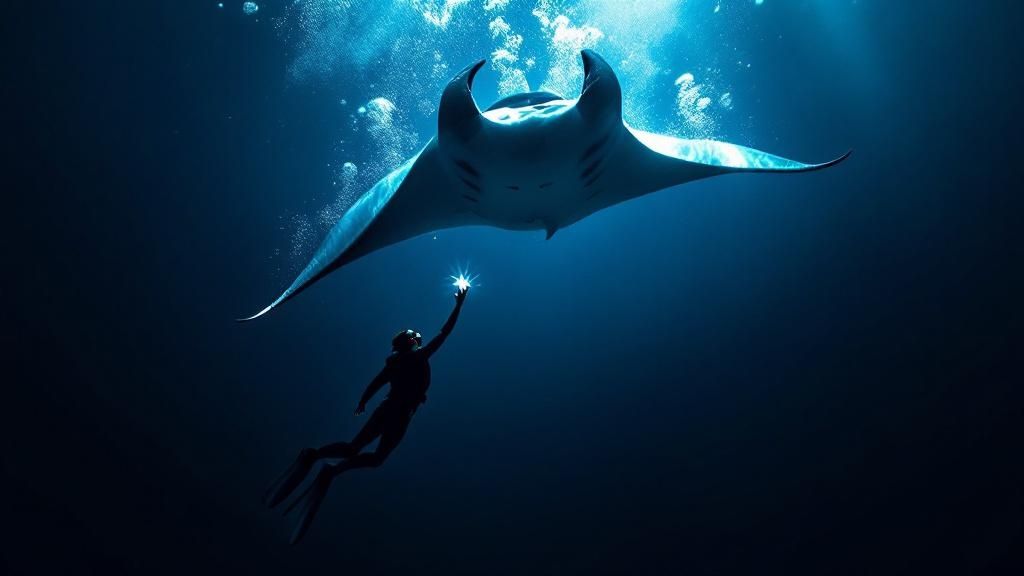
Picture this: you're floating weightlessly in the warm, dark waters of the Pacific. Out of the gloom, a colossal, gentle giant with a wingspan stretching up to 18 feet glides effortlessly toward you, performing a graceful underwater ballet. This isn't a dream; it's the world-famous manta ray dive in Kona, an experience that genuinely feels like stepping into another world.
Experience the Magic of the Kona Manta Ray Dive
The Kona coast on Hawaii’s Big Island has become the premier destination for this incredible spectacle, attracting divers and snorkelers from all corners of the globe. While manta encounters in other parts of the world can be hit-or-miss, the Kona dive boasts a staggering success rate of over 90%. This remarkable consistency is what turns it from a hopeful wish into a true bucket-list adventure.
So, what’s the secret? The whole experience is built on a beautifully simple and effective idea. As the sun sets, powerful lights are placed in the water, illuminating the darkness. These lights attract massive clouds of plankton, which just so happens to be the manta rays' favorite meal. The result is a mesmerizing feeding display where the mantas perform somersaults and barrel rolls, scooping up plankton right before your eyes.
I’ve been doing this for years, and I still can't quite capture the feeling of watching a creature the size and shape of a stealth bomber emerge from the darkness. It’s a mix of awe, wonder, and pure joy—something you truly have to see to believe.
What to Expect on Your Dive
The great thing is, you don’t have to be a seasoned scuba diver to get a front-row seat. Certified divers will find their spot on the sandy ocean floor, typically around 25-35 feet deep. From there, you just look up as these magnificent animals soar just inches above your head. It’s an absolutely breathtaking perspective.
Snorkelers get an equally amazing view from the surface. You'll hold onto a custom-built light board that attracts the plankton, and you can watch the mantas glide and feed just a few feet beneath you.
This whole encounter is a textbook example of responsible, sustainable ecotourism. There are strict guidelines in place: no touching, no chasing, no harassing the animals. This ensures the mantas can feed naturally and without stress, creating a safe and memorable interaction for everyone involved. To get a deeper feel for the experience, check out our guide on what it's like to go on the manta ray dive in Kona, Hawaii.
When you dive with a reputable, conservation-minded operator, you're not just a tourist; you're part of a system that protects these incredible creatures for generations to come.
Choosing Your Dive Site: Manta Heaven vs. Manta Village
When you decide to do the manta ray night dive in Kona, your first big choice is where to go. You'll hear two names come up again and again: Manta Heaven and Manta Village. Both spots offer absolutely unforgettable encounters with these gentle giants, but they deliver two very different kinds of experiences.
Think of it like choosing between a huge, open-air music festival and an intimate acoustic show. You'll see an amazing performance either way, but the vibe, the crowd, and your point of view will be completely different. This choice really does shape your entire adventure.
Kona's reputation for this dive is legendary for a reason—it draws around 80,000 visitors every year to witness the underwater ballet. For the best conditions, plan your trip between April and October. The water is warmer, and it’s common to see an average of 8 to 12 mantas on a single trip. You can learn more about Kona's premier manta dive sites to get the full picture.
Manta Village: The Classic Kona Experience
Manta Village, nestled in the calm, protected waters of Keauhou Bay, is the original site for this incredible dive. It’s where it all started, and its reliable, gentle conditions make it a fantastic choice, especially if you're a first-timer, diving with family, or snorkeling.
The bottom here is a fairly shallow, sandy expanse sitting at about 25-35 feet. This geography creates a perfect natural "amphitheater." Divers settle on the sand and look up as the mantas swoop and glide overhead. Because it's in a sheltered bay, the water is typically calm with minimal current, which makes for a very relaxed and predictable experience. It’s the perfect place to build your confidence and just soak it all in.
Manta Heaven: A More Dynamic Encounter
A bit further north, just off the Kona International Airport, you'll find Manta Heaven. Sometimes called Garden Eel Cove, this site offers a completely different flavor of the manta ray dive in Kona. The environment here is more exposed, with depths ranging from 30-50 feet, and you can sometimes expect a bit more current.
So, why choose Manta Heaven? That more dynamic environment can lead to more thrilling, up-close encounters. The mantas have to navigate the moving water, often bringing them right over your head. This is why more experienced divers and underwater photographers often gravitate here—they're comfortable with the variable conditions and are chasing those truly breathtaking, close-pass shots.
To help you decide which underwater stage is right for you, here’s a quick comparison of the two sites.
Manta Heaven vs Manta Village at a Glance
This table breaks down the key differences between Kona's two main manta ray locations, helping you match the dive site to your comfort level and what you hope to experience.
| Feature | Manta Heaven | Manta Village |
|---|---|---|
| Location | Off Kona International Airport | Keauhou Bay |
| Typical Depth | 30-50 feet (9-15 meters) | 25-35 feet (8-11 meters) |
| Conditions | Can have stronger currents, deeper water | Calm, protected bay, shallower sandy bottom |
| Best For | Experienced divers, photographers | Beginner divers, snorkelers, families |
| Experience | More dynamic, closer encounters | Gentle, stadium-like viewing area |
Ultimately, there’s no wrong answer here. Whether you opt for the classic calm of Manta Village or the dynamic action of Manta Heaven, you're signing up for a night you'll never forget. The real key is to match the site's personality to your own.
Ready to book your adventure? Check out our manta ray dive tours and pick the perfect spot for your trip.
Why Kona Is a Living Laboratory for Manta Ray Research
Those incredible manta encounters you experience off the Kona coast are more than just a magical tourist dive. They're actually the foundation of critical marine research happening right here in Hawaii. Kona has this one-of-a-kind setup where manta rays show up to feed almost every single night, turning the coastline into a real-world, living laboratory for scientists studying these gentle giants.
This reliable nightly show gives researchers a golden opportunity for long-term studies—the kind that would be nearly impossible anywhere else on the planet. For decades, scientists and local dive professionals have been working together, building an unbelievably detailed database of the resident manta population.
A Database Decades in the Making
So, how do they do it? The secret is written on the mantas themselves. Much like a human fingerprint, every manta ray has a completely unique pattern of black spots on its white belly. By snapping a photo of this "ventral" pattern, researchers can identify and track specific mantas throughout their lives.
This photo-ID method has been a total game-changer. It means every single dive has the potential to become a data point, transforming a recreational manta ray dive in Kona into a moment of scientific discovery.
The ability to identify individual mantas year after year gives us an unparalleled window into their lives. We can track their growth, movements, and even social behaviors, which is critical for their protection.
Researchers have been at this for a long time. Intensive monitoring between 2009 and 2014 added thousands of sightings to a dataset that actually began way back in 1991. One project, over a 14-year period, logged over 28,500 sightings of nearly 6,000 unique manta rays. This treasure trove of information helps scientists understand everything from manta health and migration patterns to seasonal population shifts—all essential for effective conservation.
From Ecotourism to Essential Science
The data gathered on these dives has given us a much deeper understanding of these animals. Researchers have identified a core group of resident mantas and even pinpointed their favorite hangouts, like Manta Village and Manta Heaven. This not only helps dive operators predict where the mantas will be, making for a better experience, but it also informs strategies to protect these vital habitats.
This beautiful partnership between tourism and science is what makes the Kona experience so special. The dive operators and the research community are in it together, making sure the nightly spectacle is both sustainable and respectful. It's a perfect example of how ecotourism can directly fund and fuel conservation work. If you're curious about how the dive itself works, you can read our guide on what is a manta ray night dive.
This dedication to science is what cements Kona’s status as the world’s gold standard for responsible manta ray tourism and a true cornerstone for their protection worldwide.
How to Choose the Best Manta Ray Dive Operator
Let's be clear: the single most important decision you'll make for your manta ray dive in Kona is picking the right operator. This choice isn't just about finding a boat to get you to the site. It’s what separates a decent dip in the ocean from a genuinely unforgettable, world-class encounter.
Think of it like this: you wouldn’t hire just anyone to guide you up a mountain. You’d want an expert who knows the terrain, prioritizes your safety, and respects the environment. The same exact logic applies to diving with mantas. The best companies are the ones that insist on smaller groups, give incredibly thorough briefings, and hire guides who are genuinely passionate about protecting these animals.
What to Look for in a Tour Operator
As you start your research, zero in on operators who are open and proud of their commitment to sustainable tourism. Look for companies that actively follow the established guidelines for manta interactions—these rules are what keep both you and the mantas safe. Simple things like no touching and staying in your designated spot make a world of difference.
A great way to gauge an operator's quality is by their reputation and how long they've been doing this. Companies like Kona Honu Divers have spent years building a name for themselves based on top-notch service and an unwavering commitment to safety and conservation. You just can’t fake that kind of track record.
Key Questions to Ask Before Booking
Don't be shy about asking some pointed questions before you hand over your credit card. Getting clear answers will give you confidence and help you know you're making the right call.
- Group Size: How many divers or snorkelers do they put with each guide? Smaller groups almost always mean a better, safer, and more personal experience. It's that simple.
- Safety Briefing: Ask them what their pre-dive briefing includes. A good one will cover everything from manta etiquette and safety procedures to exactly what you can expect once you’re in the water.
- Cancellation Policy: What’s the plan if the mantas don't show up? It happens. The best companies usually offer a "manta guarantee"—a chance to go again for free or at a steep discount. This is a huge reason to book your dive early in your trip!
Choosing an operator is an investment in your experience. A company that values safety, education, and conservation will not only give you a better dive but also contributes to the long-term health of Kona's manta population.
Putting in a little bit of homework upfront ensures you book one of the best manta ray dive tours out there. That way, your adventure is not only breathtaking but also responsible, helping to protect the very ecosystem that makes this magic possible.
How to Have a Safe and Respectful Manta Encounter
Any great manta ray dive in Kona comes down to one thing: respecting the animals and the environment. This isn't just about having a good time; it's about making sure these beautiful creatures are safe. Every professional operator out here lives by a strict set of rules, and they aren't optional. They're what keeps this incredible experience possible for everyone.
The golden rule is simple: be a passive observer. You're a guest in their world. That means absolutely no touching, no chasing, and no getting in their way. Think of it this way: manta rays have a delicate, slimy coating that protects them from infection. When people touch them, that protective layer gets rubbed off, leaving them vulnerable. Your job is just to watch the show.
The "Underwater Campfire" Explained
To make the whole experience work, operators have perfected a system often called the "underwater campfire." It's a pretty clever setup. Once you get to the bottom, your group will settle down on the sand in a semi-circle, facing a central light source. You’ll need to stay low, keep your buoyancy in check, and just relax.
"Your only job is to stay put and be amazed. When everyone stays still, it creates an open column of water above you—and that's the stage where the mantas do their thing. They swoop and glide through the light, feeding on the plankton."
Snorkelers have a similar role up on the surface. They'll hold onto a large, floating light board, creating another 'campfire' from above. For both divers and snorkelers, the key is to let the mantas come to you. They are naturally curious and will often get incredibly close, sometimes just inches away, but it always has to be on their terms. Listen carefully to your divemaster—they're the directors of this underwater show, and following their lead keeps everyone, and the mantas, safe.
These guidelines are the backbone of a tourism industry that supports the local Kona economy, with tens of thousands of people visiting Makako Bay and Keauhou Bay for this experience every year. That's why strong marine protection and clear regulations are so critical. They minimize our impact and help ensure these manta populations thrive for generations to come. If you're curious about the details, you can read the full assessment of manta ray viewing operations and its impact on the area.
When you choose a good operator and follow these simple rules, you become part of the solution. You help keep the Kona manta dive a truly magical and sustainable encounter. Ready to see it for yourself? Check out one of these amazing manta ray dive tours.
Explore More World-Class Diving in Kona
While the legendary manta ray dive in Kona is an absolute can't-miss experience, it's really just the beginning of what the Big Island offers beneath the waves. That same dramatic volcanic coastline that makes a perfect feeding ground for mantas also creates a playground for divers, with a ton of other world-class adventures waiting for you.
Your underwater journey doesn't have to stop once the mantas have had their fill. The Big Island has a full menu of incredible dives, and each one offers a completely different kind of thrill.
Beyond the Manta Encounter
If you love the magic of diving after dark but are hungry for something truly unique, the famous Kona Blackwater Dive is an experience that’s hard to describe. You drift over thousands of feet of water in the dead of night, watching the largest migration on Earth as bizarre, bioluminescent creatures rise from the depths. It’s like floating through outer space.
Then, when the sun comes up, the adventure is far from over. The Kona coast is laced with vibrant reefs teeming with life. Our general scuba diving tours are the perfect way to explore ancient lava tubes and swim through intricate coral gardens. You'll see everything from graceful sea turtles to huge schools of colorful reef fish.
The sheer variety of diving here is astounding. One day you're watching mantas, the next you're exploring a lava tube, and the next you're floating in the deep ocean staring at alien-like life. Kona truly has it all.
For those of you with a bit more experience and bottom time in your logbooks, our advanced dive trips unlock a whole new level of exploration. These charters head out to deeper, more remote sites. We're talking dramatic pinnacles, sheer walls, and thrilling drift dives that will challenge and reward even the most seasoned diver.
The Big Island manta ray night dive is just one piece of Hawaii's incredible underwater puzzle. The islands offer a wealth of experiences, and you can find many fascinating and ethical other marine wildlife encounters if you know where to look.
No matter your certification or experience level, we have a trip that’s perfect for showing you the very best of Hawaii's underwater world.
Your Manta Ray Dive Questions, Answered
It's completely normal to have a few questions before embarking on a big adventure like the Kona manta ray dive. Let's walk through some of the most common ones so you can feel totally prepared for an unforgettable night.
Do I Have to Be a Certified Scuba Diver?
Not at all! This is one of the best things about the Kona manta experience—it’s accessible to everyone.
Certified divers get to settle on the sandy bottom and watch the show from below, which is an incredible perspective. But snorkelers get an equally breathtaking view. You'll hold onto a custom-built light board that floats on the surface, attracting plankton and bringing the mantas right up to you. It's a front-row seat, no certification required.
When’s the Best Time of Year to See the Mantas?
You’re in luck—the manta ray dive in Kona is a year-round spectacle with an incredibly high success rate. These aren't migratory animals; they’re resident mantas who live and feed here all year.
That said, if you're looking for the absolute best conditions, the ocean is typically calmest and the water is warmest from April to October. But honestly, any time you go, your chances of seeing these magnificent creatures are fantastic.
An Insider's Tip: Try to book your manta tour for one of the first nights of your trip. On the rare occasion the mantas don't show up, most good companies will let you try again for free. Having that flexibility in your schedule is a huge plus.
Is It Safe to Be in the Water with Manta Rays at Night?
Yes, it's remarkably safe, especially when you go with a professional and respected operator like Kona Honu Divers. They adhere to strict safety standards and will give you a comprehensive briefing before you even touch the water.
And what about the mantas themselves? They are truly gentle giants. As filter feeders, they have no teeth, no barbs, and no stingers. The entire experience is built on mutual respect, making it not just safe, but genuinely awe-inspiring.
Here at Kona Honu Divers, our entire mission is to provide an experience that is safe, respectful, and absolutely unforgettable. Book one of our manta ray dive and snorkel tours and get ready for the adventure of a lifetime.