
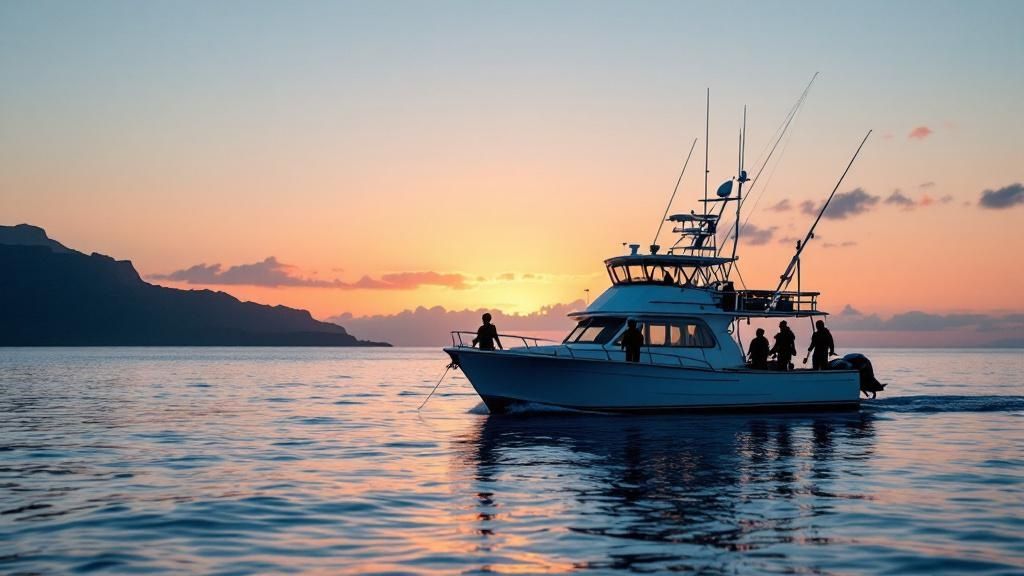
Picture this: you’re descending into the quiet, dark waters of the Pacific just as the sun dips below the horizon. There's a palpable sense of anticipation in the water. Then, out of the deep blue, graceful giants emerge, gliding effortlessly through the beams of underwater lights. This isn’t your average scuba trip; this is the world-renowned manta ray dive in Kona, an experience that feels more like an underwater ballet than a typical dive.
The Magic of the Kona Manta Ray Dive
This incredible encounter is truly one of the most unique wildlife interactions on the planet. You're not just watching from a distance; you're completely immersed in their world, playing a small but crucial part in a nightly ritual.
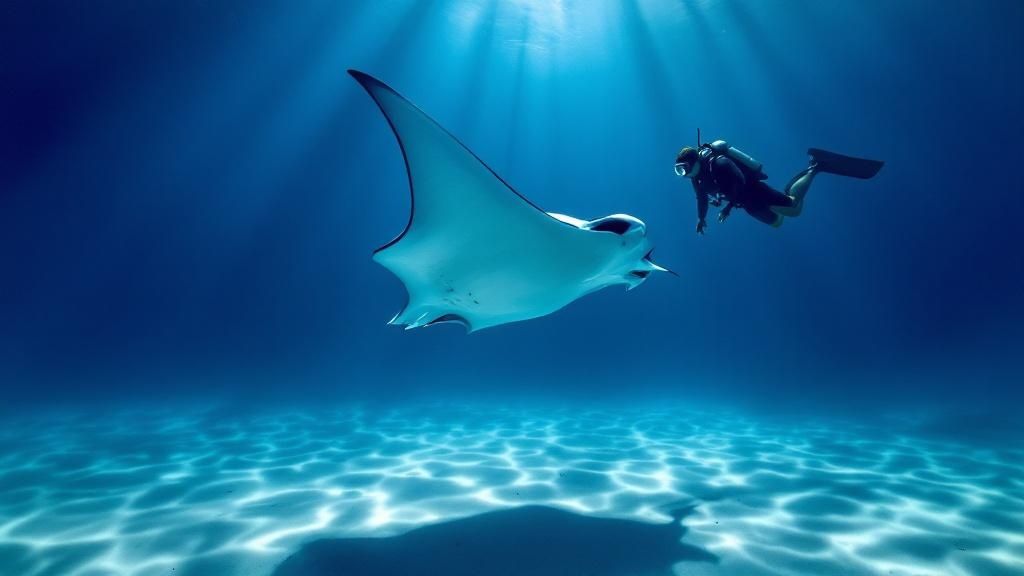
Here’s how it works: divers and snorkelers gather in a designated spot, shining their lights up into the water column. This light acts like a giant magnet for plankton, the manta rays' favorite meal. Before you know it, the mantas, known locally as hahalua, arrive for their all-you-can-eat buffet. They put on a breathtaking show, swooping and barrel-rolling through the light beams to scoop up the plankton, often coming within inches of the spellbound onlookers.
A Reliable Natural Wonder
The Kona Coast isn't just a good place for this dive—it's globally recognized as the best place for manta ray encounters. Why? Consistency. This isn't a hit-or-miss activity; it's a remarkably reliable event. Years of observation have shown an incredible 80-90% success rate for seeing mantas on these nighttime trips.
This reliability is no accident. The unique volcanic underwater landscape and local ocean currents create a constant supply of plankton, which keeps the mantas coming back night after night. It’s this dependable food source that has turned the area into a premier ecotourism destination, drawing an estimated 80,000 visitors a year to witness the magic.
But don't just take our word for it. See what fellow divers have said about their own bucket-list adventures with us at Kona Honu Divers.
Why This Dive is Unforgettable
What really sets the Kona manta dive apart is the unbelievably close, yet completely respectful, connection you feel with these gentle giants. Seeing a creature with an 18-foot wingspan glide right over your head is both humbling and exhilarating. You become part of an underwater "campfire," where your lights help create the very spectacle you came to see.
The goal is to be a quiet observer in their dining room. By becoming part of the environment, you allow the mantas to go about their natural feeding behavior undisturbed, creating a powerful memory that will stick with you for a lifetime.
Ready to see this underwater ballet for yourself? You can learn everything you need to know in our complete guide to the Kona manta ray dive.
Why Kona is the Manta Ray Capital of the World
So, what’s the secret behind Kona’s world-famous manta ray dive? It’s not just one thing, but a unique cocktail of geography, smart science, and a pretty special relationship that’s developed between humans and these gentle giants. This mix is what transforms a simple dive into a truly reliable, world-class wildlife encounter.
At the heart of it all is a brilliantly simple idea that divers here call the "campfire effect." We head out to specific spots, anchor up, and shine powerful lights into the water. Just like moths to a porch light, this attracts swarms of microscopic plankton.
All that plankton creates a floating, all-you-can-eat buffet. It’s basically a dinner bell for the local mantas, and it's a party they rarely skip. This clever method turns a patch of the dark ocean into a beautifully lit dining room where we get a front-row seat.
The Reliable Residents of Kona
Unlike a lot of marine life that travels the globe, the manta rays along the Kona coast are a large, resident population. They stick around all year, which means you can have these amazing encounters any time you visit. Their loyalty to the area is the real key to Kona's reputation.
We’re talking about a population of over 450 identified individuals—one of the largest and most-studied manta groups anywhere on the planet. The typical dive lasts about 45 to 60 minutes in just 30 to 40 feet of water, making it accessible even for newer divers. Best of all, the sighting success rate is consistently between 85% and 90%, so your odds of an unforgettable night are fantastic. For a closer look at this incredible population and the science behind it, you can explore more details on the Kona manta dive.
Ongoing research helps keep this population healthy and protected, which is exactly why it’s so critical to choose an operator who respects the rules and the animals.
Manta Village vs. Manta Heaven
When you book a trip, you’ll likely head to one of two main "stages" for the show, each with its own vibe:
- Manta Village: This is the original manta viewing site, just south of Kona near Keauhou Bay. It’s known for an incredibly high success rate and a shorter boat ride, which is always a plus.
- Manta Heaven: Located north of Kona near the airport (also called Garden Eel Cove), this spot is equally reliable. It has a reputation for sometimes attracting huge groups of mantas on a single night—a true spectacle.
The real magic of Kona is the sheer dependability of it all. You have a massive, resident population of mantas combined with a proven "campfire" technique that draws them in. You aren't just crossing your fingers hoping to see a manta; you're showing up for their regularly scheduled feast.
This reliability is what brings thousands of people here every year. When you’re ready to experience it, we’d love to show you why Kona Honu Divers is a top-rated choice for this bucket-list adventure. You can book your own front-row seat for this incredible underwater ballet on our manta ray dive tours page.
Choosing Your Manta Adventure: Dive or Snorkel?
So, you're ready to see the world-famous Kona manta ray ballet. The first big decision is how you want to experience it. The great news? There’s no wrong choice here. Whether you’re a seasoned diver or have never even put on a snorkel mask, an incredible night is waiting for you.
The real difference comes down to your perspective. Do you want to watch the show from a front-row seat on the ocean floor, or from a "sky box" right at the surface? Each offers a completely unique and mesmerizing view of these gentle giants. Let’s break down the two main ways to enjoy the manta ray dive in Kona so you can find the perfect fit.
H3: The Scuba Diving Experience: A Bottom-Up View
For certified scuba divers, this is the ultimate immersion. Your adventure starts as you descend through the dark, calming waters to a sandy patch about 30 to 40 feet deep. Here, you and your group will settle in and become part of what we affectionately call the "campfire."
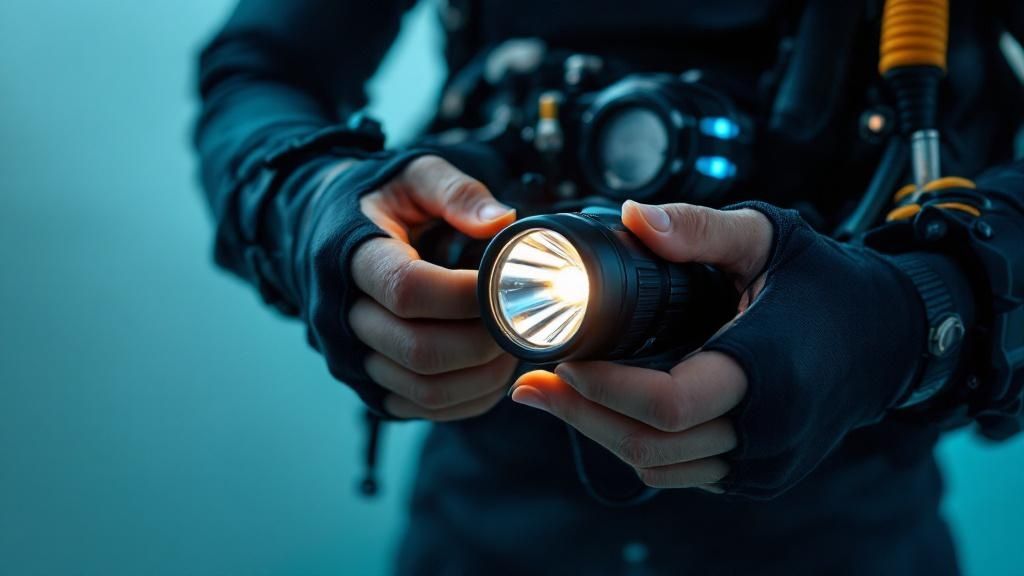
You’ll find a spot, get comfortable, and point your powerful dive light straight up. As your beam joins everyone else's, it creates a massive cone of light that acts like a dinner bell for plankton. Once the buffet is set, the guests of honor arrive.
Imagine sitting peacefully on the ocean floor as graceful giants, some with wingspans stretching up to 18 feet, perform barrel rolls and loops right over your head. Their white bellies flash in your light as they swoop down, sometimes just inches from your mask, before gliding effortlessly away. It's a humbling, face-to-face encounter you feel in your soul.
This vantage point truly lets you appreciate the sheer scale and power of the mantas as they navigate with stunning precision.
H3: The Snorkeling Experience: A Top-Down Spectacle
Not a certified diver? No problem. The snorkeling option provides an equally breathtaking show, and you don’t need a bit of prior experience. This makes it a fantastic choice for families, couples, and just about everyone.
Snorkelers are brought to a custom-made flotation board. These aren't your average pool floats; they're equipped with bright lights that shine down into the water, attracting the same plankton the mantas are here for. You simply hold onto the board, float comfortably, and put your face in the water to watch the magic happen below.
From here, you get a bird's-eye view as the mantas rise from the depths, their huge mouths open wide to filter the plankton just beneath your fins. It's like watching a silent, beautifully choreographed dance from the best seat in the house.
H3: Manta Ray Dive vs. Snorkel: Which Is Right For You?
Still weighing your options? It all comes down to personal preference. Both give you a front-row seat to one of nature's greatest shows. This table should help make the decision a little easier.
| Feature | Diving Experience | Snorkeling Experience |
|---|---|---|
| Perspective | Bottom-up view from the ocean floor | Top-down view from the water's surface |
| Proximity | Mantas glide directly overhead, often inches away | Mantas feed just below the surface, offering a close view |
| Requirements | Scuba certification is mandatory | No experience needed; great for all ages |
| Immersion | Fully submerged and part of the underwater world | Floating on the surface with a unique overhead view |
Ultimately, whether you choose to dive or snorkel, you're in for an unforgettable night. At Kona Honu Divers, we believe everyone should have the chance to witness this marvel, which is why we offer both options on our top-rated manta ray dive tours.
No matter how you choose to see them, you're guaranteed a memory that will last a lifetime. You can find all the details for both adventures on our Manta Ray Dive & Snorkel tour page.
What to Expect on Your Manta Ray Tour
So, what’s a manta ray tour really like? Knowing the step-by-step flow of the adventure helps you soak it all in, from the first moments on the boat to the final, unforgettable memory of Kona's gentle giants.
Your experience starts with a boat ride, usually setting off as the sun paints the Kona coast with its last golden light. This isn't just about getting from point A to point B; it’s part of the magic. As you cruise toward "Manta Village" or "Manta Heaven," your guides will run through a crucial briefing.
The All-Important Safety Briefing
This is where you'll get the full rundown for a safe and spectacular night. The crew will go over all the safety procedures, what to expect in the water, and, most importantly, the rules for passive interaction.
This is the golden rule of any manta encounter: look, but don't touch. Mantas are covered in a protective mucus coating, and a simple touch from a human hand can rub it off, leaving them vulnerable to nasty infections. Sticking to this rule is how we keep both you and these beautiful creatures safe.
Think of it as being a respectful guest in the mantas' house. With Kona Honu Divers, you can always count on our seasoned crew to put your safety—and the well-being of the marine life we love—first.
Entering the Underwater Theater
Once we anchor at the site, it’s time to gear up. Your guides will help you get everything sorted before you slip into the calm, dark water. As soon as everyone is in place—divers on the sandy bottom and snorkelers holding onto the surface float—the underwater lights switch on, and the show begins.
You’ll have around 45-60 minutes in the water, completely mesmerized as these magnificent animals swoop, glide, and barrel-roll through the light beams. Our guides are with you the whole time, managing the lights and making sure everyone has a fantastic, safe view. This constant supervision, along with long-term data collection, is what makes this ecotourism activity so successful. In fact, sighting statistics gathered between 2009 and 2014 gave researchers incredible insight into the mantas' behavior and confirmed just how vital Kona's waters are as a feeding ground. You can discover more insights about these manta ray statistics and the research behind them.
After your time in the water, you'll climb back on the boat, buzzing with excitement. The ride back to the harbor is always filled with stories and a shared sense of wonder. Most tours, ours included, offer hot drinks and snacks—the perfect way to warm up and relive the incredible moments you just experienced.
Ready to see it for yourself? Our manta ray dive tours are waiting.
Your Essential Kona Manta Ray Checklist
Alright, let's talk about getting ready for your big night with the mantas. A little bit of prep goes a long way toward making sure your manta ray dive in Kona is smooth, comfortable, and absolutely unforgettable.
Think of it this way: the more you sort out on land, the more you can just relax and soak in the magic once you're in the water. Getting these few details right beforehand really does make all the difference.
What to Pack in Your Bag
While your tour operator, like us here at Kona Honu Divers, will handle all the main scuba or snorkel equipment, a few personal items will make your trip much more comfortable. Trust me, you’ll be glad you have them, especially on that boat ride back to the harbor when the night air can get a bit chilly.
Here’s a quick list of must-haves:
- A Towel and Warm Clothes: This is non-negotiable. You’ll want to dry off and slip into a cozy sweatshirt or a light jacket for the return trip.
- Underwater Camera: You're going to want photos. Make sure your camera is fully charged with a cleared memory card before you even leave your hotel.
- Certification Card: For all my fellow divers out there, don't leave your C-card behind! It's mandatory for anyone joining the scuba group.
- Reusable Water Bottle: Always a good idea to stay hydrated, even on a boat.
What to Know Before You Go
Packing your bag is the easy part. The most important thing you can bring is the right mindset. Understanding how to be a respectful guest in the mantas' world is what turns a good dive into a great—and ethical—one.
Here’s the key knowledge to have locked in:
- Use Reef-Safe Sunscreen Only: If you wear sunscreen, please make sure it's reef-safe and apply it long before you get on the boat. Hawaii's corals are incredibly sensitive, and the chemicals in regular sunscreens are seriously harmful.
- Master Your Buoyancy (Divers!): The last thing you want is to be stirring up sand or accidentally bumping into the fragile reef. Practice holding your position so you can float effortlessly and just observe.
- The Golden Rule: This is the big one—passive observation. We are visitors in their house, watching them eat dinner. That means no touching, no chasing, and never blocking a manta’s path. Let them come to you.
Adopting this mindful approach ensures the adventure is safe and respectful for everyone involved: you, the other people on the boat, and of course, the magnificent manta rays.
When you're ready to put this checklist into action, our Manta Ray Dive & Snorkel tour is here waiting for you.
Explore More Kona Diving Adventures
While the world-famous manta ray dive in Kona is an absolute can't-miss experience, it's really just the opening act. Think of it as the headliner for an incredible festival of underwater exploration. The Big Island’s coastline is a world-class diving destination, with a mind-boggling variety of sites and experiences for every kind of diver.
So, you've just had your mind blown by the manta ballet and you're thinking, "What else have you got, Kona?" The answer is… a lot. The adventure doesn’t stop when the mantas glide off into the darkness. From alien-like night dives to deep volcanic ledges, your logbook is about to get a lot more interesting.
Here at Kona Honu Divers, sharing the full magic of this place is what we live for. We've spent years exploring every nook and cranny of this coast, and we know exactly where to go, whether you’re hoping to find pristine coral gardens or dramatic, rugged lava formations.
Beyond the Manta Madness
If the manta dive ignited your love for night diving, your next adventure has to be the Kona Blackwater Dive. This is a completely different beast. We head miles offshore into the deep, open ocean, where you'll drift along, tethered to the boat and suspended in pure blackness.
It’s here that the largest nightly migration on Earth happens, as countless bizarre and beautiful creatures rise from the depths. You’ll be face-to-face with bioluminescent jellies and strange, larval-stage fish that look like they were dreamed up for a sci-fi movie.
A blackwater dive is the closest you can get to floating in outer space. You're watching for alien life forms you never even knew existed. It's an experience that truly pushes the boundaries of what a dive can be.
For the Experienced Adventurer
Are you an advanced diver craving something more challenging than a standard reef tour? The Big Island's volcanic origins have created a dramatic and complex underwater landscape that is an absolute playground for those with more experience.
Our advanced dive trips are specifically designed to get you to those special, harder-to-reach spots. We're talking remote deep-water pinnacles, ancient lava tubes you can swim through, and sheer walls carpeted in sponges and brimming with life. These dives let you see entirely different marine ecosystems and put your skills to the test.
Of course, the classic daytime reef dives here are spectacular in their own right, with vibrant hard corals and clouds of fish that make every single tank a joy. To see everything we offer, from beginner to expert, check out our full range of adventures on the Kona diving tours page.
After seeing the mantas up close, it’s only natural to be curious about these gentle giants. If you want to dive deeper into their world, we’ve put together a comprehensive article where you can discover more about the Kona manta ray dive and the fascinating science behind this unique encounter.
Frequently Asked Questions About the Manta Ray Dive
The manta ray dive in Kona is a true bucket-list adventure, but it’s completely natural to have a few questions before you get in the water. We get it! To help you plan with total confidence, we’ve put together answers to the most common things people ask.
Getting the details sorted out ahead of time means you can just relax and soak in every moment of this incredible wildlife encounter. From safety to what happens on the rare night the mantas are shy, we’ve got you covered.
Is the Manta Ray Dive Safe?
Absolutely! This is probably the most important question we hear, and the answer is a resounding yes. While manta rays are related to stingrays, they are gentle giants that do not have a stinger or barb, which makes them completely harmless to people. They’re filter feeders, interested only in the tiny plankton in the water, not the divers and snorkelers watching them.
Your safety is the absolute top priority for any reputable tour operator. Every trip starts with a detailed briefing from professional guides who are right there in the water with you the whole time. We all follow strict "passive interaction" rules—basically, look but don't touch—to ensure the experience is perfectly safe for both you and these magnificent animals.
At Kona Honu Divers, our experienced crew's commitment to safety is something our guests mention time and time again.
Is There a Specific Manta Ray Season?
This is the best part: there is no "off-season" for the Kona manta ray dive! Unlike so many other marine animals that migrate with the seasons, the manta rays along the Kona coast are a massive, resident population. They live here year-round.
This means you have an incredible chance for a spectacular encounter no matter when you visit the Big Island. The nightly "campfire" of lights creates a reliable buffet for them, making this one of the most dependable wildlife experiences on the planet. To get a better feel for how it all works, you can read our complete guide explaining what the manta ray night dive is all about.
Who Can Participate in the Dive or Snorkel?
This adventure is surprisingly accessible for almost everyone. Here’s a quick look at who can join in on the magic:
- Snorkeling: This is the perfect option for just about anybody! You don't need any prior experience, which makes it a fantastic choice for families, couples, and anyone who isn't a certified diver.
- Diving: To join the scuba group on the ocean floor, you must be a certified scuba diver. You’ll just need to show your certification card before heading out.
This flexibility is great because it means your whole group can share in the experience, with everyone enjoying the show from their own unique vantage point.
What Happens if No Mantas Show Up?
While the sighting success rate in Kona is incredibly high—often over 90%—we have to remember that mantas are wild animals, and their appearance can never be 100% guaranteed. On the very rare occasion that the mantas decide to have a night off, reputable tour operators have what’s called a "manta guarantee."
If you're on one of the few trips where the mantas don't make an appearance, most companies will allow you to re-book your tour for free on another night. It’s always smart to check the specific policy when you book.
This is exactly why we suggest scheduling your manta ray tour early in your vacation. It gives you plenty of wiggle room to reschedule if needed, ensuring you don’t miss out on what could be the most memorable night of your life. Ready for your own adventure?
For an unforgettable adventure with a crew dedicated to safety, education, and the true aloha spirit, book your tour with Kona Honu Divers. Explore all our dive and snorkel options on our manta ray dive tours page.