
Ask anyone who’s been, and they’ll tell you: the manta ray dive in Kona isn't just a dive; it's pure magic. It consistently tops the charts as one of the best night dives on the entire planet for one simple reason: it delivers. You get an almost-guaranteed, up-close-and-personal encounter with gentle giants, watching them feed just inches from your face.
This incredible spectacle unfolds in shallow, protected waters, making it an amazing adventure for both certified scuba divers and snorkelers alike.
What Makes the Kona Manta Ray Dive So Famous?
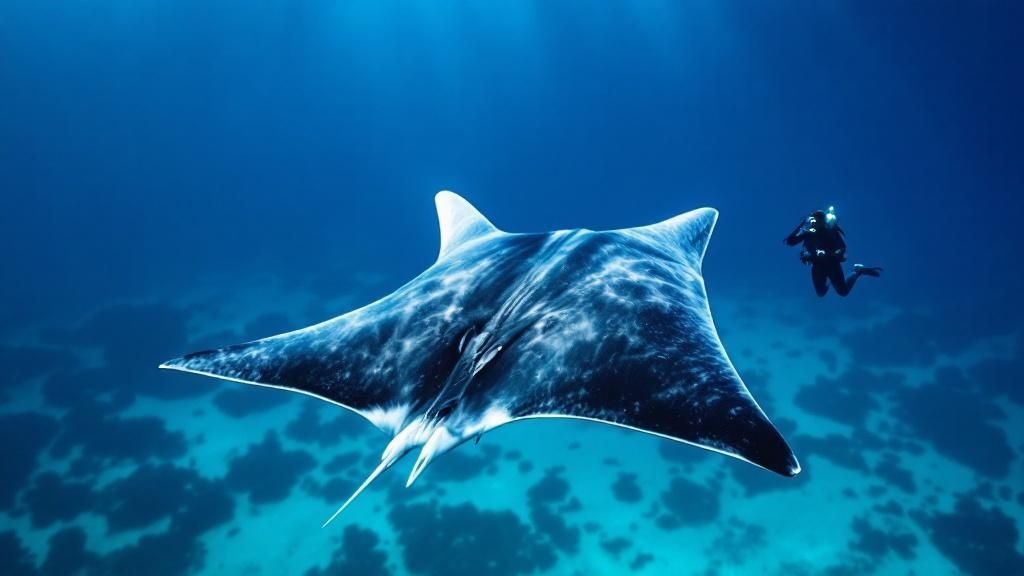
Picture this: you’re floating in the warm, dark Pacific. Below you, a powerful light cuts through the blackness. Then, out of the void, a graceful giant with a wingspan wider than a car glides silently overhead. It’s not just a dive—it's a surreal, silent ballet. People often describe it as a life-changing experience, and honestly, they're not exaggerating.
Unlike so many wildlife encounters that hinge on pure luck or seasonal migrations, the Kona manta experience is astonishingly reliable. It's a unique combination of factors that have come together to create the perfect conditions for this nightly show.
Here’s a quick summary of what makes this experience so special, giving you the essential details upfront.
Kona Manta Ray Encounter At a Glance
| Aspect | Details |
|---|---|
| Location | Kona Coast, Big Island, Hawaii |
| Manta Population | Over 450 identified resident reef mantas |
| Typical Depth | 30 to 40 feet (accessible for most divers and snorkelers) |
| Success Rate | Consistently 85% to 90% chance of seeing mantas |
| Core Concept | "Campfire Effect": Lights attract plankton, which brings in mantas |
| Key Viewing Sites | Manta Village, Manta Heaven, Kawaihae Harbor area |
This reliable, awe-inspiring adventure has put Kona on the map for divers and ocean lovers around the globe.
The Perfect Recipe for Manta Magic
The secret sauce is what we call the "campfire effect." Think of it like a bug zapper, but for plankton. Dive operators set up powerful, eco-friendly lights on the seafloor or on floating rafts. These lights act as a massive beacon, attracting huge clouds of plankton—the manta rays' favorite meal.
Over decades, the local manta population has learned that these lights mean an easy, all-you-can-eat buffet is being served. It's a learned behavior that results in a spectacular, dependable show almost every single night. Add to that the naturally calm and protected waters off the Kona coast, and you have the ideal theater for both the animals and the human audience.
The Big Island is truly special because it has three primary, reliable feeding sites: Manta Village, Manta Heaven, and a spot near the Kawaihae harbor. This concentration is exactly why Kona is known as the manta capital of the world.
An Accessible and Awe-Inspiring Adventure
With a resident population of over 450 identified manta rays, the Kona Coast is one of the most significant manta aggregation sites on Earth. The encounters usually happen in shallow water, around 30 to 40 feet, so you don't need to be a deep-diving expert to join in. The near-guaranteed viewing, with success rates hovering between 85% and 90%, has cemented Kona's status as a top-tier ecotourism destination. You can learn more about what makes the manta dive so famous here.
Choosing a responsible, safety-conscious operator is the single most important decision you'll make. It ensures this incredible natural wonder is protected for years to come. This guide will walk you through everything you need to know for a safe, respectful, and unforgettable manta ray dive in Kona.
Ready to see the magic for yourself? The 2-Tank Manta Dive & Snorkel is an evening you'll be talking about for the rest of your life.
How to Choose the Right Manta Ray Tour in Kona
Let’s be real: picking your tour operator is the single biggest decision you’ll make for your manta ray dive in Kona. This choice goes way beyond just booking a boat. It shapes your entire experience and, more importantly, directly impacts the well-being of the incredible animals you've traveled all this way to see.
Think of it less like buying a ticket and more like choosing a trusted guide to lead you into a fragile, almost sacred, underwater world. The right operator is the key to a safe, sustainable, and truly unforgettable night.
Look for Manta-Safe Practices
First things first: the most respected operators in Kona are deeply committed to protecting the mantas. A huge green flag is whether they are a "Manta Ray Green-Listed" operator (or followed these standards before the list was discontinued). These companies voluntarily stick to a strict set of best practices that always put the mantas' welfare first.
Another critical piece of the puzzle is group size. A smaller group isn’t just a nice perk—it’s essential for a better encounter.
A boat with fewer people means a less crowded "campfire" on the ocean floor. This gives the mantas more room to maneuver gracefully and provides you with a much more intimate, unobstructed view of their nightly ballet.
Top-tier operators like Kona Honu Divers have built their reputation on expert guides, smaller group sizes, and a serious dedication to conservation. They get that a healthy, thriving manta population is the heart of this entire experience. But don't just take our word for it; see what fellow adventurers have to say.
Essential Questions to Ask Before You Book
To make sure you’re going with a quality company, you need to do a little homework. Before you hand over your credit card, get on the phone or send an email and ask some direct questions. How they answer will tell you everything you need to know about their professionalism and priorities.
Here are the non-negotiables you need to ask:
- What is your manta guarantee? Sightings are incredibly reliable—often over 90%—but these are still wild animals. Good companies will have a "manta guarantee," meaning if the mantas don't show, you can come back another night for free.
- How long are we actually in the water? The total tour duration can be deceiving. What you really want to know is the "bottom time" for divers or "water time" for snorkelers. It should be around 45-50 minutes.
- What is your guide-to-guest ratio? A lower number is always better. A ratio like one guide for every six or eight guests means you'll get more personal attention and better safety oversight.
- Is all gear, including a wetsuit, included? That Pacific water gets chilly after the sun goes down. A good, properly fitting wetsuit is a must for staying comfortable, so confirm there are no surprise rental fees.
Getting straight answers to these questions empowers you to pick an operator that’s the right fit for you. Whether you end up diving or snorkeling is a matter of personal preference, and you can get the full scoop on how they differ in our guide to the Kona manta ray snorkel experience.
Ultimately, going with a proven, highly-rated operator ensures your adventure isn't just mind-blowing, but also contributes to protecting these gentle giants for years to come.
Diving vs. Snorkeling: Which View Is for You?
Alright, you’re committed to seeing the magic of a manta ray dive in Kona. Now for the big question: do you want a front-row seat on the ocean floor, or a spectacular balcony view from the surface? It’s a choice between scuba diving and snorkeling, and it’s all about tailoring the adventure to your comfort level. The best part? There's really no wrong answer—both are absolutely mind-blowing.
Think of it like deciding where to sit at an epic concert. Do you want to be right up front, feeling the bass in your chest? Or would you prefer a panoramic view from a comfortable balcony, taking in the whole spectacle at once? Let's break down what each experience is really like.
The Scuba Diving Experience: A Front-Row Seat
Picture this: you descend through the warm, dark ocean and settle onto a sandy patch about 30 to 40 feet deep. Your guide helps you get situated, and you point your dive light straight up, creating a brilliant column of light that cuts through the darkness. This is your personal invitation to one of the greatest shows on Earth.
From this vantage point, you are completely immersed in the mantas' world. These gentle giants, some with wingspans stretching over 12 feet, glide, swoop, and perform graceful barrel rolls right over your head. You can see the unique spot patterns on their bellies and feel the sheer power of their presence as they feed in the light beams, sometimes just inches away.
This bottom-up perspective is genuinely profound. You feel small in the best way possible, completely mesmerized by the silent, acrobatic ballet unfolding above. It’s an intense, powerful, and deeply moving experience.
To join the dive, you'll need to be a certified diver. Operators like Kona Honu Divers run a tight ship, ensuring a safe and guided experience so you can just relax and soak in the majesty of it all.
The Snorkeling Experience: A Balcony View
If you’re not a certified diver or if descending into the dark feels a little too intense, the snorkeling option offers an equally breathtaking view from above. Think of it as having the best box seats in the house. You'll float comfortably at the surface, holding onto a custom-made, high-flotation light board that keeps you stable while projecting powerful beams down into the water.
This floating light show attracts the plankton, and the mantas swim right up to the surface to feast. From your top-down perspective, you get to watch multiple mantas glide effortlessly just below you, their enormous mouths wide open as they filter-feed. It's an incredibly accessible option that's perfect for families, non-swimmers, and anyone who wants a stunning view without the hassle of scuba gear.
You don't need any special certification for this—just a sense of adventure. Whether you choose the immersive dive or the accessible snorkel, you’re guaranteed a view that will stick with you for a lifetime. You can learn more about this incredible encounter by checking out our complete guide to the manta ray night dive.
Comparing the Manta Dive and Snorkel Experience
Deciding between these two amazing options is a key part of planning your manta ray dive kona adventure. To make it easier, here's a quick side-by-side comparison to help you figure out which one best fits your style.
| Feature | Scuba Diving (Bottom-Up View) | Snorkeling (Top-Down View) |
|---|---|---|
| Perspective | Looking up from the ocean floor as mantas swoop overhead. | Looking down from the surface as mantas feed just below. |
| Depth | 30-40 feet (10-12 meters) | Floating at the surface. |
| Certification | Open Water Diver certification required. | No certification needed. Great for all experience levels. |
| Experience Feel | Immersive, powerful, and intense. Feels like you're in their world. | Accessible, relaxing, and panoramic. Great for families. |
| Proximity | Mantas can get within inches as they barrel roll above you. | Mantas come very close to the surface, often inches away. |
| Equipment | Full scuba gear (tank, BCD, regulator, etc.). | Mask, snorkel, and fins. Held onto a floating light board. |
Ultimately, whether you're watching the ballet from below or the feast from above, you’re in for an unforgettable night. The choice just comes down to how you want to see the show.
How to Prepare for Your Manta Night Dive Adventure
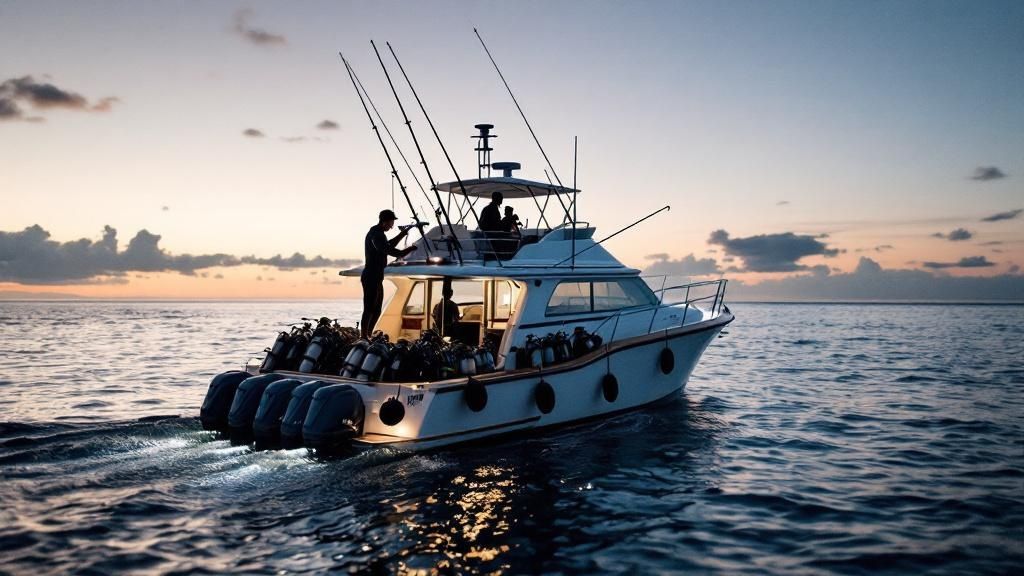
A little prep work can be the difference between a good manta ray experience and an absolutely perfect one. Knowing what to bring and what the evening will look like takes the edge off, letting you soak in every magical moment without a worry.
Think of it like getting ready for a big event—you want to be comfortable and prepared so you can enjoy the main attraction. The good news? It's all pretty simple.
Your Essential Packing List
Your tour operator will have all the big stuff covered, like dive gear, snorkel equipment, and wetsuits. But there are a few personal items you’ll want to bring to make the trip that much smoother. It’s all about comfort before and after you hit the water.
Here’s a quick checklist of what to toss in your bag:
- Swimwear: The easiest way to do this is to just wear your swimsuit under your clothes when you show up. It makes gearing up on the boat a breeze.
- Towel: A quick-dry towel is your best friend for drying off and staying warm after the swim.
- Warm Jacket or Sweatshirt: Don't underestimate the boat ride back! Even on a balmy Hawaiian evening, it can get surprisingly chilly once you’re out of the water. A hoodie or windbreaker is a game-changer.
- Dry Bag: A small dry bag is clutch for keeping your phone, clothes, and towel from getting splashed on the boat.
- Reusable Water Bottle: Staying hydrated is always a good move, and bringing your own bottle is better for the planet.
- Seasickness Medication: If you even think you might get motion sickness, take your medication before you leave the harbor. The water is usually pretty calm, but it’s always better to be safe than sorry.
With these things packed, you’re all set for a comfortable and stress-free night.
Capturing the Magic: Underwater Photography Tips
Bringing a camera is a great idea, but shooting underwater at night is its own unique challenge. Whether you're rocking a professional rig or a GoPro, a few simple tricks will make all the difference.
The number one rule is to use a constant video light, not a flash. A camera flash is a sudden, harsh burst of light that can startle and disorient the mantas. A steady video light, however, just adds to the glowing "campfire" that's already there, attracting plankton without disrupting the animals' natural behavior.
The real secret to a great manta shot is patience. Don't chase them; let them come to you. Settle in, hold your camera steady, and try to angle upwards. This will help you capture their incredible size against the dark water as they glide into the light.
Honestly, the best advice might be knowing when to put the camera down. The most powerful lens you have is your own two eyes. Make sure to take a few moments to just float and watch the silent ballet unfold. For a closer look at the trip logistics, you can find more details about the Kailua-Kona manta ray night dive.
What to Expect: A Typical Tour Timeline
Knowing the flow of the evening can help calm any nerves, especially if it’s your first time doing a night dive. While the exact details can vary a bit between operators, most tours follow a pretty standard rhythm.
- Check-in and Briefing: You’ll meet the crew at the harbor, get checked in, and listen to a detailed briefing. They'll cover all the safety stuff, the plan for the night, and the rules for interacting with the mantas respectfully.
- Boat Ride to the Site: Kick back and enjoy the ride out to one of the main manta sites, like Manta Village or Manta Heaven. This is your chance to ask the guides any last-minute questions.
- In-Water Experience: Once you’re at the site, it’s go-time. You'll spend about 45-50 minutes in the water with your guide, either watching from the seafloor (for divers) or floating at the surface (for snorkelers) as the mantas feed in the light.
- Return to the Harbor: After everyone’s safely back on board, you’ll cruise back to shore, buzzing with excitement from one of the most incredible wildlife encounters on Earth.
Meet the Famous Manta Rays of Kona
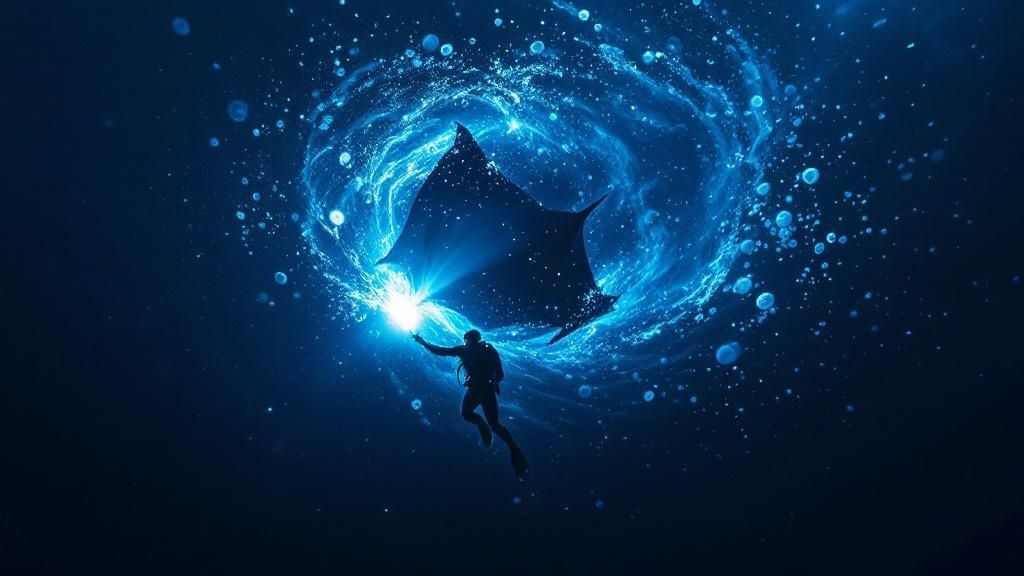
When you slip into the dark Pacific for a manta ray dive in Kona, you’re doing more than just looking at marine life. You're actually meeting a well-known, resident community of animals. Many of them have names, distinct personalities, and life stories that researchers have been tracking for decades. It's an experience that goes way beyond a simple tour; it’s a real connection with some of the ocean’s most charismatic creatures.
The entire encounter hinges on a fascinating behavior that has developed over the years, something we call the "campfire effect." Tour boats set up powerful, stationary lights on the seafloor. Just like moths to a flame, these bright lights attract massive clouds of microscopic plankton—the mantas' favorite meal.
The local manta population has learned that these nightly light shows are a signal for an easy, all-you-can-eat buffet. They now show up on purpose to feast, creating the reliable and absolutely breathtaking spectacle that has made Kona world-famous. It’s a pretty amazing example of a symbiotic relationship between tourism and nature where the animals get a dependable meal.
Identifying the Local Stars
The Kona coast is home to two different types of manta rays, though you're far more likely to see one than the other. Knowing the difference just adds another layer of appreciation to your dive.
- Reef Manta Ray (Mobula alfredi): This is the species you'll almost certainly see. They're the resident "locals," with wingspans averaging an impressive 12 feet. They stick to coastal habitats and are the real stars of the nightly feeding show.
- Giant Oceanic Manta (Mobula birostris): A much rarer and more elusive visitor. These are the biggest rays on the planet, with wingspans that can stretch over 20 feet. They’re open-ocean dwellers, so spotting one on a coastal night dive is an incredibly special treat.
The real magic, though, is being able to tell individual rays apart. This is possible because the unique spot pattern on each manta's belly (the ventral side) is as distinct as a human fingerprint.
A Legacy of Research and Recognition
This fingerprinting method has led to one of the most thorough long-term studies of a manta population anywhere on Earth. Since 1991, researchers, guides, and even divers like you have been carefully documenting every single manta sighting along the Kona Coast.
The very first manta ray cataloged in this groundbreaking database was a beloved individual named 'Lefty,' who is easy to spot because of a damaged left cephalic fin. This project has since blossomed into an incredible scientific resource.
This massive collection of data, built over decades, now includes nearly 6,000 manta encounters and over 28,500 individual sightings. To date, more than 330 unique manta rays have been officially cataloged, including both our common reef mantas and the occasional giant oceanic visitor. This database is a global model for manta conservation, helping us understand their behavior, health, and population trends.
Realizing that the manta swooping right over your head could be a local celebrity like 'Big Bertha,' 'Ray Charles,' or even 'Lefty' himself completely changes the experience. You’re not just a spectator anymore; you're a witness to the ongoing lives of these gentle giants. To dive deeper into this unique connection, check out our article on why you should go on a manta ray dive in Kona. It truly elevates what is already a world-class wildlife encounter.
Keeping it Magic: The Rules for Watching Manta Rays
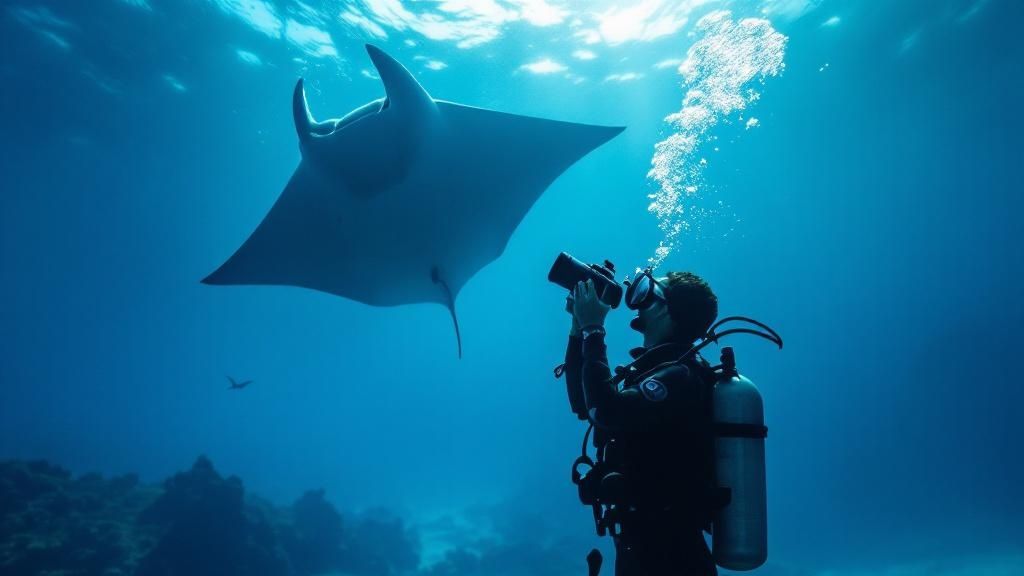
To make sure the manta ray dive in Kona stays magical for everyone—especially the mantas—we have to act like polite guests in their underwater dining room. This means we all follow a few simple guidelines that are all about passive observation. These aren't just random rules; they're absolutely essential for protecting these animals and keeping this incredible experience sustainable for years to come.
The biggest rule is the simplest: look, but don't touch. Manta rays are coated in a thin layer of protective mucus. Think of it as their immune system, shielding them from nasty bacteria and infections. When you touch a manta, even by accident, you can wipe off this vital slime coat, leaving them vulnerable to disease. It’s why every single reputable operator has a strict hands-off policy.
Understanding your place in the water is key to a safe and ethical encounter. Every person has a specific spot, which helps the mantas have a clear and predictable path to their dinner.
Your Role in the Water
If you're diving, your job is to stay on or near the sandy bottom. You and your group will settle down in a semi-circle, creating a natural amphitheater for the show. This leaves the entire water column above you wide open for the mantas to do their graceful, looping acrobatics without bumping into anyone.
Snorkelers have an equally important role up at the surface. You'll hold onto a specially designed floating raft that not only keeps you stable but also has lights pointing down to attract the plankton. It’s absolutely crucial to stay on the surface and fight the urge to free-dive down for a closer look. Diving down can disrupt their feeding patterns and turn a peaceful ballet into chaos.
The whole experience is designed to be totally passive. No chasing, no reaching out, and definitely no blocking a manta’s path. Your only job is to be a calm, quiet observer and let the mantas come to you.
This approach makes the animals feel safe and keeps them coming back to the "campfire" sites night after night. By following these rules, you become part of the solution, helping preserve this amazing interaction for future generations to enjoy.
Respect is a Form of Aloha
These rules are more than just practical—they’re a way of showing respect for the animals and for Hawaiian culture. In Hawaiian tradition, manta rays are known as hāhālua, which means "two breaths." They hold deep cultural significance and are even mentioned in the ancient creation chant, the Kumulipo.
The manta ray dive kona has become a huge part of the island's identity, bringing in around 80,000 people every year. This tourism doesn't just support the local economy; it also funds critical research. The two species we see here—the inshore reef manta (Mobula alfredi) and the bigger, more oceanic giant manta (Mobula birostris)—are famous for their intelligence, with the largest brain-to-body ratio of any fish. You can learn more about their importance and the local dive culture on outrigger.com.
When you treat the hāhālua with this kind of reverence, you're practicing aloha and helping ensure this world-class wildlife encounter continues to thrive. A well-run manta ray dive tour makes being a responsible observer both easy and totally awe-inspiring.
Frequently Asked Questions About the Manta Dive
Alright, let's tackle some of the most common questions that pop up before the big night. Think of this as your final briefing before you step onto the boat, making sure you feel totally confident and ready for an incredible adventure.
What Is the Best Time of Year for the Manta Ray Dive in Kona?
Here's the fantastic news: any time is a great time! The Kona manta ray dive is a year-round spectacle. We have a resident population of manta rays, and they show up with amazing consistency, month after month.
Sure, the water might be a few degrees warmer in the summer and a bit cooler in the winter, but the conditions are almost always calm and ideal for diving or snorkeling. Your chances of having a magical encounter are just as high in January as they are in July.
What Happens if We Don't See Any Manta Rays?
It's a fair question. Mantas are wild animals, and even with success rates often hitting 90% or higher, nature never offers a 100% guarantee. This is precisely why choosing a reputable operator is so important.
The best companies, like Kona Honu Divers, stand by their tours with a "manta guarantee." If for some reason the mantas decide not to show up on your night, you can come back and try again on another evening for free (subject to availability). Always double-check the specific policy when you book your manta ray dive tour.
Do I Need to Be a Certified Diver to See the Mantas?
Absolutely not! You don’t need any scuba certifications to have an unbelievable experience. The snorkeling option is fantastic and incredibly accessible for almost everyone—even families with kids or people who aren't strong swimmers. You just float on the surface, holding onto a custom light raft that attracts the plankton.
If you do want to be on the ocean floor looking up, you'll need at least an Open Water Diver certification. Some operators might also want to see that you've dived recently, so it's always a good idea to check their prerequisites before you book. You can get the full rundown by reading our guide on what the manta ray night dive is all about.
The key takeaway is simple: everyone gets a front-row seat. Whether you choose to dive or snorkel just depends on your certification and comfort level. Both options offer a view you'll never forget.
Is the Manta Ray Night Dive Safe?
Yes, it's considered very safe, but only when you go with a professional, experienced crew. The dive sites are well-established, fairly shallow, and sheltered from any strong ocean currents.
Your guides will walk you through a detailed safety briefing, keep a close eye on the group in the water, and make sure everyone sticks to the passive observation rules. These procedures are there for one reason: to keep both you and the beloved manta rays safe.