
Picture this: you're floating in the warm, dark Pacific Ocean, and suddenly, giant, gentle manta rays glide just inches from your face. This isn't some CGI fantasy—it's the world-famous manta ray dive in Kona, a true bucket-list adventure for divers and snorkelers alike. It's one of nature's most mesmerizing spectacles, and this guide is your key to planning it perfectly.
Your Unforgettable Kona Manta Ray Encounter
The Kona coast is known globally as a hotspot for manta rays, but it’s the night encounter that truly sets it apart. Think of it as an underwater ballet where these graceful giants perform somersaults and barrel rolls, feeding on microscopic plankton drawn to a specially designed "campfire" of lights on the ocean floor.
And here's the best part: this incredible experience isn't just for certified divers. Many tours offer a snorkeling option where you get to see the same breathtaking show from the surface. This makes it a super accessible adventure for almost everyone. Whether you're a seasoned scuba pro or a first-time snorkeler, the Kona manta ray dive offers a front-row seat to one of the ocean's greatest shows.
What Makes This Experience So Unique
Unlike a lot of wildlife encounters, the Kona manta ray experience is remarkably reliable. A big, resident population of over 240 identified manta rays calls this coastline home, which means your chances of a successful sighting are incredibly high, year-round. These aren't just fleeting glimpses, either; you can expect to spend up to 45 minutes in the water with these magnificent creatures.
The whole interaction is designed to be completely passive and non-invasive. You just hold your spot—either on the seafloor as a diver or on a float board as a snorkeler—and let the mantas come to you. This approach ensures the animals are never disturbed and can go about their natural feeding behaviors, creating a respectful and sustainable encounter.
The golden rule of the manta ray dive is passive interaction. By staying still and never touching the animals, you become part of the underwater scenery. This is what allows the mantas to approach so closely and comfortably.
Choosing The Right Tour For You
The key to an amazing experience is picking the right tour that fits your comfort and skill level. Premier operators like Kona Honu Divers provide everything you need for a safe and memorable trip. Their expert guides actually know the mantas by name and can share fascinating stories about their individual behaviors and personalities.
Here's what to think about when choosing your adventure:
- Diving vs. Snorkeling: Certified divers get to sit on the ocean floor, looking up as mantas glide directly overhead. Snorkelers float on the surface, looking down at the same incredible spectacle. Honestly, both options provide phenomenal views from different perspectives.
- Operator Reputation: Look for companies with a stellar safety record, experienced guides, and a real commitment to manta conservation. Positive reviews and a long history of successful tours are always great signs.
- Boat Comfort and Amenities: A comfortable boat with a knowledgeable crew really enhances the entire experience, from the pre-dive briefing to the warm snacks and drinks they serve you afterward.
With Kona Honu Divers, you're not just booking another tour; you're signing up for a world-class experience led by passionate pros who are deeply dedicated to marine conservation. Their local knowledge and commitment to safety make them a top choice for anyone looking to check the manta ray dive in Kona off their bucket list.
You can explore their highly-rated manta ray dive tours to see what works best for you.
Why Kona Is a Manta Ray Hotspot
The Kona coast isn't just a decent spot for a manta ray dive; it's arguably the best place on the entire planet. This isn't just a happy accident. It's the result of a perfect storm—a unique blend of underwater geography and ocean conditions that create a dependable, year-round feeding ground for these gentle giants.
Kona’s volcanic underwater landscape, shaped by millennia of lava flows, works with the local currents to create an incredibly nutrient-rich environment. These conditions are the ideal recipe for phytoplankton to bloom, and for manta rays, that plankton is a five-star, all-you-can-eat buffet.
This constant food supply is exactly why Kona is home to such a massive, resident population of manta rays. They simply don't need to migrate to find food, meaning they're here every single month of the year. For divers and snorkelers, that translates to a consistently spectacular show.
The Science of the "Campfire"
The real genius of the manta ray dive Kona experience comes down to a simple but brilliant concept that taps into the mantas' natural feeding instincts. For decades now, dive operators have used powerful underwater lights to create what we affectionately call the "campfire."
But here's the thing: the campfire doesn't attract the mantas directly. Instead, the intense beams of light draw in massive clouds of plankton. The manta rays, being the intelligent creatures they are, have learned over time that this nightly light show means an easy, concentrated meal is being served.
This learned behavior is the secret sauce to the dive's incredible success. The mantas aren't just tolerating us; they actively seek out the light sources from the tour boats, knowing it's a guaranteed dinner spot. It's a beautiful example of a symbiotic relationship between responsible ecotourism and local wildlife.
This predictable gathering is what makes the encounters so unbelievably intimate. Divers get to settle on the sandy bottom, and snorkelers can hold onto a floating board, becoming stationary observation posts as the mantas perform their graceful feeding ballet just inches away.
A Reliable and Thriving Population
The Kona Coast isn't just home to a few mantas; it's one of the world’s most significant aggregation sites, with a known population of over 450 individual manta rays. This huge congregation thrives in the nutrient-rich currents, which ensure a constant supply of their favorite food—plankton.
These conditions create the perfect stage for the famous night dive, where mantas glide and feed in water that's typically between 30 and 40 feet deep. Anyone visiting Kona has a remarkably high chance—we're talking an 85-90% success rate—of seeing manta rays on a single trip, with encounters often lasting a full 45 to 60 minutes.
This reliability is what truly sets Kona apart from other destinations where sightings can be seasonal or far less frequent. If you're planning a trip, it's worth learning about the best time of year to see manta rays in Kona.
Conservation Through Ecotourism
This one-of-a-kind gathering of mantas does more than just create a world-class tourist attraction; it opens up invaluable opportunities for scientific research and conservation. Having consistent access to a large, resident population allows scientists to study their behavior, social structures, and life cycles in incredible detail.
Many of the local dive operators, including our team at Kona Honu Divers, work hand-in-hand with research organizations to help identify and track individual mantas. The unique spot patterns on a manta's belly are like a human fingerprint, allowing each one to be named and monitored over its lifetime.
When you join a manta ray dive tour, you're directly supporting these critical efforts. The revenue from responsible ecotourism gives the local community a powerful economic reason to protect these magnificent animals and their fragile marine habitat, ensuring the Kona mantas continue to thrive for generations to come.
Choosing Your Dive Site and Tour Operator
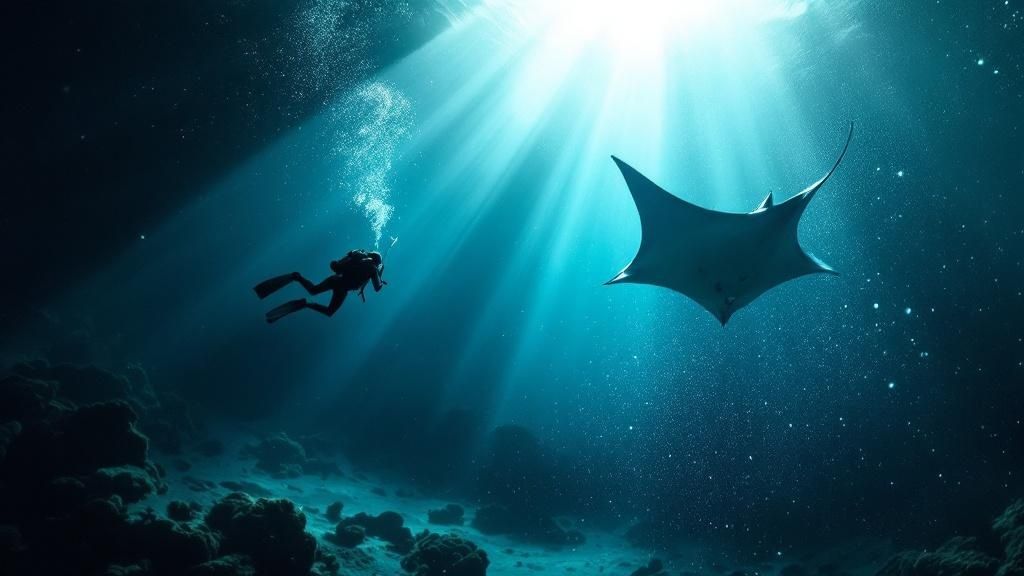
Alright, you've decided you're going to experience the magic of a manta ray dive in Kona. Fantastic choice. Now for the fun part: figuring out where you’ll dive and who you’ll go with. These two decisions are critical and will absolutely shape your entire adventure.
Trust me, not all manta ray encounters are the same. Your experience hinges on the dive site you choose and the professionalism of the crew taking you out. Let's get it right.
The Kona coast has two world-famous locations for this nighttime spectacle: Manta Village and Manta Heaven. Each has its own vibe and conditions, so one might be a better fit for you depending on your comfort in the water and what you're hoping to see.
Manta Village vs. Manta Heaven
Understanding what makes these two sites different is the key to picking the perfect tour. Think of it like choosing a hiking trail—some are gentle and scenic, while others are more rugged, but each offers a unique reward.
Kona’s manta dive sites are legendary for a reason. Manta Village, down in Keauhou Bay, is the original site. It’s known for being relatively shallow and protected, which makes it incredibly accessible for everyone, especially if you're new to diving. Then there's Manta Heaven, up near the Kona Airport. This spot is a bit deeper and can have more current, so it tends to attract divers with more experience under their belts who are looking for some dynamic photo opportunities.
Both sites are incredibly reliable, especially between April and October, when it's not uncommon to see 8 to 12 mantas in a single night.
To help you decide, let's compare them side-by-side.
| Feature | Manta Village (Keauhou Bay) | Manta Heaven (near Airport) |
|---|---|---|
| Typical Depth | 25-35 feet (Shallow) | 35-45 feet (Deeper) |
| Water Conditions | Generally calm and protected | Can have stronger currents |
| Best For | Snorkelers, beginner divers, families | Confident and experienced divers |
| The Vibe | Calm, predictable, great for first-timers | More dynamic and adventurous |
Ultimately, it comes down to what you're comfortable with. If you're a first-timer or maybe a little nervous in the water, the sheltered, shallower conditions at Manta Village are a perfect, relaxed introduction. If you're a seasoned diver looking for a bit more of an adventure, Manta Heaven will be right up your alley.
Selecting a Reputable Tour Operator
Your choice of tour operator is just as important as the dive site itself. A great company doesn't just ferry you out to see mantas; they elevate the whole experience with top-notch safety, great education, and a genuine respect for the ocean. This is where a company like Kona Honu Divers really stands out.
When you're looking for an operator, here are a few things that scream quality and responsibility:
- Manta Ray Green List Certification: This is a big deal. It means the operator follows strict, sustainable practices that put the health and safety of Kona's manta population first.
- Experienced and Passionate Guides: The best guides are more than just divemasters. They're manta experts who can identify individual rays by name and share incredible stories about their behavior. Their passion is absolutely contagious.
- Safety Is Priority #1: Look for an operator with an impeccable safety record, well-maintained gear, and detailed pre-dive briefings. You want to feel confident and looked after from the moment you step on the boat.
- Comfort and Small Group Sizes: Nothing ruins a dive like feeling like a sardine in a can. Operators with comfortable boats and small groups provide a much more personal and enjoyable experience, both on board and in the water.
Choosing a reputable operator like Kona Honu Divers ensures your adventure is both incredible and responsible. They don't just show you the mantas; they foster a genuine connection to the ocean and its inhabitants.
Whether you're looking for a standard manta ray dive tour or you're an experienced diver ready for some advanced diving opportunities, the right team makes all the difference. For a wider view of everything the underwater world here has to offer, check out our complete guide to diving the Big Island of Hawaii with Kona Honu Divers.
Taking a little time to pick the right site and operator guarantees your manta ray dive in Kona will be more than just a tour—it'll be a memory you'll cherish for a lifetime.
How to Prepare for Your Manta Adventure
The secret to a truly mind-blowing manta ray dive in Kona isn't some complex trick; it's just good old-fashioned preparation. When you're comfortable, confident, and know what's coming, you can stop worrying about the little things and just soak in the incredible underwater ballet.
Think of it like getting ready for a big concert. You figure out what to wear, how to get there, and what to expect so you can relax and enjoy the show. A little bit of planning means your adventure will be smooth, safe, and utterly unforgettable. Let's get you ready.
What to Bring on Your Manta Ray Tour
Packing for your manta trip is surprisingly simple. Your tour operator, especially a top-notch crew like Kona Honu Divers, has all the big stuff covered—the dive and snorkel gear. Your job is to bring the personal items that keep you comfy before and after your time in the water. After all, the Big Island has a ton of world-class scuba diving in Kona to offer, and being prepared is always key.
Here's a quick and easy checklist of what you should have with you:
- Swimsuit: The easiest approach is to wear it under your clothes to the harbor. It just makes getting ready on the boat so much faster.
- Towel: A must-have for drying off and warding off the post-dive chill. Don't leave it behind!
- A Warm Jacket or Sweatshirt: This is a pro-tip you'll be glad you followed. Even after a warm Hawaiian day, that boat ride back can feel brisk once you're out of the water.
- Dry Clothes: Nothing feels better than swapping a wet swimsuit for dry clothes for the ride back to shore. It's a small thing that makes a huge difference in comfort.
- Reef-Safe Sunscreen: If you're on a sunset tour, make sure you apply this before you get on the boat. Normal sunscreens carry chemicals like oxybenzone that are seriously harmful to Hawaii’s beautiful and fragile coral reefs.
- Reusable Water Bottle: Hydration is key. Most boats have water coolers, so you can easily refill.
- Camera: An underwater camera, like a GoPro, is perfect for this. Just make sure it's charged up and has a wrist strap so it doesn't end up on the ocean floor.
The Flow of a Typical Tour
Knowing what to expect can really help calm any pre-dive nerves and let you enjoy every single moment. From the second you arrive, the crew is there to make you feel safe, informed, and ready for an amazing experience.
You'll start by meeting the crew at the harbor for check-in. This is the perfect time to ask any last-minute questions you might have. Once you're on board, the boat will head out to the manta site. During the cruise, your guides will give a super important briefing. They'll cover safety, cool facts about manta rays, and exactly how to act in the water. Pay close attention here—it’s full of great info. For an even more detailed rundown, check out our complete guide to the manta ray night dive.
The golden rule of every manta ray dive is passive observation. This means you find your spot, stay put, and never, ever touch the mantas. You are a guest in their world, and allowing them to approach on their own terms is what makes the interaction so special and sustainable.
Once you arrive at the site, divers gear up and slip into the water first. You'll descend to the sandy bottom and arrange yourselves in a circle around the "campfire"—a bright collection of underwater lights. Snorkelers go in next, holding onto a custom floating raft that also has lights pointing down. These lights are what attract the plankton, and the plankton, in turn, brings in the mantas.
All you have to do is hold your spot and let the show happen. For about 45 minutes, you’ll be treated to a spectacle of giant, graceful shadows swooping and barrel-rolling right before your eyes. It’s pure magic. Afterward, you’ll climb back onto the boat for some well-deserved hot chocolate and snacks during the ride home.
Explore More Kona Diving Adventures
https://www.youtube.com/embed/Wz986Yxq7ss
While the manta ray dive in Kona is an absolute bucket-list experience, it's really just the first chapter of what the Big Island’s underwater world has in store for you. Once you’ve witnessed that nighttime manta ballet, I guarantee you'll be wondering what other secrets Kona's pristine waters are hiding. The good news? The adventure doesn't stop when the sun comes up.
The same volcanic topography that creates the perfect hangout for mantas also results in a breathtaking and varied underwater landscape. We're talking vibrant coral reefs buzzing with life, ancient lava tubes begging to be explored, and dramatic drop-offs that plunge into the deep blue. Kona is a diver's paradise, through and through. So, let's talk about what other can't-miss dives you should add to your Big Island itinerary.
The Surreal World of the Kona Blackwater Dive
If the manta dive lit a fire in you for night diving, then your next logical step has to be the world-famous Kona Blackwater Dive. This isn't just another dive; it’s a mind-bending experience that feels more like you’re floating through outer space than swimming in the ocean.
Picture this: you're drifting miles offshore in the profound, inky blackness of the open ocean, suspended over thousands of feet of water. You’re safely tethered to the boat, floating in the water column as the most bizarre and beautiful bioluminescent creatures rise from the depths. This is the largest animal migration on Earth happening right before your eyes, and you have a front-row seat.
The Blackwater Dive is a chance to see pelagic life that very few people ever encounter. From larval fish that look nothing like their adult forms to strange, gelatinous siphonophores, it’s a living gallery of evolution's weirdest and most wonderful creations.
For underwater photographers, this dive is an absolute dream. For the genuinely curious adventurer, it’s a peaceful, surreal, and utterly fascinating journey into the deep blue.
Exploring Vibrant Reefs and Lava Tubes by Day
Beyond the specialized night dives, Kona’s daytime diving is nothing short of spectacular. The island’s volcanic past has sculpted an underwater playground of arches, caverns, and intricate lava formations. These structures have become bustling neighborhoods for an incredible array of marine life.
On any given day dive, you're likely to run into:
- Honu (Green Sea Turtles): These gentle, ancient reptiles are everywhere along the Kona coast, often seen munching on algae, resting on the reef, or just gracefully cruising by.
- Spinner Dolphins: It's a common and always thrilling sight to have a pod of dolphins greet the dive boat, putting on an amazing acrobatic show.
- Endemic Fish: Hawaii is home to a ton of fish species found nowhere else on the planet. Your guide will be your best friend in spotting these unique locals.
- Unique Invertebrates: Keep your eyes peeled for well-camouflaged octopuses, moray eels peeking out of their dens, and wildly colorful nudibranchs.
The Science Behind the Spectacle
What makes Kona so special for both divers and scientists is the sheer consistency of these incredible marine encounters. Long-term monitoring of manta ray sightings, for example, gives us crucial insights into their behavior. Between 2009 and 2014, systematic studies involved night dives at key sites six to seven nights a week just to catalog individual mantas. This kind of detailed data helps predict their movements and when they're likely to gather in large numbers—vital information for both conservation and ensuring you have an amazing experience.
This deep understanding of the local marine life doesn't just improve your dive; it solidifies Kona's status as a stable, healthy habitat. The manta tourism industry alone brings in over $2.5 million to the local economy every year, creating a powerful incentive for sustainable management. You can find more fascinating insights into these conservation efforts and manta behaviors at Manta Ray Advocates.
For those eager to get a full picture of the diverse ecosystems here, our guide on the best scuba diving in Kona, Hawaii offers a deeper look into the top sites.
No matter your experience level, building an unforgettable dive vacation in Kona is easy and incredibly rewarding, especially with an operator like Kona Honu Divers who knows these waters inside and out.
Kona Manta Ray Dive FAQs
It's totally normal to have questions before booking a trip like this. Planning a manta ray dive in Kona is exciting, but getting clear answers helps you show up to the dock feeling confident and ready for an incredible adventure.
We've pulled together the most common questions we get from our guests. From safety to the best time of year, we've got you covered.
Can I Do This if I’m Not a Certified Diver?
Absolutely! This experience is designed for pretty much everyone, no matter your comfort level in the water. We—and most other top operators—offer a fantastic snorkeling option that gives you a front-row seat to the action.
You'll hold onto a custom-built, high-flotation raft at the surface. We mount powerful lights underneath it, which shine down into the water and attract plankton. This brings the mantas right up to you, where they'll perform their graceful barrel rolls just feet below. It's an incredible top-down view that requires zero prior experience.
When Is the Best Time of Year for a Manta Ray Dive?
The great news is there's really no bad time to see the mantas. They're here year-round. Our local population of over 240 identified mantas are residents, which means they don't migrate away from the Kona coast.
That said, if you're chasing those perfect, postcard-like conditions, the peak season generally runs from April to October. During these months, the ocean is warmest (usually 75-80°F) and the seas are often glassy calm. But don't let that stop you from booking in other months—our sighting success rate stays between 85-90% all year long. Your chances are fantastic no matter when you come.
Key Takeaway: Any time is a good time for a manta dive in Kona. The summer offers the warmest water and calmest seas for maximum comfort, but the mantas themselves are here 365 days a year.
Is the Manta Ray Night Dive Safe?
Yes, when you go with a professional, certified operator, the manta ray night dive is an exceptionally safe and well-managed experience. Safety is always the number one priority.
Before you even touch the water, your guides will give a detailed safety briefing. They handle all the gear and stay with you for the entire encounter. The dive sites are well-known, controlled locations that have been used for decades.
And the mantas? They're true gentle giants. They have no teeth, no stingers, and no barbs. They are only interested in the plankton attracted by our lights. The golden rule is simple: look, but don't touch. We let the guides manage the interaction to keep everyone—and the mantas—safe. If you want a better feel for the whole thing, you can read more about what it's like to go on the manta ray dive in Kona, Hawaii.
Is Seeing a Manta Guaranteed?
It’s important to remember these are wild animals, so a 100% guarantee is never really possible. This isn't an aquarium.
However, the sightings are so reliable that most reputable companies offer a "manta guarantee." Here at Kona Honu Divers, we stand by our experience. If your tour happens to be one of those very rare nights when the mantas don't show, we'll invite you to join us again on another night for free, based on availability. It’s always smart to confirm the specific policy when you book your manta ray dive tour.
For your next adventure, trust the experts at Kona Honu Divers. With a passionate crew, top-tier safety standards, and a deep respect for the marine environment, we're dedicated to making your Kona diving experience unforgettable.