
Picture this: you descend into the warm, dark Pacific, your light cutting a path through the water. Suddenly, they appear—giant, graceful manta rays performing a silent, underwater ballet. It’s no surprise the manta ray dive kona experience is consistently ranked as one of the world's most unforgettable wildlife encounters. This is a true bucket-list item where nature's magic unfolds right before your eyes.
Experience the Magic of a Kona Manta Ray Dive
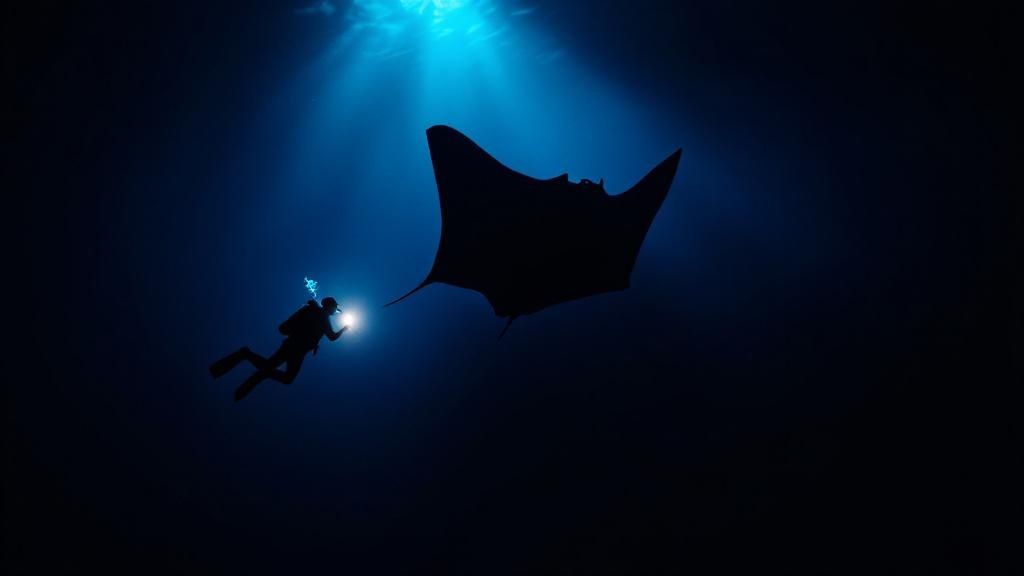
The Kona coast of the Big Island is perfectly set up for this incredible spectacle. This isn’t just any old dive; it's a front-row seat to a magnificent, naturally occurring feeding event. The concept behind it is simple, yet totally brilliant: we use powerful lights to attract swarms of plankton, which just so happens to be the manta rays' favorite meal.
As the plankton gather in the illuminated water, they create a glowing, all-you-can-eat buffet that the local manta population simply can't resist. These gentle giants, some with wingspans stretching over 12 feet, glide right into the light to feed. They perform mesmerizing barrel rolls and graceful swoops, often coming within inches of us.
What Makes This Dive So Special
Unlike manta encounters at "cleaning stations" in other parts of the world, what we have here in Kona is a dynamic feeding frenzy. You're witnessing a fundamental behavior in a setting where it happens almost every single night. That's because our local manta ray population is residential—they live here year-round, which makes sightings highly reliable.
This is so much more than just watching fish swim by; it's an immersive ballet. The feeling of a massive, silent creature soaring directly over your head is something that stays with you forever.
Choosing a trusted and experienced operator like Kona Honu Divers is about more than just your safety; it’s also about protecting these amazing animals. A professional crew gives you a detailed briefing, provides high-quality gear, and offers expert guidance in the water. We know the best practices to create a comfortable, respectful environment for both our guests and the mantas. You can find out more about what to expect on a Kona manta ray night dive in our detailed guide.
Choosing Your Manta Dive Site: Manta Village vs. Manta Heaven
When you're planning your Kona manta ray adventure, you'll quickly hear two names pop up again and again: Manta Village and Manta Heaven. Both are legendary spots, but they offer completely different underwater experiences. It’s a bit like choosing between a grand, comfortable theater and an immersive, front-row rock concert; the best one for you really boils down to your experience level and the kind of show you're hoping to see.
The Kona Coast is famous across the globe for its manta ray night dives, drawing about 80,000 people every year to see these incredible creatures. Manta Village and Manta Heaven are the two stars of the show, each with its own personality and vibe. Conditions are typically amazing between April and October, when the water is a balmy 75 to 80°F—perfect for settling in and enjoying the spectacle.
Manta Village: The Original Kona Manta Dive
Manta Village, right in Keauhou Bay, holds the title of the original and most reliable manta viewing spot in Kona. The water here is calmer and shallower—around 35 feet—with a nice sandy bottom that makes it the perfect stage for both divers and snorkelers of all skill levels.
This is the go-to spot if you're a first-time night diver or just want a more relaxed, predictable environment. You'll settle onto the sand, look up, and watch the "manta ballet" unfold as these giants glide gracefully through the beams of light. It's a breathtaking, accessible, and truly unforgettable wildlife encounter.
Manta Heaven: A More Dynamic Encounter
On the other hand, Manta Heaven (also known as Garden Eel Cove) offers a more dynamic, and slightly more advanced, experience. Located a bit further north near the airport, this site is deeper, sitting around 40-50 feet, and can sometimes have a bit more current to navigate.
These conditions often lead to ridiculously close and thrilling fly-bys, making it a huge favorite for experienced divers and underwater photographers. If you're comfortable in potentially livelier water and are craving a completely immersive, and sometimes wonderfully unpredictable show, Manta Heaven absolutely delivers. Want a better feel for the adventure? You can read more about what it's like to go on the manta ray dive in Kona here.
To make the choice a little easier, here's a quick side-by-side comparison.
Manta Village vs. Manta Heaven at a Glance
| Feature | Manta Village (Keauhou Bay) | Manta Heaven (Garden Eel Cove) |
|---|---|---|
| Experience Level | All levels (beginner-friendly) | Intermediate to Advanced |
| Typical Depth | 35 feet (10.5 meters) | 40-50 feet (12-15 meters) |
| Bottom Topography | Sandy bottom | Rocky reef & sand channels |
| Water Conditions | Generally calm, protected bay | Can have stronger currents |
| Best For | First-timers, snorkelers, relaxed viewing | Experienced divers, photographers, thrill-seekers |
| Manta Behavior | Graceful, overhead gliding "ballet" | Close, dynamic, and sometimes barrel-rolling passes |
Ultimately, there’s no wrong answer. Both Manta Village and Manta Heaven promise a magical night under the waves with some of the most majestic animals in the ocean. The right site simply depends on what kind of magic you’re looking for.
How to Prepare for Your Manta Ray Adventure
A little prep work can make a world of difference between a good manta ray dive and a truly magical one. Think of this as your pre-flight checklist for an unbelievable underwater ballet. When you plan ahead, you can just relax and soak it all in.
The adventure starts long before you jump in the water. Top-notch operators like Kona Honu Divers make safety and education a priority, kicking every tour off with a detailed pre-dive briefing. This is where you'll learn the golden rule of passive observation: never, ever touch the mantas. It's vital for protecting their delicate, slimy coating.
What to Bring and What to Leave Behind
Packing smart will keep you comfortable and happy. Here’s a quick rundown of essentials for your trip:
- A Towel and Warm Layers: After a night dive, that boat ride back can feel pretty chilly. A dry towel and a sweatshirt or windbreaker are your best friends.
- Reef-Safe Sunscreen: If your trip starts in the late afternoon sun, make sure you've applied it well beforehand. Regular sunscreens have chemicals that are seriously bad for our coral reefs.
- Reusable Water Bottle: Staying hydrated is always a good idea, and you’ll be doing the planet a favor, too.
- Underwater Camera: Definitely bring it if you've got one! Capturing the memory is great, but don't get so caught up in getting the perfect shot that you forget to just be in the moment.
One of the most important things to remember is what not to bring. Leave behind any non-reef-safe sunscreens, as their ingredients can damage the fragile marine ecosystem that the mantas call home.
Understanding the Gear and Safety Briefing
Don't worry about gear; a reputable company will provide everything you need. This includes high-quality scuba or snorkel equipment like wetsuits, masks, fins, and lights.
The pre-dive briefing is where you really need to tune in. They'll cover everything from how to get into the water to how we all position ourselves—divers on the sandy bottom, snorkelers on the surface—to create that "campfire" of light that lures in the plankton. These instructions are crucial for keeping both you and the mantas safe and sound.
You can get a deeper dive into the whole experience by exploring what is a manta ray night dive. And for our friends visiting from abroad, if you plan to explore Kona beyond the dive sites, it's a good idea to look into local driving rules, like any international driving permit requirements, to make your whole trip smooth sailing.
The Science Behind Kona’s Manta Spectacle
Your manta ray dive kona isn't just an incredible show; it's a front-row seat to a fascinating scientific story and a major conservation success. When you slip into the water, you’re not just a tourist—you’re connecting with a well-known, well-studied population of marine animals, and that makes the experience so much richer.
So, how does the magic happen? How do we know these creatures so well? It all comes down to their bellies. The unique spot patterns on a manta ray’s underside are like a natural fingerprint. No two are the same, which gives researchers and everyday divers an incredible tool for telling them apart.
The Power of a Fingerprint
This simple photo-identification method has completely changed the game for understanding the local manta population. Every time a diver snaps a picture of a manta’s underside, they can contribute to a massive visual database that tracks these animals throughout their lives. It's citizen science in its purest form.
This is how we learn about their social circles, travel habits, and the overall health of the community. So when you’re down there with your camera, you’re more than a spectator—you’re a potential contributor to a project that’s vital for protecting these gentle giants.
Since the project began in 1991, this cataloging effort has identified over 330 individual mantas in Hawaiian waters. This covers both the local reef manta (Mobula alfredi) and the bigger, more nomadic giant manta ray (Mobula birostris). The collective effort has built a database with around 28,500 logged sightings, making Kona's manta population one of the most intimately understood on the entire planet. You can even dive into the research yourself—and maybe help identify a manta from your own photos—by checking out the citizen science catalog at mantarays.info.
Why This Research Matters
All this data gives us priceless insights. We learn where the mantas go, who their friends are, and how long they live—all critical puzzle pieces for effective conservation. This information helps shape better protection strategies, ensuring the Big Island manta ray night dive remains a sustainable, ethical, and mind-blowing experience for years to come.
By choosing a responsible operator, you're doing more than just ensuring a safe and awe-inspiring dive. You're actively casting a vote for the long-term protection of Kona's beloved manta rays. It elevates your adventure from a simple tour into a powerful act of conservation.
This scientific backbone is what makes the Kona manta dive truly special. You’re not just watching a beautiful, random event. You're engaging with a community of intelligent marine animals, each with its own name, history, and personality. It adds a layer of depth and connection that makes an already unforgettable experience truly profound.
A Step-By-Step Guide to Your Night Dive
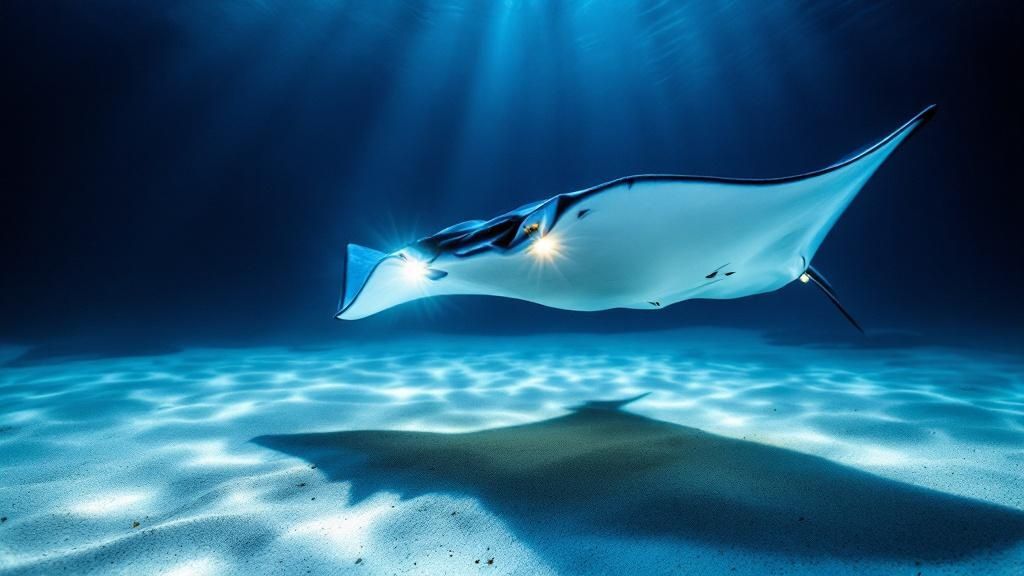
So, what does a manta ray night dive adventure actually look like from start to finish? From the moment you check in with our crew at Kona Honu Divers, you can feel the energy start to build. After a thorough safety briefing, the boat ride out to the dive site is full of anticipation for what's to come.
Once we anchor up, the real magic begins. Your guides will help you gear up and get into the water, descending to a sandy patch on the ocean floor, typically about 35 feet deep. From there, the plan is simple, but the result is absolutely breathtaking.
The Underwater Campfire
We get everyone settled in a circle on the bottom, creating what we affectionately call the "underwater campfire." On cue, every diver aims their powerful light straight up into the water column.
This collection of bright beams creates a massive cone of light, illuminating millions of tiny plankton and basically ringing the dinner bell for any manta rays in the area. It's a method that has made the Kona dive famous for a reason.
It’s a moment of pure, quiet anticipation. You settle onto the sand, surrounded by the gentle darkness, just watching the microscopic life dance in your light beam. Then you see it—a shadow moving on the edge of the light, growing larger and more defined as it glides closer.
The first manta ray swoops effortlessly into the light, its massive wingspan creating an unforgettable silhouette. Soon, another follows, and then another. They perform an incredible, silent ballet, doing barrel rolls just inches above your head with their cavernous mouths wide open to filter the plankton-rich water.
If you're curious about the science behind this incredible spectacle, you should check out our article that asks, why should you go on a manta ray dive in Kona?
This graceful, silent performance is a truly immersive and awe-inspiring experience. It connects you directly to the raw, wild beauty of the ocean in a way that creates memories you’ll hold onto for a lifetime.
Beyond the Mantas: Other World-Class Kona Dives
While the world-famous manta ray dive in Kona is an absolute can't-miss experience, the adventure definitely doesn't end there. Think of it as the headliner of an amazing festival—but you don't want to miss the other incredible acts. The Big Island's volcanic past has sculpted a truly spectacular underwater playground, and Kona's waters are teeming with life far beyond the mantas.
Our crew has spent decades exploring every nook and cranny of these reefs. We live to show divers the full, vibrant spectrum of what this coastline has to offer. But don't just take our word for it—our guests' experiences speak for themselves.
The Surreal Kona Blackwater Dive
Picture this: you're drifting over thousands of feet of inky black ocean, tethered to the boat, suspended in the deep blue. As you float, creatures from the abyss begin their nightly migration toward the surface. This isn't science fiction; it's the Kona Blackwater Dive, one of the most unique and mind-bending night dives on the planet.
You'll come face-to-face with a parade of bizarre and beautiful bioluminescent life—things you'd normally never see. From see-through larval fish to pulsing, glowing jellies, it truly feels like you've drifted into another dimension.
Advanced Dives for the Thrill-Seekers
Are you an experienced diver itching for a real challenge? Kona delivers. We're talking dramatic lava tubes you can swim through, deep pinnacles that drop off into the blue, and complex reef structures that will leave you breathless.
Our premium advanced dive trips are designed specifically to get you to these exclusive sites. Here, you'll explore incredible volcanic formations and have a better chance of encountering sharks, pods of dolphins, and other large pelagic animals. These are the dives that push your skills and reward you with some of the most jaw-dropping underwater scenery Hawaii has to offer.
No matter your skill level, Kona Honu Divers has an adventure waiting for you. Check out our full lineup of Kona diving tours and let us help you plan an unforgettable trip.
Your Kona Manta Dive Questions Answered
As you start planning your trip, you're bound to have some questions. It’s totally natural. We hear them all the time from divers getting ready for this incredible adventure, and our goal is to get you the straight answers so you feel completely ready for the experience.
One of the first things people ask is, "Will we actually see the mantas?" While they are wild animals and nothing in nature is 100% guaranteed, the Kona Coast offers one of the most reliable manta ray encounters on the entire planet. The success rate is insanely high—hovering over 90% year-round.
To give you peace of mind, top-tier operators like Kona Honu Divers even offer a "manta guarantee." If the mantas decide to be shy on your night, you can come back and try again for free.
This reliability isn't just luck. It's backed by years of organized research and citizen science. Between 2009 and 2014, researchers meticulously tracked individual mantas, their health, and how often they showed up at Manta Village and Manta Heaven. This data gave us amazing insights into their local migration patterns and population, helping us understand the best ways to have a successful, respectful encounter. You can dive deeper into these fascinating manta ray findings and statistics to learn more.
Answering Your Top Questions
To help you get fully prepared, here are some quick answers to a few more common questions we get about this dive.
-
Is the dive safe for beginners? Absolutely. The main site, Manta Village, is a perfect spot for new divers. The water is calm and relatively shallow at around 35 feet. Better yet, you’ll be kneeling or sitting on the sandy bottom, so there's no complex navigation—you just get to relax and watch the show.
-
Can I snorkel instead of dive? Yes, and it’s an equally amazing experience! Snorkelers float on the surface, holding onto a custom-built light board that attracts the plankton. The mantas swim right up to the surface to feed, barrel-rolling just inches beneath you. It’s a completely different and totally thrilling perspective.
-
What is the best time of year to go? You can see mantas here any time of year because Kona’s population doesn’t migrate away. They're residents! That said, many people prefer the months between April and October. During this time, the ocean conditions tend to be calmer, and the water is a bit warmer, typically sitting between a comfortable 75-80°F.
With these answers, you’re well on your way to an unforgettable night. The last piece of the puzzle is picking the right operator to ensure your dive is not just magical, but also safe and respectful of these majestic animals.
Ready to see the underwater ballet for yourself? Kona Honu Divers runs a world-class manta ray dive tour that will leave you with memories you’ll talk about for years to come.