
Picture this: you're floating in the warm, dark Pacific, and suddenly, they appear. Colossal, gentle giants with wingspans wider than a car, performing a silent, graceful ballet just inches from your face. This isn't a scene from a blockbuster movie; it's the world-famous manta ray dive in Kona, an encounter so consistently mind-blowing it's considered one of the absolute best night dives on the planet.
Why the Kona Manta Ray Dive is an Unforgettable Adventure
The magic behind this nightly spectacle is a brilliantly simple setup often called the "manta campfire." We gather in a specific spot, whether we're diving or snorkeling, and shine powerful lights down into the water. This light is a magnet for plankton, the manta rays' favorite meal. It creates an irresistible, all-you-can-eat buffet that draws these majestic creatures in for a feeding frenzy.
So, what makes the Kona coast the world's premier spot for this? A few key things come together perfectly here:
- They Live Here: Unlike other places where mantas just pass through, Kona is home to a year-round, resident population of reef manta rays. We know them, we've named them, and they are part of our local ecosystem.
- Insanely High Success Rate: The odds of seeing mantas on any given night are sky-high. It's genuinely one of the most reliable wildlife encounters you can find anywhere in the world.
- We Protect Them: Strong local conservation efforts and regulations are in place to ensure the mantas stay safe and the experience remains sustainable for generations to come.
This unique combination has turned the Kona coast into a global hotspot. The local manta population is estimated to have over 450 identified individuals, and the success rate for seeing them is an incredible 85% to 90% on any given night. The whole show happens in relatively shallow water, typically between 30 and 40 feet, making it accessible for most certified divers. You can find more insights about Kona's incredible manta population and its ecosystem online.
Of course, to have an experience this special, you need to go with a crew that truly respects the animals and the environment. This is where choosing a trusted, experienced operator like Kona Honu Divers makes all the difference. We’ve built our reputation on providing safe, respectful, and utterly awe-inspiring manta ray dive tours.
Our professional crew makes sure every single guest understands the golden rule: passive observation. It's how we protect both our divers and these gentle giants. When you join one of our manta ray dive tours, you aren't just signing up for another dive. You're becoming part of a beautiful, sustainable interaction between humans and nature.
Choosing Your Perfect Manta Ray Experience
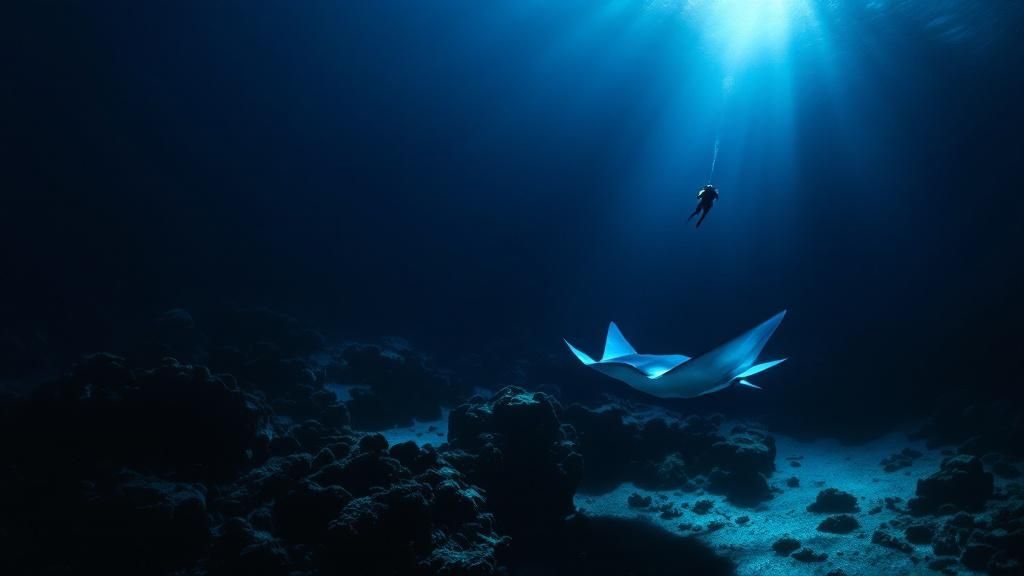
One of the first questions everyone asks is, "Should I dive or snorkel?" It's a great question, and the simple answer is: you can't go wrong. Both experiences put you face-to-face with these incredible animals. The real decision just boils down to your comfort level in the water and what kind of view you're hoping for.
Scuba Diving: An Up-Close Encounter
For certified divers, this is the classic, immersive experience. You’ll descend to a sandy patch on the ocean floor, usually around 35 feet deep, get comfortable, and simply look up.
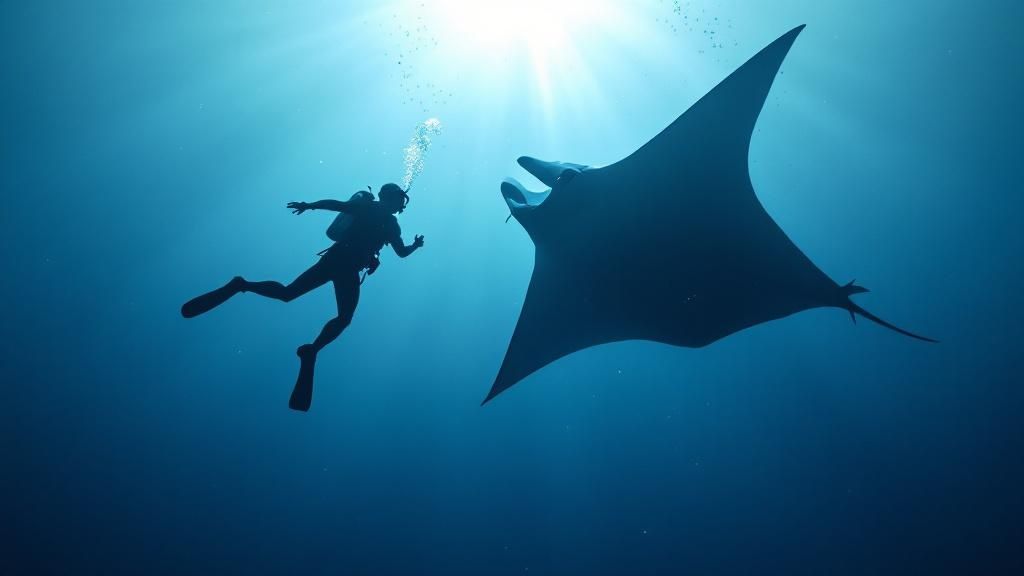
From this vantage point, you become part of the underwater world. The powerful lights draw the plankton, and the mantas swoop in for the feast, performing an incredible, silent ballet just inches above your head. It’s a powerful, humbling moment when a 1,000-pound animal glides effortlessly over you.
Snorkeling: A Bird's-Eye View
Not a diver? No problem. Snorkelers get an equally stunning—just different—perspective. You'll float comfortably on the surface, typically holding onto a custom-built light board.
These bright lights create a column of plankton in the water, and the mantas soar up from the depths to feed. You get a spectacular top-down view of the action, watching them barrel roll right below you. It’s an amazing option for families, those new to the ocean, or anyone who wants the magic without the gear.
Manta Ray Dive vs Snorkel: A Quick Comparison
Still on the fence? This table lays out the core differences to help you pick the perfect adventure for your group.
| Feature | Scuba Diving Experience | Snorkeling Experience |
|---|---|---|
| Perspective | Bottom-up view, looking towards the surface. | Top-down view, watching the action from above. |
| Certification | Open Water certification is required. | No certification needed, just basic swimming ability. |
| Proximity | Extremely close; mantas may glide directly over your head. | Very close; mantas feed just a few feet below the surface. |
| Best For | Certified divers seeking an immersive underwater encounter. | Non-divers, families, and those who prefer the surface. |
Ultimately, both experiences bring you incredibly close to the action. It's just a matter of choosing your preferred seat for the show.
Another thing to think about is what kind of trip you want. Some tours focus entirely on the manta ray spectacle. But if you want to get the most out of your day, our 2-Tank Manta Ray Dive and Snorkel is a fantastic choice. It pairs a beautiful late-afternoon reef dive with the main manta event after sunset.
Curious about what makes this dive so legendary? You can learn more about why you should go on a manta ray dive in Kona and get all the details.
Whichever you choose, know that every trip is run with the deepest respect for the mantas. As a Green-Listed operator, we ensure all encounters are completely passive and safe for the animals.
Your only job is to relax, breathe, and witness one of nature’s most magnificent displays. The professional crew handles all the logistics, safety, and lighting to create the perfect "manta campfire."
Whether you're watching from the ocean floor or floating on the surface, a night with Kona's manta rays is something you’ll carry with you forever.
How to Prepare for Your Manta Ray Adventure
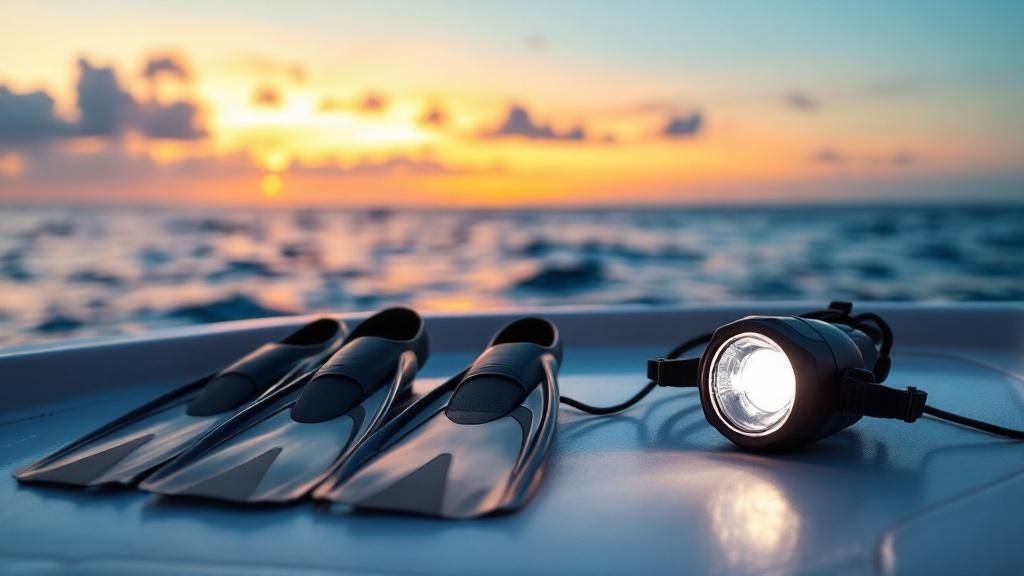
A little prep work goes a long way toward making your manta ray dive kona experience something you'll talk about for years. Getting a few simple things sorted out beforehand means you can just relax and soak in the incredible show happening all around you.
First thing's first: book your tour well in advance. I can't stress this enough. These trips are incredibly popular, and the best operators—like us here at Kona Honu Divers—fill up fast, especially during peak travel months. Locking in your spot early guarantees you won't miss out on this absolute bucket-list adventure.
Gearing Up for the Night
Once you're booked, it's all about packing smart. We provide all the necessary, high-quality dive and snorkel gear you'll need, but a few personal items will make you that much more comfortable.
Here’s a simple checklist that will set you up for success:
- Swimwear: The easiest thing to do is just wear it under your clothes to the marina. No fuss.
- Towel: A quick-dry towel is perfect for warming up after the dive.
- Dry Clothes: This one's important. A change of clothes or even just a warm jacket is a lifesaver for the boat ride back, which can get surprisingly chilly once the sun is down.
- Reef-Safe Sunscreen: If you're joining us for a 2-tank trip that kicks off in the afternoon, be sure to apply it before you head out.
If you have your own trusty mask or wetsuit, you're more than welcome to bring it. Just make sure it’s in good shape. Our crew is happy to help you get it set up with the rest of our gear.
A key part of being ready is arriving well-rested and hydrated. Avoid excessive alcohol the day before, and drink plenty of water. This helps prevent seasickness and ensures you're physically prepared for the dive, making the experience much more enjoyable.
The Most Important Part of Your Preparation
Physical prep is one piece of the puzzle, but getting in the right headspace is just as vital. The single most important part of your entire tour is the pre-dive briefing. This is where our expert guides walk you through everything you need to know for a safe, respectful, and mind-blowing encounter.
This briefing is where you'll learn the golden rules of passive interaction—how to position yourself in the water, where to aim your lights, and why you must never, ever touch the manta rays. Understanding these guidelines is absolutely fundamental to protecting these magnificent animals and their home. For a deeper dive into the principles of the encounter, you can explore our detailed explanation of what a manta ray night dive involves.
To boost your comfort and confidence underwater—especially if you're a newer diver or just want to polish your skills—think about taking a comprehensive diving course before your trip. When you show up with solid skills and a calm mindset, you can truly absorb the magic of the moment.
A Firsthand Account of the Manta Ray Night Dive
It all starts on the boat, just as the Hawaiian sun kisses the horizon goodbye, smearing the sky with fiery oranges and purples. You can feel the buzz of anticipation in the air, a shared current running through all the divers. The crew from Kona Honu Divers runs through a final briefing, and their calm, seasoned expertise is genuinely reassuring. Any pre-dive jitters melt away, replaced by pure, focused excitement.
Then comes the moment you slip over the side and into the warm, dark Pacific. The world above vanishes. All you hear is the gentle hiss and bubble of your own regulator and the soft lap of waves against the hull. For a beat, it’s just you and the vast, inky quiet of the ocean.
The Underwater Campfire
Once you make your descent, you’ll find yourself on a sandy patch of the seafloor with the other divers. This is the famous "manta campfire." Everyone gets settled in a loose circle, aiming their powerful dive lights up toward the surface. These beams cut through the blackness, creating a column of light that acts like a massive bug zapper for plankton, drawing them in from all around.
You get comfortable, find your spot on the sand, and just… wait. There’s a powerful sense of camaraderie in that silent, shared suspense. The only sounds are your own breathing and the distant, muffled thrum of the boat engine above. It’s an otherworldly feeling, like a peaceful vigil at the bottom of the sea.
This is exactly why the manta ray dive in Kona is so legendary—it’s remarkably consistent. Over years of monitoring, records show that manta sightings often range between 50 and 150 per month at these sites. The success rate hovers between 80% and 90% all year long. Researchers and dive operators have tracked these animals for decades, even giving them names like "Lefty" and "Big Bertha" based on their unique belly markings, which confirms just how loyal they are to these feeding grounds.
The Silent Ballet Begins
And then, it happens. A flicker of movement in the darkness, just at the edge of the light. A shadow grows, solidifies. The first manta ray has arrived.
It glides into view with an effortless grace that defies its massive size. Soon, another follows, and then another. Before you know it, the water above you is filled with these incredible creatures.
With wingspans that can stretch over 12 feet, they perform a silent, breathtaking ballet. They swoop, soar, and barrel-roll through the beams of light, their cavernous mouths wide open to filter the plankton. They come so close you feel like you could reach out and touch them (but don't!), their huge bodies passing inches from your head. It’s a moment that is both humbling and heart-pounding, intimate and immense. The memory of that silent, graceful dance in the dark is something you’ll carry with you forever.
To get an even better idea of what to expect from start to finish, check out our in-depth guide covering all the details of the Big Island manta ray night dive.
Why Sustainable Manta Tourism Matters
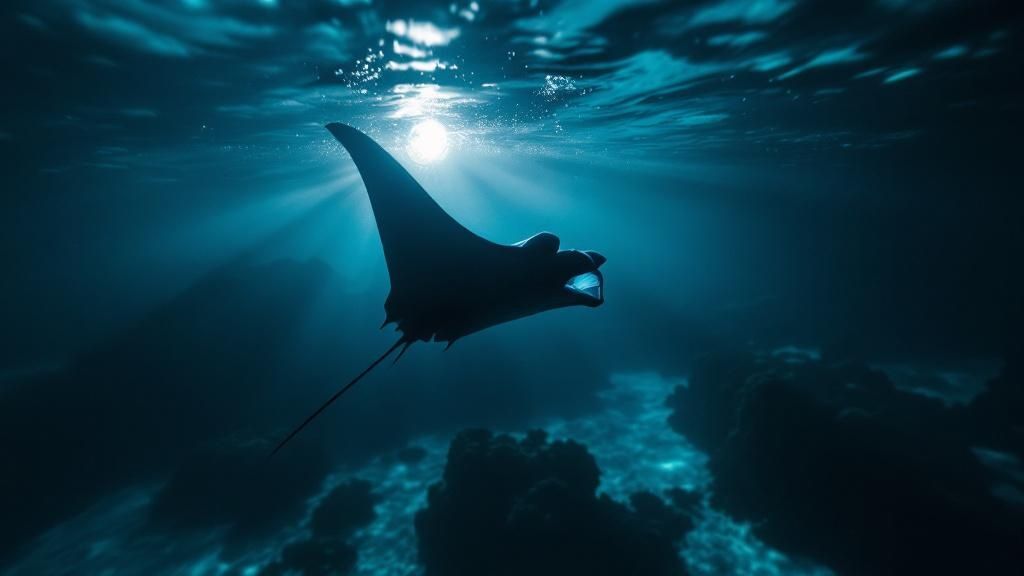
That incredible, once-in-a-lifetime encounter with a manta ray gliding inches from your face doesn't just happen by magic. It's the direct result of years of hard work, dedicated conservation, and tour operators committed to doing things the right way. When you join a manta ray dive in Kona, you're not just a passenger on a boat; you're stepping into a partnership to protect these amazing animals.
Frankly, choosing the right operator is the most important decision you'll make. When you go with a Manta Ray Green Listed operator, you're guaranteeing your trip follows the strictest standards for both your safety and the mantas' well-being. Those rules, especially the no-touching policy, aren't just suggestions. They are absolutely essential.
Your tour fee is doing more than just saving your spot. It's fueling a whole cycle of local economic support and marine conservation. The money from manta tourism creates jobs, supports Kona families, and directly funds the research needed to keep these populations healthy.
How to Be a Manta-Friendly Diver
The best part? Being a responsible visitor is actually pretty simple. It all boils down to one key idea: passive observation. Your job is to just be a quiet, respectful witness to the underwater ballet.
Here’s what that looks like in practice:
- Listen to the Briefing: Your guide knows their stuff. Pay close attention to their instructions—they're giving you the playbook for a safe and respectful dive.
- Hands Off, Always: Seriously, never touch a manta ray. Touching them strips off their protective slime coat, which is like their immune system. It leaves them wide open to nasty infections.
- Go Reef-Safe: The chemicals in most sunscreens are poison for our coral reefs and marine life. Make the switch to a reef-safe brand.
- Tuck in Your Gear: Keep your fins, camera, and anything else dangling from your BCD close to your body. You don't want to be the person who accidentally whacks a manta as it soars by.
This relationship between tourism and conservation has become a powerful model. It shows how a community can protect its natural wonders while building a sustainable economy around them. It’s a win-win.
The economic numbers are pretty staggering. Every year, manta ray night dives bring in over $2.5 million in revenue for the Kona community, supporting countless local livelihoods. This is especially vital because Hawaii’s manta rays have been protected by state law since 2009. This law shields them from the devastating gill plate trade that has wiped out populations in other parts of the world.
When you book a sustainable manta ray dive tour, you're connecting an unforgettable adventure to a much bigger purpose. Whether you're staying right in Kailua-Kona or making the drive from up north, you can check out the manta ray experience near Waikoloa Village to get all the details. You're not just a tourist—you're an active participant in protecting Kona’s cherished manta ray ohana (family) for generations to come.
More World-Class Diving in Kona
While the legendary manta ray night dive is an absolute must-do, don't for a second think your underwater adventure on the Big Island ends there. Far from it. Kona's volcanic coastline has created a spectacular playground for divers, offering experiences that are just as unique and thrilling.
Think of the manta dive as the headliner of a massive festival, with an entire lineup of world-class diving acts waiting for you.
For the truly adventurous souls, the Kona blackwater dive is something you simply won't find anywhere else on the planet. This isn't your typical reef dive. You're tethered to a line, drifting in the dead of night over thousands of feet of inky black ocean. It's here you'll see a parade of bizarre and beautiful creatures—many of them glowing with their own light—as they make their nightly migration up from the abyss.
Beyond the Night
The daylight hours in Kona have their own kind of magic. If you're an advanced diver, you can get lost exploring a labyrinth of ancient lava tubes, plunging down dramatic walls, and navigating deep pinnacles that are absolutely teeming with life.
These sites are where you'll find Kona’s most vibrant coral reefs and have those heart-stopping encounters with sharks, turtles, and huge schools of endemic fish. It’s a totally different flavor of diving from the night encounters, but every bit as captivating.
Kona Honu Divers offers a full spectrum of scuba diving tours in Kona that we’ve designed to hit every interest and skill level.
Whether you're drifting through the deep on a Kona blackwater dive or navigating sunlit lava tubes on an advanced daytime charter, you'll quickly discover why so many of us believe Kona is the ultimate dive destination.
From the world-famous manta spectacle to the alien world of the blackwater realm and the stunning volcanic reefs, Kona delivers unforgettable moments day and night. If you're looking to explore on your own, be sure to check out our guide to the best shore diving sites in Kona, Hawaii.
Your Manta Ray Dive Questions, Answered
Before you jump in, you probably have a few questions. That's a good thing! It means you're taking this adventure seriously. We get these questions all the time from first-timers, so let's clear the water and make sure you're feeling 100% confident.
Is the Kona Manta Ray Dive Safe?
This is the number one question we get, and the answer is a resounding yes. Your safety is our absolute top priority. Every trip is led by certified dive professionals who give a thorough briefing before you even get near the water and are right there with you the whole time.
And the mantas? They're called gentle giants for a reason. These magnificent creatures are filter-feeders, meaning they're only interested in the tiny plankton in the water, not the strange, bubbly creatures watching them. They have no teeth, no stingers, and no barbs. The entire encounter is incredibly passive and one of the safest wildlife interactions you can experience.
When Is the Best Time of Year to Go?
This is the best part: there is no "best" time! Kona's manta rays are a resident population, which means they live here year-round. This isn't a seasonal migration you have to time perfectly.
Our sighting success rate stays above 90% pretty much every single night, regardless of the month. While the weather can change, you can book your trip for January or July and have an equally amazing shot at a spectacular show. It's one of the most reliable wildlife encounters on the planet.
Can I Touch the Manta Rays?
This is a hard no, and it's the single most important rule of the dive. You absolutely cannot touch a manta ray, and here's why.
Mantas are covered in a special protective slime coat. Think of it as their immune system. When you touch them, you can rub off this coating, which leaves their skin vulnerable to nasty infections that can be very dangerous for them. To protect these amazing animals, responsible operators like Kona Honu Divers enforce a strict hands-off policy. Look, but don't touch.
Do I Need to Be a Certified Diver?
Not at all! Many people think this is a "divers only" experience, but the snorkeling view is just as mind-blowing.
Snorkelers get to float on custom-made boards at the surface. These boards have high-powered lights pointing down into the water, attracting the plankton and, in turn, the mantas. You get a perfect, unobstructed view of their underwater ballet as they swoop and barrel roll just a few feet below you. It's an incredible option for families, non-divers, or anyone who just wants to stay on the surface.
Ready to see it for yourself? You can book your spot on our world-famous manta ray dive tour and experience the magic.