
Picture this: you're floating in the warm, dark Pacific Ocean off the Kona coast. Suddenly, a giant, graceful creature with a massive wingspan glides just inches above you, its shape perfectly silhouetted by an ethereal blue light. This isn't a scene from a movie. It's the Kona manta ray night dive, an experience that consistently ranks as one of the most unforgettable underwater encounters on the planet.
The Underwater Ballet of Kona’s Gentle Giants
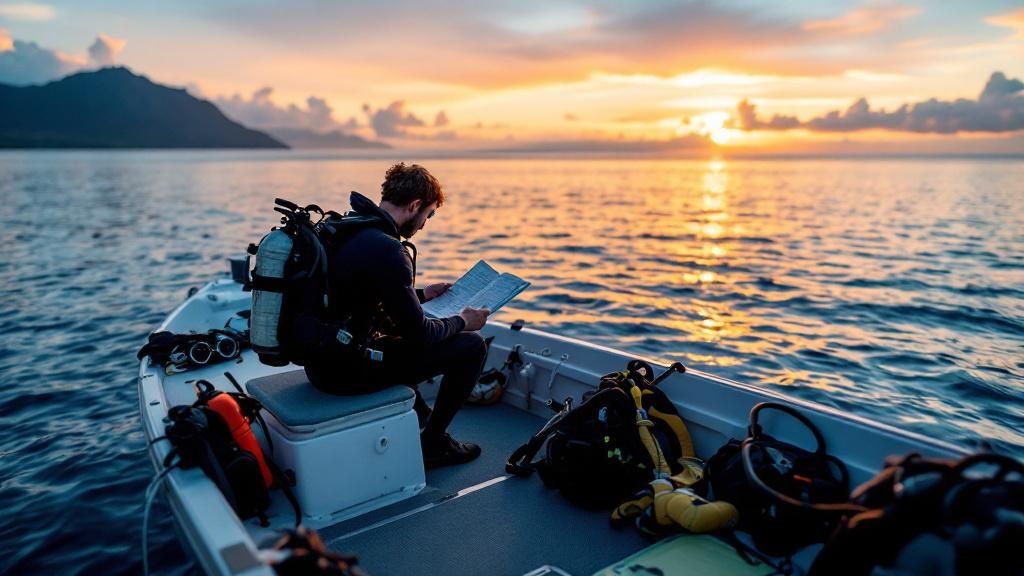
We often hear guests describe this adventure as an "underwater ballet," and honestly, it’s the perfect analogy. You get to watch these majestic manta rays swoop, soar, and barrel roll through powerful beams of light. They aren't putting on a show for you, though. They're simply feeding on clouds of plankton that have been drawn to the light, creating a spectacle that’s both thrilling and deeply moving.
One of the best things about this experience is how accessible it is. You don't have to be an expert scuba diver to witness it. Certified divers usually settle on the sandy ocean floor, about 30 to 40 feet down, and watch the show from below. Snorkelers get a fantastic view, too, holding onto custom-built floating light boards as the mantas glide right beneath the surface. For anyone wanting to see this firsthand, booking a professional tour is the only way to go.
Why Is Kona the World's Premier Manta Destination?
So, what makes Kona so special? Out of all the places in the world, this small stretch of coastline in Hawaii has become famous for its manta ray dives. It comes down to a few key factors: a large and reliable population of mantas and incredibly high sighting rates.
The mantas here are big—some have wingspans stretching over 12 feet! These are some of the largest reef mantas you can see anywhere. The dive sites themselves are also perfectly suited for the activity, located in shallow, calm waters that are accessible for a wide range of skill levels.
This unique combination of factors has turned Kona into a world-class hub for marine eco-tourism, drawing people from all over the globe for a front-row seat to nature’s performance.
Here’s what really sets Kona apart:
- High Success Rate: On any given night, there’s an 85-90% chance of seeing mantas. It's about as close to a guarantee as you can get in the wild.
- A Resident Population: The local waters are home to a known community of over 450 individual manta rays, many of whom have been identified and named. This ensures consistent encounters year-round.
- Perfect Conditions: The calm, nutrient-rich currents create the ideal feeding ground, attracting an abundance of plankton—the mantas' favorite meal.
Choosing Your Manta Adventure Site
So, you’re ready to dive with Kona’s famous manta rays. One of the first things you'll decide is where to go. The Big Island has two world-renowned spots for this incredible experience, and while both feature the same majestic animals, each offers a completely different vibe.
Think of it like choosing a concert venue. Do you want the intimate, acoustic theater or the epic, open-air amphitheater? Both are fantastic, but the experience is unique. Your choice between Manta Village and Manta Heaven will boil down to your personal comfort in the water and what kind of adventure you're looking for.
Manta Village: The Calm Original
Just south of Kailua-Kona, in Keauhou Bay, you’ll find Manta Village. This is the classic, the original, and the most established site. Its biggest advantage is its location—it's tucked into a protected bay, making the water exceptionally calm and the dive relatively shallow, typically between 25-35 feet.
Because of the calmer waters and sandy bottom, Manta Village is a fantastic spot for first-time night divers, families with kids, and snorkelers. The conditions are usually predictable, which is great for calming any pre-dive nerves so you can just relax and enjoy the show.
You'll settle onto the sandy bottom, get comfortable, and wait for the "manta ballet" to begin. It's a serene and controlled environment perfect for soaking it all in.
Manta Heaven: For the Adventurous Spirit
Head a bit further north, near the Kona International Airport, and you'll discover Manta Heaven (also called Garden Eel Cove). This site is a little deeper, sitting at around 35-45 feet, and is more exposed, which means you might encounter a mild current.
That bit of movement is exactly what makes it a favorite for seasoned divers and underwater photographers. The currents can add a dynamic element to the dive, creating breathtaking photo opportunities as the mantas swoop and glide through the moving water. While it's still completely safe with a professional crew, it feels a bit wilder and more untamed.
To help you visualize the differences and pick the best spot for your trip, here’s a quick comparison of the two sites.
| Feature | Manta Village (Keauhou) | Manta Heaven (Garden Eel Cove) |
|---|---|---|
| Location | South of Kailua-Kona (protected bay) | North of Kailua-Kona (open coast) |
| Average Depth | 25-35 feet | 35-45 feet |
| Conditions | Very calm, minimal current | Can have mild to moderate currents |
| Best For | Beginners, snorkelers, families | Experienced divers, photographers |
| Vibe | Serene, predictable, "underwater theater" | Dynamic, adventurous, "wild encounter" |
| Bottom | Sandy bottom | Rock and coral formations |
Ultimately, there isn't a "better" site—only the site that's better for you. Both locations offer a front-row seat to one of nature's most spectacular displays. From April to October, conditions are often prime, with warm water and high plankton concentrations that can attract an average of 8 to 12 manta rays per trip, making this one of the most reliable viewing locations in the world. You can learn more about Kona's world-class manta dive sites and what makes them so special.
Our team at Kona Honu Divers always chooses the best location based on the day's conditions, ensuring you have the safest and most memorable encounter possible.
Meet Kona’s Resident Manta Rays
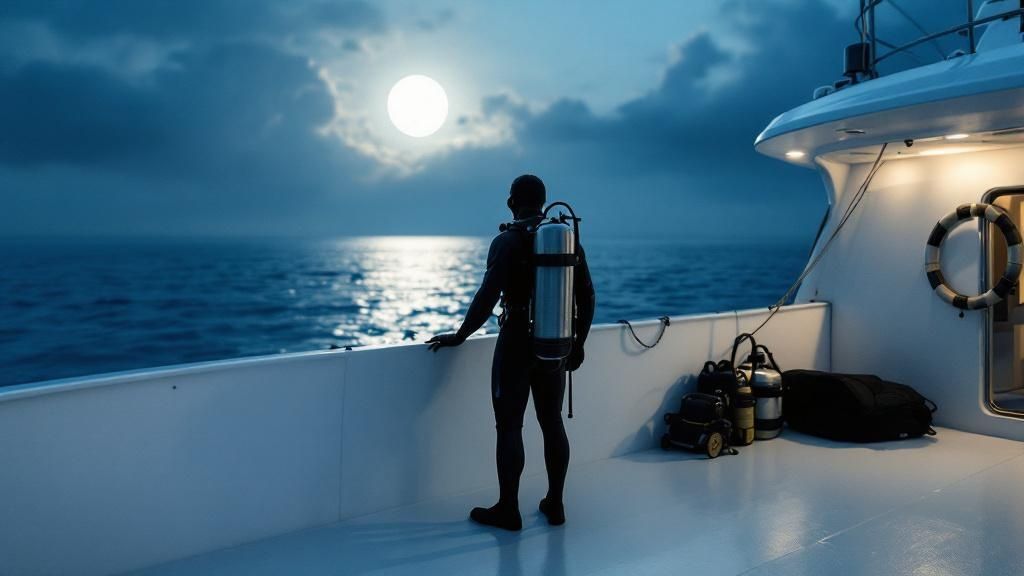
The manta ray dive Kona experience isn't just about seeing a manta ray; it's about meeting a community of local underwater celebrities. Each one is a unique individual, and we can tell them apart in a surprisingly simple way: the pattern of spots on their bellies.
Think of it like a human fingerprint. No two mantas share the same spot pattern, which allows researchers, guides, and even sharp-eyed guests to identify and track them over the years. This incredible biological quirk has transformed the nightly dives into one of the world's most successful, long-running citizen science projects.
Getting to Know the Locals
On your dive, don't be surprised if your guide points out a specific manta and tells you their name and a bit of their backstory. You might be formally introduced to "Lefty," the very first manta ray identified here all the way back in 1991, who still regularly visits the dive sites. Knowing their names and stories changes the dive from a simple animal sighting into a genuine, meaningful connection.
When you join a manta ray dive, you're becoming part of this amazing research effort. Every photo taken and every sighting logged contributes to a massive database that helps us understand and protect these gentle giants. It's the perfect fusion of adventure and conservation, and at Kona Honu Divers, we're proud to help our guests see the impact of responsible tourism firsthand.
Being able to identify individual manta rays is the cornerstone of their conservation here. It lets us monitor the population's health, track their movements, and understand their life cycles—all critical information for ensuring they thrive for generations to come.
This cataloging effort is what makes the Kona manta experience so unique. Since the early '90s, a close-knit collaboration between researchers and dive operators has meticulously documented the local manta population. By photographing their distinct ventral spot patterns, they've built a comprehensive database that now includes over 330 known individuals of both reef mantas (Mobula alfredi) and the much larger giant oceanic mantas (Mobula birostris).
This incredible citizen science initiative is one of the most extensive of its kind anywhere in the world, containing thousands of recorded encounters. You can dive deeper into this vital research and even look up individual rays yourself at the official manta ray database.
This deep, personal connection with the animals is what makes every manta ray dive in Kona feel so special. Our experienced guides at Kona Honu Divers don't just point out mantas; they introduce you to individuals with personalities and histories. This commitment to education and conservation is a huge reason why so many guests choose to dive with us again and again.
Ready to meet these famous residents for yourself? Our manta ray dive tours give you a front-row seat to this unforgettable underwater ballet.
Getting Ready for Your Manta Adventure
Any seasoned diver will tell you that a great dive starts long before you hit the water. It begins with feeling confident and prepared. Knowing exactly what to expect helps calm those pre-dive jitters, letting you fully soak in the incredible experience of the Kona manta ray night dive.
It all starts with the pre-dive briefing. Pay close attention here—this isn't just a formality. Your guides will walk you through the entire plan, making sure everyone understands how to have a safe and respectful encounter. The most important part? The rules of passive interaction.
The golden rule is incredibly simple: look, but don't touch. Manta rays are covered in a protective mucous coating, which is basically their immune system. Touching them can rub this layer off, making them susceptible to nasty infections. Just relax and let the mantas take the lead. They are naturally curious and will often glide inches from you, all on their own terms.
Tips for Divers and Snorkelers
For certified divers, your number one skill for this dive is buoyancy control. The whole idea is to settle calmly on the sandy bottom, creating a still, quiet "campfire" for the mantas to investigate. You'll want to be rock-steady, avoiding any movements that kick up sand or send you floating into their flight path. If you want to get certified or just knock the rust off your skills, our team at Kona Honu Divers offers a whole range of scuba diving tours and courses on the Big Island.
If you’re joining as a snorkeler, your view is just as spectacular. You'll be holding onto a specially designed light board that floats on the surface. This board’s powerful lights are what draw in the plankton, essentially creating a floating dinner plate for the mantas.
- Hold the float: It's your ticket to the show. Stay with the light board and avoid swimming off on your own. Stray fins in the dark can accidentally spook or injure a manta.
- Go horizontal: Lie flat on the surface with your fins down, almost like you're stargazing at the ocean floor. This posture gives you the best possible view and makes you less of an obstacle.
- Just breathe: Relax and take it all in. The mantas often come right up to the surface, performing graceful barrel rolls just below you as they scoop up plankton.
Whether you have a regulator in your mouth or a snorkel, the mission is the same: be a calm, respectful observer. When you follow these guidelines, you’re doing more than just keeping yourself safe. You're becoming a guardian of Kona’s amazing manta ray population, something we take to heart on all our manta ray dive tours.
Why a Professional Guide Is Essential
When you're planning a once-in-a-lifetime adventure like the Kona manta ray night dive, the single most important choice you'll make is who you go with. It's tempting to shop around for the cheapest tour, but a professional, safety-focused, and eco-conscious operator is the real key to a successful—and sustainable—experience.
An expert crew does more than just take you out on a boat. They transform a simple wildlife viewing into something truly profound and educational. Their work stands on three critical pillars: your safety, the mantas' well-being, and an unforgettable experience for you. Night diving has its own unique set of challenges, and a seasoned guide knows exactly how to manage the environment, brief everyone thoroughly, and handle any situation with calm professionalism.
Safety and Manta Conservation
First and foremost, a professional guide puts safety above all else. They are experts at managing groups in the dark, low-visibility conditions of a night dive, ensuring every single person—diver and snorkeler alike—feels comfortable and secure. This peace of mind allows you to completely relax and soak in the magic unfolding around you.
Just as crucial is their deep commitment to conservation. The best operators follow strict, self-imposed guidelines to protect Kona's manta ray population. They teach guests how to maintain a respectful distance and why the "look, don't touch" rule is so vital. Touching a manta can damage the delicate mucus layer that protects it from infection. By choosing a guide who puts the animals first, you're helping preserve this incredible encounter for generations to come.
The best guides aren't just tour leaders; they are passionate ocean stewards. Their genuine love for marine life is infectious and completely changes how you see the underwater world.
Enriching Your Experience
Beyond keeping you and the mantas safe, a top-tier guide truly brings the experience to life. The crew at Kona Honu Divers often knows the local manta rays on a first-name basis. They'll point out well-known individuals like "Lefty" or "Big Bertha," sharing their unique backstories and quirky behaviors. Suddenly, it's not just a wildlife sighting; it's a personal introduction to a cast of local celebrities.
This level of expertise adds a rich layer of context, turning a beautiful dive into a fascinating one. You can discover more about why the manta ray dive in Kona is so special right here on our blog.
Explore More World-Class Kona Diving
Look, there's no question about it: the manta ray dive in Kona is the star of the show. It’s what brings so many people here, and for good reason. But I’m here to tell you that the adventure doesn’t end when the mantas swim off into the night. The Kona coast is a world-class diving destination through and through, with something truly special for every diver.
Once you've experienced the magic of the mantas, you'll want to see what else these waters hold. At Kona Honu Divers, we live and breathe this ocean, and we're always excited to show you the full picture. Let's talk about what else makes our Kona, Hawaii diving tours so incredible.
Beyond the Manta Ballet
As spectacular as the night dive is, the daytime diving here is just as mind-blowing. Picture this: you're descending into an ancient lava tube, a massive underwater cavern carved out by volcanic fire centuries ago. Sunlight filters down from above, illuminating a tunnel now draped in vibrant coral and teeming with life. It's common to find whitetip reef sharks resting on the sandy bottom or stumble upon one of our beloved honu (Hawaiian green sea turtles) taking a nap.
Now, for those who really want a taste of the extraordinary, there's the Kona Blackwater Dive. I can't overstate how unique this is. We take you out over deep water at night, tether you to the boat, and let you drift in the immense darkness. You're floating in the middle of the largest daily migration on Earth, as bizarre and beautiful deep-sea creatures rise from the abyss. It’s a completely surreal experience. You can get all the details on our Blackwater Dive tour page.
I've had divers with thousands of dives under their belt tell me the Blackwater Dive was the single most incredible thing they've ever done. It truly feels like you're diving in outer space, meeting creatures from another planet.
And if you’re an experienced diver looking to push your limits, we've got you covered. Our premium advanced dive tours head out to more remote and challenging spots—think dramatic pinnacles and deep walls where you might encounter bigger pelagic animals passing through.
Whether the mantas are your main mission or you're ready to dive into everything the Kona coast has to offer, we've got an adventure waiting for you.
Your Top Questions About the Manta Ray Dive Answered
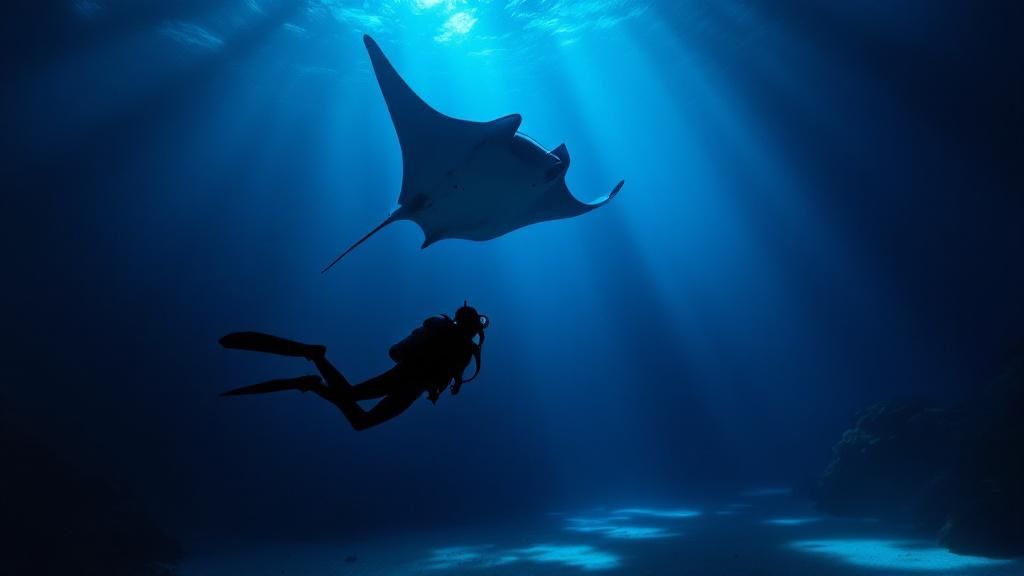
It's completely normal to have a few questions as you get ready for an adventure like the manta ray night dive. The more you know, the more you can relax and just soak in the magic. We get asked these all the time, so let's clear up some of the most common ones.
Do I Need To Be Scuba Certified?
Not at all! This is one of the best parts of the experience—it’s just as breathtaking for snorkelers as it is for divers.
While certified divers get a unique view from the ocean floor, snorkelers float at the surface, holding onto a specially designed light board. This board illuminates the water below, attracting a thick cloud of plankton and turning the area into a massive manta buffet.
The rays glide right up to the surface, often performing incredible barrel rolls just inches beneath you. You get a perfect bird's-eye view of the entire underwater ballet.
What's The Best Time of Year To Go?
Honestly, any time is a great time! The Kona mantas are residents, meaning they stick around all year long. This gives us a remarkably high sighting success rate, consistently hovering around 85-90% no matter the month.
If you’re looking for the absolute best conditions, the summer months (roughly April to October) tend to have the calmest seas and warmest water. But don't let a winter trip stop you—the show goes on, and it's every bit as spectacular.
Is the Manta Ray Night Dive Safe?
Yes, it is incredibly safe. When you go with a professional, experienced operator, you're in great hands. The guides give detailed safety briefings, use high-quality, well-maintained equipment, and follow strict rules that protect both you and the mantas.
It's important to remember that manta rays are true gentle giants. They have no teeth, no barbs, and no stingers. Their only interest is scooping up mouthfuls of tiny plankton.
What Happens If We Don't See Any Mantas?
While sightings are very reliable, manta rays are still wild animals operating on their own schedule. On the rare occasion they don't show up, most reputable tour companies have a "manta guarantee."
This typically means if your trip doesn't encounter any mantas, you can come back and try again on another night for free (standby basis). Always ask about the specific policy when you book your tour so you know exactly what to expect.
Want to learn more about how it all works? Take a look at our detailed post explaining what the manta ray night dive is all about.