
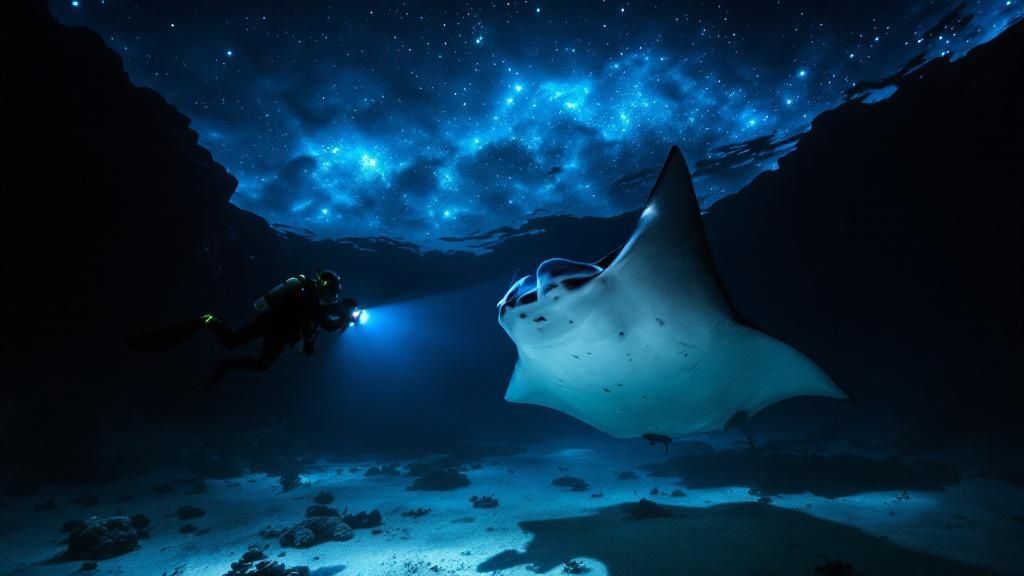
Picture this: you’re floating in the warm, dark Pacific waters off the Big Island. Suddenly, a colossal, gentle shadow emerges from the deep, gliding inches from your face. It's a giant manta ray, and its graceful dance is illuminated by a beam of light. This isn't a scene from a nature documentary. This is the world-famous manta ray dive Kona is known for, and it’s one of the most breathtaking wildlife encounters on the planet.
Why a Kona Manta Ray Dive is a Global Must-Do
There's a reason divers and ocean lovers from all over the world flock to Hawaii's Kona coast. Simply put, it's the most reliable place on Earth to see manta rays. Forget hit-or-miss sightings common elsewhere; here, it's practically a guarantee. With success rates consistently topping 90% year-round, it’s no wonder this experience lands on so many bucket lists.
So, what’s the secret behind this nightly spectacle? It all comes down to a unique, symbiotic relationship that has developed over decades. Local dive operators have perfected a safe and sustainable way to attract these gentle giants to the same spots every single night. In this guide, I'll walk you through everything you need to know to make this incredible adventure a reality.
An Experience for Everyone
One of the best things about the Kona manta ray experience is just how accessible it is. You don't have to be a seasoned diver to see the show. There are a few different ways to join in, and each offers its own amazing perspective.
- Scuba Diving: If you're a certified diver, this is the classic way to do it. You’ll settle on the sandy bottom, look up, and watch the "manta ballet" happen right over your head.
- Snorkeling: This is a fantastic choice for non-divers, families with kids, or anyone who prefers to stay on the surface. You'll hold onto a custom-built light board and watch in awe as the mantas swoop up from the darkness below.
The feeling of watching a massive fish the shape of a stealth bomber come into vision is impossible to describe. It's an awesome feeling that stays with you long after you've dried off.
No matter which option you choose, the main event is the same: seeing these magnificent creatures, some with wingspans reaching 12 feet, perform mesmerizing barrel rolls as they feed on plankton. This guide will help you pick the perfect tour and get ready for a night you’ll never, ever forget.
How the Kona Manta Ray Phenomenon Works
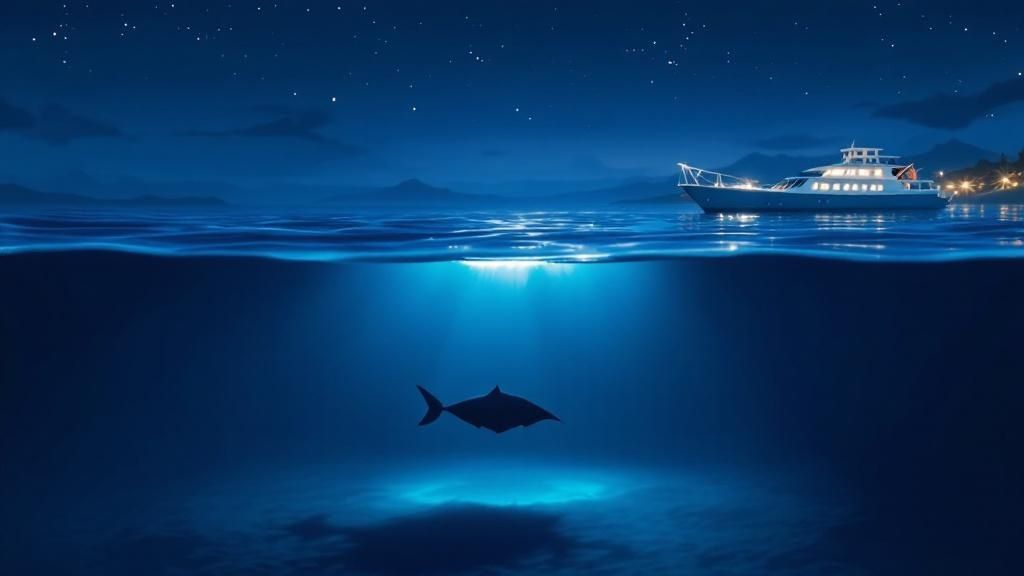
So, how do Kona's quiet coastal waters magically transform into an underwater ballet every single night? It’s not some elaborate biological secret. It's actually much simpler—a classic dinner invitation that hinges on one key ingredient: plankton.
Think of the powerful lights on a manta ray dive Kona tour as a giant, glowing dinner bell. When dive operators set up and shine these bright beams into the ocean, they create an irresistible beacon for clouds of microscopic plankton, which just so happens to be the manta rays' favorite meal. This simple act sets the stage for one of the most incredible shows in the natural world.
Over many years, Kona’s manta rays have come to associate these lights with an easy, all-you-can-eat buffet. This is a learned behavior, creating a unique and surprisingly reliable feeding routine—a special relationship between humans and marine life that you won't find anywhere else.
The Dinner Bell Effect
To really get your head around this unique interaction, it helps to break it down. The whole spectacle is a brilliant example of a conditioned response, where generations of mantas have been unintentionally trained by decades of consistent human activity.
- Lights On: Tour boats arrive at the designated sites and switch on their powerful, stationary lights, pointing them down into the water.
- Plankton Swarms: Like moths to a flame, countless tiny zooplankton and other microscopic organisms are drawn out of the dark and into the concentrated beams of light.
- Mantas Arrive for Dinner: The local manta rays, some with wingspans stretching over 12 feet, cruise into these "plankton buffets." They glide through the light, performing graceful barrel rolls to filter-feed with almost zero effort.
This dependable food source is the secret behind the incredibly high sighting success rates. The mantas know exactly where and when dinner is served, night after night. It’s a powerful testament to their intelligence and adaptability.
This predictable gathering is more than just a tourist attraction; it's a living laboratory. It allows for non-invasive study of manta populations, helping researchers understand their behavior, health, and social structures.
A Creature of Cultural and Biological Significance
The importance of the manta ray, or hāhālua, runs deep in both Hawaiian culture and biology. The waters off the Kona coast are home to two distinct species: the reef manta (Mobula alfredi) and the much larger giant manta ray (Mobula birostris). This biological richness supports a thriving ecotourism economy, bringing in around 80,000 visitors annually just for these encounters.
Culturally, the hāhālua—meaning 'two breaths'—is mentioned in the Kumulipo, the sacred Hawaiian creation chant. It symbolizes a profound connection between the Hawaiian people and the ocean. You can discover more about the manta's role in Hawaiian tradition to get the full story.
Choosing the Best Manta Ray Dive Site for You
When you're planning your manta ray night dive in Kona, you've got two world-class options to choose from. Think of it like deciding between a huge, easily accessible concert arena and a more intimate, exclusive club show. The right choice for you really boils down to your comfort in the water, your experience level, and the kind of encounter you're dreaming of.
The two main spots are lovingly called 'Manta Village' and 'Manta Heaven.' While you're almost guaranteed an incredible show at either, they're quite different in terms of location, conditions, and the vibe of the manta interaction. Getting to know these differences is the key to picking the perfect site for your big night.
So, which one is it going to be? Are you a brand-new diver or bringing the family along? Or are you a seasoned underwater photographer looking for that perfect, dramatic shot? Let’s break it down.
Manta Village: The Classic Kona Experience
Manta Village, located in Keauhou Bay just south of Kailua-Kona, is often considered the original manta ray night dive. This site is famous for its calm, protected waters and a relatively shallow, sandy bottom. Picture a perfectly lit underwater stage set up just for you—that’s Manta Village.
Its gentle nature makes it a fantastic pick for a wide range of people:
- Beginner Divers: The lack of strong currents and a depth of around 35 feet makes for a much less intimidating first night dive.
- Snorkelers: The calm surface provides a stable and comfortable platform for snorkelers to watch the action from above. It’s a spectacular bird's-eye view.
- Families: The easy access and predictable conditions are perfect for groups with mixed ages and swimming abilities.
The reliability of Manta Village is legendary. Its sheltered location and consistent manta presence have made it a cornerstone of the Kona diving scene for decades, establishing its reputation as a go-to spot for a guaranteed great time.
Manta Heaven: A Deeper Connection
Head a bit further north, up near the Kona International Airport, and you’ll find Manta Heaven. This spot, also known as Garden Eel Cove, serves up a slightly more adventurous flavor for your manta encounter. The ocean floor is a bit deeper, and the site can sometimes have a bit more current and surge.
This environment naturally appeals to a different kind of diver. It’s an especially great fit for more experienced divers who are completely at home in variable conditions. Photographers often favor this site, too, as the currents can create more dynamic and dramatic passes from the mantas.
To get a real sense of what makes this experience so special, you can read more about why you should go on a manta ray dive in Kona.
Manta Village vs. Manta Heaven: A Quick Comparison
To help you visualize the differences and make the best choice, here's a simple side-by-side look at the two locations.
| Feature | Manta Village (Keauhou Bay) | Manta Heaven (Garden Eel Cove) |
|---|---|---|
| Location | South of Kona, inside Keauhou Bay | North of Kona, near the airport |
| Conditions | Very calm, protected, minimal current | Can have current and surge, more exposed |
| Depth | ~35 feet | ~45 feet |
| Best For | Beginners, snorkelers, families, less experienced divers | Experienced divers, photographers, adventurous snorkelers |
| Manta Behavior | Consistent, graceful feeding patterns in a central area | More dynamic, acrobatic movements, sometimes more mantas |
| Bottom | Sand and rubble | Sand, rock, and coral |
| Reliability | Extremely high due to its protected nature | Very high, but can be canceled more often due to ocean swells |
Ultimately, choosing between these incredible sites comes down to matching the dive to your personal comfort and sense of adventure. Both offer a magical night you won’t soon forget. No matter which you pick, you're in for an unforgettable underwater ballet.
How to Prepare for Your Manta Ray Excursion
A little bit of planning is all it takes to make your manta ray dive Kona adventure a truly incredible memory. Getting everything in order ahead of time helps turn any pre-dive nerves into pure, bubbling excitement. And the very first thing you need to lock down is the right guide for your trip.
I can't stress this enough: look for operators who are Manta S.A.F.E. certified. This isn't just some marketing gimmick; it's a seal of approval showing a deep commitment to the mantas' well-being. These outfits follow strict, eco-conscious rules to make sure the encounter is safe and respectful for these gentle giants. A good operator doesn't just take you there; they make the entire experience better.
Gearing Up for the Night
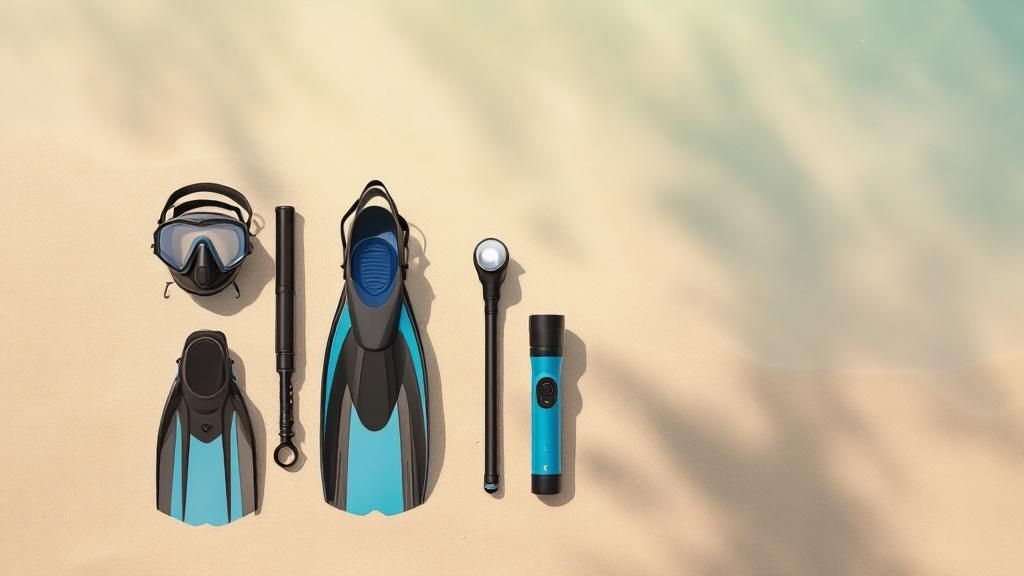
With your trip booked, it's time to think about what to bring. Your tour company will handle all the big stuff—the dive or snorkel gear—but packing a few personal items will make a world of difference for your comfort.
Here’s a quick checklist to make sure you're covered:
- Towel and a Change of Clothes: You’ll be grateful for something dry and cozy to change into after your swim.
- Warm Layers: Seriously, don't skip this. A sweatshirt or a light jacket is a lifesaver on the boat ride back. Even on a balmy Hawaiian night, the wind on the water after a dive can feel surprisingly cold.
- Reef-Safe Sunscreen: If you're on a sunset tour, put this on before you even leave. Protecting the delicate coral reef is part of the deal.
- Reusable Water Bottle: It’s easy to get dehydrated. Drink plenty of water before and after you get in the ocean.
- Motion Sickness Medication: If you even think you might get seasick, take something beforehand according to the directions. The ride is usually calm, but it's always better to be safe than sorry.
Physical and Mental Readiness
Getting ready isn't just about what's in your bag—it's also about prepping your body and mind. Make sure you're drinking water all day long leading up to the tour, and have a light meal a couple of hours before you go. A big, heavy dinner right before getting on a boat is never a good idea.
The single most important part of your preparation is your mindset. Pay close attention during the safety briefing. Your guides will walk you through the golden rules—especially the one about not touching the mantas—which keep the experience safe and magical for everyone, animals included.
Taking these simple steps helps you iron out any potential wrinkles in the experience. That way, you can just relax, soak it all in, and focus on the main event: watching Kona’s gentle giants put on their nightly show.
What to Expect During the Manta Ray Night Dive
https://www.youtube.com/embed/rLNwQqPo2m4
This is what it's all about—the moment everything has been building towards. Your adventure starts with a boat ride out as the sun starts to set, lighting up the Kona sky with incredible colors. There's a palpable buzz of excitement on board as you head out to the dive site. Then, the engines cut, the boat goes quiet, and all you can hear is the gentle sound of the ocean.
Slipping into the dark water for the first time is a thrill. Your guides will lead you down into the quiet, dark blue. If you’re diving, you’ll find a spot on the sandy ocean floor, usually arranged in a circle around a central light structure we affectionately call the "campfire." Snorkelers stay up on the surface, holding onto a floating light board that shines down into the water, attracting the main course.
The Underwater Ballet Begins
Once everyone is settled, the real show begins. The powerful lights slice through the darkness, drawing in clouds of tiny plankton. It’s like turning on a porch light on a summer night. Then, you see it—the first massive shadow gliding out of the abyss. It’s a genuinely breathtaking moment when that first manta ray swoops gracefully into the light.
Before you know it, more have joined the feast. You've just scored a front-row seat to one of the most incredible spectacles in the natural world. The mantas put on a mesmerizing underwater ballet, performing effortless barrel rolls just inches above the divers' heads. They'll swoop up toward the snorkelers, their huge mouths wide open to filter the plankton, and then dive back down again.
The most beautiful part of this whole experience is that it happens entirely on the mantas' terms. A responsible manta ray dive Kona tour makes you a silent, respectful observer. When you stay calm and still, the mantas feel secure, which leads to a much more genuine and up-close interaction.
The Golden Rules of Engagement
To keep both the mantas and the participants safe, we follow a few simple, non-negotiable rules. Your guides will give you a full briefing, but it all boils down to these core principles.
- Stay in Your Spot: Whether you're on the ocean floor or floating at the surface, it's vital to remain stationary. This creates a safe, predictable space for the mantas to swim through.
- Never Touch a Manta Ray: This is the big one. Mantas have a special mucus coating on their skin that acts as a shield against infection. Touching them can rub this protective layer off, leaving them vulnerable to disease.
- Let Them Come to You: Don't chase the mantas or swim toward them. Let them be the ones in control. Their natural curiosity will often bring them unbelievably close—sometimes they might even brush against you—but you have to let them initiate everything.
Following these rules is how we ensure Kona's beloved manta ray population stays healthy for generations to come.
Your chances of seeing this amazing display are exceptionally good. Both scientific studies and operator logs confirm a success rate for manta sightings along the Kona coast of 80-90% all year round. With about 80,000 people experiencing this tour each year, it’s clear this is a reliable and unforgettable adventure. To get the full story on this unique activity, you can also check out our guide on what a manta ray night dive is.
Common Questions About the Manta Ray Dive
It's completely normal to have questions when you're planning an adventure like a manta ray dive in Kona. Getting the details sorted out ahead of time—from safety to what you’ll actually do in the water—is the key to a stress-free experience. That way, you can just relax and soak in the magic.
Let's start with the big one: safety. People often wonder if it's safe to be in the ocean at night with such massive creatures. The answer is a resounding yes. Manta rays are true gentle giants. They don't have stingers, barbs, or teeth, and their only interest is the buffet of plankton attracted by the lights.
Reputable tour operators run these dives like a well-oiled machine. The whole experience is highly controlled and organized, with expert guides managing the group and ensuring everyone sticks to the safety protocols. It’s a thrill, but a very secure one.
Dive operators are also masters of their environment. They choose dive sites like Manta Village precisely because the waters are calm and protected, which makes for a comfortable and predictable dive, even after dark.
Is This Dive Safe for Beginners?
Without a doubt. In fact, this is one of the best nighttime ocean experiences a beginner can have. The dive itself is wonderfully passive. You won't be navigating a complex reef or swimming long distances.
Instead, you'll descend to a sandy spot about 30-40 feet down, get comfortable, and simply watch the spectacle unfold above you. Your guide gives a thorough briefing beforehand and stays with the group the entire time, making it an ideal first taste of night diving.
Can I Join if I Am Not a Certified Diver?
Yes, you absolutely can! You don't need a scuba certification to see the mantas. The snorkeling experience is just as incredible and offers a completely different, but equally breathtaking, perspective.
Snorkelers get a custom flotation board equipped with powerful lights that shine down into the dark water. You just hold on, float, and watch the mantas soar up from the depths to feed on the plankton concentrated in the light beams. It’s like having a bird's-eye view of an underwater ballet. If you'd like to dive deeper into the specifics, you can learn what you should know about the manta ray dive in Kona in our other guide.
What Is the Best Time of Year for This Dive?
Here's the fantastic news: there is no bad time. The Kona manta ray dive is a spectacular, year-round activity. The mantas here are a resident population, which means they stick around all year and don't migrate.
They reliably show up for their plankton dinner night after night, month after month. The water might be a bit warmer in the summer, but your chances of an amazing encounter are consistently high no matter when you decide to visit. You can book your manta ray dive Kona tour any time of year and expect an unforgettable show.