
You're choosing between scuba and snorkeling, checking whether your certification is current, and wondering if a manta will really show up. The Kona night dive is a genuine wildlife encounter, not a staged performance: lights gather plankton, and mantas may arrive to feed. Knowing how the setup works helps you choose the right format and enjoy the experience without getting in the animals' way.
What a Manta Ray Dive in Hawaii Really Is
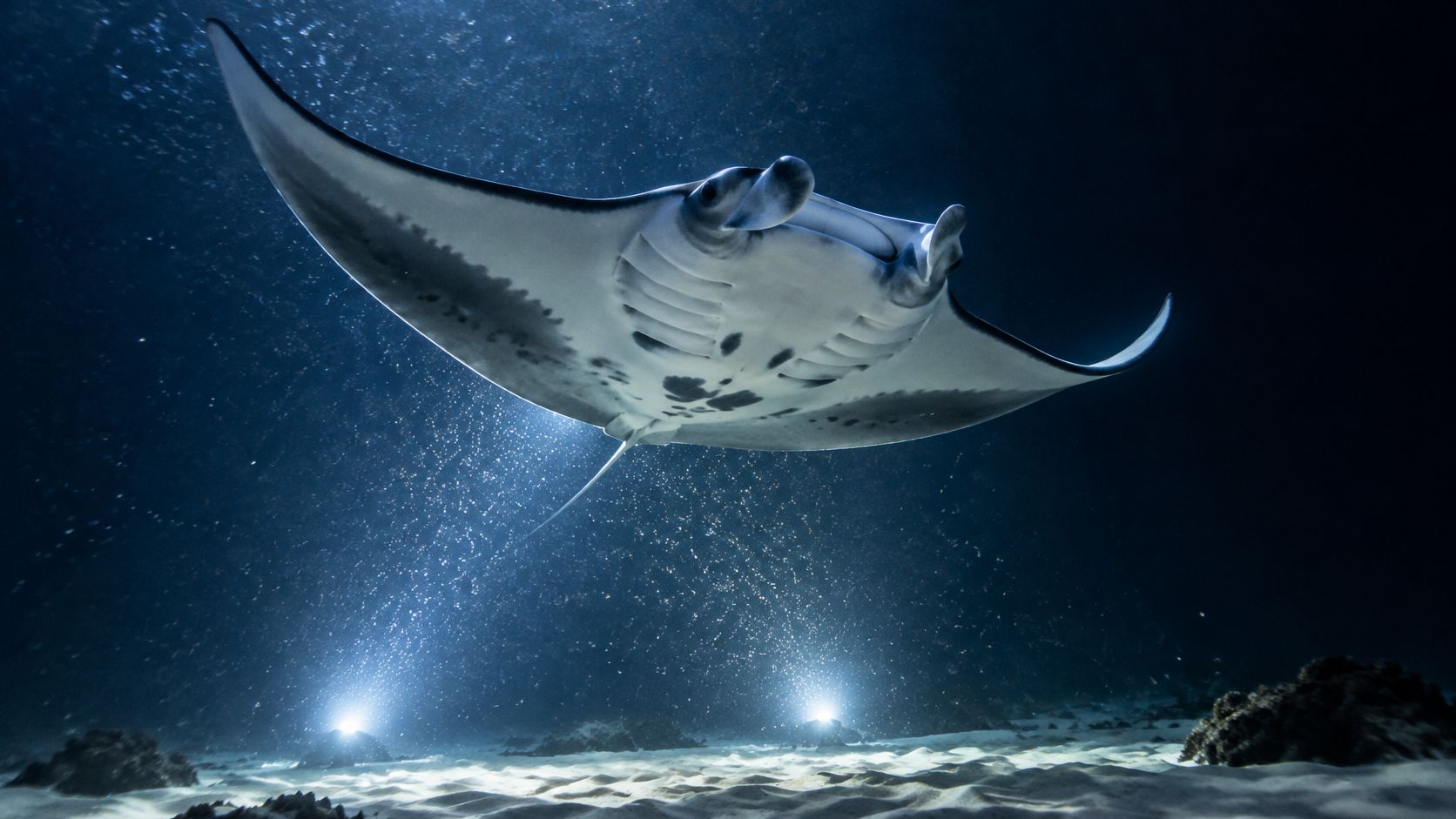
Lights come on over a sandy bottom off Kona. Tiny plankton gather in the glow, and a reef manta ray sweeps overhead, mouth open as it feeds. A manta ray dive in Hawaii is a nighttime encounter in which underwater lights gather plankton and reef manta rays arrive to feed.
Think of the lights as a spotlight on a moving crowd. The plankton gathers in the illuminated water, and mantas come to the food rather than being chased. That distinction matters: this is a controlled feeding encounter, not a guarantee that an animal will appear on cue. Kona's manta rays repeatedly use established nighttime feeding areas, so the same locations can bring divers and mantas together, but wildlife remains unpredictable.
Choose the view that fits you
Scuba places you on the seafloor looking up; snorkeling keeps you at the surface looking down. You don't need scuba certification to snorkel, but you do need to be comfortable floating in open water at night. A two-tank trip adds a reef dive before the manta session, so it suits certified divers who want more than the nighttime encounter alone.
| Manta ray night formats compared | |||
|---|---|---|---|
| Format | Best For | Where You Watch From | Certification Needed |
| Night scuba dive | Certified divers wanting the closest view | Kneeling on the sandy bottom | Open Water or higher |
| Night snorkel | First-timers and comfortable swimmers | Floating on the surface | None, only comfort in open water |
| Two-tank dive trip | Divers wanting reef time before the manta viewing | Reef at dusk, then night viewing from the sand | Open Water or higher |
The short verdict: certified divers get the closest view from the sand, while snorkelers see the same animals from the surface.
Why Garden Eel Cove Is the Best Manta Dive Site
Garden Eel Cove is the best choice for most divers because its protected viewing area and surrounding reef make for a more complete dive than an exposed, open-water setup. Also known as Makako Bay or Manta Ray Heaven, it sits off the Kona Coast near Keahole Point and is reached by boat from Honokōhau Harbor. The sheltered, calm sandy basin gives the night viewing setup a defined place, while the surrounding volcanic coral ridges, sand patches, and endemic Hawaiian garden eels add a reef experience to the outing. A site description of Garden Eel Cove's reef and nighttime setup also explains how the evening can combine a late-afternoon reef dive with manta viewing after sunset.
That two-part experience is the practical advantage. Rather than making the whole trip a wait over open water, divers get reef time first and then settle into the sandy viewing area. The lights concentrate plankton in the water without bait or animal training; mantas choose whether to feed there.
How the Kona sites compare
A University of Hawaiʻi study analyzed more than 23,000 community-recorded sightings from 2010 through 2022 and identified 167 individual reef manta rays at Garden Eel Cove and Keauhou. Garden Eel Cove generally supported larger aggregations, while Keauhou was visited disproportionately by females and showed strong female site fidelity, according to the University of Hawaiʻi study of Kona manta sightings.
| Kona manta sites compared | ||||
|---|---|---|---|---|
| Site | Shelter | Viewing Setup | Reef Quality | Best For |
| Garden Eel Cove | Protected, calm sandy basin | Sheltered basin with clearer water for the lights | Volcanic ridges, sand patches and garden eel colonies | Most divers at every level |
| Keahole Point | Less sheltered on the open coast | Open-coast viewing area | Reef details aren't specified here | Divers wanting a second Kona option |
| Keauhou | Shelter isn't specified here | Night feeding site | Reef details aren't specified here | Repeat visitors tracking resident mantas |
The wider Island population also puts the encounter in context. NOAA Fisheries reported that researchers identified 318 unique reef manta rays around Hawaiʻi Island between 1979 and 2024 in its 2024 report on Hawaiʻi Island reef manta rays. A 2023 study in BMC Ecology and Evolution estimated the genetic effective population size of Hawaiʻi Island reef manta rays at 104, with a 95% confidence interval of 99–110, in its peer-reviewed genetic study.
Aggregation size tracks zooplankton density, so the amount of food available that night matters more than choosing a particular month. Garden Eel Cove is a strong site choice, not a promise: no site or season guarantees a manta sighting.
Who Can Join and What Certification You Need
For scuba, start with recency: the two-tank manta charter requires Open Water certification or higher and a logged dive within the past two years. That rule matters because buoyancy control and basic water skills need to be ready for a stationary night dive, where you're expected to stay settled on the sand rather than drift toward the animals.
| Which format fits your dive history | ||
|---|---|---|
| Situation | Action | Notes |
| Scuba diver with a logged dive in the past 2 years | Book the two-tank manta charter | Open Water or higher required |
| Lapsed diver, no dive in 2 years | Book a refresher first | Confirm refresher options with the operator |
| Uncertified comfortable swimmer | Choose the night snorkel | Flotation device; ask about minimum age |
| Experienced diver wanting more | Premium advanced two-tank trip | Certification and recent logged dives |
If you haven't been diving recently, don't treat the night encounter as the place to rebuild rusty skills. Arrange a refresher before the charter and confirm what's available. If you're still working toward your first certification, see the Open Water certification course before planning a scuba manta dive.
Snorkeling and advanced options
For a snorkel, the key requirement is comfort swimming and floating in open water after dark. A flotation device helps you stay at the surface without needing to swim around, and a first-time snorkeler can still see the manta feeding activity from above. Ask about minimum-age rules before booking, especially if a child is joining.
Experienced divers looking for a more challenging outing can consider the premium advanced two-tank trip. Match the trip to your actual dive history rather than choosing by name alone. Count the days since your last logged dive, then choose the format that fits your certification and recency.
Gear and Preparation Checklist for Manta Night Dives
Get your essentials together the night before. A small amount of preparation makes the dock check-in smoother and leaves you less distracted once it's dark.
Paperwork and personal checks
- Certification card: Bring proof of your scuba qualification if you're diving.
- Logbook: Have your recent dive history available to confirm recency.
- Medical self-check: Think through any health changes that could affect diving, and raise concerns with the operator before boarding.
Dive and snorkel gear
- Mask and fins: A mask that seals properly is more useful than a new one that leaks.
- Exposure protection: A 3 mm suit or rash guard is a practical choice for warm Kona water; bring what keeps you comfortable while stationary.
- Snorkel: Remove it or secure it before a close manta pass so it doesn't snag or dislodge your mask.
- Computer or gauge: Keep track of your dive information and follow the crew's instructions.
- Reef-safe sunscreen: Apply it about 30 minutes before boarding so it has time to settle.
Night comfort
- Backup light: A small personal light is useful when you need to check gear.
- Towel, dry clothes and footwear: You'll appreciate a dry change after the water.
- Motion-sickness tablets: If you're prone to seasickness, plan ahead and follow the product directions.
- Water and snacks: Have something to drink and eat before or after the trip, as appropriate.
The operator supplies the main dive lights and most rental gear. Ask about rental sizes ahead of time rather than waiting until you're on the dock. Review practical guidance for scuba diving at night before the trip, then make two final checks: the weather and sea-state forecast, and whether your gear matches the format you booked.
What Happens From Boarding to the First Manta
The evening begins in daylight and ends with the group watching the water above a circle of lights. Here's how a typical two-tank trip unfolds, in order.
Board and check your setup. The crew helps with gear and weight checks while there's still light. Sort out anything that feels loose before the boat leaves.
Listen to the briefing. The crew explains why mantas come to the lights and how to observe them passively. Kona Honu Divers begins its manta night dives with a detailed briefing on the science and viewing rules.
Dive the reef before dark. On a two-tank outing, the first dive takes place over reef terrain, including volcanic ridges and sandy patches around Garden Eel Cove.
Surface and get ready for dusk. Warm up and listen for the next instructions as the crew lowers lights onto the sand. The illuminated area gives divers a visible focal point rather than leaving them in total darkness.
Settle in on the bottom. At Garden Eel Cove, divers arrange themselves around the illuminated area at approximately 10–12 meters (33–39 feet) and aim their dive lights upward. The broader site guide lists a depth range of 8–18 meters (26–59 feet), visibility of 15–30 meters (49–98 feet), and water temperatures of 24–28°C (75–82°F), in its Garden Eel Cove manta dive site guide.
Watch the feeding passes. Plankton gathers in the light, and mantas may loop overhead. Experienced divemasters and instructors are in the water with divers on Kona Honu Divers' Manta Ray Night Dive.
Keep your position. Snorkelers watch from the surface while scuba divers look up from below. The quiet can make the first close pass feel startling; then the manta's broad wings move across the light, sometimes close enough to seem within arm's reach. Don't reach out.
Ascend and debrief. Follow the guide's ascent and safety-stop instructions, then return to the boat for the trip back and a post-dive debrief.
Safety Rules and Responsible Manta Viewing
Calling the manta dive completely harmless or harmful by nature misses the core issue. The encounter brings people and boats to feeding areas, so behavior, supervision, and crowd management matter. A stationary, low-profile diver is both safer and less disruptive than one who stands, chases, or moves into the manta's path.
NOAA describes the encounter as a controlled zooplankton aggregation, not a guaranteed feeding event. Reef manta rays (Mobula alfredi) filter-feed using their broad mouths and cephalic fins; divers can help preserve their feeding corridor by staying low and leaving open water above. Read the NOAA manta-viewing guidance before the dive.
| Manta etiquette and the reason behind each rule | |
|---|---|
| Behaviour | Why It Matters |
| Stay on the sand, rubble or boulder bottom | Preserves the feeding corridor and avoids coral contact |
| Hold a stable semicircle | Leaves open water above for manta manoeuvring |
| Hold lights overhead, never sideways | Avoids blinding other divers and startling mantas |
| Keep bubbles away from approaching mantas | Bubbles can disturb the feeding area and the passes |
| Remove or secure snorkels | A close pass can dislodge a mask or snag exposed gear |
| Never touch, chase or enter the water column | Disrupts feeding and raises collision and entanglement risk |
The broader environmental picture isn't settled by etiquette alone. A peer-reviewed assessment cited in Hawaiʻi County records described rapid growth at Kona's sites, minimal enforcement, and concerns about crowding, human safety, and interactions among users. The assessment and testimony in Hawaiʻi County records also points to operating rules involving commercial permits, designated areas, mooring and navigation restrictions, and slow-no-wake approaches near displayed dive flags.
Legal compliance and best practice are related, but not identical. Permits and vessel rules govern operations; you still need to manage buoyancy, keep your distance, secure loose equipment, and follow the guide's light and site instructions. Kona Honu Divers runs the dive as a stationary, closely supervised encounter, with experienced guides helping guests stay safe and comfortable. Review responsible diver etiquette before boarding, choose an operator that follows formal rules, and speak up if anyone chases or touches a manta.
Photography Tips for Night Manta Encounters
A camera can capture the shape and movement, but only if you keep your position and don't disrupt the encounter. Follow the crew's briefing first; equipment and settings come second.
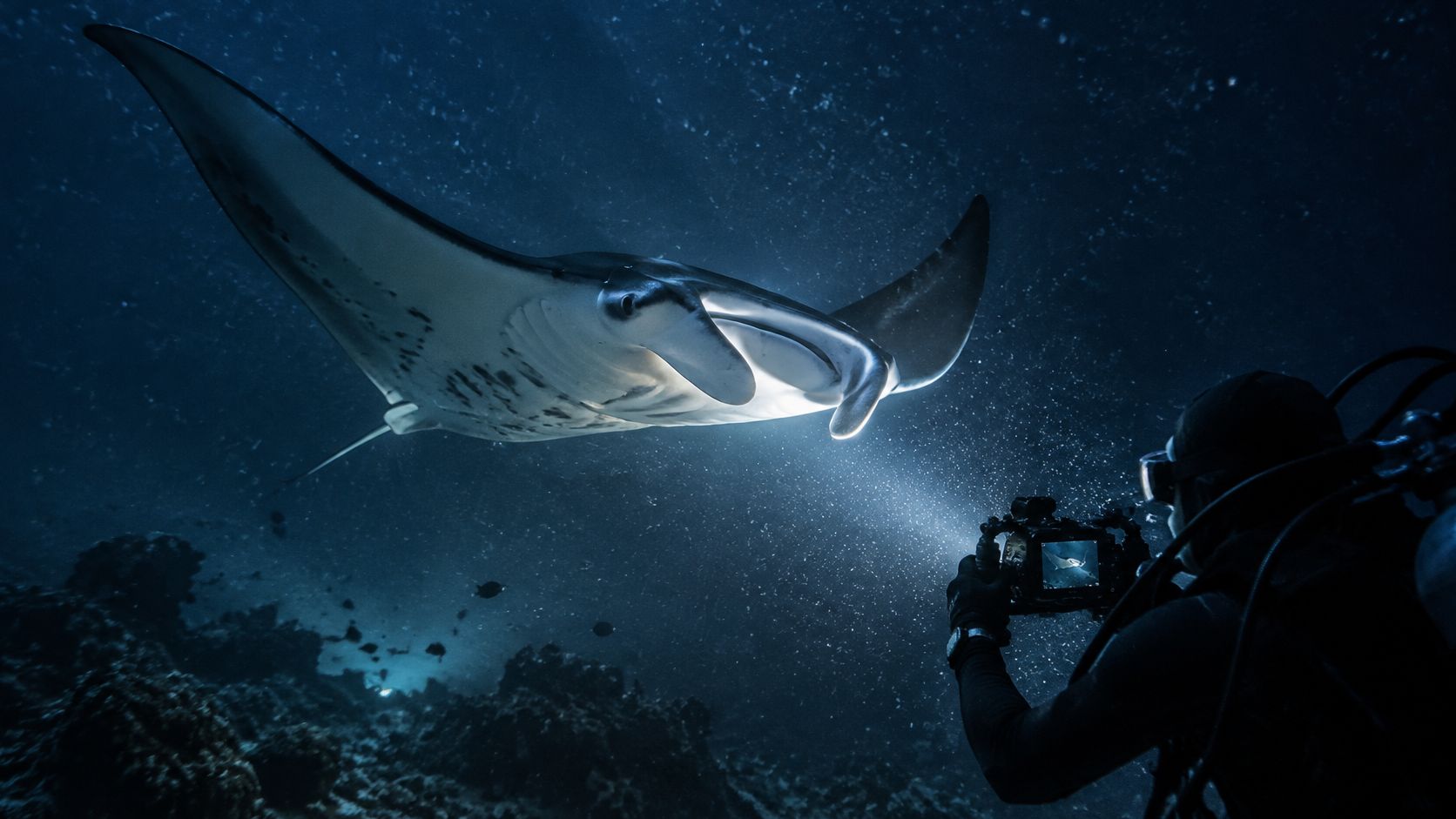
Work with the dive lights. Use the existing light for exposure and avoid strobe flash that could startle animals; follow the guides' preference from the briefing. Extra light can also distract other divers.
Choose wide angle. A wide-angle lens makes it easier to fit a manta and its surroundings into the frame. When your position allows, shoot upward from below to capture the animal against the illuminated water.
Set white balance deliberately. Blue water can shift colours, so use manual white balance or a warm preset. Check your camera's setting before descending rather than fiddling with it while the group is settled.
Use a faster shutter. Raise ISO as needed and try a shutter speed around 1/125 or faster to help freeze movement. Make adjustments without leaving your viewing position.
Hold still. Control buoyancy and rest lightly on the sand rather than kicking. That helps keep your shot steady and avoids stirring sediment or drifting into someone else's space.
Expect early blur. The first passes can be hard to frame, so shoot short bursts and review them once you're back at the surface. Don't chase an animal to salvage a missed frame.
For snorkelers, keep light off where possible. Use the established lighting and avoid pointing a camera light at the manta. More photography examples are available in the Kona manta ray dive photo guide.
The animal comes first. A missed shot is better than a stressed manta.
Choose a Reputable Operator and Book Your Manta Dive
Book early: popular manta night dives often sell out weeks in advance. Before committing, check whether the operator uses experienced divemasters in the water, gives a full briefing, supervises a stationary viewing setup, operates at an established site such as Garden Eel Cove, and clearly explains its weather and cancellation policies.
Kona Honu Divers offers the Manta Ray Night Dive, with Garden Eel Cove as its go-to site. Its two-tank manta outing combines reef time with the after-dark viewing session, and the two-tank manta dive and snorkel tour page gives the booking details. For an additional view of the company, see Kona Honu Divers reviews.
Manta dive questions, answered
Are sightings guaranteed? No. NOAA Fisheries reported 318 unique reef manta rays identified around Hawaiʻi Island between 1979 and 2024, but that count doesn't promise a sighting on any particular trip. Mantas feed where plankton gathers, and food conditions change; no operator can guarantee that an animal will arrive.
What if weather turns? Check the operator's rescheduling or refund policy before booking, and follow its directions if conditions change.
Can I combine a dive and a snorkel? Ask the operator what combinations it can accommodate. Scuba and snorkeling involve different positions and equipment, so confirm the plan rather than assuming both formats can be combined on one booking.
Make the booking decision in order: pick the format, confirm your certification and recent dive history, then book. That way you'll arrive with the right expectations and spend the evening focused on the animals, not last-minute logistics.
Kona Honu Divers offers guided manta night dives and a two-tank option that pairs reef diving with the nighttime encounter. Choose the format that fits your experience, then visit Kona Honu Divers to plan your Kona manta dive.