
Garden Eel Cove is the default and best-organized manta viewing site off Kona, and the Kona Coast has produced sightings of more than 450 individually documented manta rays with sighting rates commonly reported at 85% to 95% year-round. At the light circle, you'll float or kneel in darkness while reef mantas sweep through the illuminated water to feed.
The first few minutes can feel unusual. The boat settles onto its mooring, the engines go quiet, and the surface becomes a black sheet around you. Below, divers line up on the sandy perimeter while snorkelers hold position above the lights. Then a pale underside appears from the dark, turns on its side, and passes close enough for you to see the markings on its belly.
That's the Big Island manta ray experience. It isn't a daytime reef tour with a few lucky wildlife sightings. The encounter depends on a specific feeding pattern, a resident population, carefully positioned lights, and a viewing protocol refined over decades. The practical decisions matter, too. Garden Eel Cove versus Keauhou, snorkeling versus diving, boat layout, sea conditions, and guide behavior can all change what the night feels like.
Why the Big Island Manta Ray Night Is Unlike Anything Else in Hawaii
On a good night at Garden Eel Cove, the water below the boat looks empty until the light catches movement. Divers kneel on the sand, their red lights dimmed for the descent, while the main lamps create a bright circle overhead. A manta banks into that circle, wings spread wide, then rolls across the group with its mouth open, filtering the water as the soft chorus of regulators continues below.
The encounter has unusual historical depth. The modern Kona night-viewing tradition began in the late 1970s, when shoreline floodlights near the Kona Surf Hotel attracted plankton and the plankton attracted mantas. By the early 2000s, that accidental pattern had developed into a regular tourism activity, and organized night diving for manta viewing began in 1991. The documented history of Kona's manta night dive also describes 318 unique reef manta rays identified on Hawaiʻi Island since 1979, including the first identified local animal, nicknamed “Lefty.”
A resident encounter, not a random pass
The Kona population is strongly site-faithful. Reef mantas in this area rarely leave, and genetic research found extremely low movement between island groups, with migration rates equivalent to about one female moving between island groups every 1,300 years and one male every 64 years. The same reporting on Kona's manta population explains why the encounter can be so dependable compared with wildlife experiences that rely on passing animals.
That reliability doesn't mean every night looks identical. Plankton density, water movement, visibility, and the number of animals already feeding at a site all change the show. A quiet night can still produce close passes, while a busy night may bring several animals into the light circle at once.
Practical rule: Treat the manta dive as a managed wildlife encounter, not a performance with a guaranteed script.
Kona's compact collection of viewing sites, long observation history, and resident rays have made Hawaiʻi Island a premier destination for manta night snorkeling and diving. Independent coverage of the Kona manta operation describes three known feeding stations, including Manta Village, Manta Heaven, and a northern Kohala site, with some reports placing Manta Village above 90% sighting success and at an average of four or more rays per outing.
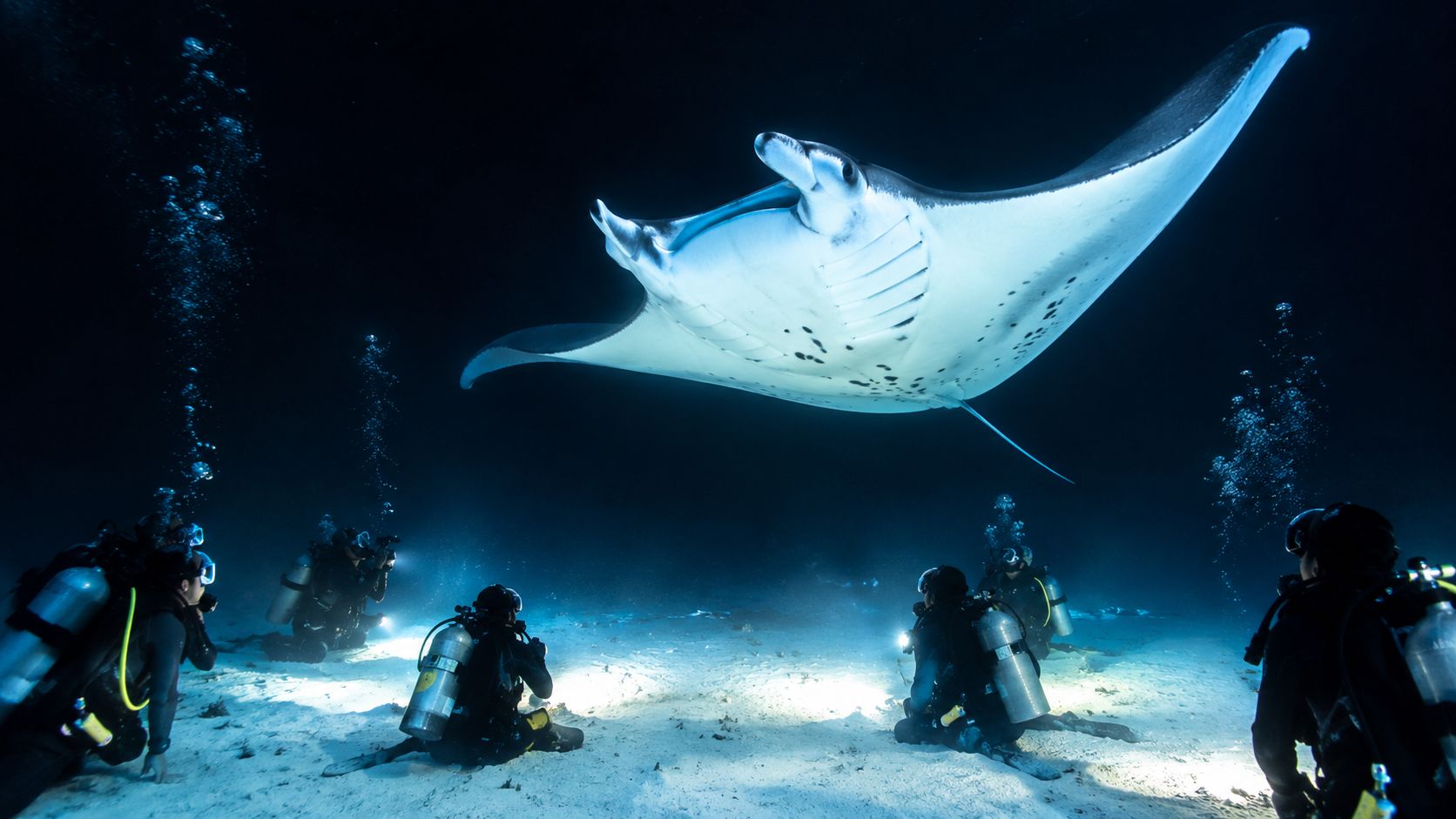
The best way to plan the night is to match your expectations to the format. Snorkelers watch from the surface, divers settle beneath the light source, and both groups need to give the animals room to work. The rest of this guide focuses on those decisions, from site selection and equipment to booking questions and conservation etiquette.
How Manta Ray Feeding Behavior Creates the Kona Night Show
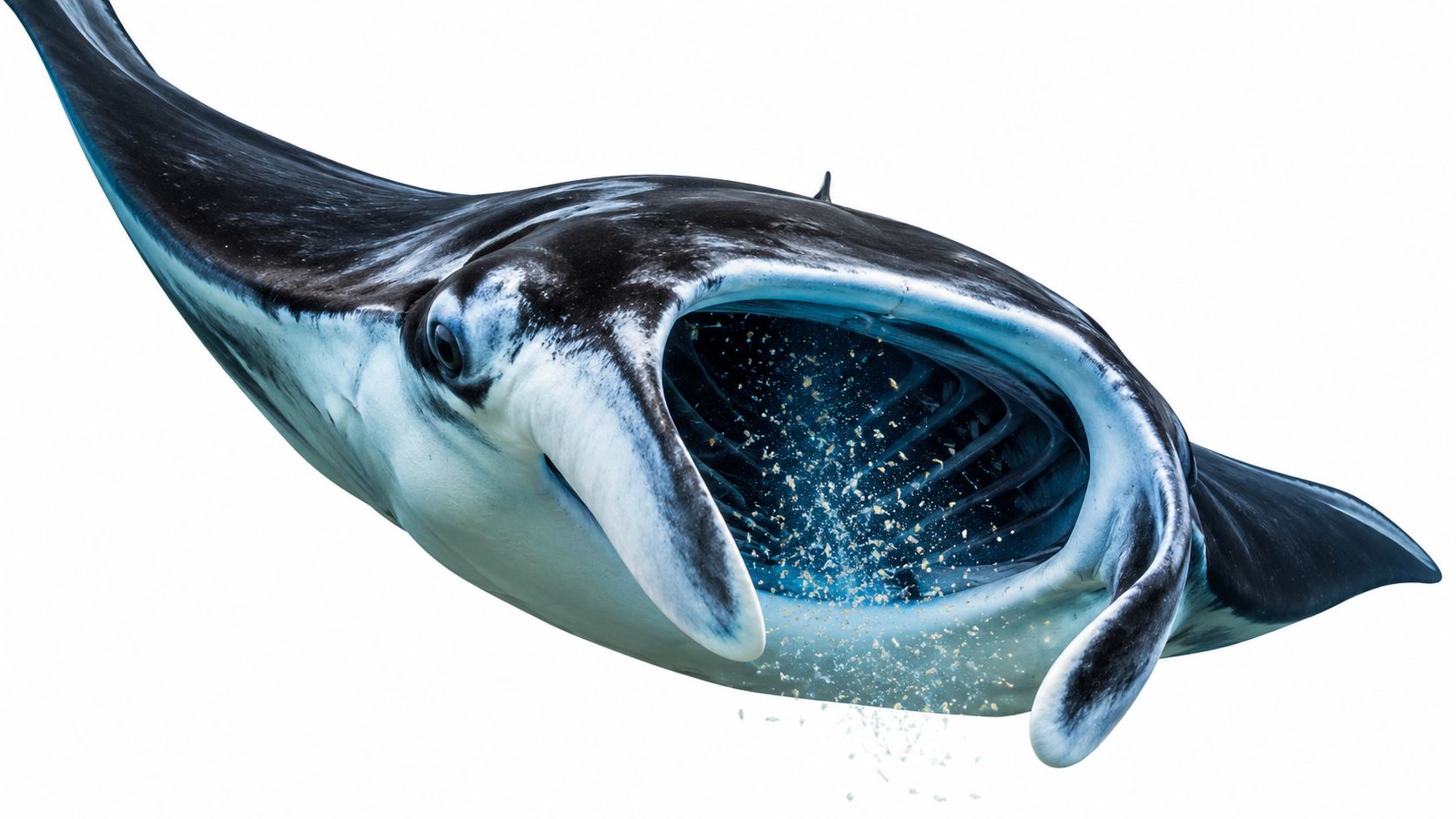
Manta rays are filter feeders. They aren't hunting divers, defending a nest, or approaching because they want human contact. They're following a food source, and the Kona night experience works because artificial light concentrates plankton where people can safely observe the feeding behavior.
The sequence is simple:
- Lights attract plankton. Powerful lamps illuminate the water near the surface and around the diver viewing area.
- Plankton attracts mantas. The rays follow the food rather than the boats or the people.
- Mantas shape the water flow. Their cephalic fins guide plankton-rich water toward their wide mouths.
- Gill rakers filter the meal. The rays separate food from seawater as they glide through the light cone.
That's why a manta can appear to barrel-roll directly toward you and then turn away at the last moment. Its path follows the densest food, not a human target. The open mouth, broad cephalic fins, and repeated passes are feeding adaptations, not signs of aggression.
What you'll notice underwater
From the diver line, the most memorable view is often the underside. Each animal carries a distinctive belly pattern, allowing experienced guides and researchers to recognize returning individuals. The rays may skim close to the lights, bank sharply, or pass overhead with only the sound of bubbles interrupting the darkness.
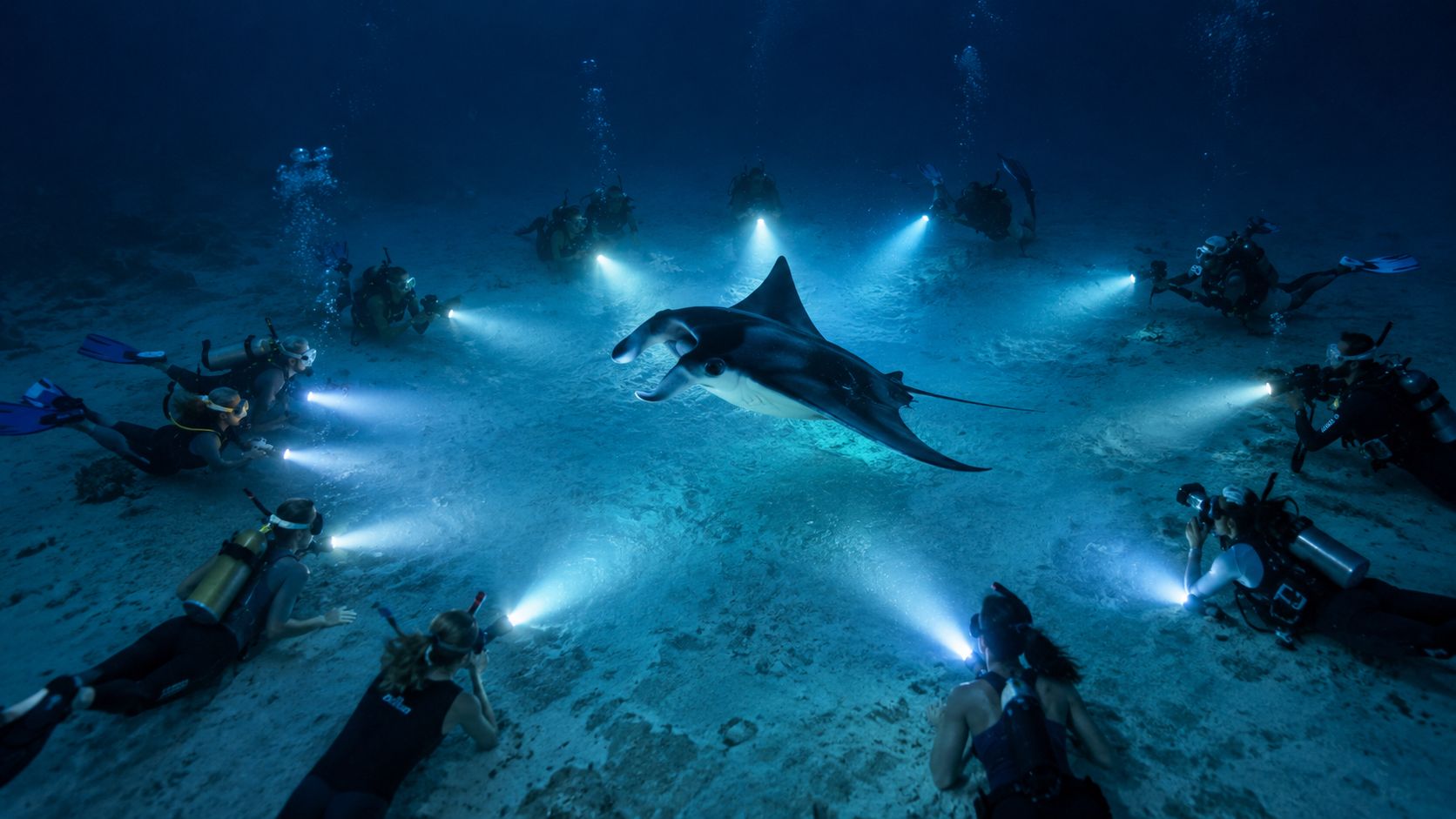
The light position matters because it creates the feeding opportunity. Divers should aim their beams upward and avoid waving them across the animals' faces. Snorkelers should stay calm and hold their position rather than swimming after a ray that moves beyond the circle.
A 13-year community-sourced study of more than 23,000 sightings and 167 individuals found that zooplankton density closely tracked aggregation size at Garden Eel Cove and Keauhou. The study hosted by the University of Hawaiʻi repository also found that Garden Eel Cove consistently supported larger aggregations, while Keauhou was used disproportionately by females.
That finding changes how I evaluate a booking. A manta tour isn't just taking you to a famous GPS point. The crew is choosing a site and light arrangement where prey conditions give the animals a reason to stay. Garden Eel Cove's stronger aggregation pattern is one reason it makes the better default for a dedicated manta night.
Garden Eel Cove vs Keauhou and Why Garden Eel Cove Wins
Garden Eel Cove and Keauhou are both legitimate Kona manta locations, but they aren't interchangeable from an operator's perspective. Garden Eel Cove is the northern site near Kona International Airport, also known as Manta Heaven or Makako Bay in different daylight and tourism contexts. Kona viewing-site information identifies it as a key northern manta location used by operators.
Garden Eel Cove wins as the default because it offers a more protected setting, a concentrated viewing area, and more moorings for boats, divers, and snorkelers. An operational comparison of the two primary sites describes the northern location as closer and better organized for viewing. Those details matter after dark, when boat position, spacing, and the consistency of the light circle determine whether you get a clean view or spend the night adjusting around other groups.
| Decision factor | Garden Eel Cove | Keauhou |
|---|---|---|
| Protection | More protected and concentrated | Can be a useful alternative in different conditions |
| Viewing area | More organized perimeter and more moorings | More compact experience depending on the operator |
| Aggregations | Typically larger | Can produce excellent encounters, especially when conditions favor it |
| Resort access | Convenient from the north Kona side | Convenient for guests staying near the Keauhou corridor |
| Best use | First choice for a dedicated manta night | Practical backup or shorter transfer option |
Keauhou still has a place. If the sea state is uncomfortable at the northern site, or if you're staying near Keauhou Harbor, a southern departure can reduce transfer time and make the outing easier. A good crew should make that decision from current conditions and animal activity, not from a rigid promise to use one site every night.
For most visitors, though, Garden Eel Cove offers the better combination of protected water, reef setting, viewing space, and aggregation behavior. A Garden Eel Cove manta night dive option is worth considering when the site itself is a priority rather than an incidental stop on a broader itinerary.
Best Time of Year and Time of Night for a Manta Ray Big Island Outing
There's no closed manta season on the Kona Coast. These are resident reef mantas, so operators can run viewing trips throughout the year. The more useful question is whether the night offers calm surface conditions, workable visibility, and enough plankton concentration to hold a strong aggregation near the lights.
Summer often provides the easiest operating conditions, especially from roughly May through September. Winter can bring larger swells and less comfortable surface conditions, but it doesn't remove the possibility of a good encounter. I'd choose a date that fits your schedule and then pay close attention to the operator's weather policy rather than delaying the trip in pursuit of a perfect calendar window.
Choose the format before choosing the date
Snorkeling and diving place you in different positions around the same feeding behavior.
- Snorkeling: You remain at the surface, usually holding a flotation board or positioning yourself inside the light circle. It suits confident swimmers, families, and guests who want a simpler introduction.
- Scuba diving: You descend to the sandy viewing area and watch the rays from below. It provides a closer perspective, but you need appropriate certification, comfort in darkness, and control of your position.
- Night dive planning: Certified divers should ask whether the trip includes one or two dives, how the surface interval works, and what support is available at the mooring.
| Period | Conditions | Best format | Notes |
|---|---|---|---|
| Roughly May through September | Often calmer and comfortable for surface viewing | Snorkel or dive | A practical choice for guests prioritizing easy boat conditions |
| Winter months | Swell and visibility can vary | Dive or snorkel, depending on forecast | Mantas remain present, but surface comfort may change |
| Twilight departure | Light fades as the boat reaches the site | Either | The transition into darkness is part of the experience |
| Later evening return | Cooler air and dark water | Either | Bring a dry layer and plan an unhurried return |
Check-in commonly falls into an evening window around 7:00 to 8:30 PM, depending on daylight and the operator's schedule. This guide to when to dive with Kona mantas is useful when comparing departure times, seasonal conditions, and the difference between a surface experience and a scuba descent.
What a Manta Ray Night Dive and Snorkel Actually Feel Like Step by Step
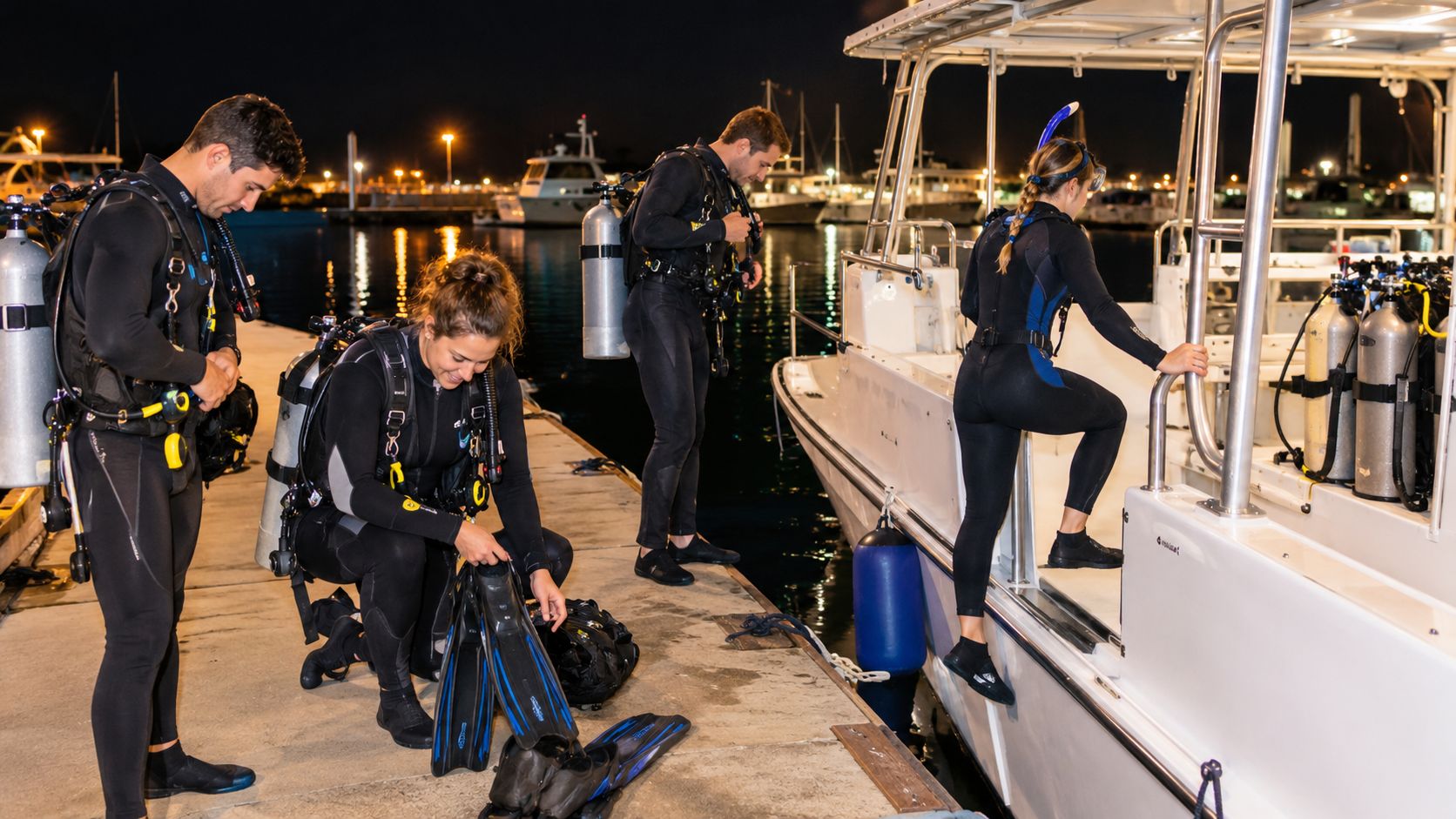
The night starts at the harbor with a practical routine. You check in, confirm your gear, fit the wetsuit, and listen to the safety briefing. Certified divers complete a weight check and organize their lights, while snorkelers receive mask, fins, and flotation equipment.
The boat ride gives the crew time to explain the animals and the viewing rules. The trip to Garden Eel Cove is generally a short coastal run, but the exact duration depends on the departure point, sea conditions, and the selected site. By the time the boat reaches the mooring, most first-timers understand why the crew keeps emphasizing stillness and spacing.
At the mooring
The boat ties in, and the water changes character immediately. The harbor noise disappears, the lights become the main reference point, and the surface takes on a green or blue glow.
Divers descend to the sandy viewing area, which is commonly described as roughly 35 feet deep at the western Kona site near Makako Bay. A description of the Kona night-diving setup places the viewing area at that approximate depth. Divers settle into a controlled line or semicircle and point their lights toward the feeding area.
Snorkelers stay at the surface inside the same general light circle. A foam board or snorkel float gives you something stable to hold while you look down. You don't need to swim around searching. The best viewing usually comes from staying quiet and letting the rays return to the food.
When the mantas arrive
At first, you may see only particles moving through the lamps. That plankton “snow” is the cue that the food web is active. Then a ray enters from outside the light, rolls through the illuminated water, and disappears again into the dark.
Some passes are slow and graceful. Others are fast, with the manta banking tightly and returning from a different angle. You'll hear divers exhale, snorkelers gasp, and guides direct attention toward an approaching animal. The crew's job is to keep the group organized while the animals decide where to feed.
The return is less dramatic but just as useful. Divers make a controlled ascent, snorkelers climb aboard with assistance, and the crew helps everyone out of wet gear. Towels, dry layers, and a calm ride back make a noticeable difference after standing still in nighttime water. You'll probably talk less on the way home than you expected.
Safety Rules Etiquette and Conservation at the Light Circle
The rules at the light circle protect both the animals and the quality of the encounter. Kona's resident aggregation numbers only a few hundred documented individuals, while roughly 80,000 people visit the manta experience each year, according to recent reporting on the pressure surrounding Kona's manta tourism. That imbalance makes every guest's behavior relevant.
The basic rules are straightforward:
- Stay behind the lighted perimeter: Let the animals choose their path through the feeding area.
- Never touch or ride a manta: Even a gentle touch can remove the protective coating on its skin and alter its behavior.
- Keep hands and knees clear: Mantas can turn sharply, and their wingtips need room.
- Don't chase or block: Swimming after a ray usually pushes it away from the food and other viewers.
- Control your lights: Aim beams into the water rather than directly at an animal's face.
- Avoid disruptive camera flashes: Strong flashes can interfere with the dark viewing environment and make it harder for the group to maintain a calm line.
Why spacing improves the experience
Crowding creates more than a personal safety problem. Too many lights, fins, bubbles, and moving bodies can break up the feeding area. When animals leave the circle, everyone loses viewing time, including the person who caused the disturbance.
The best groups look almost boring from the outside. Divers hold a stable position, snorkelers keep their bodies horizontal, and guides make small corrections before anyone drifts into the animals' path. That restraint produces better passes than active pursuit.
A quiet viewer is not missing the action. A quiet viewer gives the manta a reason to stay.
Kona's manta rays also face localized threats such as entanglement, fishing lines, moorings, and boat strikes. Genetic research indicates that island populations are small and isolated, with strong female philopatry and limited inter-island movement. The NOAA-linked genetic analysis reports mitochondrial divergence of ΦST = 0.488 and near-zero neutral nuclear differentiation of FST = 0.003, a pattern consistent with females returning to local island habitats while males move more broadly.
For a practical overview of responsible surface viewing, see this Kona manta ray night snorkeling guide. The most responsible behavior is also the most effective viewing strategy. Stay still, keep your equipment controlled, and let the animals own the light circle.
Gear and Photography Tips for a Low Light Manta Encounter
Pack for your position in the water rather than buying a generic manta-tour checklist. Snorkelers need warmth and stable flotation, while divers need controlled buoyancy, reliable lights, and equipment they can manage without disturbing the viewing line.
Snorkeler setup
A 3mm wetsuit works as a practical starting point, with a 5mm to 7mm suit for guests who get cold easily or expect colder conditions. Use a low-profile mask with defog applied before boarding, a rash guard to reduce chafing, and fins that fit securely over booties.
Keep the mask strap snug. Bright accessories and loose straps become distractions when you're looking down for long periods. A board or float is more useful than swimming around because it lets you hold position while keeping your attention on the light circle.
Diver setup
Divers should generally favor a 5mm to 7mm wetsuit, plus a hood if they run cold. Carry a primary light and a backup, and use a red filter or covered beam while staging the descent so you don't flood the group with unnecessary light.
Your computer, surface marker buoy, and audible signaling device belong in the kit because the boat remains above you. The manta line is controlled, but it's still a night dive in open water. Good buoyancy and disciplined equipment management matter more than carrying extra accessories.
Camera settings that give you a chance
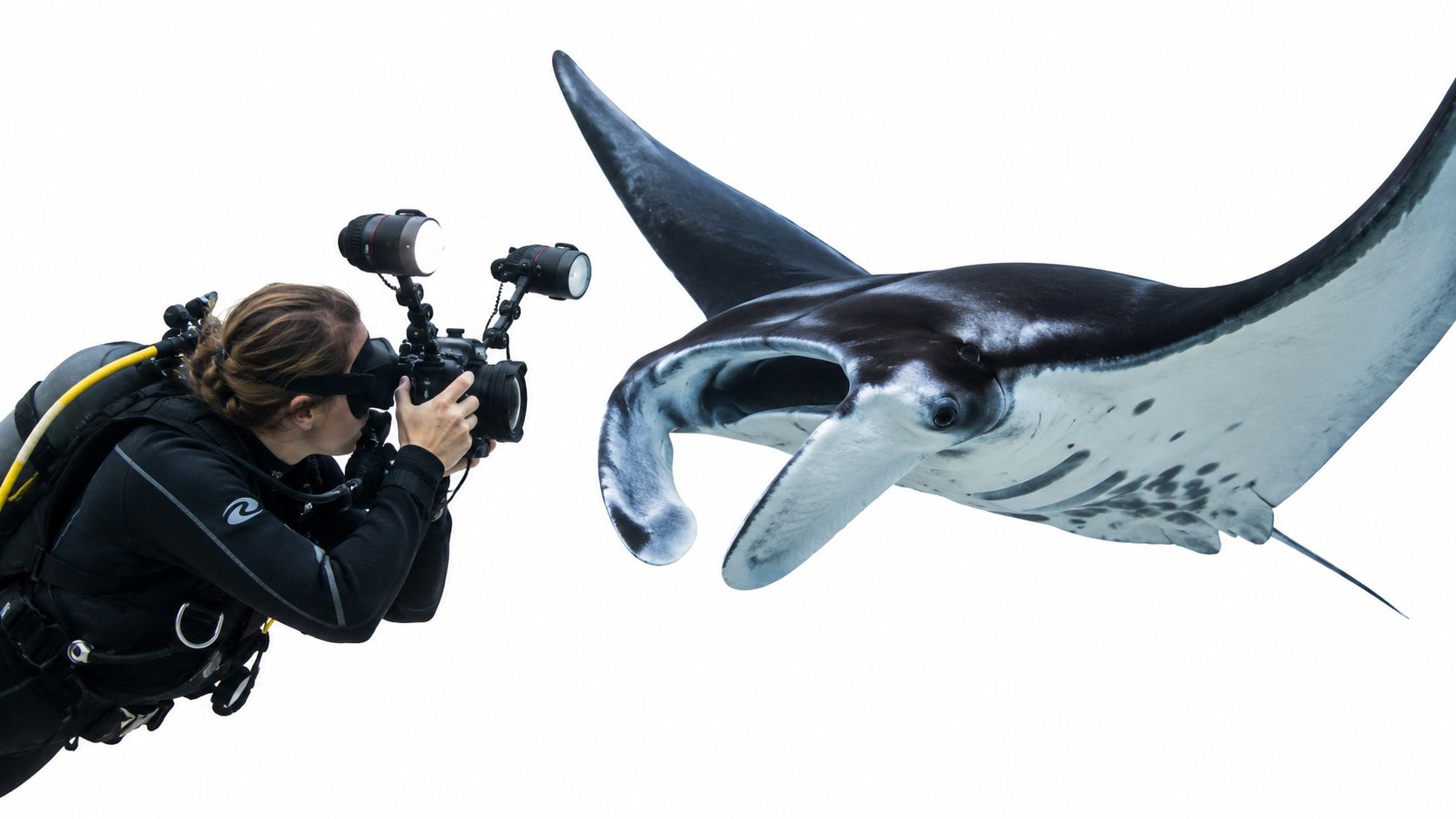
Low-light photography rewards preparation. A compact or mirrorless camera with a wide-angle dome port is a sensible choice. Start with two video lights in the 2,500 to 4,000 lumen range, manual white balance at 5,000K, shutter speed around 1/60 to 1/125, aperture near f/4, and ISO between 800 and 1,600.
Those are starting points, not promises. Water clarity, light output, and the manta's distance will force adjustments. Frame the animal before it reaches you, avoid chasing it with the camera, and never fire a strobe directly into its face.
Photographer's rule: A sharp, respectful pass is worth more than a full memory card of blurred pursuit shots.
This manta ray diving guide for Hawaii covers the practical differences between preparing for a manta dive and bringing an action camera into the water. Charge every battery, label every light, and check the camera housing before leaving the dock.
Booking Transportation Seasickness Prep and Final Checklist
The operator choice has more influence on the night than most guests expect. Confirm which site the boat normally uses, whether Garden Eel Cove is the default, how the crew handles a site change, and how the snorkelers and divers share the viewing area.
Ask direct questions before paying:
- Site plan: Is the trip scheduled for Garden Eel Cove, Keauhou, or either site based on conditions?
- Group layout: How does the crew separate snorkelers and divers at the light circle?
- Equipment: Are lights professionally mounted and positioned, or are guests expected to improvise?
- Weather policy: What happens if sea conditions make the planned site unsuitable?
- Included gear: Confirm wetsuits, masks, fins, tanks, weights, and flotation equipment.
- Timing: Verify check-in, expected return, and whether the trip includes a sunset surface interval.
- Transport: Ask whether hotel transportation is provided or whether you need to reach the harbor independently.
Seasickness preparation is worth handling before the boat leaves. Take any medication according to its label and your clinician's advice, eat lightly, and avoid arriving dehydrated. Options travelers commonly consider include the Ship-EEZ Seasickness Patch, Dramamine pills, Bonine pills, Sea Band wristbands, and ginger chews. If you're unsure which option is appropriate, ask a pharmacist before the trip.
Bring a towel, dry layer, swimsuit, hair tie if needed, and a waterproof way to store personal items. Apply reef-safe sunscreen after the water portion rather than carrying a greasy layer into the viewing area. Complete the waiver online when possible, and check the cancellation policy before departure day.
A Kona-based operator that offers both diving and manta viewing can be useful when your group includes different experience levels. The key is not the sales language. It's whether the crew explains the site choice, manages the light circle, fits equipment properly, and treats the mantas as wild animals.
Use the Kona seasickness preparation guide to review the details before travel, then choose the format that matches your comfort and certification. The best manta night is the one where you arrive warm, rested, properly equipped, and ready to hold your position while the animals do the spectacular part.
Kona Honu Divers offers a Garden Eel Cove manta ray night dive and manta viewing experience with a sunset cruise, equipment support, and an educational briefing on manta behavior. Visit Kona Honu Divers to review the available dive and snorkel options, confirm the current schedule, and book the format that fits your Big Island plans.