
You're already picturing the moment: you slide into dark water, the ocean goes quiet, and a pale wing shape appears out of the black like it was drawn there by the lights below. Then it turns, opens its mouth, and glides past with a slow confidence that makes the whole boat feel smaller. That's the appeal of manta ray night snorkeling, and in Kona it isn't random luck, it's a long-running wildlife gathering shaped by light, plankton, and local stewardship.
The Magic and History of Kona Manta Ray Night Snorkeling
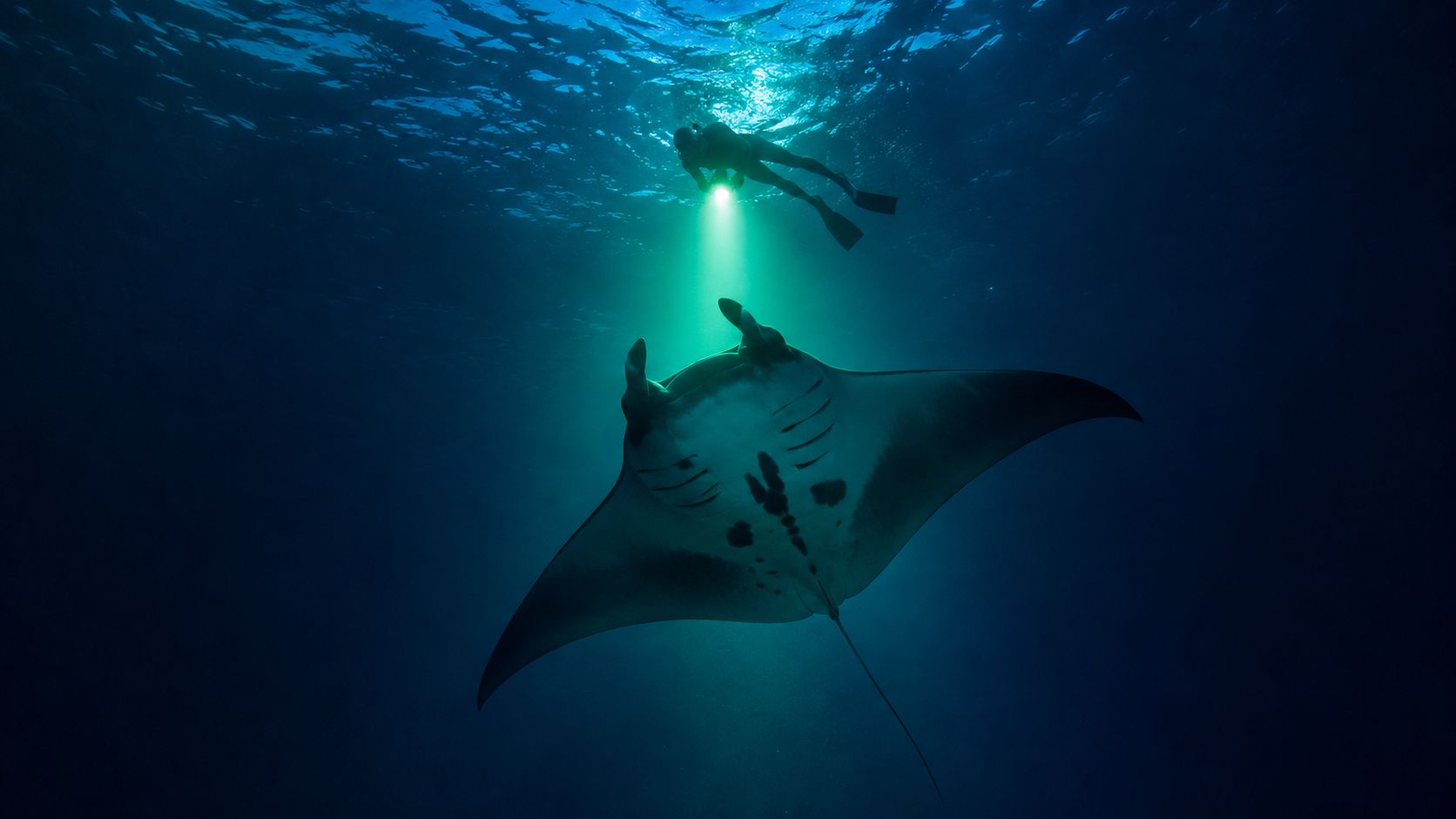
Step into the water after dark, and the scene changes fast. Your body goes still, the shoreline disappears, and the only place to look is the light beneath you. Then a manta ray rises through that glow, turning the whole encounter into a quiet lesson in how light, plankton, and animal behavior fit together.
Kona's modern story began with an accident that became a managed wildlife encounter. A historical account traces the practice to 1979, when floodlights near the former Kona Surf Hotel drew plankton, then manta rays. By 1992, organized night dives were operating there, and by 1993 local operators had written guidelines that still shape how the experience is run today (historical account). If you want the broader Kona context around the coastline and the dive culture that grew around it, this guide to what makes diving in Kona unique explains why the area became such a natural fit for night encounters.
From accident to repeatable encounter
What makes Kona stand out is that the feeding event became consistent enough to organize around. County tourism data puts annual participation at about 80,000 people, and top operators often report sighting success rates in the 85% to 90% range at established sites such as Manta Village and Manta Heaven. That does not guarantee a sighting, but it does show that this is a repeatedly observed wildlife aggregation, not a random search.
Treat the trip like a viewing platform for wild feeding behavior, not a performance. When the group stays calm and follows the rules, the encounter usually works better for everyone in the water.
The shoreline shaped the pattern as well. When the Kona Surf Hotel closed for remodeling in 1999 and its lights went off, mantas shifted roughly 16 miles north toward the Kona airport area, which helped establish a second major viewing location. That change shows how closely these animals track light, food, and habitat. The sites people visit are only one part of a much larger ecological system.
The Ecology of the Nighttime Feeding Aggregation
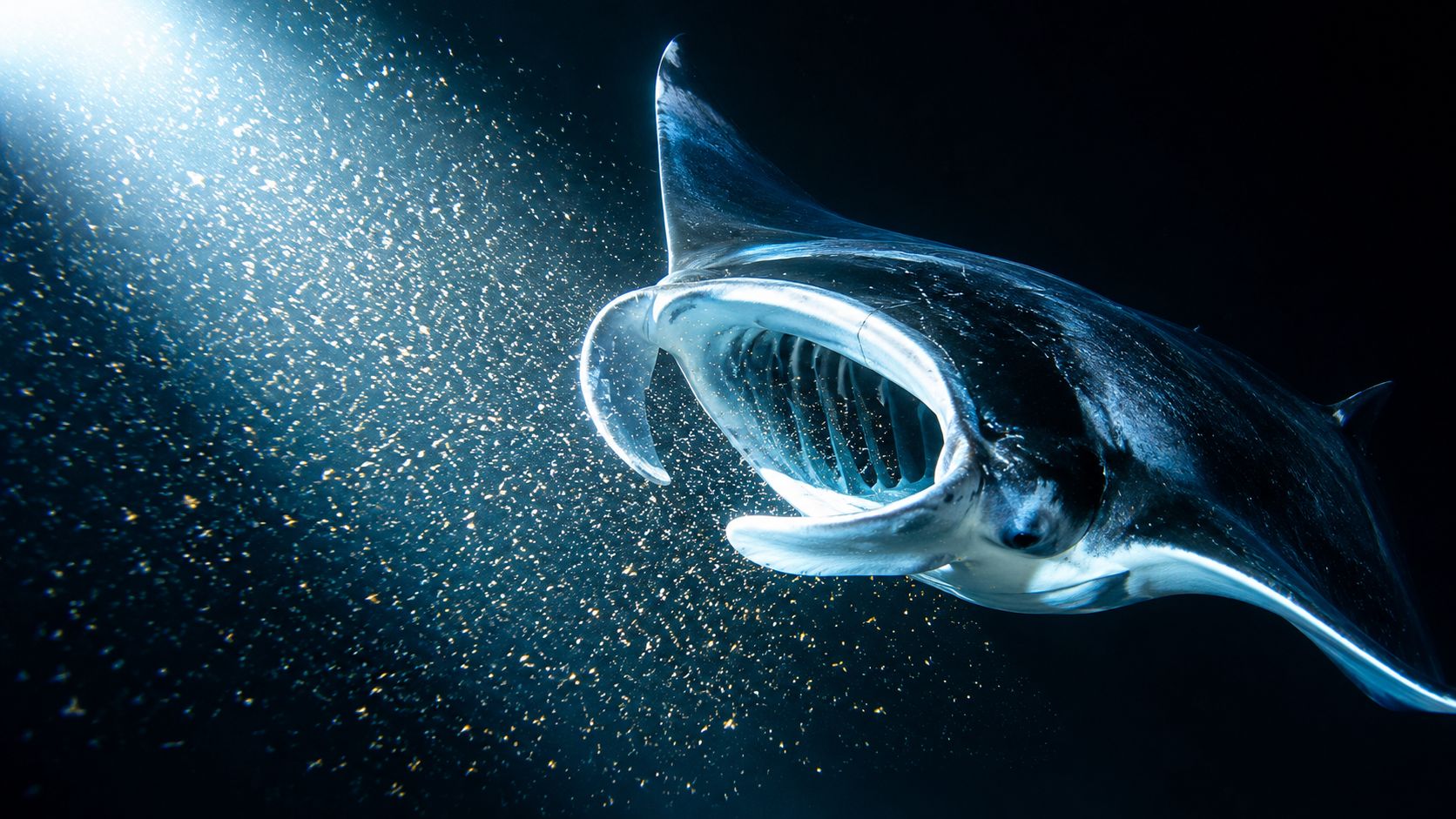
After sunset, underwater lights turn a patch of ocean into a temporary feeding station. Plankton gathers in the illuminated water, much like ingredients collecting in a slow-moving soup, and reef mantas arrive to filter-feed through that concentrated column. The lights are the ecological engine of the experience, so beam placement, intensity, and a steady lit area matter greatly (PADI guidance). Our guide to manta ray diving in Hawaii explains how this wider setting shapes the encounter.
That food web also explains why tours begin after sunset. Hawaiian coverage describes boats leaving around sunset, traveling to established feeding sites, and using illuminated platforms to concentrate plankton (Hawaii Magazine). As the plankton cloud develops, mantas can locate the food source without being chased, fed, or lured. Their choice to enter the light is what makes the observation meaningful.
Why the site keeps producing the same drama
Kona's best-known locations, Manta Village and Manta Heaven, reflect more than convenient access. Their coastline, seafloor shape, currents, and lighting conditions repeatedly create the same useful relationship between plankton and feeding mantas. Hawaiian site data has recorded mantas at both locations on almost every night. Experienced guides therefore log conditions night after night and adjust light placement to the prevailing current rather than following a fixed map.
Small changes can affect the feeding lane. A current may spread plankton beyond the brightest area, while a poorly positioned beam can leave the animals working around the edges. The group's position matters for the same reason. A stable viewing area gives mantas room to turn, loop, and pass through the plankton-rich water without repeated interruptions.
The scientific record supports the idea of a resident aggregation. By 2007, researchers had identified 105 reef manta rays along the Kona Coast and recorded a 76% resight rate, meaning many individuals appeared again after their initial cataloging (county testimony document). The same animals returning gives the site a sense of continuity, while also reminding visitors that these are known wild animals with established habits.
Manta and devil rays form seasonal feeding aggregations in many parts of the world, ranging from small groups to very large gatherings. Kona's nightly activity belongs to that broader pattern, even though each encounter depends on local light, plankton, currents, and animal behavior.
Stay flat at the surface and keep the lit area intact. The mantas are feeding in a narrow column, and your job is to observe, not interrupt.
Safety Protocols and In-Water Etiquette
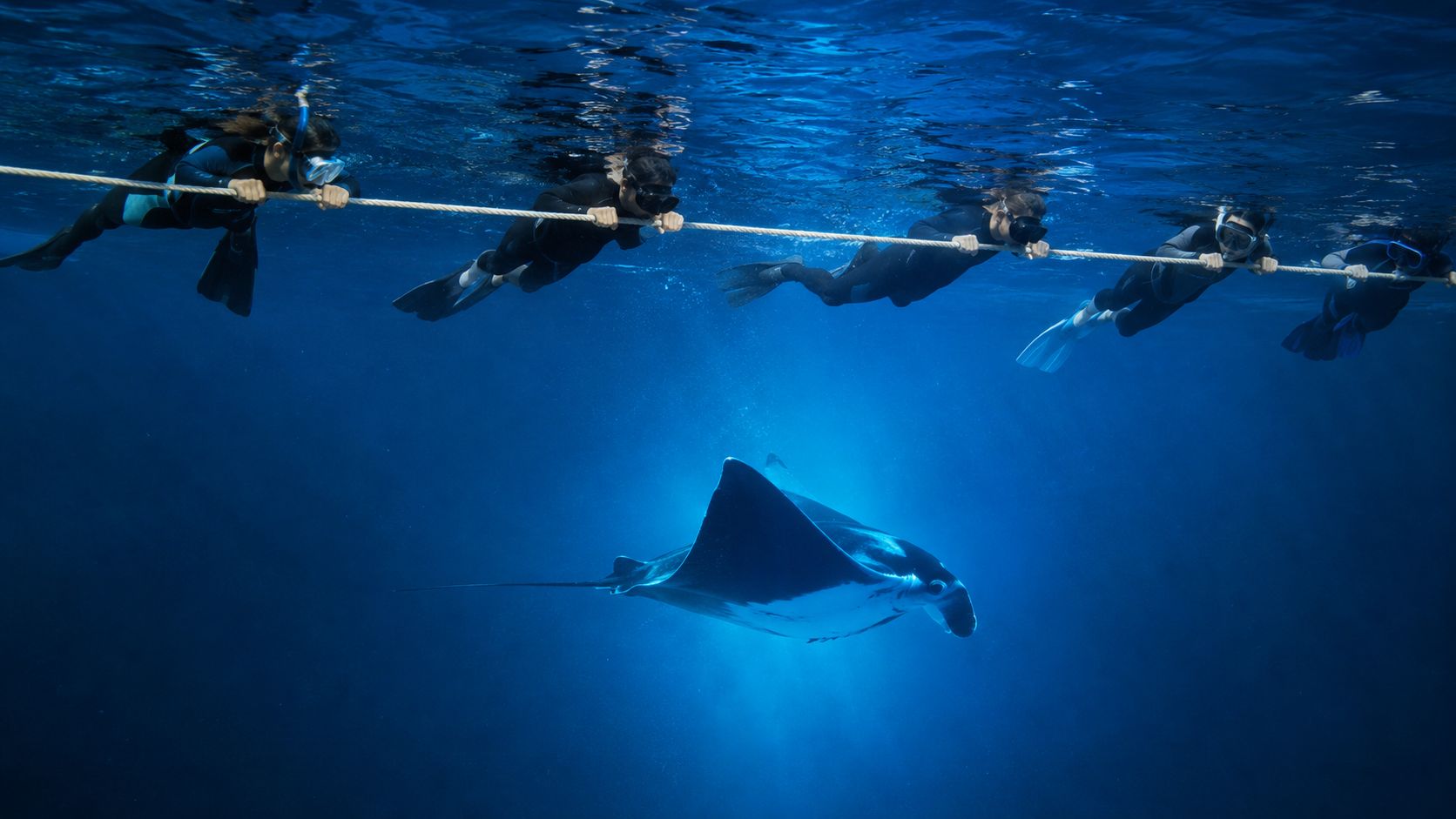
The encounter works because the feeding lane stays calm. You are not chasing mantas through open water. You are holding a fixed position at the surface while the animals rise through the light to feed below you. Big Island Divers advises snorkelers to stay flat on the surface, while divers remain lower in the water column, because the mantas often feed just beneath the group and the main risk is accidental contact (Big Island Divers).
That surface discipline protects more than the encounter itself. A manta's mucus layer helps protect its skin, so a fin kick, a lowered leg, or a drift into the feeding lane can injure the animal or change how it moves through the light. Independent guidance also says not to dive down, chase, or touch mantas, because those actions increase collision risk and interrupt feeding behavior (our full diver etiquette guide; Hawaii Guide).
What to do in the water
Hold the raft handles, keep your body long and quiet, and let your fins stay below the surface line. Do not splash. Do not bob forward into the light. If a manta glides close, stay still and let it pass through the plankton-rich water on its own path.
A few operators are stricter than others about who can join. Independent tour guidance says open-ocean night snorkeling usually requires basic swimming ability, some operators ask for prior snorkeling experience, and non-swimmers may be turned away for safety reasons (The Manta Snorkel Co). That is not gatekeeping. It reflects the reality of a managed ocean setting at night, where steady control matters.
If seasickness is part of your reality, take your preferred remedy 30 to 60 minutes before boarding as directed, avoid alcohol beforehand, sit mid-boat where motion is usually gentler, and tell the crew early so they can place you where you are most comfortable. Planning for that before departure is much easier than dealing with it after the boat is offshore.
The right mindset is calm, not fearless. Quiet, steady snorkelers help keep the light column intact, which gives the mantas room to feed without disturbance.
Logistics and Booking Your Kona Tour
A good operator should make the evening feel organized from the first check-in. That usually means a clear meeting point, a briefing before departure, and gear that's ready before anyone gets near the water. Kona Honu Divers is one example of a Kona operator you can compare against others when you're looking at tour logistics, boat setup, and how seriously a crew treats conservation-minded procedures.
The biggest booking mistake is choosing on convenience alone. Kona's manta viewing rules can include designated zones and timing limits, and one source states that commercial viewing hours are listed as 4:00 pm to 4:00 am, participants and guides must stay within 150 feet of the campfire or light source, and motorboats must stay at least 100 feet away except for arrival, departure, or emergencies (Kona Snorkel Trips blog). Those restrictions exist to keep the scene predictable for both the animals and the boats.
What a careful booking checklist looks like
- Choose a licensed operator: Look for crews that explain the rules clearly and enforce them in the water.
- Confirm the gear plan: Ask what's included, then bring warm layers and reef-safe sunscreen if your operator says to pack them.
- Assess your swimming comfort: If you're shaky in open water, pick a different activity.
- Book early in your trip: That gives you room to reschedule if weather or ocean conditions change.
For travelers deciding between surface snorkeling and a deeper perspective, the manta dive is a different experience altogether. If you're considering the scuba version, the manta dive tour page shows the separate dive option, and many divers prefer the protected setting of Garden Eel Cove because it offers a better viewing area and reef structure for that style of encounter. The point isn't that one is universally better, it's that the right choice depends on whether you want to hover at the surface or observe from below.
Photography Tips for Capturing the Encounter
Night manta photography is hard because the light is doing two jobs at once. It has to attract plankton and illuminate the scene, while your camera still needs enough exposure to freeze motion in dark water. That's why the best shots usually come from patience, positioning, and a willingness to let the moment happen in the beam instead of trying to force it.
If you're using a phone in a waterproof housing, keep your movement small and your screen brightness low. If you're using a dedicated camera, turn off any internal strobe or flash you don't need, because harsh bursts create backscatter in plankton-rich water and can distract the animals. The manta should be lit by the operator's system, not by a panic-flash from your device.
Simple camera habits that help
- Hold position near the light board: Let the manta cross through the brightest part of the scene instead of drifting into the dark.
- Shoot the pass, not the pose: The animal's movement matters more than waiting for a perfect still frame.
- Keep your rig passive: If your setup makes you kick, bob, or lunge, it's too much gear for this encounter.
- Respect the no-flash rule: You'll get better behavior and cleaner images if you stay unobtrusive.
This manta photo guide is useful if you want ideas for framing and timing before you go. The ethical line stays the same either way, never trade a better shot for a worse experience for the animals.
Frequently Asked Questions About Manta Snorkeling
If the mantas don't show, that doesn't mean you did anything wrong. These are wild animals, and recent guidance notes that sighting times can vary from minutes to much longer depending on conditions, with NOAA-linked research emphasizing how site-specific and behaviorally variable the encounter can be (NOAA repository). The honest answer is that good operators improve your odds, but they can't guarantee the ocean.
Children and mixed-ability groups need a careful reality check. Some operators allow family participation, but open-ocean night snorkeling still depends on swimming comfort, calm behavior, and the ability to stay flat at the surface. If someone in your group is a weak swimmer or a non-swimmer, ask the operator directly before you book.
Manta Village versus Manta Heaven
The two main sites are both part of the Kona story, but they don't feel identical. Manta Village is the long-established, highly convenient site near Keauhou Bay, while Manta Heaven sits closer to the Kona airport area and became especially important after the lighting change that shifted mantas north in 1999 (historical account). One tends to be the easier, more familiar choice, while the other often draws people who want a different setting and are willing to go where recent activity looks strongest.
A lot of readers also ask whether the experience is safe. The answer is yes, when you follow the briefing and stay disciplined at the surface, because the protocol is built around keeping you out of the mantas' feeding lane. That's the secret of the Kona night snorkel, it's not about proximity at any cost, it's about being still enough to let the wildlife do the work.
If you want a guided Kona experience built around clear briefings, respectful wildlife interaction, and practical on-the-water support, Kona Honu Divers is worth a look. Their manta-focused trips fit this style of encounter, and their crew can help you choose the right option for your comfort level and goals.