
The boat leaves Honokohau Harbor as the last light fades over the Kona coast. You're headed toward a patch of dark water marked by bright lights, wondering whether the mantas will show and what the night will feel like. If this is your only chance to go, the best preparation is knowing what you're signing up for: a wildlife encounter, not a guaranteed performance.
Kona's reef mantas belong to a small, locally resident population. Their feeding habits, the viewing site, ocean conditions, and the way tour operators manage people and boats all shape the experience. This guide gives you the practical rundown, from choosing a site and understanding the night's routine to evaluating an operator and accepting the possibility of a quiet outing.
Table of Contents
- Why a Big Island Manta Encounter Stays With You
- How Kona's Manta Rays Actually Live and Feed
- Garden Eel Cove Versus Keauhou at a Glance
- What a Manta Night Dive and Snorkel Look Like
- Best Time of Year and Conditions for Manta Viewing
- Crowding, Safety, and Responsible Manta Tourism
- Gear, Packing, and Seasickness Prep for a Manta Trip
- Choosing a Manta Tour Operator on the Big Island
Why a Big Island Manta Encounter Stays With You
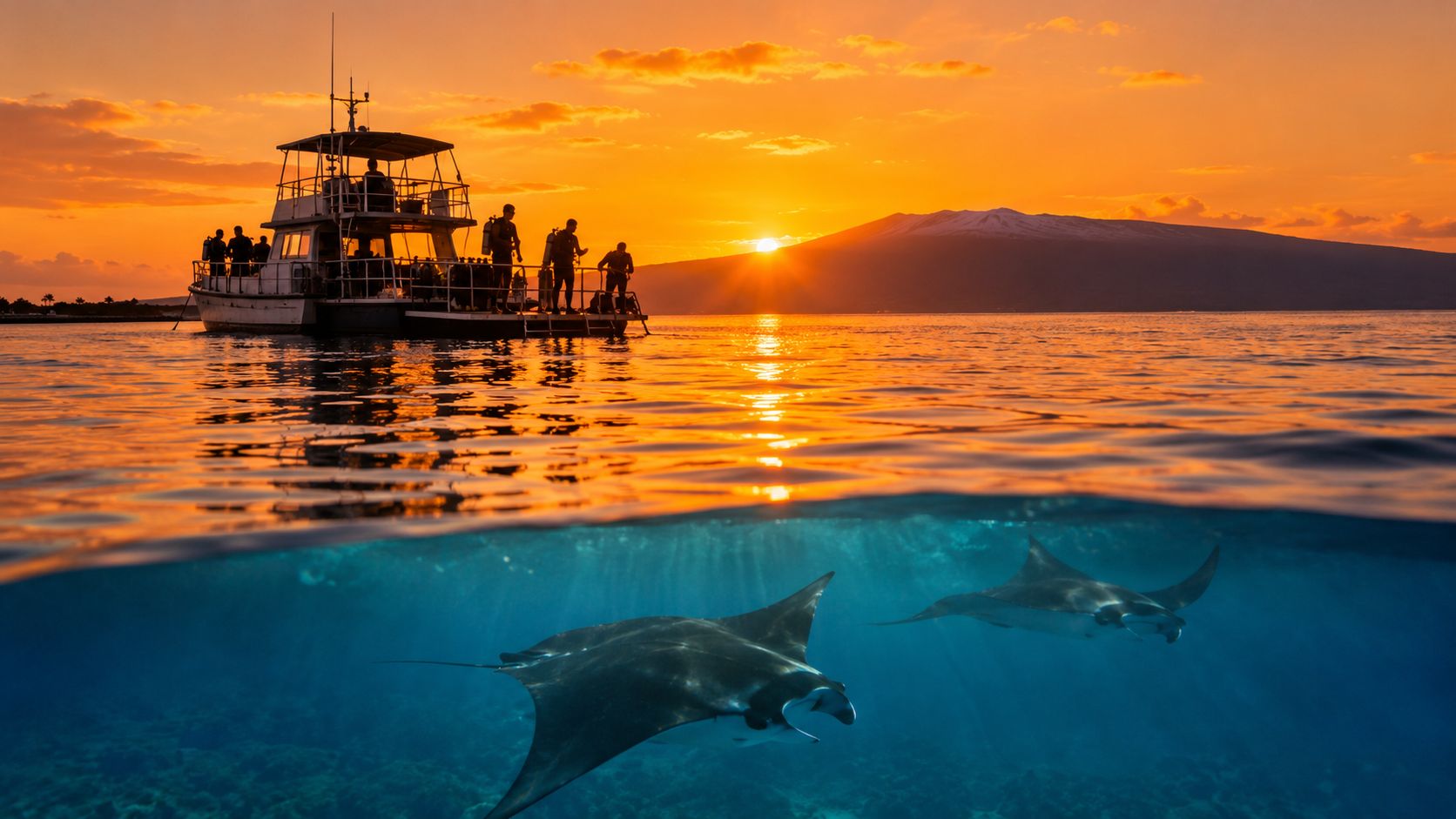
From the boat, the site can look like a simple arrangement: lights shining into black water, guests waiting at the surface or settling on the bottom. Then a manta rises through the beams, turns, and glides back into the dark. That movement is the spectacle, but the context makes it more than a show.
NOAA Fisheries' summary of genetic and photo-identification research reports 318 unique manta rays documented around Hawaiʻi Island since 1979 and estimates about 104 adult breeding individuals. Those figures describe a limited local population, not a parade of unrelated animals arriving from across the islands. A ray seen again and again may be the same individual returning to a familiar feeding site. NOAA Fisheries' summary of the Big Island manta research
That's why I'd approach a manta trip differently from an ordinary night out on the water. You're watching wild animals feed in a place they use repeatedly. A respectful guest stays still, follows the guide's directions, and lets the mantas control the distance.
If you're deciding whether to dive or snorkel, take a look at photos from Kona manta dives to get a feel for the underwater perspective. This guide will help you understand manta behavior, compare the main sites, follow the trip from check-in to return, judge conditions and crowding, and choose an operator with clear wildlife practices. It also gives you a candid look at what can make a night fall short.
How Kona's Manta Rays Actually Live and Feed
Kona's manta encounters feature reef manta rays, Mobula alfredi. These large filter feeders don't hunt fish; they move through water with their mouths open and strain tiny prey from it. On night tours, lights draw plankton into a concentrated patch, and the mantas may feed by sweeping through it in repeated loops and barrel rolls.
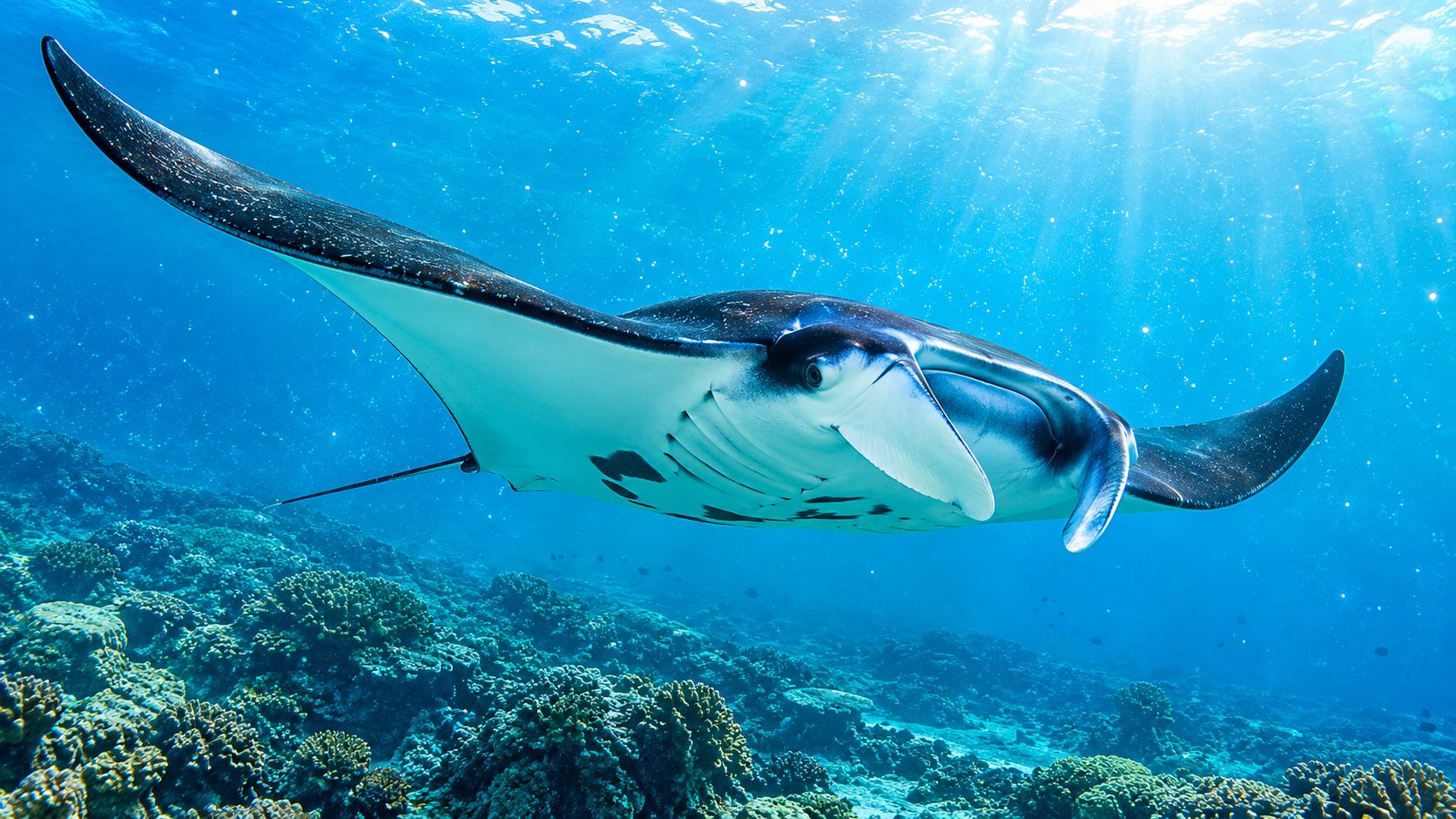
The important detail is that Hawaiʻi Island's mantas are not part of one freely mixing statewide population. Genomic research found that Big Island and Maui Nui reef manta populations are genetically distinct, with little movement between island groups. Females show strong reproductive site fidelity, tending to reproduce near the island where they were born; male-mediated dispersal between groups appears comparatively greater. Genomic research on Hawaiʻi's reef manta populations
For a visitor, that biology changes how you should interpret a busy night or a repeat sighting. Seeing mantas regularly at a Kona site doesn't mean animals from elsewhere will quickly replace local rays if they're harmed. Entanglement, vessel strikes, habitat change, and repeated disturbance can matter disproportionately to a population with a restricted range.
What the feeding scene looks like
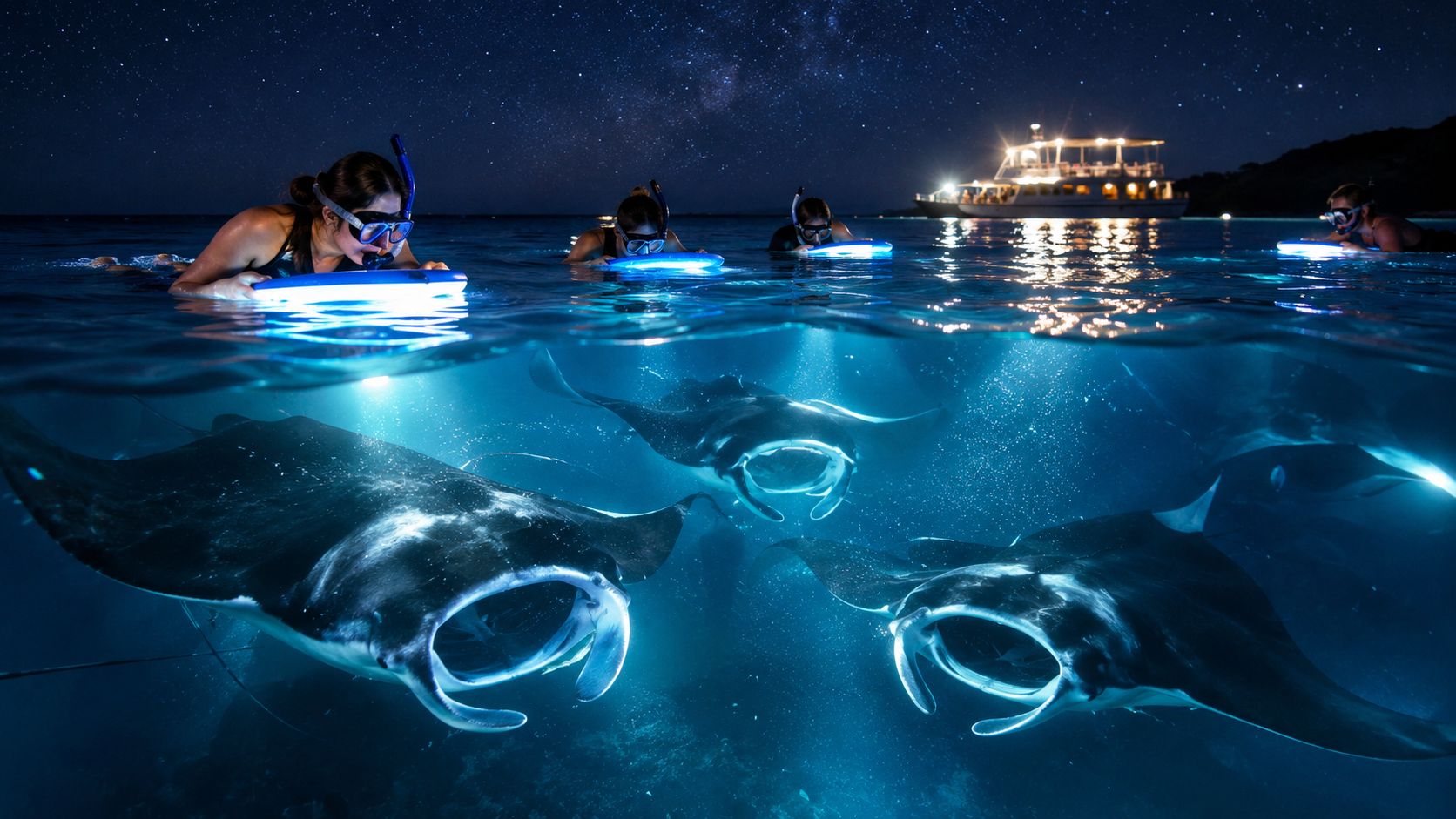
At the surface, snorkelers typically hold a light board and watch from above. Divers settle beneath the feeding area and look upward. In either case, a manta may approach closely as it follows the plankton, but that proximity is the animal's choice.
The rule that matters: Don't touch, chase, block, or dive into a manta's path. Hold your position and let the animal decide where to feed.
Experienced guides may also take identification photos. The markings on a manta's underside help distinguish individuals, making those images useful as long-term monitoring records, not just souvenirs. Your job is simpler: stay calm, keep your body position predictable, and make room for the animal.
Garden Eel Cove Versus Keauhou at a Glance
The two primary Kona manta-viewing locations are Garden Eel Cove and Keauhou Bay. Garden Eel Cove is also commonly called Manta Heaven; Keauhou is often called Manta Village. Their differences aren't just names on a booking page. The site shapes the viewing setup, the kind of aggregation researchers have recorded, and how the night feels in the water.
Long-term monitoring across the sites found that Garden Eel Cove supported larger and more variable aggregations, while Keauhou had smaller aggregations and a strongly female-biased record, with 91% of sightings there involving females. The same research found aggregation size at both locations was positively correlated with zooplankton density, so a site's usual pattern isn't a promise about any particular evening. Long-term monitoring of Kona's manta aggregation sites
| Feature | Garden Eel Cove | Keauhou Bay |
|---|---|---|
| Setting | More protected cove setting | Closer to shore |
| Typical aggregation size | Generally larger, with more variation | Generally smaller |
| Viewing configuration | Strong fit for watching multiple mantas feed over a viewing area | A distinct site with its own resident-use pattern |
| Best fit for guest type | Guests prioritizing larger feeding groups in a more enclosed setting | Guests whose operator selects the site based on conditions and activity |
My pick for a viewing-focused trip
For a tour centered on watching multiple mantas feed, I'd choose Garden Eel Cove. Its protected setting and viewing area make it the stronger option for observing feeding groups. A comparative site analysis likewise reports larger groups at Garden Eel Cove than at Keauhou, while describing notable female site fidelity at Keauhou. Comparative information on Garden Eel Cove and Keauhou
That recommendation doesn't mean Keauhou is a poor choice. The right captain may favor another location based on the night's conditions and manta activity. Ask where the tour plans to go, but be wary of anyone promising a particular number of rays: aggregation size follows food availability, and wild animals don't follow a booking schedule.
What a Manta Night Dive and Snorkel Look Like
The lights go on, guests settle into position, and the mantas decide whether to feed. That is the honest shape of a Kona manta trip: the crew sets up the viewing area, but the animals choose when to arrive and how long to stay.
From check-in to the water
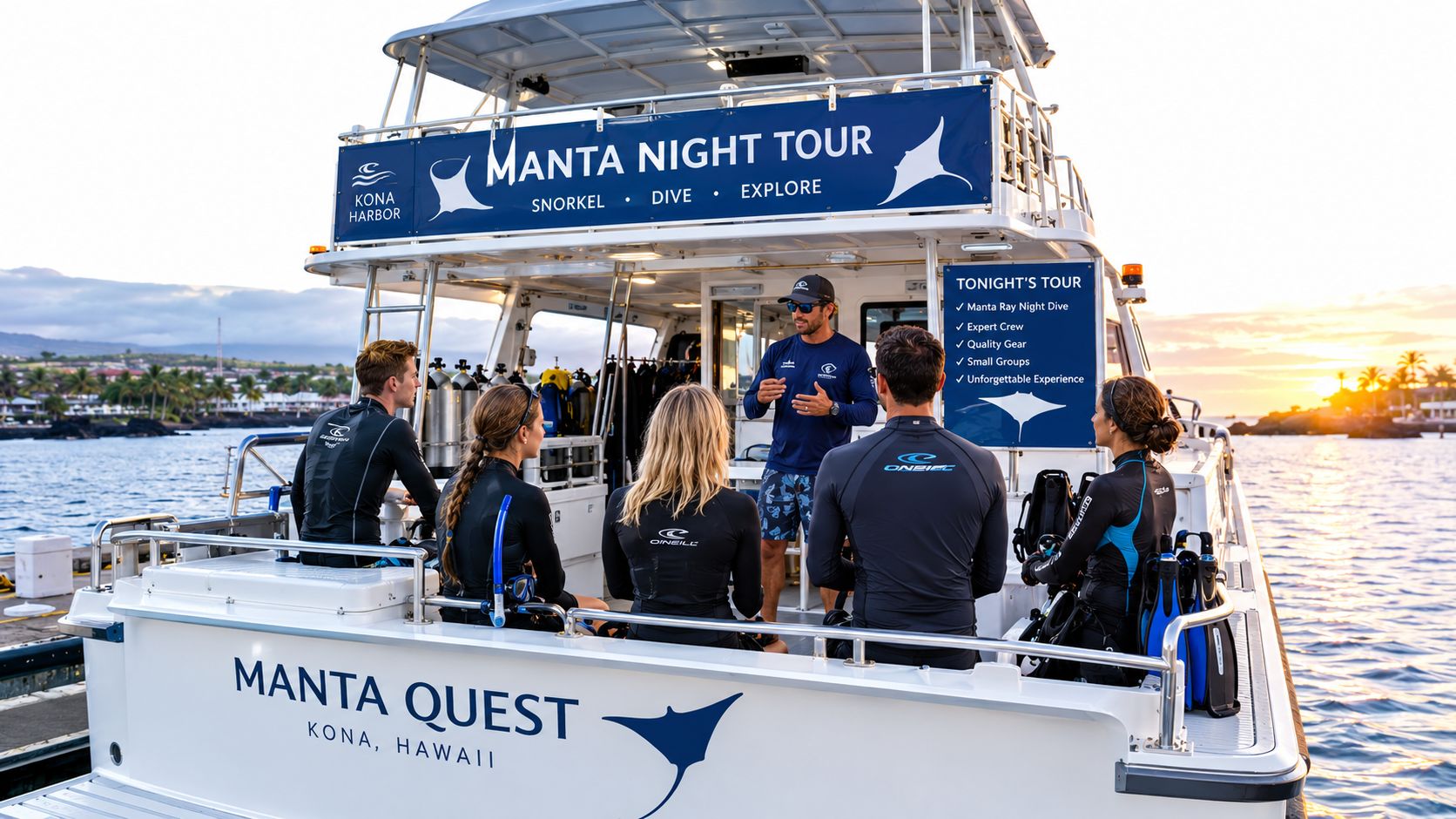
At the harbor, the crew checks your gear and explains how to enter, where to position yourself, and how to signal for help. Pay attention. Once the boat reaches the site, divers and snorkelers take different positions, and following the crew's directions keeps the viewing area orderly.
Snorkelers hold a floating light board at the surface. Its lights attract plankton, and the board gives the group a fixed place to watch from. Divers descend to the designated viewing area and aim their dive lights as instructed. Keep your beam off other divers' eyes, and never sweep it across a manta.
What happens during the feeding window
Mantas may circle through the illuminated plankton, glide over the viewing area, then leave and return. The time spent in the water varies with the tour and conditions. Kona Honu Divers describes its two-tank manta dive and snorkel tour as a trip built around Garden Eel Cove.
Before booking, ask the operator about the planned depth, tank setup, and where divers will stay. Configurations differ, so raise any equipment needs or preferences in advance. Snorkelers should hold their surface position instead of swimming after rays. Give the animals room to pass, and leave their route clear.
When the crew ends the viewing, follow its instructions to exit and board. The boat ride back is when you'll be glad you brought something warm and dry. If you're comparing other Big Island scuba options, browse the available Kona diving tours.
Best Time of Year and Conditions for Manta Viewing
Don't book around a supposed guaranteed manta season. Kona's aggregation sites are used repeatedly, but animal numbers and viewing quality vary from night to night. The key ecological factor is food: monitoring at Garden Eel Cove and Keauhou found larger aggregations where zooplankton density was higher.
A separate six-year observation study recorded reef mantas at Manta Heaven on 92% of monitored nights and at Manta Village on 78% of monitored nights during the period from January 1, 2009, through December 31, 2014. Those are historical site-use figures, not a promise that mantas will appear on your specific trip. Six-year observations at Manta Heaven and Manta Village
Conditions matter more than a calendar claim
Plankton availability is central, but it isn't the only factor. Current, swell, wind, visibility, and the amount of light already present around the site can affect how comfortable the tour is and how clearly you can watch. A bright moon can also change the contrast of the lighted viewing area, though it can't tell you whether the mantas will feed.
A good operator won't sell you certainty. They'll tell you what conditions they're seeing and whether they're comfortable taking guests out.
If the forecast looks borderline, ask whether the company will move sites, reschedule, or cancel when conditions don't meet its standards. A shorter or quieter encounter can still be worthwhile, but a responsible crew shouldn't push an unsafe trip to protect a booking. For more planning context, see this guide to the best time to see manta rays in Kona.
Crowding, Safety, and Responsible Manta Tourism
“No touching” is essential, but it isn't the whole answer to responsible manta viewing. Boat traffic, people in the water, light placement, and how an operator positions its group also affect the encounter. A guest can behave carefully and still find themselves in a crowded setup.
A Hawaiʻi County safety assessment identified Makako Bay and Keauhou Bay as the two primary manta-viewing locations. By August 2015, at least 42 commercial operators were visiting those sites for nighttime snorkeling and scuba tours. Observations from August 10–13, 2015, counted approximately 16–19 vessels and 160–190 people in the water concurrently on observed nights; another observation recorded 21 vessels and 301 people at the site. Hawaiʻi County manta-site safety assessment details reported by Big Island Now
Questions to ask before you book
Those observations are historical, not a count of current nightly traffic. They do show why site management matters. Before booking, ask the operator:
- Capacity: How many guests will be in the water, and how many boats may share the site?
- Positioning: How does the crew keep guests and vessels clear of the manta feeding path?
- Lights: How are lights placed, and what guidance does the crew follow?
- Conditions: Will the operator move, reschedule, or cancel if the water is unsuitable?
- Monitoring: Does the crew contribute manta identification photos or other monitoring information?
The clearest sign of a thoughtful operator is a crew that explains the rules before you enter and enforces them in the water. Read the practical Kona diver etiquette guidance before the trip, then follow the crew's instructions even if another guest doesn't.
Gear, Packing, and Seasickness Prep for a Manta Trip
The boat ride and the time in the water can leave you chilled, especially after dark. Pack for warmth on the ride home as well as comfort in the water. Divers can bring a 3 mm wetsuit if the operator allows personal exposure gear; snorkelers should plan on a rashguard and a warm layer for after the swim.
Bring a towel, a dry bag, and reef-safe sunscreen for time before sunset. A headlamp with a red-light mode is useful on the boat because it helps you see without flooding the dark with bright white light. Confirm what the operator supplies rather than assuming every tour includes the same equipment.
Divers and motion-sensitive guests
Ask whether your certification level is accepted for the planned dive, whether Nitrox is available, and what tank configuration the tour uses. If you've recently been diving, have a medical concern, or aren't sure whether you're fit to dive, speak with the operator and a qualified medical professional before departure.
The ride out can be choppy, and seasickness is easier to prevent than to manage once the boat is moving. Ask your clinician or pharmacist what's appropriate for you, especially if you take medication or have a health condition. Options guests commonly consider include the Ship-EEZ seasickness patch, Dramamine, Bonine, Sea Band wristbands, and ginger chews. Review how to avoid seasickness before deciding what to use.
Quick check before leaving: swimsuit on, towel packed, warm layer ready, medication considered, and operator instructions confirmed.
Choosing a Manta Tour Operator on the Big Island
A manta sighting is wildlife viewing, not a guaranteed show. Choose an operator that explains its site choice, group setup, lighting rules, guide experience, boat condition, and cancellation policy. Ask whether the crew contributes manta identification records or research observations, and what happens if conditions are poor.
Kona Honu Divers offers a Garden Eel Cove manta tour with a two-tank dive and snorkel option. It may suit guests who want to visit that site and hear a clear plan for both the dive and viewing. Review the manta dive and snorkel tour details for current logistics.
Judge the operation, not the sales pitch
Before booking, ask who leads the briefing, how guests stay clear of the mantas' path, and how the crew responds when the viewing site is crowded. Clear answers matter more than a promise of sightings. Compare operators using this guide to choosing a Kona diving company.
Check that cancellation and rebooking terms are clear, then compare them with the operator's stated site and lighting protocols before you pay. If the answers are vague, choose another operator.